Small Business AEO Competitive Advantage: How Local Entities Outrank Global Giants in AI Search

AEO represents a shift from winning the search page to winning the search answer.
Quick answer
Small business AEO competitive advantage stems from the ability to provide hyper-specific, authoritative answers that AI models value over broad corporate content. By leveraging structured data and niche expertise, smaller entities can secure citations in ChatGPT, Perplexity, and Google Gemini, effectively bypassing the domain authority barriers that traditionally favored massive global conglomerates.
Small business AEO competitive advantage stems from the ability to provide hyper-specific, authoritative answers that AI models value over broad corporate content. By leveraging structured data and niche expertise, smaller entities can secure citations in ChatGPT, Perplexity, and Google Gemini, effectively bypassing the domain authority barriers that traditionally favored massive global conglomerates.
The Shift from Discovery to Retrieval
For two decades, the digital marketing strategy for small businesses was centered on 'discovery.' You wanted to be found among a list of links. The goal was to appear on page one of Google, and the mechanism for getting there was a combination of high-volume keywords, backlink building, and technical SEO. However, the paradigm is shifting. We are moving from a Search Engine economy to an Answer Engine economy.
In this new environment, users no longer want a list of websites to browse; they want a specific answer to a specific question. Large Language Models (LLMs) like GPT-4o, Claude 3.5, and Gemini 1.5 act as intermediaries. They ingest vast amounts of data, distill it, and present a synthesized response. For a small business, this is a massive opportunity. While a local bakery might never outrank a national food blog for the keyword 'best sourdough recipe' in traditional search, they can absolutely become the definitive cited source for 'where can I find traditional fermented sourdough in Seattle with no added sugar?'
This granularity is where the competitive advantage lies. LLMs value precision and verifiable facts over generic authority. If your site is technically prepared to deliver those facts, you become the answer. Unlike traditional SEO, which often rewards the "biggest" site, AEO rewards the "best" answer. This democratizes the digital landscape, allowing a three-person consulting firm to outshine a Fortune 500 company if the smaller firm's data is more legible to the machine.
Why AEO Matters in 2026
As we look toward 2026, the dominance of AI-mediated search is not just a trend; it is a structural change in how the internet functions. Gartner has predicted a 25% drop in traditional search engine volume as users migrate to AI agents. This sounds catastrophic for small businesses, but it is actually a filter. The traffic that remains will be higher intent, and the citations provided by AI models will carry significantly more weight than a standard blue link.
In 2026, the 'competitive advantage' is not about who has the biggest marketing budget, but who has the most 'retrievable' data. Traditional SEO favored those who could afford to play the long game of link acquisition. AEO favors the agile—the businesses that can rapidly update their FAQ sections for AEO and implement sophisticated schema that clearly defines their products, services, and locations.
The Erosion of Large-Scale Authority
For years, big-box retailers and global SaaS companies dominated the SERPs (Search Engine Results Pages) simply because their domains were twenty years old and had millions of links. AI models are different. They are designed to minimize hallucinations and provide accurate data. If a small business provides a more direct, clear, and technically structured answer to a query than a massive conglomerate, the AI is programmed to prioritize that clarity. This is the first time in the history of the internet where being small and nimble is a technical advantage in search.
Large corporations suffer from "content bloat." They have thousands of legacy pages written for SEO bots of the 2010s—stuffed with keywords and devoid of actual utility. Cleaning that up is a multi-year project for a corporate marketing department. A small business can optimize its entire digital footprint in a single quarter.
A Five-Step Strategy to Secure Your AEO Advantage
Building a robust AEO presence requires a shift in how you think about your website content. It is no longer a brochure; it is a structured database for AI agents to consume.
Step 1: Technical Schema Foundation
AI engines do not read your website like a human; they parse it like a computer. You must use JSON-LD structured data to label every critical element of your business. This includes your physical location (LocalBusiness), your team's expertise (Person), and your core knowledge base (FAQ).
- Why it works: Schema provides a 'source of truth' that the AI can easily map into its knowledge graph. It removes the guesswork for the LLM.
- Common Mistake: Using generic 'Article' schema when 'Service' or 'Product' schema would provide more specific data points like price, availability, or specific geographic service areas.
- Pro Tip: Use the 'SameAs' property in your Organization schema to link your website to your social profiles and Wikipedia pages, reinforcing your entity authority.
Step 2: Transition to Conversational Content
Keywords are dying; queries are living. Instead of targeting 'plumber Brooklyn,' you should target 'how to fix a leaking PVC pipe in an old Brooklyn apartment.' Your content should mirror the way people talk to Siri, Alexa, or ChatGPT.
- Why it works: AI models are trained on natural language. Content that matches the input query's intent and syntax is more likely to be selected as a citation because it requires less "translation" by the model.
- Common Mistake: Writing in overly formal, 'corporate' speak that obscures the actual answer with marketing adjectives.
- Pro Tip: Read your content out loud. If it doesn't sound like a conversation you'd have with a customer, rewrite it. Use tools like Otter.ai to record yourself answering client questions, then use those transcripts as the basis for your content.
Step 3: Implement the 'Claim-Evidence-Conclusion' Framework
When AI engines look for answers, they look for authoritative structures. Structure your paragraphs by making a clear claim, providing evidence (data, links, or experience), and drawing a conclusion.
- Why it works: This logical flow is easily summarized by LLMs, making your content 'snackable' for AI agents. It mirrors the logic-gate processing of most transformer models.
- Common Mistake: Burying the answer at the bottom of a 1,000-word post to increase time-on-site—a tactic that actively hurts you in AEO.
- Pro Tip: Put the direct answer to the primary question in the first 50 words of your page. Look at our aeo-best-practices for more on this.
Step 4: Audit for AI Readability
You need to know how the machines see you. Use tools that simulate LLM crawling to see if your site’s main points are being extracted correctly. If an AI summarizes your service page and gets your pricing or location wrong, your technical structure is failing.
- Why it works: Regular audits ensure that as LLMs update their algorithms, your site remains a high-confidence source.
- Common Mistake: Neglecting to update old content that now conflicts with new service offerings, leading to "entity confusion."
- Pro Tip: Perform a monthly aeo-website-audit to identify 'confused' entities in your site structure.
Step 5: Build Entity Authority Beyond Your Site
AEO is not just about your website. It is about how the entire web talks about your 'entity.' Being mentioned in local news, industry podcasts, and niche directories helps AI models build a 'consensus' about your reliability.
- Why it works: AI models use cross-referencing to verify facts. If multiple reputable sources say you are the top accountant in Austin, the AI will believe it even if your domain authority is lower than H&R Block's.
- Common Mistake: Focusing solely on on-page AEO while ignoring third-party mentions and Google Business Profile completeness.
- Pro Tip: Engage in niche PR to get your brand mentioned on authoritative, high-traffic domains within your specific industry. One mention in a trade journal is worth fifty generic blog backlinks.
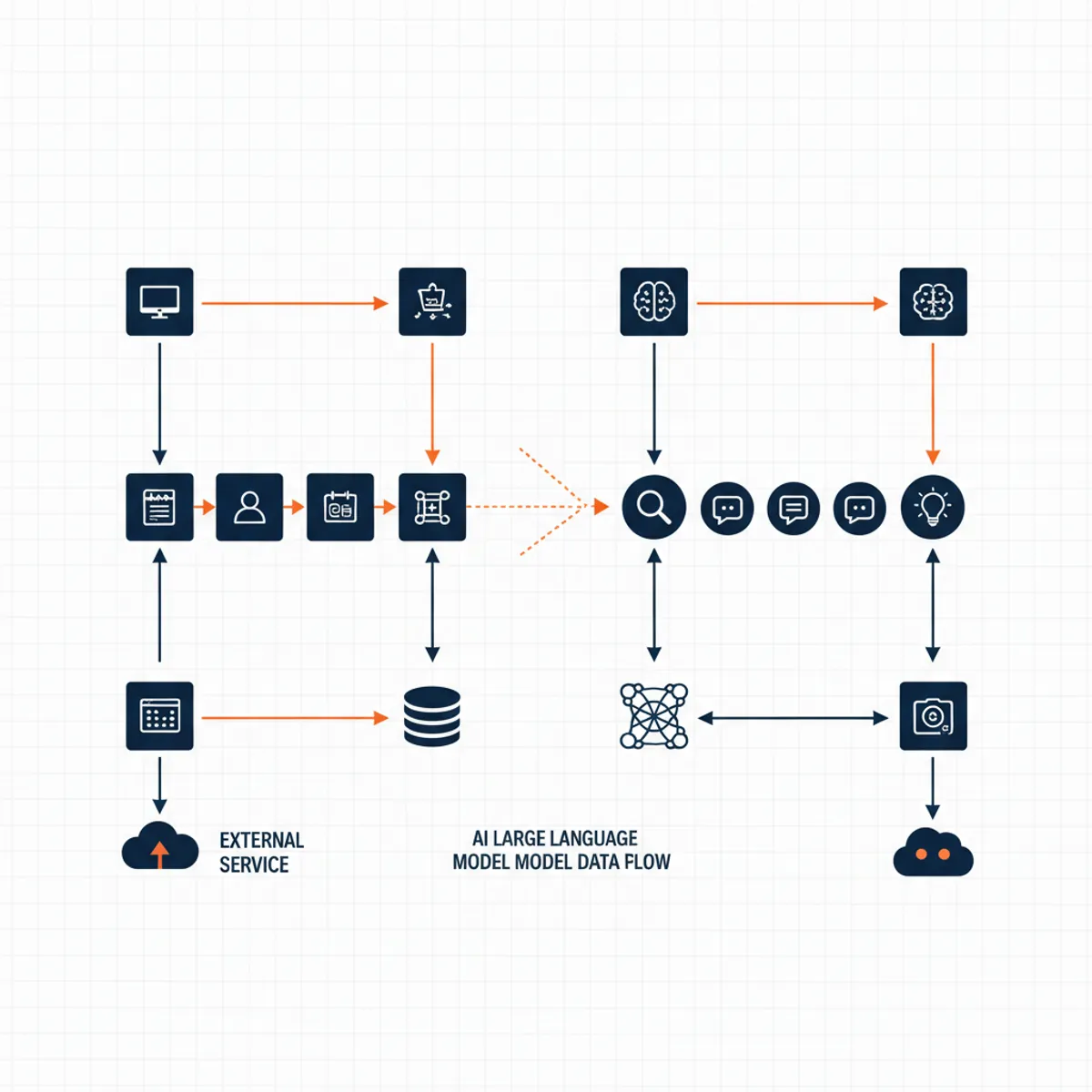
Comparison: Traditional SEO vs. Small Business AEO
| Feature | Traditional SEO | Small Business AEO |
|---|---|---|
| Primary Goal | Ranking in the top 10 links | Becoming the 'cited' AI answer |
| Success Metric | Click-Through Rate (CTR) | Impression Share / Citations |
| Content Style | Long-form, keyword-dense | Direct, factual, structured |
| Ranking Factor | Backlink quantity & Domain Authority | Data accuracy & Entity Authority |
| User Intent | Browsing / Researching | Immediate problem solving |
| Technical Focus | Page speed & Sitemap | JSON-LD Schema & Entity Mapping |
Advanced AEO Tactics for Local Domination
For the small business, "local" is the most defensible moat. Large language models are notoriously prone to "local hallucinations"—they often struggle with the nuances of specific neighborhoods or hyper-local regulations. Small businesses can win by filling this data gap.
The Hyper-Local Knowledge Graph
A national real estate platform might know the average house price in Denver. A local boutique agency knows the specific parking regulations in the RiNo district, the best coffee shop for remote work on Larimer Street, and the impact of the latest zoning vote by the city council. By publishing content that addresses these hyper-local nuances, you create "Information Gain" that an LLM cannot find elsewhere. When a user asks, "Is it easy to find parking for a new business in RiNo Denver?", the AI will cite the local expert, not the national aggregator.
Zero-Click Optimization via 'Answer Blocks'
Traditional SEO tried to get users to click. AEO acknowledges that many users will get their answer directly in the AI interface. You must optimize for the citation. This means using formatting that AI loves: bulleted lists for steps, bolded text for key definitions, and tables for data comparisons. If an AI agent can easily extract a table of your "2025 Seasonal Maintenance Rates," it is highly likely to display that table directly to the user with your brand name as the source.
Overcoming Common Objections to AEO
Despite the clear trajectory of search, many small business owners remain skeptical. Here are the most common objections addressed with a strategic lens.
"If the AI answers the question, no one will visit my site."
This is the most common fear: the death of the click. While top-of-funnel informational traffic will decrease, the traffic you do get will be much further down the conversion path. If a user asks a LLM for the "best organic dry cleaner in Chicago who handles vintage silk" and the AI cites you, the user who clicks through is already 90% sold. You are trading high-volume, low-quality traffic for low-volume, high-conversion traffic.
"I already spent years on SEO. Is that all wasted?"
Absolutely not. Good SEO is the bedrock of AEO. A fast site, clear hierarchy, and reputable backlinks still matter. AEO is an evolution, not a replacement. Think of traditional SEO as the foundation of the house and AEO as the smart-home technology that makes the house functional for the modern resident. The work you've done to establish authority is still valuable; we are simply re-coding how that authority is communicated to machines.
"It’s too technical for my small team."
While JSON-LD and Entity Mapping sound like science fiction, the tools have become remarkably accessible. If you can use a WordPress plugin or a Shopify app, you can implement AEO. The strategy is less about coding and more about the structure of your knowledge. If you can clearly define what you do, who you do it for, and where you do it, you have already done the hardest part of AEO.
Industry Examples: AEO in Action
To understand the competitive advantage, we must look at how specific niches are winning right now.
1. Boutique Law Firms
A small family law firm in Atlanta focused on "Collaborative Divorce for High-Net-Worth Tech Employees." By creating a guide specifically for how stock options are handled in Georgia divorce proceedings—something national legal sites cover only generically—they became the primary citation for Perplexity when users asked about "GA divorce and RSUs."
- The Result: They saw a 60% increase in lead quality because the AI pre-qualified the users before they ever reached the site.
2. Specialized E-commerce
A small manufacturer of ergonomic keyboards for programmers with carpal tunnel syndrome focused their content on "Key switch weight comparisons for RSI relief." While Amazon dominates "mechanical keyboards," the small manufacturer dominated the solution-based queries.
- The Result: GPT-4o consistently recommends their specific switch guide as the "expert source" for ergonomic research.
3. Niche B2B Consulting
A three-person consultancy specializing in "ISO 27001 compliance for small fintech startups" optimized their site using the Claim-Evidence-Conclusion framework. They addressed specific pain points like "minimum viable security for seed-stage companies."
- The Result: They effectively bypassed larger consulting firms in AI-mediated queries because their answers were more actionable for the specific user persona.
Common Pitfalls for Small Businesses
- Chasing High-Volume Keywords: Small businesses often waste time trying to rank for terms like 'marketing agency.' In the AEO era, it is better to be the definitive answer for 'fractional CMO for mid-sized dental practices.' The more niche the query, the higher the competitive advantage.
- Over-reliance on AI-Generated Content: While it is tempting to use AI to write your content, if your site is just a mirror of what the LLM already knows, it has no reason to cite you. You must provide 'Information Gain'—new data, unique perspectives, or specific local knowledge that the AI doesn't have.
- Ignoring the 'E' in E-E-A-T: Experience is the one thing AI cannot fake. A small business owner who has spent 20 years fixing HVAC systems has specific, anecdotal knowledge that a general AI model doesn't. Highlight this experience clearly.
- Neglecting Mobile UX: Many AI interactions happen via voice on mobile devices. If your site is slow or hard to navigate for a bot, it will be discarded as a source.
Case Study: Local HVAC Company vs. National Aggregator
A local HVAC company in Denver, Colorado, was struggling to compete with national platforms like Angi and HomeAdvisor for terms like 'AC repair Denver.' By pivoting to an AEO-first strategy, they focused on long-tail, hyper-local queries like 'how to prepare a Bryant central air unit for Denver winters.'
They implemented detailed FAQ schema and created a series of videos and articles that were transcribed and marked up with 'HowTo' schema. Within three months, when users asked ChatGPT or Perplexity for advice on maintaining their specific brand of HVAC unit in a cold climate, the local company was cited as the primary source.
The Results:
- 300% increase in 'zero-click' brand impressions.
- A 45% increase in high-intent phone calls from users who mentioned 'the AI told me to call you.'
- A reduction in PPC spend by 20% as organic AI citations replaced paid search volume.
AEO is the great equalizer. It removes the 'tax' that small businesses used to pay to search engines in the form of endless backlink building and allows them to win on the merit of their actual expertise. — Amir, Founder of EvronStudio
The Tools of the Trade
To execute this strategy, small businesses need a lean but effective stack. You don't need a $1,000/month enterprise SEO platform. You need tools that focus on entity health and AI visibility.
- Perplexity AI: Use this as your primary search engine to see how AI is currently answering questions in your niche. Pay attention to the 'Sources' section.
- Schema.org / JSON-LD Generators: Use these to build the technical foundation of your site without needing to be a coder.
- Claude 3.5 Sonnet: Use this to analyze your existing content and ask: "What information gain does this provide compared to the general consensus on this topic?"
- Google Search Console: Still vital for monitoring how 'AI Overviews' are driving traffic to your site.
- WordLift: An excellent tool for small-to-mid-sized businesses to automate the creation of a knowledge graph and structured data. For more options, see our guide on best-aeo-tools-for-ecommerce.
Measuring AEO Success: The Metrics That Matter
In the traditional world, we looked at 'rankings.' In AEO, we look at 'presence.' You should be tracking:
- Citation Share: How often is your brand mentioned in the footnotes of an AI response for your target queries? You can track this by manually prompting models or using emerging AEO monitoring tools.
- Sentiment of Response: Is the AI describing your business as a leader, a budget option, or a local specialist? The way an AI frames your brand is the new "brand reputation."
- Assisted Conversions: Tracking users who arrive at your site after interacting with an AI agent. This often requires looking at referral traffic from domains like
chatgpt.comorperplexity.aiin your GA4 dashboard. - Information Gain Score: A qualitative measure of how much unique data your content provides compared to your top five competitors. If your score is low, you are a commodity; if it is high, you are an authority.
The AEO Readiness Checklist
- [ ] Does every service page have at least 3 FAQ items with JSON-LD markup?
- [ ] Is your 'About' page linked to your social profiles via
sameAsschema? - [ ] Have you removed 'fluff' and 'filler' text that might confuse an AI summarizer?
- [ ] Does your site provide a clear, direct answer to a specific question within the first 10% of the page?
- [ ] Have you audited your aeo-content-strategy to ensure it focuses on 'why' and 'how' rather than just 'what'?
- [ ] Are your images tagged with descriptive, context-rich alt text that helps LLMs understand visual data?
- [ ] Have you claimed your entity on relevant third-party databases (Wikidata, Crunchbase, etc.)?
Conclusion: The Future belongs to the Specific
The small business AEO competitive advantage is not a fleeting hack; it is the new baseline for digital relevance. As AI agents become the primary interface through which consumers interact with the web, the brands that win will be those that are the easiest to understand, the most consistent in their data, and the most authoritative in their specific niche.
Large corporations are slow. They have thousands of pages of legacy content that are difficult to update and re-structure. You, as a small business owner, have the ability to pivot your top-answer-engine-optimization-strategies in a matter of days. By embracing AEO now, you aren't just keeping up—you are leapfrogging the giants who are still playing by the rules of 2015.
The shift from "matching keywords" to "providing answers" is the single greatest opportunity for small businesses in the last twenty years. It rewards expertise, punishes genericism, and levels the playing field for anyone willing to treat their website as a source of truth rather than just a digital flyer.
Ready to claim your place in the future of search? Start by identifying the ten most common questions your customers ask and answering them more clearly, more accurately, and more technically than anyone else on the web. The AI is listening. Make sure it hears you.
For a deeper dive into your current standing, consider a free-aeo-audit to see where your business stands in the AI rankings, or contact our team to build a bespoke strategy.
Frequently asked questions
How does AEO differ from traditional SEO for small businesses?+
Traditional SEO focuses on ranking in the top ten blue links through keyword density and backlink volume. AEO focuses on providing direct, structured answers to user queries so that AI agents like ChatGPT or Gemini cite your business as the definitive source. For small businesses, this means niche authority matters more than raw site traffic.
Why is AEO a better investment than SEO for local companies?+
Local companies often lack the budget to compete for broad keywords against national brands. AEO allows these businesses to win 'zero-click' searches and AI citations by answering specific, long-tail questions about their services. It levels the playing field by rewarding accuracy and technical structure rather than just domain age and link quantity.
What is the first step in a small business AEO strategy?+
The foundation is a technical audit of your schema markup. You must ensure that AI crawlers can instantly identify your business type, location, and services without ambiguity. Implementing 'Organization', 'LocalBusiness', and 'FAQ' schema helps AI models understand your entity relationship and trust the facts you present on your website.
Will AEO replace Google Search for my customers?+
AEO isn't replacing search; it is evolving it. While users still use Google, they are increasingly relying on the 'AI Overviews' at the top of the page. By optimizing for AEO, you ensure your business is the one being summarized in those overviews, keeping you relevant as user behavior shifts toward conversational queries.
Do I need expensive tools to start optimizing for answer engines?+
No. While enterprise tools exist, small businesses can start by using Perplexity and ChatGPT to see which sources are currently cited for their target keywords. Analyzing these sources reveals the content structure and tone the AI prefers. You can then replicate and improve upon those formats using standard CMS tools.
How long does it take to see results from AEO efforts?+
AI models are retrained and updated frequently. While traditional SEO can take six months to a year, a well-structured AEO content update can lead to new citations in AI responses within weeks, especially on platforms that use real-time web browsing like Perplexity or Google's SGE.
Sources & further reading
Soft next step
Want to see where AI answers mention you — and where they don't?
We run a free AEO audit across ChatGPT, Gemini, Copilot and Perplexity, then hand you the fixes in priority order. Start your AEO strategy today.
Keep reading
AEO Fundamentals
AEO vs SEO: Which Strategy Should You Prioritize in 2026?AI Platforms
How to Rank in ChatGPT: The 2026 AEO Optimization GuideContent Strategy
AEO Framework: How to Optimize for Answer Engines in 2026