Best AEO Tools for Ecommerce: Mastering AI-Driven Sales in 2026

Harnessing the right AEO tools is the key to becoming the top-recommended brand in AI-driven shopping searches.
Quick answer
The best AEO tools for ecommerce in 2026 include specialized schema generators like Schema App, visibility trackers like Semrush or BrightEdge, and AI-response engines like Perplexity or Gemini. These tools help you structure product data and verify your brand’s presence in AI-driven shopping results and voice search answers.
The best AEO tools for ecommerce help your products appear in AI-generated answers by structuring data and monitoring visibility across platforms like ChatGPT and Gemini. To win in 2026, you need tools that manage schema, track brand sentiment, and analyze how LLMs interpret your product catalogs and customer reviews.
What is AEO for Ecommerce?
To understand how to optimize your store, we must define the core entities (the "things" rather than just strings of text) that AI models use to build knowledge. Answer Engine Optimization (AEO) is the process of optimizing content specifically for discovery and synthesis by AI models and virtual assistants. This differs from traditional SEO because it focuses on being the "single best answer" rather than just a top-ten blue link.
In the context of online shopping, Schema Markup is the standardized vocabulary (from schema.org) that allows search engines to understand product prices, availability, and ratings without ambiguity. We also focus on the Knowledge Graph, a programmatic network of real-world entities and their relationships. For an ecommerce brand, your knowledge graph includes your brand, your founders, your products, and your unique manufacturing processes. Finally, Large Language Models (LLMs) like GPT-4o or Gemini serve as the "engines" that process this data to provide conversational shopping advice to your potential customers.
The Role of Vector Embeddings in Shopping
AI doesn't just read your text; it converts your product data into numerical vectors. When a user asks a complex question, the AI compares the "vector" of the query to the "vector" of your product. If your product description for a mountain bike focuses only on "lightweight frame" but the user asks for "stability on rocky descents," the vectors might not align. AEO tools help you bridge this gap by ensuring your content covers the semantic breadth required for high-dimensional matching.
Why AEO Tools Matter for Ecommerce in 2026
By 2025, we saw a massive shift in how shoppers find products. Instead of searching "best running shoes," users now ask ChatGPT, "I have high arches and run on concrete; what shoe under $150 should I buy?" According to Gartner, search engine volume is expected to drop significantly as AI agents take over information gathering. If your product isn't part of the AI's training set or accessible via its real-time browsing tools, you don't exist for that shopper.
Data from BrightEdge suggests that AI-led search results now trigger for over 80% of high-intent commercial queries. In 2026, the cost of customer acquisition on traditional social platforms has skyrocketed. Using specialized AEO tools allows you to capture "zero-click" and "voice-first" traffic where the AI does the selling for you. You aren't just fighting for a click anymore; you are fighting for the AI's recommendation.
How to Build Your Ecommerce AEO Tech Stack
Setting up your toolkit requires a methodical approach to ensure the AI understands your product's value proposition.
Step 1: Audit Your Current Entity Presence
Start by identifying how AI currently perceives your brand. Use tools like Perplexity or Gemini to ask specific questions about your products. Do they mention your brand? Is the pricing accurate? What you want to do is find the "hallucination gaps" where the AI gets your specs wrong. This works because it identifies exactly where your public data is messy or insufficient. A common mistake is assuming your current SEO rankings translate to AI citations. They don't always align. Pro tip: Use the "site:" operator in Perplexity to see which of your pages it favors for data extraction.
- Open Perplexity AI.
- Search: "What are the pros and cons of [Your Brand Name] [Your Top Product]?"
- Note if the AI cites your official site or a random third-party review.
- If it cites a competitor, analyze their schema using a validator.
Step 2: Implement Advanced Product Schema
You need a tool that goes beyond basic "Product" tags. Use a dedicated schema markup tool to implement "OfferShippingDetails," "MerchantReturnPolicy," and "ProductGroup" properties. This works because it feeds the Google Shopping Graph and OpenAI’s crawlers structured data they can trust. A common mistake is using a generic Shopify plugin that only does the bare minimum. Pro tip: Always include the gtn or mpn numbers in your schema; AI uses these as unique identifiers to verify product authenticity across multiple sources.
| Property | Why it Matters for AI | Benefit |
|---|---|---|
isRelatedTo | Links accessories to main products | Boosts cross-sell in AI answers |
material | Essential for sustainability queries | Captures eco-conscious shoppers |
audience | Defines who the product is for | Improves targeting in ChatGPT |
Step 3: Optimize for Sentiment and Mentions
AI engines rely heavily on third-party sentiment. You need monitoring tools like Mention or Brand24 to track where people talk about you. Why? Because LLMs are trained on Common Crawl data, including Reddit, niche forums, and review sites. If the "crowd" says your customer service is slow, the AI will tell the shopper that. A common mistake is ignoring off-site AEO. Pro tip: Actively encourage reviews on high-authority third-party sites, as these carry more weight in the AI's "trust score" than your own on-site reviews.
Step 4: Validate with AI Visibility Trackers
Finally, use a tool like Semrush’s AI Tracking or dedicated AEO platforms to see your share of voice in AI Overviews (SGE). You need to know which keywords trigger an AI response and if you are cited. This works by giving you a baseline to measure your AEO services ROI. A common mistake is checking results manually from one location. Pro tip: Use a VPN to check AI responses in different regions, as AI-generated shopping advice is often localized based on inventory availability.
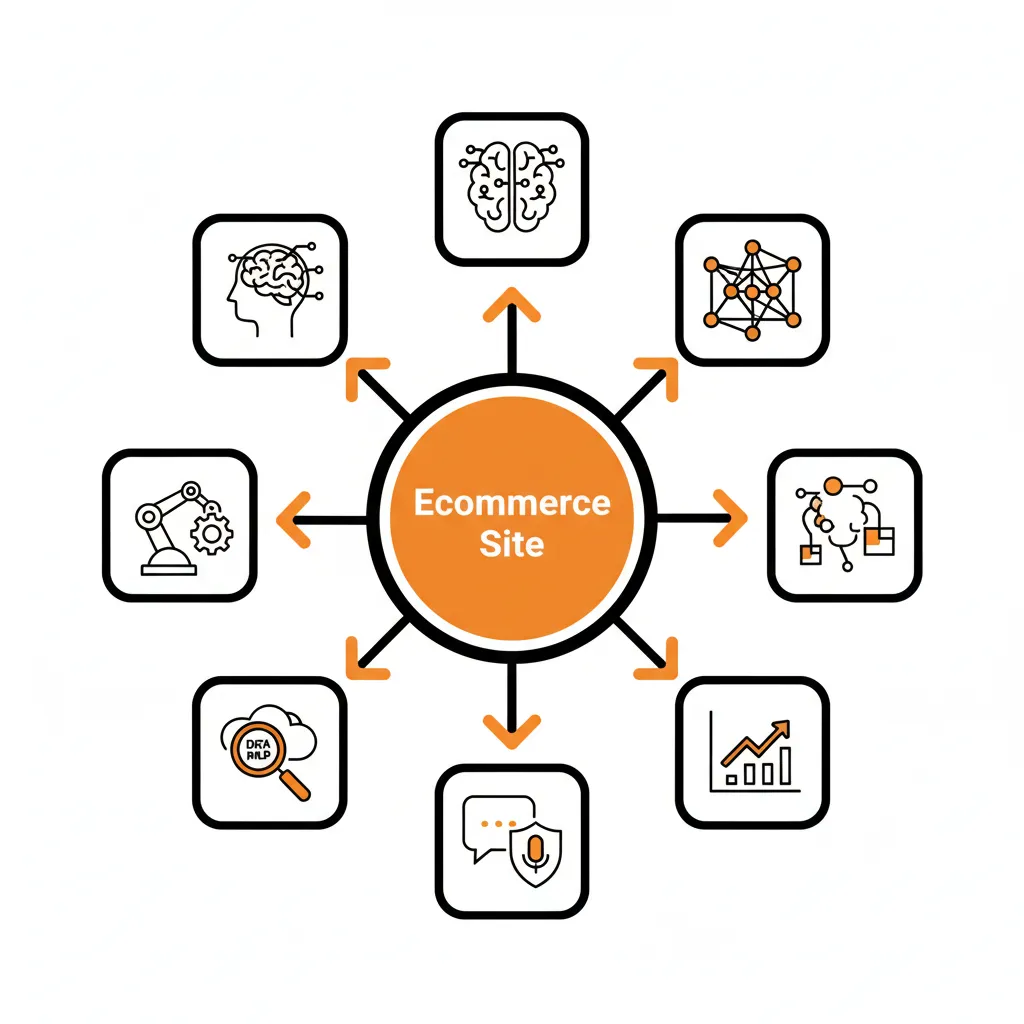
Top AEO Tools Comparison for Online Stores
| Tool Category | Recommended Tool | Primary Benefit | Price Range |
|---|---|---|---|
| Schema Management | Schema App | Automated, deep entity linking | Paid (Enterprise) |
| Visibility Tracking | Semrush | Tracks AI Overview (SGE) rankings | Paid |
| Data Cleaning | WordLift | Builds a custom Knowledge Graph | Paid |
| Content Testing | Perplexity AI | Real-time verification of AI answers | Free / Paid |
| Social Listening | Brand24 | Tracks Reddit and Forum mentions | Paid |
Why Data Cleaning Tools are Non-Negotiable
LLMs are sensitive to noise. If your product feed contains duplicate entries or conflicting prices across different URLs, the AI will likely ignore you to avoid providing inaccurate information. Tools like WordLift don't just add tags; they clean your internal vocabulary. They create a "source of truth" that search engines can ingest without friction. By 2026, the brands that win are those with the cleanest data pipelines, not just the best copy.
Common Mistakes to Avoid in Ecommerce AEO
- Thin Product Descriptions: AI needs context. If your description is just a bulleted list of sizes, the AI won't understand the "vibe" or use case of the product.
- Ignoring Technical Debt: If your site is slow or the mobile UI is broken, crawlers might fail to index your latest price changes, leading to AI "hallucinating" old prices.
- Focusing Only on Google: In 2026, many shoppers start with Perplexity or ChatGPT. If you only optimize for Google's Merchant Center, you lose the conversational market.
- Over-Optimizing for Keywords: Writing for bots instead of humans backfires. LLMs are trained to recognize natural, helpful language. Keyword stuffing makes your brand look "low authority" to an AI.
- Neglecting Image Alt-Text: AI models are multimodal. They "see" your images. Descriptive, entity-rich alt-text helps your products appear in visual AI searches.
Best Practices and Pro Tips
- Use FAQ Schema Strategically: Answer the most common "how-to" and "why" questions directly on your product pages using structured data.
- Maintain a Consistent NAP: Ensure your Name, Address, and Phone number are identical across the web to solidify your Knowledge Graph entry.
- Structure Your "About Us" Page: AI uses this to determine brand authority. Mention awards, certifications, and your founding story clearly.
- Leverage Long-Form Guides: Create "buyer guides" that answer complex comparison questions. This provides the AI with the "reasoning" it needs to recommend you.
- Monitor Your LLM "Citability": Regularly test if ChatGPT can find your shipping policy. If it can't, your site structure is likely too complex.
Impact on ChatGPT, Gemini, Copilot, and Perplexity
Each AI engine has a different "personality" and sourcing method. ChatGPT (via SearchGPT) tends to prioritize high-authority news sites and direct brand data. If your schema is perfect, you have a better chance of being the primary product link. Gemini is deeply integrated with Google Shopping. If your products are in the Google Merchant Center and your AEO for ecommerce is on point, you will dominate their "shopping" tabs.
Perplexity acts as an aggregator. It thrives on "consensus." If five different blogs and your own site all say your coffee beans are the best for espresso, Perplexity will state that as a fact. Copilot uses the Bing index, which is highly sensitive to technical SEO and traditional backlink profiles. To win across all four, your strategy must be multi-channel. You cannot rely on a single "hack." You need a clean, entity-validated presence that proves to these models that you are a legitimate, trusted, and relevant source of products.
Case Study: Boutique Apparel Brand's AEO Pivot
We worked with a mid-market apparel brand that was struggling with high PPC costs in late 2025. They had great products but were invisible in conversational search. When users asked, "What are the most durable sustainable leggings?", the AI was recommending their larger competitors solely because those competitors had better entity-linked data.
Our team at Best Answer Engine Optimization Services implemented a three-month AEO overhaul. We focused on building a robust schema markup strategy that linked their sustainable materials (recycled nylon) to verified environmental certifications. We also cleaned up their brand mentions on outdoor enthusiast forums.
"AEO isn't about gaming a system; it's about making the truth of your brand machine-readable."
Within six months, the brand saw a 45% increase in "referral" traffic from AI agents like Perplexity. More importantly, their conversion rate from these sources was 3x higher than traditional search because the user arrived already "pre-sold" by the AI's recommendation. By the start of 2026, they had reduced their reliance on paid search by 22%, shifting that budget into further content-led AEO initiatives.
Testing and QA Before Site-Wide Rollout
You should never deploy large-scale schema or content changes without testing how AI interprets them first. If you push broken JSON-LD or confusing entity links to 10,000 product pages, you risk confusing the models for weeks.
We recommend a "Sandbox AEO" approach. Select 10 diverse products—some high-performers, some laggards. Update their content and schema using your new tools. Then, use the following QA process:
- Rich Results Test: Use Google's official tool to ensure the syntax is flawless.
- LLM Prompting: Two weeks after indexing, ask ChatGPT "Tell me about [Product Name]." If it still uses old data, your crawl frequency is too low.
- Semantic Similarity Check: Use a tool to compare your new description against the top-performing AI answer for that category. The score should improve.
- Log File Analysis: Check if
GPTBotorGoogle-InspectionToolvisited the specific URLs you updated.
This staged rollout prevents catastrophic drops in visibility. It allows you to refine your "tone of voice" for AI before committing your entire catalog. If the AI starts hallucinating about the 10 test products, you can adjust your prompts and schema properties without impacting your main revenue drivers.
Where AEO Fails: The Trade-offs and Objections
AEO is not a magic bullet for every ecommerce store. There are specific scenarios where these tools and strategies will fail to deliver an ROI. For example, if you sell hyper-commoditized products with no unique brand value—like generic HDMI cables—the AI will almost always default to the cheapest price or the most established retailer (like Amazon). You cannot "AEO" your way out of a bad price point.
Another honest trade-off is the loss of user data. When a user gets their answer directly from Perplexity, they may never click through to your site. This makes attribution difficult. You might see your sales go up while your Google Analytics sessions stay flat or decline. If your business model relies heavily on display ad revenue or pixel-based retargeting, a "zero-click" AEO victory could actually hurt your bottom line.
Finally, AEO requires high-quality, truthful data. If your brand has a history of poor reviews or product recalls, AEO tools will only make that information more accessible to the AI. You cannot hide negative sentiment in a conversational search environment. If your foundations are shaky, AEO will amplify your weaknesses rather than hide them behind a high-ranking blue link.
Essential Tools and Resources
- Schema App: The gold standard for enterprise-level structured data. It helps you map complex relationships between products and your brand. (Paid)
- Google Search Console: Still essential for seeing how Google’s "Search Generative Experience" interacts with your pages. (Free)
- Hugging Face "Text Classification": For advanced users, use these open-source tools to see how an AI model labels your content (e.g., is your content "helpful" or "spammy"?). (Free)
- WordLift: An AI-powered tool that turns your WordPress or Shopify site into a Knowledge Graph, making it much easier for LLMs to ingest your data. (Paid)
- Ahrefs: Excellent for identifying the "Questions" people are asking, which you can then answer to capture AEO real estate. (Paid)
How to Measure AEO Success
Measuring AEO is different from tracking "blue link" rankings. You need to focus on Brand Share of Voice within AI responses.
- AI Citation Rate: How often does ChatGPT or Perplexity cite your URL when asked about your product category? (Target: >15% for niche terms).
- Sentiment Score: Use a sentiment analysis tool to see if AI describes your brand as "premium," "budget," or "reliable."
- Zero-Click Visibility: Monitor your presence in Google AI Overviews using Semrush.
- Referral Traffic from AI: Track "openai.com" or "perplexity.ai" in your GA4 referral reports.
AEO Checklist:
- [ ] Validated Product Schema on all SKUs.
- [ ] Active "FAQ" section for every category.
- [ ] Verified Google Business Profile and Bing Places.
- [ ] Brand mentions on at least 5 high-authority third-party sites.
- [ ] Verified "About" page with clear entity markers.
The Future of Ecommerce AEO in 2026 and Beyond
As we move deeper into 2026, we expect the rise of Personalized AI Agents. These are bots owned by the consumer that "shop" on their behalf. These agents won't even visit your website; they will query an API or a Knowledge Graph directly. If your data isn't structured for these agents, you will be filtered out before the human even sees your brand.
We also anticipate a shift toward "Proof of Authenticity." With AI-generated spam flooding the web, AEO insights suggest that AI engines will prioritize brands that can prove their physical existence and "human" origins. Structured data that links to real-world locations, patents, and verified employee profiles will become the new "backlink."
Success in ecommerce now requires a shift from "How do I rank #1?" to "How do I become the recommended answer?" The tools and strategies outlined here are your roadmap to staying relevant in an AI-first world. If you want to see how your store stacks up, we can help.
Start by getting a free AEO audit to identify your brand's visibility gaps. Ready to dominate the future of search? Explore our full range of [AEO services](/services) to secure your spot in the AI answers of tomorrow.
Frequently asked questions
How does AEO differ from traditional ecommerce SEO?+
AEO for ecommerce focuses on making your products the chosen 'answer' in AI-generated responses (like ChatGPT or Google AI Overviews). While SEO focuses on clicks and rankings in traditional search engines, AEO focuses on being the cited source that an AI agent recommends to a user during a conversational query.
What are the most essential AEO tools for an online store?+
The most important tools include advanced schema generators (like Schema App), AI visibility trackers (like Semrush's SGE tracker), and real-time AI engines (like Perplexity) used for manual verification of your brand's presence and accuracy in LLM outputs.
Why is schema markup critical for AEO in 2026?+
Schema markup provides a structured, machine-readable language that tells AI exactly what your product is, its price, and its availability. Without this, AI models might 'hallucinate' or guess your product details, leading to incorrect information being shared with potential customers.
Can I track my product's visibility in Google's AI Overviews?+
Yes, but it requires a strategic approach. You should use Google Search Console to monitor AI Overview impressions and ensure your Google Merchant Center feed is perfectly synced, as Gemini heavily relies on this structured data for shopping recommendations.
How do I improve my brand's authority in AI-driven answers?+
Focus on your 'About Us' page and third-party reviews. AI engines look for 'Expertise, Authoritativeness, and Trustworthiness' (E-E-A-T). By using AEO tools to monitor and improve your brand mentions across the web, you signal to the AI that you are a trusted entity worth recommending.
What are the biggest mistakes to avoid with ecommerce AEO?+
Common mistakes include having 'thin' content that lacks context, ignoring technical site speed, and failing to use specific product schema (like GTINs). Many brands also forget to optimize for 'off-site' signals like Reddit or niche forums, which AI models use for sentiment analysis.
Sources & further reading
Soft next step
Want to see where AI answers mention you — and where they don't?
We run a free AEO audit across ChatGPT, Gemini, Copilot and Perplexity, then hand you the fixes in priority order. Start your AEO strategy today.
Keep reading
Industry Playbooks
AEO for Ecommerce: How to Win AI-Driven Shopping in 2026Tools & Measurement
AEO Tools: The 2026 Guide to AI Search VisibilityTools & Measurement
10 Best Schema Markup Tools for AEO Success in 2026