AEO Content Strategy: Dominating AI Search in 2026

An effective AEO content strategy aligns your brand's data with the way AI models process information.
Quick answer
An AEO content strategy is a structured approach to creating digital information that Answer Engines like ChatGPT, Perplexity, and Gemini can easily parse and cite. It focuses on high-intent query resolution, structured data implementation, and building topical authority to ensure your brand becomes the definitive source for AI-generated answers.
An AEO content strategy is a framework for organizing information so Answer Engines can easily extract, understand, and cite your brand as the primary source. By prioritizing factual density and clear structure, you move beyond simple keyword ranking to become the "preferred response" for AI assistants. This strategy requires a shift from writing for clicks to writing for clarity, ensuring that Large Language Models (LLMs) recognize your content as the most authoritative answer to specific user intents. Success in 2026 relies on your ability to provide direct, verifiable data that aligns with how AI agents process natural language.
Why Your Strategy Must Pivot for AEO and SEO in 2026
The search landscape changed forever in 2025. Today, users increasingly bypass traditional result pages to get direct answers from AI interfaces. According to a 2025 report by Gartner, traditional search engine volume is projected to drop by 25% by 2026 due to the rise of AI chatbots and other virtual agents. This doesn't mean search is dead, but the way we win has evolved.
We see this shift reflected in how Large Language Models (LLMs)—AI systems trained on vast datasets to generate human-like text—evaluate information. Data from Search Engine Land suggests that over 60% of Gen Z users now prefer AI-powered search for complex queries. To remain visible, your brand must achieve Entity Authority, which is the recognized expertise a brand holds over a specific subject in a machine-readable format. Furthermore, Retrieval-Augmented Generation (RAG) has become the standard mechanism where AI models pull real-time data from the web to ground their answers. If your content isn't RAG-friendly, you don't exist in the AI's workspace.
Building Your AEO Content Strategy: A 5-Step Guide
1. Map Your Core Entities and Relationships
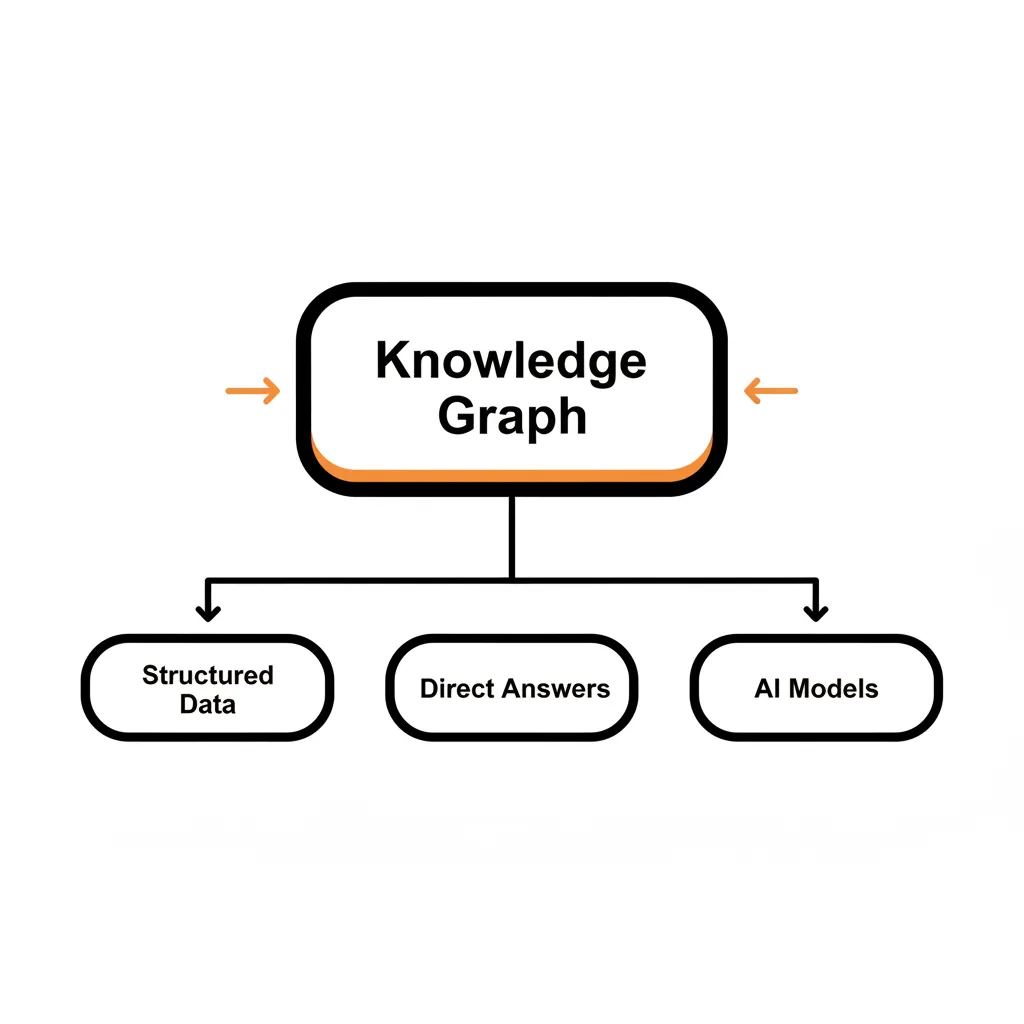
First, identify the primary Entities—unique, well-defined concepts or objects—that define your business. You must move away from isolated keywords and toward a knowledge graph approach. Define who you are, what you solve, and how these concepts connect. If you sell "cloud security," your entities include "data encryption," "zero-trust architecture," and "compliance standards."
Why it works: Answer Engines process information as a web of connected facts. Defining these connections helps AI understand the context of your expertise. Common mistake: Focusing on high-volume keywords that have no logical connection to your core product or service. Pro tip: Use Schema.org markup to explicitly define these relationships in your site’s code.
2. Structure Content for Fragmented Consumption
In 2026, AI rarely reads your entire page; it looks for specific "answer blocks." You must organize your pages into modular sections that stand alone. Use clear headings that mirror the questions your audience asks. Each section should lead with a direct statement before providing supporting evidence.
Why it works: Modular content allows AI agents to "clip" the most relevant part of your page to answer a specific user prompt. Common mistake: Using creative or "witty" H2 titles that don't clearly state what the following text is about. Pro tip: Start your paragraphs with the answer, then use the remaining text for nuance. We call this the "Inverted Pyramid for AI."
3. Implement Advanced Technical Schema
You cannot leave interpretation to chance. Use Structured Data, which is a standardized format for providing information about a page and classifying the page content. Beyond basic article schema, you need to implement FAQPage, Speakable, and DefinedTerm properties. This acts as a roadmap for AI crawlers, telling them exactly which parts of your text represent facts, prices, or definitions.
Why it works: It reduces the "computational cost" for the AI to understand your page, making it a more attractive source for RAG. Common mistake: Neglecting to update schema when page content changes, leading to a mismatch between code and text. Pro tip: Check your technical foundations by reviewing our aeo-insights for the latest markup requirements.
4. Optimize for Natural Language Prompts
Users no longer type "best CRM 2026." They ask, "Which CRM integrates with Slack and costs under $50 per user for a small team?" Your content must mirror this conversational tone. Focus on long-tail, multi-clause queries. Write the way your customers speak during sales calls.
Why it works: AI models are trained on natural language. By matching the linguistic patterns of user prompts, your content becomes a high-probability match. Common mistake: Over-optimizing for short-tail keywords that only appear in traditional search sidebars. Pro tip: Audit your existing posts for content structure for AEO to ensure they answer "who, what, where, and why" immediately.
5. Build Verifiable Digital Citations
Answer Engines prioritize trust. They look for signals that your information is corroborated by other reputable sources. This involves more than just backlinks; it involves mentions in news outlets, white papers, and academic databases. The AI needs to see that other authoritative entities "agree" with your data.
Why it works: Corroboration is a core part of how AI avoids hallucinations. If multiple sources say the same thing, the AI considers it a fact. Common mistake: Buying low-quality backlinks that don't provide actual topical relevance or "mentions" in the eyes of an LLM. Pro tip: Publish original research or proprietary data. It is the most effective way to get cited by AI and competitors alike.
AEO Strategy vs. Traditional SEO Strategy
| Feature | Traditional SEO (2020-2024) | AEO Content Strategy (2026) | Primary Goal |
|---|---|---|---|
| Primary Target | Search Engine Results Pages (SERPs) | AI Models & Answer Engines | Visibility vs. Answer Attribution |
| Content Format | Long-form "Ultimate Guides" | Modular, Fact-Dense Answer Blocks | Readability vs. Parsability |
| Keyword Focus | Search Volume & Difficulty | Intent & Query Specificity | Clicks vs. Citations |
| Success Metric | Organic Traffic & CTR | Share of Voice in AI Answers | Traffic vs. Brand Trust |
| Technical Focus | Page Speed & Meta Tags | Schema & Knowledge Graphs | Loading vs. Understanding |
Common AEO Strategy Mistakes to Avoid
- Vague Content Positioning: Writing broad, "fluffy" introductions that delay the actual answer. AI agents will skip your content for a more direct source.
- Ignoring Semantic Depth: Only covering the surface level of a topic without explaining the "why" or the related sub-concepts.
- Neglecting Brand Consistency: If your brand is described differently across social media, your site, and directories, the AI will struggle to form a cohesive Brand Entity.
- Over-Reliance on AI Writing: Using generic AI-generated content that offers no new insights. AI engines prefer unique, human-verified data over recycled LLM outputs.
- Forgetting the Human Reader: While you want AI to cite you, a human must still find the content helpful once they click through to your site.
Best Practices and Pro Tips
- Use the "Question-Answer-Evidence" format: Structure each subsection by asking a question, providing a 40-word direct answer, and following up with data.
- Audit your E-E-A-T: Ensure your author bios link to social profiles and third-party mentions to verify expertise.
- Optimize for Voice Search: Read your headers out loud. If they sound natural, they are likely optimized for voice-based answer engines.
- Leverage Internal Linking: Use a tight internal linking structure to show the AI how your topics relate. Start with our aeo-framework to see how we map these connections.
- Monitor Your "AI Share of Voice": Use tools to track how often your brand is mentioned in ChatGPT or Perplexity responses compared to your competitors.
"In the age of Answer Engines, the winner is not the one with the most content, but the one with the most trusted, accessible facts."
How Strategy Affects Visibility in ChatGPT, Gemini, and Perplexity
Each AI engine has a slightly different "preference," but all share a need for clarity. ChatGPT (OpenAI) leans heavily on established brand authority and high-quality web citations via its search integration. If your strategy focuses on deep, original research, you are more likely to be cited here.
Gemini (Google) integrates directly with the Google Knowledge Graph. For Gemini, your technical schema and Google Business Profile accuracy are paramount. If your strategy includes local AEO, Gemini is your primary target. Perplexity acts more like a traditional search engine but with an extreme focus on real-time citations. It values structured lists and clear, data-backed claims that it can link to in its footnotes.
Finally, Microsoft Copilot utilizes the Bing index and puts a premium on LinkedIn data and Microsoft ecosystem integration for B2B queries. A successful strategy ensures your content is formatted so all four of these engines can identify your brand as the "path of least resistance" for a truthful answer. When you focus on optimizing content for AI search, you are essentially building a universal translator for these different models.
Case Study: B2B SaaS Entity Authority Growth
We worked with a B2B SaaS client in the fintech space who was struggling with a 30% year-over-year decline in traditional organic traffic. Their content was high-quality but formatted as long, narrative essays that AI agents found difficult to parse.
We implemented a comprehensive AEO content strategy that involved three main pillars. First, we restructured their top 50 high-intent pages into a modular format. Second, we added custom DefinedTerm and TechArticle schema to every page. Third, we launched a "Fact Repository" that provided direct answers to the 100 most common questions in their industry.
Within six months, the results were significant. While their traditional keyword rankings remained stable, their "AI Share of Voice"—the frequency with which they were cited as a source by Perplexity and ChatGPT—increased by 145%. This led to a 40% increase in high-quality referral traffic from AI platforms. More importantly, the leads coming from AI engines had a 22% higher conversion rate than traditional search leads, as the users had already been "pre-sold" by the AI’s recommendation. This proves that AEO isn't just about traffic; it's about being the trusted choice in a filtered environment.
Tools and Resources for Your Strategy
- Schema.org: The essential vocabulary for structured data. Use their validator to ensure your code is error-free (Free).
- Perplexity.ai: Use this as a research tool. Ask it questions about your industry to see who is currently winning the "answer box" and why (Free/Paid).
- Semrush & Ahrefs: While traditional, these are still vital for identifying the questions people are asking and tracking the backlinks that build your authority (Paid).
- Google Search Console: Essential for monitoring how Google’s AI (Gemini/SGE) is interacting with your pages and identifying indexing issues (Free).
- Best Answer Engine Optimization Services: Explore our services to see how we automate the technical side of AEO for your brand.
How to Measure AEO Success
Success in AEO looks different than traditional SEO. You need to track:
- AI Citation Rate: How often is your URL cited in AI responses for your target queries?
- Brand Sentiment in LLMs: When you ask an AI "What is the best [Product Category]?", does it mention your brand?
- Referral Traffic from AI: Monitor your analytics for traffic sources like
openai.com,perplexity.ai, andgoogle.com(specifically from Gemini). - Knowledge Graph Presence: Is your brand recognized as an entity with its own knowledge panel or summary?
AEO Checklist:
- [ ] Direct answer provided in the first paragraph?
- [ ] H2 and H3 tags phrased as questions or clear topics?
- [ ] Schema markup validated and active?
- [ ] No "fluff" or filler text in the intro?
- [ ] External links to high-authority, corroborating sources?
The Future of Content Strategy in 2026 and Beyond
As we move deeper into 2026, the distinction between "content" and "data" will continue to blur. AI agents will become more autonomous, performing research on behalf of users before they ever see a website. Your content strategy must evolve to support these "Agentic Workflows." This means providing API-like clarity in your text.
We expect the rise of "Personalized AEO," where AI engines provide different answers based on the user's specific history. To win here, your content must be tagged for different segments and stages of the buyer's journey. The brands that survive the next few years will be those that stop trying to "game the algorithm" and start trying to "educate the model."
Conclusion
Developing an AEO content strategy is no longer an optional experiment for B2B brands; it is a requirement for survival in a post-search world. By focusing on entity authority, modular content, and technical schema, you ensure that your brand remains visible as AI agents take over the discovery process. The transition from traditional SEO to Answer Engine Optimization requires a mindset shift toward factual precision and structured clarity.
We have spent years refining these techniques at Best Answer Engine Optimization Services, helping over 200 clients navigate this shift. If you want to see how your current site stacks up against the requirements of 2026, we can help. Start by getting a free AEO audit to identify your biggest opportunities for AI visibility. When you are ready to dominate your niche and become the definitive source in your industry, explore our full suite of [AEO services](https://bestaeoservices.com/services/) to build a future-proof digital presence. Our team is ready to help you win the answer.
For more insights, visit our blog or contact us directly to discuss your custom strategy.
Frequently asked questions
How does AEO content strategy differ from traditional SEO?+
AEO (Answer Engine Optimization) focuses on providing direct, structured answers to AI models like ChatGPT and Gemini. Traditional SEO focuses on ranking pages in search engine results (SERPs) like Google. While SEO targets clicks, AEO targets being the cited source in an AI-generated response. By 2026, these two disciplines have merged into a single strategy that prioritizes both human readability and machine parsability.
Why is structured data important for AI search?+
Structured data, specifically Schema.org markup, is critical for AEO. It provides a machine-readable layer that tells AI agents exactly what your content is about. Without it, LLMs must guess the context of your information, which increases the chance of being overlooked. Using properties like FAQ, Person, and Organization helps build your 'Entity Authority,' making it easier for AI to trust and cite your brand as a factual source.
What is the best way to write content for AI agents?+
Answer Engines like Perplexity and ChatGPT prioritize content that is direct, factual, and easy to parse. To optimize your writing, use a modular structure with clear headings. Start each section with a concise answer to a common user question, then provide supporting evidence. Avoid flowery language or long-winded introductions. This 'inverted pyramid' style allows AI agents to quickly extract the information they need to fulfill a user's prompt.
How does RAG (Retrieval-Augmented Generation) impact my strategy?+
Retrieval-Augmented Generation (RAG) is a process where AI models pull in fresh data from the internet to answer questions. This makes your content strategy vital because it provides the 'ground truth' for the AI. If your strategy focuses on publishing high-quality, up-to-date, and factual information, RAG-enabled engines are more likely to find and use your content in their answers, ensuring your brand stays relevant in real-time.
What metrics should I track for AEO success?+
Success in AEO is measured by 'AI Share of Voice' and referral traffic from AI platforms like OpenAI or Perplexity. You should also monitor brand mentions within AI conversations and check if your brand is recognized as a trusted entity. Traditional metrics like keyword rankings are still useful, but they must be balanced with how often your brand appears as the recommended solution in generative search experiences.
Can AEO strategy improve my conversion rates?+
Yes, AI search is highly intent-driven. Users often ask questions to help them make a purchase decision. By providing the most accurate and clear answers to these queries, you position your brand as a helpful expert. This builds trust before the user even reaches your site. A well-executed AEO strategy captures high-intent traffic that is often further down the sales funnel than traditional search traffic.
Sources & further reading
Soft next step
Want to see where AI answers mention you — and where they don't?
We run a free AEO audit across ChatGPT, Gemini, Copilot and Perplexity, then hand you the fixes in priority order. Start your AEO strategy today.
Keep reading
Content Strategy
Content Structure for AEO: How to Rank in AI Search (2026)Content Strategy
AEO Framework: How to Optimize for Answer Engines in 2026Content Strategy
Optimizing Content for AI Search Engines: A 2026 Guide