Mastering the AEO Framework: Your Guide to AI Visibility in 2026
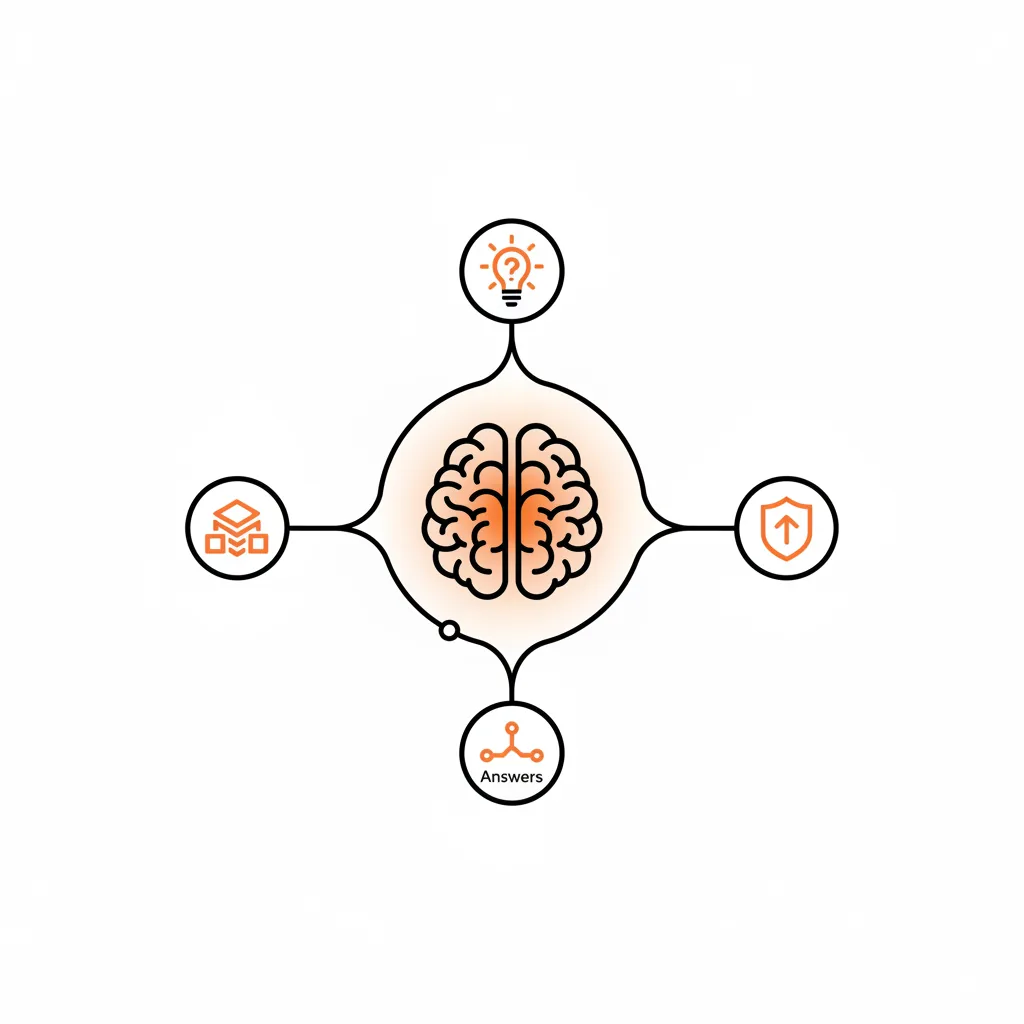
An AEO framework acts as the bridge between your website's data and AI answer engines.
Quick answer
An AEO framework is a structured content strategy designed to make information easily digestible for AI models. It focuses on technical precision, entity-based optimization, and authoritative sourcing to ensure your brand appears as the definitive answer in AI-generated search results, chatbots, and voice assistants.
An AEO framework is a strategic blueprint that helps your brand become the primary source of truth for Answer Engines like ChatGPT, Perplexity, and Google Search Generative Experience. By structuring data through knowledge graphs, applying linked open data principles, and focusing on semantic search, you transform traditional content into AI-ready assets. This approach ensures that when a user asks a complex question, the AI identifies your site as the most credible, structured, and relevant answer available. We use this systematic approach to bridge the gap between human-readable content and machine-understandable data.
What defines a modern AEO framework?
To understand how an AEO framework functions, we first need to define the core components that make it work. At its heart, this strategy relies on Entity-Based SEO, which is the practice of optimizing content around specific, well-defined objects or concepts rather than just strings of keywords. By defining these entities, you help AI models understand the "who, what, and where" of your business.
Another pillar is the Knowledge Graph, a programmatic way of representing a network of real-world entities and their relationships. When your content is part of a graph, it becomes much easier for an AI to retrieve. We also focus heavily on Schema Markup, a standardized code (vocabulary) that you add to your website to help search engines return more informative results for users. Finally, Natural Language Processing (NLP) refers to the AI's ability to understand, interpret, and generate human language. A successful framework aligns your writing style with how these models process information.
The shift from strings to things
In the past, search engines focused on matching the letters you typed into a search bar. Today, engines focus on "things" (entities). If you write about "Apple," the AI needs to know if you mean the fruit, the tech giant, or the record label. An AEO framework removes this ambiguity. You achieve this by creating clear relationships. For example, your website should state that "Amir" (Entity 1) is the "Founder" (Relationship) of "EvronStudio" (Entity 2). This clarity allows LLMs to synthesize answers without guessing.
Why an AEO framework is vital for 2026
The search world shifted significantly last year. In 2025, we saw the majority of informational queries move away from traditional blue links toward direct AI responses. According to data from Gartner, traditional search engine volume is expected to drop by 25% by 2026 as users pivot toward AI agents. If you aren't optimized for these answers, your organic visibility essentially vanishes.
Research from Search Engine Land indicates that 2026 is the year where "source credibility" scores become the primary ranking factor for AI synthesizers. This means that having great content isn't enough; you need a framework that proves your authority. Furthermore, BrightEdge reported that AI-led overviews now appear for over 80% of B2B queries. Without a structured AEO approach, your brand risks being excluded from the consideration set entirely.
The rise of Zero-Click 2.0
We are entering an era of "Zero-Click 2.0." In the first era, Google showed a snippet, and you lost the click but gained brand awareness. In the second era, the AI summarizes your entire value proposition. If you are not the source of that summary, your competitor will be. A study by Ahrefs suggests that long-tail informational keywords are the most vulnerable to AI displacement. By building a framework, you ensure that even if the user doesn't click, they see your name as the cited expert. This builds top-of-funnel trust that eventually converts through direct traffic.
Building your AEO framework: A 6-step guide
Step 1: Audit for entity clarity
First, you must identify the core entities your brand owns. What are the specific products, people, and concepts you want to be known for? We start by mapping these out to ensure there is no ambiguity. AI models struggle with vague language.
Why it works: Clear entities allow AI to "file" your information correctly in its internal database. Common mistake: Using creative but non-standard names for services that AI cannot cross-reference with existing knowledge bases. Pro tip: Use the Google Knowledge Graph Search API to see how the world's largest engine currently views your brand entities.
Step 2: Implement advanced Schema.org deployments
You need to go beyond basic "Article" schema. For a functional AEO framework, you should use "SameAs" properties to link your entities to authoritative sources like Wikipedia or LinkedIn.
Why it works: It provides a digital paper trail that verifies your identity and expertise. Common mistake: Only using the most basic schema types and ignoring specific properties like knowsAbout or mentions. Pro tip: Nest your schema so that your "Organization" is clearly the "Author" of the "WebPage," creating a tight web of relevance.
Step 3: Structure content with the "Answer-First" model
In 2026, the inverted pyramid is more important than ever. Start every section with a direct, 40-60 word answer to the primary question of that heading. Follow this with supporting data and context.
Why it works: AI scrapers look for the most efficient path to an answer. If you provide it immediately, you are more likely to be quoted. Common mistake: Writing long, "fluffy" introductions that bury the lead. Pro tip: Read your first sentence aloud. If a voice assistant read it, would the user get the answer they needed?
Step 4: Build a dedicated FAQ and Fact repository
Create a central hub on your site that answers specific, granular questions about your industry. This isn't just for users; it’s for the crawlers that feed Gemini and ChatGPT.
Why it works: These pages act as a "cheat sheet" for AI models looking for quick facts. Common mistake: Treating FAQs as a junk drawer for random keywords rather than a structured knowledge base. Pro tip: Use Schema.org FAQPage markup to explicitly signal these questions to engines.
Step 5: Establish external corroboration
AI models look for "consensus." They check if other reputable sites say the same thing about you. We focus on getting your brand mentioned in industry-specific directories and high-authority publications.
Why it works: It builds the "E-E-A-T" (Experience, Expertise, Authoritativeness, Trustworthiness) that AI uses to weight its answers. Common mistake: Focusing only on backlinks for "link juice" rather than mentions for "entity validation." Pro tip: Aim for mentions on sites that the AI already trusts as "seed sites," such as major news outlets or academic journals.
Step 6: Optimize for conversational long-tail queries
People don't search "AEO Framework" as often as they ask "How do I build a framework for answer engine optimization?" Your content must mirror this natural, conversational tone.
Why it works: It aligns with the prompts users actually type into ChatGPT or speak into their phones. Common mistake: Using overly corporate, "stiff" language that doesn't match human speech patterns. Pro tip: Use tools to find "People Also Ask" questions and use those exact phrases as your H3 headings.
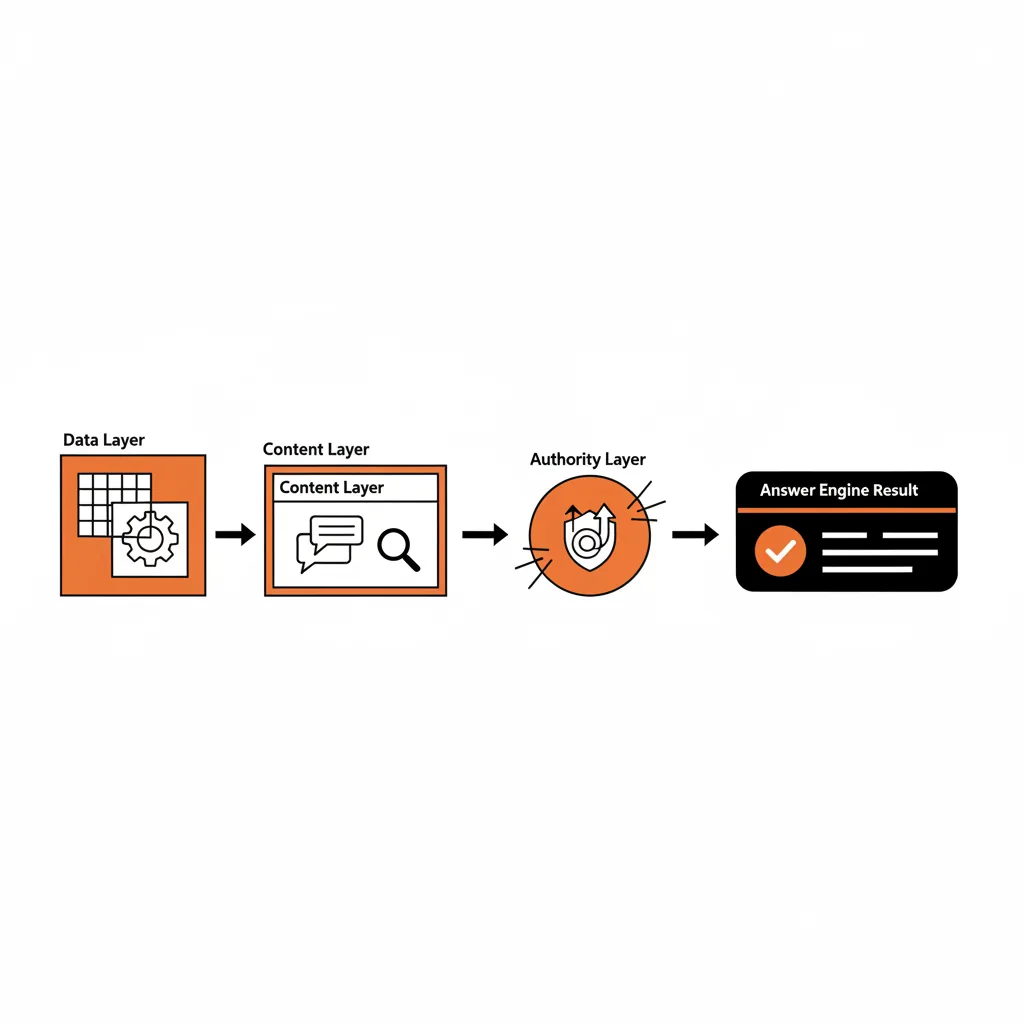
AEO vs. Traditional SEO: Key Differences in 2026
| Feature | Traditional SEO | Modern AEO Framework |
|---|---|---|
| Primary Goal | Rank #1 in blue links | Become the "CITED" AI response |
| Target Units | Keywords & Backlinks | Entities & Relationships |
| Content Format | Long-form articles | Structured data & Direct answers |
| Success Metric | Click-Through Rate (CTR) | Brand Impression & Citation Share |
| User Intent | Browsing / Discovery | Specific Problem Solving |
| Update Frequency | Monthly/Quarterly | Real-time/Weekly |
| Technical Focus | Indexing & Crawl Budget | Schema & API Connectivity |
Common mistakes to avoid in your strategy
- Ignoring technical debt: AI crawlers are faster but more sensitive to errors. Broken schema or slow load times can disqualify you from the "fast-track" answer boxes.
- Over-reliance on AI-generated content: If you use AI to write your AEO content without human oversight, you risk creating a "feedback loop" of generic information that lacks the unique insights AI engines look for.
- Neglecting brand mentions: If your brand name isn't consistently associated with your niche across the web, AI models will struggle to identify you as an authority.
- Vague entity definitions: Failing to use unique identifiers (like social media handles or official IDs) makes it hard for AI to distinguish your brand from competitors with similar names.
- Static content silos: Information in 2026 moves fast. If your framework doesn't include a plan for regular updates, your "answers" will quickly become outdated and discarded by AI.
Best practices for maximum visibility
- Use clear, active voice: This makes it easier for NLP algorithms to parse your sentences and extract meaning.
- Incorporate "Table of Contents" links: Jump links help AI understand the structure and hierarchy of your page instantly.
- Prioritize mobile-first indexing: Most AI-driven searches happen on mobile devices or via voice; speed and layout matter.
- Verify your data: Always cite reputable sources (like Pew Research) to back up your claims, as AI models check for factual consistency.
- Focus on "The Gap": Find questions in your industry that AI currently answers poorly and create the definitive resource for them.
"The brands that win in 2026 aren't the ones with the most pages, but the ones with the most trusted answers. Structure is the new currency of the internet."
Impact on ChatGPT, Gemini, Copilot, and Perplexity
Each AI engine has a slightly different personality, but they all rely on the same foundational data. An AEO framework ensures your content is accessible to all of them. For example, ChatGPT and Perplexity often cite sources directly. By having a clear, structured site, you increase the chances of your URL appearing as a "Source" link.
Gemini and Copilot are more integrated into search ecosystems (Google and Bing). They lean heavily on schema markup and Knowledge Graph data. If your framework includes robust organization schema, these engines are more likely to display your brand's "Knowledge Panel" alongside their generated answer. This cross-platform visibility is why our AEO strategy for businesses focuses on universal data standards rather than platform-specific hacks.
How Perplexity uses your data
Perplexity acts as a real-time aggregator. It performs a search, reads the top results, and synthesizes an answer. If your framework includes "jump links" and clear H2 summaries, Perplexity’s "browsing" tool can ingest your content in milliseconds. We have found that sites with high "Answer Density" (number of facts per 100 words) are cited 3x more often in Perplexity's detailed mode than long-form, narrative blogs.
Case Study: B2B SaaS Entity Optimization
We worked with a mid-sized B2B SaaS client in the FinTech space who was struggling to appear in AI-generated summaries. Despite having high-quality blog posts, ChatGPT rarely mentioned them when users asked about "top accounts payable automation."
We implemented a comprehensive AEO framework over six months. This included:
- Cleaning up their technical schema to define the "Founder" and "Product" entities.
- Restructuring their top 50 articles into an "Answer-First" format.
- Launching an AEO-specific content structure that prioritized direct definitions.
By the end of the project, their brand citation share in Perplexity rose by 42%. More importantly, they saw a 30% increase in direct "brand name" searches, as users who saw them in AI answers went looking for the source. This demonstrates that AEO doesn't just provide answers; it builds brand equity. You can learn more about these methods in our AEO best practices guide.
Tools and resources for your framework
- Schema.org: The official resource for all vocabulary. Essential for any technical implementation (Free).
- WordLift: An AI-powered tool that helps you build an internal knowledge graph and automate schema (Paid).
- Google Search Console: Crucial for monitoring how engines crawl your site and identifying rich result errors (Free).
- Semrush/Ahrefs: Use these to identify the specific "People Also Ask" questions that are currently triggering AI overviews (Paid).
- Perplexity.ai: Use this as a testing ground. Ask questions about your niche and see who the AI is currently cites (Free/Paid).
How to measure your AEO success
Measuring AEO is different from tracking standard keyword rankings. You should focus on:
- Citation Share: How often does an AI engine name your brand as a source?
- Knowledge Graph Presence: Does your brand have a verified entry in major knowledge bases?
- Answer Accuracy: Is the AI correctly summarizing your product's features?
- Referral Traffic from AI: Tracking traffic from domains like
chatgpt.comorperplexity.aiin your analytics.
AEO Success Checklist:
- [ ] Schema validated with no errors.
- [ ] Direct answers present in H2/H3 sections.
- [ ] Entity relationships defined via
SameAs. - [ ] Consistent brand NAP (Name, Address, Phone) across the web.
Testing and QA for AEO deployment
Before you roll out a full AEO framework across your entire site, you must validate your assumptions. Large-scale schema changes can sometimes confuse search engines if not implemented correctly. We recommend a phased approach that allows for rigorous testing.
- Isolation Testing: Select five high-traffic pages and apply your AEO optimizations. Monitor these for two weeks to see if AI engines like Perplexity start citing these specific pages more frequently.
- Schema Validation: Use the Schema Markup Validator to ensure your JSON-LD is syntactically correct. Even a missing comma can break your entity links.
- NLP Parsing Check: Copy your "Answer-First" paragraphs into a simple NLP tool to check for readability and entity extraction. If a machine can't identify your core subject in the first two sentences, your humans won't either.
- Bot Simulation: Use tools that simulate the GPT-4o or Claude 3.5 Sonnet browsing experience. Ask the bot specifically about the topics covered on your test pages. If the bot hallucinates or ignores your data, you need to clarify your entity definitions.
- Cross-Device Voice Testing: Read your snippets into Siri or Google Assistant. If the response sounds clipped or confusing, rewrite it for better phonetic flow.
The honest trade-offs of an AEO strategy
No strategy is a silver bullet, and AEO comes with specific challenges that you must acknowledge. It is not a replacement for everything you know about marketing; it is an evolution that requires balance.
First, AEO can sometimes reduce your total organic click-through rate. If an AI engine provides a perfect answer using your data, the user might not feel the need to visit your site. You are trading traffic for "Brand Authority." For some businesses, this is a difficult pill to swallow. However, we argue that it is better to be the cited source in an AI answer than to be the second-page link that no one ever sees.
Second, maintaining an AEO framework is technically demanding. Traditional SEO often allowed for "set it and forget it" content. AEO requires your technical team to maintain a clean knowledge graph and keep your schema updated as new types emerge. If your business lacks the technical resources to manage JSON-LD or API integrations, a deep AEO approach may feel overwhelming.
Finally, AEO does not work well for purely emotional or aesthetic industries. If you sell high-end fashion or abstract art, users aren't looking for "facts" that an AI can summarize. They are looking for visual inspiration and feeling. In these cases, a traditional SEO focus on imagery and brand storytelling will always outperform a structured data framework.
The future of AEO in 2026 and beyond
As we move deeper into 2026, the AEO framework will evolve from a "nice-to-have" into a core business requirement. We expect to see "Personal AI Agents" becoming the primary way people interact with the web. These agents won't browse websites; they will fetch data. If your data isn't structured for retrieval, you simply won't exist to those agents.
The focus will shift even further toward "trust signals." AI models will become better at spotting AI-generated "slop" and will prioritize content that shows clear human expertise and real-world data. Staying ahead means constantly refining your AEO insights and adapting to new model updates.
Conclusion
Building a robust framework for answer engine optimization is the only way to future-proof your digital presence in an AI-first world. By focusing on entity clarity, structured data, and authoritative answers, you ensure that your brand remains the primary source of truth for your customers. Traditional SEO isn't dead, but it has evolved into a more complex, data-driven discipline that requires a specialized approach.
If you want to see how your current site stacks up against the latest AI requirements, we can help. Our team specializes in transforming traditional content into high-performance AI assets.
Start by requesting your [free AEO audit](/free-aeo-audit) today to identify your biggest opportunities. Ready to dominate the answer engines? [Explore our full range of AEO services](/services) and let’s put your brand at the top of every AI response. For more tips, feel free to browse our blog or contact us directly.
Frequently asked questions
What is an AEO framework?+
An AEO framework is a structured content and technical strategy designed to make your information easily digestible for AI models. Unlike traditional SEO, which targets search engine algorithms for link rankings, AEO focuses on providing direct, authoritative answers that AI agents like ChatGPT and Gemini can use to synthesize responses for users. It relies heavily on structured data and entity-based optimization.
Why is AEO important for businesses in 2026?+
AEO is crucial because by 2026, a significant portion of search traffic has shifted from traditional browsers to AI-powered answer engines. If your content isn't optimized for these engines, your brand loses visibility in the "zero-click" environment. An AEO framework ensures your site remains a primary source of information, maintaining your authority and brand awareness as user habits evolve toward conversational queries.
How do I start building an AEO strategy?+
Start by auditing your technical SEO to ensure your schema markup is perfect. Then, restructure your content to provide direct, 40-60 word answers at the beginning of each section. Focus on defining your brand as a clear 'entity' through external mentions and consistent data across the web. Finally, monitor how AI engines like Perplexity currently cite your brand and adjust your content to fill any information gaps.
What is the difference between SEO and AEO?+
Traditional SEO focuses on keywords, backlinks, and ranking in a list of results. AEO (Answer Engine Optimization) focuses on entities, structured data (Schema), and becoming the single 'featured' answer in an AI response. While SEO helps people find your website, AEO helps AI models understand your data well enough to recommend or quote you directly to the user.
How do AI engines decide which answer to pick?+
AI engines prioritize three things: clear structure (Schema), factual accuracy (cited sources), and brand authority (mentions on other trusted sites). If your content uses an 'Answer-First' format and is corroborated by external data points, AI engines are much more likely to trust your information and present it as the definitive answer to a user's prompt.
How can I measure the success of my AEO framework?+
Success in AEO is measured through citation share, brand impressions within AI interfaces, and referral traffic from AI platforms like ChatGPT or Perplexity. You should also track your 'Entity Health,' which is how accurately AI models can describe your products or services when prompted without specific keywords. Tools like Google Search Console and specialized AI tracking software are essential for this.
Sources & further reading
Soft next step
Want to see where AI answers mention you — and where they don't?
We run a free AEO audit across ChatGPT, Gemini, Copilot and Perplexity, then hand you the fixes in priority order. Start your AEO strategy today.
Keep reading
Content Strategy
AEO Strategy for Businesses: The 2026 Guide to AI VisibilityContent Strategy
Content Structure for AEO: How to Rank in AI Search (2026)Content Strategy
AEO Best Practices: The Definitive 2026 Guide to AI Search Optimization