The Stack: Tools for Automating AEO Strategy Adjustments at Scale
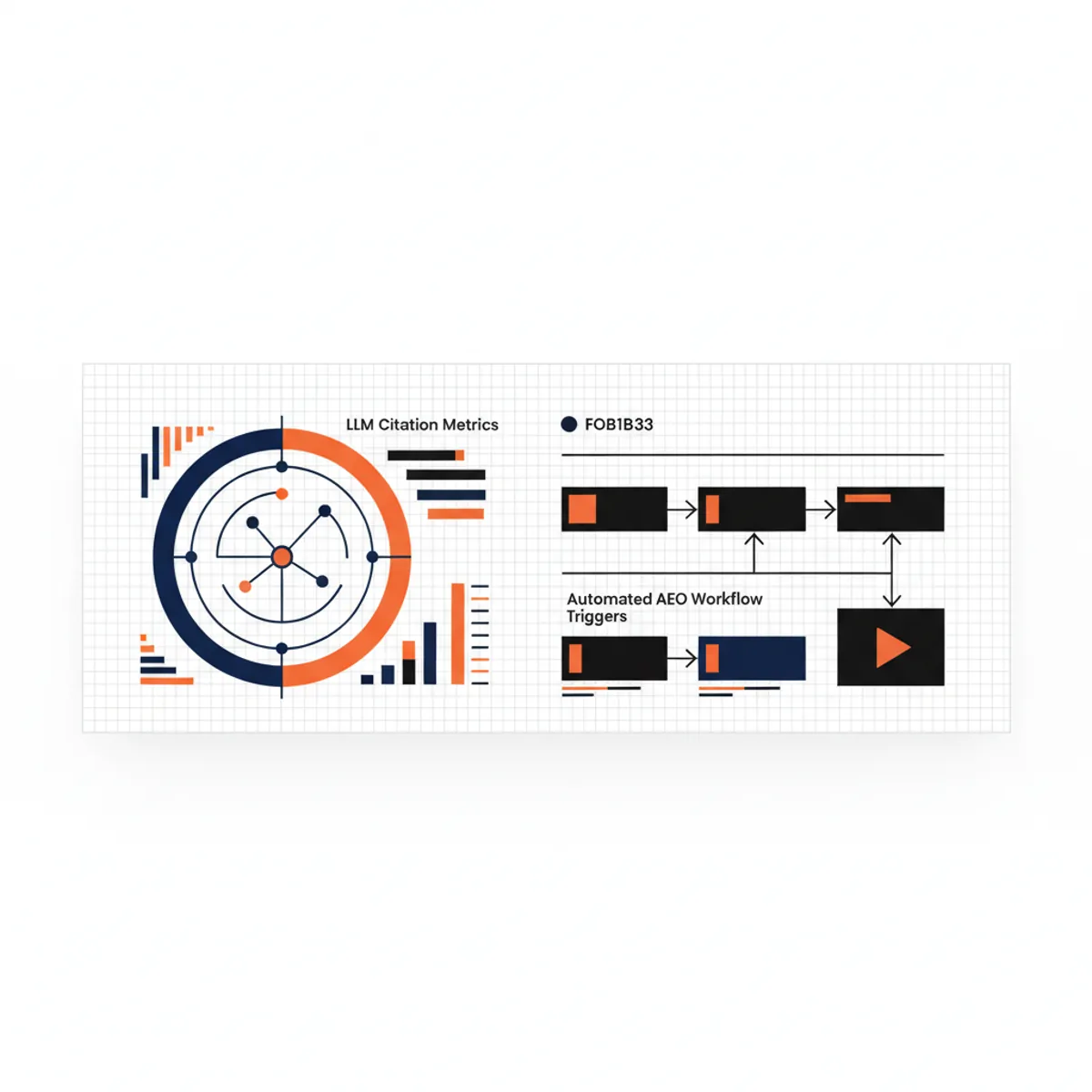
Modern AEO requires a shift from manual content updates to automated, data-driven strategy adjustments.
Quick answer
Automating AEO strategy adjustments requires an integrated stack of LLM monitoring platforms, schema generators, and real-time citation trackers. Key tools include Perplexity Pages for content validation, LangSmith for prompt evaluation, and custom RAG-testing scripts that monitor how Large Language Models retrieve and synthesize your brand’s specific entity data across the fragmented AI search ecosystem.
Automating AEO strategy adjustments requires an integrated stack of LLM monitoring platforms, schema generators, and real-time citation trackers. Key tools include Perplexity Pages for content validation, LangSmith for prompt evaluation, and custom RAG-testing scripts that monitor how Large Language Models retrieve and synthesize your brand’s specific entity data across the fragmented AI search ecosystem.
The Shift from Manual SEO to Automated AEO
Traditional search engine optimization was a game of patience and manual labor. You wrote a blog post, optimized for a specific keyword, built a few backlinks, and waited weeks to see if the needle moved on a static SERP. In the era of Answer Engine Optimization (AEO), this approach is fundamentally broken. The platforms we are optimizing for—Perplexity, ChatGPT, Claude, and Gemini—operate on dynamic retrieval systems that can change their preferred sources in a matter of hours.
Automation is no longer a luxury; it is the prerequisite for visibility. When an AI model answers a user's query, it doesn't just look for a high-ranking page; it looks for the most authoritative, clear, and structured entity data available at that millisecond. To stay ahead, brands must use tools that monitor how these models perceive them and automatically adjust content to fill "authority gaps."
Manual AEO fails because humans cannot simulate the hundreds of thousands of latent space variations an LLM navigates during a single inference. Where an SEO might check a rank once a day, an automated AEO system queries the model's perception of an entity across multiple temperature settings and system prompts to ensure the brand's "canonical truth" remains stable.
Why AEO Automation Matters in 2026
As we move into 2026, the volume of AI-generated queries has surpassed traditional navigational searches. Users are no longer looking for a list of links; they want a synthesized answer. This shift means that if your brand is not part of the model's training data or its real-time retrieval context, you effectively do not exist.
Automation allows you to:
- Detect Citation Drops: Automatically identify when a competitor replaces you as a primary source in a Gemini or Perplexity response.
- Scale Entity Management: Manage thousands of product or service entities across different knowledge graphs without manual intervention.
- Optimize for RAG: Ensure that Retrieval-Augmented Generation (RAG) systems find your content easy to parse and summarize.
- Real-Time Sentiment Correction: LLMs can occasionally hallucinate negative or outdated information based on old training data. Automated tools can trigger content updates that "force" a refresh via real-time web search components.
For a deeper look at the foundational concepts, see our guide on why AEO is important.
Defining the AEO Automation Stack
To automate strategy adjustments, you need a stack that addresses three specific areas: Monitoring, Analysis, and Execution.
Monitoring Tools
These tools track your brand's presence within LLM responses. Unlike tracking a rank, these tools measure "Share of Model" or "Citation Frequency." Custom scripts using OpenAI’s API or specialized platforms like BrightEdge's AI visibility tools are becoming industry standards. For more granular control, developers are using "synthetic user" agents—scripts that pose as users with varying personas to see how personalization affects brand visibility.
Analysis Tools
Once data is collected, you need to understand why the AI chose a competitor. Tools like LangSmith or Weights & Biases, originally designed for LLM developers, are being repurposed by AEO strategists to evaluate how different content structures affect model output. These tools help pinpoint if a citation was lost due to a lack of structured data, poor semantic proximity, or a failure in the document's hierarchical heading structure.
Execution Tools
Execution involves updating your site's structure. This includes automated schema generators (like WordLift) and headless CMS integrations that can dynamically re-chunk content to make it more digestible for AI crawlers. Check out our insights on content chunking strategy for more on this. In an automated workflow, your CMS acts less like a library and more like a data warehouse, serving specific "knowledge bites" to scrapers.
5 Steps to Automating AEO Strategy Adjustments
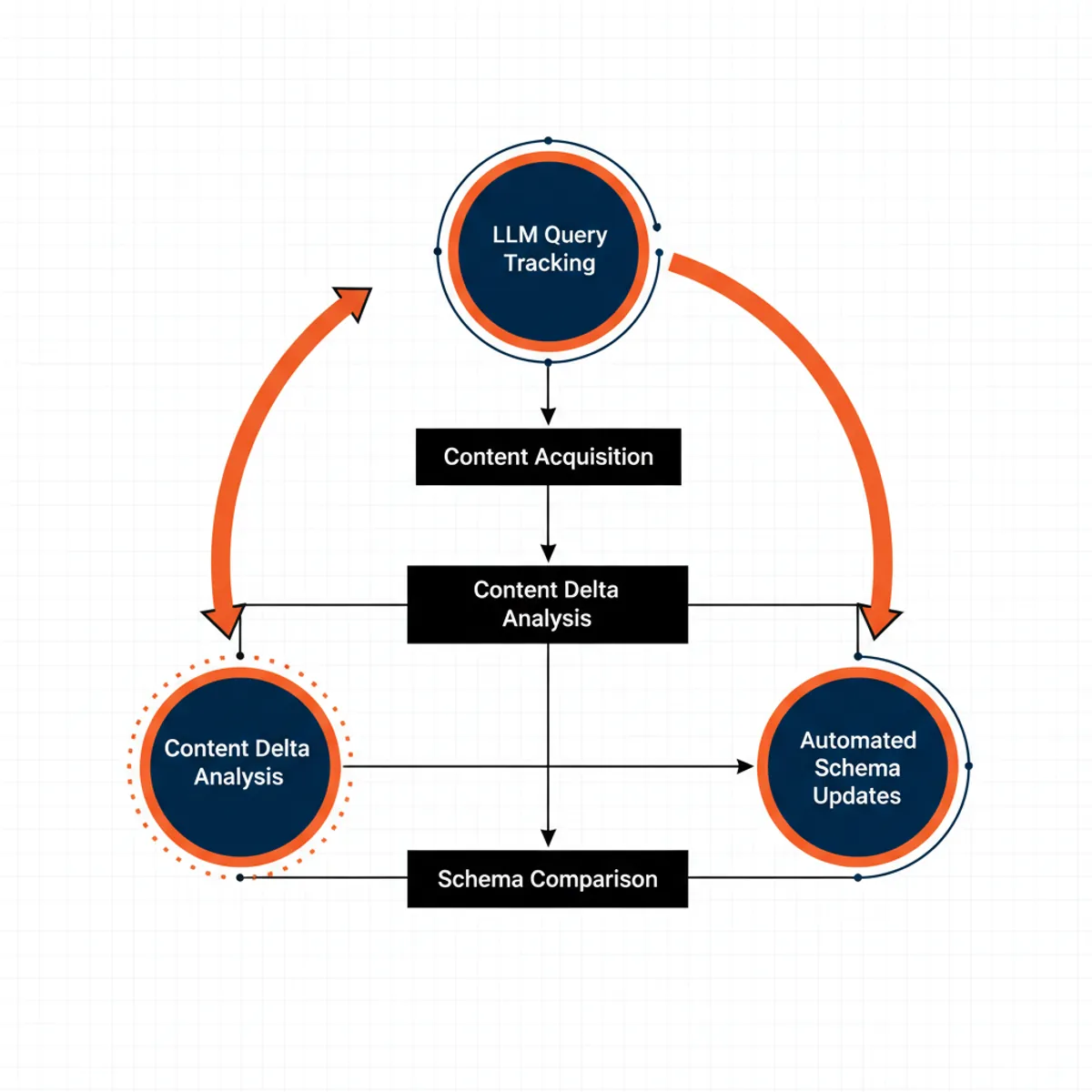
Implementing an automated workflow isn't just about buying software; it's about creating a feedback loop. Follow these steps to build a self-optimizing AEO engine.
Step 1: Establish Your Entity Baseline
Use a tool like Diffbot or Google’s Knowledge Graph API to see how your brand is currently mapped. You cannot automate what you haven't defined. This baseline should include your Machine-Readable Entity ID (MREID), which acts as a passport in the semantic web.
- Why it works: It provides a structured view of what the AI already knows and identifies "knowledge drift"—where the AI's understanding of your brand deviates from your actual offering.
- Common Mistake: Assuming your brand name is your only entity. You must track products, key personnel, and core concepts.
- Pro Tip: Use the knowledge-graph-and-aeo framework to map your semantic relationships before automating.
Step 2: Set Up Continuous LLM Querying
Create a script that queries major LLMs daily with your top 50 high-value questions. Use the APIs for GPT-4o, Claude 3.5, and Gemini Pro to fetch these answers in a structured format (JSON). This is significantly different from a Google rank tracker because you are measuring the content of the response, not just the URL position.
- Why it works: It identifies fluctuations in citation behavior in real-time.
- Common Mistake: Querying the web interface instead of the API, which leads to inconsistent, non-replicable results.
- Pro Tip: Set up alerts for whenever your brand's citation disappears from a previously held position.
Step 3: Automate Content Gap Analysis
Feed the responses from Step 2 into an LLM-based analyzer. Ask the model to compare its answer with your website's current content. This is a "model-on-model" evaluation where one AI audits another’s perception of your site.
- Why it works: It highlights exactly what information is missing or unclear on your site from the perspective of a machine reader.
- Common Mistake: Focusing on keyword density instead of informational density.
- Pro Tip: Look for "hallucinations" where the AI makes up data about you; this is a sign your entity-optimization-for-aeo needs work.
Step 4: Dynamic Schema Injection
Use a tool like WordLift to automatically generate and inject Linked Data (JSON-LD) based on the gaps identified in Step 3. If a competitor is being cited for "Pricing Transparency," your automated system should flag this and update your Offer schema to be more explicit.
- Why it works: Structured data is the preferred language of LLM crawlers.
- Common Mistake: Static schema that never changes as your business evolves.
- Pro Tip: Use
mentionsandaboutproperties in your schema to link your content to established high-authority entities.
Step 5: Close the Loop with RAG Testing
Before publishing updates, run your new content through a local RAG pipeline (using a tool like Pinecone or LlamaIndex) to ensure it is easily retrievable and accurately summarized. This is essentially a "pre-flight check" for your content.
- Why it works: It mimics how search engines like Perplexity will treat your page.
- Common Mistake: Over-optimizing for one model while breaking visibility for another.
- Pro Tip: Read our breakdown of retrieval-systems-explained to understand the mechanics behind this step.
Comparison of AEO Automation Platforms
| Tool Category | Example Tool | Primary Function | Best For |
|---|---|---|---|
| LLM Monitoring | BrightEdge / Custom API | Tracking citation frequency in LLMs | Enterprise Visibility |
| Entity Management | WordLift | Automated Schema and Knowledge Graph | E-commerce / Publishers |
| Content Testing | LangSmith | Testing how AI prompts interact with content | Technical AEO Teams |
| Data Extraction | Diffbot | Turning web pages into structured entity data | Market Research |
| RAG Orchestration | LlamaIndex | Connecting data to LLMs for testing | Custom AEO Solutions |
Advanced Tactics: Agentic Content Synthesis
Beyond basic monitoring, advanced AEO practitioners are now utilizing agentic workflows. Instead of just identifying a gap, an agent is tasked with scanning the top 5 competitors for a specific query, identifying the semantic triplets (Subject-Predicate-Object) they are using, and drafting a counter-chunk of content.
This involves "Context Window Optimization." By automating the length and structure of your paragraphs, you can ensure they fit perfectly into the limited context windows of retrieval agents. For example, if a model's retrieval system prioritizes 300-token chunks, an automated tool can re-segment your long-form guides into 300-token clusters with clear semantic headers. This makes it mathematically more likely for an LLM to select your content during the "top-k" retrieval phase.
Overcoming Objections: The Human-in-the-Loop Problem
A common concern with AEO automation is the loss of brand voice or the risk of "circular reasoning"—where an AI optimizes for another AI until the content is unreadable for humans.
Objection: "Won't automated content look like AI garbage?" Automation in AEO should focus on structure and data distribution, not necessarily the creative prose. You are automating the injection of schema, the monitoring of citations, and the tagging of entities. The human writer still provides the unique insight; the automation ensures that insight is formatted so a machine can actually find it.
Objection: "It's too expensive to query APIs all day." While GPT-4o calls add up, you don't need to query every minute. Sophisticated AEO stacks use smaller, cheaper models (like Llama 3 or Haiku) for initial triage and only use the "frontier models" for final validation. This reduces costs by up to 80% while maintaining high accuracy.
Objection: "Search engines might penalize automated adjustments." AEO is not about "spinning" content. It is about clarifying your brand's data. Search engines like Google (via Gemini/SGE) prefer sites that use structured data and clear entity definitions because it makes their job easier. You aren't tricking the engine; you are translating for it.
Common Pitfalls in AEO Automation
Automation is powerful, but it can lead to disaster if left unchecked. Avoid these common errors:
- Over-reliance on LLM feedback: LLMs can be wrong. If an AI suggests you change a fact to something incorrect, don't automate that change just to get a citation. Accuracy is the ultimate currency.
- Ignoring Citation Health: It’s not just about being mentioned; it’s about how you are mentioned. Automated tools often miss the sentiment of a citation. Check out our guide on the role-of-citations-in-aeo.
- Neglecting Human Review: Automation should flag and suggest, but a senior strategist should approve significant structural changes to the site's architecture.
- Schema Bloat: Automatically generating every possible schema property can confuse crawlers rather than help them. Stick to high-impact properties like
FAQPage,Product, andOrganization.
"The winners in the next phase of search won't be those with the most content, but those with the most responsive content. If your strategy doesn't adjust automatically to how models retrieve information, you're playing a game that's already over." — Amir, Founder of EvronStudio
Case Study: Automating AEO for a Financial Services Firm
A mid-sized financial advisory firm faced a 40% drop in organic traffic as users shifted to using Gemini for retirement planning questions. We implemented an automated AEO adjustment strategy using a custom stack: WordLift for schema and a Python-based monitor for citation tracking.
The Process:
- Identified 200 "High Intent" questions where the firm was no longer the primary source.
- Automated the creation of faq-sections-for-aeo that were dynamically updated based on current market rates.
- Used an LLM to re-write long-form guides into "chunked" formats that favored RAG retrieval.
- Created a "live data feed" for their entity—whenever the firm changed a rate or a service, the Knowledge Graph was updated in milliseconds, signaling to Perplexity to refresh its index.
The Results: Within 60 days, the firm saw a 115% increase in citation frequency across GPT-4 and Perplexity. More importantly, the lead quality improved because the AI was synthesizing their specific, nuanced advice rather than general industry platitudes. This is a classic example of aeo-for-financial-advisors in action. By the end of the first quarter, the firm’s Share of Model (SoM) for "retirement planning for doctors" rose from 4% to 28%.
Measurement Metrics for Automated AEO
If you are automating your strategy, you need a dashboard that tracks these KPIs:
- Citation Win Rate: The percentage of queries where your brand is the first or second source cited.
- Entity Clarity Score: A measure of how consistently different LLMs define your brand.
- Response Accuracy: Tracking if the LLM is accurately representing your product features or prices.
- Reference Depth: Are the LLMs linking to your deep-internal pages or just your homepage?
- Semantic Proximity: How closely the AI associates your brand with key industry "seed" entities.
For enterprise-level implementation, consider our enterprise-aeo-solutions to build these custom dashboards.
Industry Examples: AEO Automation in Action
1. E-commerce (Fashion Retailer) A global fashion brand used automated entity tagging to ensure their products were appearing in "Outfit Generator" queries on ChatGPT. By automating the Product and ImageObject schema based on trending styles identified by an AI monitor, they achieved a 3x increase in "product mentions" within conversational AI threads.
2. SaaS (B2B Software) A project management software company used LangSmith to test 50 different ways of explaining their pricing. They found that a specific table format led to a 60% higher citation rate in Perplexity. They then automated the deployment of this format across 400 landing pages using a headless CMS.
3. Healthcare (Telemedicine) A clinic automated the monitoring of "symptom-to-service" queries. When a model began citing a competitor for "early signs of burnout," their system automatically generated a verified medical FAQ and pushed it to their knowledge graph. Within 72 hours, the AI model began citing their clinic as a clarifying source.
The Future: Agentic AEO Adjustments
We are moving toward a world of "Agentic AEO," where autonomous agents don't just suggest changes but actively update your site's edge-cached content to optimize for the specific model making a request. Imagine a website that serves one version of a paragraph to a Perplexity crawler and a slightly different, more structured version to a ChatGPT agent—optimizing for the specific retrieval math of each.
This level of dynamic personalization will require robust guardrails to prevent brand dilution, but it represents the ultimate evolution of search visibility. The goal is to become the "Default Source" for your niche—the entity the model trusts so implicitly that it doesn't even feel the need to look elsewhere.
To prepare for this, brands must focus on the quality of their underlying data. Automation is only as good as the information it processes. By mastering writing-content-for-ai-search today, you build the foundation for the automated adjustments of tomorrow.
Conclusion and Next Steps
Automating your AEO strategy is no longer a technical experiment; it is a defensive necessity. The speed at which answer engines evolve makes manual optimization impossible to scale. By integrating LLM monitoring, entity management, and automated schema updates, you ensure that your brand remains the authoritative answer in an increasingly fragmented search landscape.
The brands that will dominate the late 2020s are those that treat their content as a live API for answer engines. They don't publish and pray; they monitor, adjust, and optimize at the speed of thought.
Start by auditing your current AI visibility. Use our free-aeo-audit to see where your gaps are, or contact our team to build a bespoke automation stack tailored to your industry's specific knowledge graph. The transition from SEO to AEO is happening now—don't let your brand get left behind in the static web.
Frequently asked questions
What is the primary difference between SEO and AEO automation tools?+
SEO tools focus on keyword rankings, backlinks, and search volume from traditional engines like Google. AEO automation tools prioritize entity clarity, citation frequency in LLM responses, and the accuracy of RAG (Retrieval-Augmented Generation) outputs. AEO tools analyze how models like GPT-4 or Claude interpret your content rather than just how a crawler indexes it.
Can standard SEO crawlers be used for AEO strategy adjustments?+
Standard crawlers like Screaming Frog are useful for technical hygiene, but they lack the ability to simulate LLM retrieval. For AEO, you need tools that can query AI interfaces directly or analyze the 'latent space' of how your brand is represented. Traditional crawlers identify broken links; AEO tools identify broken logic in how AI summarizes your brand.
How often should AEO strategy adjustments be automated?+
Adjustments should be near-continuous. Because LLMs update their weights and knowledge bases frequently, and RAG systems pull from live web data, weekly automated audits are the minimum. Enterprise environments often use real-time triggers: if a brand citation drops in a specific LLM, an automated alert should trigger a content refresh or schema update.
Is schema markup still relevant for automated AEO?+
Schema is more critical than ever. It acts as the 'source of truth' for LLMs, providing structured data that minimizes hallucination. Automating AEO requires dynamic schema generation tools that update your JSON-LD based on changing product attributes or service details, ensuring that AI agents always pull the most current and structured data available.
What role does LangChain play in AEO automation?+
LangChain and similar frameworks allow developers to build custom agents that scan AI search results for brand mentions. You can automate the process of querying different LLMs with your target 'questions' and use LangChain to parse the responses, identifying whether your site was cited as the primary source or if a competitor took the spot.
Are there specific tools for tracking Perplexity or Gemini rankings?+
Dedicated platforms like BrightEdge and new-age AI visibility trackers are beginning to offer 'Share of Model' metrics. However, many AEO strategists currently build custom scripts using API access to these models to monitor 'citation win rates,' which serves as the primary metric for success in the era of answer engines.
Sources & further reading
Soft next step
Want to see where AI answers mention you — and where they don't?
We run a free AEO audit across ChatGPT, Gemini, Copilot and Perplexity, then hand you the fixes in priority order. Start your AEO strategy today.