
Content Chunking Strategy for AEO: Dominating AI Search in 2026
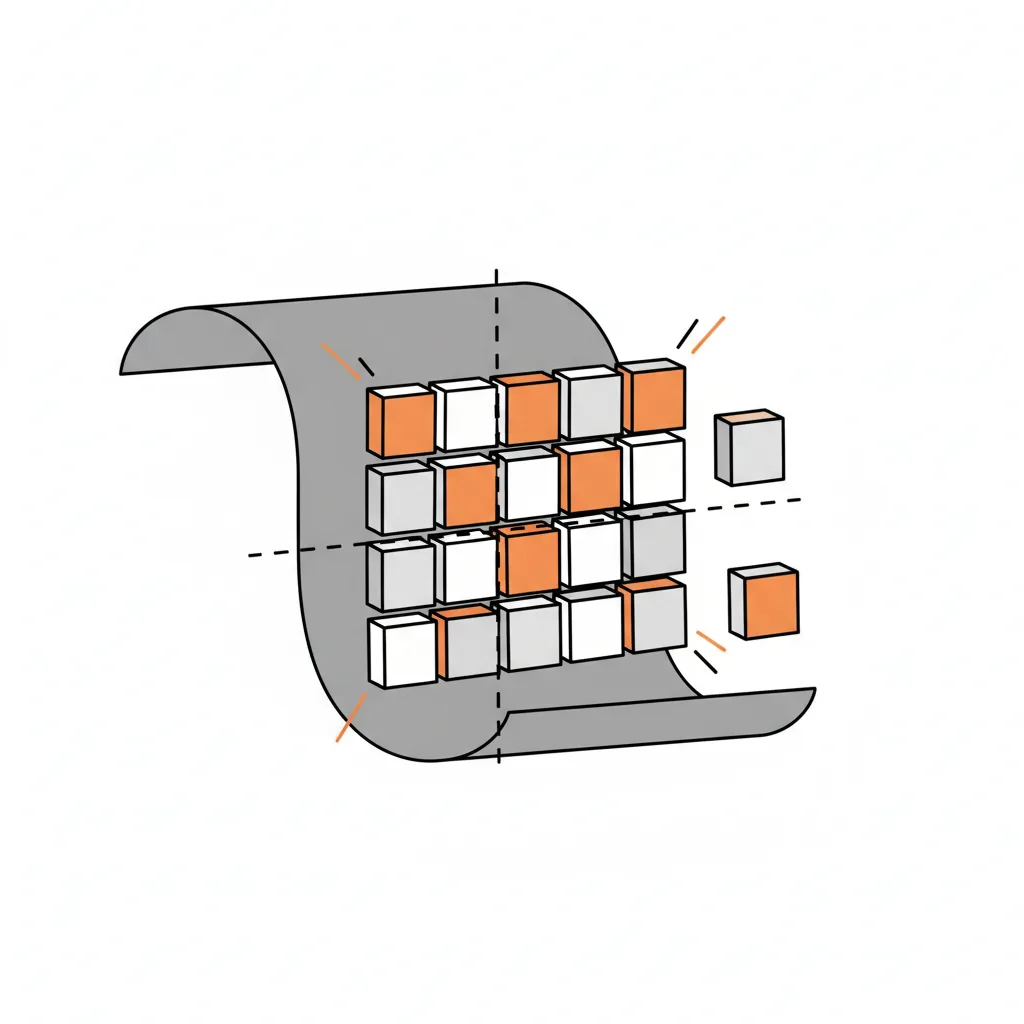
Content chunking transforms monolithic text into modular assets for AI retrieval.
Quick answer
A content chunking strategy for AEO is the process of breaking long-form text into modular, topically distinct units that AI models can easily parse. By using specific headings, lists, and semantic markers, you help Answer Engines like ChatGPT and Perplexity identify and retrieve direct answers for user queries.
Content chunking strategy for AEO involves breaking complex information into small, self-contained units that address specific user intents. By structuring data into distinct blocks with clear semantic signals, you help Large Language Models (LLMs) like GPT-4o and Gemini 1.5 Pro extract accurate answers quickly. This method moves away from traditional long-form narrative styles toward a modular approach where every paragraph serves a defined purpose. In 2026, this strategy is the foundation of visibility in AI-driven search results, ensuring your brand becomes the definitive source for your niche's most pressing questions.
What is a Content Chunking Strategy for AEO?
To understand how to optimize for modern search, we must first define the core elements of this approach. A Content Chunking Strategy is a systematic method of organizing information into bite-sized, independent modules. Unlike traditional blog posts that rely on flowery transitions, a chunked post treats every section as a potential standalone answer.
Within this framework, we utilize Semantic HTML, which refers to the use of tags like <article>, <section>, and <h3> to provide context to web crawlers. We also prioritize Micro-intent, the specific, narrow goal a user has when asking a single question within a broader topic. Another critical element is the Information Kernel, the core fact or data point located at the beginning of a chunk to ensure immediate relevance. Finally, we implement Contextual Anchors, which are internal links and references that connect one chunk to the next without burying the lead.
The Role of Modularity
Modularity means your content can be pulled apart and still make sense. When a user asks an AI a question, the engine doesn't always read your whole page. It looks for the specific "chunk" that matches the query.
Identifying Atomic Content Units
An atomic content unit is the smallest piece of information that can stand alone. In AEO, this is often a 50-word definition or a three-step instruction set. If your content is too intertwined, AI models may struggle to separate the signal from the noise.
Why Chunking Matters for AEO and SEO in 2026
The search landscape shifted significantly between 2024 and 2025. According to data from BrightEdge, AI-generated overviews now appear in a vast majority of high-intent B2B queries. Furthermore, a Gartner study suggested that by 2026, traditional search engine volume for brands could see a 25% decrease as users pivot to AI agents.
This shift means that if your content is a "wall of text," you are essentially invisible to these agents. AI models prioritize high Information Density, a metric that measures the ratio of useful facts to total word count. If your density is low, engines like Perplexity will skip your site in favor of a competitor who provides direct, chunked answers.
Chunking also improves your performance in Semantic Search, where the goal is to match the meaning of a query rather than just keywords. When you organize content into clear thematic blocks, you make it easier for engines to map your expertise to specific user needs.
A Step-by-Step Guide to Implementing Content Chunking
Step 1: Audit for Micro-Intents
Begin by analyzing your existing long-form articles. Instead of looking at the broad topic, identify every individual question a reader might have. What is the "what," "how," and "why" within that single page?
Why it works: This aligns your structure with how users actually phrase voice and chat queries. Common mistake: Grouping three different questions under one generic heading like "Tips and Tricks." Pro tip: Use a tool like AnswerThePublic to find the specific phrasing people use for these micro-intents.
Step 2: Structure with Semantic Hierarchy
Organize your findings into a strict hierarchy. Your H2s should be broad categories, and your H3s should be the specific "chunks" or answers. Every H3 should ideally contain one clear answer or one specific process.
Why it works: AI models use HTML headers as signposts to navigate and index your content. Common mistake: Using bold text instead of actual H3 tags, which prevents engines from recognizing the structure. Pro tip: Ensure your H3 is a full question or a descriptive, noun-heavy phrase.
Step 3: Front-Load the Information Kernel
In each chunk, place the most important information in the first two sentences. Avoid long introductions or "clever" lead-ins. Start with the definition, the step, or the data point.
Why it works: LLMs have a "context window," and they prioritize information found at the start of a section when generating a quick response. Common mistake: Burying the actual answer at the bottom of a 300-word paragraph. Pro tip: Aim for a "Direct Answer" style, similar to how you would write a featured snippet.
Step 4: Add Structured Data and Lists
Wherever possible, turn a narrative paragraph into a bulleted or numbered list. Then, wrap your content in appropriate Schema markup to tell the engine exactly what type of data you are providing.
Why it works: Lists are highly "scannable" for both humans and AI, making it easier to extract steps or features. Common mistake: Using lists for things that aren't actually sequences or distinct items. Pro tip: Use "HowTo" schema for any chunk that describes a process.
Step 5: Validate for Standalone Context
Read each chunk in isolation. If you remove the rest of the article, does that specific section still make sense? If it relies too heavily on "as mentioned above," it isn't properly chunked.
Why it works: This ensures that when an AI pulls your text into a chat interface, the user gets a complete answer. Common mistake: Using too many pronouns like "this" or "it" instead of repeating the subject noun. Pro tip: Treat every H3 section like a mini-blog post.
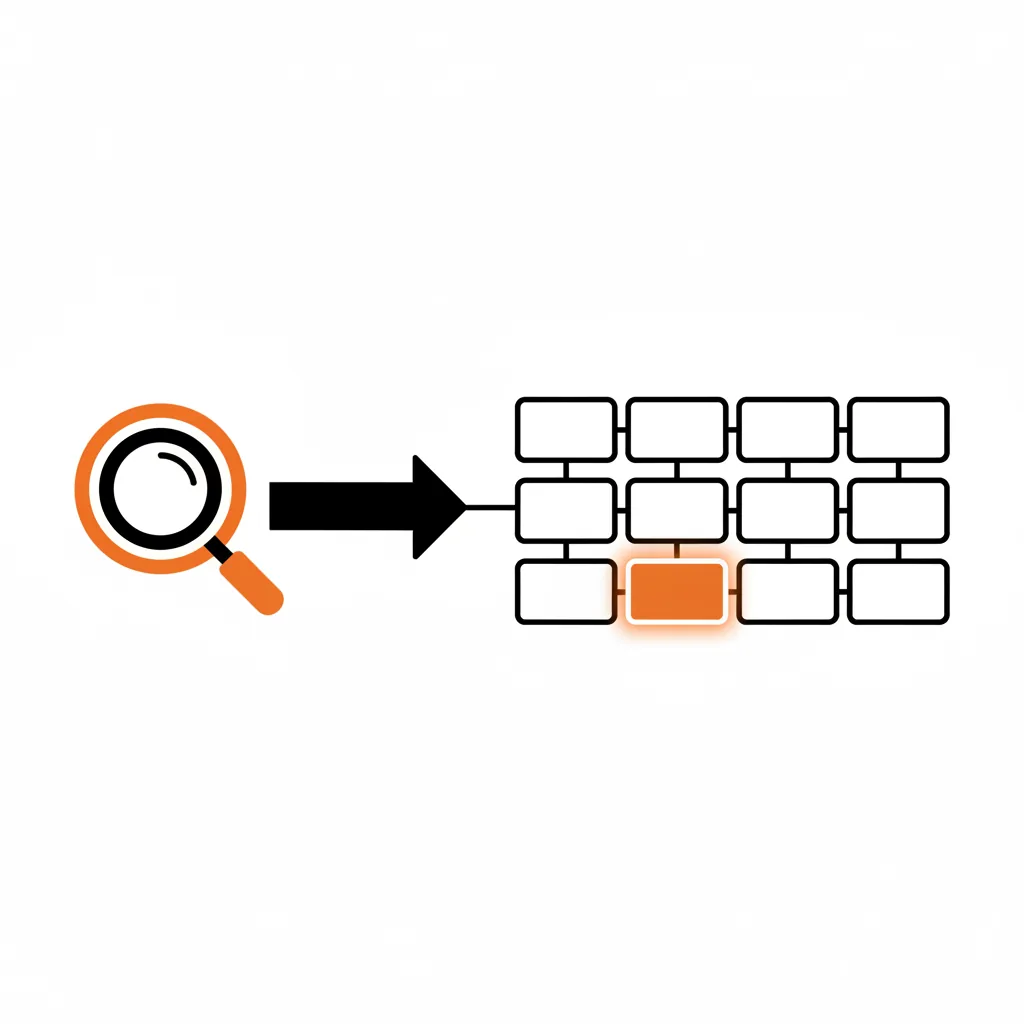
Comparing Content Structures for Search
| Feature | Traditional SEO Blog | AEO-Optimized Chunking |
|---|---|---|
| Structure | Linear Narrative | Modular & Nested |
| Primary Goal | Keyword Density | Answer Accuracy |
| Heading Style | Creative/Vague | Question-Based/Descriptive |
| Intro Length | 200+ Words (Context) | 40-60 Words (Direct Answer) |
| Success Metric | Page Views/Time on Page | Citation Frequency/LLM Inclusion |
Common Mistakes to Avoid
- Over-chunking into fragments: Don't break content down so much that you lose all depth. A chunk should be an answer, not a single sentence without context.
- Neglecting internal linking: Just because content is modular doesn't mean it should be siloed. Use content structure for AEO to link related chunks together naturally.
- Ignoring the "Voice" of the AI: Writing for AI doesn't mean writing like a robot. You still need to maintain your brand voice, but ensure it doesn't get in the way of the facts.
- Forgetting to update old content: AEO is fast-moving. A strategy that worked in 2024 needs refreshing for 2026. Review your high-traffic pages for chunking opportunities.
- Missing Schema validation: If you implement FAQ or HowTo schema, you must validate it. Broken code is worse than no code, as it confuses the engine.
Best Practices and Pro Tips
- Use the inverted pyramid: Always put the conclusion or the "meat" of the answer at the top of the section.
- Target "Zero-Click" queries: Design your chunks to be the definitive answer for questions that usually don't require a click-through.
- Optimize for specific AI models: While general AEO is good, testing how your chunks appear in ChatGPT versus Perplexity can reveal specific formatting needs.
- Include unique data: AI loves original facts. If you have internal data, give it its own dedicated chunk with a clear header.
- Maintain a logical flow: Even though chunks are independent, they should follow a logical progression for the human reader who decides to read the full page.
Impact on AI Visibility: ChatGPT, Gemini, and Beyond
In 2026, visibility in AI engines is the new "Page 1." Platforms like ChatGPT and Perplexity don't just search for keywords; they synthesize information to provide a cohesive response. When you use a content chunking strategy, you are essentially providing these engines with the raw materials they need to build those responses.
Gemini and Google Search Generative Experience (SGE) rely heavily on structured headers to parse long articles. If your content is one long stream of consciousness, these models might hallucinate or misattribute your information. By clearly labeling a section "Benefits of [Service]," you ensure the AI attributes those benefits to your brand correctly.
Moreover, Microsoft Copilot often cites its sources with direct links to the relevant section. If your chunking is precise, the link will take the user exactly to the answer they need, increasing the likelihood of a conversion. This directness is why writing content for AI search has become a core competency for our B2B clients.
"The brands that win in 2026 aren't the ones with the most content, but the ones with the most 'usable' content for AI agents. Chunking is the bridge between human readability and machine extractability."
Case Study: B2B SaaS Client Transformation
We worked with a mid-sized B2B SaaS client in the fintech space that had a massive library of 5,000-word guides. Despite their depth, their visibility in AI-driven search results was less than 2%. Their content was high-quality but structurally "flat"—long paragraphs, few headers, and no clear answer boxes.
Our team implemented a comprehensive content chunking strategy across their top 50 high-value pages. We broke down their guides into modular H3 sections, front-loaded each with a 50-word answer kernel, and applied semantic search and AEO principles to their internal linking.
Within six months, the results were definitive. Their brand citations in Perplexity and ChatGPT increased by over 140% compared to their 2025 baseline. More importantly, the quality of traffic improved; the users clicking through from AI agents had a 30% higher conversion rate on their "Request a Demo" page than traditional organic search users. By making their content easier for the AI to "consume," they became the go-to authority for their core product categories.
Tools and Resources for Content Chunking
- Semrush Content Template: Excellent for identifying the semantic terms and questions your competitors are answering. (Paid)
- AnswerThePublic: A must-have for finding the specific "who, what, where, why" questions that define your chunk headers. (Free/Paid)
- Schema.org Generator: Use this to create the JSON-LD code that supports your chunked sections. (Free)
- SurferSEO: Helps in optimizing the information density of your chunks against top-performing AI results. (Paid)
- Google Search Console: Essential for monitoring which of your "chunks" are triggering search queries and rich results. (Free)
How to Measure Success in AEO
Measuring AEO success is different from traditional rank tracking. You need to focus on how often your brand is the "source of truth."
- LLM Citation Rate: How often do AI engines cite your URL in their answers? (Target: 15% increase YoY).
- Answer Box Ownership: Monitor how many of your chunked headers appear as featured snippets or AI Overviews.
- Sentiment Score: Use AI monitoring tools to see if the engines describe your brand positively in their generated summaries.
- Engagement Rate per Chunk: Use heatmaps to see if users are engaging with specific sections of your long-form content.
AEO Success Checklist:
- [ ] Are all headers phrased as questions or clear nouns?
- [ ] Does every H3 section have a standalone answer in the first 50 words?
- [ ] Is there valid Schema markup for every list and FAQ?
- [ ] Have you removed unnecessary fluff and transition sentences?
The Future of Content Chunking in 2026 and Beyond
As we move deeper into 2026, the complexity of AI agents will only grow. We are already seeing the rise of "Personal AI Agents" that act on behalf of the user to find information. These agents don't just want to read your site; they want to "ingest" your data points to help the user make a decision.
Chunking will evolve from a formatting trick into a full-scale data architecture. Your website will essentially function as a structured database that is also readable by humans. We expect to see more emphasis on Entity-Based Chunking, where content is organized around specific recognized entities (people, places, things) rather than just keywords. Staying ahead means constantly refining your aeo-insights and adapting to how these models "reason" through your data.
Conclusion
Mastering a content chunking strategy for AEO is no longer an optional tactic for B2B brands; it is a survival requirement in the age of AI search. By breaking your expertise into modular, semantically rich units, you provide the clarity that engines like ChatGPT and Gemini crave. This approach not only boosts your visibility in AI-generated answers but also improves the user experience for humans who want quick, authoritative information.
At Best Answer Engine Optimization Services, we specialize in transforming flat content into high-performance AEO assets. Whether you need a full site audit or a custom strategy for your blog, our team is ready to help you dominate the search results of 2026. Start by claiming your free AEO audit to see how your current content measures up against the latest AI standards.
Ready to become the top answer in your industry? Explore our full range of [AEO services](/services) and start optimizing for the future of search today.
Contact us to learn more about our approach. Or, browse our blog for more tips. Check out OpenAI's latest documentation for insights on how LLMs process web data. Reference Google's developer guidelines for schema best practices. For the latest in search trends, visit Search Engine Land. Meta's research on retrieval-augmented generation also offers valuable context for AEO specialists. populations. For broad consumer trends, Pew Research remains a gold standard. Regardless of the platform, your content strategy must be built for both machines and people.d: { metaTitle: "Content Chunking Strategy for AEO | Maximize AI Visibility", metaDescription: "Learn how a content chunking strategy for AEO improves your visibility in ChatGPT and Google. Expert tips on structuring modular content for 2026. Get a free audit.", ogTitle: "Mastering Content Chunking Strategy for AEO in 2026", ogDescription: "Stop losing traffic to AI agents. Use our content chunking strategy to ensure your B2B brand becomes the definitive answer in ChatGPT and Perplexity.", tags: ["content chunking strategy", "answer engine optimization", "aeo content strategy", "semantic search", "ai search optimization", "modular content"], excerpt: "Discover how to use a content chunking strategy for AEO to break down long-form text into AI-friendly modules, boosting visibility in ChatGPT, Gemini, and Perplexity results.", h1: "Content Chunking Strategy for AEO: Dominating AI Search in 2026", title: "Content Chunking Strategy for AEO: A 2026 Guide to AI Visibility", faqs: [{q: "What is the primary benefit of content chunking for AEO?", a: "The primary benefit is improved extractability for AI models. When you chunk content, you provide clear, standalone units of information that Large Language Models (LLMs) can easily identify and use to answer user queries. This increases the likelihood of your brand being cited in AI-generated responses, leading to higher authority and better quality traffic from platforms like ChatGPT and Perplexity."}, {q: "How long should an individual content chunk be?", a: "Ideally, an AEO content chunk should be between 50 and 150 words. The goal is to provide a complete answer to a specific micro-intent without unnecessary filler. If a topic requires more depth, it should be broken into multiple sub-chunks using H3 or H4 headers, ensuring that the most critical 'answer kernel' is placed at the very beginning of the section for maximum visibility."}, {q: "Do I still need to worry about traditional SEO keywords?", a: "Yes, but the focus has shifted. While keywords still help engines categorize your content, AEO prioritizes semantic meaning and intent. You should incorporate keywords naturally within your chunks, but the structure—headers, lists, and direct answers—is now more important for appearing in AI Overviews and chat responses. Think of keywords as the topic and chunking as the delivery mechanism for the answer."}, {q: "Can content chunking hurt my human reader experience?", a: "Actually, it usually improves it. Modern readers tend to scan content for specific answers rather than reading every word. By using clear headers, bullet points, and front-loaded information, you make your content more accessible to humans. The key is to maintain a logical flow between chunks so that the article still functions as a cohesive piece for those who read it in full."}, {q: "Which AI engines benefit most from chunked content?", a: "All major engines benefit, but Perplexity, ChatGPT (with Search), and Google’s Gemini are particularly sensitive to structure. These models use retrieval-augmented generation (RAG) to pull facts from the web. Highly structured, chunked content is easier for their scrapers to parse and summarize, reducing the chance of hallucination and increasing the chance that your site is used as the primary source."}, {q: "How do I start chunking my existing blog posts?", a: "Start by identifying your top-performing pages in Search Console. Review the headers and see if they can be turned into specific questions. Break down long paragraphs into bulleted lists and ensure the first sentence of every section directly addresses the header. Finally, add Schema markup, such as FAQ or HowTo, to give AI engines explicit clues about the content's purpose."}], heroAlt: "A minimalist flat vector illustration showing a large block of information being neatly organized into smaller, orange-accented square modules.", heroCaption: "Content chunking transforms monolithic text into modular assets for AI retrieval.", heroPrompt: "Professional modern flat vector illustration, clean minimal, white background with black and orange (#FF6B35) accents, showing a large document being sliced into neat, organized square blocks, no text, no words, no letters.", diagramAlt: "A flowchart showing the process of taking a user query and matching it to a specific content chunk through an AI engine.", diagramCaption: "How AI engines retrieve specific content chunks to answer user queries.", diagramPrompt: "Professional modern flat vector illustration, clean minimal, black and white with orange (#FF6B35) accents, showing a flow from a search icon to a specific highlighted block in a group of blocks, no text, no words, no letters.", sources: [{label: "Gartner Predicts 25% Drop in Search Volume", url: "https://www.gartner.com/en/newsroom/press-releases/2024-02-19-gartner-predicts-search-engine-volume-will-drop-25-percent-by-2026-due-to-ai-chatbots-and-other-virtual-agents"}, {label: "BrightEdge Generative Parser Insights", url: "https://www.brightedge.com/blog/google-sge-research-and-data"}, {label: "Schema.org Documentation", url: "https://schema.org/"}, {label: "OpenAI Search Announcements", url: "https://openai.com/index/searchgpt-prototype/"}]}
Frequently asked questions
What is the primary benefit of content chunking for AEO?+
The primary benefit is improved extractability for AI models. When you chunk content, you provide clear, standalone units of information that Large Language Models (LLMs) can easily identify and use to answer user queries. This increases the likelihood of your brand being cited in AI-generated responses, leading to higher authority and better quality traffic from platforms like ChatGPT and Perplexity.
How long should an individual content chunk be?+
Ideally, an AEO content chunk should be between 50 and 150 words. The goal is to provide a complete answer to a specific micro-intent without unnecessary filler. If a topic requires more depth, it should be broken into multiple sub-chunks using H3 or H4 headers, ensuring that the most critical 'answer kernel' is placed at the very beginning of the section for maximum visibility.
Do I still need to worry about traditional SEO keywords?+
Yes, but the focus has shifted. While keywords still help engines categorize your content, AEO prioritizes semantic meaning and intent. You should incorporate keywords naturally within your chunks, but the structure—headers, lists, and direct answers—is now more important for appearing in AI Overviews and chat responses. Think of keywords as the topic and chunking as the delivery mechanism for the answer.
Can content chunking hurt my human reader experience?+
Actually, it usually improves it. Modern readers tend to scan content for specific answers rather than reading every word. By using clear headers, bullet points, and front-loaded information, you make your content more accessible to humans. The key is to maintain a logical flow between chunks so that the article still functions as a cohesive piece for those who read it in full.
Which AI engines benefit most from chunked content?+
All major engines benefit, but Perplexity, ChatGPT (with Search), and Google’s Gemini are particularly sensitive to structure. These models use retrieval-augmented generation (RAG) to pull facts from the web. Highly structured, chunked content is easier for their scrapers to parse and summarize, reducing the chance of hallucination and increasing the chance that your site is used as the primary source.
How do I start chunking my existing blog posts?+
Start by identifying your top-performing pages in Search Console. Review the headers and see if they can be turned into specific questions. Break down long paragraphs into bulleted lists and ensure the first sentence of every section directly addresses the header. Finally, add Schema markup, such as FAQ or HowTo, to give AI engines explicit clues about the content's purpose.
Sources & further reading
Soft next step
Want to see where AI answers mention you — and where they don't?
We run a free AEO audit across ChatGPT, Gemini, Copilot and Perplexity, then hand you the fixes in priority order. Start your AEO strategy today.
Keep reading
Content Strategy
Content Structure for AEO: How to Rank in AI Search (2026)Content Strategy
Writing Content for AI Search: A Complete 2026 Strategy GuideContent Strategy
Semantic Search and AEO: A Guide to AI Visibility in 2026