The Role of Citations in AEO: Building Authority for AI Search in 2026

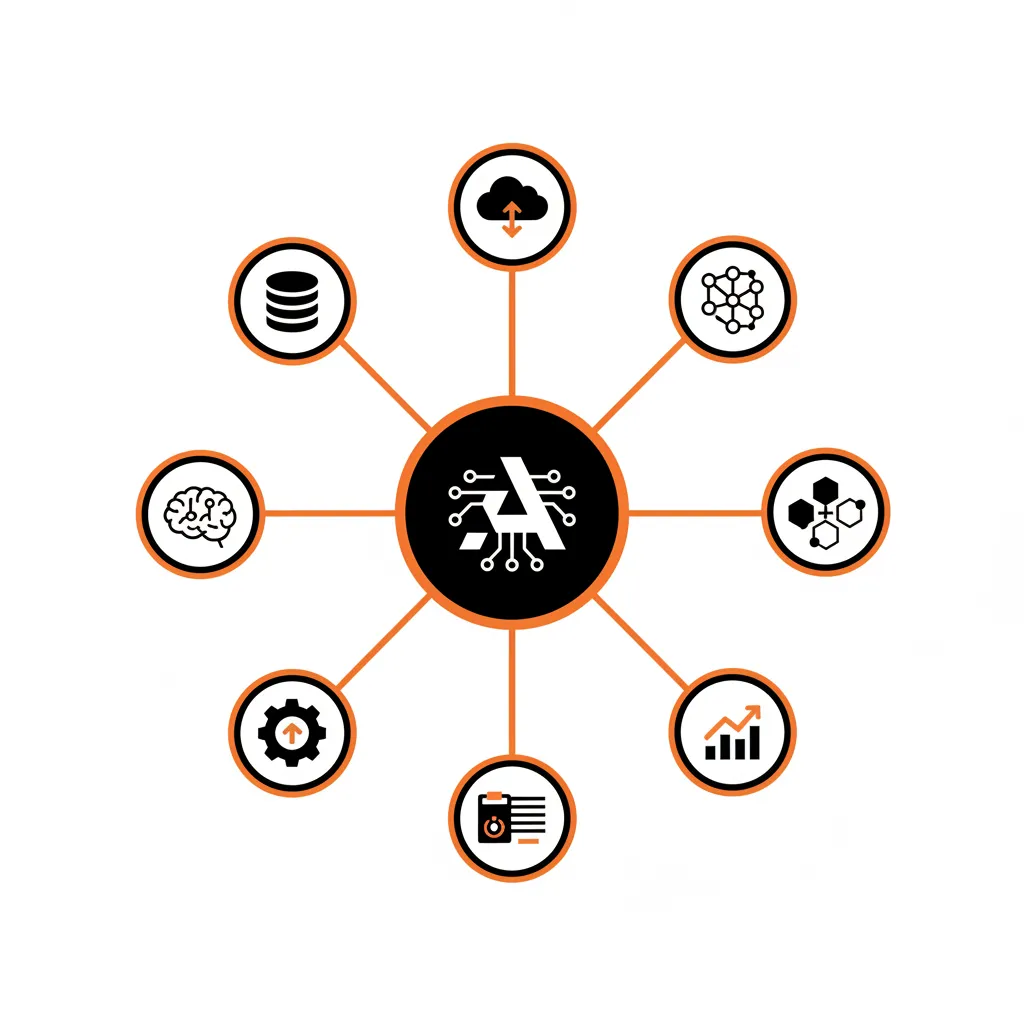
Building a network of citations is essential for appearing in AI-generated answers.
Quick answer
Citations are the digital proof points that Answer Engines like ChatGPT and Perplexity use to verify your information. They represent direct links or mentions of your brand as a primary source for specific facts. In AEO, citations serve as the foundational building blocks for credibility, visibility, and authoritative ranking.
Citations in Answer Engine Optimization (AEO) act as the digital fingerprints that verify your brand's authority to Large Language Models (LLMs). When a user asks a query, engines like Perplexity or Gemini search for verified data points. These engines prioritize content supported by a network of cross-referenced mentions. In 2026, the role of citations has shifted from simple backlinks to complex trust signals. They are the primary way these systems validate that your content is accurate, current, and worthy of being presented as a definitive answer. Without a clear citation strategy, your brand remains invisible to AI-driven searchers.
What are Citations in the Context of AEO?
To understand how citations work today, we must define the core elements of the modern web. A Citation is any mention of a brand, entity, or specific data point across the web, regardless of whether a physical hyperlink exists. In the world of AEO, these function as "knowledge votes."
We also need to look at the Knowledge Graph, which is a programmatic network of real-world entities and their interrelations. When an AI finds your brand mentioned alongside a specific topic, it adds a node to this graph. Another critical term is Entity, a unique, well-defined concept or object that an AI can distinguish from others. Finally, Linked Data refers to the method of publishing structured data so that it can be interlinked and become more useful through semantic queries.
How Citations Build the Knowledge Graph
Citations act as the glue between these entities. If your SaaS platform is cited by a major research firm, the AI recognizes a relationship between your brand (Entity A) and industry expertise (Entity B). This relationship is then recorded in the knowledge base that powers search responses.
The Difference Between SEO Backlinks and AEO Citations
While SEO cares about the "link juice" or equity passed between sites, AEO focuses on the verification of facts. A citation might be a footnote in a ChatGPT response or a source link in a Perplexity summary. It isn't just about traffic; it is about being the "source of truth."
Why Citations Matter for AEO and SEO in 2026
The search environment has changed rapidly since 2025. According to data from Gartner, by 2026, traditional search engine volume is expected to decline by 25% as users pivot to AI assistants. This means your brand must appear within the AI's generated response to remain relevant.
Furthermore, a study by BrightEdge in late 2025 indicated that over 40% of AI-generated answers now include direct citations to external websites. These citations are the only way for users to click through to your site. Without them, you lose both visibility and the ability to drive traffic. Search Engine Land has also noted that AI models are increasingly using "source grounding" to reduce hallucinations, meaning they will only state facts they can attribute to a reputable citation.
A Step-by-Step Guide to Building AEO Citations
1. Identify Your Core Entity Attributes
Before seeking citations, you must define exactly what you want to be known for. This involves identifying your unique data points, proprietary research, or niche expertise. AI models need to associate your brand name with specific "intent clusters."
What to do: Create a list of 5-10 primary topics where your brand is the definitive expert. Why it works: It prevents the AI from getting confused about your brand's purpose. Common mistake: Trying to be an authority on too many unrelated topics at once. Pro tip: Use entity optimization for AEO to align your site's structure with these core attributes.
2. Secure Mentions in Trusted Industry Databases
AI models are trained on massive datasets, including industry-specific repositories, Wikipedia, and professional directories. Being present in these databases provides a "seed" citation that AI models trust implicitly.
What to do: Audit your presence in databases like G2, Capterra, or specialized academic journals. Why it works: These sites have high "trust scores" in the training data of LLMs. Common mistake: Leaving profiles incomplete or using inconsistent brand naming. Pro tip: Ensure your NAP (Name, Address, Phone) data is identical across every database to reinforce entity clarity.
3. Publish Original, Citable Research
The most powerful way to gain citations is to become the source of new information. When you publish a proprietary study, other sites cite you, and AI models pick up these mentions as factual anchors.
What to do: Conduct a yearly survey or data analysis relevant to your field and publish the findings. Why it works: AI models prioritize "first-party data" when answering complex user queries. Common mistake: Publishing generic content that doesn't offer new, quantifiable data. Pro tip: Our services include helping you identify "citation-gap" opportunities where AI needs more data.
4. Implement Advanced Schema Markup
Citations aren't just for humans; they are for machines. Schema markup allows you to tell the AI exactly where your citations are and what they represent.
What to do: Use citation and isBasedOn properties in your JSON-LD schema. Why it works: It creates a direct, machine-readable link between your content and your sources. Common mistake: Using outdated schema formats that engines no longer prioritize. Pro tip: Check the official Schema.org documentation for the most recent updates on citation properties.
5. Monitor and Reclaim Unlinked Mentions
Often, your brand will be mentioned in articles or papers without a link. In 2026, these "unlinked mentions" are still valuable, but a link helps the AI verify the entity more quickly.
What to do: Use tools to find brand mentions and reach out to request a formal citation. Why it works: It strengthens the connection between your brand entity and the surrounding context. Common mistake: Being overly aggressive in outreach; focus on the value of the citation for the reader. Pro tip: Mentioning that a citation helps AI models provide better answers is a new, effective angle for outreach.
Comparing Citation Types in AEO
| Citation Type | Primary Purpose | AI Impact | Difficulty |
|---|---|---|---|
| Direct Hyperlink | Referral Traffic | High - Direct verification | Hard |
| Unlinked Brand Mention | Entity Association | Medium - Semantic link | Easy |
| Structured Data (Schema) | Machine Readability | Very High - Fact grounding | Medium |
| Directory Listing | Trust & Verification | Medium - Domain authority | Easy |
| Social Media Context | Recency Signals | Low - Trend validation | Medium |
Common Mistakes to Avoid
- Inconsistent Entity Naming: Using "Evron" in one place and "Evron Studio" in another confuses AI models, leading to fragmented authority.
- Over-reliance on Low-Quality Links: Just like SEO, AEO rewards quality. A hundred citations from spammy sites will not help you appear in ChatGPT.
- Neglecting Wikipedia and Wikidata: These are the primary sources for many LLM knowledge bases; ignoring them is a massive missed opportunity for entity verification.
- Ignoring Niche-Specific Sources: Focusing only on big-name sites while ignoring the specific journals or forums where your audience lives.
- Static Content Strategies: Failing to update your "citable" data. AI models prioritize recent information to ensure their answers are not outdated.
Best Practices and Pro Tips
- Prioritize Fact-Density: Write content that is packed with verifiable facts rather than fluff to increase the likelihood of being cited.
- Use Descriptive Anchor Text: When others cite you, aim for text that describes exactly what the source provides (e.g., "according to the 2026 AEO Benchmark Report").
- Optimize for Natural Language: Write your data points in a way that AI can easily extract as a standalone answer.
- Leverage Expert Quotes: Including quotes from recognized industry leaders on your site can lead to citations of those experts—and your brand by extension.
- Audit Your Footprints: Regularly use a free AEO audit to see how AI models are currently citing (or ignoring) your brand.
The citation is no longer just a path for a human to click; it is the evidence an algorithm requires to trust your brand's voice in a sea of generated noise.
How Citations Affect Visibility in ChatGPT, Gemini, and Perplexity
Each AI engine handles citations differently, but all rely on them for "grounding." ChatGPT (OpenAI) uses citations to verify its browsing results. When it searches the web to answer a user, it looks for high-authority domains that have been cited frequently in its training data.
Gemini (Google) integrates its search index with its model. Because Google has the world’s most extensive knowledge graph, it uses citations to confirm entity relationships. If your site is cited by reputable sources, Gemini is more likely to feature you in its "AI Overviews."
Perplexity is perhaps the most citation-heavy engine. Its entire value proposition is based on providing sources for every claim. In Perplexity, citations are prominently displayed at the top of the interface. Winning a spot here is the new "Position Zero."
Copilot (Microsoft) uses a similar approach, pulling from the Bing index. It favors citations that provide clear, structured answers to complex queries. For all these platforms, citations act as a filter. If the AI cannot find a reputable source to back up a piece of information, it may choose to omit that information—or your brand—entirely to avoid errors.
Case Study: Boosting Visibility for a B2B SaaS Client
A B2B SaaS client in the fintech space approached us in late 2025. Despite having excellent SEO rankings, they were virtually invisible in AI-generated answers for their primary keywords. Their information was being used, but they weren't being cited as the source.
We implemented a comprehensive citation strategy focusing on three areas:
- Data Sovereignty: We helped them package their internal transaction data into an anonymized quarterly report.
- Entity Mapping: We updated their schema markup to clearly define their relationship to specific financial regulations.
- Strategic Outreach: We targeted 15 high-authority industry publications to ensure they cited the client’s original data rather than general industry trends.
The Results: Within six months, the client saw a 140% increase in "source mentions" within Perplexity for their target keywords. Their appearance in ChatGPT’s "Search" feature rose by 85%. Most importantly, the traffic coming from AI engines showed a 22% higher conversion rate than traditional organic search traffic, as the users were already "pre-sold" by the AI’s authoritative recommendation. You can learn more about how to build authority in AI search through our documented frameworks.
Tools and Resources for Citation Management
- Diffbot: An AI-powered web scraper that helps you understand how your brand is perceived as an entity. (Paid)
- Google Search Console: Still vital for seeing which sites are linking to you, which AI models often translate into citations. (Free)
- Semrush: Useful for tracking unlinked brand mentions and identifying gaps in your authority. (Paid)
- Schema.org Validator: The essential tool for ensuring your structured data is correctly formatted for AI consumption. (Free)
- Perplexity Pages: Use this to see how the engine currently summarizes your brand and identify what sources it uses. (Free/Paid)
How to Measure Success in AEO Citation Building
Measuring AEO is different from tracking keywords. You need to focus on "Answer Share" and "Citation Frequency."
Metrics to Track:
- Citation Count: How many times AI engines list your URL as a source.
- Entity Sentiment: Whether the AI associates your brand with positive or negative attributes.
- Referral Traffic from AI: The specific traffic volume originating from
openai.com,perplexity.ai, etc.
Your AEO Checklist:
- [ ] Brand name is consistent across all top 50 industry directories.
- [ ] Original data/research published within the last 6 months.
- [ ] JSON-LD schema includes
sameAsandcitationproperties. - [ ] Top 5 competitor citations identified and targeted.
The Future of Citations in 2026 and Beyond
As we move deeper into 2026, the concept of a citation will continue to evolve. We are seeing the rise of Verifiable Credentials, where citations are cryptographically signed to prevent AI-generated misinformation. AI models will likely become even more selective, ignoring citations from sites that show signs of mass-produced, unverified content.
Furthermore, we expect "Multimodal Citations" to become standard. An AI might cite a specific timestamp in a video or a specific cell in a shared spreadsheet. The brands that win will be those that provide their data in the most accessible, verifiable, and structured formats possible. Check our aeo-insights for weekly updates on these shifts.
Conclusion
Citations are the cornerstone of a successful AEO strategy in 2026. They provide the necessary proof for AI models to trust your content and present it to users as a definitive answer. By focusing on entity clarity, original research, and technical schema, you can secure your brand's place in the future of search. The transition from SEO to AEO is not just about changing tactics; it is about changing your mindset from "getting clicks" to "being the authority."
If you aren't sure where your brand stands in the eyes of ChatGPT or Gemini, it is time to evaluate your digital footprint. Start by getting a free AEO audit to identify your current citation gaps.
Ready to dominate the answer engines? Explore our full suite of [AEO services](/services) and let us help you become the primary source for your industry.
***
Sources:
Frequently asked questions
What is a citation in AEO?+
In AEO, a citation is any mention or reference to your brand, data, or content that an AI model uses to verify a fact. Unlike traditional SEO, which focuses on hyperlinks for ranking power, AEO citations focus on 'source grounding.' They prove to the AI that your information is credible and can be trusted as a definitive answer for users.
Why are citations important for AI visibility?+
Citations provide the 'proof' that Large Language Models (LLMs) need to avoid hallucinations. When an AI like Gemini or ChatGPT finds multiple reputable citations for a specific claim, it is much more likely to include that information in its response. Without citations, your brand lacks the authority to be chosen as a primary answer source.
What types of citations are most valuable for AEO?+
While all citations help, those from high-authority, trusted domains like Wikipedia, major news outlets, and niche-specific academic or industry journals carry the most weight. Structured data (Schema markup) is also a critical 'technical citation' that helps AI models understand the relationship between different pieces of information on your website.
Can unlinked mentions count as citations?+
Yes, unlinked mentions are very significant in AEO. AI models use semantic processing to understand that a brand name mentioned in a reputable article refers to your specific entity. While a link is helpful for traffic, the mention itself helps build your 'Entity Authority' within the AI's knowledge graph, which is the core of AEO.
How do I track my AEO citation performance?+
You can measure success by tracking your 'Answer Share'—the frequency with which your brand is cited in AI responses for target queries. Tools like Perplexity and specialized AEO tracking software can show you which URLs are being used as sources. Monitoring referral traffic from AI domains in your analytics is also a key indicator.
What is the best way to get more AEO citations?+
Focus on publishing original, first-party data. When you produce unique research or proprietary statistics, other websites will naturally cite you as the source. This creates a ripple effect of citations that AI models pick up, signaling that your brand is the originator of that specific knowledge in your industry.
Sources & further reading
Soft next step
Want to see where AI answers mention you — and where they don't?
We run a free AEO audit across ChatGPT, Gemini, Copilot and Perplexity, then hand you the fixes in priority order. Start your AEO strategy today.
Keep reading
AI Platforms
How AI Chooses Sources: The Definitive 2026 Guide to AEOContent Strategy
How to Build Authority in AI Search (2026 AEO Guide)Technical AEO
Entity Optimization for AEO: Mastering AI Search in 2026