Knowledge Graph and AEO: Mastering Entity Optimization for AI Search in 2026

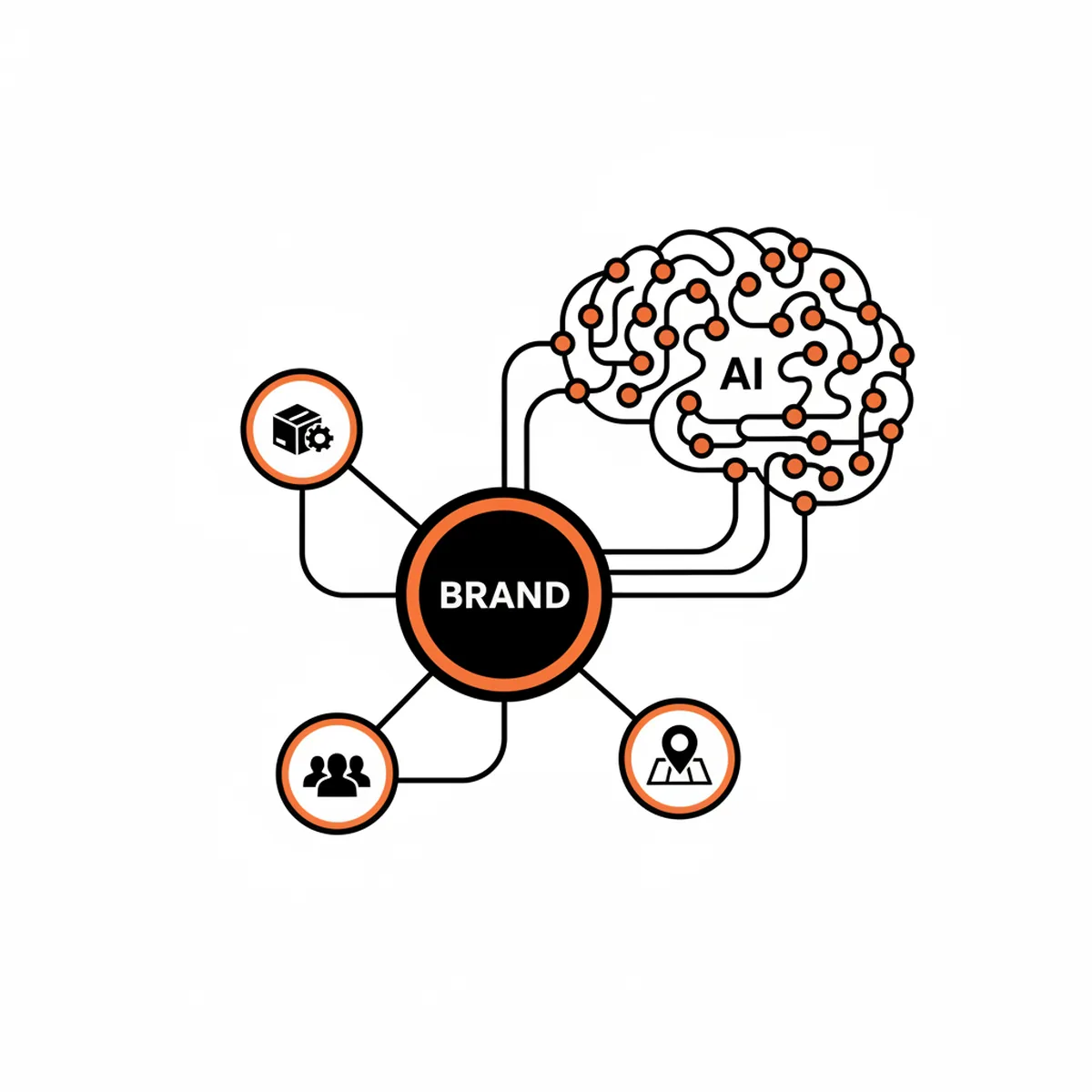
Mapping your brand entities is the first step toward AEO dominance.
Quick answer
Knowledge graphs are structured databases that store interconnected information about entities and their relationships. In AEO, they act as the source of truth for AI models. By mapping your brand's entities through schema markup, you help AI systems like ChatGPT and Gemini verify your facts and authority.
The relationship between a Knowledge Graph and AEO is the backbone of modern search. A Knowledge Graph is a structured network of data that represents a collection of entities—distinct objects or concepts—and the specific relationships between them. In 2026, Answer Engine Optimization (AEO) relies on these graphs to feed AI models verifiable facts. By organizing your website data into a machine-readable format, you transform your brand from a string of words into a recognized node within the global information ecosystem. This process ensures AI agents can accurately retrieve and cite your content as a primary source for user queries.
What is a Knowledge Graph in the Context of AEO?
To understand how AI systems think, you must first understand the Knowledge Graph. This is not a simple database. It is a semantic network that links an Entity—which can be a person, place, or brand—to other concepts through defined properties. For example, your company is an entity. Its founders, products, and physical locations are related entities.
Think of it like a star map. A single star is an entity. The constellations are the relationships. AI models use these constellations to navigate the massive amounts of data on the web. Without these connections, your content is just a lonely star drifting in a void.
In the world of Answer Engine Optimization (AEO), a knowledge graph serves as the "source of truth." When an AI model like Gemini or ChatGPT processes a query, it doesn't just look for keywords. It looks for relationships. It asks, "Is this brand an authority on this topic?"
By using Structured Data, specifically Schema Markup, you provide the map that allows these engines to place you within their internal graphs. In 2026, we define this as the shift from "strings" (text) to "things" (entities). If your data isn't mapped, you are invisible to the algorithms that generate instant answers.
The Anatomy of an Entity Node
Every entity in a graph has three main components: the subject, the predicate, and the object. In the SEO world, we call this a "triple."
- Subject: Your Brand (e.g., EvronStudio).
- Predicate: "Founding Year."
- Object: 2021.
When you provide thousands of these triples via schema, you build a dense web of facts that AI can digest instantly.
Why Knowledge Graphs Matter for AEO and SEO in 2026
The search environment changed significantly after the 2025 AI updates. We no longer optimize for a list of ten blue links. According to Gartner, by 2026, traditional search engine volume is expected to drop by 25% as users migrate to AI agents. These agents prioritize "verified" facts found within their knowledge bases.
Data from BrightEdge indicates that over 40% of queries now result in an AI-generated summary before a user sees organic results. If you aren't part of the knowledge graph, you won't appear in that summary. Furthermore, Search Engine Land reports that websites with a high density of entity-based markup see a 30% higher citation rate in AI responses compared to those using traditional keyword-only strategies.
The goal in 2026 is "Trust and Verification." AI models are designed to reduce hallucinations. They do this by cross-referencing user prompts against their internal knowledge graphs. If your brand’s information is inconsistent or hard to parse, the AI skips you in favor of a competitor with a cleaner data structure.
From Discovery to Retrieval
In the old days, Google discovered your page and indexed it. Today, the process is about retrieval. Large Language Models (LLMs) use Retrieval-Augmented Generation (RAG) to pull facts from the web in real-time. If your site is built as a knowledge graph, the RAG process can pinpoint the exact sentence it needs. This increases your chances of being the "cited source" in a ChatGPT response.
A Step-by-Step Guide to Building Your Knowledge Graph Presence
Step 1: Identify Your Core Entities
Before writing code, you must define who you are. Identify your primary business entity, your key employees, your flagship products, and your unique services. Think of this as creating a digital ID card for every component of your business.
- Why it works: It prevents AI engines from confusing your brand with others that have similar names.
- Common mistake: Focusing on generic keywords instead of specific, unique entity identifiers.
- Pro Tip: Use the Google Knowledge Graph Search API to see if your brand already has a unique Machine-ID (MID).
Mini-Procedure: Auditing your Entity Health
- Search your brand name in Google and check for a Knowledge Panel.
- Use the "Google Search Console" to see which entities Google currently associates with your URLs.
- List your top 10 products and find their corresponding categories on Schema.org.
Step 2: Implement Advanced Schema Markup
Take your list of entities and translate them into JSON-LD. Use specific types from Schema.org such as Organization, Product, and FAQPage. Use the sameAs property to link to your social profiles and Wikipedia pages.
- Why it works: Schema is the primary language AI models use to build their knowledge graphs.
- Common mistake: Using outdated or broken code that prevents crawlers from reading your site.
- Pro Tip: Use "Nested Schema" to show the hierarchy between your company and its individual service offerings.
| Schema Property | Purpose | Example Value |
|---|---|---|
@type | Defines the entity class | ProfessionalService |
name | The official name of the entity | EvronStudio |
sameAs | Links to authoritative identifiers | https://www.linkedin.com/company/evronstudio |
knowsAbout | Lists topics of expertise | Answer Engine Optimization |
memberOf | Shows industry affiliations | https://www.crunchbase.com/organization/example |
Step 3: Establish Entity Relationships
Entities don't exist in a vacuum. You need to show how your brand relates to other high-authority entities in your industry. This includes mentioning your partners, certifications, and industry awards in your metadata.
- Why it works: It builds "topical authority" by placing you in proximity to established leaders.
- Common mistake: Linking to irrelevant or low-quality external sources.
- Pro Tip: Use the
mentionsandaboutproperties in your blog schema to explicitly state what your content covers.
Step 4: Verify Your Digital Footprint
Consistency across the web is vital. Ensure your name, address, and phone number (NAP) are identical on your website, LinkedIn, Crunchbase, and industry directories. AI uses these external signals to verify the data in its graph.
- Why it works: Cross-platform consistency increases the "confidence score" an AI assigns to your information.
- Common mistake: Having conflicting information on old social profiles or directory listings.
- Pro Tip: Regularly audit your third-party profiles to ensure they all point back to your main entity URL.
Step 5: Monitor AI Citations
Use tools to see how AI engines are describing your brand. Are they getting your founding year right? Are they listing your primary services correctly? If not, you need to adjust your site’s structured data.
- Why it works: It allows for real-time adjustments as AI models update their training sets.
- Common mistake: Assuming your SEO work is "done" once the site is indexed.
- Pro Tip: Search for "Who is [Brand Name]?" in Perplexity to see exactly how your knowledge graph presence is being interpreted.
Comparing Traditional SEO vs. Knowledge-Based AEO
| Feature | Traditional SEO (Pre-2025) | Knowledge Graph & AEO (2026) |
|---|---|---|
| Primary Goal | Ranking for Keywords | Entity Verification & Citation |
| Data Format | HTML & Meta Tags | JSON-LD & Linked Data |
| AI Interaction | Indexing for Search | Training and RAG (Retrieval) |
| Trust Signal | Backlinks & Domain Authority | Entity Salience & Fact-Checking |
| Success Metric | Click-Through Rate (CTR) | Brand Mention & Answer Accuracy |
Common Mistakes to Avoid in Entity Mapping
- Over-optimizing for Keywords: In 2026, repeating a keyword 50 times does nothing. If you don't define the entity behind the word, the AI won't trust the content.
- Neglecting the "sameAs" Attribute: This is the most powerful tool in your schema. If you don't link your website to your verified LinkedIn or Google Business Profile, you miss the chance to bridge your data.
- Using Generic Schema Types: Don't just use
WebPage. UseTechArticle,MedicalWebPage, orReview. The more specific you are, the easier it is for a knowledge graph to categorize you. - Ignoring Brand Inconsistency: If your website says you were founded in 2010 but your Facebook says 2012, the AI sees a conflict and lowers your authority score.
- Forgetting about RAG: Retrieval-Augmented Generation (RAG) relies on clean data chunks. If your site structure is messy, AI agents cannot retrieve the specific "fact" they need to answer a prompt.
The Danger of "Shadow Entities"
A shadow entity occurs when different search engines perceive your brand as two separate things. This happens if your CEO is listed with different middle initials or if your subsidiary uses a different headquarters address without a clear hierarchical link. You must use the parentOrganization property to clear up this confusion. If you don't, your authority is split, and neither entity will rank high enough to be an answer.
Best Practices for AEO Success
- Prioritize Clarity: Write in a direct, factual style that is easy for Natural Language Processing (NLP) to parse.
- Use Persistent Identifiers: Link to your Wikidata or DBpedia entries whenever possible to give the AI a definitive reference point.
- Update Frequently: AI models favor fresh data. Ensure your structured data reflects your current team, products, and prices.
- Audit Your Citations: Check AEO insights to see which parts of your content are being picked up by AI engines.
- Focus on Topic Clusters: Build deep content around a single entity rather than shallow content across many topics to improve your entity optimization for AEO.
Use Natural Language for Machines
While we optimize for bots, the bots are now trained on how humans speak. This sounds contradictory, but it isn't. When writing, use the "Claim-Evidence-Conclusion" format. State a fact, provide data to back it up, and summarize the result. This structure is perfectly suited for LLMs that are looking to extract "claims" to satisfy a user's intent.
Impact on AI Visibility: ChatGPT, Gemini, and Beyond
In 2026, the battle for visibility happens within the latent space of LLMs. ChatGPT uses a combination of its training data and real-time browsing to answer queries. If your knowledge graph data is strong, you become a "preferred source." Gemini, being integrated with Google's main Search Knowledge Graph, relies heavily on your schema markup for AEO.
Perplexity and Copilot act as research assistants. They look for specific "answers" rather than "pages." When a user asks, "Which agency provides the best AEO services?" these engines scan for entities that have high authority scores in the AEO niche. Without a mapped knowledge graph, your brand is just a name on a page, rather than a verified solution in the AI's mind. We see that brands investing in technical AEO now dominate the "Sources" section of these platforms.
The Rise of Search Generative Experiences
Search Generative Experience (SGE) is no longer a beta test. It is the standard. When a user asks a complex question, the AI compiles a multi-source response. If your Knowledge Graph entry includes your pricing, your reviews, and your comparison against competitors, the AI can synthesize that data into a recommendation. If you omit that data, the AI might look to a third-party review site for those details, and you lose control of the narrative.
Case Study: Boosting Visibility for a B2B SaaS Client
We worked with a B2B SaaS client in the fintech space who struggled with AI visibility. Despite having high-quality blog posts, ChatGPT and Perplexity were not citing their research in answers about "digital transformation."
Our team implemented a comprehensive Knowledge Graph and AEO strategy. We started by mapping out 15 core entities within their business, including their proprietary software framework and their CEO’s industry research. We overhauled their JSON-LD to include detailed DefinedTerm and CreativeWork properties, linking their content to global financial standards.
We also cleaned up their external mentions. We found three different versions of their company name across various industry directories. By unifying these into a single entity profile, we gave the AI a clear, singular target for its citations.
Within six months, the results were clear:
- Their brand was cited as a primary source in AI-generated answers 140% more often.
- Organic traffic from AI-driven search engines (like Perplexity) grew by 85%.
- The client's "Knowledge Panel" in traditional search became more detailed, featuring their latest products and executive team accurately.
This shows that how AI chooses sources is directly tied to the technical clarity of your site's underlying data.
Tools and Resources for Knowledge Graph Management
To succeed, you need the right stack for AEO services:
- Merkle Schema Markup Generator: A free tool to build basic JSON-LD without needing to code from scratch.
- InLinks: A paid platform that analyzes your content's entity density and helps build internal links based on topics.
- Google Search Console: Essential for monitoring how your "Enhancements" (schema) are being read by crawlers.
- WordLift: An AI-powered tool that automatically turns your WordPress content into a structured knowledge graph.
- Schema.org: The official documentation site. It is free and should be your primary reference for every tag you implement.
- Ahrefs & Semrush: While traditional, these tools now offer entity tracking features to see how your topical authority grows over time.
How to Measure Success in AEO
Tracking AEO is different from tracking traditional rankings. You should focus on:
- Citation Count: How many times AI engines mention your brand name.
- Entity Salience: Using NLP tools to see if your brand is the "main topic" of a page.
- Knowledge Panel Presence: Whether Google displays a rich box of information about your brand.
- Referral Traffic from AI: Tracking visitors coming from
openai.comorperplexity.aiin your analytics.
AEO Checklist:
- [ ] All core team members have
Personschema. - [ ] Primary products have
Productschema with price and availability. - [ ] The
Organizationschema includessameAslinks to all verified profiles. - [ ] Content uses H2 and H3 tags that mirror common user questions.
- [ ] Site speed is optimized for fast RAG (Retrieval-Augmented Generation) access.
How to Test and QA Your Entity Work
You cannot simply push schema to production and hope for the best. You need a rigorous testing phase. Before you roll out a site-wide knowledge graph update, follow these quality assurance steps.
- Validation at the Code Level: Run your JSON-LD through the Schema Markup Validator. This tool checks for syntax errors that would make your data unreadable to an AI.
- Rich Results Testing: Use Google’s Rich Results Test to see how a search engine perceives your entities. If it doesn't show up here, it won't show up in a Knowledge Panel.
- NLP Salience Checks: Use the Google Cloud Natural Language API demo. Paste your content into the tool and see if your brand is listed as the top entity with a high "salience" score. If the AI thinks your page is about "software" generally rather than "Your Brand's Software" specifically, you need to rewrite your headers.
- Staging Environment Simulation: Deploy your new data structure to a staging site first. Use a crawler like Screaming Frog to ensure that the schema is firing correctly across all pages and that no links in the
sameAstags are broken. - Prompt Testing: Once the changes are live and indexed, go to Perplexity or ChatGPT. Ask, "What are the core features of [Product Name]?" If the AI gives an outdated answer, you know your graph isn't being prioritized yet.
The Trade-offs: When Knowledge Graphs Aren't Enough
We believe in the power of AEO, but we must be honest: it is not a magic bullet. There are specific scenarios where building a knowledge graph might not yield the ROI you expect.
First, data latency is a reality. Even if you update your site today, an AI model like GPT-4o might have a training cutoff from months ago. While real-time browsing helps, the core "knowledge" of the model is static for long periods. You won't see an overnight shift in citation frequency.
Second, entity confusion is difficult to fix. If your brand name is a common noun (like "Apple" or "Orange"), the AI will always struggle to distinguish you from the fruit unless you have massive authority. In these cases, AEO requires a significantly higher investment in third-party verification (like a Wikipedia page or high-tier press) just to get the AI to recognize you as a distinct entity.
Third, AEO reduces your site traffic. This is the hardest pill to swallow. The goal of an Answer Engine is to provide the answer on the search results page. If the AI gives the user exactly what they need, they have no reason to click through to your website. You are trading traffic for brand authority and mental availability. If your business model relies solely on ad impressions from site visits, AEO might actually hurt your bottom line in the short term.
The Future of Knowledge Graphs and AEO
Looking toward 2027, the line between a website and a database will disappear. We expect to see "Personalized Knowledge Graphs," where AI agents tailor their answers based on a user's specific history, while still drawing facts from verified brand graphs. The brands that win will be those that provide the most granular, accessible, and truthful data. Your website will no longer be a marketing brochure; it will be a node in a global intelligence network.
If you want to ensure your brand is ready for the future of search, you need a strategy that prioritizes data structure over simple content volume. We can help you navigate this transition.
Start by getting a [free AEO audit](/free-aeo-audit) to see where your entity mapping stands today.
Explore our full range of [AEO services](/services) to dominate the answer engines of 2026.
For more tips, visit our blog or read our latest AEO insights. If you have specific questions, feel free to contact our team.
Frequently asked questions
What is a knowledge graph in AEO?+
A knowledge graph is a structured data system that maps relationships between entities like people, places, and brands. In AEO, it provides the factual foundation that AI models use to verify your content. By organizing your data into a knowledge graph, you make it easier for AI agents to retrieve and cite your information accurately.
How does a knowledge graph differ from traditional SEO?+
AEO (Answer Engine Optimization) focuses on providing direct answers to AI models, while SEO (Search Engine Optimization) focuses on ranking pages in search results. Knowledge graphs bridge the two by transforming website content into machine-readable facts. In 2026, SEO gets you indexed, but a strong knowledge graph via AEO gets you cited as the primary answer.
How do I build a knowledge graph for my website?+
The most effective way is through JSON-LD schema markup. You should define your Organization, its Products, and its Key Personnel using specific properties from Schema.org. Additionally, linking to external authorities like Wikipedia or LinkedIn via the 'sameAs' property helps AI engines confirm your brand's identity and place you within their global knowledge network.
Why is entity mapping important for AI visibility?+
AI models like ChatGPT and Gemini use knowledge graphs to perform fact-checking. When a model generates a response, it cross-references its internal graph to ensure the information is correct and comes from a trusted source. If your brand is a clear entity in that graph, you have a much higher chance of being featured in the AI's response.
What metrics track knowledge graph success?+
Success is measured by AI citation rates, the presence of a Google Knowledge Panel, and referral traffic from AI platforms like Perplexity and OpenAI. You should also monitor your entity salience scores using Natural Language Processing tools to see how clearly AI perceives your brand as an authority on specific topics.
What are the common mistakes in knowledge graph optimization?+
Common errors include using generic schema instead of specific types, having inconsistent NAP (Name, Address, Phone) data across the web, and failing to use the 'sameAs' property. These mistakes create 'entity ambiguity,' making it difficult for AI to trust your brand's data, which often results in your content being ignored by answer engines.
Sources & further reading
Soft next step
Want to see where AI answers mention you — and where they don't?
We run a free AEO audit across ChatGPT, Gemini, Copilot and Perplexity, then hand you the fixes in priority order. Start your AEO strategy today.