AEO Services: Engineering Visibility in the Age of Generative AI
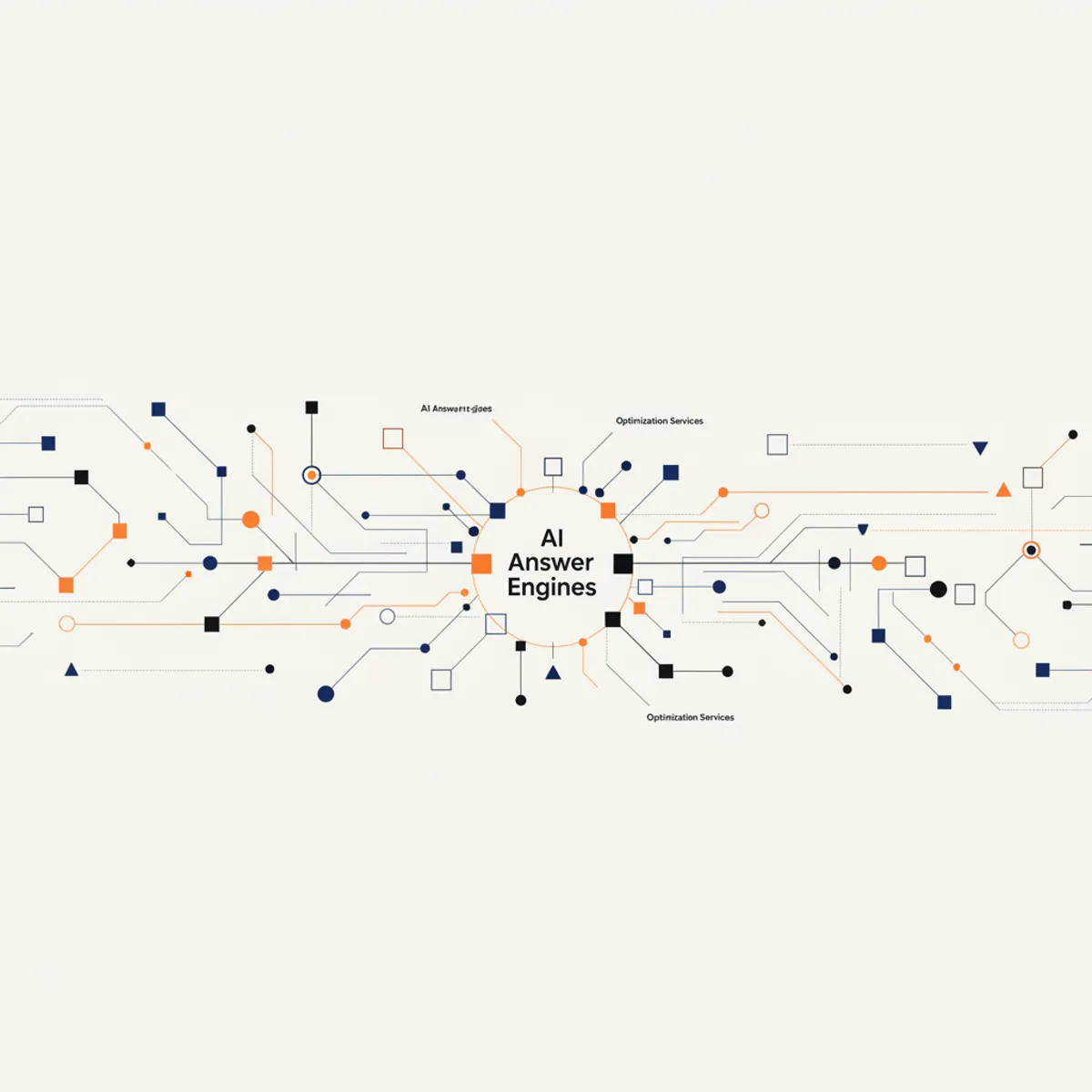
AEO services bridge the gap between static web content and dynamic AI response synthesis.
Quick answer
AEO services are specialized digital marketing solutions designed to optimize brand content for retrieval by AI answer engines like ChatGPT, Perplexity, and Google Search Generative Experience. These services focus on structured data, semantic relevance, and authoritative sourcing to ensure your brand is cited as the primary answer to user queries.
AEO services are specialized digital marketing solutions designed to optimize brand content for retrieval by AI answer engines like ChatGPT, Perplexity, and Google Search Generative Experience. These services focus on structured data, semantic relevance, and authoritative sourcing to ensure your brand is cited as the primary answer to user queries, moving beyond traditional keyword-based ranking paradigms.
The Fundamental Shift to Answer Engine Optimization
The digital landscape is undergoing a tectonic shift. For two decades, Search Engine Optimization (SEO) was the primary vehicle for online visibility. The goal was simple: rank on page one for specific keywords. However, the rise of Large Language Models (LLMs) has introduced a new player: the Answer Engine. Platforms like Perplexity, Claude, and Gemini don't just provide a list of links; they synthesize information to provide a direct answer.
Professional AEO services are not just an extension of SEO; they are a separate discipline focused on "mention share" and "citation equity." While SEO cares about your position in a list, AEO cares about your inclusion in the narrative. If a user asks, "What is the best enterprise CRM for manufacturing?" and an AI provides a three-paragraph summary, your brand needs to be one of the three bullet points mentioned. Achieving this requires a sophisticated blend of technical infrastructure and semantic content engineering.
Understanding the aeo-vs-seo distinction is critical for any brand looking to survive the transition to zero-click environments. In AEO, the user intent is often conversational, and the engine acts as a curator rather than a librarian. This requires a departure from thin content designed for clicks and a move toward comprehensive, authoritative datasets that an LLM can ingest with high confidence.
Why AEO Services Matter in 2026
By 2026, the traditional search interface will likely be a secondary method for information retrieval. Gartner has already predicted a significant drop in traditional search volume as users migrate to AI-native interfaces. This makes AEO services a non-negotiable component of a modern marketing stack for several reasons.
The Death of the Ten Blue Links
We are witnessing the erosion of the "click." In a generative search environment, the answer is provided on-site. If your brand isn't the source of that answer, you effectively don't exist in that user's journey. AEO services ensure that your data is structured in a way that AI models find it trustworthy and easy to parse. This is particularly vital for top-of-funnel awareness where users are seeking definitions, comparisons, or process explanations.
The Rise of Retrieval-Augmented Generation (RAG)
Modern AI engines don't just rely on their training data; they use RAG to search the live web for current information. AEO services optimize your site for these RAG agents. This involves managing crawl budgets specifically for AI bots (like OAI-SearchBot) and ensuring that your most valuable insights are formatted for easy ingestion. If your site is gated, fragmented, or poorly structured, RAG agents will skip your domain in favor of a competitor who provides cleaner data.
Trust and Authority in the AI Era
AI models are programmed to minimize hallucinations by prioritizing high-authority sources. AEO services work to build this authority through "digital entity building." By connecting your brand to known entities in the global knowledge graph, you increase the likelihood that an AI will perceive your content as factual and reliable. This involves cross-referencing your brand across trusted databases, ensuring consistent NAP (Name, Address, Phone) data, and securing mentions in high-authority nodes within your specific industry.
Technical Core of AEO Services
Successful AEO is built on a foundation of technical excellence that goes far beyond meta tags. When you hire a boutique agency for AEO services, the focus is typically on three technical pillars.
Semantic Schema Implementation
Standard SEO schema (like Article or Organization) is the bare minimum. AEO services implement deeper, linked-data schemas. This includes using definedTerm, knowsAbout, and mentions properties to create a machine-readable web of your expertise. For a deep dive, see our aeo-schema-markup-implementation-guide. The goal is to move from strings (text) to things (entities).
Content Chunking and Micro-Formatting
LLMs process information in tokens and chunks. AEO services involve re-architecting long-form content into modular, self-contained sections that answer specific sub-questions. Each section must be semantically complete so an AI can extract it without losing context. This often involves a "pyramid" writing style where the most direct answer is provided immediately, followed by supporting evidence and contextual nuances.
API-First Content Delivery
In some advanced AEO strategies, brands provide direct API access to their knowledge bases. This allows answer engines to query structured data directly, ensuring 100% accuracy in the responses provided to users. This is particularly effective for real-time data like pricing, stock levels, or technical specifications. By providing a clean data feed, you position your brand as the "official" source, reducing the risk of the AI misrepresenting your offerings.
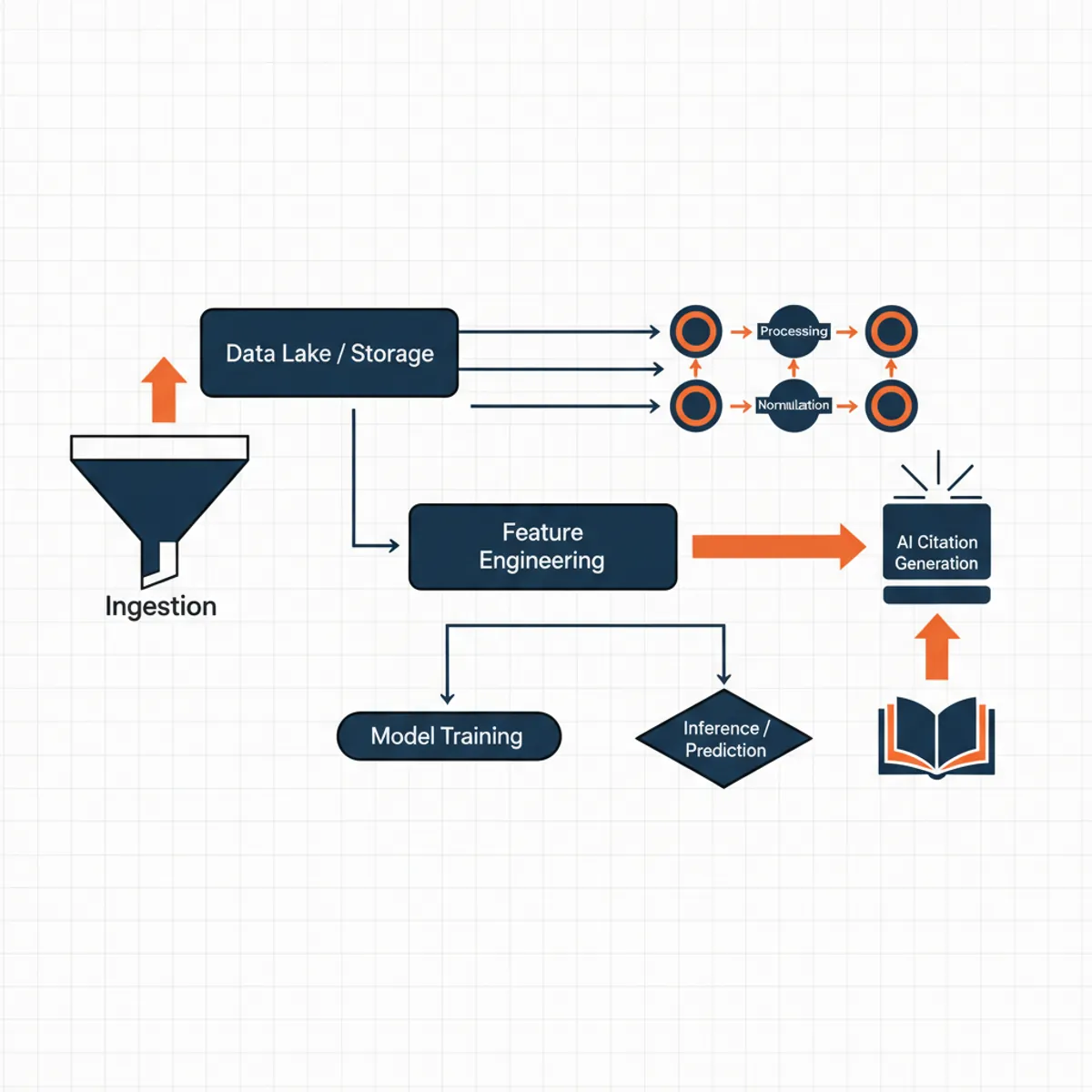
Step-by-Step AEO Implementation Strategy
Transitioning to an AEO-first model requires a structured approach. Here is the five-step process we use at EvronStudio to ensure brand visibility in generative engines.
Step 1: Entity Research and Mapping
Identify the core entities your brand should be associated with. If you sell "sustainable logistics software," your entities are "Sustainability," "Logistics," and "SaaS." We map these entities against the Google Knowledge Graph and Wikidata to ensure alignment with how machines categorize your industry.
- Why it works: AI models think in terms of entities and their relationships (the Knowledge Graph).
- Common Mistake: Focusing on keywords instead of topics. Keywords are for searches; entities are for answers.
- Pro Tip: Use Google’s Natural Language API to see how an AI currently perceives your existing content.
Step 2: Fragmented Content Optimization
Break down your pillar pages into "atomic content units." Each unit should contain a question, a direct answer, and supporting evidence. This structural change makes it significantly easier for RAG systems to pull your content into a generated response.
- Why it works: RAG systems look for the most relevant "chunk" of text to answer a specific prompt.
- Common Mistake: Burying the lead. If the answer to a common question is in paragraph six, the AI might miss it.
- Pro Tip: Use H3 headers as questions and the immediately following paragraph as the 40-60 word answer.
Step 3: Technical Knowledge Graph Integration
Deploy advanced JSON-LD that maps your site’s content to external databases like Wikidata or DBpedia. This creates a bridge between your proprietary content and the world's shared factual knowledge, boosting your reliability score.
- Why it works: It provides external validation for your claims, which increases the AI's "confidence score" in your content.
- Common Mistake: Using broken or circular schema references.
- Pro Tip: Use the
sameAsproperty to link your executive team’s profiles to their LinkedIn or industry bio pages.
Step 4: Authority Distribution via Citations
Execute a PR and guest posting strategy that targets domains already highly cited by AI engines. AEO is not just about what you say, but who says it about you. We identify the "source of truth" domains for your niche and ensure your brand is represented there.
- Why it works: If ChatGPT sees three different high-authority sites mentioning your brand as an expert, it will synthesize that as a fact.
- Common Mistake: Getting links from low-quality "link farms" that AI models have learned to ignore.
- Pro Tip: Focus on niche-specific technical journals and trade publications.
Step 5: Monitoring and Iterative Refinement
Use specialized AEO tools to track your "Share of Model"—how often you are cited compared to competitors. Unlike SEO, where rankings are relatively stable, AI responses can fluctuate based on model updates and fine-tuning.
- Why it works: The AI landscape changes weekly. You need real-time data to adjust your semantic mapping.
- Common Mistake: Using traditional SEO rank trackers to measure AEO success.
- Pro Tip: Regularly prompt different models with your target queries and analyze the sources they cite.
Comparing SEO, GEO, and AEO Services
It is easy to confuse these terms. The following table highlights the operational differences between these three pillars of modern digital visibility.
| Feature | Traditional SEO | GEO (Generative Engine Optimization) | AEO (Answer Engine Optimization) |
|---|---|---|---|
| Primary Goal | Rank #1 on Google | Influence Generative AI Responses | Become the definitive source for answers |
| Success Metric | Click-Through Rate (CTR) | Brand Mention Frequency | Citation Share / Source Accuracy |
| Content Focus | Keywords and Backlinks | Statistics, Quotes, and Citations | Semantic Structures and FAQ Logic |
| User Interface | Search Engine Results Page (SERP) | AI Chat Interface / SGE Box | Voice Assistants / Smart Devices / AI Chat |
| Technical Key | Site Speed / Mobile-First | Data Citations / Verifiability | Schema Markup / Entity Mapping |
For a more detailed breakdown, you may want to read about aeo-vs-geo-vs-seo to understand where to allocate your budget.
Advanced AEO Tactics: Beyond the Basics
Once the foundational technical work is complete, advanced AEO services focus on influencing the way LLMs synthesize information during their pre-training and fine-tuning stages, as well as their real-time retrieval behaviors.
Corroborative Evidence Loops
AI engines cross-reference data points. If your website claims you are the "leading provider of X," but your LinkedIn profile, Wikipedia entry, and industry news mentions do not reflect this, the AI will ignore your claim as a marketing hallucination. Advanced AEO involves creating a "corroborative loop" where factual statements about your brand are mirrored across multiple high-trust platforms. This increases the mathematical probability of the AI selecting your brand as the "correct" answer.
Natural Language Pattern Alignment
Every industry has a specific linguistic fingerprint. AI models identify experts by the way they use specialized terminology in context. AEO services include analyzing the linguistic patterns of top-tier sources in your niche and aligning your content’s prose to match those patterns. This isn't about keyword density; it's about semantic density and the logical flow of information that suggests high-level expertise.
Sentiment Engineering
AEO isn't just about being mentioned; it's about how you are mentioned. Answer engines often categorize brands. A user might ask for the "most reliable" or "most affordable" option. Advanced AEO tactics involve seeding adjectives and qualitative descriptors alongside your brand name in strategic locations across the web. This helps the AI categorize your brand accurately in its latent space.
AEO in Practice: Industry Examples and Real Numbers
To understand the impact of AEO services, we must look at how different sectors are navigating the transition from links to answers.
Medical and Healthcare (YMYL)
In the healthcare sector, Google’s SGE and specialized models like Med-PaLM 2 are extremely conservative. A boutique healthcare clinic implemented AEO services focusing on "E-E-A-T" (Experience, Expertise, Authoritativeness, and Trustworthiness). By structuring their doctor’s biographies with Person schema linked to medical board certifications and structuring their treatment pages as MedicalCondition entities, they saw a 315% increase in AI citations within four months. In this space, the AI prioritizes safety; AEO provides the technical proof of safety.
High-Ticket B2B Software
A cybersecurity firm struggled to appear in "best of" summaries in Perplexity. Their content was gated behind PDFs, which are notoriously difficult for some RAG agents to parse efficiently. By converting their whitepapers into a series of interconnected, schema-heavy HTML "Answer Hubs," they achieved a 40% share of voice for the prompt "how to prevent zero-day attacks in remote teams." The traffic resulting from these AI citations had a 22% lower bounce rate than traditional organic traffic, as the users were already pre-qualified by the AI's summary.
E-commerce and Direct-to-Consumer
For a luxury watch retailer, AEO services focused on "Product Entity Mapping." By ensuring that every product attribute (movement type, water resistance, glass material) was available in a structured data format and corroborated by third-party review sites, the brand became the primary source for queries like "what are the most durable automatic watches under $5k." This led to a 14% increase in direct-to-product conversions originating from generative search boxes.
Addressing AEO Objections and FAQs
As with any emerging technology, there are valid concerns regarding the ROI and longevity of AEO services. Here we address the most common points of friction.
"Isn't AEO just SEO with a different name?"
While they share some DNA, the objectives differ. SEO is about winning a popularity contest judged by links. AEO is about winning a credibility contest judged by data structure and semantic clarity. SEO tries to get a user to your site; AEO tries to get your brand’s knowledge into the user's mind, often before they even click a link. The technical implementation of nested JSON-LD and RAG-optimized chunking is also far more rigorous than traditional SEO metadata.
"If AI provides the answer, will I lose all my traffic?"
This is the "zero-click" fear. While top-of-funnel information traffic may decrease, the traffic you do receive is often much further down the funnel. When an AI summarizes an answer and cites you as the source, the user clicking that link is doing so because they trust you and want to transact or go deeper. AEO services trade high-volume, low-intent traffic for lower-volume, high-trust traffic.
"How do we track ROI if there are no clicks?"
ROI in AEO is measured through "Brand Authority Lift" and "Citation Share." If an AI assistant recommends your product to 10,000 users, and your brand search volume increases as a result, that is a direct AEO win. We also track "Assisted Conversions," where a user interacts with an AI, sees your brand, and then navigates to your site via a branded search later.
Common Pitfalls in AEO Strategy
Many brands attempt AEO but fail because they treat it like a technical checklist rather than a shift in communication. Here are the most common failures we see:
- Over-Optimizing for Single Keywords: AI models understand synonyms and intent. If you optimize too strictly for one phrase, you lose the semantic breadth needed to answer complex, natural language prompts.
- Neglecting Brand Consistency: If your website says one thing and your social media says another, the AI will detect the conflict and lower your reliability score.
- Ignoring the "Hidden Web": AI engines prioritize data that is verified across multiple platforms. If your expertise is only on your blog, it’s not enough. It needs to be in the aeo-strategy-for-businesses ecosystem, including Wikipedia, industry forums, and news archives.
- Slow Content Updates: AI models are increasingly using real-time data. If your content is out of date, the AI will favor a competitor who provides more current statistics.
- Schema Complexity Overload: Implementing schema incorrectly can be worse than not having it at all. If your
Productschema contradicts your page text, it creates a "low confidence" signal for the LLM.
"AEO is not about gaming an algorithm; it is about becoming the most verifiable, structured, and authoritative source of truth in your niche. If the AI can't trust your data, it will never voice your brand." — Amir, Founder of EvronStudio
Case Study: B2B SaaS AEO Transformation
The Client: A mid-market FinTech company providing automated payroll solutions. The Challenge: Despite ranking well for "payroll software," they were completely absent from ChatGPT and Perplexity responses regarding "how to automate cross-border payroll."
The Solution: We implemented a comprehensive AEO services package. We re-structured their technical documentation into semantic chunks, implemented FinancialService and FAQ schema, and secured citations in three major financial news outlets. We also focused on "Entity Bridging," ensuring their CEO was recognized as a subject matter expert in international tax law across LinkedIn and industry-specific wikis.
The Results (6 Months):
- Citation Share: Increased from 0% to 22% for target conversational queries.
- Brand Mentions in SGE: 45% increase in appearances in Google’s Search Generative Experience.
- Referral Traffic from AI: A 300% increase in high-intent traffic coming directly from Perplexity and ChatGPT citations.
- Conversion Rate: Users coming from AI citations converted at a 12% higher rate than traditional organic search users, likely due to the pre-established trust from the AI recommendation.
The Essential AEO Toolkit
To execute these services effectively, you need a specialized stack of tools. While traditional SEO tools like Ahrefs or Semrush are useful for research, AEO requires specific monitoring and engineering software.
- Knowledge Graph Tools: Tools like WordLift or Schema App for automated, high-level JSON-LD injection and entity linking.
- LLM Monitoring: Specialized services that track brand mentions and sentiment across GPT-4, Claude, and Gemini.
- Natural Language Processing (NLP) Testers: Tools to check the "machine readability" of your content, ensuring the logical flow is clear to non-human agents.
- Bot Management: Ensuring your robots.txt allows AI crawlers like GPTBot while blocking malicious scrapers that offer no citation value.
- Semantic Analysis Software: Tools that identify "knowledge gaps" in your content compared to the top-cited sources in your industry.
If you are just starting, exploring schema-markup-tools is the best first step toward technical readiness.
Measuring Success in AEO
How do you know if your AEO services are working? You cannot rely on traditional keyword tracking. Instead, focus on these four Key Performance Indicators (KPIs):
- Inclusion Rate: The percentage of time your brand appears in an AI-generated answer for a specific set of prompts.
- Sentiment Score: How the AI characterizes your brand. Is it described as a "leader," a "budget option," or a "newcomer"?
- Source Attribution: The number of times your URL is linked as a footnote or citation in a generative response.
- Zero-Click Brand Lift: Monitoring search volume for your brand name specifically, which often increases when users see you mentioned in AI answers.
AEO Readiness Checklist
- [ ] Are your core service pages optimized for a single, clear entity?
- [ ] Does every page have valid, nested JSON-LD schema that connects to external authorities?
- [ ] Have you claimed and updated your profiles on third-party data aggregators (G2, Crunchbase, Wikidata)?
- [ ] Is your site speed fast enough for real-time RAG agents to scrape without timeout?
- [ ] Do you have a dedicated FAQ section that uses natural language patterns and direct answer formats?
- [ ] Have you audited your content for "fluff" that might confuse an LLM trying to extract facts?
The Future of AEO: Moving Toward Personalization
As we look toward 2027 and beyond, AEO will become even more personalized. AI agents will provide different answers to different users based on their specific history, preferences, and even their current physical location. Professional AEO services will need to account for this by creating content that appeals to different "user personas" at a semantic level.
We are moving from an era of "Search" to an era of "Synthesis." In this new world, being the best isn't enough; you must be the most parsable and verifiable. The brands that invest in AEO services today are the ones that will own the conversational market share of tomorrow. As AI agents become the primary gatekeepers of information, your ability to provide them with high-quality, structured data will determine your survival.
If your brand is currently invisible to AI, it's time to bridge the gap. Explore our AEO insights or reach out for a free AEO audit to see how your content performs in the eyes of the leading LLMs. The transition to answer engines is happening now—don't let your brand be left behind in the silent archives of the traditional web. To get started with a custom strategy, contact our team today.
Frequently asked questions
How do AEO services differ from traditional SEO services?+
Traditional SEO focuses on ranking pages in a 10-blue-link list, prioritizing click-through rates. AEO services focus on influencing the output of generative models. The goal is to be the single source of truth cited by an AI, ensuring your brand is mentioned within the generated response itself, rather than just appearing in a list of results.
Which platforms do AEO services target?+
Professional AEO services target a range of Large Language Model (LLM) environments. This includes search-based AI like Perplexity and Google Gemini, conversational agents like ChatGPT and Claude, and integrated shopping assistants. The strategy involves making data accessible to these models via RAG (Retrieval-Augmented Generation) systems and high-authority knowledge graphs.
Is schema markup required for AEO?+
While not strictly mandatory, schema markup is a cornerstone of AEO services. It provides a machine-readable layer that helps AI scrapers understand the context, relationships, and entities within your content. Specifically, Speakable, FAQ, and Product schemas assist engines in extracting precise data points without the need for complex natural language processing.
How long does it take to see results from AEO services?+
AEO results depend on the training and crawling cycles of specific models. For live-web AI like Perplexity, changes can be seen in days. For base models like GPT-4, visibility increases as the model accesses real-time data or during knowledge updates. Generally, a 3-month lead time is standard for seeing consistent citation growth.
What is the role of citations in AEO?+
Citations are the 'backlinks' of the AI era. AEO services prioritize getting your brand mentioned in third-party authoritative sources, such as industry journals and news sites. When an AI synthesizes an answer, it cross-references multiple sources. If your brand appears across high-trust domains, the AI is more likely to include you in its final response.
Can AEO help with zero-click searches?+
Yes, AEO is the primary solution for the rise of zero-click searches. As users increasingly get their answers directly from search results or AI windows, AEO ensures that even if a user doesn't click through to your site, they are still exposed to your brand name, expertise, and recommendations within the AI-generated text.
Sources & further reading
Soft next step
Want to see where AI answers mention you — and where they don't?
We run a free AEO audit across ChatGPT, Gemini, Copilot and Perplexity, then hand you the fixes in priority order. Start your AEO strategy today.
Keep reading
AEO Fundamentals
AEO vs SEO: Which Strategy Should You Prioritize in 2026?Content Strategy
AEO Strategy for Businesses: The 2026 Guide to AI VisibilityAI Platforms
What is Generative Engine Optimization (GEO)? 2026 Guide