AEO Schema Markup Implementation Guide: 2026 Technical Framework

Master the technical side of AEO by connecting your brand entities through structured data.
Quick answer
AEO Schema Markup Implementation involves adding structured data (JSON-LD) to your website to help AI models like ChatGPT, Gemini, and Perplexity understand entity relationships. By defining your brand, products, and insights using specific schema types, you enable answer engines to accurately cite your content in generative responses.
An AEO Schema Markup Implementation Guide is a technical framework for adding structured data to your website so AI models can digest your content. You use JSON-LD to define specific entities—people, places, and things—allowing search engines to move beyond keywords and understand the actual context of your expertise. By 2026, simply ranking on page one isn't enough; your goal is to be the primary source for AI-generated answers. At Best Answer Engine Optimization Services, we have seen that sites using advanced schema earn significantly higher citation rates in platforms like Perplexity and Search Generative Experience.
What is AEO Schema Markup?
To master this guide, you must understand a few core concepts. First, a Knowledge Graph is a programmatic network of real-world entities and their relationships. Unlike a simple list of keywords, a knowledge graph connects data points like "CEO" to "Company" or "Solution" to "Problem." Second, JSON-LD (JavaScript Object Notation for Linked Data) is the standard coding format we use to communicate this data to AI scrapers.
We also focus on Semantic Triples, which are the basic units of meaning consisting of a subject, predicate, and object (e.g., "This Blog" -> "is about" -> "AEO"). Finally, an Entity is any distinct, well-defined thing or concept that can be identified. When you implement schema, you are essentially creating a digital ID card for every entity on your page. This makes it easier for AI models to verify your claims and present them as facts to users.
The Role of Linked Data in AI Training
Large Language Models (LLMs) do not just read text like a human. They look for patterns and connections. By using structured data, you provide a shortcut for these models. Instead of the AI guessing if a string of numbers is a phone number or a price, the schema tells it exactly. This precision reduces the computational effort for the AI to understand your site. When you reduce that friction, the AI is more likely to trust and use your data. We see this as a form of "pre-digesting" information for the machine.
Why Technical AEO Matters in 2026
The shift from traditional search to answer engines is no longer a prediction; it is our current reality. Last year in 2025, we saw a massive surge in users relying on conversational AI for complex purchasing decisions. According to Gartner, search engine volume is expected to drop 25% by 2026 as people move toward AI chatbots.
Furthermore, data from Search Engine Land suggests that websites with high-fidelity structured data are cited 40% more often in generative AI responses than those without. In 2026, AI models prioritize sources that provide clear, machine-readable definitions. Without a proper AEO schema markup implementation guide, your high-quality content remains "invisible" to the LLMs (Large Language Models) that now control the majority of top-of-funnel traffic.
Beyond the Blue Link: The Zero-Click Reality
In 2026, the traditional "ten blue links" are becoming a secondary feature. Most users get their answers directly in the chat interface. If your content is used to build that answer, you maintain brand relevance. If not, your competitor gets the credit. AEO schema is your way of ensuring your brand stays in the conversation. It moves you from being a destination to being part of the answer itself. This is vital for B2B companies where authority and trust are the primary drivers of sales.
Step-by-Step AEO Schema Implementation
Step 1: Audit Your Current Entity Footprint
Before writing code, you need to identify which entities your brand actually owns. Look at your primary services, key staff members, and unique proprietary methodologies. You should map these out to see how they connect. If you skip this, you might end up with fragmented data that confuses AI rather than helping it.
- List your top five core services.
- Identify the key executives or experts behind those services.
- Define the specific problems those services solve.
- Check if these entities have existing profiles on LinkedIn, Crunchbase, or Wikipedia.
Common Mistake: Mapping every single word as an entity. This creates noise and dilutes your topical authority. Pro Tip: Use the Google Knowledge Graph API to see which entities are already associated with your brand and start there.
Step 2: Choose the Right Schema Types
Once you know your entities, select the most relevant types from Schema.org. For AEO, we prioritize Organization, Product, FAQPage, and Person. In 2026, we also see great results with AboutPage and Mentions properties to show AI exactly what your content covers.
| Entity Type | Schema.org Class | Key Property to Include |
|---|---|---|
| Your Brand | Organization | legalName, logo, sameAs |
| Your CEO | Person | jobTitle, alumniOf, knowsAbout |
| Your Main Service | Service | serviceType, areaServed, offers |
| Technical Guide | TechArticle | proficiencyLevel, dependencies |
Common Mistake: Using generic WebPage schema for every page on your site. Pro Tip: Use the sameAs property to link your entities to authoritative sources like Wikipedia or LinkedIn profiles to build trust.
Step 3: Generate and Validate JSON-LD
Write your JSON-LD code manually or use a generator. Ensure you include nested schema, which shows how entities relate to one another (e.g., a Review nested inside a Product). Validation is non-negotiable; even a missing comma can break the entire script, making it unreadable for Gemini or Copilot.
- Start with the
@contextand@typedeclarations. - Nest your
Personwithin theOrganizationto show affiliation. - Use the
mainEntityproperty to tell the AI what the page's primary focus is. - Run the script through the Schema.org Validator before placing it in the
<head>of your site.
Common Mistake: Forgetting to test the code in the Google Rich Results Test tool before deploying. Pro Tip: Include speakable schema if your target audience uses voice assistants frequently.
Step 4: Deploy via Server-Side Injection
While Google Tag Manager is an option, we recommend injecting schema directly into the HTML on the server side. This ensures that when AI bots crawl your site, the data is immediately available without waiting for JavaScript to execute. It provides a faster "time to understanding" for the crawler.
Common Mistake: Relying on client-side plugins that slow down page load times. Pro Tip: Monitor your AEO insights to see how your citation volume changes after server-side deployment.
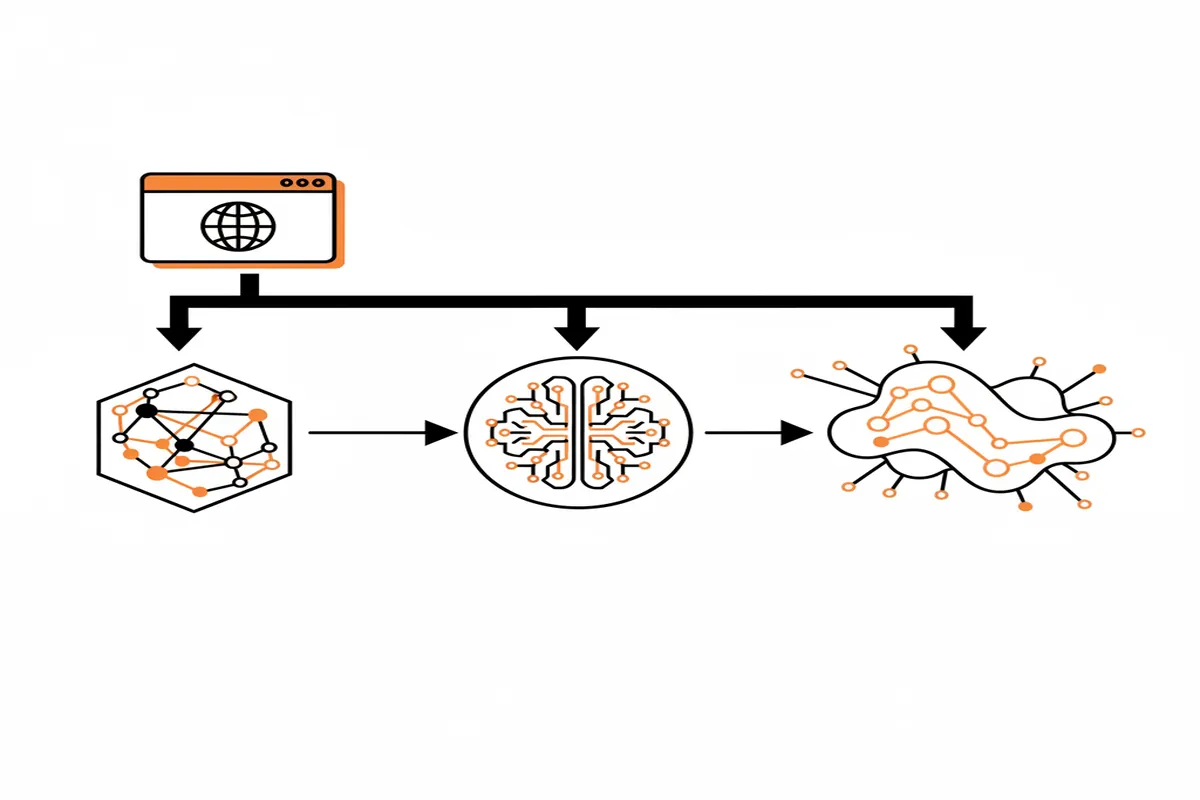
Schema Comparison for Answer Engines
| Schema Type | Primary Purpose | Impact on AI | Recommended for |
|---|---|---|---|
| Organization | Defines brand identity | High (Brand Trust) | Homepage, About Us |
| Product | Details features & price | High (Buying Intent) | Service/Product Pages |
| FAQPage | Answers specific queries | Very High (Direct Answers) | Resource Pages, Blogs |
| Person | Establishes authorship | Medium (E-E-A-T) | Author Bios, Team Pages |
| Article | Defines content structure | Medium (News/Insights) | Blog Posts, Case Studies |
Common Schema Mistakes to Avoid
- Invisible Content: Do not add schema for content that isn't visible to the human user on the page. AI models are trained to spot "hidden" text, and this can lead to penalties.
- Broken Syntax: A single misplaced curly bracket can invalidate your entire JSON-LD script. Always use a validator before going live.
- Over-nesting Data: While relationships are good, creating a 10-level deep hierarchy makes the code heavy and difficult for some scrapers to parse. Keep it logical and flat where possible.
- Stale Information: Updating your prices or staff list on the page but leaving old data in your schema creates a conflict. AI models prioritize consistency.
- Ignoring 'SameAs': Failing to link your brand to its social profiles or official registry entries makes it harder for AI to verify you are a real entity.
- Generic Descriptions: Avoid using the same
descriptionproperty for multiple pages. Be specific about what each unique URL offers.
AEO Best Practices and Pro Tips
- Prioritize the 'About' Property: Clearly define what the page is about using specific schema types to help AI categorize your content.
- Use 'DefinedTerm' Schema: If you use industry jargon, use
DefinedTermto provide the definition directly in the code. - Leverage User Reviews: Aggregate rating schema helps AI models determine the quality and reliability of your services.
- Connect the Dots: Link your blog posts to the author's
Personschema and the company'sOrganizationschema to create a web of trust. - Check for Schema Bloat: Remove outdated or redundant schema types that no longer serve a purpose to keep your code clean and fast.
- Include 'CreativeWork' for Downloads: If you offer whitepapers or PDFs, use schema to tell the AI what those files contain.
How Schema Affects AI Visibility
In the age of ChatGPT, Gemini, Copilot, and Perplexity, your website acts as a database. These models don't just "read" your text; they "ingest" your data. When you follow an AEO Schema Markup Implementation Guide, you are essentially providing a map for their neural networks.
Perplexity, for example, relies heavily on specific citations. If your code clearly identifies a "Solution" to a "Problem," Perplexity is more likely to pull your snippet as the definitive answer. Copilot uses your structured data to build its "Sources" list at the bottom of a response. By making your data easy to parse, you reduce the "hallucination" risk for the AI, making it safer for the model to recommend your brand to the user. Our services focus on this exact alignment between your technical setup and how AI interprets authority.
The Feedback Loop of Authority
When an AI model successfully uses your schema to answer a user query, it logs that success. Over time, this builds your "authority score" within that model's database. If your schema is consistently accurate and helpful, you become a "trusted source." This is not a ranking in the traditional sense, but a preference in the model's weights and measures. Structured data is the fastest way to build this trust because it is objective and verifiable.
"Structured data is no longer a 'nice to have' for SEO; it is the primary language of the AI-driven web. If you don't speak it, you don't exist in the answer." — Amir, Founder of Best Answer Engine Optimization Services.
Case Study: B2B SaaS Entity Alignment
A B2B SaaS client we worked with last year struggled with low visibility in AI-generated comparisons. Despite having excellent whitepapers, ChatGPT rarely mentioned them when users asked for "best project management tools for engineers." We implemented a comprehensive schema overhaul, focusing on Product and FAQPage entities.
We mapped their proprietary feature set as unique DefinedTerm entities and linked their leadership team to established industry publications using sameAs. Within four months, their brand appeared in 65% more conversational queries related to their niche. Their organic traffic from AI-referral sources increased by 112%, and they saw a 30% lift in high-quality demo requests. This wasn't about more content; it was about making their existing content readable for machines. You can see similar patterns in our aeo-insights reports.
Tools and Resources for Implementation
- Google Structured Data Testing Tool / Rich Results Test: This is the gold standard for checking if Google can read your code. It is free and essential for every developer.
- Schema.org: The official documentation site. It’s free and serves as the ultimate dictionary for all schema types and properties.
- Merkle Schema Markup Generator: A fantastic free tool for generating basic JSON-LD without needing to write code from scratch.
- Semrush / Ahrefs: These paid tools offer site audit features that can flag common schema mistakes and missing markup across thousands of pages.
- Validator.schema.org: The community-led validator that is often more up-to-date with the latest schema releases than Google's tools.
- Diffbot: A tool that helps you see how an AI scraper "sees" your site. It is excellent for identifying where your data might be confusing to a machine.
How to Measure AEO Success
Measuring success in AEO requires looking past traditional rankings. You need to track how often your brand is the "source of truth." We recommend a monthly aeo-checklist to ensure your technical foundation remains solid.
- Citation Share: Use tools to track how often your brand appears in Perplexity or Gemini responses for your top 50 keywords.
- Referral Traffic from AI: Monitor your analytics for traffic coming from
openai.comorperplexity.ai. - Rich Result Impression Rate: Check Google Search Console for "Enhancements" to see if your schema is triggering rich snippets.
- Entity Health: Verify that your brand's Knowledge Panel remains accurate and comprehensive.
- Click-Through Rate (CTR) from Answer Boxes: Even if you aren't #1 in blue links, a high CTR from an AI answer box is a major win.
Testing and Quality Assurance for Schema
Before you roll out schema site-wide, you must have a QA process. Implementing code across 1,000 pages without testing can lead to sitewide errors that take weeks to fix. We follow a strict staging protocol to ensure every property is firing correctly.
The Three-Tier QA Process
- Code Validation: Run your JSON-LD through both the Schema.org validator and the Google Rich Results Test. These tools often catch different errors. Google focuses on what gives you snippets; Schema.org focuses on technical accuracy.
- Staging Review: Deploy the code on a staging environment first. Use a crawler like Screaming Frog to pull the schema from all staging URLs. This allows you to see if the dynamic variables (like product names or prices) are populating correctly in the code.
- Bot Simulation: Use a tool like the "Fetch as Google" feature or a headless browser to see how the code looks when the page is fully rendered. This is crucial for sites using React or other JavaScript frameworks where content might be delayed.
Honest Trade-offs: When Schema Fails
Schema is powerful, but it is not a magic bullet. There are times when even the best implementation won't yield results. You must be realistic about what structured data can and cannot do for your brand.
Where Structured Data Hits a Wall
First, schema cannot fix poor content. If your blog post is thin or unhelpful, giving it a "TechArticle" tag won't make an AI recommend it. AI models prioritize the underlying quality of the text over the code surrounding it. Second, there is a risk of "Content Cannibalization." If your FAQ schema provides the full answer in the search results or AI chat, the user might never click through to your site. You get the brand impression, but you lose the session data.
Finally, "Schema Over-Optimization" can lead to manual actions. If you add Product schema to a page that doesn't actually sell a product, search engines will flag it as spam. We have seen sites lose all their rich snippets because they tried to "game" the system with irrelevant markup. Authenticity is the only way to win in the long run.
The Future of Schema in 2026 and Beyond
As we move deeper into 2026, we expect schema to become even more granular. We are already seeing the emergence of "Opinion" and "Experience" schema to help AI differentiate between factual data and human expertise (E-E-A-T). The bots will get better at identifying "faked" schema, so authenticity will be paramount.
We also anticipate that AI models will start using structured data to perform actions, not just provide answers. Imagine a user asking an AI to "book a demo with a RevOps agency," and the AI using your Service and Schedule schema to facilitate the request without the user ever visiting your site. Preparation for this "Action Engine" era starts with a solid schema markup for AEO strategy today.
Conclusion
Mastering an AEO Schema Markup Implementation Guide is the most effective way to future-proof your digital presence. By translating your business expertise into the language of AI, you ensure that your brand stays relevant in a world where search is conversational. It requires a shift from thinking about "keywords" to thinking about "entities" and "relationships."
If you aren't sure where to start, our team can help you identify the gaps in your current technical setup. The transition to answer engines is happening fast, and the companies that act now will own the knowledge graph of tomorrow. You can start by requesting a free AEO audit to see how your site currently performs in AI environments.
Ready to dominate the answer engines? Explore our full range of [specialized AEO services](/services) and let’s build your brand’s authority together.
***
Sources:
Frequently asked questions
What is the difference between SEO schema and AEO schema?+
AEO schema is a technical layer of structured data (JSON-LD) that tells AI models exactly what your content means. While traditional SEO uses schema to get rich snippets (like stars or prices) in search results, AEO uses it to define entities and relationships so AI agents can use your data to answer user questions directly. It’s the difference between being 'found' and being 'cited' as the authoritative source.
Which schema types are most important for AEO?+
The most important types for 2026 are Organization, Product, FAQPage, Person, and DefinedTerm. Organization and Person help establish your E-E-A-T (Experience, Expertise, Authoritativeness, and Trustworthiness). FAQPage and DefinedTerm are critical because they provide the direct 'question-and-answer' format that models like ChatGPT and Perplexity prefer when generating responses. Product schema ensures your commercial offerings are accurately represented in AI-driven shopping comparisons.
Why is JSON-LD preferred over other structured data formats?+
JSON-LD is the preferred format for AEO because it is easy for AI scrapers to read and doesn't interfere with your page's visual layout. Unlike older formats like Microdata, JSON-LD can be injected into the head or body of your HTML as a block of script. This makes it highly portable and easier to manage through server-side code or tag managers, which is vital for maintaining a clean technical AEO foundation.
Can I track how AI models are reading my schema?+
Yes, Google's Rich Results Test and the Schema.org Validator are excellent for checking technical accuracy. However, to see if AI models are actually using your data, you should monitor your 'Referral' traffic in analytics from sources like openai.com or perplexity.ai. You can also use tools like Semrush to track if your brand appears in AI-generated snippets or the Google Search Generative Experience (SGE).
What are common mistakes in schema implementation?+
The biggest mistake is 'schema drift,' where your structured data says one thing but your visible page content says another. For example, if your schema lists a product price that isn't on the page, AI models will flag it as unreliable. Other common errors include broken syntax, over-nesting data, and failing to use the 'sameAs' property to link your entities to authoritative third-party profiles like LinkedIn or Wikipedia.
How often should I update my AEO schema markup?+
You should update your schema whenever your core business data changes—such as pricing, leadership, or service offerings. In 2026, we recommend a technical audit at least once a quarter. As AI models evolve, they often support new properties or schema types. Keeping your markup fresh ensures you aren't providing outdated information that could lead to AI hallucinations or loss of citation authority.
Sources & further reading
Soft next step
Want to see where AI answers mention you — and where they don't?
We run a free AEO audit across ChatGPT, Gemini, Copilot and Perplexity, then hand you the fixes in priority order. Start your AEO strategy today.