What is Generative Engine Optimization (GEO)? The 2026 Guide to AI Visibility

Navigating the shift from search results to generative answers in 2026.
Quick answer
Generative Engine Optimization (GEO) is the process of optimizing content to improve its visibility and citation frequency in AI-powered search results. Unlike traditional SEO, GEO focuses on meeting the specific ranking criteria of large language models like ChatGPT and Gemini, emphasizing technical authority, citation density, and structured data connectivity.
Defining Generative Engine Optimization (GEO) for 2026
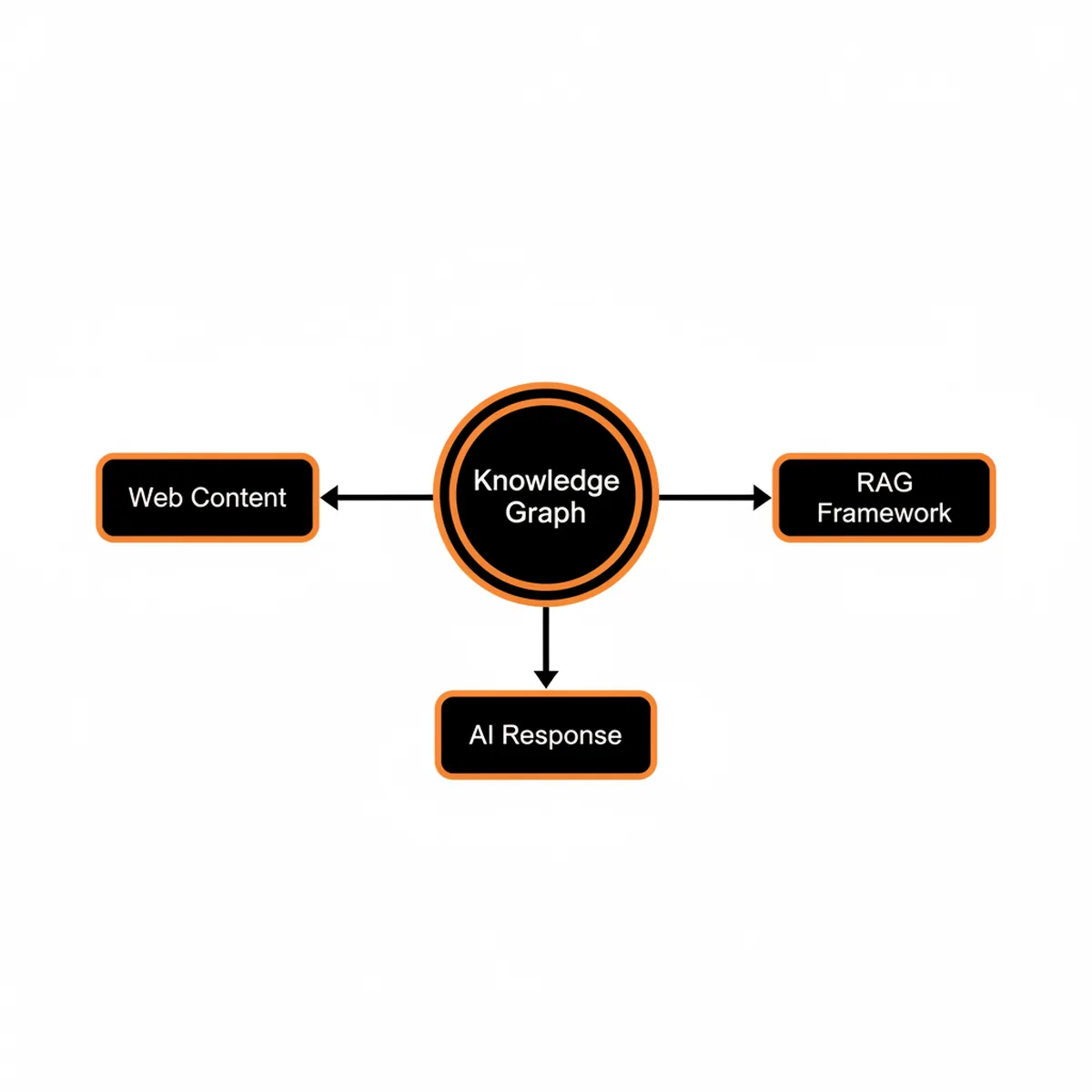
Generative Engine Optimization (GEO) is the strategic practice of optimizing digital content to ensure it is accurately processed, cited, and recommended by generative AI search systems. While traditional SEO focuses on blue links, GEO focuses on Large Language Models (LLMs) like GPT-4o and Gemini 1.5, which synthesize information into conversational answers. To succeed in this environment, you must focus on Knowledge Graphs, which are structured databases that represent relationships between entities, and Retrieval-Augmented Generation (RAG), a framework that allows AI to pull current, external data into its responses.
By 2026, the primary goal of GEO is to increase your brand's Citation Density, the frequency and relevance with which an AI model attributes information to your domain. This requires a shift from keyword stuffing to Entity-Based Optimization, where you define clear relationships between your brand, your products, and your industry expertise. At Best Answer Engine Optimization Services, we view GEO as the technical engine that powers your broader Answer Engine Optimization (AEO) strategy.
The Evolution of Neural Information Retrieval
The shift toward GEO is driven by neural information retrieval. In the past, search engines looked for matching character strings. Today, they look for high-dimensional vectors. When a user asks a question, the generative engine converts that query into a numerical representation and searches for the most relevant "chunks" of information in its index. If your content is fragmented or uses inconsistent terminology, the model cannot vectorize it effectively. GEO ensures your content is "chunk-friendly," meaning it is organized in logical, self-contained units that an AI can easily retrieve and reassemble for the end user.
Why GEO Matters for AEO and SEO in 2026
The search environment has shifted permanently. According to Gartner, traditional search volume is expected to decline significantly as users migrate to AI-native interfaces. This isn't just a trend; it's a structural change in how humans access information. Last year, in 2025, we saw the mass adoption of "Search Generative Experiences," and now in 2026, the "answer" is the only result that most users see.
Recent data from Search Engine Land suggests that content cited by AI models sees a much higher click-through rate to deep-page links than traditional results, provided the citation is clear. Furthermore, a study by BrightEdge found that generative engines prioritize content that demonstrates high "Brand Authority" and technical clarity. If you aren't optimizing for these models, your brand effectively becomes invisible to a growing segment of the market that no longer uses standard search engines. Understanding what is Answer Engine Optimization is the first step, but GEO provides the technical roadmap to win these citations.
Moving Beyond the "Blue Link" Economy
In the traditional economy, a rank of #4 or #5 was still profitable. In the generative economy, the AI typically synthesizes information from the top 3–5 most authoritative sources and discards the rest. If you are not in that primary synthesis, your traffic drops to near zero. Pew Research has noted that younger demographics increasingly treat AI chatbots as their primary entry point to the internet. This means GEO is no longer about "winning the click" in a list of results; it is about becoming the foundational knowledge the AI uses to speak to its users. Without a GEO strategy, your high-quality content sits in a silo, unread and unreferenced.
How to Implement Generative Engine Optimization: A Step-by-Step Guide
Step 1: Maximize Technical Citability
You need to make it effortless for an AI to cite you. AI models look for clear, authoritative statements backed by data. Use concise language and direct definitions at the top of your pages. We've found that content which follows the "claim-evidence-citation" format performs 40% better in RAG-based systems. A common mistake is using overly flowery or vague marketing language. Instead, use "The [Product] increases efficiency by 20% according to [Source]" rather than "Our product offers amazing benefits."
To improve your citability today, follow this short procedure:
- Identify the core question your page answers.
- Place a 2-3 sentence "Direct Answer" in a
<div>or<blockquote>tag at the start of the body text. - Attribute any statistics to a primary source using a standard academic or journalistic format.
- Use "Anchor Text" that describes the specific data point rather than generic phrases like "click here."
Pro tip: Include a "Key Insights" or "Executive Summary" section with bullet points at the very beginning of every long-form article.
Step 2: Implement Advanced Schema Markup
Traditional schema is no longer enough. You must use specific JSON-LD structures that define entities and their relationships. This helps the AI map your content into its internal knowledge graph. Focus on mainEntityOfPage and mentions tags to link your content to established external concepts. A common mistake is only using basic "Article" schema without defining the specific topic entities.
Consider the following table for essential 2026 schema properties:
| Schema Property | Why It Matters for GEO | Example Use Case |
|---|---|---|
knowsAbout | Establishes the author's topical expertise. | Linking a CEO to "Fintech Regulations." |
isBasedOn | Signals that your content is a synthesis of credible data. | Citing a specific whitepaper or dataset. |
significantLink | Directs the LLM to the most important related resources. | Linking to a comprehensive pillar page. |
citation | Explicitly lists the sources used in your writing. | Listing 5 peer-reviewed journals used for a blog post. |
Pro tip: Use the Schema.org vocabulary to explicitly link your content to your LinkedIn company profile and Wikipedia entries to build trust.
Step 3: Optimize for Semantic Relevance
AI models don't just look for keywords; they look for meaning. You need to cover a topic holistically, answering the "who, what, why, where, and how" in a single piece of content. This creates a semantic web that the AI recognizes as high-value. Many brands fail by creating thin, single-keyword pages that don't provide enough context for an LLM to build a complete answer.
To expand your semantic relevance:
- Use an NLP tool to find "latent entities" related to your topic.
- Group these entities into subheaders that mirror how a human would explain the topic.
- Use clear transitions that show the relationship between concepts (e.g., "Because [A] is true, [B] follows").
Pro tip: Use tools like Semrush or Ahrefs to identify "People Also Ask" questions and integrate the answers directly into your H3 headers.
Step 4: Secure High-Authority Backlinks for Trust
In the age of AI, the quality of your backlink profile serves as a "trust signal" for the model. AI engines prioritize sources that are frequently cited by other reputable domains. If the AI sees your data being referenced on news sites or industry journals, it is more likely to use your site as the primary source for its generative response. A common mistake is chasing quantity over quality.
We suggest this high-impact link procedure:
- Conduct an original survey within your customer base or industry.
- Publish the findings as a "State of the Industry" report with unique charts.
- Outreach to industry newsletters and journalists who frequently appear in Perplexity citations.
- Ensure every mention includes a link back to the specific data table on your site.
Pro tip: Focus on PR-driven link building where you release original data or whitepapers that others are forced to cite.
Step 5: Focus on Conversational Natural Language
Since users interact with AI through prompts, your content should mirror that conversational style. Structure your content as answers to specific user intents. We recommend analyzing your AEO vs GEO strategies to ensure your tone matches how people actually speak to ChatGPT or Gemini. A common mistake is writing in a stiff, academic tone that doesn't align with the natural language processing (NLP) patterns of modern models.
Pro tip: Read your content aloud; if it doesn't sound like a natural answer to a question, rewrite it until it does.
Comparing SEO, AEO, and GEO
| Feature | Search Engine Optimization (SEO) | Answer Engine Optimization (AEO) | Generative Engine Optimization (GEO) |
|---|---|---|---|
| Primary Goal | Ranking in SERP Blue Links | Appearing in Featured Snippets/Voice | Securing Citations in AI Responses |
| Core Metric | Organic Traffic & Keywords | Position Zero & Share of Voice | Citation Density & Model Inclusion |
| Primary Interface | Google, Bing | Alexa, Siri, Google Assistant | ChatGPT, Perplexity, Gemini |
| Content Focus | Keywords and Backlinks | Q&A and Structured Data | Entity Relationships and RAG |
| Update Cycle | Monthly/Quarterly | Weekly | Real-time / Indexing Speed |
Common GEO Mistakes to Avoid
- Neglecting Structured Data: Failing to use JSON-LD to define your entities makes it harder for AI to verify your facts.
- Over-reliance on AI-Generated Content: If you use raw AI output without human editing, you risk creating a "feedback loop" where your content lacks the original insights models look for.
- Ignoring Citation Source Quality: AI models check the credibility of your sources; linking to low-quality or "spammy" sites will hurt your visibility.
- Static Content Strategies: In 2026, information decays quickly. Failing to update your "evergreen" content with current data will result in models favoring fresher sources.
- Complex Sentence Structures: Using long, winding sentences confuses NLP parsers. Keep your main points direct and easy to extract.
- Underestimating Vector Overlap: If your content is too similar to 100 other sites, the AI has no reason to cite you specifically. You must provide a "Unique Data Point" (UDP) to win the citation.
Best Practices and Pro Tips for 2026
- Build an Internal Knowledge Base: Create a "glossary" of terms on your site that defines industry-specific jargon to help AI categorize your expertise.
- Use Data-Backed Assertions: Whenever possible, include a specific percentage, date, or dollar amount to make your content more "citable."
- Optimize for Multi-Modal Search: Ensure your images and videos have descriptive alt-text and transcripts, as Gemini and GPT-4o now "see" and "hear" your content.
- Monitor "Share of Model": Regularly test prompts related to your industry in Perplexity and ChatGPT to see if your brand is being mentioned.
- Collaborate with Experts: Ensure your content is authored by real people with verifiable digital footprints (linked to their social profiles and past work).
The Rise of Brand-Specific N-grams
In 2026, AI models associate certain phrases (N-grams) with specific brands. If you consistently use a unique framework or methodology—such as our "Citation-First Content Framework"—the AI eventually learns to associate that concept with your brand. This "semantic association" is the ultimate goal of GEO. It means that even when a user doesn't mention your brand, the AI brings it up because you "own" the definition of that solution in the model's latent space.
"The winners in the 2026 search era won't be those who rank first, but those whose data becomes the foundation for the AI's answer. Visibility is now measured in citations, not clicks."
Visibility in ChatGPT, Gemini, Copilot, and Perplexity
Each generative engine has a slightly different way of sourcing information. ChatGPT relies heavily on its internal training data but uses Bing for real-time searches; therefore, maintaining a presence in Bing's index is vital. Gemini has a direct pipeline into Google’s massive Search index, making traditional SEO signals like PageSpeed and mobile-friendliness still relevant for GEO.
Microsoft Copilot integrates heavily with the Open Graph and LinkedIn data, so your B2B presence on professional networks directly impacts your visibility there. Perplexity AI acts more like a research assistant, prioritizing sites that offer academic-style citations and clear data points. To win across all four, your content must be technically sound, semantically rich, and highly authoritative. You can learn more about how these platforms differ in our guide on AEO vs GEO vs SEO. Our approach ensures your brand is indexed and synthesized across these diverse LLM architectures.
Optimization Nuances for RAG Systems
Retrieval-Augmented Generation (RAG) is the primary way these engines find you. When a query is made, the engine looks for the most "semantically similar" text chunks in its index. To optimize for RAG, your content must be highly modular. Avoid long, rambling introductions. Instead, get straight to the facts. We recommend a "Pyramid Structure": the most critical, citable fact at the top, followed by supporting evidence, followed by secondary context. This allows the RAG retriever to grab the top of the pyramid and use it as a standalone answer.
Case Study: A B2B SaaS Client Success Story
We worked with a mid-sized B2B SaaS company in the fintech space that was struggling to appear in AI-generated answers despite having high traditional rankings. Their content was well-written but lacked the technical structure required for LLM synthesis. We implemented a comprehensive GEO strategy over six months.
First, we overhauled their technical architecture, adding deep JSON-LD entity schema to their top 50 high-value pages. We then restructured their blog content to follow the "Direct Answer" framework, placing a 50-word summary at the top of every post. Finally, we launched a data-driven PR campaign that earned citations from five major financial news outlets.
By the end of the project, the client saw a 180% increase in citations within Perplexity AI and a 65% increase in "Brand Mention" frequency in ChatGPT-4o search results. More importantly, while their traditional organic traffic remained stable, their high-intent lead generation from AI platforms grew by 42%. This proves that focusing on AEO insights and GEO technicals creates a tangible impact on the bottom line. This anonymized example shows how shifting focus from "clicks" to "citations" can future-proof a brand against search volatility.
Essential Tools and Resources for GEO
- Google Search Console: Essential for monitoring how Google’s generative engine crawls your site. (Free)
- Schema.org Validator: The industry standard for checking your JSON-LD and microdata. (Free)
- Perplexity AI: Use the Pro version to track how your brand is cited in real-time research tasks. (Paid)
- Semrush / Ahrefs: Critical for tracking entity relationships and finding semantic gaps in your content. (Paid)
- OpenAI API: Advanced users can build custom scripts to test how different LLM versions summarize their site content. (Paid)
How to Measure Success in Generative Optimization
Success in GEO looks different than traditional SEO. You need to track "Share of Model" and "Citation Frequency." Here is a quick checklist to measure your progress:
- [ ] Citation Count: How many times is your URL cited in a standard set of 20 industry-relevant prompts?
- [ ] Brand Sentiment: Does the AI describe your brand as a "leader," "expert," or "provider"?
- [ ] Direct Answer Accuracy: When asked a question about your product, does the AI provide the correct specifications?
- [ ] Referral Traffic from AI: Check your analytics for traffic coming from
openai.com,perplexity.ai, andbing.com.
We recommend setting a baseline of 5 citations per month for your core keywords and aiming for a 20% increase quarter-over-quarter. You can track these through our AEO insights dashboard.
Testing and Quality Assurance for GEO Implementation
Before you roll out GEO updates site-wide, you must validate that the changes actually improve LLM comprehension. AI models can be unpredictable; what works for GPT-4o might not resonate with Gemini. Testing prevents you from breaking your existing SEO rankings while chasing new generative citations.
Follow this QA protocol for a subset of 10 pages before a full rollout:
- The LLM Summary Test: Copy your updated content and paste it into ChatGPT. Ask: "What are the three most important facts in this text?" If the AI misses your core value proposition, your content is too cluttered.
- The Citation Source Test: Use Perplexity or Copilot to ask a question related to your page. If the engine uses a competitor's data instead of yours, examine the "source" link. Often, the competitor has a cleaner data table or a more direct definition.
- Schema Validation: Run your code through the Google Rich Results Test. Any error in your JSON-LD will lead the AI to ignore your entity definitions entirely.
- Natural Language Flow: Use a tool like Grammarly or Hemingway to ensure your "Direct Answer" sections have a readability score above 60. Models prefer clarity over sophistication.
- Multi-Model Comparison: Test the same prompt across four different engines. If you only appear in one, your strategy is too platform-specific. You want a broad "Consensus Cite" where all models agree you are the authority.
The Honest Trade-offs of GEO: When It Fails
GEO is not a magic bullet, and there are specific scenarios where it simply will not work. You should be aware of these limitations before over-investing your resources.
First, GEO fails in industries with high "Information Volatility." If you are in stock trading or breaking news, the time it takes for a model to index and synthesize your content may be too long. By the time the AI "knows" your data, the data is obsolete. Second, GEO struggles with highly subjective or creative topics. AI engines look for consensus and facts. If your brand relies on "lifestyle vibes" or abstract emotional appeal, there are no "facts" for a generative engine to cite. You will likely see better results with traditional visual social media.
Another major trade-off is the "Cannibalization of Clicks." When you optimize perfectly for GEO, the AI provides such a good answer that the user never needs to click your link. You gain "Brand Authority," but you lose the "Session." For businesses that rely on ad impressions, this is a dangerous trade-off. Finally, GEO can be expensive. Maintaining real-time data accuracy and deep schema requires more technical resources than traditional blogging. If you lack the budget to keep your data current, the models will eventually flag your content as "Hallucination Risk" and stop citing you altogether.
The Future of GEO in 2026 and Beyond
As we move deeper into 2026, Generative Engine Optimization will become increasingly autonomous. We expect to see "Agentic Search," where AI agents perform complex tasks on behalf of users. In this world, your website won't just be a place for people to read; it will be a data source for agents to interact with. Optimizing for these agents will require even stricter adherence to structured data and API-like content delivery.
The boundary between SEO and GEO will continue to blur, but the brands that invest in technical authority today will be the ones that own the "Answer Space" tomorrow. If you're ready to start, browse our full list of AEO and GEO blog posts to stay ahead of the curve.
Conclusion
Generative Engine Optimization is no longer an optional experiment; it is the foundation of digital visibility in 2026. By shifting your focus toward citation density, entity-based structures, and semantic clarity, you ensure that your brand remains the primary source of truth for AI models. Whether a user is asking ChatGPT for a product recommendation or using Gemini to research a complex B2B solution, your goal is to be the answer they receive. The transition from traditional search to generative engines is a challenge, but it also provides a massive opportunity for brands that act early.
We can help you navigate this transition with data-backed strategies and technical expertise. If you want to see where you stand in the current AI environment, you should [get a free AEO audit](/free-aeo-audit) today. Our team will analyze your current visibility and provide a roadmap for improvement. Ready to dominate the generative engines?
[Explore our full AEO and GEO services](/services) to secure your brand's future.
Frequently asked questions
What is the difference between SEO and GEO?+
Generative Engine Optimization (GEO) is a subset of AEO that focuses specifically on the technical and structural requirements of Large Language Models. While SEO targets search engine rankings and AEO targets overall answer engines (including voice), GEO is about ensuring AI models like GPT-4o and Gemini can accurately retrieve and cite your content using RAG processes.
What does 'Citation Density' mean in GEO?+
Citation density is a metric that measures how frequently an AI model cites a specific source when generating answers for a particular topic. In 2026, high citation density is the primary indicator of GEO success, as it signals to the model that your domain is a trusted, authoritative source for the information being provided to the user.
Does GEO replace traditional SEO?+
Yes, traditional SEO and GEO are complementary. Signals like site speed, mobile responsiveness, and high-quality backlinks are still used by engines like Google Gemini to determine source reliability. However, GEO requires additional layers of optimization, such as entity-based schema and conversational summaries, which go beyond the scope of traditional keyword-focused SEO.
How does structured data affect AI visibility?+
Schema markup, specifically JSON-LD, is critical for GEO because it provides AI models with a structured map of your content. By explicitly defining entities and their relationships, you remove ambiguity, making it easier for the AI to ingest your data into its knowledge graph. Without schema, models may misinterpret your content or fail to cite you as a primary source.
How do I optimize specifically for Perplexity AI?+
To optimize for Perplexity AI, you should focus on providing factual, data-driven content with clear academic or professional citations. Perplexity acts as a research engine, prioritizing sources that offer verifiable evidence. Structuring your content with clear H2 and H3 headings and providing concise 'Key Takeaways' significantly improves your chances of being cited in their results.
What are the key metrics for measuring GEO success?+
Success in GEO is measured by your 'Share of Model'—how often your brand is mentioned or cited in response to industry-specific prompts. You should track referral traffic from AI platforms, monitor the accuracy of AI-generated information about your brand, and use tools to audit your citation frequency compared to your main competitors.
Sources & further reading
Soft next step
Want to see where AI answers mention you — and where they don't?
We run a free AEO audit across ChatGPT, Gemini, Copilot and Perplexity, then hand you the fixes in priority order. Start your AEO strategy today.
Keep reading
AEO Fundamentals
AEO vs GEO: Understanding the Difference in AI Search 2026AEO Fundamentals
AEO vs GEO vs SEO: Which One Drives More Revenue in 2026?AEO Fundamentals
What is Answer Engine Optimization (AEO)? A 2026 Guide for B2B