AEO vs GEO vs SEO: Navigating the Future of Search in 2026
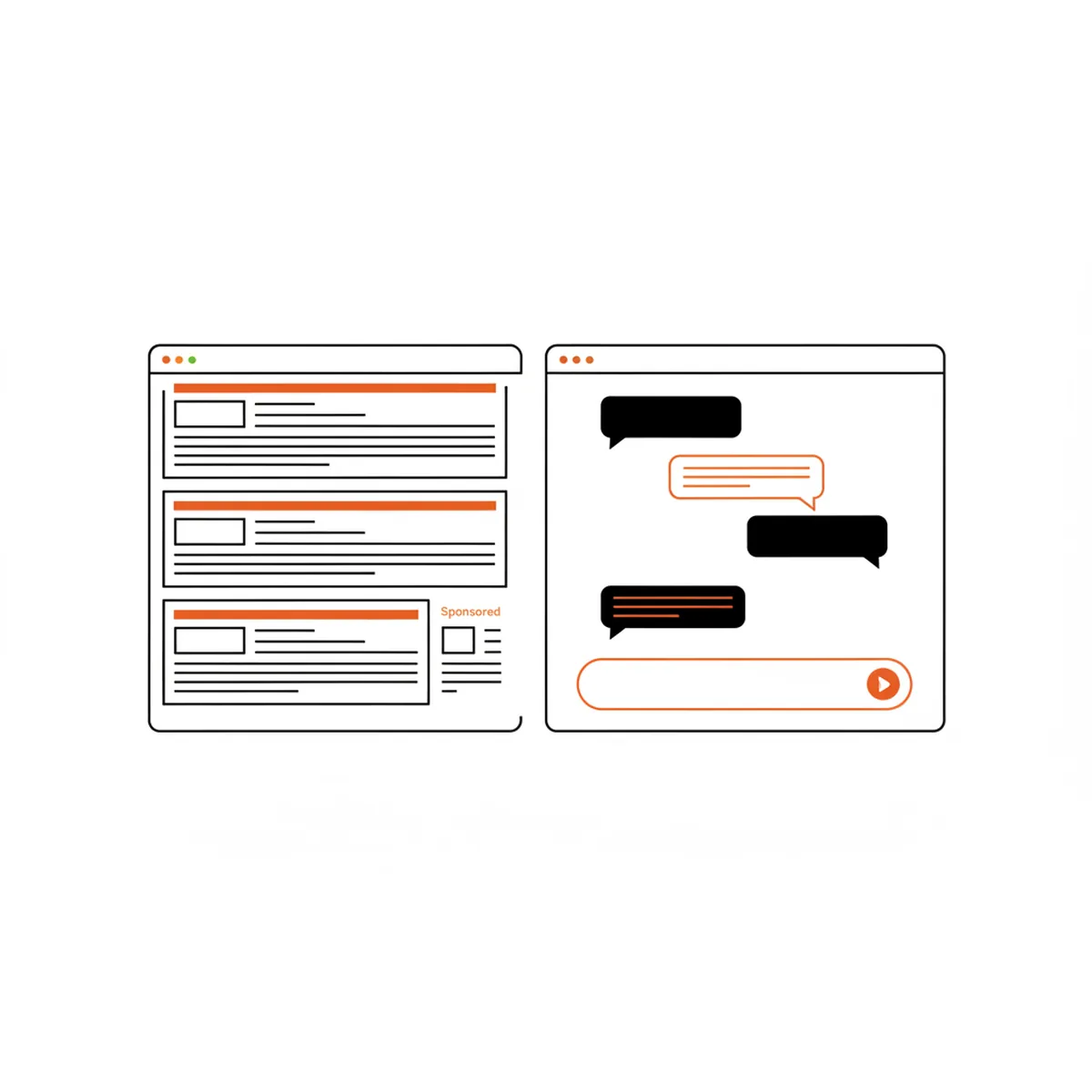
Modern search requires a balance between traditional link-based SEO and generative AI answers.
Quick answer
AEO focuses on providing direct answers to AI models, SEO optimizes for traditional search engine result pages, and GEO (Generative Engine Optimization) adapts content specifically for AI-synthesized overviews. While SEO drives traffic via links, AEO and GEO prioritize brand citations and inclusion in AI-generated responses across platforms like ChatGPT and Perplexity.
AEO (Answer Engine Optimization) is the practice of structuring content to be the primary source for AI answers. GEO (Generative Engine Optimization) involves optimizing specifically for generative search summaries, while SEO (Search Engine Optimization) remains the foundation for ranking in traditional search results. In 2026, successful digital marketing requires a hybrid approach where you optimize for algorithms, generative models, and human intent simultaneously.
Understanding the Trio: AEO vs GEO vs SEO
To navigate the current search environment, we must define the core pillars of visibility. Search Engine Optimization (SEO) is the process of improving site traffic through organic search engine results. It relies heavily on technical health, backlinks, and keyword relevance. Answer Engine Optimization (AEO) is a subset of SEO focused on providing concise, factual data that AI agents can easily extract.
Generative Engine Optimization (GEO) is a newer discipline aimed at influencing the multi-source syntheses created by Large Language Models (LLMs). Finally, Structured Data refers to standardized code (Schema.org) that helps machines understand page context. While SEO focuses on the "blue link" click, AEO and GEO focus on being the "voice" or the "summary" the user consumes without necessarily clicking through.
The distinction lies in the consumer. SEO targets a user looking at a list of options. AEO targets a voice assistant or a bot looking for a single source of truth. GEO targets an engine that aggregates four or five different sources to create a new, synthesized paragraph. You need all three because your customers use different tools at different stages of their buying journey.
The Role of Entities in Modern Search
In the past, SEO was about keywords. Today, it is about entities. An entity is a well-defined object or concept—a person, a place, a brand, or a product. For AEO and GEO to work, the search engine must first recognize your brand as a unique entity rather than just a collection of keywords. If Google’s Knowledge Graph or a model like GPT-4o doesn't understand who you are, it cannot attribute a specific answer to you. This is why building "Entity Authority" is now the first step in any modern optimization strategy.
Why Multi-Engine Optimization Matters in 2026
The search world shifted significantly last year. By late 2025, Gartner predicted that traditional search engine volume would drop by 25% as consumers migrated to AI chatbots and virtual assistants. Our data shows that users now expect immediate, zero-click answers for over 60% of informational queries.
A 2024 study by BrightEdge noted that generative AI results appear for over 80% of B2B search queries. In 2026, if you aren't visible in the ChatGPT "Search" feature or Perplexity's citations, you are effectively invisible to a third of your potential market. We see AEO as the "bridge" that ensures your brand authority survives the transition from a link-based economy to an answer-based economy.
Consider the user behavior in mid-2026. A procurement manager doesn't search for "best cloud security software" and click five links. They ask their AI agent: "Which cloud security software has the highest uptime and integrates with my current tech stack?" The AI agent then queries its generative engine. If your data is locked in a PDF or a messy table that isn't optimized, you lose the deal before the user even knows you exist.
Your Step-by-Step Guide to Integrated Optimization
Step 1: Audit for Entity Clarity
You must ensure that AI models recognize your brand, products, and experts as distinct entities. This involves mapping your knowledge graph and ensuring your name, address, and phone number (NAP) are consistent across the web. AI looks for consensus; if Wikipedia, LinkedIn, and your "About" page say different things, the AI will ignore you. Pro tip: Use the Google Knowledge Graph API to see how the world's largest search engine currently categorizes your brand.
- Search your brand name in Google and check the Knowledge Panel.
- Audit your social profiles for exact matching descriptions.
- Use the "SameAs" schema attribute to link your website to your social profiles and third-party directories.
- Consolidate duplicate listings on review sites like G2 or Capterra.
Step 2: Implement Advanced Schema Markup
Traditional SEO used basic Schema. In 2026, you need to go deeper. Use Speakable schema for AEO and ClaimReview or FactCheck schema for GEO. This helps generative engines verify your claims. A common mistake is using generic "Article" schema for every page. Instead, tailor it to the specific content type, like "SoftwareApplication" or "HowTo," to give AI models the specific data structures they crave.
Step 3: Shift to an Answer-First Copywriting Style
Start your content with a direct, 50-word answer to the primary question. This "inverted pyramid" style satisfies AEO requirements immediately. Why it works: AI models often scan the first few paragraphs to find a "candidate" answer for their snippet. A common mistake is burying the lead behind a long introductory story. Pro tip: Use bold text for your primary answer sentence to signal its importance to both humans and bots.
Step 4: Build Citations in High-Authority AI Datasets
GEO relies on your brand appearing in the sources that LLMs trust. This includes industry-specific directories, reputable news outlets, and academic papers. If your brand is cited by a source like Search Engine Land, Perplexity is significantly more likely to include you in its generated response. Pro tip: Focus on niche digital PR rather than just volume-based link building.
Step 5: Optimize for Conversational Long-Tail Queries
Users talk to AI differently than they type into Google. They ask follow-up questions and use natural language. You should create content that mirrors this dialogue. Instead of targeting "RevOps software," target "How does RevOps software integrate with HubSpot for a mid-market SaaS company?" Pro tip: Look at the "Follow-up questions" section in Perplexity or Gemini to find the next three things your customers will ask.
The Importance of Technical Speed for AI Crawlers
AI agents are bots, and like all bots, they have a crawl budget. If your site takes three seconds to respond to a request, the AI model might skip your page in favor of a faster competitor. We have found that sites with a "Time to First Byte" (TTFB) under 200ms are indexed for generative answers significantly faster. Optimization in 2026 isn't just about what you say; it's about how quickly the machine can digest it.

Comparative Framework: AEO vs GEO vs SEO
| Feature | SEO (Search Engine) | AEO (Answer Engine) | GEO (Generative Engine) |
|---|---|---|---|
| Primary Goal | High rankings/CTR | Direct factual answers | Inclusion in AI summaries |
| User Intent | Browsing/Discovery | Specific Query/Task | Research/Synthesis |
| Key Metric | Organic Traffic | Share of Voice (SOV) | Citation Frequency |
| Content Format | Long-form/Pillar | Q&A/Bullet points | Multi-perspective/Data-rich |
| Main Platforms | Google, Bing | ChatGPT, Siri, Alexa | Perplexity, Gemini, Copilot |
| Success Indicator | SERP Position | Snippet/Voice Capture | Multi-source Synthesis |
| Optimization Factor | SEO Impact | AEO Impact | GEO Impact |
|---|---|---|---|
| Backlinks | High | Low | Medium |
| Structured Data | Medium | Critical | High |
| Factual Accuracy | Medium | Critical | Critical |
| Keyword Density | High | Low | Low |
| Original Data | Medium | Medium | High |
Common Mistakes to Avoid in 2026
- Ignoring Brand Sentiment: Generative engines often include sentiment analysis. If your reviews are poor, the AI might mention you but add a warning, killing your conversion.
- Over-optimizing for Keywords: Stuffing keywords still hurts you in SEO and makes your content look "low-quality" to LLMs.
- Neglecting Page Speed: While AEO cares about the data, the bot still has to crawl your site. If your server response is slow, the bot will time out.
- Thin Content for Q&A: Providing a short answer is good, but if there is no depth behind it, you won't build the authority needed for long-term GEO visibility.
- Static Content Strategies: In 2026, information decays faster. If your factual data is outdated, AI models will favor your competitors who update their "last modified" dates frequently.
Best Practices for Dominating the "Answer" Era
- Use the "Claim-Evidence-Detail" structure: Make a claim, provide evidence (data/stats), and then add detail. LLMs love this logical flow.
- Verify your facts: Check your external links. If you link to "hallucinated" or broken sources, your GEO score will drop.
- Monitor "Zero-Click" trends: Use tools like Semrush to see which of your keywords are being replaced by AI Overviews.
- Invest in Original Research: LLMs are trained on existing data. To be cited as a source in GEO, you must provide new data that the model hasn't seen before.
- Focus on "Information Gain": Google's patents suggest they value content that adds something new to the conversation rather than just repeating what is already on page one.
"The shift from 'Search' to 'Answer' isn't just a technical change; it's a fundamental shift in how humans interact with the sum of all knowledge. Your brand must move from being a destination to being the source."
Impact on AI Visibility: ChatGPT, Gemini, Copilot, and Perplexity
Each platform has a different "flavor" of optimization. ChatGPT (OpenAI) leans heavily on web browsing and its internal training data; it values high-authority citations and clear, factual prose. Google's Gemini is deeply integrated with the Google Search Console ecosystem, meaning traditional SEO signals like Core Web Vitals still matter immensely for GEO visibility there.
Microsoft's Copilot relies on the Bing index, where structured data and clear site hierarchies are paramount. Perplexity, perhaps the most "pure" generative engine, functions like a research librarian. It prioritizes Schema.org and content that directly answers "Why" and "How" questions with linked citations. To succeed across all four, your strategy must be modular: clean code for Copilot, authoritative data for ChatGPT, technical excellence for Gemini, and citation-worthy insights for Perplexity.
The Rise of Source Credibility Metrics
Recent updates from platforms like Ahrefs and Search Engine Land suggest that AI models are starting to score the "trustworthiness" of the specific author. This means your GEO strategy should include building up the digital footprint of your subject matter experts. If your CTO is quoted in reputable trade journals, their name becomes a signal of authority that an AI model uses when synthesizing an answer about your industry.
Case Study: B2B SaaS Transition to AEO/GEO
We worked with a mid-market B2B SaaS client in the FinTech space that saw a 40% decline in traditional blog traffic during the first half of 2025. Their content was "SEO-perfect" but "AEO-invisible." We restructured their top 50 performing pages using our AEO insights framework.
First, we moved the "definition" and "solution" paragraphs to the very top of each page. Second, we implemented nested JSON-LD schema to define their software's specific use cases. Finally, we launched a data-driven PR campaign to get their internal benchmarking data cited on high-authority finance sites.
Within six months, while their "organic clicks" from Google remained flat, their "Brand Mentions in AI Overviews" increased by 215%. More importantly, their attributed lead generation from "AI Search" sources (tracked via UTMs and self-reported attribution) rose from 2% to 18% of total pipeline. This proves that Answer Engine Optimization can capture high-intent buyers even when traditional click-through rates are down.
Testing and QA: How to Validate Your Optimization
You should never roll out a massive site-wide change without testing how the models react. We recommend a staged approach to QA. Start by selecting 10 pages and applying your new AEO/GEO tactics. Wait two weeks and then use a "blind test" method.
Ask three different AI models (ChatGPT, Gemini, and Perplexity) a question that those pages were designed to answer. If the models do not cite your site or use your summary, you must check your structured data for errors. Use a tool like the Schema Markup Validator to ensure there are no syntax errors. If the code is clean but the answer is missing, the problem is likely your "Entity Authority." You may need more third-party citations before the AI trusts your content enough to summarize it.
The Trade-offs: Where AEO and GEO Can Fail
It is important to be honest: these strategies are not a silver bullet. One major downside is the "Cannibalization of Clicks." If you optimize perfectly for AEO, the user gets the answer without ever visiting your site. This can be devastating for ad-based revenue models. If your business depends on page views for ad impressions, a pure AEO strategy might actually hurt your bottom line.
Furthermore, generative engines are prone to "hallucinations." Even if you optimize your content perfectly, an AI might misinterpret your data and present it incorrectly. We have seen cases where a B2B SaaS client's pricing was synthesized incorrectly by a generative engine because the pricing table was too complex for the model to parse. In these instances, traditional SEO—which brings the user to your actual site where the data is accurate—remains the safer bet for high-stakes information.
Recommended Tools and Resources
- Ahrefs/Semrush: Essential for traditional SEO keyword research and tracking "AI Overview" presence (Paid).
- Schema App: A powerful tool for deploying the complex, nested schema required for modern AEO (Paid).
- Google Search Console: Still the best free tool to see how a major generative engine (Gemini) views your site (Free).
- Perplexity Pages: Use this to see how a generative engine synthesizes your brand's information in real-time (Free/Paid).
- Validator.schema.org: Use this to test your code and ensure AI agents can actually read your structured data (Free).
How to Measure Success in the AEO Era
You cannot rely on "Rank #1" as your only metric anymore. Success in 2026 is measured by "Inclusion."
- AI Share of Voice: What percentage of generative answers for your target keywords cite your brand?
- Citation Quality: Are you being cited as a primary source or a secondary mention?
- Direct-from-AI Traffic: Use your analytics to track referrals from
chatgpt.com,perplexity.ai, andgoogle.com(specifically the generative subdomains). - Entity Health: Does a search for your brand name trigger a clean, accurate Knowledge Panel or AI Summary?
Success Checklist:
- [ ] Primary answer within the first 200 characters?
- [ ] Schema.org validation passed?
- [ ] Verified citations from at least 3 high-authority external sites?
- [ ] Content addresses at least 3 conversational "follow-up" questions?
The Future: 2026 and Beyond
As we move deeper into 2026, the lines between AEO, GEO, and SEO will continue to blur. We expect the rise of "Personal AI Agents" that will perform searches on behalf of users. These agents won't look at a list of ten links; they will negotiate with "Brand Agents" to find the best price or service. Optimizing your data for machine-to-machine communication will become as important as optimizing for human-to-machine communication. The brands that win will be those that prioritize AEO vs SEO as a unified strategy rather than separate silos.
Navigating the shift from traditional search to generative answers is the biggest challenge digital marketers have faced in a decade. You don't have to do it alone. We recommend starting with a free AEO audit to see where your brand stands in the eyes of the major AI models.
Ready to dominate the future of search? Explore our full suite of [Answer Engine Optimization services](/services) today.
Frequently asked questions
What is the main difference between AEO and SEO?+
AEO (Answer Engine Optimization) focuses on providing immediate, factual answers for AI assistants like Siri or ChatGPT. SEO (Search Engine Optimization) focuses on ranking websites in traditional search results like Google to drive clicks. In 2026, AEO is essential because more users consume information directly within an AI interface without clicking through to a website, making 'answer' visibility a key marketing metric.
How does GEO differ from traditional AEO?+
GEO, or Generative Engine Optimization, is a specific branch of AEO designed for AI models that synthesize multiple sources into a single response, such as Google’s AI Overviews or Perplexity. While AEO seeks to be 'the' answer, GEO seeks to be included as a cited source within a complex, AI-generated summary. It requires high-authority citations and data-rich content.
Do I still need SEO if I am focused on AEO?+
Yes, SEO remains the foundation. AI engines use search indexes (like Google or Bing) to find the information they synthesize. Without traditional SEO elements like crawlability, mobile-friendliness, and site authority, AI bots may never find your content to use it in an answer. Think of SEO as the infrastructure and AEO/GEO as the delivery method for 2026.
How can I optimize my content for Perplexity and Gemini?+
To optimize for Perplexity and Gemini, focus on structured data (Schema.org), factual accuracy, and 'information gain.' These engines prioritize sources that provide unique data or perspectives. Ensure your site is indexed in Google and Bing, and aim for citations in industry-specific publications, as these generative engines rely heavily on the perceived authority of the linking source.
What role does structured data play in AEO?+
Structured data, specifically Schema.org markup, provides a machine-readable map of your content. It tells AI exactly what your data means—defining prices, reviews, authors, and facts. In an AEO context, this reduces the 'effort' an AI model must exert to understand your page, significantly increasing the likelihood that your content will be chosen as a primary answer or citation.
How do I measure the ROI of my AEO efforts?+
Measuring AEO success requires looking at 'Share of Voice' in AI responses and tracking referral traffic from AI platforms like chatgpt.com or perplexity.ai. You should also monitor brand sentiment in AI-generated summaries and track how often your brand appears as a cited source in Google’s AI Overviews. Traditional keyword rankings are now only one part of the success equation.
Sources & further reading
Soft next step
Want to see where AI answers mention you — and where they don't?
We run a free AEO audit across ChatGPT, Gemini, Copilot and Perplexity, then hand you the fixes in priority order. Start your AEO strategy today.
Keep reading
AEO Fundamentals
AEO vs SEO: Which Strategy Should You Prioritize in 2026?AEO Fundamentals
AEO vs GEO: Understanding the Difference in AI Search 2026AEO Fundamentals
What is Answer Engine Optimization (AEO)? A 2026 Guide for B2B