AEO Strategy for Businesses: Dominating the Answer Engine Era

Strategic AEO implementation ensures your brand is the primary source for AI-generated answers.
Quick answer
An AEO strategy for businesses focuses on optimizing digital content so AI models like ChatGPT and Gemini provide your brand as the definitive answer. This involves structuring data with Schema markup, building topical authority, and creating direct, conversational content that addresses specific user intent within AI-driven search environments.
An AEO strategy for businesses involves optimizing your online presence so AI-driven platforms like ChatGPT, Gemini, and Perplexity choose your content as the definitive answer for user queries. In 2026, successful businesses focus on structured data, verifiable facts, and conversational content to ensure AI models trust their information. This shift from traditional ranking to "answering" requires a deep understanding of how Large Language Models (LLMs) process and retrieve information. By prioritizing technical precision alongside human readability, you position your brand as a primary source for the most influential AI agents in the digital marketplace today.
Why Answer Engine Optimization Defines Success in 2026
The shift from 2025 to 2026 marked a definitive change in how users find information. We no longer just browse a list of links; we interact with Answer Engines, which are AI-powered interfaces that synthesize information from multiple sources to provide a single, cohesive response. According to recent Gartner projections, traditional search engine volume is expected to drop by 25% by 2026 as generative AI takes over. This makes an effective AEO strategy a requirement for survival rather than a luxury.
Search Engine Land reports that over 50% of B2B research now happens within AI chat interfaces before a user ever visits a vendor website. If your brand is not part of the Knowledge Graph—a programmatic database used by AI to understand relationships between entities—you are effectively invisible to half your market. We see this daily at our agency: businesses that ignore their Entity Maturity, which is the depth and accuracy of data AI has about their brand, lose significant market share to smaller, more AEO-savvy competitors.
To understand how high the stakes are, consider the path of a modern B2B buyer. They don't start with "Best CRM software" in a search bar. They ask a private AI agent: "Which CRM integrates best with HubSpot and handles international tax compliance for a team of 50?" If your website lacks the structured data to answer that specific query, you won't even appear as an option. You are disqualified before the human buyer even knows you exist.
The Rise of the Synthesis Layer
The internet has moved from an "index" to a "synthesis layer." In the old days of SEO, Google matched keywords. Today, LLMs use "embeddings" to understand the vector space where your brand lives. If your content is vague, your vector is weak. High-performing brands in 2026 treat their website like a structured database first and a marketing brochure second. This ensures that when an AI "reads" your site, it extracts hard facts it can use to build its answer.
Building Your AEO Strategy: A 5-Step Implementation Guide
1. Audit Your Current Entity Footprint
Before you can optimize, you must understand how AI currently perceives you. Start by querying various models about your products and services. What you are looking for is "hallucinations" or gaps in their knowledge. A common mistake is assuming that because you rank on page one of Google, ChatGPT knows who you are. Pro tip: Use technical AEO tactics to check if your site’s robots.txt is actually allowing AI crawlers like GPTBot or OAI-SearchBot to access your most valuable data.
To conduct a manual audit, perform these three checks:
- Identity Check: Ask Gemini "Who is [Your Company]?" and note any outdated information.
- Product Specificity: Ask Perplexity "How does [Product A] differ from [Competitor B]?"
- Source Verification: Check which links the AI provides as citations. If it cites your competitors to explain your niche, you have an authority gap.
2. Implement Advanced Schema Markup
Schema Markup is a standardized vocabulary of tags you add to your HTML to help AI understand your content. For businesses, this means going beyond basic "Article" tags. You need "Product," "FAQ," "Organization," and "Service" schemas that are interlinked. This structure provides the "ground truth" AI models crave. A common mistake here is having broken or nested schemas that lead to code errors. Pro tip: Always validate your code using the Schema.org Validator to ensure AI agents can parse your data without friction.
| Schema Type | Value for AEO | Key Properties to Include |
|---|---|---|
| Organization | Establishes brand identity | logo, sameAs (social links), founder, parentOrganization |
| Product | Feeds AI shopping/feature bots | sku, priceRange, aggregateRating, offers |
| FAQPage | Direct answer sourcing | mainEntity, acceptedAnswer, text |
| ProfessionalService | Localized entity verification | address, geo-coordinates, openingHours |
3. Transition to a Direct-Answer Content Model
AI models prefer content that gets straight to the point. Your pages should follow the "inverted pyramid" style: provide the direct answer in the first 50 words, then provide supporting evidence. This works because LLMs use "attention mechanisms" to weigh the importance of text, often prioritizing the beginning of a document. A common mistake is burying the lead behind 500 words of introductory fluff. Pro tip: Use a "Key Takeaways" box at the top of every long-form article to make it easily "scrappable" for AI summaries.
4. Build Third-Party Verification and Citations
AI models do not just trust your own website; they look for consensus across the web. This means your brand needs to be mentioned on high-authority industry sites, Wikipedia, and official registries. This builds your E-E-A-T (Experience, Expertise, Authoritativeness, and Trustworthiness). A common mistake is focusing solely on your own blog while ignoring your presence on platforms like G2, Capterra, or LinkedIn. Pro tip: Ensure your NAP (Name, Address, Phone) data is 100% consistent across every directory to strengthen your entity node.
5. Optimize for Conversational and Long-Tail Queries
Users talk to AI differently than they type into Google. They ask full questions like, "What is the best AEO strategy for a mid-sized SaaS company?" rather than typing "AEO strategy." Your content must mirror this natural language. This works because it aligns with the "latent semantic indexing" methods AI uses to match queries to answers. A common mistake is keyword stuffing for old-school SEO terms. Pro tip: Record your sales team’s calls and use the exact questions prospects ask as your H2 headings.
Mastering Natural Language Patterns
To truly win at conversational queries, you must stop writing for "keywords" and start writing for "intent clusters." AI models analyze the proximity of words to determine relevance. If you want to be known for "Supply Chain AI," your content should naturally include related terms like "logistics automation," "predictive analytics," and "ERP integration." This creates a dense topical map that AI perceives as highly authoritative.
AEO vs. Traditional SEO: Key Differences in 2026
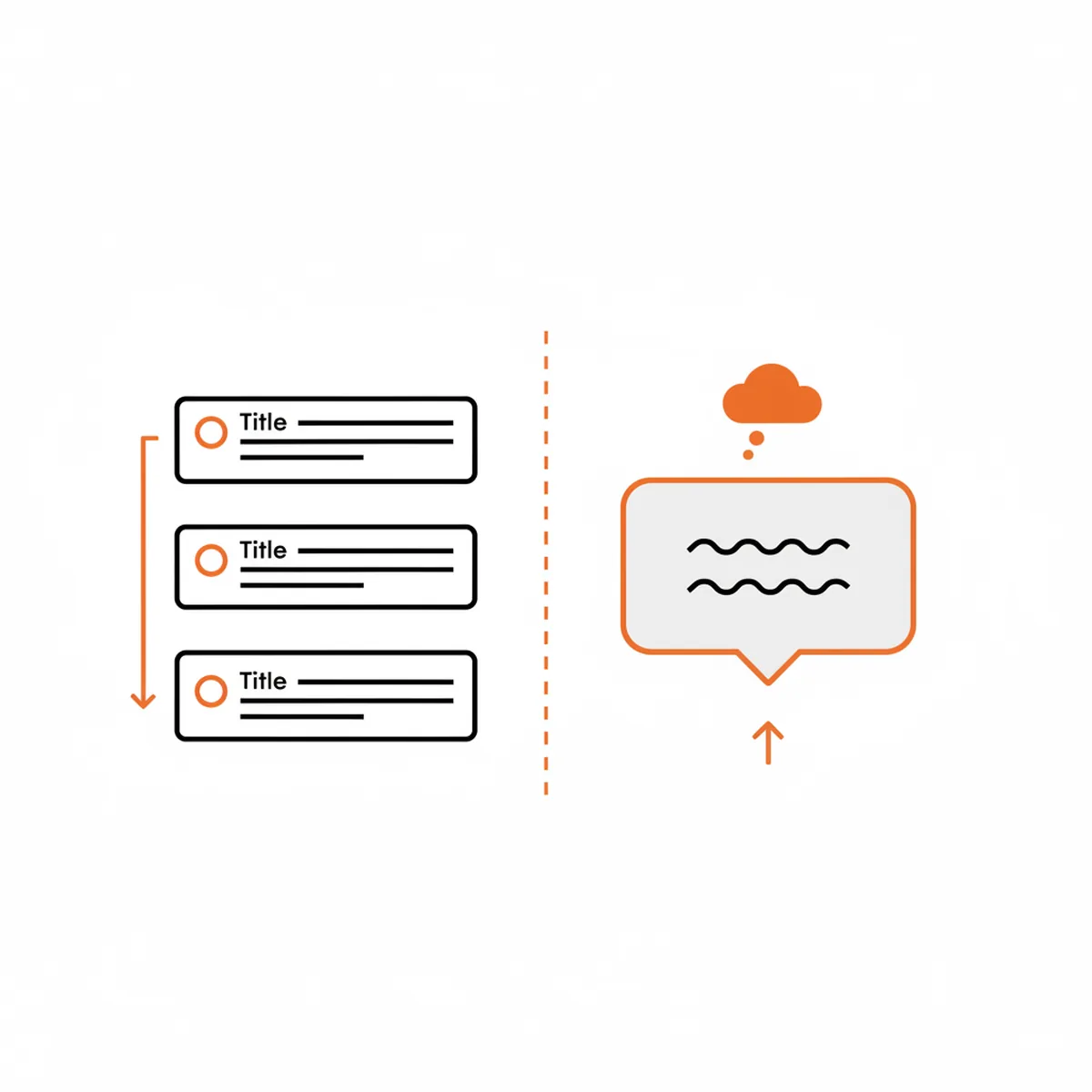
Understanding the nuance between these two disciplines is vital. While SEO focuses on visibility in search results, AEO focuses on being the "chosen" answer by an AI agent.
| Feature | Traditional SEO | Answer Engine Optimization (AEO) |
|---|---|---|
| Primary Goal | Rank in Top 10 Search Results | Become the "Citation" in AI Responses |
| Content Structure | Long-form, keyword-dense | Concise, direct, and structured |
| Tech Focus | Core Web Vitals & Backlinks | Schema & Knowledge Graph integration |
| User Intent | Information seeking via links | Immediate problem solving via dialogue |
| Primary Metric | Organic Traffic & Clicks | Share of Model Voice & Brand Mentions |
The Death of the Meta Description
In the SEO era, we wrote meta descriptions to entice clicks. In the AEO era, these descriptions are often ignored by LLMs. Instead, the AI looks at your "header hierarchy" and your first paragraph. We've seen that sites which prioritize clear H2 and H3 questions outperform those with "optimized" meta tags but disorganized body text. The AI is looking for the structure of the information, not just the packaging.
Common Mistakes to Avoid in Your AEO Journey
- Ignoring the robots.txt file: Many businesses accidentally block AI crawlers, preventing ChatGPT or Gemini from ever seeing their latest updates. Ensure
User-agent: GPTBotandUser-agent: OAI-SearchBotare specifically allowed. - Vague brand positioning: If your website doesn't clearly state exactly what you do and who you serve in the first paragraph, AI models will struggle to categorize your entity correctly. Avoid phrases like "we empower synergy." Say "we provide payroll software for construction firms."
- Over-reliance on AI-generated content: Using raw AI output to rank on AI engines creates a "feedback loop" that often lacks the unique insights and E-E-A-T required for high-trust citations. Models can often detect their own recursive patterns.
- Neglecting structured data: Failing to use JSON-LD Schema is like speaking to a linguist in a language they don't know; they might get the gist, but they won't understand the details.
- Focusing on volume over value: In the AEO era, one perfectly structured, highly authoritative answer is worth more than 50 low-quality blog posts. AI engines prioritize the most concise and accurate source, not the most prolific one.
Best Practices for Dominating AI Results
- Maintain a single source of truth: Ensure your website, social profiles, and PR releases all share identical facts about your business. Inconsistencies lead to AI "confusion" and lower trust scores.
- Use clear, declarative headers: Instead of "Thoughts on Strategy," use "How to Build a 2026 AEO Strategy." AI agents scan headers to quickly categorize the content's utility.
- Prioritize factual density: Every sentence should provide value or data. Avoid filler words that dilute the informational content of the page. Aim for at least one hard fact or data point per 100 words.
- Monitor AI mentions: Regularly use tools to track how often your brand is mentioned as a recommendation in AI chats. This is your new "ranking" report.
- Engage in digital PR: The more high-authority sites that link to you in an editorial context, the more "verified" you appear to AI training sets. Links from news sites or industry journals act as high-weight trust signals for LLMs.
Creating "Knowledge Snippets"
A best practice we advocate for is the creation of "Knowledge Snippets." These are standalone, 200-word sections of a page that answer a specific sub-question. By treating your long-form content as a collection of modular answers, you make it significantly easier for an LLM to "clip" your content and present it to the user. This increases your chances of being the featured citation in a multi-source response.
How AEO Affects Visibility in ChatGPT, Gemini, and Perplexity
The mechanics of visibility vary slightly across platforms, but the core AEO strategy for businesses remains consistent. ChatGPT relies heavily on its training data and specific "Browse with Bing" capabilities. It looks for clear citations and reputable sources to back up its claims. If your site provides structured, easy-to-parse data, you are more likely to be the source it cites with a clickable link. OpenAI has refined its "Search" features to favor sites that provide direct, verifiable data over speculative blog posts.
Gemini, being a Google product, integrates deeply with the existing Knowledge Graph. It prioritizes entities it can verify through Google Business Profiles and established web authority. If your Google Business profile is incomplete, Gemini's confidence in your entity drops. Perplexity and Microsoft Copilot act as "Search-Augmented" models; they crawl the web in real-time to answer a query. For these platforms, your technical SEO health and the speed at which your content is indexed are paramount.
To succeed across all these models, you need a multi-pronged approach. You aren't just optimizing for one algorithm anymore; you are optimizing for a variety of LLMs that all value factuality and structure. By adhering to modern AEO insights, you ensure that regardless of which AI tool a customer uses, your business remains the top recommendation.
Case Study: B2B SaaS Entity Growth
We worked with a B2B SaaS client in the fintech space that had plateaued in organic traffic throughout 2025. Despite ranking for several high-volume keywords, they were absent from AI-generated summaries and recommendations in Gemini and Perplexity. Their content was "fluffy" and lacked the technical structure needed for AI digestion.
Our team implemented a comprehensive AEO strategy focusing on three pillars: restructuring their entire knowledge base into Q&A formats, deploying deep JSON-LD schema across all service pages, and launching a digital PR campaign to secure mentions on tier-one financial news sites. We specifically targeted "unlinked mentions" on high-authority financial blogs to strengthen their entity node in the Knowledge Graph.
Within six months, the results were measurable:
- 45% increase in "Share of Voice" within ChatGPT-4o and Gemini 1.5 Pro queries related to their core software.
- 30% rise in referral traffic originating directly from AI chat interfaces.
- 22% improvement in lead quality, as users coming from AI engines had already received a synthesized "pitch" of the product's benefits.
This composite example demonstrates that while traditional search traffic might fluctuate, the high-intent traffic coming from Answer Engines is often more ready to convert. By focusing on AEO services, the client moved from being a link in a list to a trusted recommendation. They didn't just get more clicks; they got better conversations.
Essential Tools and Resources for AEO
- Schema.org: The official resource for all structured data vocabulary. It is free and essential for any technical AEO work. Use it to find the specific properties for your niche.
- Semrush / Ahrefs: While primarily SEO tools, they are vital for tracking keyword gaps and monitoring the backlinks that fuel your authority. (Paid)
- Perplexity AI: Use this as a research tool to see which competitors are currently being cited for your target queries. It provides a transparent look at the sources LLMs prefer. (Free/Paid)
- Google Search Console: Essential for monitoring how Google (and by extension Gemini) indexes your pages and identifies entities. Check the "Enhancements" report for schema errors. (Free)
- Custom GPTs: We often build internal GPTs for clients to "stress test" how AI interprets their brand messaging before it goes live. You can upload your raw copy and ask the GPT to "Summarize the 3 key facts about our product." If it gets them wrong, your copy is the problem.
How to Measure Success in an AEO-First World
Measuring success in AEO is different from tracking simple keyword rankings. You need to look at "Assisted Conversions" and "Brand Mentions." We recommend a monthly AEO success audit to track these KPIs:
- AI Citation Rate: How often is your URL cited in responses from Perplexity or Copilot for your top 20 target questions?
- Entity Health Score: Are your brand facts (CEO name, founding date, key services) consistent across three different AI models?
- Zero-Click Visibility: Are you appearing in Google’s AI Overviews? You can track this by monitoring your "Impressions" vs. "Clicks" in Search Console for specific long-tail queries.
- Referral Source Tracking: Monitor your analytics for traffic coming from "chat.openai.com," "gemini.google.com," and others.
A quick checklist for your team:
- [ ] Is every blog post answering a specific user question in the first 2 paragraphs?
- [ ] Has your Schema been validated in the last 30 days?
- [ ] Are you mentioned on at least three reputable third-party websites?
- [ ] Do your headers clearly define the content that follows?
Testing and QA: How to Validate Your AEO Strategy
You should never roll out a full-site AEO restructure without testing. We use a "Canary" approach, applying optimizations to a small subset of pages before a global launch. This prevents accidental traffic drops and allows you to refine your conversational tone based on real model feedback.
The AEO Sandbox Method
Select 10 pages that represent your core services. Apply deep Schema, conversational headers, and the direct-answer model. Wait 14 days for the major AI bots (which now crawl more frequently) to index the changes. Then, use a variety of LLMs to query the topics covered on those pages.
If the AI starts citing these specific pages more frequently than your non-optimized pages, you have proof of concept. Use the "Search" feature in ChatGPT to see if it pulls your updated "Key Takeaways" box. If it does, you've successfully created a "snackable" data point that the model trusts.
Technical QA Checklist
Before pushing live, run your code through a headless browser. Some AI crawlers struggle with heavy JavaScript. If your content is hidden behind complex interactions, the AI might miss it. Ensure that the "Ground Truth" data—your pricing, features, and contact info—is rendered in the initial HTML. Use tools like the Rich Results Test to confirm that your JSON-LD isn't just present, but "eligible" for enhanced display.
Honesty and Trade-offs: Where AEO Strategy Fails
AEO is not a magic bullet. It requires a significant shift in resources and may not work for every type of content. Being honest about these limitations helps you avoid wasted spend and unrealistic expectations.
Where AEO Doesn't Work
AEO is poor for "discovery-based" content where the user doesn't know what they want. If your business relies on users stumbling across an interesting article they weren't looking for, AEO won't help. Answer engines are "pull" technologies; they respond to specific intents.
Furthermore, AEO can actually reduce your total site traffic. If an AI gives the user the full answer without them needing to click your link, your "sessions" will drop. You must be comfortable with "Zero-Click" visibility. The trade-off is that the users who do click through are much further down the sales funnel. They are looking for the implementation, not just the information.
The Cost of Accuracy
Maintaining "Entity Maturity" is expensive. You cannot just "set and forget" your AEO strategy. If you change your pricing or service model and forget to update your Schema and third-party directories, the AI will continue to hallucinate old data. This can lead to friction in the sales process when a lead cites a price or feature that no longer exists because an AI model pulled it from an outdated 2024 blog post.
The Future of AEO Strategy: 2026 and Beyond
As we move deeper into 2026, the line between "the web" and "the model" will continue to blur. We expect to see "Personal AI Agents" that do the searching for us. In this future, your AEO strategy won't just be about being found by a human, but about being "hired" by another AI to solve a task. The data you provide now—its accuracy, its structure, and its accessibility—is the foundation for your business's relevance in the next decade of the internet.
We are already seeing the emergence of "Agentic SEO," where optimization is geared toward helping AI agents perform actions like booking a demo or purchasing a subscription on behalf of a user. To prepare for this, your site needs clear API-like documentation and unambiguous service descriptions. If an agent can't understand how to buy from you, it will move to a competitor whose site is more "agent-friendly."
Conclusion
Developing a comprehensive AEO strategy for businesses is no longer optional in a market dominated by artificial intelligence. By shifting your focus from traditional link-building to entity-building and structured data, you ensure your brand remains visible where your customers are now looking: within the chat interfaces of AI models. The transition requires technical precision, but the rewards are a deeper level of trust with your audience and a sustainable competitive advantage.
If you are ready to see how your brand performs in the age of AI, you can request a free AEO audit from our team today. We will analyze your entity footprint and provide a roadmap for improvement. To scale your visibility and secure your place as the top answer in your industry, explore our full range of [bespoke AEO services](/services).
[Partner with us to dominate the answer engines today.](/services)
Frequently asked questions
What is an AEO strategy for businesses?+
AEO (Answer Engine Optimization) is the process of optimizing your digital content so that AI-powered answer engines like ChatGPT, Gemini, and Perplexity recognize your brand as the most authoritative source. Unlike traditional SEO, which focuses on ranking in a list of links, AEO focuses on providing the direct, synthesized answer that an AI model presents to the user.
How do I make my business visible in AI chat results?+
To make your business visible in AI results, you must implement advanced Schema markup (JSON-LD), create content that directly answers specific user questions, and maintain consistent brand information across the web. AI models look for "entities" they can verify. Strengthening your E-E-A-T through third-party citations and high-quality, factual content is essential for AI visibility.
What is the difference between SEO and AEO?+
Traditional SEO aims to improve a website's position in search engine results pages (SERPs) to drive clicks. AEO aims to provide the best possible answer to an AI's query, often resulting in a direct citation within a chat interface. While SEO cares about backlinks and keywords, AEO prioritizes data structure, factuality, and clear entity relationships.
Why is Schema markup important for AEO?+
Schema markup is critical for AEO because it provides a structured language that AI models can easily parse. By using Schema, you tell the AI exactly what your content means (e.g., this is a product price, this is a founder's name). This reduces the effort needed for the AI to understand your data, making it more likely to use your site as a source.
How do I measure the success of my AEO efforts?+
Success in AEO is measured by "Share of Model Voice," AI citations, and referral traffic from AI platforms. Unlike traditional keyword tracking, you should monitor how often AI models recommend your brand for specific queries. Tracking your presence in Google's AI Overviews and the accuracy of your brand's entity profile in the Knowledge Graph are also key metrics.
Is AEO effective for B2B companies?+
Yes, Answer Engine Optimization is highly effective for B2B companies. B2B buyers often conduct extensive research, and AI models are increasingly used to summarize vendor capabilities and compare features. By positioning your content as the definitive answer for complex industry questions, you can influence the buyer's journey long before they reach out to your sales team.
Sources & further reading
Soft next step
Want to see where AI answers mention you — and where they don't?
We run a free AEO audit across ChatGPT, Gemini, Copilot and Perplexity, then hand you the fixes in priority order. Start your AEO strategy today.
Keep reading
Content Strategy
How to Do AEO: A 2026 Guide to Answer Engine OptimizationTools & Measurement
Measuring AEO Success Metrics: The 2026 Guide to AI VisibilityAEO Fundamentals
The Strategic Benefits of AEO: Dominate AI Search in 2026