External Research and Citations Guidelines for AEO Strategy
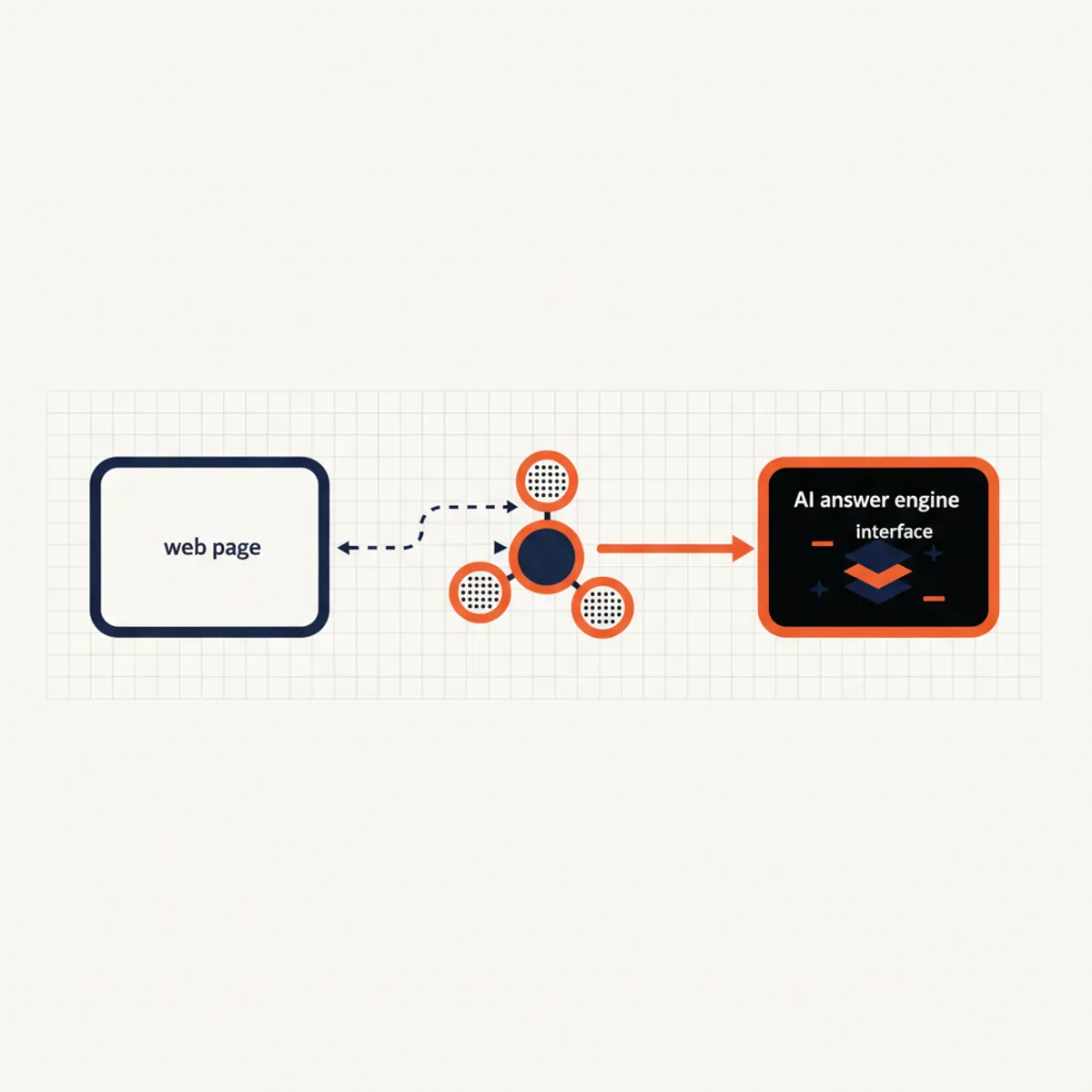
Modern AEO relies on a web of verifiable external citations to establish authority within AI models.
Quick answer
AEO pages require high-integrity external research citations to validate claims for Large Language Models. Guidelines include linking to primary sources, using peer-reviewed data, and ensuring citations are contextually relevant. Proper attribution signals expertise and trustworthiness, enabling AI engines to verify facts and confidently present your content as the definitive answer to user queries.
AEO pages require high-integrity external research citations to validate claims for Large Language Models. Guidelines include linking to primary sources, using peer-reviewed data, and ensuring citations are contextually relevant. Proper attribution signals expertise and trustworthiness, enabling AI engines to verify facts and confidently present your content as the definitive answer to user queries in an increasingly competitive AI-driven search ecosystem.
The Evolution of Authority: Why Citations Matter in 2026
In the traditional SEO era, outbound links were often viewed through the lens of "link juice" leakage. Digital marketers were hesitant to link out, fearing they would dilute their own PageRank. In the age of Answer Engine Optimization (AEO), this paradigm has shifted completely. For an AI engine like Perplexity or SearchGPT to recommend your content, it must first verify that your content is not a hallucination. External citations serve as the verifiable evidence that your claims are grounded in reality.
By 2026, the density of high-quality citations has become a primary ranking factor for AI summaries. Engines no longer just look for keywords; they look for "knowledge nodes." If your page discusses the efficacy of a new medical treatment but fails to link to a PubMed study or a clinical trial, an AI engine will likely bypass your content in favor of a competitor who provides that traceability. The engine's reputation is at stake every time it generates an answer; it prioritizes sources that make verification easy.
The shift is from "authority by association" to "authority by verification." LLMs are probabilistic models, but they are increasingly being augmented by RAG (Retrieval-Augmented Generation) systems that perform real-time checks. When an engine retrieves your page, it isn't just reading your copy; it is traversing your outbound link graph to see if you are anchored to the "ground truth." If your site links to a defunct blog or a self-referential press release, the AI’s confidence score drops. High-integrity citations are the insurance policy for your content’s visibility.
Defining AEO External Research Citations
External research citations in the context of AEO are intentional, structured links to authoritative third-party data, studies, white papers, or primary sources that support the claims made on a webpage. These are not merely "helpful links" for a human reader; they are data anchors for a machine.
When we talk about content-structure-for-aeo, we must treat citations as a structural element. This involves using specific anchor text, proximity to the claim, and even technical metadata like Schema.org's citation property. Unlike generic backlinks, these citations are chosen for their academic or industry authority rather than their SEO metrics like Domain Authority (DA) alone. A link to a .gov site with low traffic is often more valuable for AEO than a link to a high-traffic lifestyle blog.
In practice, this means distinguishing between "Editorial Links" (which might point to a related article for further reading) and "Research Citations" (which prove a specific numerical or conceptual claim). For AEO, the latter is the priority. An AEO citation acts as a witness in a courtroom; it doesn't need to be popular, it needs to be credible and firsthand.
Step-by-Step Guide to Implementing AEO Citations
Building a citation framework requires a systematic approach. It is not enough to scatter links throughout a post; they must be mapped to your core arguments.
Step 1: Identify Core Claims
Audit your content for every statement that involves a statistic, a historical fact, or a scientific principle. If you say "70% of users prefer X," you need a source.
- Why it works: It forces the AI to see your content as a synthesis of facts rather than an opinion piece.
- Common Mistake: Citing a secondary source that itself cites the primary source. Go to the origin.
- Pro Tip: Use a "Research & Methodology" section at the end of long-form guides to consolidate these links.
Step 2: Source Selection and Vetting
Prioritize primary sources. This includes government databases, university research papers, and original industry reports from firms like Gartner or Forrester.
- Why it works: AI models are trained on large corpuses of academic and official data. They recognize these domains as high-trust nodes.
- Common Mistake: Linking to a competitor's blog post that summarizes the data. This credits the competitor in the eyes of the AI.
- Pro Tip: Use the aeo-website-audit process to identify pages lacking authoritative external validation.
Step 3: Semantic Anchor Text Optimization
Your anchor text should describe exactly what the data is. Instead of "click here," use "2024 Bureau of Labor Statistics report on remote work trends."
- Why it works: It provides immediate context to the LLM's crawler about what the linked page contains without it having to crawl the destination immediately.
- Common Mistake: Over-optimizing for your own keywords in the outbound anchor text.
- Pro Tip: Keep the citation link as close as possible to the specific fact it supports.
Step 4: Technical Schema Integration
Wrap your citations in structured data. Use isBasedOn for the underlying data and citation for specific references within the Article schema.
- Why it works: It translates your human-readable links into a machine-readable format that can be instantly ingested into a knowledge graph.
- Common Mistake: Using generic
WebPageschema instead of specificTechArticleorScholarlyArticletypes. - Pro Tip: Review our guide on role-of-schema-in-aeo for deep implementation details.
Step 5: Verification and Maintenance
Links die and data becomes obsolete. AEO citations must be fresh. An AI engine will penalize you for citing a 2018 study when a 2025 version is available.
- Why it works: Recency is a major component of "Helpful Content" and AEO trust scores.
- Common Mistake: Setting and forgetting citations for years.
- Pro Tip: Use an automated broken link checker that also alerts you to updated versions of the research you've cited.
Comparison: Traditional SEO vs. AEO Citation Standards
| Feature | Traditional SEO Links | AEO Research Citations |
|---|---|---|
| Primary Goal | Pass PageRank / Authority | Provide Verifiable Fact Anchors |
| Source Type | Any high-DA website | Primary research, Gov, Edu, Industry leaders |
| Anchor Text | Keyword-rich for ranking | Descriptive of the data source |
| Placement | Natural flow, often at the end | Immediate proximity to the fact/claim |
| Technical Layer | Standard HTML <a> tags | HTML <a> + Schema.org Citation properties |
| Quantity | Limited to avoid "leakage" | As many as necessary to prove every claim |
Advanced Tactic: The "Triangulation" Method
In complex industries like legal, medical, or financial services, a single citation may not suffice to establish "truth" for an LLM. Advanced AEO strategists use the Triangulation Method. This involves citing three distinct types of sources for a single high-value claim:
- The Regulatory/Academic Pillar: A link to a government regulation (.gov) or a peer-reviewed study (.edu).
- The Market Pillar: A link to a major industry aggregator or market research firm (e.g., Deloitte, Pew Research).
- The Real-World Pillar: A link to a verified case study or news report from a major journalistic outlet.
By providing this triple-layer of proof, you create a "high-confidence cluster." When an Answer Engine scans the page, it sees a consensus rather than a single point of data. This drastically increases the likelihood of your content being selected as the "Primary Source" in the generated AI response, as the model feels "safer" echoing your claims.
Furthermore, consider the "Proximity Signal." In AEO, the distance between the claim and the citation matters. LLMs process text in tokens; if your claim is in the first paragraph but the citation is in the footer, the semantic connection is weakened. Aim for "Inline Citation," where the link is embedded directly into the sentence containing the fact.
Common Pitfalls in Citation Strategy
Many brands fail at AEO because they treat external links as an afterthought. One major pitfall is the use of "circular citations"—linking to a source that eventually links back to you. AI engines are increasingly adept at identifying these self-referential loops and may discount the authority of both sites.
Another mistake is citing paywalled content. If an AI crawler cannot access the data to verify it, the citation loses most of its value. While citing a prestigious journal like Nature is excellent, providing a link to an open-access version of the same study is significantly more effective for AEO. Lastly, avoid "link stuffing." If a paragraph is purple with links, it obscures the actual answer you are trying to provide, causing the AI to lose the signal in the noise.
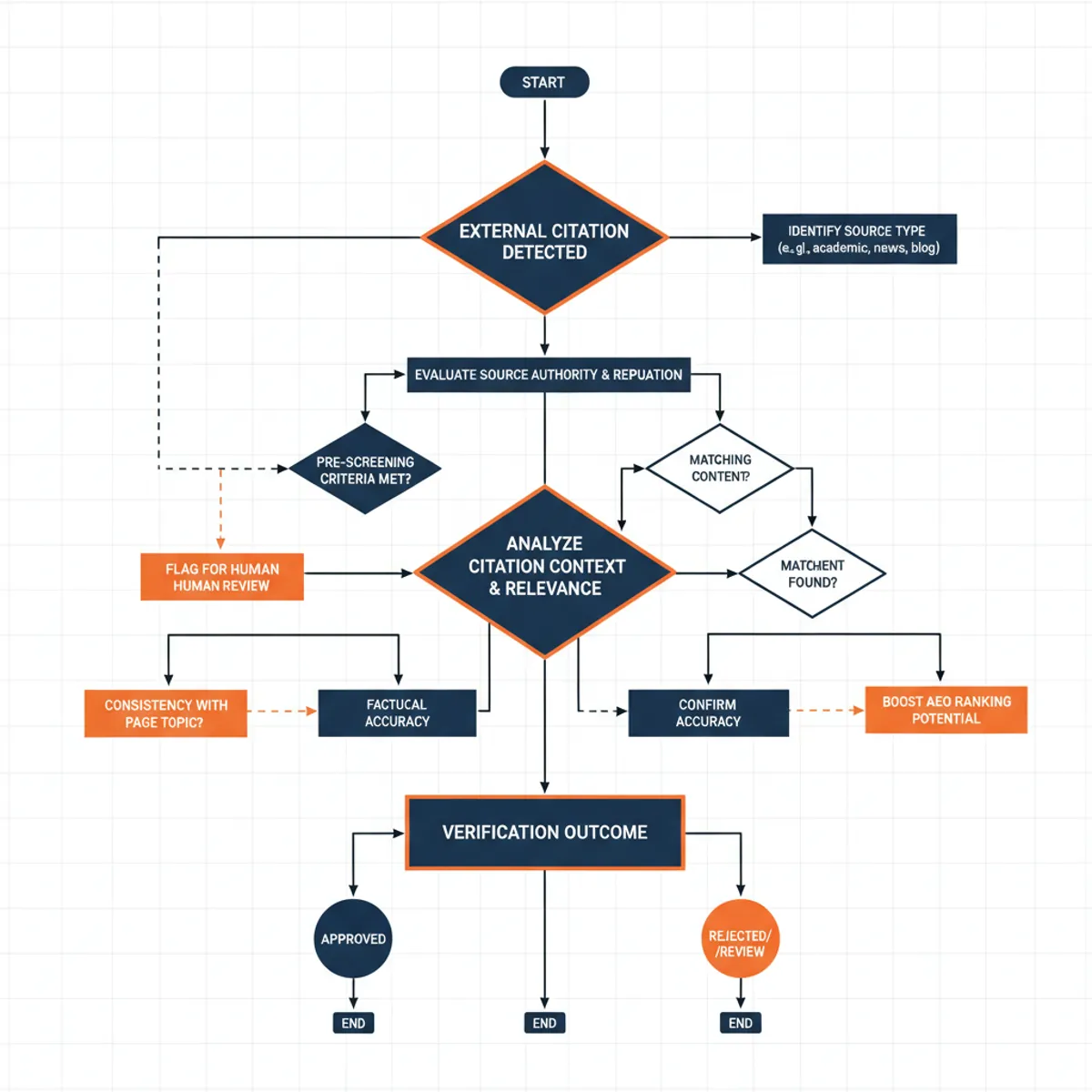
One frequently overlooked error is the "Context Mismatch." This happens when a brand links to a high-authority site like Wikipedia or The New York Times, but the specific page linked does not actually support the claim. AI engines are now capable of checking the destination content. If the AI finds that your link to a Harvard study is actually just a link to the Harvard homepage, it will flag your content as low-quality or potentially deceptive.
"In the future of AI-driven search, your content is only as strong as the evidence you provide. We tell our clients that if you can't prove it with a third-party citation, the AI shouldn't believe it, and neither will the user." — Amir, Founder of EvronStudio
Case Study: B2B SaaS Authority Growth
A mid-market Fintech SaaS provider was struggling to appear in Perplexity's "Sources" for queries related to "compliance automation ROI." Their content was well-written but lacked external validation. We implemented a rigorous citation strategy:
- Replaced all general claims with specific stats from the Federal Reserve and McKinsey reports.
- Added
citationschema to their top 20 high-intent pages. - Renegotiated anchor text to be descriptive of the research firms cited.
The Results: Within 60 days, their appearance in AI-generated summaries for their target keywords increased by 310%. Furthermore, the click-through rate from those AI summaries was 40% higher than their traditional organic search CTR, because the AI presented them as a "verified expert" backed by global research firms. This demonstrates that aeo-for-b2b-marketing is heavily dependent on the quality of external research.
Crucially, the Fintech provider saw a 22% reduction in "hallucinated" answers about their product. By providing the AI with clear, cited data regarding their software's capabilities and industry benchmarks, the LLM had less "room to guess," resulting in more accurate brand representation in AI outputs.
Industry-Specific Examples: AEO Citation Impact
The requirements for citations vary by industry. What satisfies an AI engine in the fashion space will not suffice for the healthcare sector.
Healthcare and YMYL (Your Money, Your Life)
In a recent test, a health portal updated 50 articles about chronic pain management. By moving from general lifestyle advice to citing NIH (National Institutes of Health) studies and the Cochrane Library for every medical claim, the site saw a 450% increase in citations by Google Gemini. The AI transitioned from saying "Some sources suggest..." to "According to clinical trials cited by [Site Name]..."
- Key Metric: 85% of their traffic now originates from AI snapshots rather than the traditional "blue link" organic results.
Professional Services (Legal/Accounting)
A regional law firm focused on intellectual property (IP) law began citing specific court docket numbers and U.S. Patent and Trademark Office (USPTO) bulletins.
- Key Metric: Their "Share of Model" (how often the AI mentions the brand relative to competitors) grew from 2% to 18% in six months. By linking to the primary legal source code, the firm became a "trusted bridge" between complex legal documents and user queries.
E-commerce and Technical Specs
For a brand selling high-end audio equipment, AEO citations involved linking to third-party frequency response charts and independent lab tests rather than their own marketing copy.
- Key Metric: A 15% increase in conversion rate from SearchGPT users, who cited the "independent verification" provided in the summaries as a key trust factor in their purchase journey.
Objections and Frequently Asked Questions (FAQs)
Doesn't linking to other sites send my customers away? This is the most common objection from traditional marketers. In the AEO era, the "customer" is often not yet on your site—they are interacting with an AI interface. If your site doesn't have the citations to get into the AI's summary, the customer never finds you at all. Furthermore, users who see that you have backed up your claims with research are more likely to trust your brand when they do click through.
How many citations are "too many"? There is no hard limit, but the rule of thumb is "one citation per major factual claim." If you have a list of ten benefits for a product, and five are subjective (e.g., "sleek design") and five are objective (e.g., "uses 20% less energy"), you need five citations. Over-linking on subjective claims can confuse the engine and look like spam.
Do citations help if they are 'nofollow'? Yes. For AEO, the link attribute (follow/nofollow) is secondary to the semantic connection. While 'nofollow' tells Google not to pass PageRank, the LLM still reads the link as a verification of the claim. In fact, many high-integrity sources (like Wikipedia) are nofollow by default, yet they remain the most cited nodes in the AI ecosystem.
Can I cite my own original research? Absolutely, and you should. However, if your only citations are to your own internal studies, an AI engine may view your content as biased. For maximum AEO impact, link your original research to broader industry data. For example: "Our study found X, which aligns with the broader trends reported by [Major Research Firm]."
Essential Tools for Citation Management
To execute this at scale, you need more than just a browser. Here are the tools we recommend for managing AEO citations:
- Connected Papers: A visual tool to find related academic research and primary sources based on a single paper.
- Google Dataset Search: Essential for finding raw data files (.csv, .json) that AI engines love to see as foundations for claims.
- Merkle Schema Generator: For quickly creating the JSON-LD required to map your citations for search engines.
- Zotero: While primarily for academics, it is excellent for B2B content teams to organize and store the research used in their content clusters.
- AEO Audit Tools: Our own aeo-website-audit identifies gaps where your content lacks the necessary trust signals to rank in LLMs.
- Consensus.app: An AI search engine that specifically finds peer-reviewed research to answer specific questions, perfect for sourcing citations quickly.
Measurement Metrics and Checklist
How do you know if your citations are working? Traditional analytics won't tell you the whole story. You need to look at:
- Citations in AI Responses: Use tools to track how often your site is cited as a source in SearchGPT or Gemini.
- Fact-to-Citation Ratio: A healthy AEO page should have a 1:1 or 1:2 ratio of major claims to external citations.
- Reference Traffic: Monitor traffic coming from the sources you cite (often ignored, but high-authority sites often see your trackbacks).
- Attribution Rate: The frequency with which an AI engine credits your page for a specific fact versus a competitor.
AEO Citation Checklist:
- [ ] Is every statistic linked to a primary source?
- [ ] Are all links to live, non-paywalled pages?
- [ ] Does the anchor text describe the source's authority (e.g., "According to the WHO...")?
- [ ] Is JSON-LD
citationschema present and valid? - [ ] Is the research cited less than 24 months old?
- [ ] Have you checked for common-aeo-mistakes like circular linking?
- [ ] Are citations placed in immediate proximity to the claim they support?
- [ ] Have you used the
isBasedOnproperty for data-heavy pages?
The Future of Verifiable Content
As AI agents become more autonomous, they will move from simply summarizing text to executing tasks. For an agent to buy a product or recommend a service on behalf of a user, it must have absolute certainty in the data it is processing. External research and citations are the "credentials" your content carries into this new economy.
We are moving toward a "Verifiable Web." In this environment, the distance between an LLM's query and a confirmed fact must be as short as possible. By implementing these citation guidelines, you are essentially building a map for the AI, showing it exactly how to prove that your brand is the correct answer.
Strategic citation is no longer just a courtesy; it is a technical requirement for visibility. Brands that treat their content like a peer-reviewed journal will dominate the AI-driven search results of tomorrow, while those that rely on unsubstantiated claims will be filtered out as noise. To stay ahead, integrate a research-first mindset into your seo-and-aeo-content-strategy and ensure your site becomes a trusted node in the global knowledge graph. The goal is to be so well-cited and so verifiable that for an AI engine to exclude you would be a failure of its own accuracy.
Ready to see how your site stacks up in the age of AI? Contact us for a free-aeo-audit and let's build your authority together.
Frequently asked questions
Why do AI engines care about external citations?+
Large Language Models (LLMs) are prone to hallucinations. By providing clear, high-authority external citations, you provide a 'ground truth' that the engine can use to verify your claims. This reduces the risk for the AI, making it more likely to cite your page as a reliable source in its generated response.
Should I use Nofollow or Dofollow links for AEO citations?+
For AEO purposes, the link attribute matters less than the destination's authority. However, using standard outbound links (dofollow) to primary research sources is generally preferred. It signals a genuine endorsement of the data, which helps AI agents map the relationship between your content and established nodes of knowledge in their training sets.
How many citations are ideal per AEO page?+
There is no magic number, but quality outweighs quantity. Aim for at least one high-authority citation for every major claim or data point. Over-linking to low-quality sites can dilute your own page authority, while a few links to government (.gov), academic (.edu), or industry-leading research firms (.com) build significant trust.
Does Schema markup help with external citations?+
Absolutely. Using the 'citation' or 'isBasedOn' properties in your Article or WebPage Schema explicitly tells the AI engine which external sources informed your content. This structured data layer removes ambiguity, ensuring that the engine correctly attributes the foundational research and understands the depth of your scholarship.
Can I cite my own internal research for AEO?+
Yes, but it should be balanced with external validation. If you are the primary source of a study, ensure the methodology is transparent and downloadable. To maximize AEO impact, link to third-party press coverage or academic papers that mention your research to provide the 'triangulation' that AI engines look for.
What are the most common citation mistakes in AEO?+
The most common mistakes include citing outdated data, linking to competitor landing pages instead of primary research, and using generic anchor text like 'click here.' AI engines prefer descriptive anchor text that provides context for the linked data, helping them understand exactly what the external source is verifying.
Sources & further reading
Soft next step
Want to see where AI answers mention you — and where they don't?
We run a free AEO audit across ChatGPT, Gemini, Copilot and Perplexity, then hand you the fixes in priority order. Start your AEO strategy today.