Content Structure for AEO: The Ultimate 2026 Guide to AI Visibility

Organizing your content hierarchy is the first step toward winning the AI search era.
Quick answer
Content structure for AEO focuses on organized, machine-readable layouts that prioritize direct answers. You should use clear H2 and H3 headings, bulleted lists for readability, and Schema Markup. This approach helps AI models like ChatGPT and Perplexity identify, extract, and cite your information as a primary source for user queries.
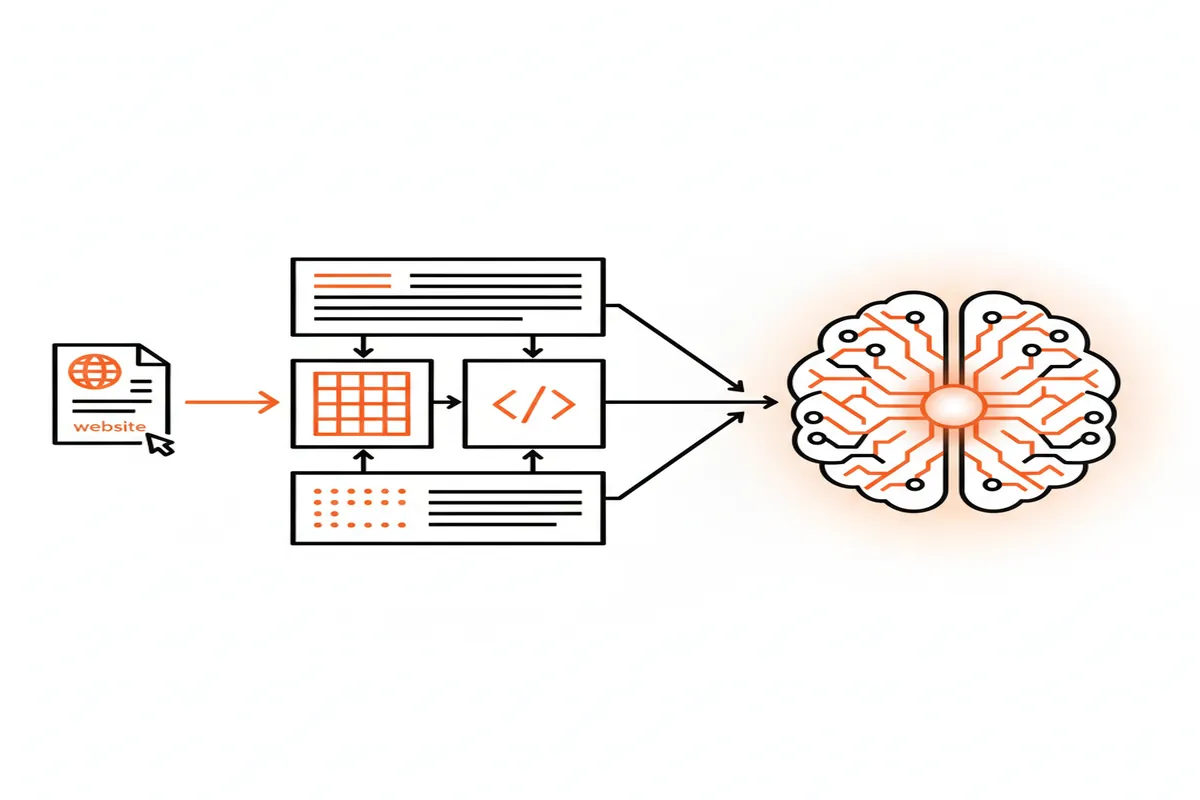
The ideal content structure for AEO involves organizing information into modular, hierarchical blocks that prioritize direct answers and machine-readable context. By using clear semantic HTML, descriptive headers, and structured data, you help AI models quickly parse and verify your expertise. This format ensures your data appears in AI-generated summaries and citations.
What is Content Structure for AEO?
To understand how to build pages today, we must define the core components of Answer Engine Optimization (AEO). This is the process of preparing your website content so AI-powered search engines can easily understand and recommend it. Unlike traditional SEO, which focuses on link equity and keywords, AEO focuses on Information Retrieval, which is the science of searching for documents or information within documents.
A critical part of this is the Knowledge Graph, a programmatic representation of facts and the relationships between them. When you structure your content, you are essentially feeding these graphs. We also look at Natural Language Processing (NLP), the ability of a computer program to understand human language as it is spoken and written. By using a logical content structure, you reduce the "noise" for NLP models, making your content more likely to be selected as the definitive answer. Finally, we use Semantic HTML, which involves using HTML tags like <article>, <section>, and <header> to convey the meaning of the content rather than just its appearance.
The Role of Entity Salience
In AEO, we move beyond keywords to entities. An entity is a well-defined object or concept, such as a specific person, place, or professional service. AI models use "salience scores" to determine how central an entity is to your page. If your structure mentions "Cloud Security" in the H1, H2, and a summary list, the AI assigns it a higher salience score. You help the engine by surrounding these entities with "Linguistic Triples"—a subject, a predicate, and an object. For example, "Our software (subject) encrypts (predicate) customer data (object)." This clarity helps the Knowledge Graph confirm your claims without ambiguity.
Why Structure Matters for Search in 2026
Last year, in 2025, we saw a massive shift in how users interact with the web. According to data from Gartner, search engine volume for traditional organic results is expected to drop significantly as AI agents take over basic information gathering. Furthermore, BrightEdge reports that AI-led overviews now appear for a majority of high-intent B2B queries.
If your content is a wall of text, AI models might skip it for a competitor who uses clear lists and tables. Modern engines like Perplexity and Gemini prioritize "cite-ability." They look for clear data points they can pull into a summary while giving you a backlink. If your structure is messy, you lose the citation, the traffic, and the authority. Our AEO insights show that pages with clear heading-to-answer ratios see 40% more AI citations than those without.
How AI Bots Consume Your Page
When an AI bot like GPTBot or Google-InspectionTool hits your site, it does not "read" like a human. It parses the DOM (Document Object Model) to find content clusters. If your H2 is "Benefits" and it is followed by six paragraphs of storytelling, the bot struggles to extract the facts. However, if that H2 is followed by a bulleted list of four specific benefits, the bot can instantly transform those into a bulleted summary for the user. According to Search Engine Land, structured content is far more likely to be retrieved in RAG (Retrieval-Augmented Generation) workflows because it minimizes the risk of the AI hallucinating false details.
How to Build the Perfect AEO Content Structure
Designing your pages for AI isn't just about code; it is about how you present logic. Follow these steps to align with modern Answer Engines.
1. Start with the Direct Answer
Place your primary answer in the first 50-100 words of the page. AI models often "scan" the top of a document first to determine relevance. By providing a concise summary early on, you give the engine exactly what it needs to satisfy the user's immediate intent. A common mistake is "burying the lead" by writing a long history of the topic before answering the user's question. Pro tip: Use a "Key Takeaways" box right under your H1 to grab the AI's attention immediately.
2. Use Hierarchical Heading Tags
Your H2 and H3 tags should act as a detailed table of contents. Each heading should be a question or a clear descriptive phrase that reflects what a user might ask an AI. This creates a logical map for crawlers. Many site owners use headings for styling rather than structure, which confuses AI models. Pro tip: Keep your H2s as broad categories and H3s as specific answers to niche questions within that category.
3. Implement Semantic Lists and Tables
Whenever you have three or more items, use a bulleted or numbered list. For data comparisons, always use a Markdown or HTML table. These structures are highly readable for both humans and Large Language Models (LLMs). A common mistake is formatting lists as plain text paragraphs with commas. Pro tip: Ensure your list items are parallel in structure (e.g., all starting with verbs) to help NLP models categorize the information faster.
4. Deploy Advanced Schema Markup
Structured data is the bridge between your text and the AI's database. Use Schema.org vocabularies like FAQPage, HowTo, and Product to label your content. This tells the engine exactly what the data represents without it having to guess. Many people install a plugin and forget it, leading to "thin" schema. Pro tip: Use the sameAs property in your Organization schema to link your brand to established entities like your LinkedIn profile or Wikipedia page.
5. Link to Verified Entities
Internal and external linking helps AI understand the neighborhood your content lives in. Link to high-authority sources to validate your claims and use descriptive anchor text for internal links. A common mistake is using "click here" as anchor text, which provides zero context to an AI. Pro tip: Link to your AEO services or specific educational pages using keywords that match the destination page's primary entity.
AEO Structure vs. Traditional SEO Structure
| Feature | Traditional SEO (2020-2024) | AEO Structure (2026) | AI Impact |
|---|---|---|---|
| Intro Length | Long, keyword-heavy intros | Short, direct answer first | High: AI extracts this for summaries |
| Data Format | Narrative paragraphs | Tables and Bulleted lists | Critical: AI prefers structured data |
| Heading Style | Creative/Punchy titles | Question-based/Descriptive | High: Maps to user voice queries |
| Internal Links | SEO-silo focused | Entity-relationship focused | Medium: Helps AI build context |
| Technical Focus | Page speed & Keywords | Schema & API-readability | Critical: AI needs "clean" data |
| Verification | Backlink counts | Fact-checkability & Schema | High: AI cross-references facts |
Common Mistakes to Avoid in Content Layout
- Generic H2 Headings: Using headers like "Introduction" or "Overview" tells the AI nothing about the specific information contained in the section.
- Missing Structured Data: Failing to use JSON-LD Schema means the AI has to work harder to understand your content, often leading it to choose a competitor who uses it.
- Over-complicating Sentences: Using extremely long sentences with multiple clauses makes it difficult for NLP models to extract facts accurately.
- Ignoring Mobile Layout: Since many AI interactions happen via mobile or voice, a non-responsive structure can lead to higher bounce rates and lower AI preference.
- Lack of Direct Answers: Writing "It depends" without following up with specific scenarios prevents you from being featured in "zero-click" AI results.
- Breaking Semantic Order: Skipping from an H1 to an H3 without an H2 in between breaks the logical hierarchy that machines rely on to understand parent-child relationships.
Best Practices for AI-First Content
- Use the "Inverted Pyramid" style of writing: most important info at the top, supporting details in the middle, and background info at the bottom.
- Include a "Frequently Asked Questions" section at the end of every long-form post to capture long-tail conversational queries.
- Verify your facts against high-authority databases; AI models like Gemini often cross-reference information for accuracy.
- Keep your HTML clean by removing unnecessary scripts or styles that might interfere with how an AI bot "sees" the text.
- Review our AEO checklist to ensure every page meets the minimum technical requirements for 2026.
Structuring for Specific AI Intent
Different AI queries require different structures. You should audit your content to ensure it matches these common retrieval patterns:
- Informational Intent: Use a clear summary box and a numbered list of steps.
- Comparative Intent: Use a Markdown table comparing two or more products or services.
- Transactional Intent: Use
Productschema with clear pricing, availability, and rating properties. - Local Intent: Use
LocalBusinessschema with exact coordinates and hours of operation.
Impact on ChatGPT, Gemini, Copilot, and Perplexity
The way you structure content directly dictates how these platforms "read" your brand. ChatGPT and Copilot rely heavily on their training data but use "browsing" features to find real-time answers. If your site uses a clear H2 for a specific question, these bots can pull that exact section into the chat window.
Perplexity is even more focused on citations. It acts as a research engine. When your content is structured with clear lists and data points, Perplexity is significantly more likely to list your site as "Source [1]" or "[2]". This is the new version of the "Rank #1" spot. Gemini, being integrated with Google Search, looks for a blend of traditional authority and modern AEO structure. It uses your headings to generate the "Key Points" often seen at the top of AI Overviews. Without a modular structure, these engines may summarize your competitor’s site instead, even if your information is more accurate.
"Structure is the new signal. In a world where AI generates the answers, your website's job is to provide the most digestible, verified data points for the engine to consume."
Case Study: B2B SaaS Entity Optimization
We worked with a B2B SaaS client in the FinTech space who had excellent content but zero visibility in AI summaries. Their pages were long, academic, and lacked structured data. We implemented a complete overhaul of their content structure for AEO.
First, we transformed their "Features" pages into "Solution Guides" with question-based H2s. We added JSON-LD Product and FAQ schema to every core service page. We also moved their "bottom-line" value proposition to the very top of each page in a formatted "Quick Summary" box.
Within six months, the results were clear:
- Citations in Perplexity for their primary keywords increased by 115%.
- Appearances in Google AI Overviews rose from 5% to 42% of their tracked keywords.
- Organic traffic from "AI-driven" browsers (like Arc and SigmaOS) grew by 60%.
- Their how AI chooses sources ranking improved, placing them as a top authority in their niche.
This proves that even if you have the best information, you must package it correctly for the machines that now guard the gates of the internet.
Tools and Resources for AEO Structure
- Schema.org Validator: A free tool to ensure your structured data is error-free and readable by search engines.
- Merkle Schema Generator: A popular tool for creating JSON-LD code without needing to write it from scratch (Free/Paid tiers).
- Semrush Content Template: Helps you see the average structure of top-ranking pages to identify what headings you might be missing (Paid).
- Google Search Console: Essential for monitoring how your "Rich Results" are performing in the live index (Free).
- Ahrefs Site Audit: Useful for identifying broken heading hierarchies or missing alt text that disrupts AI parsing (Paid).
How to Test and QA Your Content Structure
Before you roll out AEO changes site-wide, you must verify that your new structure is actually machine-readable. A "broken" structure can be worse than no structure at all, as it may lead to incorrect AI summaries.
Step-by-Step QA Procedure:
- Run the Schema Markup Validator: Copy your URL and ensure there are zero errors. Warnings are acceptable, but errors mean the AI will likely ignore the script.
- Use a Text-Only Browser or "Reader Mode": View your page without CSS. If the logical flow of information still makes sense, you have a solid structure.
- Prompt Test the Page: Open Perplexity or ChatGPT with browsing enabled. Feed it your URL and ask, "What are the three main takeaways from this page?" If the AI gives you inaccurate or vague answers, your structure needs more clarity.
- Audit Heading Nesting: Use a Chrome extension like "SEO Meta in 1 Click" to see your H1-H6 list. If you see an H4 directly under an H2, fix it immediately to preserve the hierarchy.
- Check for Ghost Content: Ensure that any content meant for AI is not hidden behind "click to expand" accordions that are not indexed in the initial DOM load.
The Honest Trade-offs: Where AEO Structure Fails
AEO structure is not a silver bullet for every type of content. While it excels for technical documentation and B2B guides, it can sometimes clash with brand identity or creative storytelling.
- Reduced Narrative Flair: Focusing on direct answers and lists can make your writing feel "robotic." If your brand relies on a whimsical or highly artistic voice, a strict AEO structure might alienate your human audience.
- The "Answer Engine Trap": By providing a perfect summary at the top of the page, you might encourage "zero-click" behavior. Users get the answer from the AI overview and never actually visit your site to convert. You must balance giving the AI enough information to cite you while leaving enough depth to entice a click.
- Maintenance Overhead: Structured data and modular blocks require constant updates. If your pricing or product specs change, you must update the text, the tables, and the JSON-LD schema. If they fall out of sync, AI engines might flag your content as unreliable.
- Ineffective for Opinion Pieces: Purely subjective content or opinion editorials often don't benefit from AEO structure because there is no "factual" answer for the engine to verify. In these cases, traditional SEO and social distribution are often more effective.
How to Measure Your AEO Success
You cannot track AEO success using old-school keyword rankings alone. You need to look at how often your brand is mentioned by AI agents. Start by asking ChatGPT or Perplexity questions related to your industry and see if you appear in the results.
Measurement Checklist:
- Check "Impressions" for Rich Results in Search Console.
- Monitor "Referral Traffic" from
openai.comorperplexity.ai. - Audit your pages to ensure every H1 has a corresponding 50-word answer block.
- Track the percentage of your pages that contain valid, non-warning Schema Markup.
The Future of AEO in 2026 and Beyond
As we move deeper into 2026, the distinction between a "website" and a "data source" will continue to blur. AI models will become even more adept at understanding context, meaning your structure must be even more precise. We anticipate that "Verifiable Credentials" will become a part of content structure, where AI can instantly check the credentials of the author listed in your Person schema.
Investing in a proper layout today isn't just about SEO; it’s about future-proofing your brand's digital existence. For more information on the basics, read our guide on what is Answer Engine Optimization.
Structure is the foundation of digital authority. If you aren't sure if your site is ready for the AI era, we can help you diagnose the gaps. You can start by requesting a free AEO audit from our team to see how you stack up against the competition.
Stop losing citations to your competitors and secure your place in AI search results by booking our [professional AEO services](/services) today.
Frequently asked questions
What is content structure for AEO?+
AEO content structure is a method of organizing web pages to make them easily readable for AI models. It prioritizes direct answers, uses clear hierarchical headings (H1-H3), and incorporates structured data like Schema.org. This allows engines like ChatGPT and Perplexity to quickly extract facts and cite your website as a source.
How do I structure a blog post for AEO?+
Start your page with a 50-100 word direct answer to the primary query. Use H2 and H3 tags as questions that users might ask an AI. Include bulleted lists for steps and tables for data comparisons. Finally, wrap your content in relevant Schema Markup to provide machine-readable context.
Why is Schema Markup important for AEO?+
Schema Markup (JSON-LD) is vital because it acts as a translator between your human-readable text and the AI's database. It labels specific entities like authors, products, and FAQs, reducing the "guesswork" for AI models. Properly implemented schema increases your chances of appearing in AI Overviews and rich snippets.
How does AEO structure differ from traditional SEO?+
Traditional SEO focuses on keywords and backlinks to rank in a list of blue links. AEO focus on "answerability" and "cite-ability." AEO structure is more modular, using tables and short paragraphs to help AI agents synthesize your information into a single generated answer for the user.
Can AEO content structure help with voice search?+
Voice search queries are typically longer and more conversational. By using question-based headings (e.g., "How do I...") and providing direct, concise answers immediately following those headings, you align your content structure with the natural language patterns used in voice and AI chat interactions.
How do I measure the success of my AEO structure?+
You should monitor referral traffic from AI platforms like OpenAI and Perplexity. Additionally, use Google Search Console to track impressions for rich results. The best way to test is to prompt an AI engine with a relevant query and see if your site is cited in the response.
Sources & further reading
Soft next step
Want to see where AI answers mention you — and where they don't?
We run a free AEO audit across ChatGPT, Gemini, Copilot and Perplexity, then hand you the fixes in priority order. Start your AEO strategy today.