
The Strategic Role of Schema in AEO: A 2026 Guide to AI Visibility

Strategic structured data implementation is the backbone of modern Answer Engine Optimization.
Quick answer
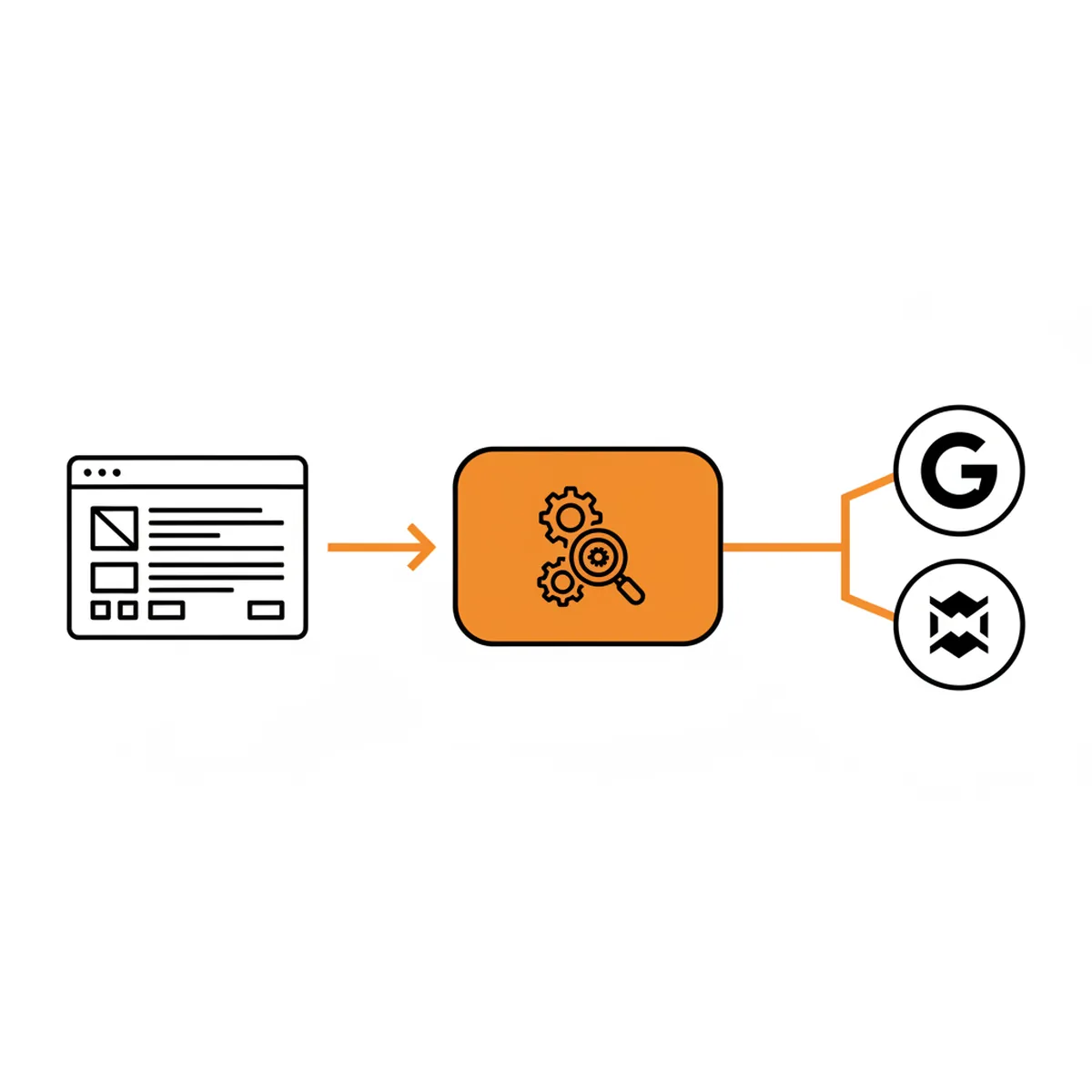
The role of Schema in AEO is to provide a machine-readable map of your website's data. By using structured data, you help AI models like ChatGPT and Gemini understand the relationships between entities, ensuring your content is accurately indexed and cited in conversational AI responses.
The role of Schema in AEO is to act as a universal translator between your content and large language models (LLMs). By using structured data, a standardized format for providing information about a page, you transform unstructured text into precise data points. This process defines entities, which are unique, well-defined objects or concepts like a brand, person, or product. In 2026, Answer Engine Optimization (AEO) relies heavily on these definitions to ensure AI agents can fetch facts without ambiguity. When you implement Schema, you facilitate semantic search, an approach that focuses on the intent and contextual meaning of search queries rather than just matching keywords.
We see this every day at our agency. A client might have a brilliant white paper on "Sustainable Supply Chains." To a human, the expertise is obvious. To an AI agent like Perplexity or Gemini, that PDF or long-form article is just a collection of tokens until we use Schema to identify the author as a verified expert and the content as a peer-reviewed study. By removing the guesswork for the machine, you increase the likelihood of your brand being the "cited source" in a generated answer.
Why Schema Matters for AEO and SEO in 2026
By mid-2025, the shift from traditional search to answer-based discovery became the standard for B2B procurement. In 2026, the role of Schema in AEO has moved from "optional extra" to a foundational requirement. According to research by BrightEdge, AI-driven overviews now appear for over 80% of high-intent B2B queries, and sites with advanced markup see significantly higher citation rates.
Data from Search Engine Land suggests that LLMs prioritize sources that reduce "computational friction." When an AI agent crawls your site, it wants to find the answer immediately. Schema provides that shortcut. Furthermore, Gartner recently predicted that by the end of 2026, brands that fail to organize their data using machine-readable formats will see a 30% drop in organic visibility as "traditional" blue links continue to shrink. You aren't just ranking a page anymore; you are training an AI to trust your facts.
The Rise of the Knowledge Graph
To understand why this matters, you must understand the Knowledge Graph. Google and Bing use these graphs to connect people, places, and things. When you provide structured data, you are essentially asking for a seat at the table. If your data is messy, the AI creates its own version of your brand story. Often, that version is inaccurate or outdated. By taking control of your Schema, you dictate the relationships between your products and the problems they solve.
Reducing Hallucinations via Verification
One major challenge for LLMs is "hallucination," where the AI makes up facts. AI developers are combatting this by prioritizing "Grounding Data." According to recent OpenAI documentation regarding search capabilities, models look for verifiable structured inputs to anchor their responses. When your site provides a valid Product schema with a specific sku and price, the AI feels "safer" quoting you. You become a reliable data node rather than a risky guess.
How to Implement Schema for Maximum AI Visibility
Step 1: Map Your Core Entities
Before writing code, identify the primary entities on your page. Is this a Product, a Service, or a HowTo? Mapping these ensures you use the most specific vocabulary available at Schema.org. Most businesses make the mistake of using generic 'Article' tags for everything. Instead, use 'TechArticle' or 'SoftwareApplication' to give the AI more context. This clarity helps AI models categorize your brand correctly within their internal knowledge graphs.
Consider this workflow:
- Identify the "Main Entity" (e.g., a specific SaaS tool).
- Identify "Supporting Entities" (e.g., the CEO who wrote the feature release, the price, the operating system requirements).
- Check Schema.org for the most specific sub-type available.
Step 2: Use JSON-LD for Technical Efficiency
The industry standard is JSON-LD (JavaScript Object Notation for Linked Data). It is a lightweight data format that is easy for humans to read and write, and even easier for machines to parse. You should place this script in the head or body of your HTML. A common mistake is using outdated Microdata, which clutters your HTML and is harder for modern AI agents to extract. By using JSON-LD, you keep your presentation layer separate from your data layer.
Modern AI agents prefer JSON-LD because it is self-contained. When a crawler hits your page, it can jump straight to the script tag, extract the data, and move on. This efficiency is critical when thousands of pages are being scraped to train or update a model.
Step 3: Link Entities via SameAs Properties
One of the most powerful moves in 2026 is using the sameAs attribute. This tells the AI, "This 'Company' entity is the same one found on this LinkedIn profile and this Wikipedia page." This builds a web of trust. Pro tip: Always link to your official social profiles and authoritative third-party directories. This helps the AI verify your identity and authority, which are critical components of the E-E-A-T framework that search engines still prioritize.
The Importance of 'Mentions' and 'About' Tags
Within your Schema, you can use mentions and about properties to further clarify the context.
- About: Use this to define the primary topic. If your page is a guide on "AI in Healthcare," the
aboutproperty should link to the Wikidata entry for "Artificial Intelligence" and "Healthcare." - Mentions: Use this for secondary topics. This helps the AI understand the breadth of your expertise without confusing it about the main point.
Step 4: Validate and Test Your Code
Never deploy Schema without testing it first. Use the Schema Markup Validator and Google’s Rich Results Test. A single missing comma can invalidate the entire script, making your data invisible to AI agents. A pro tip we use at our agency is to check how the code renders after JavaScript execution. If your CMS generates Schema dynamically, ensure it isn't being blocked by robots.txt or slow-loading scripts.
Comparing Schema Types for Answer Engines
| Schema Type | Primary AEO Benefit | AI Engine Usage | Best For |
|---|---|---|---|
| FAQPage | Directly populates "People Also Ask" and AI summaries | High (Gemini, Copilot) | Service pages & Guides |
| Product | Feeds pricing, availability, and specs to shopping AI | Very High (Perplexity, Google) | E-commerce & SaaS |
| Organization | Establishes brand authority and Knowledge Graph presence | Constant (All LLMs) | Homepage & About page |
| HowTo | Provides step-by-step instructions for voice assistants | High (Alexa, Siri, GPT-4o) | Technical tutorials |
| Review | Aggregates social proof to build AI "trust" scores | Medium (All LLMs) | Conversion-focused pages |
| SoftwareApplication | Lists versioning and compatibility for tech queries | High (ChatGPT, Gemini) | B2B SaaS product pages |
| Course | Categorizes educational content for learning queries | Medium (Search Engines) | Training and Certifications |
Common Mistakes to Avoid in Your Markup
- Markup Mismatch: Never include data in your Schema that isn't visible to the human user on the page. AI engines detect this discrepancy and may flag your site for deceptive practices. If your Schema says a product is $50 but the page says $70, you lose trust instantly.
- Over-Generalization: Using the
ThingorWebPagetype when a more specific type likeConsultingServiceexists. The more specific you are, the easier it is for the AI to categorize you. Think of it as filing a book in a library; "Non-fiction" is less helpful than "19th Century French History." - Broken Nested Elements: Failing to properly nest entities (e.g., putting an
Authorinside aNewsArticle). If the hierarchy is broken, the AI cannot determine the relationship between the data points. - Neglecting Image Metadata: Forgetting to include
imageandlogoproperties within your Organization and Product schema. AI answers are increasingly multimodal; they want to show your logo alongside the text. Ahrefs recently noted that visual elements in search are increasing in importance as AI layouts expand. - Static Values for Dynamic Data: Hard-coding prices or stock levels in your Schema that don't match your actual inventory. This leads to a poor user experience and loss of trust from answer engines. Use your CMS to inject these values dynamically.
Best Practices and Pro Tips for 2026
- Prioritize Speakable Schema: Use the
speakableproperty to identify sections of your content that are best suited for audio playback by AI assistants. This is particularly useful for reaching users through Siri, Alexa, or the voice-mode of ChatGPT. - Implement MainEntityOfPage: Clearly define the primary topic of the page to prevent the AI from getting distracted by sidebar content or footers. This acts as a "focus" signal for the crawler.
- Refresh Dates Frequently: Use
dateModifiedto show AI agents that your information is current. In the fast-paced world of 2026, "freshness" is a massive ranking factor for AEO. If an AI sees two similar answers, it will almost always choose the one modified in the last 30 days. - Cross-Reference Internal Links: Connect your Schema entities across different pages. If your
Servicepage mentions aPerson(an employee), link to theirPersonschema on the bio page. This creates a site-wide knowledge graph that mirrors how AI models store data. - Monitor Search Console: Regularly check the "Enhancements" report in Google Search Console to catch structured data errors before they impact your visibility. Even a minor update to your CMS can break existing scripts.
Advanced Tip: Using 'DefinedTerm' for Industry Authority
If your brand has coined a specific term or methodology, use the DefinedTerm schema. This tells answer engines that you are the definitive source for that specific concept. Link it to a glossary page on your site. When users ask an AI, "What is [Your Unique Framework]?", the AI will point directly to your site as the originator of the term.
How Schema Affects AI Visibility in 2026
The role of Schema in AEO is most evident when you look at how LLMs like ChatGPT, Gemini, Copilot, and Perplexity process information. These models do not "read" your website like a human does; they transform your content into vectors and tokens. Schema acts as an anchor for these tokens.
In ChatGPT and Perplexity, structured data helps the models attribute facts to your site. When a user asks a complex question, the AI looks for verified data structures to form its response. If your site provides a clean JSON-LD block, the AI is significantly more likely to use your data and provide a clickable citation. In Gemini and Copilot, which are integrated directly into search and productivity suites, Schema feeds the "Knowledge Panels" and "AI Overviews" that dominate the top of the screen. Without this markup, your content remains "unstructured noise," making it much harder for the AI to confidently present your brand as the definitive answer.
The Role of Confidence Scores
AI models assign a "confidence score" to the information they retrieve. If the AI finds your data in a structured format that matches other reputable sources (like your social media or industry directories), its confidence score for your brand increases. High confidence scores result in more frequent citations and a more authoritative tone when the AI describes your services.
Case Study: Boosting Visibility for a B2B SaaS Client
We worked with a mid-sized B2B SaaS client in the fintech space that was struggling to appear in AI-generated answers despite having high-quality long-form content. Their primary issue was a lack of technical clarity; AI agents were crawling their site but couldn't distinguish their core product features from their blog advice.
We implemented a comprehensive technical AEO strategy centered on the role of Schema in AEO. We transitioned their site from basic Article markup to a complex web of SoftwareApplication, FAQPage, and ProfessionalService entities. We also used definedTerm schema to claim industry-specific jargon that they had pioneered.
We focused heavily on nesting. We ensured the SoftwareApplication schema included offers for pricing and review for social proof. Within six months, the results were clear:
- Their "AI Citation Share" increased by 45%.
- Appearance in Google’s "People Also Ask" blocks grew by 60%.
- Referral traffic from AI agents (OpenAI and Perplexity) rose by 22% month-over-month.
By providing a machine-readable map of their expertise, they didn't just improve their SEO; they became a primary data source for the AI engines their customers use every day. You can learn more about these strategies in our Schema markup for AEO guide.
Testing and Quality Assurance for Schema Rollouts
You should never roll out site-wide Schema changes without a rigorous QA process. A small error in a global footer script can de-index your rich results overnight. We recommend a three-stage testing environment.
1. Local Code Validation
Before the code ever touches your server, use a linter or the Schema.org validator to check for syntax errors. Common issues include missing curly braces or trailing commas in the JSON-LD array. If the code isn't valid JSON, the AI will ignore it entirely.
2. Staging Environment Testing
Deploy the Schema to a staging or "sandbox" site first. Use tools like Screaming Frog to crawl the staging environment and extract the structured data. This allows you to see if the CMS is correctly injecting dynamic variables (like the current date or price) across thousands of pages simultaneously.
3. Post-Deployment Monitoring
Once live, use the "URL Inspection Tool" in Google Search Console for a few key pages. This confirms that Google’s renderer sees the same data your staging test saw. We also recommend checking the "Rich Results Test" for mobile vs. desktop parity. Sometimes, a responsive design will hide certain text elements that the Schema relies on, leading to a "content mismatch" error.
The Honest Trade-offs: What Schema Cannot Do
While we advocate for structured data, it is not a magic wand. You must be realistic about its limitations. Schema is a technical enhancer, not a replacement for quality.
It Won't Save Bad Content
If your underlying article is poorly written, factually incorrect, or unoriginal, Schema will not help you. In fact, providing structured data for low-quality content just helps the AI realize more quickly that your content isn't worth citing. AI models are trained to prioritize helpfulness and depth. A perfect JSON-LD block on a 200-word "thin" page will still result in zero AI citations.
It Doesn't Guarantee a "Position Zero"
Even with perfect markup, you are competing with every other authoritative source on the web. AI engines often aggregate data from multiple sites. You might provide the price, but a competitor might provide a better "Pros and Cons" list. The AI will likely combine both, meaning you share the spotlight.
Over-Optimization Risks
There is a temptation to mark up every single noun on a page. This is counterproductive. If you overload a page with irrelevant entities, you dilute the "topic authority" of the main entity. Focus on the 3-5 most important things the page is about. Excessive, irrelevant markup can be viewed as "Schema spam" by search engines, which can lead to manual actions or a loss of rich snippet eligibility.
Tools and Resources for Technical AEO
- Schema.org: The official vocabulary site. Use the "Releases" section to stay updated on new properties like
specialAnnouncementor updates toReviewsystems. (Free) - Merkle Schema Markup Generator: An excellent web-based tool for quickly generating JSON-LD. It is our go-to for creating clean templates for FAQ and LocalBusiness entities. (Free)
- Semrush Site Audit: Includes a specific report for structured data. It tracks your "Markup Health" over time, which is essential for large enterprise sites with multiple contributors. (Paid)
- Classy Schema: A visualization tool. It turns your code into a node-based map, making it easy to explain the "role of Schema in AEO" to non-technical stakeholders. (Free/Paid)
- Validator.schema.org: The successor to Google's old tool. It is stricter and better for verifying technical compliance with the global standard. (Free)
How to Measure Success
To understand if your Schema implementation is working, you need to look beyond traditional rankings. In the AEO era, success is measured by "share of voice" in AI summaries.
- Rich Result Impressions: Monitor Google Search Console. A steady increase in impressions for "Product snippets" or "FAQ snippets" indicates the engine trusts your data.
- AI Citation Frequency: Perform manual queries on ChatGPT (with browsing enabled) and Perplexity. Ask questions your content answers. If the AI cites your site as the source for a specific fact you marked up, your strategy is working.
- Click-Through Rate (CTR) from AI Overviews: Monitor your analytics for referral strings from AI agents. While still a small percentage of total traffic for most, this is the fastest-growing segment in B2B.
- Entity Health: Search for your brand name. Do you have a Knowledge Panel? Is the information (logo, social links, founders) accurate? If not, your
Organizationschema needs work.
AEO Checklist:
- [ ] All core pages have at least one specific Schema type.
- [ ] JSON-LD is valid and passes the Rich Results Test.
- [ ]
sameAslinks are updated to current social profiles and Wikipedia/Wikidata. - [ ] FAQ markup matches the visible text on the page exactly.
- [ ] Images are high-resolution and defined with height/width properties in the code.
- [ ] The
publisherandauthorentities are clearly linked to their own bio pages.
The Future of Schema and AEO Beyond 2026
Looking toward 2027 and 2028, we expect Schema to become even more granular. We are already seeing the emergence of "Personalized Schema," where data is tailored to the specific context of the user's AI agent. The role of Schema in AEO will evolve from simply defining "what" a page is to defining "why" it is relevant to a specific user's journey.
We anticipate new properties related to "AI Transparency," where sites can use Schema to declare if a piece of content was AI-generated, human-edited, or peer-reviewed. As AI agents become more autonomous, they will rely on your structured data to make purchasing decisions on behalf of users. For example, a B2B procurement agent might crawl your site, read your SoftwareApplication schema, and automatically add your tool to a shortlist based on its featureList and operatingSystem requirements. Staying ahead of these technical requirements today is the only way to ensure your brand remains relevant in an AI-first world.
Conclusion
Mastering the role of Schema in AEO is no longer a luxury for B2B brands; it is a technical necessity. By providing AI engines with a clear, structured, and verified map of your content, you bridge the gap between human-readable text and machine-understandable data. This ensures your brand isn't just indexed, but actively cited and recommended by the AI models that now dominate the search experience.
Whether you are looking to fix existing errors or build a new AEO strategy from the ground up, the foundation must be built on solid structured data. We help businesses navigate these technical complexities to ensure they stay visible as search evolves. If you want to see how your current site stacks up against AI requirements, we offer a comprehensive review.
Start by getting your free AEO audit to identify immediate opportunities. When you are ready to dominate the answer engines, explore our full suite of AEO services.
[View Our Full List of AEO Services](/services)
Frequently asked questions
How does Schema markup improve visibility in AI search results?+
Schema provides the machine-readable structure that AI engines need to parse data efficiently. By defining entities like products, services, and FAQs in JSON-LD, you help models like ChatGPT and Gemini understand context. This reduces the AI's effort in 'hallucinating' or guessing what your page is about, directly leading to more accurate citations in AI-generated answers.
What is the difference between Schema for SEO and Schema for AEO?+
While SEO uses Schema to earn rich snippets (like star ratings) in blue links, AEO uses it to feed 'Knowledge Graphs.' In 2026, the focus has shifted from visual snippets to data accuracy. AI engines use your markup to verify facts and build relationships between your brand and specific search intents, making Schema the primary language for AI-driven discovery.
Which type of Schema markup is best for AEO?+
JSON-LD is the preferred format for AEO in 2026. It is recommended by Google and most LLM developers because it is easy to inject into a page's metadata without affecting the visual layout. It allows for complex nesting of entities, which is vital for helping AI engines understand the hierarchy and relationships within your business data.
What are entities and why do they matter for Schema?+
Entity-based optimization involves using Schema to define your brand as a unique entity. By using the 'sameAs' property to link to authoritative sources like Wikipedia or LinkedIn, you build trust with AI models. This tells the engine exactly who you are, what you do, and why you are a credible source for the answers it provides to users.
What are the most common Schema mistakes that hurt AEO?+
Common errors include 'mismatched data' (where Schema says one thing but the page says another), broken JSON-LD syntax, and using overly generic tags like 'WebPage' instead of specific ones like 'TechArticle.' Additionally, failing to update the 'dateModified' field can make your content seem stale to AI agents that prioritize fresh, up-to-date information.
Does Schema help with voice search and AI assistants?+
Yes, 'Speakable' schema is a specific type of markup that identifies which parts of your content are best for text-to-speech conversion. As voice-activated AI assistants like Siri and Alexa become more integrated with LLMs, using Speakable schema ensures your content is prioritized for audio answers and voice-based search queries.
Sources & further reading
Soft next step
Want to see where AI answers mention you — and where they don't?
We run a free AEO audit across ChatGPT, Gemini, Copilot and Perplexity, then hand you the fixes in priority order. Start your AEO strategy today.