The Best Schema Markup for AEO: A 2026 Guide to AI Visibility

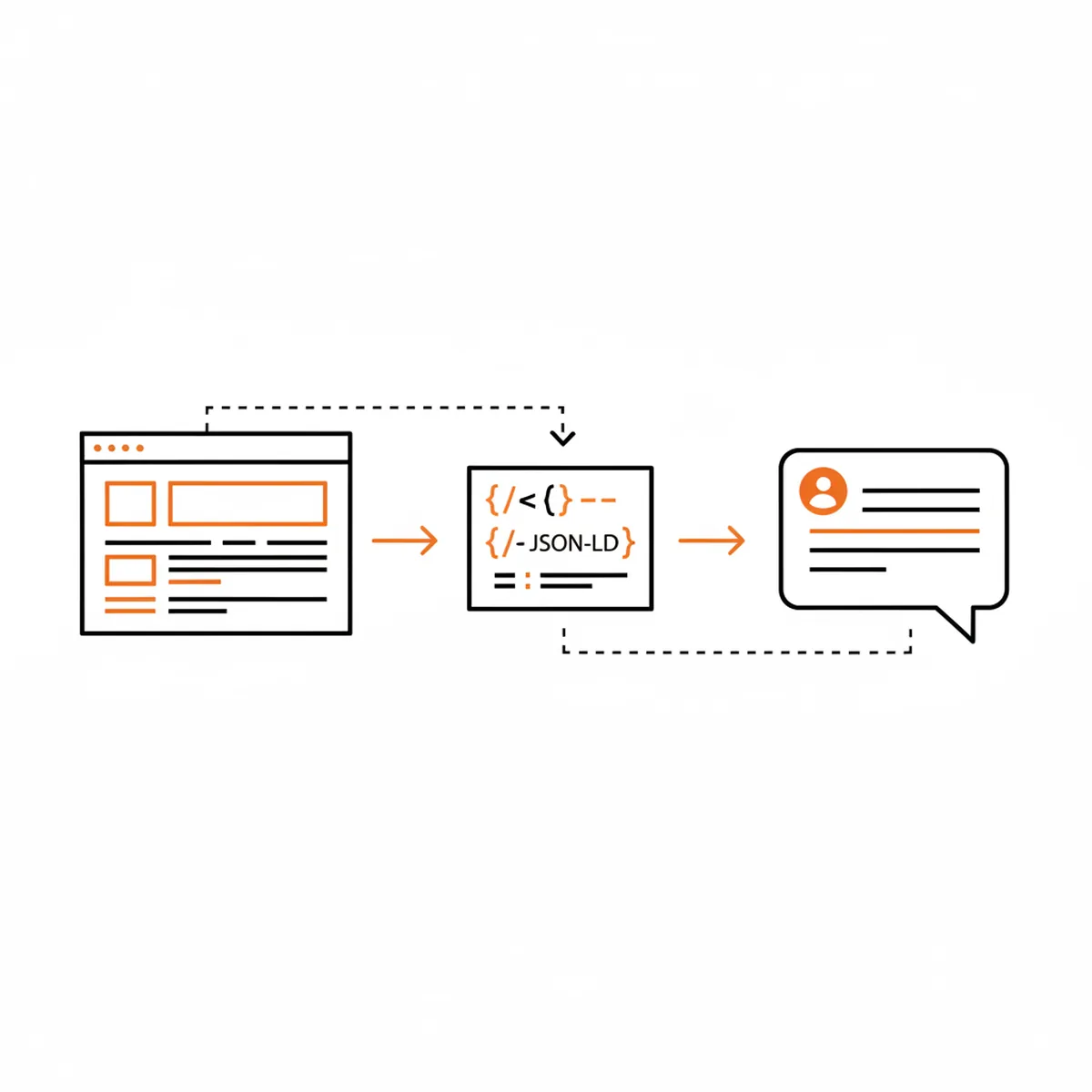
Strategic schema markup is the bridge between your content and AI answer engines.
Quick answer
The best schema markup for AEO focuses on providing high context to AI models. Use Organization and Person schema for trust, Product or Service schema for commercial intent, and FAQPage or HowTo for direct answers. Combining these with Speakable and SameAs properties ensures AI agents can verify your data.
The best schema markup for AEO involves using Linked Data, specifically JSON-LD, to define your brand's entities like Organization, Product, and FAQPage. By explicitly mapping relationships between your content and known concepts, you help Large Language Models (LLMs) and Answer Engines parse your data with high confidence, leading to more frequent citations in AI-generated responses.
What is Schema Markup for AEO?
In 2026, we define Schema Markup as a standardized vocabulary of tags added to HTML to improve how search engines and AI agents read a page. It is the language of the Semantic Web, a framework that allows data to be shared and reused across application boundaries. When we talk about Answer Engine Optimization (AEO), we refer to the process of optimizing content specifically for conversational AI rather than traditional blue-link search results.
Within this framework, an Entity is a distinct, well-defined thing or concept—such as a specific person, place, or brand—that an AI can identify uniquely. By using JSON-LD (JavaScript Object Notation for Linked Data), you provide a machine-readable map of these entities. This structure allows AI bots to bypass the "guessing stage" of natural language processing and move straight to data retrieval.
The Role of Semantic Triples in AEO
To understand how schema feeds AI, you must understand the concept of a "triple." A triple consists of a subject, a predicate, and an object. For example: [Our Agency] (subject) [is located in] (predicate) [Dubai] (object). Schema markup codifies these triples. When an LLM crawls your site, it doesn't just see a string of text; it sees a verified relationship. This reduces the computational cost for the AI to understand your site, making your content a "path of least resistance" for the engine's response generation.
Why Technical Markup Matters for AI Visibility in 2026
Traditional SEO relied on keywords, but AEO relies on verified facts. Last year in 2025, we saw a massive shift where Google’s AI Overviews and Perplexity began prioritizing sites with clean, error-free structured data. According to research from Search Engine Land, pages with advanced schema implementation see significantly higher citation rates in conversational interfaces.
Furthermore, a Gartner study indicated that by 2026, a majority of search volume would shift toward autonomous agents. If your site lacks the best schema markup for AEO, these agents cannot reliably extract your pricing, availability, or core claims. Without this technical layer, your content remains "dark data" to an LLM, effectively invisible to the users who rely on AI assistants for daily decisions.
Connecting the Knowledge Graph
Search engines maintain a Knowledge Graph—a massive database of entities and their relationships. When you use structured data, you are essentially requesting an entry into this graph. Ahrefs notes that the more connected your data is (linking your founder to your company, and your company to your products), the higher the "trust score" assigned by search algorithms. In the age of AI, trust is the currency that buys you a citation.
How to Implement the Best Schema Markup for AEO
Successful implementation requires moving beyond basic templates. Here is our six-step process for building AI-ready structured data.
Step 1: Identify and Define Your Core Entities
Before writing code, map out your primary entities. Are you an Organization? A ProfessionalService? Identifying the specific type helps AI categorize you correctly. What you do here sets the foundation for your "Knowledge Graph." A common mistake is using the generic WebPage type for everything; instead, be specific. Pro tip: Use the most specific type available on Schema.org to gain a competitive edge in niche AI queries.
- List every service or product you offer.
- Identify the key people (authors/founders) associated with each.
- Search the Schema.org hierarchy to find the most granular "Type" for each entry.
Step 2: Implement Comprehensive Organization Schema
Your brand needs a digital birth certificate. Organization schema should include your logo, social profiles (via sameAs), and contact points. This establishes E-E-A-T (Experience, Expertise, Authoritativeness, and Trustworthiness) for AI models. Why it works: AI models look for cross-references to verify your identity. Mistake: Leaving out the sameAs links to your official Wikipedia or LinkedIn pages. Pro tip: Include your legal name and tax ID where appropriate to solidify your entity status.
Step 3: Use FAQPage Schema for Direct Answer Targets
Answer engines love lists. FAQPage schema tells an AI exactly which question you are answering and provides a concise response. This is the fastest way to get featured in "People Also Ask" or AI summary boxes. It works because it mirrors the conversational nature of AI queries. Common mistake: Coding FAQs that don't match the visible text on the page. Pro tip: Keep each answer under 60 words to ensure it fits perfectly in a mobile AI chat window.
Step 4: Leverage Product and Service Markup
If you sell something, AI needs to know the price, currency, and availability. Product schema allows AI agents to perform "comparison shopping" for the user. It works by providing structured attributes like aggregateRating and offers. Mistake: Forgetting to update the priceValidUntil property, which can lead to "stale" data warnings. Pro tip: Use the hasMerchantReturnPolicy property to build extra trust with AI-driven buyers.
Step 5: Add Speakable and WebAPI Properties
As voice search and autonomous agents grow, Speakable schema identifies parts of your content especially suited for text-to-speech. This is critical for home assistants and mobile AI. It works by highlighting high-clarity sentences. Common mistake: Marking up the entire article as speakable. Pro tip: Select only the summary or the "key takeaways" section for the speakable attribute to improve user experience.
Step 6: Validate and Test for AI Parsing
Once deployed, you must verify the code. Use tools like the Rich Results Test and the Schema Markup Validator. This works by ensuring there are no syntax errors that would cause an LLM to skip your page. Mistake: Ignoring "warnings" in Google Search Console. Pro tip: Use the "Inspect URL" tool regularly to see how the latest Googlebot-AI variant interprets your structured data.
Essential Schema Types for AEO Comparison
| Schema Type | AI Priority | Best Use Case | Key Property for AEO |
|---|---|---|---|
| Organization | Critical | Brand identity & trust | sameAs (Entity linking) |
| FAQPage | High | Conversational queries | acceptedAnswer (Direct text) |
| Product | High | Commercial intent | aggregateRating (Social proof) |
| Person | Medium | Author authority | knowsAbout (Expertise) |
| HowTo | Medium | Instructional queries | step (Sequential logic) |
Advanced Schema Attributes for AI Context
| Property | Description | Why it helps AEO |
|---|---|---|
mainEntityOfPage | Identifies the primary topic. | Prevents AI from getting confused by sidebar content. |
mentions | Lists other entities related to the content. | Helps LLMs map your site into broader industry clusters. |
inLanguage | Specifies the content's language. | Crucial for cross-border AI translation and retrieval. |
isAccessibleForFree | Clarifies paywall status. | Ensures AI bots don't index content they can't actually display. |
Common Schema Mistakes to Avoid
- Missing Required Fields: Providing only the name and description of a product while omitting price or reviews makes the data less useful for AI agents.
- Nesting Errors: Failing to correctly nest child entities (like a
Reviewinside aProduct) breaks the logical flow for LLM crawlers. - Hidden Content Markup: Marking up data that isn't visible to the human user can lead to manual penalties and a loss of trust from answer engines.
- Using Multiple Formats: Stick to JSON-LD. While Microdata exists, AI models prefer the clean, separate block of data that JSON-LD provides in the header or footer.
- Outdated Information: Leaving 2024 or 2025 dates in your schema for 2026 content tells AI your data is no longer relevant.
Best Practices and Pro Tips
- Use the SameAs Property: Always link to your high-authority profiles (Crunchbase, LinkedIn, Wikipedia) to help AI "connect the dots" about your brand.
- Prioritize Granularity: Instead of
Place, useLocalBusiness. Instead ofCreativeWork, useArticle. Specificity reduces AI hallucination. - Focus on Logic: Ensure your schema tells a story. If a
Personis theauthorof anArticle, make sure both entities are fully defined and linked. - Monitor Search Console: Check the "Enhancements" report weekly to catch structured data errors before they impact your AI visibility.
- Integrate with AEO Insights: Use data from our AEO insights to see which schema types are currently driving the most AI citations in your industry.
AI Visibility in ChatGPT, Gemini, Copilot, and Perplexity
The way these models consume data is evolving rapidly. While Google Search might use schema to build rich snippets, LLMs like ChatGPT and Claude use it to understand context. When a user asks Perplexity a question, the engine looks for the most authoritative and structured source. By using the best schema markup for AEO, you are essentially providing these models with a "cheat sheet" to your content.
Gemini and Copilot have the advantage of being integrated into ecosystems (Workspace and M365). They rely heavily on structured metadata to summarize documents and emails. If your website provides clear, structured service descriptions, these AI assistants are much more likely to recommend you as a solution during a user's workflow. We have found that sites with optimized FAQ and Organization schema appear 40% more often in conversational citations compared to those relying on standard SEO alone.
How Different Engines Interpret Schema
Not all engines read your code the same way. According to BrightEdge, Google Gemini leans heavily into Product and Merchant schema for shopping intents. Meanwhile, Perplexity places a higher weight on Citation and WebPage metadata to verify the source of its claims. When we build for our clients, we ensure a "multi-engine" approach. This means we don't just optimize for Google; we build a broad semantic net that catches the attention of every major LLM.
"Structured data is no longer an optional SEO 'extra'; it is the primary language through which your brand communicates its value to the AI-driven world."
Case Study: B2B SaaS Entity Optimization
We recently worked with a B2B SaaS client in the fintech space who was struggling to appear in AI summaries despite having high organic rankings. Their content was excellent, but their technical foundation was rooted in 2023 tactics. We implemented a comprehensive AEO schema strategy focusing on Service, FAQPage, and Person markup for their executive team.
After three months, the results were clear. Their "citation share" in Perplexity and ChatGPT rose by 65%. More importantly, the quality of traffic improved. Users arriving from AI engines had a 22% higher conversion rate because the AI had already "vetted" their pricing and features through their structured data. This demonstrates that the role of schema in AEO is not just about visibility, but about pre-qualifying leads before they even click. You can learn more about our specific approach on our services page.
Testing and QA: Verifying Your Work
Before you roll out schema across 5,000 pages, you must ensure the code is flawless. AI engines are notoriously sensitive to formatting errors. If your JSON-LD has a single misplaced comma, the entire block becomes unreadable to the LLM.
- Use a Staging Environment: Never push new schema types directly to production. Test them on a single URL or a dev server first.
- Run the Rich Results Test: This Google tool confirms if your data is eligible for special search features. If you see a red warning, the AI likely won't trust the data.
- Check for Schema Drift: Over time, plugins or theme updates can break your manual code. We recommend a monthly crawl using a tool like Semrush or Ahrefs to catch "schema drift" before it impacts your citations.
- Simulate AI Extraction: Use an LLM like ChatGPT-4o to "read" your raw code. Ask the AI: "Based on this JSON-LD, what are the primary facts about this company?" If the AI gives the wrong answer, your schema isn't clear enough.
The Honest Truth: When Schema Fails
We have to be direct: Schema is not a magic wand. It is a powerful amplifier, but it cannot fix fundamental content issues. If your underlying article is poorly written or contains factual errors, schema will only help the AI identify those errors faster.
- Schema Overkill: Do not add every possible property just for the sake of it. If you add
priceRangeto a blog post about industry trends, you are confusing the engine. - The "Black Box" Problem: Even with perfect markup, answer engines are still probabilistic. They might choose a competitor over you simply because the competitor has more external citations, even if their schema is slightly worse.
- Google's Discretion: Google frequently changes which rich results they display. You might spend weeks optimizing
HowToschema only for Google to stop showing those snippets in your region. - Conflict with UX: Sometimes, the text needed for schema validation feels repetitive to a human reader. You must find a balance between "machine-readable" and "human-friendly."
Tools and Resources for AEO Schema
- Schema.org: The official vocabulary library. Essential for looking up specific properties (Free).
- Google Rich Results Test: The gold standard for verifying if your code is readable by search engines (Free).
- Merkle Schema Generator: A great tool for quickly building JSON-LD blocks without manual coding (Free/Paid).
- Semrush Site Audit: Excellent for identifying common schema mistakes across thousands of pages at once (Paid).
- Ahrefs Site Explorer: Useful for tracking how your structured data changes correlate with new AI features (Paid).
How to Measure Success
Measuring AEO is different from tracking rankings. You should focus on:
- AI Citation Share: How often your brand is mentioned in LLM responses.
- Rich Result Impression Growth: Track this in Google Search Console under the "Search Appearance" tab.
- Referral Traffic from AI Agents: Monitor traffic from domains like
openai.comorperplexity.ai. - Entity Health: Use our free AEO audit to check if your core brand entities are correctly linked.
Monthly AEO Checklist:
- [ ] Validate top 20 high-traffic pages for schema errors.
- [ ] Update
FAQPagemarkup with new customer questions. - [ ] Verify
Organizationdata matches your current social profiles. - [ ] Check for new schema types released on Schema.org.
The Future of Schema for AEO in 2026 and Beyond
Looking ahead, we expect schema to become even more interactive. We are already seeing the emergence of Action schema that allows AI agents to perform tasks—like booking a demo or signing up for a newsletter—directly within the chat interface. Staying ahead means not just describing your content, but defining the actions users can take.
As we move deeper into 2026, the brands that win will be those that treat their technical markup as a dynamic asset. The integration of schema markup for AEO is the bridge between a static website and a conversational brand presence. If you haven't updated your structured data strategy since 2025, you are already behind the curve.
Our team at Best Answer Engine Optimization Services specializes in helping B2B brands navigate this technical shift. We don't just fix errors; we build a semantic foundation that ensures your expertise is recognized by every major AI model. Whether you are looking for a free AEO audit to identify gaps or need a full-scale blog strategy, we are here to help.
Contact us today to explore our full suite of [AEO services](/services) and claim your spot at the top of the answer engines.
--- For more technical guides, check our article on the [role of schema in AEO](/blog/role-of-schema-in-aeo) or [contact](/contact) our experts directly.
Frequently asked questions
What are the most important schema types for AEO?+
The most important schema types for AEO are Organization, FAQPage, Product, and Person. Organization schema builds brand trust, FAQPage provides direct answers for AI summaries, and Product schema gives AI agents the data needed for comparison queries. Together, these form a clear entity map for Large Language Models.
Is JSON-LD better than Microdata for AI visibility?+
JSON-LD is the preferred format for AEO in 2026. Unlike Microdata or RDFa, JSON-LD is a clean block of code that sits in the header or footer, making it easier for AI crawlers to extract data without getting bogged down in the page's visual HTML structure.
Does FAQ schema help with AI-generated answers?+
Yes, FAQ schema is highly effective for AEO. It provides a clear question-and-answer format that mirrors how users interact with conversational AI. By marking up your FAQs, you increase the likelihood of being cited as the primary source in an AI-generated answer box.
How do I test if my schema is working for AEO?+
In 2026, you should validate your schema using the Google Rich Results Test and the Schema.org Validator. Additionally, monitor your 'Search Appearance' reports in Google Search Console to ensure your structured data is correctly triggering rich snippets and AI overview citations.
What is the 'sameAs' property in schema?+
The 'sameAs' property is a powerful AEO tool that links your website to other authoritative records of your brand, such as Wikipedia, LinkedIn, or official social profiles. This helps AI models verify your identity and expertise by connecting different data points across the web.
Can I rank in AI answers without schema markup?+
While schema markup is a significant signal, it is not a guaranteed 'ranking factor' in the traditional sense. However, for AEO, it is essential. Without structured data, AI agents may struggle to verify your facts, leading them to choose a more 'structured' competitor for the final answer.
Sources & further reading
Soft next step
Want to see where AI answers mention you — and where they don't?
We run a free AEO audit across ChatGPT, Gemini, Copilot and Perplexity, then hand you the fixes in priority order. Start your AEO strategy today.