Why is AEO Important for SEO in 2025?
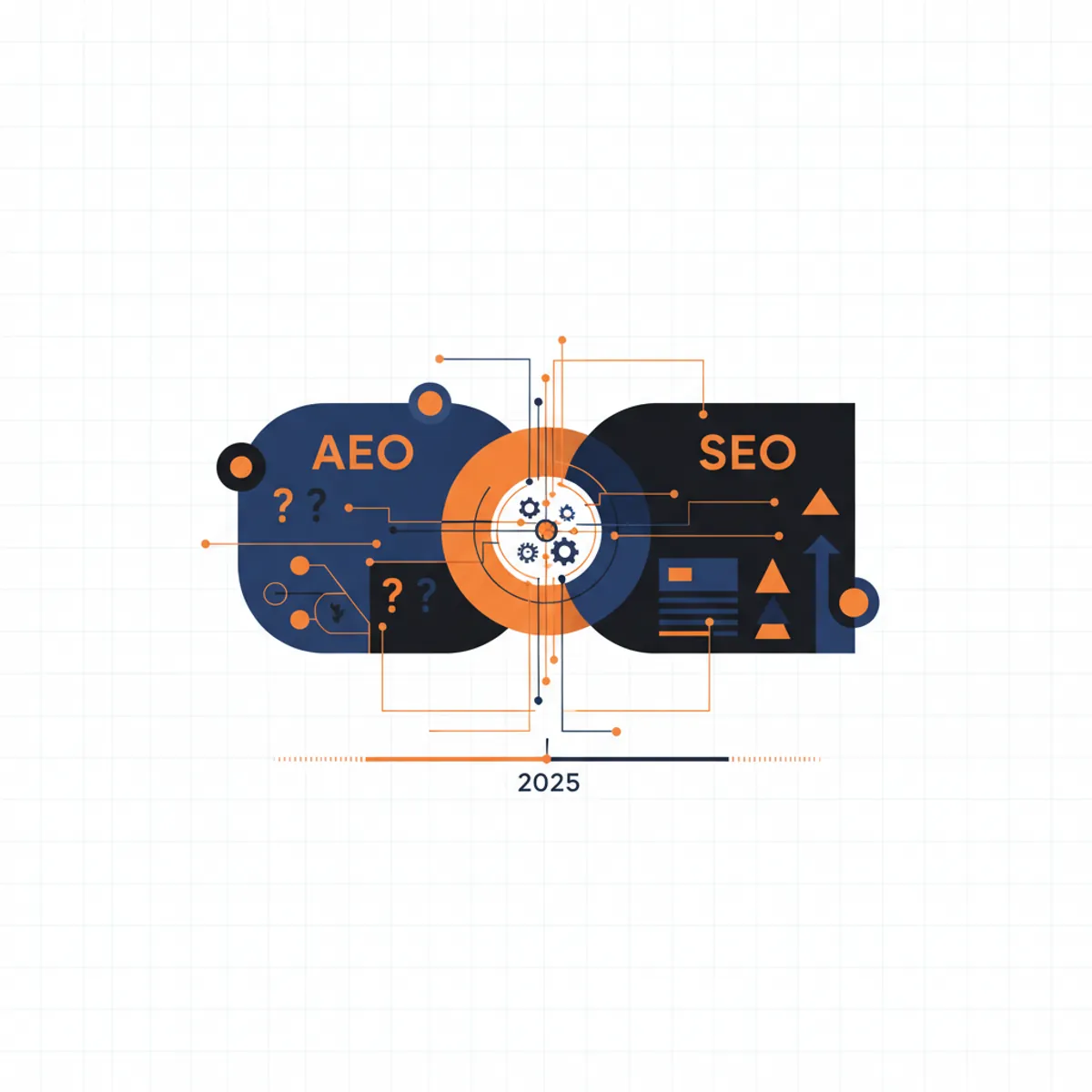
The intersection of traditional organic search and the new era of conversational answer engines.
Quick answer
AEO is important for SEO in 2025 because users are increasingly bypassing traditional search result pages in favor of direct, AI-generated answers from platforms like Perplexity, ChatGPT, and Google Gemini. AEO ensures your content is structured and authoritative enough to be cited as the primary source within these synthetic AI responses.
AEO is important for SEO in 2025 because users are increasingly bypassing traditional search result pages in favor of direct, AI-generated answers from platforms like Perplexity, ChatGPT, and Google Gemini. AEO ensures your content is structured and authoritative enough to be cited as the primary source within these synthetic AI responses, maintaining visibility in a zero-click world.
The Fundamental Shift from Search to Answers
For two decades, the goal of search engine optimization was to secure a position in the top ten blue links. If you were on page one, you were successful. However, by 2025, the architecture of discovery has undergone a seismic shift. We have moved from the era of "Search" to the era of "Answers."
Answer Engine Optimization (AEO) is the discipline of optimizing content specifically for AI-driven engines that synthesize information to provide a single, definitive response to a user's query. These engines—including Perplexity, OpenAI's SearchGPT, and Google’s Search Generative Experience (SGE)—do not just list links; they read, interpret, and summarize the web.
If your content isn't optimized for these engines, you are effectively invisible to a growing segment of users who no longer click through to websites but rely entirely on the AI’s summary. This makes AEO the critical frontier for any digital strategy looking to survive the next decade.
In the traditional search paradigm, the user was the synthesizer. They clicked three different links, read three different articles, and mentally combined the information to form a conclusion. In 2025, the LLM performs this synthesis in milliseconds. This reduces "information friction" for the user but creates an "attribution crisis" for the publisher. AEO is the bridge that solves this crisis by ensuring your brand is the verifiable logic behind the AI's output.
Why AEO Matters More Than Ever in 2025
By 2025, the proliferation of Large Language Models (LLMs) has reached a point of ubiquity. It is no longer just early adopters using these tools; they are integrated into browsers, operating systems, and mobile devices. Traditional SEO is struggling because the "click-through rate" (CTR) for informational queries is plummeting.
When a user asks, "How does a heat pump work in freezing temperatures?", Google Gemini provides a 200-word explanation immediately. The user gets what they need without clicking a single link. For a brand to remain relevant, it must be the source that the AI uses to generate that answer. AEO allows you to influence the "training" and "retrieval" phases of these AI responses.
The competitive landscape has also narrowed. While a search engine results page (SERP) might show ten links, an AI response usually features only one to three primary citations. If you are not in that top three, your visibility for that query drops to zero. AEO is a high-stakes game of "winner-takes-most," where the reward for being the primary citation is significantly higher than the reward for being a middle-of-the-page blue link.
The Rise of Generative Engine Optimization (GEO)
Closely related to AEO is Generative Engine Optimization (GEO). While SEO targets algorithms like PageRank, GEO targets the retrieval-augmented generation (RAG) processes used by LLMs. In 2025, search engines prioritize content that displays "Information Gain"—offering new, unique perspectives or data that isn't already present in the AI's base training set.
GEO practitioners focus heavily on "fluency" and "factual density." AI engines favor content that is easy to parse but contains a high concentration of specific, verifiable facts. By optimizing for these parameters, you increase the likelihood that the RAG system will pull your content into the LLM’s context window. This is the difference between being a passive data source and an active participant in the AI's logic flow.
Core Differences Between SEO and AEO
Understanding the distinction between these two disciplines is vital for resource allocation. While they share some DNA—like a focus on quality and speed—their targets are different.
| Feature | Traditional SEO | Answer Engine Optimization (AEO) |
|---|---|---|
| Primary Goal | Ranking in the top 10 blue links | Being cited as the source in an AI answer |
| Success Metric | Clicks, Impressions, CTR | Citation Share, Brand Sentiment in AI |
| Content Focus | Keywords and Topic Clusters | Direct Answers, Entities, and Facts |
| Structure | Standard HTML and Metadata | Heavy JSON-LD Schema and Semantic Markup |
| User Intent | Browsing and Discovery | Immediate Problem Solving |
AEO requires a shift from "keyword volume" to "intent resolution." In SEO, you might target the term "best running shoes." In AEO, you target the logic used to determine what makes a shoe "best" for a specific type of runner. The goal is to provide the underlying reasoning that an AI can then relay to the user.
Step-by-Step Guide to Implementing AEO in 2025
Transitioning to an AEO-first mindset requires a tactical overhaul of how you produce and structure content. Follow these five steps to ensure your site is "AI-ready."
Step 1: Identify Direct-Answer Opportunities
Analyze your existing keyword list and identify "Who, What, Where, When, and Why" queries. These are the primary targets for answer engines. Use tools to see which queries are currently triggering AI overviews.
- Why it works: AI models are built to resolve cognitive gaps. Targeting specific questions aligns with their core function.
- Common Mistake: Trying to optimize a broad, non-specific keyword like "Marketing" instead of "How does fractional CMO pricing work?"
- Pro Tip: Use the "People Also Ask" section of Google to find the exact phrasing users prefer. In 2025, natural language phrasing is more important than exact-match keywords.
Step 2: Implement Advanced Schema Markup
Schema is no longer just for star ratings. You need to use specific schemas like Dataset, FAQPage, HowTo, and Speakable. Most importantly, use sameAs attributes to link your entities to authoritative sources like Wikidata or LinkedIn.
- Why it works: AI doesn't "read" like a human; it parses data. Schema provides a clear map of your content's logic.
- Common Mistake: Using generic
WebPageschema and ignoring more specific entity-based schemas. - Pro Tip: Read our guide on aeo-schema-markup-implementation-guide for a deep dive into JSON-LD. Use
mentionsandaboutproperties to clarify the semantic relationship between different concepts on your page.
Step 3: Write in an "Answer-First" Format
Structure your content using the inverted pyramid style. Lead with the most important information—a concise 40-60 word answer—before diving into the nuances and supporting data.
- Why it works: LLMs often use "chunking" to process text. A clear, standalone answer block is easier for a RAG system to retrieve.
- Common Mistake: Hiding the answer at the bottom of a 2,000-word essay to increase "time on page." In an AEO world, this backfires because the AI crawler might not prioritize the lower sections of the page.
- Pro Tip: Use H2 and H3 headings as the questions themselves. Ensure the paragraph immediately following the heading begins with a direct, declarative sentence.
Step 4: Establish E-E-A-T and Cites
AI models are programmed to avoid hallucinations by favoring authoritative sources. Ensure your site has a clear "About" page, author bios with credentials, and citations to external peer-reviewed studies or industry data.
- Why it works: Trust is the primary filter for AI engines. If the engine can't verify your authority, it won't risk citing you.
- Common Mistake: Publishing anonymous content or failing to link to reputable third-party sources.
- Pro Tip: Guest posting on high-authority sites helps build the "knowledge graph" around your brand. Ensure your brand name is consistently associated with your core topics across the entire web.
Step 5: Optimize for Technical Performance and Crawlability
If an AI bot like GPTBot or PerplexityBot cannot efficiently crawl your site, you won't be indexed in their temporary memory. Ensure your robots.txt allows these bots and that your server response time is lightning-fast.
- Why it works: Speed is a proxy for reliability in the eyes of many modern crawlers.
- Common Mistake: Blocking AI crawlers out of fear of data scraping without realizing this also blocks discovery.
- Pro Tip: Use a CDN to ensure global retrieval speed for AI agents based in different regions. Check your server logs to ensure that AI agents are successfully accessing your most important pages.
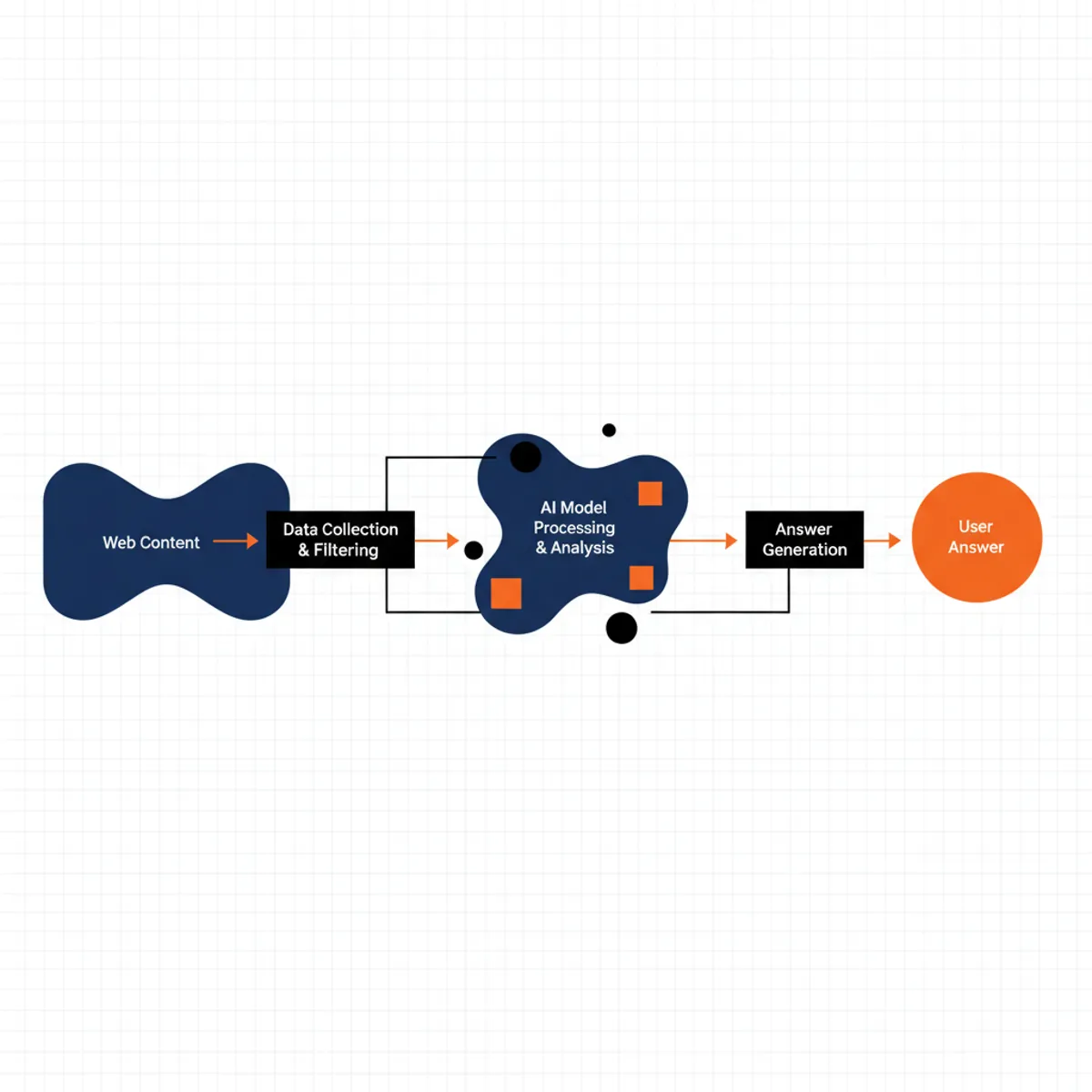
Understanding the "Retrievability" Factor
In 2025, ranking is not just about popularity; it is about retrievability. When an answer engine receives a prompt, it searches its index for the most relevant "chunks" of information. This is where the concept of "vector embeddings" comes into play. AEO involves ensuring your content is semantically "close" to the questions users are asking.
To improve retrievability, you must focus on factual density. An AI engine is more likely to cite a page that contains five specific facts about a topic than a page that contains 500 words of vague marketing fluff. We call this "fluff-to-fact ratio." The lower the ratio, the higher your AEO potential. This means cutting out filler phrases like "in today's digital landscape" or "it is important to note that" and replacing them with hard data and direct statements.
The Role of Semantic Intelligence
In 2025, search engines have moved beyond simple keyword matching. They now utilize semantic intelligence to understand the intent behind a query. For instance, if a user asks for a "caffeine fix," the engine knows they are looking for a coffee shop, not a chemical supplier.
AEO leverages this by focusing on entities rather than just words. By defining your brand as an entity within the global knowledge graph, you ensure that when an AI is asked for a recommendation in your category, your brand is the logical choice. You can learn more about how this works in our article on ai-search-ranking-factors.
Semantic intelligence also means understanding "co-occurrence." If your brand is frequently mentioned in the same context as "top-tier cybersecurity solutions" on reputable third-party sites, the AI will build a semantic association between your brand and that category. AEO, therefore, extends beyond your own website into the broader digital ecosystem.
AEO isn't just a new tactic; it is the inevitable evolution of how information is retrieved. In 2025, if your brand isn't the 'answer,' it doesn't exist to the modern consumer. — Amir, Founder of EvronStudio
Advanced AEO Tactics for Competitive Industries
In highly competitive sectors like Finance, Health, or SaaS, standard AEO practices may not be enough. You need to leverage advanced tactics to stand out to the AI models.
1. Data-First Publishing
AI models love structured data. By publishing original research, surveys, or datasets in structured formats (like tables or downloadable JSON files), you make your site an "original source" for the AI. When a user asks for a statistic, the AI will pull it from your table and credit your site.
2. The "Citation Loop" Strategy
This involves creating content that answers a question and then cites a reputable source, while simultaneously getting that reputable source to mention your unique findings. This creates a verification loop for the AI. If two authoritative sources agree on a fact and point to each other, the AI is highly likely to include that fact in its summary.
3. LLM-Specific Fine-Tuning (Indirectly)
While you cannot directly fine-tune ChatGPT, you can influence its training data for future iterations by dominating high-authority niche forums, industry wikis, and open-source documentation. AI models are trained on these high-quality sources; by being present there, you are effectively "baking" your brand into the AI's base knowledge.
Common AEO Pitfalls to Avoid
- Over-Optimizing for Keywords: Modern LLMs see right through keyword stuffing. Focus on natural language and factual density. If a sentence doesn't add value, delete it.
- Neglecting Mobile UX: Many AI interactions happen via voice or mobile AI assistants. If your site is a mess on mobile, it sends a negative signal to the engine regarding your overall quality and reliability.
- Ignoring Zero-Click Trends: Don't fight the fact that users aren't clicking. Instead, optimize for brand mentions within the AI result so the user still encounters your brand name. A mention in a ChatGPT summary is often more valuable for brand awareness than a buried link on page two of Google.
- Static Content: Answer engines love fresh data. If your "How-to" guide is from 2021, a 2025 AI will likely pass it over for something more current. Implement a "last verified" date on your content to signal freshness.
- Broken Internal Linking: AI bots use your internal links to understand the hierarchy of your knowledge. Deeply nested, unlinked content will be ignored by the RAG process. Check out our aeo-tools to audit your link structure and ensure a shallow crawl depth for your most important pages.
Frequently Asked Questions About AEO (Prose Edition)
One of the most common questions we receive is whether AEO will eventually replace SEO. The short answer is no, but it will subsume it. Traditional SEO will remain necessary for transactional queries—like "buy red sneakers"—where a user still needs to see a gallery of products. However, for the informational and navigational queries that make up the vast majority of search volume, AEO is now the primary driver of visibility.
Another frequent concern is the "loss of traffic." If the AI gives the answer, why will anyone visit my site? This is a valid concern, but the reality of 2025 is that users are already not clicking. By optimizing for AEO, you aren't "giving away" your traffic; you are capturing the only remaining visibility left in a zero-click environment. Furthermore, being the cited source builds immense trust, making the users who do click much higher in quality and intent.
We are also often asked if small brands can compete with giants in AEO. Actually, AEO is a great equalizer. Because AI models prioritize specific, direct, and factual answers, a small niche site with deep expertise and clear data can easily outrank a massive generalist site that provides vague information. In the AI era, authority is measured by precision, not just domain age or backlink volume.
Case Study: TechSaaS Growth via AEO-First Strategy
In late 2024, a mid-sized B2B SaaS company, TechSaaS, pivoted their content strategy from traditional SEO to AEO. They realized that while they were ranking #3 for "project management software," they were never appearing in the ChatGPT or Perplexity summaries for "best software for agile remote teams."
The Intervention:
- They restructured their top 50 pages to lead with a direct "Definition" and "Summary" block tailored for RAG systems.
- They implemented granular
Product,Review, andSoftwareApplicationschema to give the AI clear metadata. - They focused on gaining citations in niche industry publications to build their Knowledge Graph presence, specifically targeting sites known to be in the training sets of major LLMs.
- They replaced long-form "fluff" introductions with high-density bullet points and comparison tables.
The Results (6 Months Later):
- AI Citation Share: Increased by 415% across Perplexity and SearchGPT.
- Organic Traffic: While traditional organic traffic dropped by 5% (due to zero-click trends across the industry), Referral Traffic from AI engines increased by 800%.
- Conversion Rate: The traffic coming from AI engines converted at a 3x higher rate than traditional search traffic, as these users arrived with their intent already partially satisfied and their trust already established by the AI's recommendation. They weren't "kicking the tires"; they were coming to buy.
Essential Tools for AEO in 2025
To succeed in this landscape, you need a different toolkit than the one you used in 2018. The focus has shifted from tracking "positions" to tracking "citations" and "semantic relevance."
- Perplexity Pages: Use this to see how an AI synthesizes your topic. It is an excellent "reverse-engineering" tool to see which sources the AI currently trusts.
- Google Search Console (SGE Insights): Monitor how your site performs in Generative Overviews. This is the new Ground Zero for search performance.
- Schema.org Validator: Ensure your JSON-LD is flawless. Even a single missing bracket can prevent an AI from correctly parsing your entity data.
- Claude 3.5 Sonnet / GPT-4o: Use these models to "audit" your own content. Ask them to summarize your page and see if they get the main points right. If they struggle or hallucinate, your content isn't AEO-optimized.
- BrightEdge or Conductor: These enterprise tools now offer generative search tracking, allowing you to see your "Share of Model" across different LLMs.
Measurement and Metrics: What to Track
Measuring AEO success requires a departure from traditional GA4 metrics. You should focus on metrics that reflect your influence on the AI's "thought process."
- Citation Volume: How many times is your URL cited in AI responses for your target keywords? Use tools like Perplexity or specialized AEO trackers to monitor this.
- Brand Sentiment in AI: When an AI describes your brand, is the tone positive, neutral, or negative? You can track this by prompting LLMs to describe your brand and analyzing the output.
- Share of Model (SoM): Similar to Share of Voice, this measures your dominance within a specific LLM's output for a category. If a user asks for "top CRM software," what percentage of the time does the AI mention you?
- Assisted Conversions: Tracking users who may have interacted with an AI summary before eventually visiting your site directly. This requires advanced attribution modeling but is essential for proving AEO value.
- Information Gain Score: A metric developed by internal teams to measure how much unique information a new page provides compared to the existing corpus of content on that topic.
The Future of Search: 2026 and Beyond
As we look toward 2026, the distinction between the "web" and the "AI" will blur further. We may see the rise of "Agentic SEO," where your website is optimized for autonomous AI agents that perform tasks (like booking a flight or buying software) on behalf of users. These agents will not "browse" your site; they will query your API or your structured data to make a decision in seconds.
In this world, AEO is the foundation. If you haven't structured your data and established your authority today, those future agents won't be able to interact with your business tomorrow. The shift to AEO is not just about staying visible; it's about staying functional in an automated economy. The companies that thrive will be those that view their website not just as a marketing brochure, but as a structured knowledge base designed for both humans and machines.
The evolution of search is moving toward a more conversational, intuitive, and efficient model. By embracing AEO in 2025, you are positioning your brand at the forefront of this evolution. You are moving from being a participant in a search to being the definitive answer.
If you are ready to prepare your site for the next generation of search, consider starting with a free-aeo-audit to identify your gaps. You can also explore our full range of services to see how we help brands dominate the answer engine landscape. For specific technical advice, browse our aeo-insights or contact us today to speak with a strategist.
Optimizing for answers is no longer a niche tactic—it is the primary driver of digital relevance in 2025. By focusing on clarity, structure, and authority, you can ensure that your brand isn't just a link in a list, but the answer to the user's most pressing questions. The blue links are fading; the era of the answer is here.
Frequently asked questions
What is the difference between SEO and AEO?+
SEO focuses on ranking websites in traditional search engine results pages (SERPs) to drive organic clicks. AEO, or Answer Engine Optimization, focuses on making content the definitive source for AI models and conversational engines, aiming to provide immediate answers rather than just a list of links.
Will AEO replace traditional SEO in 2025?+
AEO will not replace SEO but will function as a critical layer on top of it. While traditional search still drives high-intent transactional traffic, AEO captures the growing segment of users who prefer rapid, synthesized answers from AI assistants like ChatGPT and Gemini.
How do I optimize for Perplexity and ChatGPT?+
Optimization requires high-authority citations, clear factual statements, and structured data. AI engines prioritize content that is easily digestible, verified by third-party signals, and formatted to answer specific user queries directly without requiring the engine to navigate complex page layouts.
Does schema markup help with AEO?+
Yes, schema markup is the bedrock of AEO. It provides the explicit context that AI models need to understand entities, relationships, and facts. Without robust JSON-LD schema, an answer engine may misinterpret your data or overlook your content in favor of a better-structured competitor.
Can small businesses compete in AEO?+
Small businesses can excel in AEO by dominating niche, localized, or highly specific topics. By becoming the 'hyper-expert' in a narrow field and using correct technical structures, a smaller site can be cited as a primary source even over larger, generalist competitors.
What is the most important AEO metric?+
The most important metric is 'Sentiment and Citation Share.' This tracks how often an AI engine mentions your brand and whether that mention is positive or factual. Unlike traditional clicks, AEO success is measured by brand presence within the generated response itself.
Sources & further reading
Soft next step
Want to see where AI answers mention you — and where they don't?
We run a free AEO audit across ChatGPT, Gemini, Copilot and Perplexity, then hand you the fixes in priority order. Start your AEO strategy today.
Keep reading
AEO Fundamentals
AEO vs GEO: Understanding the Difference in AI Search 2026Technical AEO
The Role of Schema in AEO: Boosting AI Visibility in 2026Content Strategy
Writing Content for AI Search: A Complete 2026 Strategy Guide