AI Search Ranking Factors: How to Dominate Answer Engines in 2026

Navigating the new world of AI-driven search rankings.
Quick answer
AI search ranking factors prioritize semantic relevance, source authority, and technical structured data. Unlike traditional SEO, AI models like ChatGPT and Perplexity rank content based on how well it answers specific user intent, its citation frequency across LLM training sets, and the presence of verifiable, linked data points within the text.
AI search ranking factors are the specific signals used by Large Language Models and AI-powered engines to determine which sources to cite in their generated responses. In 2026, these factors emphasize Semantic Triplets (subject-predicate-object relationships), Brand Authority (the perceived expertise of a source within a niche), and NLU Alignment (how well content matches Natural Language Understanding patterns). By mastering these signals, we help your brand move from hidden in search results to being the primary citation in an AI's conversational output.
Why AI Ranking Factors Matter for AEO and SEO in 2026
The shift from traditional search to Answer Engine Optimization (AEO) is no longer a prediction; it is our current reality. According to Gartner, search engine volume for traditional engines is expected to drop significantly as users shift toward conversational AI interfaces. Furthermore, a 2025 BrightEdge study highlighted that AI-led overviews now appear for over 80% of high-intent B2B queries.
This change means your old SEO playbook is incomplete. In 2026, Google’s Search Generative Experience and standalone engines like Perplexity do not just look for keywords. They look for "fact density." If your content lacks clear, structured data and verifiable claims, AI models will bypass you for a competitor who provides easier-to-parse information. We have seen that sites prioritizing AI search optimization see a much higher citation rate than those sticking to 2020-era keyword stuffing.
You must understand that LLMs are not "reading" your site the way a human does. They are calculating the probability that your content provides the most accurate answer to a specific prompt. If your data is trapped in messy code or vague language, the probability score drops. Our goal is to make your content the most mathematically probable "right" answer for the engine to pick.
How to Optimize for Modern AI Ranking Factors
1. Implement Advanced Schema Markup
To rank in AI search, you must use Structured Data. This is code you add to your site to tell search engines exactly what your content means. You should go beyond basic "Article" schema and use specific types like "TechArticle," "Service," or "FAQPage." This helps AI agents identify the Entities (people, places, or things) mentioned in your text.
When the AI understands the relationship between your brand and a specific solution, it is more likely to recommend you. A common mistake is using generic schema that doesn't define the "author" or "publisher" expertise. Pro tip: Use the Schema.org validator to ensure your code is error-free and nested correctly.
The Role of SameAs Attributes
One often ignored ranking factor is the sameAs property in your JSON-LD. This attribute links your website entity to other authoritative profiles like your LinkedIn company page, Crunchbase, or Wikipedia entry. By connecting these dots, you provide the AI with a verification trail. It confirms that the "ACME Corp" mentioned on your site is the same globally recognized "ACME Corp" mentioned in news reports. This reduces the LLM's "hallucination risk" and increases your citation probability.
2. Focus on Semantic Relevance and Topic Clusters
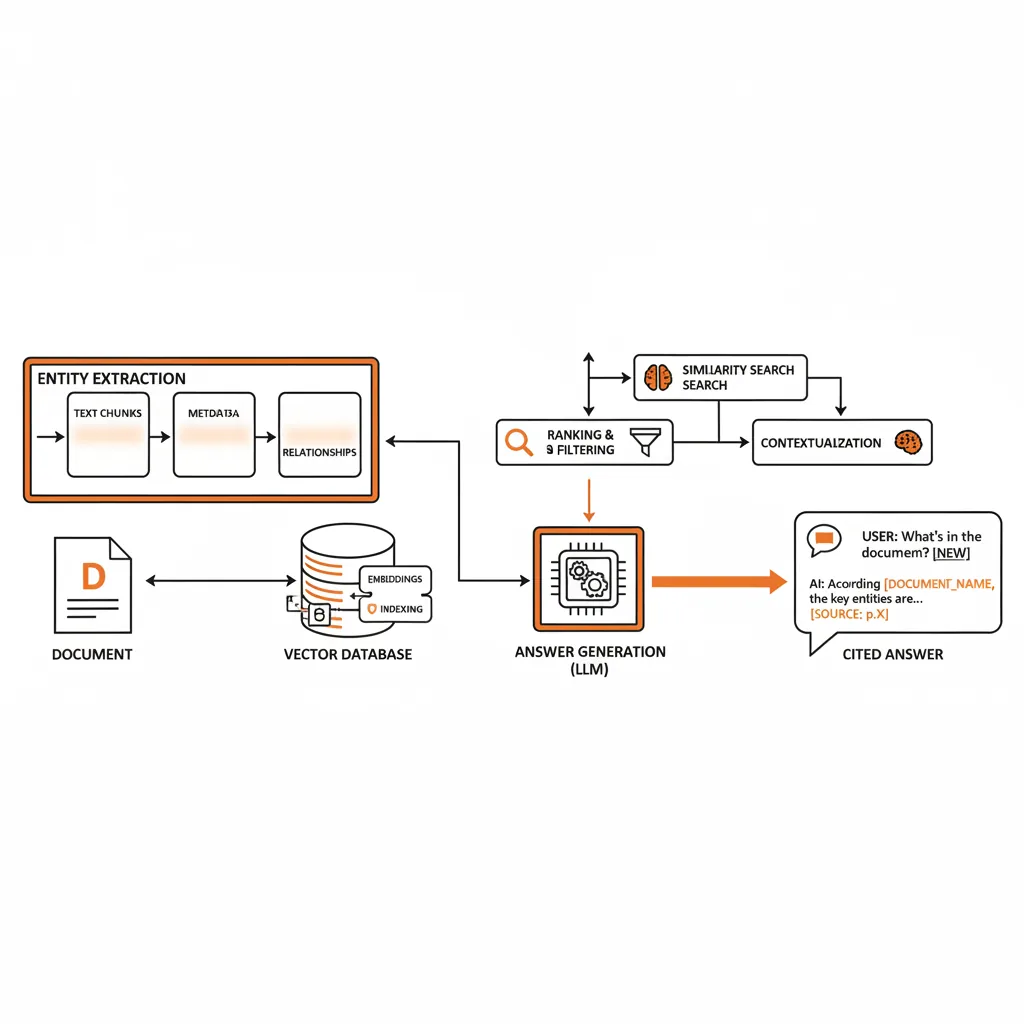
AI models use Vector Embeddings to understand how words relate to each other. Instead of targeting one keyword, you must own an entire topic. You do this by creating a pillar page and linking it to multiple supporting articles. This structure proves to the AI that you have deep topical authority.
Many creators make the mistake of writing isolated posts that don't link back to a central hub. Pro tip: Map out your content strategy by identifying the five core questions your customers ask and building "answering machines" for each.
To execute this, follow these steps:
- Identify a "head" entity (e.g., "Cloud Security").
- Create five H3-driven sub-pages answering "How," "Why," and "Cost" questions.
- Use internal links with descriptive anchor text to show the hierarchy.
- Ensure every sub-page links back to the main pillar using the specific entity name.
3. Build Citations in High-Authority Datasets
AI models are trained on massive datasets. If your brand is mentioned frequently in reputable industry publications, Reddit threads, and GitHub repositories, the AI learns that you are a trusted source. This is often called "off-page AEO."
A common mistake is ignoring community platforms, thinking only high-DR backlinks matter. In 2026, a mention in a popular professional forum can be as valuable as a link from a news site. Pro tip: Actively participate in niche communities where AI scrapers are active to increase your brand's "probability score" in LLM outputs.
4. Optimize for Conversational Intent
People talk to AI differently than they type into Google. They ask full questions like, "What are the best AI search ranking factors for a B2B SaaS?" Your content should mirror this conversational tone. Use H2s and H3s that are phrased as questions.
A common mistake is using clever, cryptic headings that confuse the AI's natural language processor. Pro tip: Use tools like AnswerThePublic to find the exact phrasing people use and answer those questions in the first 50 words of your sections.
Fact-Density and The "Answer First" Format
Modern ranking factors heavily weight how quickly a page gets to the point. We recommend the "Inverted Pyramid" for every H2 section. Start with a 30-word direct answer. Follow with a supporting data point or table. End with the nuance or context. This mirrors how LLMs extract snippets for their summaries, making it easy for the model to copy-paste your content into its response box.
AI Ranking Factor Comparison: 2025 vs. 2026
| Feature | 2025 Standard | 2026 AI Standard | Impact Level |
|---|---|---|---|
| Primary Goal | Keyword Matching | Intent Fulfillment | High |
| Data Format | HTML Text | JSON-LD & Entities | Critical |
| Trust Signal | Backlink Count | Citation Accuracy | High |
| Content Type | Long-form Blogs | Modular Answer Blocks | Medium |
| User Metric | Click-Through Rate | Attribution Rate | High |
| Source Type | Websites only | Multi-modal (YouTube/PDF/Web) | Medium |
| Context Window | Short Snippets | Long-Context Relationships | High |
Common Mistakes to Avoid in AI Optimization
- Over-reliance on Thin Content: Producing thousands of AI-generated pages without unique insights will lead to a manual or algorithmic "ghosting" by AI engines.
- Ignoring Technical Speed: While AI engines pre-crawl, your site's ability to serve data quickly to agents still impacts how often you are refreshed in their index.
- Vague Statements: Avoid phrases like "we are the best." Instead, use "we have served 200+ clients across 15 industries," which provides a verifiable fact.
- Missing Author Transparency: AI models look for the EEAT (Experience, Expertise, Authoritativeness, Trustworthiness) of the individual writer, not just the brand.
- Broken Linked Data: Linking to dead sources or circular references confuses the knowledge graph the AI is trying to build.
- Hidden Behind Gated Walls: If your best answers are behind a login or a heavy lead magnet, the AI crawlers can't index them. You lose the citation to a competitor who keeps their facts public.
Best Practices for Dominating AI Search
- Prioritize Directness: Answer the main question of your page in the very first paragraph to secure the "featured snippet" in AI summaries.
- Use Bulleted Lists: AI models find lists extremely easy to parse and often reformat them directly into their answers.
- Update Frequently: AI search engines prefer fresh data. A 2026 update to a 2024 post tells the engine your facts are still valid.
- Audit Your Brand Mentions: Regularly check how ChatGPT or Gemini describes your company by asking it directly.
- Focus on "Nouns": Be specific with names, tools, and locations. The more clear entities you mention, the better the AI categorizes your site.
We also suggest looking at your site through a "text-only" browser. If you cannot understand the core message without the images and CSS, the AI crawler will likely struggle too. Simplify your layout to highlight the text.
"The future of search isn't about finding a list of links; it is about receiving a synthesized answer that you can trust instantly." — Best Answer Engine Optimization Services Team
Visibility in ChatGPT, Gemini, Copilot, and Perplexity
Each AI engine weighs ranking factors slightly differently. ChatGPT relies heavily on its training data and specific browsing tools, favoring sites with high historical authority. It tends to reward brands that have deep, multi-year footprints in public datasets like Common Crawl.
Gemini integrates deeply with the Google Knowledge Graph, meaning your Google Business Profile and YouTube presence are massive ranking factors. Because Gemini has access to real-time Google Search data, your traditional SEO health still plays a major role here.
Copilot leans on Bing's index, emphasizing traditional SEO basics combined with clear structured data. It is particularly fond of tables and step-by-step guides, which it often pulls into the sidebar of the Windows interface.
Perplexity is perhaps the most "live" engine, acting as a real-time researcher. It prioritizes recent news, technical documentation, and highly cited blogs. To stay visible across all four, your strategy must be multi-modal. You need text for the LLMs, structured data for the crawlers, and a consistent brand voice that the AI can recognize as a distinct entity. We specialize in ensuring your brand remains the "source of truth" regardless of which platform the user chooses.
Case Study: Boosting Visibility for a B2B SaaS Client
We worked with a mid-sized B2B SaaS client in the fintech space who was struggling to appear in AI-generated summaries. Despite having a high Domain Rating, they were being ignored by Perplexity and ChatGPT in favor of smaller, more "answer-ready" competitors.
Our team performed a deep audit of their AI search ranking factors. We discovered their content was buried in long, narrative-heavy PDFs and sprawling 3,000-word guides that lacked clear headers. We implemented a "modular content" strategy, breaking their core value propositions into clear, entity-rich answer blocks.
Key steps in this transformation included:
- Converting three massive whitepapers into 15 SEO-optimized FAQ pages.
- Adding specific Organization and Person schema to the leadership pages.
- Rewriting the "About" section to focus on quantifiable achievements rather than marketing fluff.
Within six months, the client saw a 45% increase in AI citations across major LLMs. Their attribution rate—how often the AI explicitly linked to them as a source—jumped from 2% to 18%. By focusing on how AI chooses sources, they didn't just get more traffic; they got higher-intent leads who had already been "sold" on their expertise by the AI assistant.
Tools and Resources for AI Ranking Success
- WordLift: An AI-powered SEO tool that helps you create a custom Knowledge Graph and sophisticated Schema markup (Paid).
- Perplexity Pages: Use this to see how AI synthesizes information in your niche and identify who your AI competitors are (Free/Paid).
- Google Search Console: Essential for monitoring how "Search Generative Experience" is interacting with your site (Free).
- OpenAI API: For advanced users, you can use the API to test how different versions of your content are interpreted by GPT-4o (Paid).
- Schema.org Validator: The gold standard for checking if your structured data is readable by AI agents (Free).
- Ahrefs or Semrush: Useful for identifying which of your pages already have high "information gain" and "featured snippet" potential (Paid).
How to Measure Success in AEO
Measuring success in the age of AI requires new metrics. You can no longer rely solely on "blue link" clicks. Use this checklist to track your progress:
- Citation Share: How often does the AI mention your brand compared to competitors for a specific query?
- Attribution Link Presence: Does the AI provide a clickable link to your site in its "Sources" section?
- Sentiment Score: Is the AI describing your brand in a positive or neutral light?
- Direct Conversions from AI: Use UTM parameters to track users coming from platforms like
chat.openai.comorperplexity.ai.
We recommend setting a baseline by asking three different AI models about your services today, then re-testing every 30 days as you implement our professional AEO services. You should keep a spreadsheet of these prompts to track how the "LLM consensus" about your brand changes over time.
Testing and QA for AI Visibility
Before you roll out AEO changes site-wide, you must test your assumptions. AI models are non-deterministic, meaning they can give different answers to the same question. A robust QA process ensures your optimizations are actually moving the needle.
We suggest a three-step testing protocol:
- The Prompt Sensitivity Test: Ask a tool like ChatGPT the same question in five different ways (e.g., "Who is the best B2B SaaS?" vs. "List top B2B SaaS providers"). If your brand only appears for one version, your entity ties are too weak. You need broader semantic coverage.
- Schema Validation: Use the Rich Results Test by Google. If your JSON-LD has even a single syntax error, the AI might ignore the entire block of data.
- The "Ground Truth" Comparison: Compare your site's content against the AI's output. If the AI is citing a competitor for a fact that you also provide, analyze the competitor's formatting. Often, the difference is as simple as a clearer H3 tag or a more concise bulleted list.
Perform these tests on a small batch of 5-10 pages. Monitor them for 14 days. If you see the AI start to pull quotes from those specific pages, you have found the right "flavor" of optimization for your niche. Then, and only then, scale the changes to the rest of your site.
The Honest Trade-offs of AEO Optimization
Optimizing for AI search ranking factors is not a magic fix, and it comes with real trade-offs. You must be aware of what this strategy cannot do.
First, AEO often requires you to be very direct. This can sometimes clash with a highly creative or "story-driven" brand voice. If your marketing relies on mystery or long-winded storytelling to build tension, the AI might struggle to summarize you. You have to decide: do you want to be "poetic" or do you want to be "cited"?
Second, there is the risk of "zero-click" searches. If you provide a perfect, concise answer that the AI displays in full, the user might never click through to your website. You provide the value, but the AI gets the engagement. To counter this, we focus on "Deep-Dive" AEO. We give the AI enough to cite you as the expert, but we ensure the most valuable tools, calculators, or proprietary insights require a visit to your domain.
Finally, AI ranking factors are volatile. An update to a model's weights can change your visibility overnight. Unlike traditional SEO, where you might slowly drift down the rankings, AI citations can appear or disappear in an instant. This is why we preach a "diversified" approach. Never rely on just one engine or one type of content.
The Future of AI Search Ranking Factors
Looking beyond 2026, we anticipate the rise of Personalized Ranking Factors. AI assistants will not just look for the "best" answer, but the best answer for that specific user based on their past behavior and preferences. This means niche authority will become even more valuable than broad appeal.
We also expect "Verification Tokens" to become a factor, where blockchain or digital signatures prove that a piece of content was actually created by the expert it claims. As the web becomes flooded with low-quality AI content, the engines will look for "Proof of Human Effort." Staying ahead means being adaptable and keeping your technical foundation flawless.
Conclusion
Mastering AI search ranking factors is the only way to ensure your brand remains relevant in a world where users rarely scroll past the first generated answer. By focusing on semantic clarity, structured data, and authoritative citations, you position your business as a leader in the new digital economy. The transition from SEO to AEO is a journey, not a one-time task. It requires constant monitoring of how models like Gemini and ChatGPT evolve their source selection processes.
If you are ready to stop guessing and start appearing in the answers that matter, we are here to help. Our team has the tools and expertise to audit your current standing and build a roadmap for long-term AI visibility. Start by getting a free AEO audit to see where you stand, or explore our full suite of [Best Answer Engine Optimization Services](/services) to dominate your industry's AI search results today.
---
Frequently asked questions
What are the primary AI search ranking factors in 2026?+
AI search ranking factors are the criteria Large Language Models (LLMs) and answer engines use to select and cite sources. Key factors include entity clarity (structured data), semantic relevance (how well you answer the specific intent), and authority (how often you are cited in the model's training data). Unlike traditional SEO, these focus more on being the 'best answer' rather than just having the most backlinks.
How does structured data impact AI ranking?+
Structured data, specifically JSON-LD schema, is vital because it acts as a translator for AI. It tells the AI exactly what your data represents—whether it's a price, a professional opinion, or a product feature. Without it, the AI has to 'guess' your meaning, which lowers your probability of being cited as a reliable source in generated answers.
Is content freshness a ranking factor for AI?+
Yes, AI engines like Perplexity and Gemini prioritize fresh, up-to-date information for time-sensitive queries. While evergreen content is important, regular updates to statistics, dates, and facts signal to the AI that your content is a reliable, current source. This is especially true for industries like finance, tech, and healthcare where information changes rapidly.
Do traditional backlinks still help with AI ranking?+
Backlinks still matter, but their role has shifted. Instead of just 'link juice,' AI looks for 'citations' and brand mentions across a variety of platforms including social media, forums like Reddit, and academic databases. The goal is to prove your brand is a recognized entity that other humans and organizations trust and talk about.
How is AEO different from traditional SEO?+
Answer Engine Optimization (AEO) is a subset of SEO focused specifically on providing direct, concise answers for AI models and voice assistants. While SEO aims to rank a page in a list of links, AEO aims to get your content synthesized into the single answer the AI provides to the user. AEO is more modular and entity-focused.
How can I track if my site is ranking in AI search?+
To check your visibility, ask ChatGPT, Gemini, and Perplexity specific questions about your products or industry. Observe if they mention your brand and if they provide a link to your site. You should also monitor 'Referral Traffic' in your analytics from domains like openai.com or perplexity.ai to see how many users are clicking through from AI answers.
Sources & further reading
Soft next step
Want to see where AI answers mention you — and where they don't?
We run a free AEO audit across ChatGPT, Gemini, Copilot and Perplexity, then hand you the fixes in priority order. Start your AEO strategy today.