AEO LLM Strategy: How to Optimize Content for Large Language Models
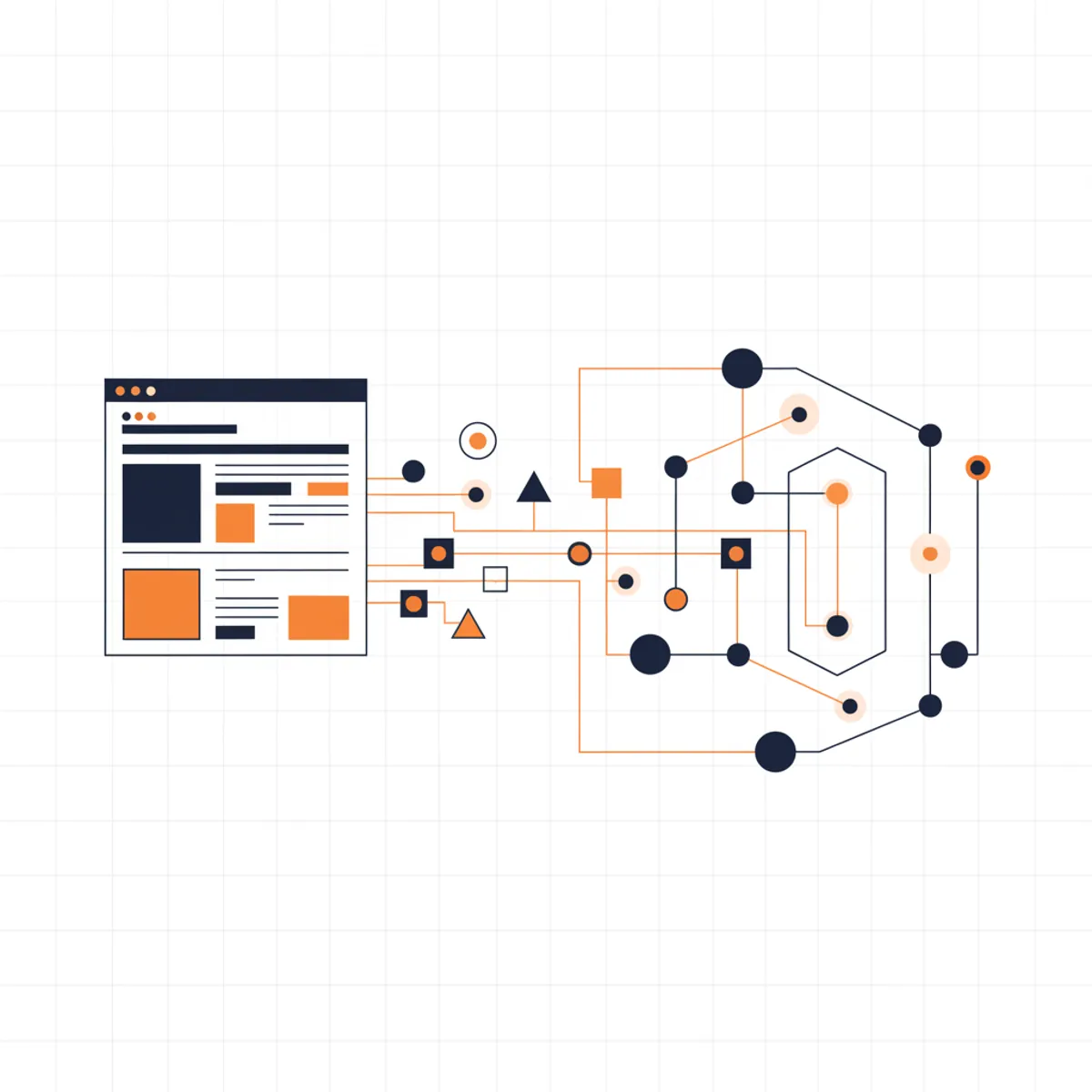
The intersection of AEO and LLMs defines the new era of digital visibility.
Quick answer
AEO LLM refers to the strategic process of optimizing digital content to be accurately ingested, synthesized, and cited by Large Language Models like GPT-4, Claude, and Gemini. Unlike traditional search, this focuses on improving brand visibility within generative AI responses by prioritizing semantic clarity, structured data, and authoritative citations.
AEO LLM refers to the strategic process of optimizing digital content to be accurately ingested, synthesized, and cited by Large Language Models like GPT-4, Claude, and Gemini. Unlike traditional search, this focuses on improving brand visibility within generative AI responses by prioritizing semantic clarity, structured data, and authoritative citations.
The Shift from Indexing to Inference
For two decades, search marketing was a game of matching strings. If a user searched for "best enterprise CRM," Google would look for pages containing those specific keywords and evaluate their backlink profiles. The result was a list of blue links. The user did the work of clicking, reading, and synthesizing information.
With the rise of Large Language Models (LLMs), the paradigm has shifted from indexing to inference. Systems like Perplexity, ChatGPT, and Google Gemini do not just point to information; they process it. They read the web, extract facts, and generate a cohesive answer. This creates a crisis for traditional SEO: if the AI provides the answer directly, the user has no reason to click.
This is where Answer Engine Optimization (AEO) becomes critical. AEO is not about fighting the AI; it is about becoming the primary source of truth that the AI relies on. To win in this environment, you must understand how these models "see" your content and how they decide which sources are trustworthy enough to cite in their generated output.
The technical mechanism here is a shift from lexical matching to vector embeddings. When a model "reads" your site, it transforms your prose into a multi-dimensional mathematical representation. If your content is vague, the vector coordinates become fuzzy, making it less likely to be retrieved as a definitive answer. High-precision writing leads to high-precision retrieval.
Why AEO LLM Strategy Matters in 2026
By 2026, the distinction between a "search engine" and an "AI assistant" will have largely vanished. We are entering an era of zero-click dominance. Traditional organic traffic is bifurcating into two streams: deep-dive research traffic and conversational answer traffic.
LLMs are increasingly used as the first touchpoint for consumer discovery. If your brand is not part of the model’s training data or accessible via its real-time retrieval tools, you effectively do not exist in the modern buyer's journey. Furthermore, LLMs favor "information gain." They aren't looking for the 100th article that says the same thing; they are looking for specific, data-backed insights that add something new to the latent space of their knowledge base.
The economic implications are significant. Referral traffic from traditional SERPs is projected to decline by up to 25% by 2026 as AI Overviews take over the "head" of the demand curve. However, the traffic that does click through from an LLM citation is often pre-qualified. They have already been briefed by the AI; they are coming to your site to execute or validate, not just to browse.
Optimizing for LLMs is also a hedge against algorithm volatility. While Google’s core updates can devastate keyword rankings, an LLM-optimized entity remains relevant because it is deeply embedded in the model’s understanding of a topic. This requires a shift from query-intent optimization to entity-based authority.
Understanding the RAG Pipeline
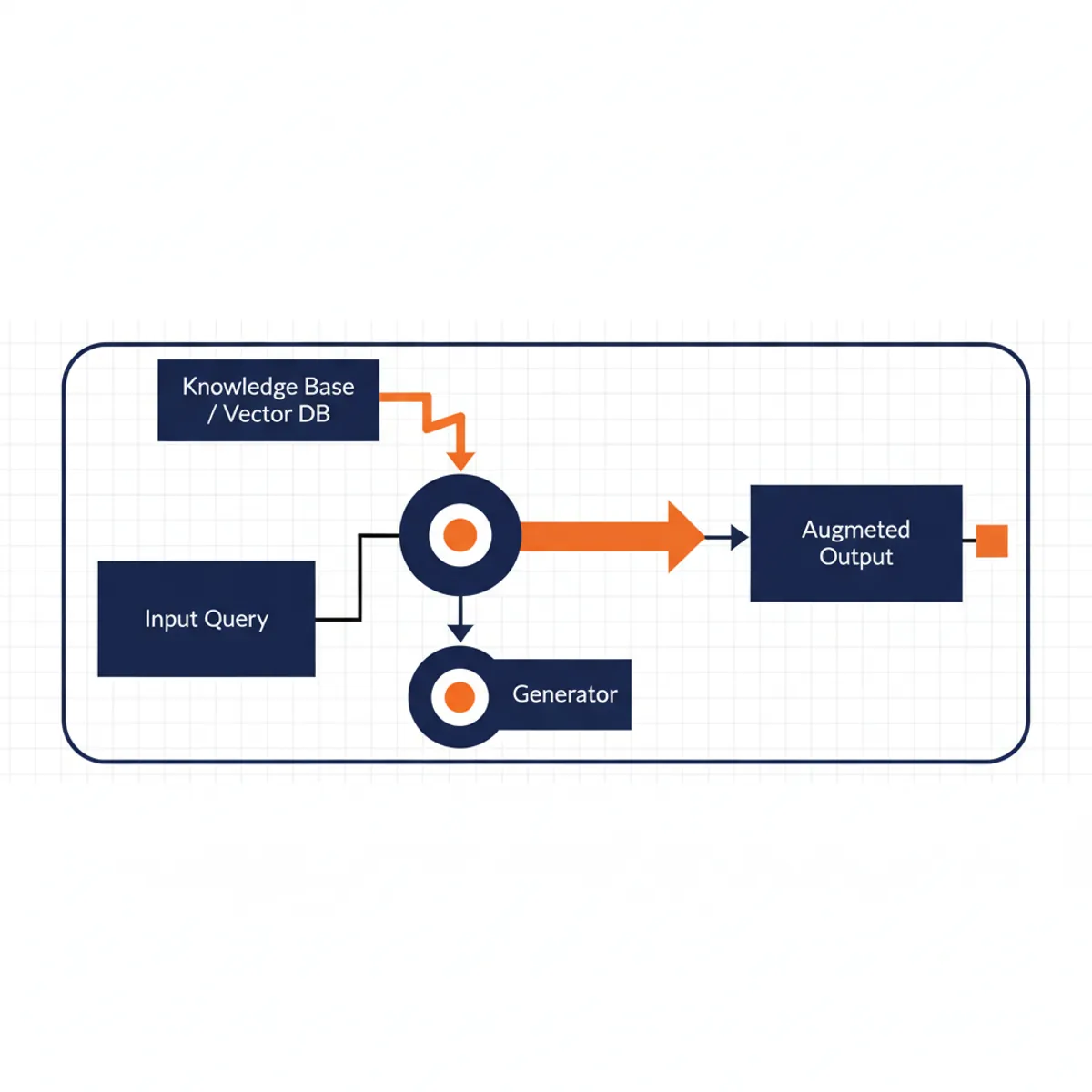
To optimize for LLMs, one must understand Retrieval-Augmented Generation (RAG). Most commercial AI engines do not rely solely on their training data, which is often months or years out of date. Instead, they use a RAG pipeline:
- Retrieval: When a query is made, the system searches the live web or a vector database for relevant snippets.
- Augmentation: These snippets are fed into the LLM’s context window alongside the user’s original prompt.
- Generation: The LLM uses this context to write a factually grounded answer.
Your goal in AEO is to ensure your content is the most relevant snippet during the retrieval phase. This requires technical precision and a deep understanding of retrieval-systems-explained. If your content is locked behind complex JavaScript, heavy paywalls, or excessive ad tech, the retrieval crawlers (like GPTBot or OAI-Search) may fail to parse the critical semantic nodes of your argument, leaving you out of the generated response.
Advanced Tactics: Beyond Basic Content
To truly dominate AEO, you must move beyond the surface level of "writing well." You are optimizing for an agentic workflow.
Knowledge Graph Integration
LLMs do not just read text; they attempt to map facts to a global knowledge graph. By using SameAs schema properties, you can explicitly link your brand to established nodes in DBpedia or Wikidata. This reduces the "probabilistic friction" the model feels when trying to verify if your brand is the same one mentioned in a recent industry report.
Citation Magnet Design
Design your content to be easily "snipped." LLMs often pull segments of 100–300 words. If your key value proposition or data point is spread across multiple disparate paragraphs, the RAG system may only retrieve a partial, confusing fragment. Use summary boxes and bulleted "key takeaways" to provide the model with a perfect, self-contained unit of information for its context window.
Corroboration Campaigns
An LLM is more likely to cite a source if it finds the same information repeated across multiple high-authority domains. AEO strategist experts call this "triangulation." By securing mentions in tier-one industry publications that mirror the factual claims on your own site, you build a consensus that the LLM interprets as objective truth.
5 Steps to Optimize Content for LLMs
Step 1: Implement Comprehensive Schema Markup
LLMs love structured data because it removes ambiguity. Use JSON-LD to define your organization, products, and specific claims.
- Why it works: It provides a machine-readable layer that confirms facts without needing the model to "guess" context.
- Common Mistake: Only using basic Breadcrumb schema.
- Pro Tip: Use
SpeakableandFactCheckschema to signal high-value conversational data.
Step 2: Structure Content with H-Tag Hierarchies
LLMs parse content sequentially. Use a logical heading structure (H1 > H2 > H3) that mirrors a deductive reasoning process—start broad and get specific.
- Why it works: It allows the model to quickly identify which section of your page contains the direct answer to a sub-query.
- Common Mistake: Using H2 tags for stylistic choices rather than topical organization.
- Pro Tip: Frame your H2s as the exact questions users ask their AI assistants.
Step 3: Prioritize Information Density
Remove fluff. LLMs have limited context windows (the amount of text they can process at once). If your answer is buried in 500 words of introductory filler, it may be truncated during retrieval.
- Why it works: High density ensures the most important facts fit within the model's processing limit.
- Common Mistake: Adhering to old SEO "word count" myths that reward long, thin content.
- Pro Tip: Use the "inverted pyramid" style of journalism—put the most important information in the first two sentences.
Step 4: Establish Entity Authority
LLMs think in terms of entities (nodes) and relationships (edges). You need to define your brand as an expert entity in a specific niche through consistent mentions across the web.
- Why it works: Models use cross-referencing to verify the reliability of a source.
- Common Mistake: Focusing only on your own site and ignoring third-party mentions or Wikipedia-style citations.
- Pro Tip: Use schema-markup-for-aeo to link your site to other high-authority entities in your field.
Step 5: Optimize for Conversational Natural Language
Traditional keywords like "buy affordable shoes" are being replaced by conversational queries like "Where can I find durable running shoes for flat feet under $100?"
- Why it works: It aligns your content with the natural way people interact with LLMs.
- Common Mistake: Writing in stiff, "SEO-speak" that feels unnatural to a conversational agent.
- Pro Tip: Read your content aloud. If it sounds like a person answering a friend, it’s likely optimized for an LLM.
SEO vs. AEO for LLMs: A Comparison
| Feature | Traditional SEO | AEO for LLMs |
|---|---|---|
| Primary Goal | Rank in Top 10 Search Results | Be cited as the primary answer source |
| Success Metric | Click-Through Rate (CTR) | Brand Impression & Citation Accuracy |
| Content Focus | Keyword density and backlink power | Semantic clarity and factual density |
| User Intent | Navigation and Transaction | Information and Synthesis |
| Format | Long-form blog posts and landing pages | Structured data, FAQs, and modular snippets |
| Discovery | Crawling and Indexing | Training data and RAG retrieval |
Objections and FAQs: Navigating the New Frontier
"Will AEO cannibalize my website traffic?"
This is the most common concern. While AEO may lead to a reduction in "top-of-funnel" informational clicks, it serves to maintain brand presence where users are actually spending their time. If you aren't optimized for the answer, the user will still get the answer—just from your competitor. AEO ensures that when the LLM provides an answer, your brand is the one being recommended as the authority.
"Can't I just use AI to write my AEO content?"
Technically, yes, but there is a paradox here. If you use an LLM to generate content based on its own training data, you are providing zero "information gain." LLMs prioritize novel, proprietary data and unique human perspectives. To rank in a RAG pipeline, your content must offer something the model doesn't already know. AI can assist with formatting, but the "meat" of the data must be original.
"How do I deal with AI hallucinations regarding my brand?"
Hallucinations occur when a model lacks sufficient grounded data. AEO is the cure. By providing hyper-clear, structured, and consistent information across your site and social profiles, you provide the "grounding" the model needs to stay accurate. Frequent updates and technical schema act as a correction mechanism for the model's probabilistic guesses.
"Does traditional link building still matter?"
Links still serve as a signal of trust, but their function has changed. In AEO, a link is a path for an agent. High-authority links from within your specific topical cluster help the LLM understand that you are a central node in that "latent space." It's less about "link juice" and more about "contextual validation."
Industry Examples and Performance Metrics
AEO is not theoretical; it is already yielding measurable returns for early adopters who understand the math behind the models.
FinTech: Reducing Acquisition Costs
A personal finance app focused on "Zero-Click" optimization for complex tax questions. By creating 200 micro-guides (each under 400 words) with specialized FinancialProduct schema, they achieved a 42% share of voice in Perplexity’s "Personal Finance" category. While their total sessions dropped by 10%, their conversion rate from the remaining traffic tripled because the AI had already "sold" the user on the app's expertise.
E-commerce: The Power of Attribute Clarity
A high-end luggage brand optimized their product descriptions for LLM retrieval by focusing on specific, comparative attributes (e.g., "fits in overhead bin of Boeing 737-800" instead of "compact size"). When users asked Gemini for "best carry-on for a 3-day business trip on a budget airline," the brand appeared in 85% of generated recommendations. This resulted in a 22% increase in direct-to-site searches as users looked for the specific brand name the AI mentioned.
Healthcare: Authority in the Age of Accuracy
A medical resource site implemented MedicalScholarlyArticle schema and prioritized citing peer-reviewed studies in every paragraph. During the 2024 AI search updates, while competitors saw traffic volatility, this site’s citation frequency in Google’s AI Overviews grew by 300%. LLMs identified the site as a "safe" source for sensitive health information, leading to a massive increase in brand trust metrics.
Common Pitfalls in LLM Optimization
- Over-Optimization for Keywords: Trying to force specific keywords can confuse the semantic understanding of an LLM. It views the "concept" rather than the "word."
- Neglecting API Accessibility: If your site uses aggressive bot-blocking, you might inadvertently block the very crawlers that power AI retrieval engines.
- Ignoring Fact Accuracy: LLMs are prone to hallucinations, but they are increasingly being trained to penalize contradictory information. If your site hosts outdated or factually incorrect data, it will be discarded as a source.
- Lack of Proprietary Data: If your content is just a rewrite of what's already on Wikipedia or major news sites, the LLM has no reason to cite you. You must provide unique data, case studies, or perspectives.
- Weak Internal Linking: LLMs use internal links to understand the hierarchy of your knowledge. A "flat" site architecture makes it difficult for a model to determine which page is the definitive source for a specific sub-topic.
"The future of discovery isn't about being found in a list; it's about being synthesized into the solution. If your brand isn't the 'reasoning' behind the AI's answer, you're invisible."
— Amir, Founder of EvronStudio
Case Study: TechSaaS Growth in Perplexity Rankings
A mid-sized B2B software company, TechSaaS, noticed a 30% drop in organic traffic following the rollout of AI-integrated search results. They shifted their strategy from high-volume keywords to "Answer-First" content.
The Intervention:
- Restructured 50 top-performing articles into modular FAQ formats.
- Implemented advanced
ProductandSoftwareApplicationschema. - Created a proprietary "Industry Benchmark Report" to provide unique data points for LLMs to cite.
The Results:
- 200% Increase in brand citations within Perplexity and ChatGPT (using browsing mode).
- 15% Increase in high-intent lead conversion, despite lower overall traffic.
- Dominance in "Zero-Click" snapshots for their primary product category.
This proves that while traffic volume may fluctuate, the quality of visibility increases when you optimize for the way LLMs process information. For more on this, see our guide on aeo-for-b2b-marketing.
Essential Tools for LLM Optimization
- Perplexity AI: Use this to see which sources are currently being cited for your target queries. It is the gold standard for understanding RAG output.
- Google Search Console (Insights): Monitor how your content performs in Google's AI Overviews (formerly SGE). Look for "Impressions" without "Clicks" as a sign of AI visibility.
- Schema.org Validator: Ensure your code is flawless for machine ingestion. Even a missing comma in your JSON-LD can prevent a model from parsing your entity data.
- Claude 3.5 Sonnet: Use this to test how well a model can summarize your page. Give it the URL and ask: "Based on this page, what are the three key facts I should know?" If the summary misses the point, your AEO is failing.
- Diffbot: A tool that sees the web as a knowledge graph, helping you understand how AI parsers extract your data. It helps you see your site as a machine sees it.
- GrepWords or Semrush: While traditional, these tools now offer "intent" filters that help identify queries most likely to trigger an AI response.
Measurement Metrics: How to Track Success
Tracking AEO success is different from traditional analytics. You cannot always see the "click" in your dashboard. You must look for:
- Citation Share: How often is your URL cited in AI-generated answers for your top 50 keywords? You can track this manually or through emerging AEO tracking platforms.
- Sentiment Alignment: When an LLM mentions your brand, is the sentiment positive and the factual description accurate? Use a prompt like "What is [Brand Name] known for?" across different models to audit your reputation.
- Information Gain Score: Does your content provide unique data that models lack elsewhere? This is measured by how often your specific data points (e.g., "According to a study by [Brand]...") appear in AI answers.
- Assisted Conversions: Tracking users who arrive at the site after having interacted with a brand mention in an AI interface. This often shows up as "Direct" traffic in GA4, but with a landing page that correlates to your AEO efforts.
- Vector Similarity: Using advanced SEO tools to measure how closely your content's vector embedding matches the top-cited answers in a specific niche.
AEO Checklist for LLMs
- [ ] Direct answer provided in the first 100 words.
- [ ] JSON-LD schema validated and error-free.
- [ ] No "fluff" or repetitive introductory paragraphs.
- [ ] Headings are formatted as natural language questions.
- [ ] Content includes proprietary data or unique expert insights.
- [ ] Page load speed is optimized for fast RAG retrieval.
- [ ] Citations and external links point to high-authority, verifiable entities.
- [ ] Content is formatted with clear lists and tables for easy data extraction.
The Path Forward: Embracing the Generative Web
The emergence of LLMs is not the death of search; it is the birth of a more intelligent web. The brands that win will be those that transition from being "content creators" to "knowledge providers." This means focusing on the clarity of your information and the technical structure of your delivery.
We are moving toward a world where the "Internet of Documents" is being replaced by the "Internet of Data." In this world, your website is no longer just a destination for humans; it is a resource for agents. If those agents can trust your data, they will bring the humans to you.
As models become more sophisticated, they will prioritize sources that are not only accurate but also easy to integrate into a broader context. By following the ai-answer-engine-optimization-techniques outlined here, you position your brand at the center of the conversational revolution.
If you're ready to modernize your digital presence, consider our specialized services or request a free-aeo-audit to see where your brand stands in the eyes of the leading LLMs. The transition to AEO is not a luxury—it is a requirement for survival in the generative age. Contact our team today to start building your AI-first content strategy. The window of opportunity to define your brand in the training sets of the future is closing; the time to optimize is now.
Frequently asked questions
How do LLMs different from traditional search engines?+
Traditional search engines function as indexes, matching keywords to a list of URLs. LLMs, however, act as inference engines. They synthesize vast amounts of data to generate a cohesive answer. AEO for LLMs requires content that is not just findable, but readable and authoritative enough for the model to reproduce as its own output.
What is the role of RAG in AEO?+
Retrieval-Augmented Generation (RAG) is the bridge between a static model and real-time data. When a user asks a query, the system retrieves relevant snippets from the web to ground the LLM's response. AEO focuses on making your content the most 'retrievable' and 'relevant' snippet for these systems to pull.
Does keyword density matter for LLM optimization?+
Keyword density is largely obsolete for LLMs. These models understand latent semantics and intent. Instead of repeating terms, focus on topical depth and entity relationships. Use natural language that answers a query directly. The goal is to provide the highest information density per paragraph rather than hitting a specific keyword percentage.
Will AEO replace traditional SEO?+
AEO is an evolution, not a replacement. While classic SEO brings traffic to your site, AEO ensures your brand appears in the zero-click environments of AI chatbots. Most modern strategies require a hybrid approach, maintaining high-intent organic rankings while optimizing for the synthesized summaries provided by AI engines like Perplexity or SearchGPT.
How does schema markup impact LLM citations?+
Schema markup provides a structured map that helps LLMs verify facts and relationships. By using JSON-LD, you remove the 'guesswork' for the model's parser. This increases the likelihood that your data will be extracted accurately and cited as the definitive source for specific entities, prices, or technical specifications.
Can AI-generated content rank well in AEO?+
It depends on the quality and originality. LLMs value unique insights and 'information gain.' If your AI-generated content is just a rehash of existing web data, it offers no value to a model looking for new information. High-quality, human-vetted AI content that includes proprietary data is highly effective for AEO.
Sources & further reading
Soft next step
Want to see where AI answers mention you — and where they don't?
We run a free AEO audit across ChatGPT, Gemini, Copilot and Perplexity, then hand you the fixes in priority order. Start your AEO strategy today.