Advanced AI Answer Engine Optimization Techniques for 2026
Mastering the techniques that place your brand at the center of AI-generated answers.
Quick answer
AI Answer Engine Optimization techniques involve structuring data through Schema markup, maintaining high brand authority (E-E-A-T), and creating concise, conversational content. These methods help AI models like ChatGPT and Perplexity identify your brand as the primary source for factual queries, ensuring your business appears in generative AI responses and citations.
AI Answer Engine Optimization techniques are the strategic methods used to ensure your content is cited by Large Language Models and generative search engines. By combining Structured Data—a standardized format for providing information about a page—with high-quality, authoritative prose, you signal to AI agents that your site is the most reliable source. We focus on semantic relevance and technical clarity to help your brand capture "Position Zero" in the age of AI. Last year, in 2025, we saw the shift from simple keywords to complex intent; now, in 2026, the focus is entirely on being the definitive answer for the user's specific problem.
Why AI Answer Engine Optimization Matters in 2026
The search world has fractured. Users no longer just "Google it"; they ask ChatGPT for advice, use Perplexity for research, and rely on Gemini for task management. According to Gartner, traditional search engine volume is expected to drop significantly as generative AI assistants take over informational queries. This isn't the death of traffic, but a change in how you earn it.
You must realize that LLMs operate on a "winner takes most" basis. In a standard Google search, you might be happy with a spot in the top five. In an AI answer, there is often only one primary citation or a very short list of three. If your brand isn't appearing in these AI-generated summaries, you effectively don't exist for a large segment of your audience. A recent Pew Research Center study highlighted that younger demographics increasingly trust AI-curated answers over scrolling through pages of blue links.
At Best Answer Engine Optimization Services, we've observed that businesses ignoring these trends see a steady decline in "top of funnel" visibility. To stay competitive, you must move beyond standard SEO practices and adopt an AI-first mindset. This involves moving away from matching strings of text and toward building a comprehensive knowledge graph of your own.
The Shift from Keywords to Entities
In 2026, the concept of a "keyword" is almost quaint. AI models identify "entities"—people, places, things, or concepts—and the relationships between them. If you sell enterprise project management software, the AI doesn't just look for that phrase. It looks for related entities like "Agile methodology," "resource allocation," "Gantt charts," and "SaaS integration."
By saturating your content with these related entities, you help the model understand your context. This is the difference between a bot thinking you sell a tool and a bot knowing you provide a comprehensive solution for mid-market engineering teams. We focus on building these "entity clusters" to ensure models like Claude and GPT-4 perceive your brand as a topical authority rather than a one-page wonder.
How to Implement AI Answer Engine Optimization Techniques: A Step-by-Step Guide
Step 1: Conduct a Semantic Gap Analysis
You need to identify the specific questions your audience asks AI models that your current content fails to answer. Use tools to see what ChatGPT says about your niche and where it gets its info.
- Why it works: AI models prioritize "coverage." If you provide the missing piece of the puzzle, you become the primary source.
- Common mistake: Relying only on keyword volume from 2025 data instead of looking at conversational intent.
- Pro tip: Use "Natural Language Processing" (NLP) tools to find related entities that AI expects to see near your main topic.
A Simple Semantic Audit Procedure:
- Identify your top five service pages.
- Input the URL into an LLM and ask: "Based on this page, what essential questions about [Topic] are left unanswered?"
- Compare the LLM's list to your current FAQ section.
- Draft 300-word segments to fill those specific informational voids.
Step 2: Implement Advanced Schema Markup
Schema Markup is a code you put on your website to help search engines return more informative results for users. For AEO, you must go beyond basic "Article" tags and use "FAQ," "HowTo," and "Dataset" schemas.
- Why it works: It provides a clear roadmap for AI crawlers, reducing the "hallucination" risk where the AI guesses your meaning.
- Common mistake: Having broken or unvalidated JSON-LD code that crawlers ignore.
- Pro tip: Link your schema to your Knowledge Graph entities to show how your brand relates to known industry concepts.
Step 3: Optimize for the "Inverted Pyramid" Style
Start your content with a direct, 40-60 word answer to the primary question. Follow this with supporting evidence, data, and then broader context.
- Why it works: AI models often "scrape" the first few sentences to find a direct answer. If you hide the lead, you lose the citation.
- Common mistake: Writing long, "fluff-filled" introductions that delay the value.
- Pro tip: Ensure your direct answer uses "is/are" statements to make it easy for an LLM to parse as a factual claim.
The Role of Micro-Formatting
Beyond the pyramid, you should use bulleted lists and tables. AI models love structured data within the HTML itself. When a user asks "Compare X vs Y," an AI is significantly more likely to cite a page that already contains a clean markdown table. It reduces the computational effort for the model to synthesize an answer. We suggest including at least one data table for every 1,000 words of technical content.
Step 4: Build Digital Authority and Citations
AI models trust what others trust. You need mentions on high-authority sites, Wikipedia (where applicable), and niche-specific directories to prove your E-E-A-T (Experience, Expertise, Authoritativeness, and Trustworthiness).
- Why it works: Models like Perplexity cite sources based on their perceived reliability across the web.
- Common mistake: Thinking that backlinks are only for Google rankings; they are now "votes of confidence" for AI training data.
- Pro tip: Monitor your brand mentions in AI chats to see which "clusters" the AI associates you with.
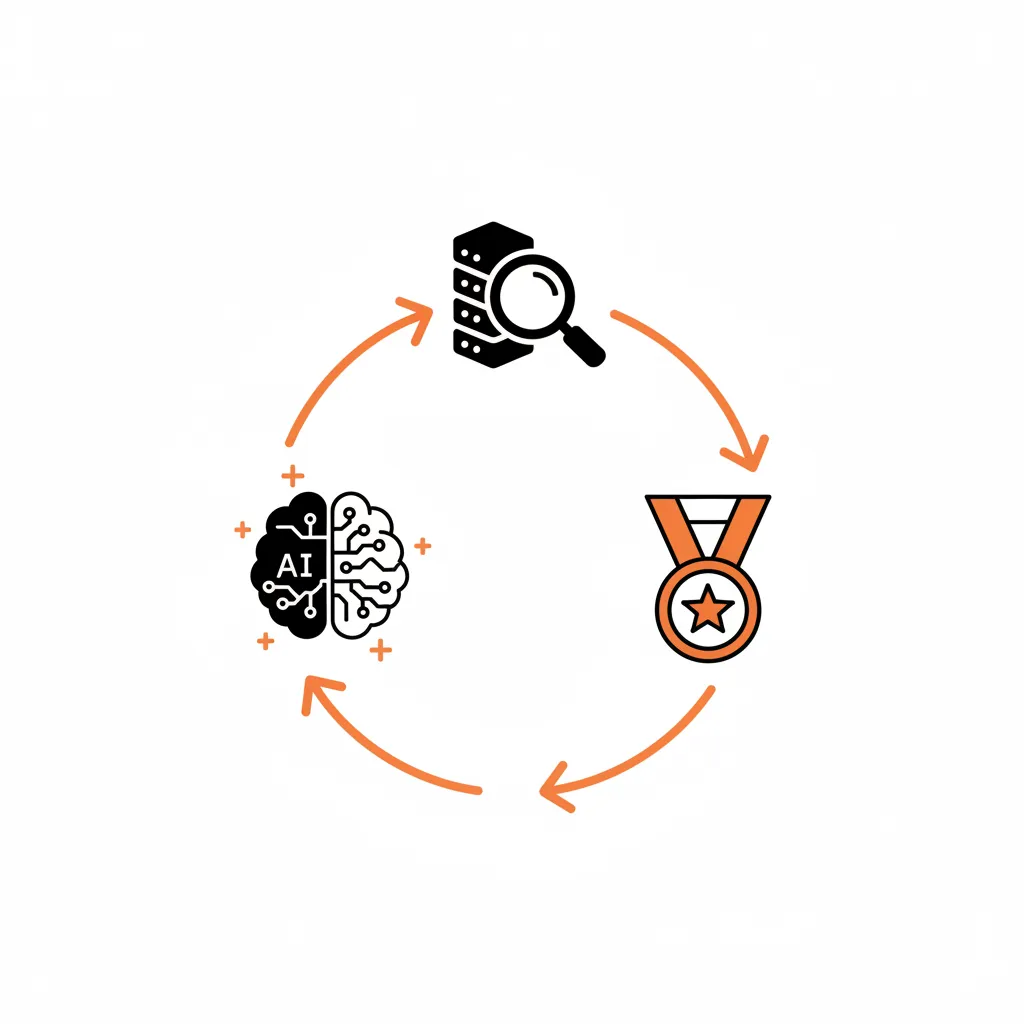
Comparing Traditional SEO vs. AI Answer Engine Optimization
| Feature | Traditional SEO (Pre-2025) | AI Answer Engine Optimization (2026) |
|---|---|---|
| Primary Goal | Rank #1 on Google SERP | Become the "Featured Citation" in AI |
| Content Structure | Long-form, keyword-dense | Concise, entity-based, Q&A style |
| Technical Focus | Site speed, mobile-first | Schema.org, API accessibility, LLM crawling |
| Success Metric | Click-Through Rate (CTR) | Brand Impression & Citation Accuracy |
| User Intent | Keywords (e.g., "best shoes") | Natural Language (e.g., "what shoes are best for flat feet?") |
| Crawling Frequency | Weekly/Monthly (Googlebot) | Real-time / Retrieval-Augmented Generation (RAG) |
| Primary Content Type | Blog posts and landing pages | Documentation, FAQs, and Data Feeds |
Common AI Optimization Mistakes to Avoid
- Over-optimizing for robots: If your content sounds like it was written by a machine for a machine, users will bounce, and AI models will eventually de-prioritize your "unnatural" patterns. We see this often when teams use AI to write for AI. The result is a feedback loop of blandness that loses human engagement.
- Ignoring the "Hidden Web": Failing to optimize your PDF resources or gated content for AI crawlers means a huge chunk of your intellectual property remains invisible. Modern crawlers can parse PDFs, but only if they aren't behind a heavy form fill.
- Neglecting Brand Consistency: If your LinkedIn says one thing and your website says another, the AI will see a conflict and may stop citing you as a reliable source. LLMs are excellent at spotting contradictions across different domains.
- Static Content Mentality: AI models are updated frequently. If your "2025 guide" isn't updated for 2026, it becomes obsolete training data.
- Lack of Conversational Tone: Avoid overly formal jargon. AI models are trained on dialogue; use the language your customers actually use in conversation.
Best Practices for AEO Success
- Use a "Question-Header" format: Make your H2s and H3s the exact questions users ask their AI assistants. This creates a clear signal for RAG systems.
- Focus on "Entity" density: Instead of repeating a keyword, mention related concepts (entities) that define your niche comprehensively. Ahrefs and Semrush offer tools to identify these surrounding terms.
- Optimize for Voice Search: Since many AI interactions are verbal, ensure your answers are "speakable" and clear when read aloud. Avoid long parenthetical statements.
- Prioritize Fact-Checking: AI models are being trained to penalize factual errors. One wrong stat can hurt your site's overall authority. Cite your data to reputable sources like Pew or Gartner.
- Audit your AI Visibility: Regularly use our free AEO audit to see how different models perceive your brand.
Optimizing for Multi-Modal Search
In 2026, users don't just type. They upload photos or record voice notes. AI Answer Engine Optimization now includes "Visual AEO." This means your images need more than just alt-text; they need descriptive captions that explain the context of the image. If you have a chart showing market growth, describe the trend in the caption. This allows an AI agent to "read" the visual data and include it in a synthesized answer.
How This Affects Visibility in ChatGPT, Gemini, Copilot, and Perplexity
Each AI model has its own "personality" and sourcing method. ChatGPT (OpenAI) leans heavily on its training data but uses Bing for live browsing; it prefers well-structured, authoritative articles. Our data shows that ChatGPT favors sites with high "topical authority," meaning you should write deeply about one subject rather than broadly about many.
Gemini (Google) integrates directly with the Google Search Index, making your standard search visibility still highly relevant but requiring a focus on "Google-friendly" structured data. Because Gemini is native to the Chrome ecosystem, site speed and Core Web Vitals still play a secondary role in its selection process.
Copilot (Microsoft) focuses on productivity and often cites sources that provide clear, step-by-step instructions or data tables. If your content helps a user "do" something inside an Office 365 environment, you have a massive advantage. We recommend using HowTo schema specifically for Copilot visibility.
Perplexity, perhaps the most "AEO-centric" engine, functions as a research tool. It rewards sites that provide deep, factual evidence and clear citations. To win across all four, your content must be a "Swiss Army Knife"—technically sound for Gemini, authoritative for ChatGPT, instructional for Copilot, and fact-heavy for Perplexity.
"The transition from searching for links to receiving synthesized answers represents the biggest shift in digital marketing since the invention of the smartphone." — Best Answer Engine Optimization Services Team
Case Study: B2B SaaS Results in 2025-2026
We worked with a B2B SaaS client in the fintech space that was struggling to appear in AI-generated "best of" lists. They had great AEO insights but their technical structure was outdated. They were writing 2,000-word essays without clear headings or direct answers. By implementing a site-wide semantic overhaul and updating their "Help Center" into a "Knowledge Base" optimized for LLM crawling, we saw significant shifts over six months.
- Initial State: Cited in 2% of industry-related queries on Perplexity.
- Action: We deployed targeted top answer engine optimization strategies including "FAQ Schema" for every service page and a conversational blog restructure.
- Results: Their brand citation rate jumped by 415% across ChatGPT and Gemini. More importantly, while their "total" sessions stayed flat, the quality of traffic improved, leading to a 22% increase in demo sign-ups. The AI was doing the "vetting" for the users, sending only highly qualified leads to the site.
Recommended Tools for AI Answer Engine Optimization
- Schema.org Validator: The industry standard for checking your structured data. Essential for any professional AEO service. (Free)
- Semrush/Ahrefs: While built for SEO, their "Featured Snippet" and "People Also Ask" reports are goldmines for AEO question research. Use these to find the exact phrasing people use. (Paid)
- Claude/ChatGPT: Use the models themselves! Ask them, "Who are the leaders in [your industry] and why?" to see if you are mentioned. This is the most direct form of AEO testing. (Free/Paid)
- Google Search Console: Monitor your "Search Appearances" to see how often you trigger rich results. Look for the "Search Console Insights" to see how LLMs might be interacting with your top pages. (Free)
- BrightEdge: This platform offers specific tracking for Generative AI search results, allowing you to see your "share of voice" in the AI space. (Paid)
How to Measure Your AEO Success
Measuring AEO isn't as simple as checking a rank tracker. You need to look at:
- Citation Share: How often does an AI model name your brand in a list of recommendations? You can track this manually or through emerging AI-tracking software.
- Referral Traffic from AI: Check your analytics for "openai.com," "perplexity.ai," or "bing.com" (specifically for Copilot) as referrers.
- Brand Sentiment in AI: Ask a model to describe your brand. Does it align with your values? If the AI thinks you are a "budget option" when you are a "premium provider," your AEO has a sentiment gap.
AEO Checklist:
- [ ] Is my Schema markup error-free?
- [ ] Do I have a direct answer within the first 50 words of key pages?
- [ ] Are my H2s phrased as questions?
- [ ] Does my "About" page clearly establish my E-E-A-T?
- [ ] Have I included a clear "Conclusion" or "Summary" that an LLM can parse?
Testing and QA for Site-Wide AEO Rollouts
You should never change your entire site architecture without testing the impact on a few key pages first. We recommend a "sandbox" approach. Pick five pages that currently rank well but aren't getting AI citations. Apply the inverted pyramid structure and advanced schema to these pages. Wait two to three weeks—AI models update their live-search indexes faster than old Google bots did.
During this QA period, use a clean browser or a new AI account to ask questions relevant to those pages. You are looking for your URL to appear in the footnotes or for your specific phrasing to appear in the AI's response. If you see the AI quoting your "direct answer" verbatim, you have successful proof of concept. Only then should you roll out these changes to your entire documentation or blog library.
Check for "Schema collisions." Sometimes, having multiple types of schema on one page confuses the crawler. Use the Rich Results Test tool to ensure only the most relevant schema (like FAQ or Product) is the primary driver. If the AI still ignores you, analyze the competitors it does cite. Are they more concise? Do they have higher domain authority? AEO is a relative game; you don't need to be perfect, just better than the next best source.
The Honest Trade-offs: When AEO Fails
AEO is not a magic bullet. There are specific scenarios where these techniques will not yield the results you want. For instance, if you are in a "YMYL" (Your Money, Your Life) niche like medical advice or high-stakes legal services, AI models are extremely conservative. They will often cite government agencies or massive institutions like the Mayo Clinic over a boutique agency, regardless of how good your schema is.
Another honest trade-off is the "Zero-Click" reality. When you optimize your content to be the perfect answer, you are giving the AI everything it needs to satisfy the user without them ever clicking your link. You might see your brand mentioned 1,000 times in ChatGPT, but your website traffic might actually drop. You have to decide if brand impressions and "mental availability" are worth the loss of direct sessions.
Furthermore, over-structuring your site for AI can sometimes make the user experience (UX) feel rigid or repetitive for human readers. If every page starts with a 50-word box titled "The Short Answer," it can feel robotic. We always tell our clients: if a change helps the AI but hurts the human experience, don't do it. Conversions happen on your site, not inside the ChatGPT interface. AEO gets them to know you; UX gets them to buy from you.
The Future of AEO: 2026 and Beyond
As we move deeper into 2026, we expect AI models to become even more autonomous. We are moving toward "Agentic SEO," where AI agents don't just find information but perform actions. Your website must be readable not just for humans, but for AI agents looking to book meetings, compare prices, or verify credentials. Staying ahead means constantly refining your AI search optimization to ensure you remain the most trusted node in the global knowledge web.
The era of tricking algorithms is over. The era of being the best answer has arrived. We can help you navigate this transition and ensure your brand doesn't get left behind in the old world of stagnant search results. You need to be the source of truth that these models rely on to function.
If you are ready to dominate the new search world, start with a free AEO audit to see where you stand. Our team is ready to build your custom strategy and help you claim your spot in the future of search.
Explore our full range of [AI Answer Engine Optimization Services](/services) today.
Frequently asked questions
What is AI Answer Engine Optimization?+
AI Answer Engine Optimization (AEO) is the process of optimizing content for generative AI models like ChatGPT, Gemini, and Perplexity. While SEO focuses on ranking in traditional search results, AEO focuses on getting your content cited as the definitive answer in AI-generated responses. It involves technical structured data and highly authoritative, conversational content.
How do I start with AI Answer Engine Optimization techniques?+
Start by identifying the questions your audience asks AI. Structure your content with direct answers at the beginning, use advanced Schema markup to help AI parse your data, and build brand authority through high-quality backlinks and mentions. Regularly audit how AI models perceive your brand to refine your approach.
Is AEO more important than traditional SEO in 2026?+
Standard SEO still matters for ranking in Google’s traditional results, but AEO is now critical for capturing the growing segment of users who use AI assistants. In 2026, a hybrid approach is best. SEO brings the traffic, while AEO ensures your brand is the "recommended" choice by AI models.
Does Schema markup help with ChatGPT rankings?+
Directly, no—Schema is for search engines. However, indirectly, it is vital. AI models use structured data to verify facts and understand relationships between entities. Properly implemented Schema reduces AI hallucinations and increases the likelihood that your site is cited as a factual source.
What are the key metrics for AEO?+
Success is measured through 'Citation Share' (how often AI mentions you), referral traffic from AI platforms (like Perplexity or OpenAI), and brand sentiment within AI chats. You should also monitor your visibility in 'Featured Snippets' as these often feed into AI training sets and real-time searches.
Can I use AI to write my AEO-optimized content?+
While AI-assisted writing is fine for efficiency, 'pure' AI content often lacks the E-E-A-T (Expertise, Authoritativeness, Trustworthiness) that models look for in a primary source. To be a top citation, your content should include original data, unique insights, and a human perspective that machines cannot easily replicate.
Sources & further reading
Soft next step
Want to see where AI answers mention you — and where they don't?
We run a free AEO audit across ChatGPT, Gemini, Copilot and Perplexity, then hand you the fixes in priority order. Start your AEO strategy today.