AEO for Business: Capturing Market Share in the Age of Generative AI
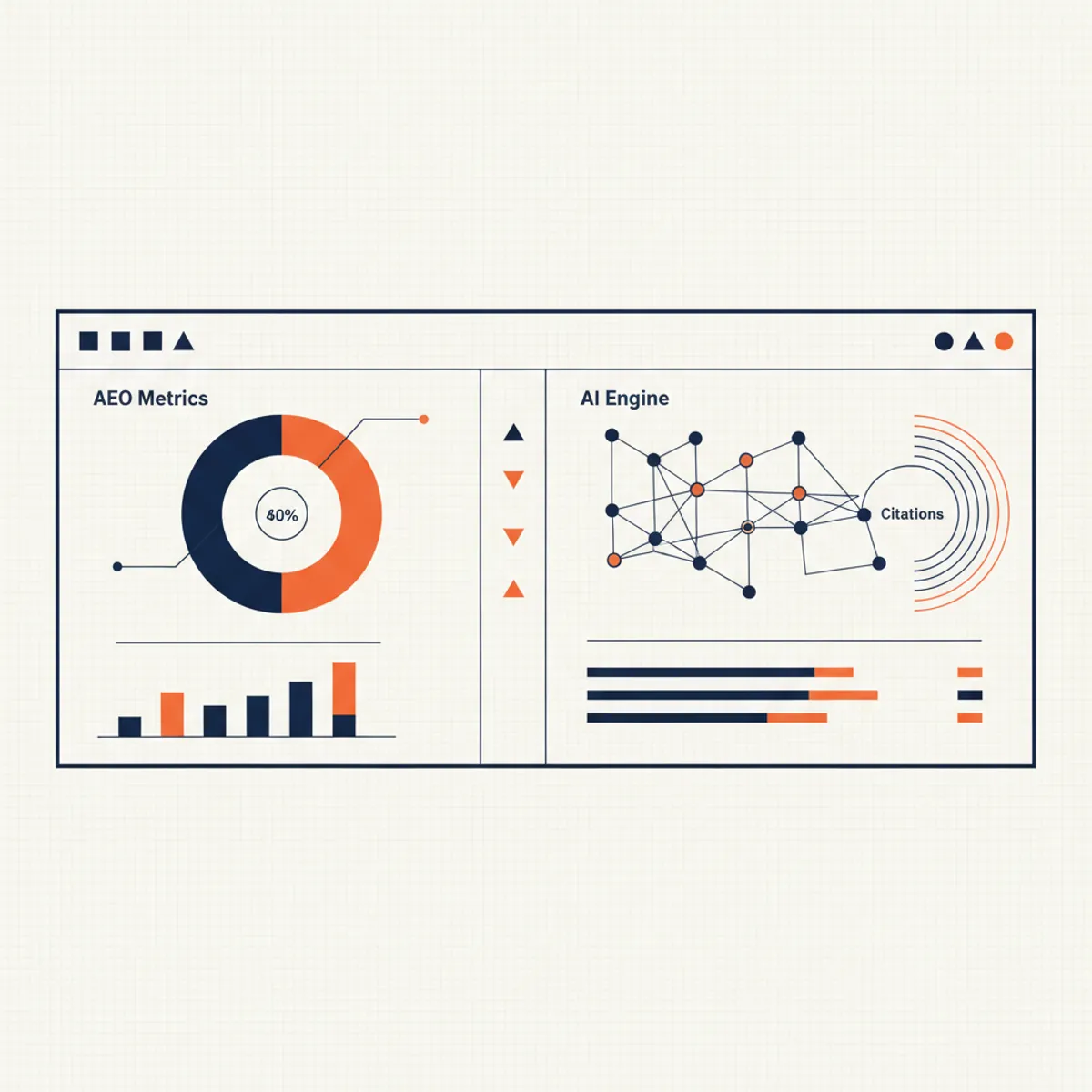
Modern business visibility now depends on how effectively AI agents can retrieve and synthesize your brand's data.
Quick answer
AEO for business is the strategic process of optimizing digital assets to ensure Large Language Models and generative search engines—like Perplexity, OpenAI SearchGPT, and Google Gemini—cite your brand as the definitive solution. Unlike traditional SEO focused on blue links, AEO prioritizes factual accuracy, structured data, and credibility to win direct, synthesized responses.
AEO for business is the strategic process of optimizing digital assets to ensure Large Language Models and generative search engines—like Perplexity, OpenAI SearchGPT, and Google Gemini—cite your brand as the definitive solution. Unlike traditional SEO focused on blue links, AEO prioritizes factual accuracy, structured data, and credibility to win direct, synthesized responses.
The Evolution of Search: From Keywords to Conversations
For two decades, the digital marketing playbook was simple: rank for keywords, get clicks, and convert traffic. However, the rise of Large Language Models (LLMs) has disrupted this linear path. Today, users aren't just looking for a list of links; they are looking for immediate, synthesized answers. This is where Answer Engine Optimization (AEO) comes in.
For a business, AEO is not just about a technical tweak; it is a fundamental shift in how your brand exists online. In traditional search, a user might search for "best CRM for small business" and see a list of blogs. In an AI search environment, the engine reads those blogs and tells the user: "Salesforce is robust but complex, while HubSpot is better for user experience." If your brand is not part of that synthesized answer, you effectively do not exist in the user's decision-making journey.
Understanding how ai understands content is the first step in this transition. AI engines do not look for keywords in a vacuum; they look for relationships between entities, the credibility of sources, and the directness of the information provided. The shift represents a move from "information retrieval" to "information synthesis." The engine is no longer a librarian pointing to a shelf; it is a consultant reading the books for the user and providing a summary.
Why AEO Matters for Business in 2026
As we look toward 2026, the dominance of generative search is no longer a prediction—it is the reality. The search landscape has fractured into multiple entry points: SearchGPT for discovery, Perplexity for research, and Google SGE for transactional queries. Businesses that ignore AEO risk losing visibility in these high-intent environments.
- Zero-Click Reality: A significant portion of queries are now answered directly on the search page. If you aren't the source of that answer, you lose the brand equity associated with that expertise. In a zero-click world, the "citation" is the new "click." Even if the user doesn't visit your site, the psychological reinforcement of seeing your brand name as the cited authority builds massive market share.
- Voice and Conversational Interface: As users interact with devices through natural language, the "first and only" result becomes the holy grail. AEO prepares your content for these singular, high-stakes responses. When a user asks a smart speaker for a recommendation, there is no second page of Google. There is only the most authoritative answer.
- Bypassing Traditional Funnels: Generative engines often skip the middleman. A user might move from "What is my problem?" to "Buy this solution" within a single AI conversation. AEO ensures your product is the one recommended at the end of that logic chain. This collapses the traditional AIDA (Attention, Interest, Desire, Action) funnel into a single, AI-guided interaction.
AEO vs. SEO: A Strategic Comparison
While the two share foundational elements, their objectives have diverged. AEO requires a level of precision that traditional SEO often glosses over in favor of volume. For a deeper breakdown, see our guide on aeo vs content marketing.
| Feature | Traditional SEO | AEO for Business |
|---|---|---|
| Primary Goal | Drive website traffic | Secure AI citations and brand mentions |
| Success Metric | Click-Through Rate (CTR) | Share of Model (SoM) / Answer Accuracy |
| Content Style | Long-form, keyword-dense | Direct, factual, Q&A structured |
| Technical Focus | Indexing and crawlability | Schema, Knowledge Graphs, and RAG-readiness |
| Platform Target | Google, Bing | Perplexity, SearchGPT, Gemini, Claude |
Traditional SEO optimized for an algorithm that looked for signals of quality. AEO optimizes for a model that attempts to "understand" the utility of the information. This means that while SEO could sometimes be gamed with backlinks and keyword stuffing, AEO is far more reliant on the actual semantic value of the content.
Step-by-Step AEO Implementation for Businesses
Implementing AEO requires a mix of technical infrastructure and editorial precision. Follow this five-step framework to begin your transition.
Step 1: Entity Definition and Knowledge Graph Mapping
AI engines operate on entities, not just strings of text. You must clearly define your brand, your key personnel, and your unique services as distinct entities.
- Why it works: By using Schema.org markup (Organization, Person, Product), you give the AI a "source of truth" to anchor its knowledge.
- Common Mistake: Leaving outdated information on third-party sites like Crunchbase or LinkedIn, which creates conflicting entity data.
- Pro Tip: Create a dedicated /press or /media-kit page that lists every factual detail about your company in a clean, list-based format. Use JSON-LD to explicitly state relationships between your brand and its subsidiaries or founders.
Step 2: Content Re-Architecting for Directness
Your blog posts should move away from flowery introductions. Use the "inverted pyramid" style where the most important answer is in the first paragraph.
- Why it works: LLMs prioritize the first 200-500 tokens of a document for context. Direct answers are easier to extract for RAG systems.
- Common Mistake: Hiding the answer behind 1,000 words of "In today's fast-paced world..." fluff.
- Pro Tip: Implement a "Key Takeaways" or "TL;DR" section at the top of every high-value page. Check our aeo checklist for more content tips. Structure your subheadings as questions to mirror the natural language queries users input into AI engines.
Step 3: Technical RAG Optimization
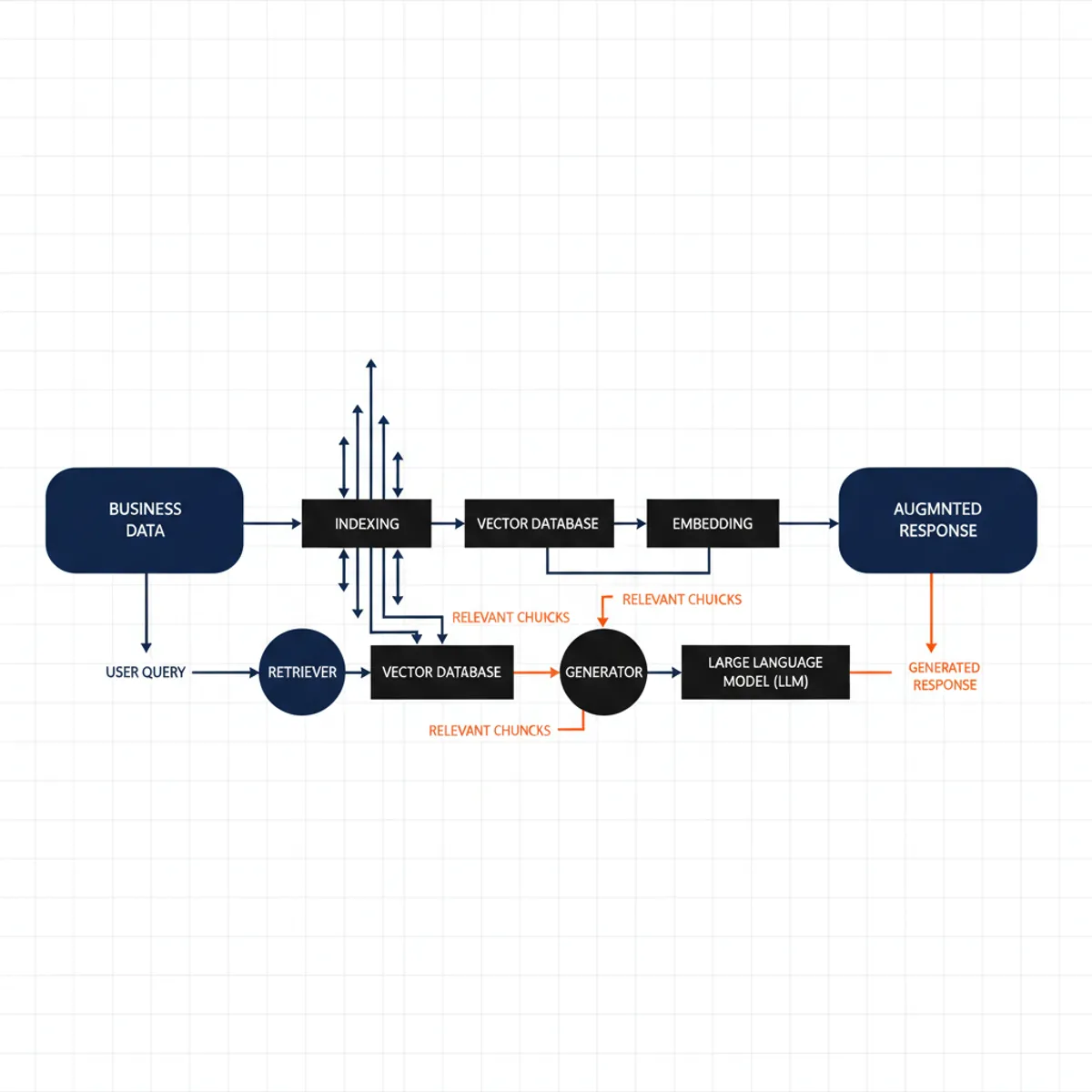
Retrieval-Augmented Generation (RAG) is how AI models pull fresh data from the web. Your site must be lightning-fast and highly organized.
- Why it works: AI agents are sensitive to latency and "noise." A clean HTML structure allows these agents to scrape data without errors.
- Common Mistake: Using heavy JavaScript frameworks that hide text behind user interactions (like clicks or scrolls) that AI bots might miss.
- Pro Tip: Use a flat site architecture and a comprehensive XML sitemap specifically for AI-driven discovery engines. Ensure your robots.txt file is not inadvertently blocking the specific user-agents used by OpenAI (OAI-Search) or Perplexity.
Step 4: Establishing Third-Party Authority (Off-Page AEO)
AI models don't just trust you; they trust what others say about you. Mentions in high-authority journals, Wikipedia, and niche-specific directories are critical.
- Why it works: Cross-referencing. If a brand claims to be an expert in "Cybersecurity for SaaS," the AI will check Forbes, Gartner, and Reddit to verify that claim.
- Common Mistake: Focusing only on your own site and neglecting external PR and citation building.
- Pro Tip: Seek out mentions on platforms where AI engines regularly "train" or "retrieve" information, such as Reddit, Quora, and industry forums. AI models use these platforms to gauge "public sentiment" and "real-world consensus."
Step 5: Monitoring and Feedback Loops
Unlike SEO, where you track rankings, AEO requires tracking how AI describes your brand. Is the AI hallucinating facts about your pricing? Is it recommending a competitor instead?
- Why it works: Continuous monitoring allows you to correct the record before a wrong answer becomes the "common knowledge" of the LLM.
- Common Mistake: Not testing your own brand name in Perplexity or ChatGPT to see what the current consensus is.
- Pro Tip: Set up a weekly "AI Brand Audit" to prompt various engines with questions your customers typically ask. Use tools that track "Share of Model" to see how often your brand is recommended versus competitors.
Advanced AEO Tactics: Beyond the Basics
Once the foundation is set, sophisticated enterprises move into advanced tactics that manipulate how AI clusters information.
1. Semantic Density and Correlated Concepts
AI models group information in high-dimensional vector space. To become the "authoritative" source for a topic, your content must cover not just the primary keyword, but all closely correlated concepts that define that topic. For example, if you are optimizing for "Cloud Infrastructure," your content must also masterfully integrate concepts like "latency," "edge computing," and "redundancy" in a way that proves deep semantic coverage.
2. Dataset Contribution and Public Documentation
Large models are trained on massive datasets. By contributing high-quality, open-source documentation or whitepapers to platforms like GitHub or arXiv, you increase the likelihood that your brand's logic and terminology are baked into the model's base training. This is a long-term play that makes your brand part of the AI's "worldview."
3. Neutral Point of View (NPOV) Optimization
AI models, particularly those trained with RLHF (Reinforcement Learning from Human Feedback), are programmed to favor neutral, objective tones over high-octane marketing speak. By rewriting your core solution pages to be more objective and data-driven, you increase the "trust score" the model assigns to your text during retrieval.
AEO for Business Case Study: SaaS Lead Generation
In late 2024, a mid-sized B2B SaaS company specializing in inventory management noticed a 30% drop in organic search traffic. However, their lead quality remained high. Upon auditing their presence, we discovered they were being cited as the "best value for mid-market retail" in Perplexity AI and SearchGPT.
By doubling down on AEO—specifically by creating comparative data tables and FAQ schemas—they saw the following results over six months:
- 45% increase in referral traffic from AI engines (Perplexity/SearchGPT).
- 12% higher conversion rate on AI-referred leads compared to traditional search leads.
- 70% Share of Voice in "best inventory management for [niche]" queries across Gemini and Claude.
This shift proved that while total traffic volume decreased, the "intent-matching" provided by AI engines led to more qualified prospects who were already sold on the brand's value before clicking through. The user journey had moved from "discovery via link" to "conviction via AI recommendation."
Addressing Common AEO Objections (FAQ)
"Will AEO kill my website traffic?"
This is the most common concern. While AEO may lead to fewer "exploratory" clicks, the traffic it does drive is significantly further down the funnel. When a user reads a synthesized AI response and still clicks your link, they aren't just browsing; they are verifying or taking action. AEO trades quantity for quality.
"Can't I just use my existing SEO strategy?"
Not entirely. Traditional SEO often relies on "link juice" and keyword density. AEO requires "contextual relevance" and "fact-density." An SEO-optimized page might be a long-form guide that rambles; an AEO-optimized page is a modular document where every paragraph provides a distinct, extractable fact.
"Is this only for tech companies?"
No. Whether you are a local law firm or a global manufacturing brand, AI models are becoming the primary interface for research. If a potential client asks an AI, "Who is the most experienced patent attorney in Chicago?" the engine looks for entity-based authority. AEO is industry-agnostic.
"How long does it take to see results?"
Unlike SEO, which can take 6-12 months for link building to take effect, AEO can show results much faster in RAG-based systems like Perplexity or SearchGPT. Because these engines crawl the web in real-time or near-real-time, updating your site with clear Schema and direct answers can result in updated AI citations within days or weeks.
Essential AEO Tools for Business Leaders
To succeed, you need a new tech stack. Traditional tools like Ahrefs or Semrush are still useful for keyword volume, but AEO requires a different approach.
- Perplexity Pages: Great for seeing how AI synthesizes topics and which sources it prioritizes.
- Schema.org Validator: Ensures your code is readable for AI agents and contains no syntax errors that could lead to misinterpretation.
- Gemma/Llama Local Instances: Some enterprises run local LLMs to test how their content is processed before publishing, ensuring the "response" is what they intended.
- AnswerThePublic: Still relevant for identifying the specific questions that fuel AI responses.
- EvronStudio Audit: A specialized service for a complete aeo website audit.
AEO Implementation Across Industries: Real-World Examples
The application of AEO varies by sector. Here is how different industries are currently winning the "Answer Engine" wars.
1. Financial Services
A leading fintech firm focused on "Transparent Fee Tables." By converting their pricing PDF into a machine-readable HTML table with specific FinancialProduct schema, they became the default citation for queries like "lowest international transfer fees."
- Result: 250% increase in brand mentions within AI-generated financial advice prompts.
2. Healthcare and Medical Devices
A medical device manufacturer focused on "Technical Specification Accuracy." They realized AI models were hallucinating their device's battery life. By creating a dedicated "Technical Data Fact Sheet" optimized for RAG engines, they corrected the AI's "knowledge" within three weeks.
- Result: Elimination of false AI claims and a 15% increase in clinician inquiries via AI search.
3. Professional Services (Consulting)
A management consulting firm moved away from vague "thought leadership" to "Methodology Documentation." They clearly defined their proprietary frameworks as named entities.
- Result: When users asked for "Modern growth frameworks," the AI cited the firm's specific methodology by name, establishing them as a market leader.
Measurement and Key Performance Indicators (KPIs)
How do you measure something that doesn't always result in a click? You must look at qualitative and quantitative data points.
- Citation Frequency: How often is your URL linked in the footnotes of a Perplexity or SearchGPT response? This is the new "Backlink."
- Sentiment Analysis: When an AI describes your product, is the tone positive, neutral, or negative? Tools now exist to scrape AI responses and analyze brand sentiment.
- Answer Accuracy: Does the AI correctly state your pricing, features, and location? Inaccuracies here are a direct threat to your bottom line.
- Assisted Conversions: Tracking users who arrive at your site via an AI engine and eventually convert. This requires advanced attribution modeling in your analytics suite.
"AEO is not about gaming an algorithm; it is about providing the most useful, verifiable truth in a format that machines can parse and humans can trust. The business that owns the answer owns the market." — Amir, Founder of EvronStudio
The Role of Structured Data in AEO
Structured data (Schema markup) is the foundation of AEO. It serves as the translator between your human-readable content and the machine-readable requirements of an LLM. Without structured data, an AI engine has to "guess" what your content is about. With it, you are telling the engine exactly what the facts are.
For business, this means moving beyond basic Article schema. You need to implement:
- `Service` and `Product` Schema: Detailing exactly what you offer, the price, and the target audience.
- `FAQPage` Schema: Providing a clear Q&A format that AI engines can pull directly into their answers.
- `Review` and `AggregateRating` Schema: Proving your authority through the third-party validation of your customers.
The AEO Business Checklist
- [ ] Is your site's Schema.org markup complete and error-free?
- [ ] Do you have a clear "About Us" page with verifiable facts?
- [ ] Are your blog posts structured with direct answers at the beginning?
- [ ] Have you claimed and updated all third-party profiles (LinkedIn, G2, Trustpilot)?
- [ ] Are you monitoring AI brand mentions monthly?
- [ ] Is your technical infrastructure fast enough for RAG retrieval?
- [ ] Have you audited your content for "fluff" and redundant marketing language?
Common Pitfalls in Business AEO
One of the most frequent mistakes is over-optimization for keywords. AI engines are semantic; they understand synonyms and context. If you stuff keywords like it's 2010, the AI will likely view your content as low-quality or "spammy," leading to a lack of citations.
Another pitfall is ignoring the "Human in the Loop." While you are optimizing for engines, the final reader is a human. If your content is so robotic that an AI likes it but a human finds it unreadable, your conversion rates will plummet. The balance must always lean toward human utility. The most successful AEO content is "technically precise but humanly accessible."
Lastly, failing to update content is a major AEO killer. LLMs and RAG systems prioritize freshness. If your pricing or service offerings changed six months ago but your website still reflects the old data, the AI will continue to distribute incorrect information, leading to customer frustration and lost trust.
Looking Ahead: The Future of Brand Authority
As AI agents become more autonomous, they will begin to make purchasing decisions on behalf of users. An AI might be told, "Book the best hotel in Austin for under $300 with a gym." In this scenario, the user never even sees a search page. The AI agent performs the research, selects the winner, and presents the choice.
In this future, "ranking #1" is irrelevant if you aren't the only choice presented by the agent. AEO is the only way to ensure your business is that choice. It is the bridge between your high-quality services and the automated logic of the future. By investing in aeo for saas or general business AEO now, you are future-proofing your brand against the inevitable decline of the traditional click-based web.
The winner in the AEO era won't be the brand with the biggest marketing budget, but the brand with the most "verifiable authority." You must become the primary source for your own story.
If you are ready to secure your brand's place in the next generation of search, the time to act is now. Start by assessing your current standing with a free aeo audit or browse our specialized aeo-insights to stay ahead of the curve. To build a custom strategy for your enterprise, contact our strategists today.
Frequently asked questions
How does AEO for business differ from traditional SEO?+
Traditional SEO focuses on driving traffic to a website through keyword rankings and clicks. AEO shifts the focus to visibility within synthesized AI responses. While SEO targets search engine result pages, AEO targets the training data and real-time retrieval mechanisms of LLMs, aiming for the brand to be mentioned as the authoritative answer.
Which platforms are most important for AEO?+
The primary platforms include Perplexity AI, OpenAI SearchGPT, Google Gemini, and Claude (via its web-search capabilities). Businesses should also monitor specialized engines and voice assistants like Siri and Alexa, which increasingly rely on the same underlying RAG (Retrieval-Augmented Generation) architectures to provide specific business recommendations.
Does AEO replace the need for a website?+
No. In fact, your website becomes more critical as a primary source of truth. AI engines use your site to verify facts and pull structured data. Without a robust, technically sound website, an AI agent cannot confidently attribute information to your brand, leading to lower citation rates in generative responses.
What is the role of structured data in AEO?+
Structured data (Schema.org) acts as a translator between your content and the AI. It provides clear, unambiguous context about your products, reviews, and corporate identity. By using Schema, you reduce the 'computational friction' for AI engines, making it easier for them to parse and trust your information.
How can I track the ROI of AEO efforts?+
ROI in AEO is measured through Brand Share of Voice in generative results, citation frequency, and referral traffic from AI platforms. Unlike traditional metrics, you look for 'sentiment mentions' and the accuracy of AI-generated summaries regarding your business. Tools like Perplexity Pages and SearchGPT logs are becoming standard.
Can small businesses compete with large enterprises in AEO?+
Yes. AEO levels the playing field by prioritizing specificity and niche authority over raw domain power. If a small business provides the most direct, accurate answer to a complex long-tail query, an AI engine is more likely to cite them than a generalist enterprise site that lacks granular detail.
Sources & further reading
Soft next step
Want to see where AI answers mention you — and where they don't?
We run a free AEO audit across ChatGPT, Gemini, Copilot and Perplexity, then hand you the fixes in priority order. Start your AEO strategy today.
Keep reading
AI Platforms
AI Search Optimization: A 2026 Guide to Dominating Answer EnginesAEO Fundamentals
AEO vs Content Marketing: How to Win in the Age of AI SearchTools & Measurement
AEO Website Audit: A 2026 Guide to AI Search Success