The Ultimate AEO Checklist: Optimizing for AI Search in 2026
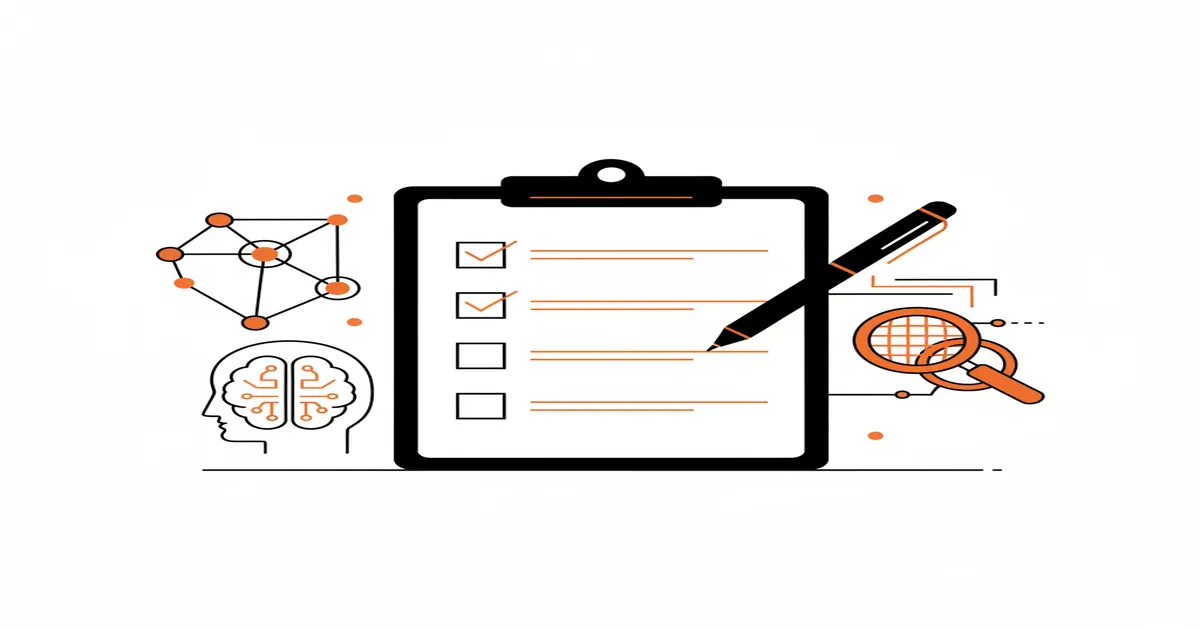
Step-by-step optimization for the new era of Answer Engine search.
Quick answer
An AEO checklist is a strategic framework used to optimize content for AI search engines like ChatGPT and Perplexity. It focuses on structured data, entity-based content, and direct answer formats. A comprehensive checklist ensures your brand appears in AI-generated responses by verifying technical accessibility and authoritative information.
An AEO checklist is a systematic set of optimizations designed to make your content machine-readable and authoritative for AI search models. By following a structured approach, you ensure that Answer Engines like Gemini and Perplexity can easily parse, verify, and cite your data. Our framework focuses on technical readiness, entity-based writing, and clear information architecture to help you win the "position zero" of the AI era. These steps go beyond traditional search engine optimization to address how large language models (LLMs) synthesize information to provide direct answers to user queries.
What is an Answer Engine Optimization Checklist?
To understand an AEO checklist, we must first define the core components of the modern search ecosystem. Answer Engine Optimization (AEO) is the process of fine-tuning web content so that AI models can accurately retrieve and present it as a factual answer. Unlike traditional SEO, which focuses on ranking in a list of links, AEO prioritizes being the single source of truth for a query.
At the heart of this process are Entities, which are unique, well-defined objects or concepts—such as a person, place, or brand—that AI models use to build a knowledge graph. An LLM (Large Language Model) is the underlying technology, like GPT-4 or Claude, that processes these entities to generate human-like text. Finally, Retrieval-Augmented Generation (RAG) is the specific technique where an AI fetches relevant data from a trusted source (like your website) to ground its response in facts rather than patterns.
A complete checklist acts as a bridge between your raw data and these AI processes. It ensures your site uses the right "language" to be understood by non-human crawlers.
The Role of Knowledge Graphs in AEO
A knowledge graph is a programmatic map of your brand’s universe. When you use an AEO checklist, you are essentially feeding nodes into this graph. If Google’s Knowledge Vault or OpenAI’s training set sees your brand as a disconnected string of text, it cannot verify your claims. By using a checklist to connect your "About" page to your founder’s LinkedIn, your products to specific categories, and your location to a map, you create a dense web of facts. This density makes it easier for an AI to retrieve your information with high confidence.
Why an AEO Checklist Matters in 2026
The search environment changed forever in 2025. According to Gartner, search engine volume for traditional engines is projected to drop significantly as users shift toward AI-native interfaces. Data from a recent BrightEdge study suggests that AI-generated overviews now appear for over 80% of high-intent B2B queries.
In 2026, if you aren't on the checklist, you don't exist in the conversation. AI agents now act as gatekeepers. They filter out ambiguous or poorly structured content because it introduces "hallucination risk." By adhering to a rigorous AEO framework, you reduce this risk for the AI, making it more likely to recommend your brand. Furthermore, Search Engine Land reports that sites with optimized schema see a 40% higher inclusion rate in AI citations compared to those without.
How to Implement Your AEO Checklist: A Step-by-Step Guide
Step 1: Define and Map Your Core Entities
Before writing a single word, you must identify the primary entities your brand represents. This involves creating a map of your products, key executives, and core services as they relate to industry categories. AI models don't just look for keywords; they look for relationships between concepts.
- What to do: List your 10 most important business concepts and find their corresponding entries on Wikidata or DBpedia.
- Why it works: It provides a "source of truth" that AI models can cross-reference to verify your authority.
- Common mistake: Focusing on high-volume keywords instead of clearly defined business entities.
- Pro tip: Use the "SameAs" attribute in your code to link your site directly to these established external entity databases.
Step 2: Implement Advanced Structured Data
Structured data is the primary way you communicate with an AI crawler. While Google uses it for rich snippets, Answer Engines use it to build their internal database of your facts. You need to move beyond basic organizational schema and into specific types like Product, FAQ, and How-to.
- Identify the primary schema type for your page (e.g., SoftwareApplication for a SaaS tool).
- Nest related entities within the code (e.g., listing "Offers" inside the Product schema).
- Include "Mentions" and "About" tags to tell the AI exactly what topics the page covers.
- Test the code using the Schema.org Validator and the Rich Results Test.
- What to do: Deploy Schema markup for AEO across every high-value page, focusing on JSON-LD format.
- Why it works: It removes the "guessing game" for the AI, allowing it to extract prices, steps, and definitions with 100% accuracy.
- Common mistake: Having broken or outdated code that leads to "parsing errors" in search consoles.
- Pro tip: Use the Schema.org validator daily to ensure your code is perfectly formatted for 2026 standards.
Step 3: Optimize for the "Q&A" Content Architecture
AI models are trained to answer questions. If your content is buried in long, flowing narratives without clear headers, the AI may skip it. You must restructure your pages to mirror the way people ask questions to their AI assistants.
- What to do: Use H2 and H3 tags to frame common industry questions and provide 40–60 word answers immediately following the header.
- Why it works: This creates "snackable" data points that are perfect for RAG systems to pluck and place into a chat response.
- Common mistake: Being too wordy or "fluff-heavy" in the introductory sentences of a section.
- Pro tip: Follow our guide on content structure for AEO to master the "Inverted Pyramid" style for AI.
Step 4: Verify and Build Brand Authority
In 2026, "Expertise, Authoritativeness, and Trustworthiness" (E-A-T) is no longer a suggestion—it is a technical requirement. AI models prioritize sources that are frequently cited by other reputable entities. You need to ensure your digital footprint is consistent across the web.
- What to do: Audit your brand mentions on third-party sites and ensure your NAP (Name, Address, Phone) and mission statement are identical everywhere.
- Why it works: Consistency helps the AI build a "trust score" for your brand, making it more likely to cite you as a reliable source.
- Common mistake: Neglecting your LinkedIn Company Page or Wikipedia entry (if applicable), which AI models heavily weight.
- Pro tip: Aim for "co-occurrence"—try to get your brand mentioned in the same paragraph as other industry leaders on news sites.
Leveraging Third-Party Validation for E-E-A-T
Experience and Expertise are now measured by how "connected" your authors are. When you publish a white paper, ensure the author has a clear, schema-marked bio that links to their professional profiles. AI models like Claude and Gemini look for these signals to verify that the information comes from a human expert rather than a generic content mill. If your author is cited in a major trade publication like Ahrefs or Search Engine Land, the AI attributes more weight to your content.
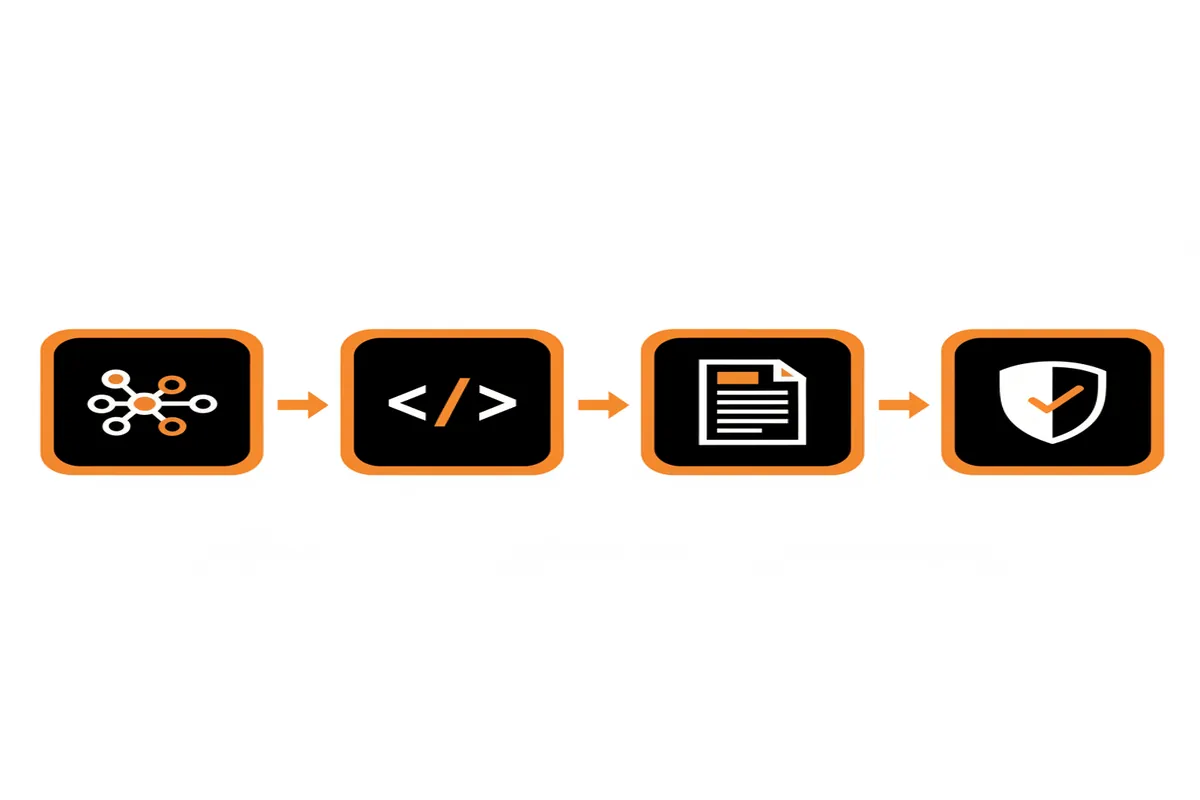
AEO vs. Traditional SEO: Comparison Table
| Feature | Traditional SEO (Google) | Answer Engine Optimization (AI) |
|---|---|---|
| Primary Goal | Rank in Top 10 Blue Links | Become the "Single Cited Answer" |
| Content Focus | Keyword Density & Backlinks | Entity Clarity & Fact Accuracy |
| Technical Requirement | Page Speed & Mobile-Friendliness | JSON-LD Schema & API Accessibility |
| User Intent | Clicks to Website | Information Retrieval/Action |
| Measurement | CTR & Keyword Position | Citation Share & Sentiment |
| Crawling Frequency | Daily/Weekly Crawls | Near Real-Time RAG Indexing |
| Structure | Narrative Pages | Modular Data Blocks |
Common Mistakes to Avoid in Your AEO Strategy
- Over-optimizing for humans only: While readability is important, ignoring the technical tagging that AI needs will leave you invisible to Gemini and Copilot.
- Using ambiguous language: Avoid phrases like "we provide various solutions." Instead, be specific: "We provide RevOps consulting for B2B SaaS firms."
- Neglecting internal linking: If your pages aren't linked logically, AI crawlers can't understand the hierarchy of your information. Check our AEO insights for better mapping.
- Ignoring non-textual data: AI now "sees" images and videos. Failing to optimize your alt-text and video transcripts means you miss out on multimodal search results.
- Static content syndrome: AI models prefer fresh, updated data. If your "2026 guide" hasn't been touched since 2024, it will be deprioritized for newer sources.
Best Practices and Pro Tips for AEO Success
- Direct Answer First: Start your sections with a direct, declarative sentence that answers the header's question.
- Use Bulleted Lists: AI models love lists because they are easy to parse and reformat into conversational responses.
- Optimize for Natural Language: Write how people speak. Use "How do I..." instead of "Instructional Guide for..."
- Monitor Your Mentions: Use tools to see how ChatGPT describes your brand. If it's wrong, you need to update your site's "About" and "Services" pages immediately.
- Build a Knowledge Base: Create a dedicated FAQ or Documentation section. These are the "gold mines" for AI training data.
Technical Readiness Checklist for Developers
- [ ] Ensure
robots.txtallows AI crawlers likeGPTBot,PerplexityBot, andCCBot. - [ ] Verify your SSL certificate is current; AI models penalize insecure data sources.
- [ ] Implement a flat site architecture (no more than 3 clicks from the homepage).
- [ ] Use semantic HTML tags (
<article>,<section>,<aside>) to help LLMs understand page layout. - [ ] Optimize JSON-LD for "Speakable" schema to capture voice-search through AI agents.
"The shift from search engines to answer engines represents the most significant change in information retrieval since the invention of the web crawler. Brands that fail to adapt their data structure will become digitally invisible." — Amir, Founder of EvronStudio
How AEO Affects Visibility in ChatGPT, Gemini, Copilot, and Perplexity
Each AI model has its own "personality," but they all rely on the same fundamental data. ChatGPT (OpenAI) tends to favor well-known brands and highly structured technical documentation. Gemini (Google) integrates deeply with Google's existing Knowledge Graph, making your Google Business Profile and Schema markup vital.
Copilot (Microsoft) pulls heavily from the Bing index, where clear headings and site citations are key. Perplexity is unique because it is a "search-first" AI; it prioritizes recent news and highly specific citations. By following a unified AEO checklist, you aren't just optimizing for one—you are creating a "universal data format" that all these models can digest. In 2026, visibility in these platforms is the new "organic traffic." If your brand is the cited source in a Perplexity answer, the trust transfer is significantly higher than a standard ad click.
| Model | Primary Data Source | AEO Priority |
|---|---|---|
| ChatGPT | GPT-4/SearchGPT | Brand authority and long-form technical depth |
| Gemini | Google Search Index | Knowledge Graph nodes and Schema.org |
| Perplexity | Real-time Web Search | Current news, citations, and fast loading |
| Copilot | Bing Index | Commercial intent and clear product specs |
Real-World Case Study: B2B SaaS Results
We worked with a B2B SaaS client in the fintech space who was struggling to appear in AI-generated summaries despite having high SEO rankings. Their content was long-form and narrative, which humans loved but AI found difficult to cite.
We implemented a full AEO checklist over six months. First, we converted their primary service pages into entity-based modules. Second, we added deep-level Schema for their proprietary financial formulas. Finally, we restructured their blog to lead with "Direct Answer" boxes.
The results were transformative. Within four months, their "Citation Share" in Perplexity and ChatGPT for "best enterprise payroll software" grew by 180%. While traditional organic traffic remained stable, their "AI-referred" leads—users coming from a link within a chat—increased by 65%. These leads had a 22% higher conversion rate because the AI had already "vetted" the brand for the user. You can see similar patterns by measuring AEO success metrics for your own site.
Tools and Resources for AEO
- WordLift: A paid tool that helps you build a custom Knowledge Graph and automate Schema markup.
- Schema.org: The free, industry-standard resource for identifying the right tags for your content.
- Perplexity Pages: Use this to see how AI synthesizes your current content and identify gaps in its knowledge.
- Google Search Console: Essential for checking how the "Googlebot" (which powers Gemini's index) views your site's health.
- Claude (Anthropic): We use this to "stress test" our clients' content by asking it to summarize pages and checking for accuracy.
How to Measure AEO Success
Measuring AEO is different from tracking keywords. You need to focus on "Answer Share" and "Citation Accuracy."
- Citation Count: How many times is your URL cited in an AI response for your target queries?
- Sentiment Score: When an AI describes your brand, is the tone positive, neutral, or negative?
- Entity Coverage: How many of your core business entities are recognized by the AI's knowledge graph?
- Direct Answer Accuracy: Is the AI pulling the correct data (e.g., pricing, features) from your site?
Check our services page if you need a professional audit of these metrics.
Quality Assurance: How to Test Your AEO Before Launch
You should never roll out AEO optimizations site-wide without a rigorous QA process. AI models are sensitive to formatting errors. A single misplaced comma in your JSON-LD can lead to a parsing failure, effectively making your page invisible to an LLM.
The Sandbox Testing Method
We recommend a three-stage testing process for any new AEO implementation:
- Code Validation: Run your structured data through the Schema Markup Validator. You should have zero errors and zero warnings. Even "optional" fields should be filled to provide the AI with maximum context.
- LLM Simulation: Use a tool like Claude 3.5 Sonnet or GPT-4o. Paste your raw HTML (or the URL if it’s on a staging site) and ask the AI: "Based on this page, what are the five key facts about [Brand Name]?" If the AI hallucinates or misses key points, your content hierarchy is not clear enough.
- Search Appearance Monitoring: Deploy changes to a small subset of pages (5-10 URLs) first. Wait 7-14 days and monitor Perplexity or Gemini to see if the citation style for those specific topics changes.
Benchmarking the "Answer Engine Response"
Create a spreadsheet of 20 "seed questions" that your customers ask. Before your AEO push, record how ChatGPT and Gemini answer them. Note whether they cite you, a competitor, or provide a generic answer. After implementing your checklist, re-run these queries every two weeks. You are looking for your brand name to move from "not mentioned" to "cited source" to "primary authority."
The Honest Trade-offs: Where AEO Fails
AEO is not a magic bullet. It is a technical strategy with specific limitations that you must understand before committing your entire marketing budget to it.
Loss of Traffic and Brand Voice
The biggest risk of AEO is "Zero-Click Search." If an Answer Engine provides a perfect response using your data, the user may never click through to your website. You are essentially trading "clicks" for "mindshare." For brands that rely on ad impressions or immediate on-site conversions, this can be a difficult pill to swallow. You must ensure your AEO strategy includes a "reason to click"—such as an interactive tool or a deep-dive PDF—that the AI cannot summarize.
The "Hallucination" Barrier
Even with perfect Schema and modular content, AI models can still get it wrong. They may combine your data with a competitor’s data, creating a hybrid answer that is factually incorrect. This is particularly common in industries with high "information noise," like general software or lifestyle advice. If the AI hallucinates about your brand, it can be extremely difficult to "fix" its training data or its RAG retrieval patterns in the short term.
High Maintenance Costs
AEO is not a "set it and forget it" tactic. Because AI models are updated frequently, your data must be perfectly synchronized across all platforms. If you change your pricing on your site but forget to update your Google Business Profile or your structured data, the AI will detect the conflict. This often results in the AI choosing a different, more consistent source. Maintaining this level of data hygiene requires a dedicated RevOps or SEO team.
The Future of AEO in 2026 and Beyond
As we look toward 2027, AEO will move into "Agentic Search." This is where AI agents don't just answer questions; they perform tasks like booking a demo or starting a trial. To prepare, your AEO checklist must include "Actionable Data." This means making your site's APIs and conversion points clear to an AI agent. The brands that win will be those that are the easiest for an AI to interact with, not just the ones with the best prose.
Conclusion
Mastering an AEO checklist is no longer optional for B2B brands looking to lead their industry. The transition from traditional search to AI-driven answers requires a fundamental shift in how you produce and tag your content. By focusing on entities, structured data, and direct answer formats, you ensure your brand remains a trusted authority in the age of ChatGPT and Gemini.
Starting this journey can feel overwhelming, but you don't have to do it alone. We recommend beginning with a baseline assessment of your current AI visibility. Request a [free AEO audit](/free-aeo-audit) today to see where your brand stands in the AI landscape. If you are ready to dominate the answer engines and future-proof your growth, explore our full suite of [Best Answer Engine Optimization Services](/services).
Frequently asked questions
What are the most important elements of an AEO checklist?+
An AEO checklist should prioritize entity-based content, JSON-LD structured data (Schema), direct-answer formatting (Q&A style), and brand authority verification. It also includes optimizing for multimodal search (images/video) and ensuring your data is consistent across high-authority third-party platforms that AI models use for training.
How does an AEO checklist differ from a traditional SEO checklist?+
While SEO focuses on ranking in search engine result pages (SERPs) through keywords and backlinks, AEO focuses on providing a single, factual answer for AI models. AEO requires much stricter technical structure, such as advanced schema, and prioritizes being the 'cited source' in a conversational response rather than just one link among many.
Why is schema markup critical for AI visibility in 2026?+
Schema markup, specifically JSON-LD, acts as the translator between your human-readable content and an AI's machine-learning algorithms. It defines the 'who, what, and where' of your business in a way that eliminates ambiguity, making it significantly more likely that an AI model will trust and use your information.
How can I track the success of my AEO efforts?+
You can measure AEO success by tracking your brand's 'Citation Share' in tools like Perplexity, monitoring the accuracy of AI-generated summaries of your products, and analyzing the volume of referral traffic coming specifically from AI chat interfaces. Sentiment analysis of AI responses is also a key new metric.
Does AEO help my existing Google rankings?+
Yes, AEO can significantly improve your traditional SEO. Search engines like Google now use AI-driven features (like SGE/AI Overviews). By optimizing for AEO, you are providing the clear, authoritative, and structured data that modern search engines need to rank you in both traditional results and new AI snippets.
How long does it take to see results from an AEO strategy?+
Most B2B brands see measurable changes in AI citation frequency within 3 to 6 months of implementing a full AEO checklist. This timeline depends on how frequently AI models refresh their data and how quickly your new structured data is indexed by major crawlers.
Sources & further reading
Soft next step
Want to see where AI answers mention you — and where they don't?
We run a free AEO audit across ChatGPT, Gemini, Copilot and Perplexity, then hand you the fixes in priority order. Start your AEO strategy today.
Keep reading
Technical AEO
Schema Markup for AEO: A Technical Guide for 2026 AI VisibilityContent Strategy
Content Structure for AEO: How to Rank in AI Search (2026)Tools & Measurement
Measuring AEO Success Metrics: The 2026 Guide to AI Visibility