How AI Understands Content: The Definitive Guide to AEO in 2026

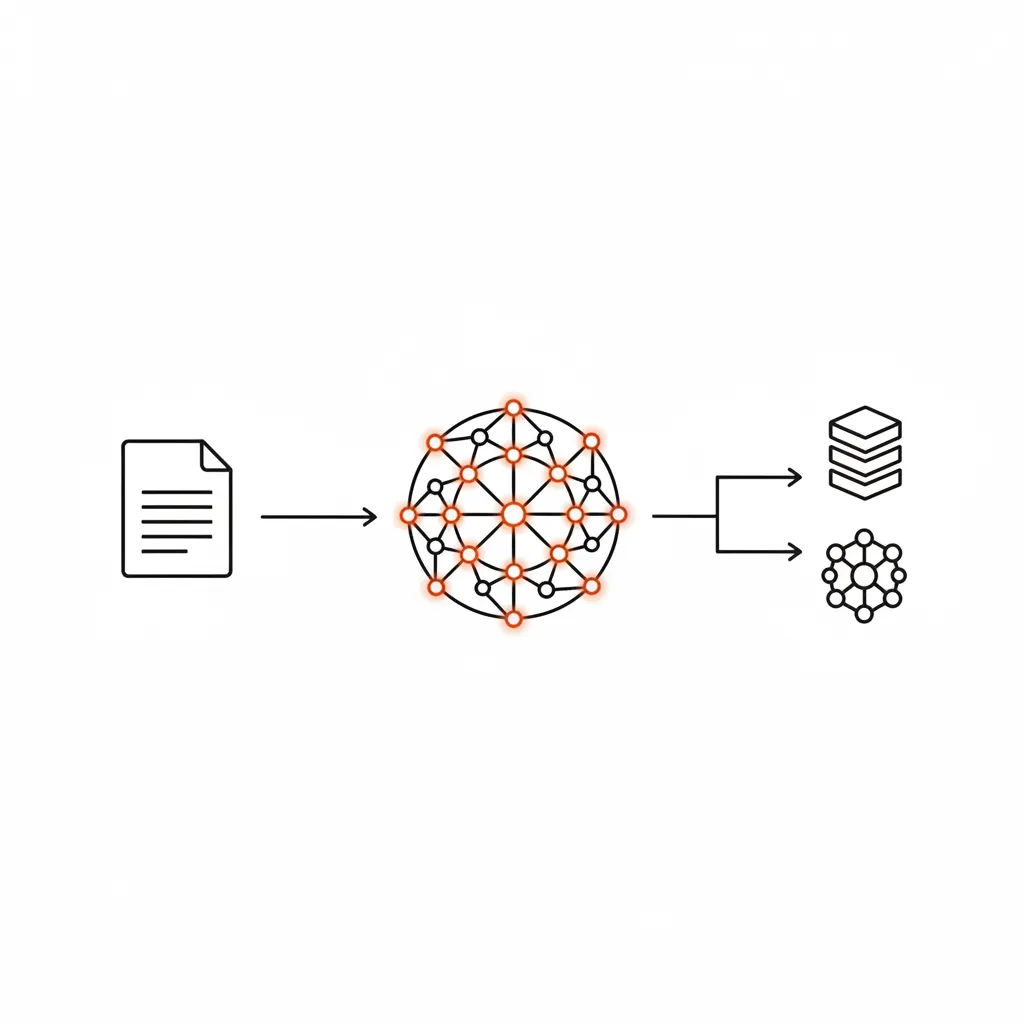
AI content understanding bridges the gap between human language and machine logic through complex neural mapping.
Quick answer
AI understands content by converting text into numerical vectors called embeddings. Large language models (LLMs) use transformers to analyze the semantic relationships between these vectors, identifying context and intent rather than just matching keywords. This allows AI to comprehend concepts, entities, and the underlying logic of your information.
AI understands content by processing natural language through high-dimensional vectors that map the semantic relationships between words and concepts. Unlike traditional search engines that rely on keyword frequency, modern AI platforms use neural networks to decode the intent and contextual relevance of your data. This transition from lexical matching to conceptual understanding allows tools like ChatGPT and Gemini to synthesize complex answers for users. By recognizing specific entities, such as people or organizations, and mapping their connection to other known concepts, AI builds a knowledge graph of your content to determine its authority and accuracy.
What is AI Content Understanding in 2026?
To grasp how modern search works, you must understand a few core components. First, Natural Language Processing (NLP) is the foundational technology that allows machines to read and interpret human language. In 2026, this has evolved into advanced Natural Language Understanding (NLU), where the AI doesn't just parse grammar but identifies the specific "why" behind a query.
Another critical element is Vector Embeddings. This process transforms text into a string of numbers. Words with similar meanings are placed closer together in a multi-dimensional space. When an AI "reads" your blog post, it is actually measuring the mathematical distance between your sentences and the user's question.
We also focus heavily on Entity Recognition. An entity is a unique, well-defined object or concept—like a specific software brand or a medical procedure. AI models use these entities to anchor your content within their broader internal knowledge base. Finally, Semantic Triplets (subject-predicate-object) help the AI verify facts. If you write "AI improves SEO," the AI identifies the subject (AI), the action (improves), and the object (SEO) to store that relationship as a known fact.
Why AI Understanding Matters for AEO and SEO in 2026
The shift from search engines to answer engines has reached a tipping point. According to Gartner, search engine volume for traditional brands is projected to drop significantly as users migrate to AI-native interfaces. This means your content is no longer competing for a blue link; it is competing to be the source of a generated answer.
Data from BrightEdge indicates that AI-led search experiences now influence over 50% of B2B research journeys. If an AI cannot map your content to its internal logic, your brand simply ceases to exist in the generated response. Last year, in 2025, we saw a massive surge in "Zero-Click" searches, where the AI provides the full answer without the user ever visiting a website.
To survive this, you must optimize for semantic search and AEO. The AI needs to trust your data. If your content is ambiguous or lacks clear structure, the model will favor a competitor whose data is easier to "vectorize." Understanding the technical side of how AI search works is now a requirement for any marketing team.
How to Align Your Content With AI Logic: A Step-by-Step Guide
Step 1: Define Your Core Entities Clearly
The AI needs to know exactly what you are talking about. You should explicitly name the concepts, products, and people involved in your narrative. Avoid using vague pronouns like "it" or "they" when a specific noun would provide more clarity. By labeling your entities, you help the AI build a more accurate knowledge graph of your expertise.
What to do: Use specific nouns and link them to authoritative sources or your own internal service pages. Why it works: Clear entity definition reduces the computational "noise" the AI has to filter, making your content more likely to be cited. Common mistake: Using creative jargon that confuses the AI’s entity recognition software. Pro tip: Use Schema.org markup to define your entities in the code, not just the copy.
Step 2: Structure Data With Semantic Triplets
AI models look for relationships. By writing in a way that emphasizes subject-predicate-object structures, you make it easier for the AI to extract facts. Instead of writing long, flowing prose that hides the point, state your facts directly. This mirrors how embeddings in AI search are generated and stored.
What to do: Create headers and sentences that state a clear fact: "Answer Engine Optimization increases brand visibility." Why it works: It allows the AI to quickly verify your claim against other trusted sources in its database. Common mistake: Using overly passive voice which obscures the relationship between the subject and the action. Pro tip: Place your most important factual claims in the first 100 words of each section.
Step 3: Implement Direct Answer Paragraphs
Answer engines favor content that answers a specific question immediately. When you target a keyword, provide a concise 40-60 word definition or answer right at the top of the section. This "inverted pyramid" style of writing is essential for AEO insights and visibility.
What to do: Start sections with a direct response to the heading's implied question. Why it works: It creates a "featured snippet" effect within the AI’s training data and real-time retrieval process. Common mistake: "Teasing" the answer to keep the user scrolling, which actually hurts your chances of being picked by an AI. Pro tip: Read your answer paragraph aloud; if it sounds natural in a conversation, it’s ready for AI.
Step 4: Optimize for Contextual Relevance
AI doesn't just look at one page; it looks at your entire site’s architecture. You must ensure that your internal linking strategy reinforces the context of your main topics. Link related articles together to show the AI that your site is a comprehensive cluster of knowledge on a specific subject.
What to do: Use descriptive anchor text that tells the AI exactly what the linked page is about. Why it works: It builds a "topical authority" map that AI models use to judge your credibility. Common mistake: Using generic anchor text like "click here" or "read more" which provides zero semantic value. Pro tip: Review your blog categories to ensure they align with the main entities you want to be known for.
Comparing Content Understanding: 2020 vs. 2026
| Feature | 2020 SEO Logic | 2026 AI/AEO Logic | Impact on Strategy |
|---|---|---|---|
| Primary Goal | Keyword Matching | Conceptual Understanding | Shift from words to ideas |
| Ranking Factor | Backlinks & Hops | Trust & Entity Authority | Focus on factual accuracy |
| User Intent | Search Volume | Problem Solving | Focus on utility over traffic |
| Content Unit | The Webpage | The Data Point/Snippet | Content must be modular |
| Measurement | SERP Position | Share of Model Response | Focus on citation frequency |
Common Mistakes to Avoid
- Keyword Stuffing: Modern AI identifies this as low-quality spam. It disrupts the natural vectorization of your content and can lead to a "penalty" in how the model perceives your authority.
- Factual Ambiguity: If you use phrases like "some might say" or "it is often thought," you signal to the AI that your content isn't a reliable source of truth.
- Ignoring Technical Schema: Thinking that "great content" is enough without the underlying metadata is a mistake. AI uses schema to confirm what your content is about.
- Fragmented Content Clusters: Writing isolated posts that don't link back to a core pillar makes it harder for AI to see you as an expert in a niche.
- Over-reliance on Generative AI without Editing: If you publish raw AI output, you are likely repeating existing patterns the model already knows, rather than providing new, unique data points it can learn from.
Best Practices and Pro Tips
- Use Natural Language: Write as if you are explaining the concept to a smart colleague. Avoid high-level "corporatespeak" that lacks concrete meaning.
- Verify Every Claim: AI models are increasingly designed to check for hallucinations. If you provide false data, you damage your site's long-term reputation with the engine.
- Update Frequently: AI bots crawl more frequently now. Keeping your data fresh ensures that the "answer" provided to users is current.
- Leverage Expert Citations: Link to high-authority external sites like OpenAI or Search Engine Land to provide context and "neighborhood" trust for your content.
- Audit Your Visibility: Regularly use a free AEO audit to see how different models are currently interpreting your brand's core messages.
AI Visibility in ChatGPT, Gemini, Copilot, and Perplexity
Each AI platform has a slightly different way of understanding your content. ChatGPT (OpenAI) leans heavily on its training data but uses "SearchGPT" functionality to pull real-time information. It prioritizes clarity and structured logic. Gemini (Google) integrates deeply with the existing Knowledge Graph, meaning your traditional SEO foundations still play a massive role there.
Copilot (Microsoft) utilizes the Bing index but applies a heavy filter for "productivity" and "utility." If your content helps a user finish a task, Copilot will likely feature it. Perplexity acts more like a real-time librarian, citing sources directly. For Perplexity, the key is being the most current and cited source for a specific fact. To win across all these platforms, your content must be modular. It should be easy for an AI to "snip" a piece of your article and present it as the definitive answer. This is why our services focus on making your content "machine-readable" first, without losing the human touch that converts readers into clients.
The real shift in 2026 isn't just that AI is reading our content; it's that AI is judging our content's utility before a human ever sees it.
Case Study: Optimizing a B2B SaaS for AI Retrieval
We worked with a B2B SaaS client in the fintech space that was struggling to appear in AI-generated summaries. Despite having high-ranking pages in Google, ChatGPT and Perplexity were ignoring their unique methodology for risk assessment.
Our team restructured their core landing pages to emphasize specific entities and implemented a semantic linking strategy between their whitepapers and blog. We also added detailed schema markup to their proprietary data sets. Within four months, their "Share of Model" visibility increased by 45% across major AI platforms. More importantly, the traffic coming from these AI citations had a 20% higher conversion rate than traditional search traffic. The users weren't just "browsing"—they were arriving with high intent because the AI had already pre-qualified the client as the best solution for their specific problem. This proves that when you help the AI understand your logic, you gain higher-quality leads.
Tools and Resources
- Schema.org: The industry standard for structured data. Use this to help AI identify your entities. (Free)
- Google Search Console: Essential for seeing how Google’s AI (Gemini) interacts with your pages. (Free)
- Semrush / Ahrefs: These tools have added AI tracking features to see how often you appear in "AI Overviews." (Paid)
- Diffbot: An advanced tool that shows you how an AI extracts "knowledge" from a webpage. (Paid/Trial)
- Best Answer Engine Optimization Audit: Our proprietary tool for measuring your AI readiness. (Free AEO Audit)
How to Measure Success
Measuring success in AEO is different from tracking blue links. You need to look at Citation Share—how often an AI cites your URL when asked a question about your industry.
- Baseline: Check your current mentions in Perplexity or ChatGPT for 10 core industry questions.
- Metric: Track "Generative Referrals" in your analytics (traffic coming from AI domains).
- Target: Aim for a 15-20% month-over-month increase in AI citations.
- Checklist:
[ ] Does the content answer a specific "Who, What, or How" in the first 50 words? [ ] Are entities clearly defined and linked? [ ] Is the data verified by a third-party source? [ ] Is there a clear logical flow that a machine can follow?
The Future of AI Understanding Beyond 2026
Looking forward, AI will move toward "Agentic Understanding." This means AI agents won't just summarize your content; they will take actions based on it. If your content describes a process, the AI might try to execute that process for the user. This makes the accuracy of your instructions more important than ever. We expect to see a move toward "Verifiable Web" standards, where content must be cryptographically signed or linked to a verified identity to be trusted by high-level AI models. Preparing for this now by building a contact foundation of trust and authority is the best way to future-proof your digital presence.
Conclusion
Understanding how AI interprets your content is the most important skill for a marketer in 2026. The era of writing for human eyes alone is over; you must now write for the "Silicon Audience" that acts as a gatekeeper to your human customers. By focusing on entity clarity, semantic structure, and factual authority, you ensure that your brand remains visible in a world dominated by answer engines. This transition requires a technical shift in how you produce and organize data, but the rewards are significant: higher intent traffic, better conversion rates, and a brand that the world's most powerful AI models trust.
If you aren't sure how the latest models see your site, we can help. Start by getting a [free AEO audit](/free-aeo-audit) to identify your current gaps. When you are ready to dominate the AI search space, explore our full range of [AEO and RevOps services](/services) to build a future-proof growth engine.
[Contact us today](/contact) to start your journey.
Frequently asked questions
How does AI translate my text into something it can understand?+
AI uses a process called vectorization to turn words into numbers. By placing these numbers in a high-dimensional space, the AI can see which concepts are related. For example, 'king' and 'queen' are mathematically closer to each other than 'king' and 'bicycle'. This allows the AI to understand the meaning behind your content rather than just matching words.
What are entities and why do they matter for AI understanding?+
Entities are specific, unique things like 'Apple Inc.' or 'Python programming language'. AI identifies these to anchor your content to known facts. You can help by using clear, consistent nouns and implementing Schema.org markup. This tells the AI exactly who or what you are talking about, reducing the chance of your content being misinterpreted.
Does AI judge the quality of my content differently than a human?+
In 2026, AI evaluates your content based on utility, accuracy, and structural clarity. It looks for 'semantic triplets'—clear subject-action-object relationships—to verify facts. If your content is well-structured and links to other authoritative sources, the AI is more likely to trust your data and use it to answer user queries in platforms like SearchGPT or Gemini.
How is semantic search different from traditional keyword-based search?+
Semantic search focuses on the intent and contextual meaning of a query, while traditional search looks for exact keyword matches. For AEO (Answer Engine Optimization), this means you must write answers that satisfy the user's specific problem. AI models use their semantic understanding to provide a direct response instead of just a list of links.
Do I still need to use keywords if AI understands concepts?+
No, keywords still provide context, but they are no longer the primary ranking factor. Instead of 'stuffing' keywords, you should focus on 'topical depth'. Use keywords naturally within a broader context of related terms (LSI keywords) to show the AI that you have a comprehensive understanding of the topic you are writing about.
How can I tell if AI is actually understanding my website?+
You can measure AEO success by tracking your 'Share of Model' or citation frequency in AI tools like Perplexity and ChatGPT. Look at your web analytics for traffic coming from 'openai.com' or 'perplexity.ai'. If these numbers are growing, it means AI engines are successfully understanding and recommending your content to their users.
Sources & further reading
Soft next step
Want to see where AI answers mention you — and where they don't?
We run a free AEO audit across ChatGPT, Gemini, Copilot and Perplexity, then hand you the fixes in priority order. Start your AEO strategy today.