The Future Role of AEO in Marketing: From Clicks to Conversational Answers
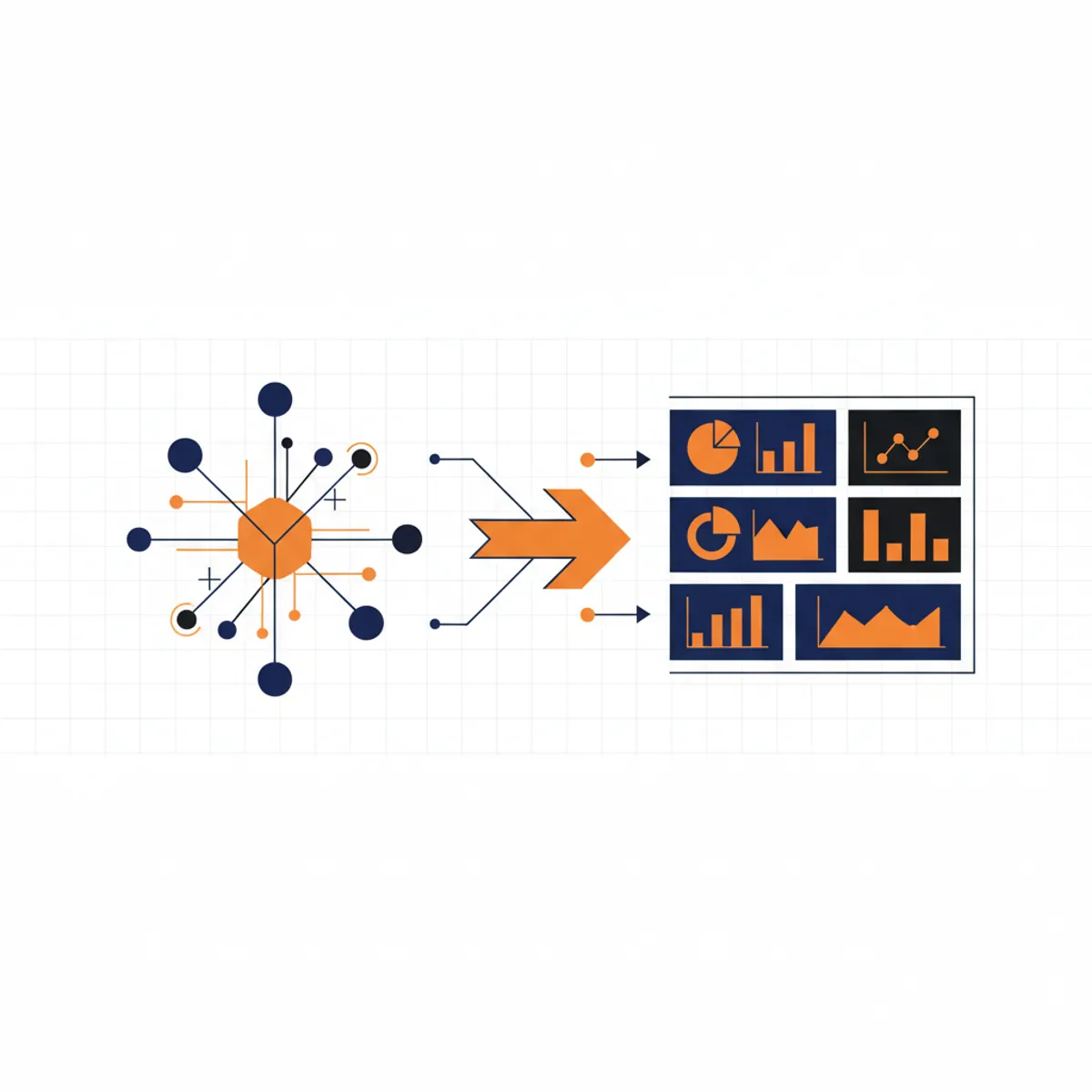
The convergence of artificial intelligence and strategic brand positioning.
Quick answer
The future role of AEO in marketing shifts the focus from ranking in search results to becoming the definitive source for AI-generated answers. As LLMs become the primary interface for discovery, AEO ensures brand visibility through structured data, high-intent factual fragments, and authoritative citations within platforms like Perplexity, ChatGPT, and Google Gemini.
The future role of AEO in marketing shifts the focus from ranking in search results to becoming the definitive source for AI-generated answers. As LLMs become the primary interface for discovery, AEO ensures brand visibility through structured data, high-intent factual fragments, and authoritative citations within platforms like Perplexity, ChatGPT, and Google Gemini.
Defining the Shift: From Discovery to Retrieval
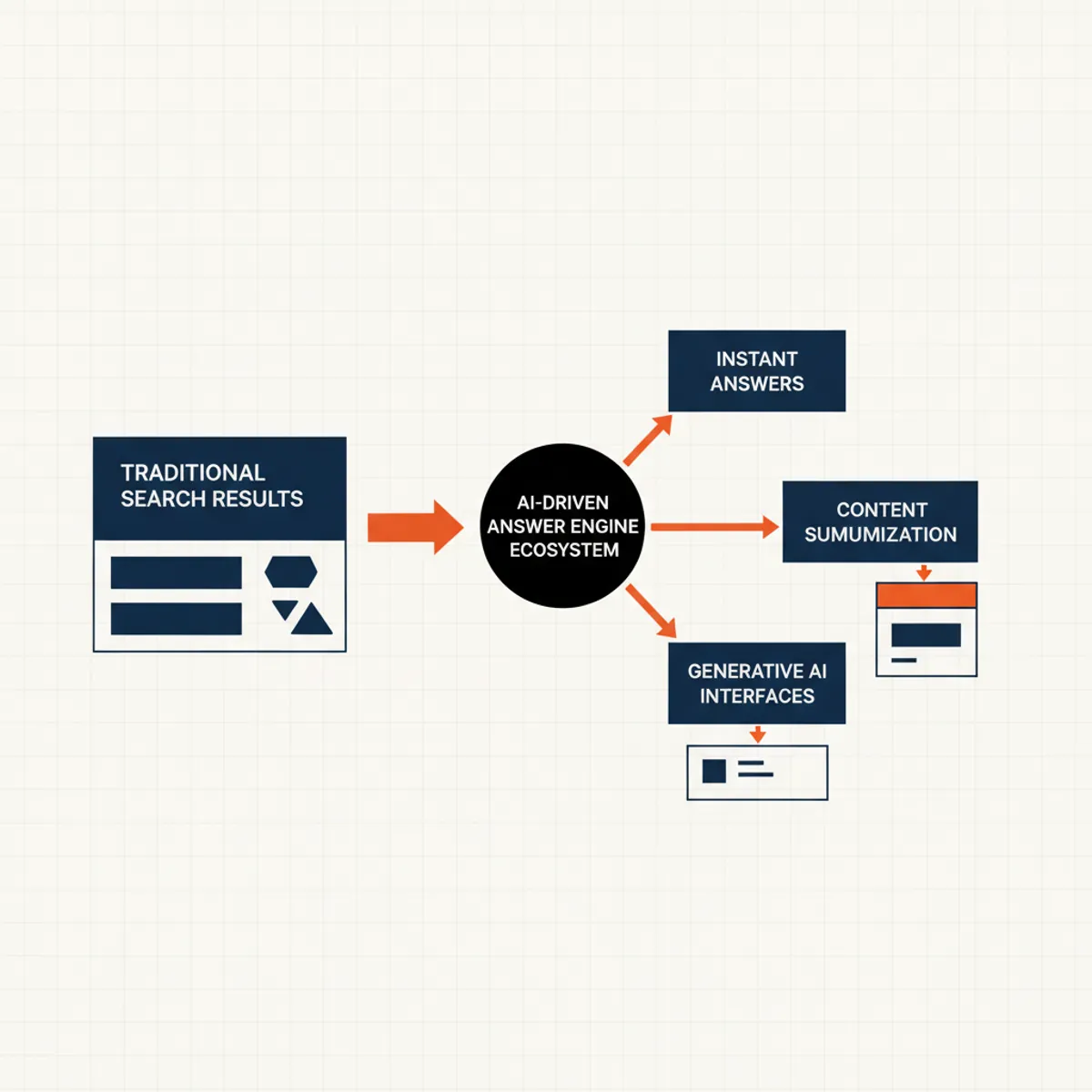
For two decades, marketing has operated on a discovery-based model. We built pages, optimized for keywords, and hoped a user would click a blue link. Answer Engine Optimization (AEO) represents a fundamental pivot toward a retrieval-based model. In this new paradigm, the "answer engine" acts as an intermediary, synthesizing information from across the web to provide a single, cohesive response to the user.
In the context of the future role of aeo in marketing, visibility is no longer about occupying position one. It is about being the data source that the AI trusts enough to quote. This requires a transition from creating "content for humans that search engines can read" to "data for AI that humans find valuable."
The retrieval process differs from traditional crawling. Large Language Models (LLMs) and Retrieval-Augmented Generation (RAG) systems look for consensus and clarity. If five high-authority sources say your product costs $50, but your own website is ambiguous, the answer engine will prioritize the consensus of the external sources. Therefore, AEO is as much about managing your digital footprint across the web as it is about your own site architecture.
The Rise of the Synthesis Layer
Modern search is no longer just a list of directories. Google’s AI Overviews and Perplexity’s citations create a synthesis layer. This layer sits between your website and the user. If your marketing strategy does not account for how this layer digests your information, your brand becomes invisible to the millions of users who never scroll past the AI-generated response.
This synthesis layer functions by identifying "atomic units of information." An atomic unit is a self-contained fact—for example, "Company X offers 24/7 customer support." In a discovery-based world, you might hide this fact in a long paragraph about your values. In a retrieval-based world, this fact must be isolated and explicit so the synthesis layer can extract it with high confidence.
Why AEO Matters in 2026 and Beyond
By 2026, the traditional search engine results page (SERP) will be a secondary destination for most informational queries. We are entering the era of zero-click dominance. When a user asks, "What is the best CRM for a mid-sized architecture firm?", they no longer want to read five blog posts. They want a table comparing features, pricing, and user sentiment.
AEO is the mechanism by which your brand ensures its data is included in that comparison table. The role of AEO in marketing will expand into brand protection. If an AI model hallucinates or provides outdated information about your service, AEO strategies—specifically structured data and persistent factual updates—are your only defense.
Furthermore, the rise of voice assistants and wearable AI (like AI pins or smart glasses) means the "screen" is disappearing. In a screenless environment, there is no "page two" of Google. There is only the answer. If you are not the answer, you do not exist in that user's journey.
"AEO is not just a technical checklist; it is the fight for brand sovereignty in a world where machines do the talking for us." — Amir, Founder of EvronStudio
The Death of Long-Tail Traffic?
Many fear that AEO will kill organic traffic. While it is true that informational traffic may decrease, the value of the remaining traffic increases. Users who click through from an AI citation are often deeper in the funnel, seeking specific validation or execution rather than basic definitions. AEO filters out the "tire-kickers" and delivers highly informed prospects.
Instead of measuring success by sessions, marketers must measure success by "Brand Mention Frequency" within AI dialogues. A thousand users reading a basic definition on your blog is often less valuable than a hundred users seeing your brand recommended as the solution by a trusted AI assistant.
Deep Dive: How LLMs Evaluate Information
To master AEO, you must understand the "Trust Triad" used by modern answer engines: Verification, Authority, and Recency.
1. Verification through Consensus
LLMs do not "know" things; they predict strings of text based on training data. When an answer engine performs a real-time search (like Perplexity or Gemini), it looks for corroboration. If your site is the only one making a specific claim, the AI may flag it as low-confidence. AEO strategists must ensure that third-party sites, directories, and news outlets reflect the same core facts as the main brand site.
2. The Semantic Proximity of Entities
Answer engines build maps of the world. In this map, your brand is an "entity." The engine looks at which other entities are close to you. If your brand is frequently mentioned alongside "luxury," "sustainability," and "high-end," the AI will categorize you as a premium provider. AEO involves deliberately placing your brand entity within the correct semantic neighborhood through strategic PR and content clustering.
3. Factual Persistence
Information decay is a significant risk in the AI era. If an AI model was trained on data from 2023 stating your product lacks a specific feature, but you added that feature in 2024, you face a retrieval gap. AEO focuses on "Factual Persistence"—using persistent identifiers and high-frequency updates to ensure the most recent version of your truth is the one retrieved.
Step-by-Step: Implementing a Future-Proof AEO Strategy
Success in AEO requires a departure from traditional SEO workflows. Follow these five steps to align your marketing with the future of answer engines.
Step 1: Fragment Your Authority
AI models don't read 3,000-word articles the way humans do; they ingest chunks of information. Break your long-form content into clear, question-and-answer formatted segments.
- Why it works: LLMs are trained to identify patterns of inquiry and resolution. High-density answer blocks are easier for the model to index and serve.
- Common Mistake: Hiding the direct answer behind a long, anecdotal introduction.
- Pro Tip: Use the "Inverted Pyramid" style for every H2 section. Provide the conclusion first, then the evidence.
Step 2: Implement Advanced Schema Architectures
Move beyond basic article schema. Utilize Service, Product, FAQPage, and Speakable schema to provide a machine-readable map of your offerings.
- Why it works: Structured data acts as a direct API for search engines, reducing the "guesswork" the AI has to do.
- Common Mistake: Using generic schema that doesn't reflect the specific attributes of your niche.
- Pro Tip: Use content-structure-for-aeo to align your JSON-LD with the specific questions your audience is asking.
Step 3: Optimize for Semantic Entities
Stop thinking in keywords and start thinking in entities. If you sell "Organic Coffee," you must also establish authority in related entities like "Direct Trade," "Arabica Beans," and "Sustainable Roasting."
- Why it works: AI models understand the world through a knowledge graph of related concepts. Strengthening these links makes your brand a more logical choice for the answer engine.
- Common Mistake: Keyword stuffing without providing semantic context.
- Pro Tip: Use tools to analyze which entities your competitors are associated with in AI responses.
Step 4: Secure Third-Party Validation
AI models trust what others say about you more than what you say about yourself. Mentions in reputable trade journals, Wikipedia, and high-authority review sites are critical.
- Why it works: LLMs weigh citations based on the perceived authority of the source. A mention in a Tier-1 publication acts as a trust signal for the model.
- Common Mistake: Focusing solely on your own domain while ignoring your digital footprint on other sites.
- Pro Tip: Run a free AEO audit to see how often your brand appears in non-owned citations.
Step 5: Monitor and Iterate on AI Citations
Treat AI responses like live ad copy. If your brand is mentioned but the context is wrong, update your source material immediately.
- Why it works: Unlike static search results, AI responses are fluid. Consistent updates to your content can trigger a re-indexing of the model’s local cache.
- Common Mistake: Setting and forgetting your AEO content.
- Pro Tip: Track "Share of Voice" in Perplexity for your top 10 commercial keywords.
SEO vs. AEO: A Comparison for 2026
| Feature | Traditional SEO | Future AEO |
|---|---|---|
| Primary Goal | Rank #1 for Keywords | Become the Featured Citation |
| User Intent | Browsing / Research | Immediate Problem Solving |
| Content Format | Long-form Articles | Structured Answer Fragments |
| Success Metric | Click-Through Rate (CTR) | Share of Model (SoM) |
| Optimization Focus | Backlinks & Keywords | Schema & Entity Authority |
| Primary Platform | Google Search | SearchGPT, Perplexity, Gemini |
Advanced Tactics: The "Knowledge Graph" Approach
To truly dominate the future role of AEO, brands must build their own internal knowledge graphs. This moves beyond simple HTML and into the realm of Linked Data. By hosting a machine-readable directory of your brand’s relationships—employees, products, locations, and sub-brands—you provide AI agents with a roadmap.
Tactical Implementation:
- JSON-LD Hubs: Create a centralized page (often invisible to users) that hosts the comprehensive JSON-LD for your entire organization. Link this in your site’s header so crawlers find it first.
- SameAs Properties: Use the
sameAsattribute in your schema to link your brand to its social profiles, Wikipedia entry, and industry listings. This "staples" your digital identity together for the AI. - Question Mapping: Analyze search logs to find the exact phrasing of user questions. Create dedicated "micro-pages" that address these questions with a single, clear, data-backed answer.
Facing the Objections: AEO Mythbusting
As AEO gains traction, several misconceptions have emerged. Addressing these is vital for any strategist looking to secure executive buy-in.
"AEO is just SEO with a new name."
While they share roots, the mechanics are distinct. SEO is about relevance to a keyword; AEO is about being the "Truth" for an engine. SEO prizes the click; AEO prizes the citation. You can rank #1 in Google Search and still be completely omitted from a Gemini AI Overview if your content isn't structured for retrieval.
"If users don't click, we don't make money."
This is a fundamental misunderstanding of the modern buyer's journey. By the time a user asks an AI for a recommendation, they are looking for validation. Being the cited expert builds massive brand equity. When they are ready to buy, they won't search for the category—they will search for you by name. That "Branded Search" is the highest-converting traffic you will ever receive.
"LLMs are too unpredictable to optimize for."
LLMs are probabilistic, but they are not random. They follow the path of least resistance. If you provide the most clearly formatted, well-cited, and logically structured data, you become the path of least resistance. AEO is about reducing the computational "cost" for the AI to understand your brand.
Case Study: B2B SaaS Growth Through AEO
In late 2024, a mid-market FinTech firm shifted 40% of their SEO budget into aeo-playbook tactics. They identified 50 high-value questions their customers were asking during the consideration phase.
The Strategy:
- Developed 50 "Answer Hubs" optimized with
FAQPageschema. - Secured mentions in 5 authoritative finance publications linking to these hubs.
- Simplified their pricing page to a machine-readable comparison table.
The Results (6 Months):
- 312% increase in citations within Google AI Overviews.
- 45% increase in branded search volume, driven by users seeing the brand name in ChatGPT responses.
- 18% decrease in total web traffic, but a 22% increase in qualified lead conversions.
This case study illustrates the fundamental truth of the future role of AEO in marketing: traffic may go down, but the business value of the visibility goes up. The leads generated were more educated and required 15% less time to close, as the answer engines had already handled the preliminary education phase.
The Essential AEO Toolkit
To compete in this space, marketers need a new stack of tools. While traditional SEO tools still have their place, specialized platforms are emerging to fill the gap.
- Perplexity Labs: For testing how different prompts trigger brand mentions.
- Schema.org Validator: The baseline for ensuring your structured data is flawless.
- Diffbot: An AI-powered crawler that helps you see your site the way an LLM sees it.
- Google Search Console (Insights): To monitor which queries are triggering AI Overviews for your domain.
- WordLift: An AI-native SEO tool that focuses on building a custom knowledge graph for your brand.
For a deeper look at platforms, see our guide on top-rated-answer-engine-optimization-platforms.
Measuring Success: The New KPIs
We must move beyond the vanity metrics of the 2010s. The future of marketing measurement lies in understanding influence rather than just volume.
- Curation Rate: How often is your content curated into an AI summary for a specific topic? This is the new "Ranking."
- Entity Salience: How strongly does Google's Natural Language API associate your brand with your target keywords? Use API testing to see your "salience score."
- Direct Answer Accuracy: When an AI engine answers a question about your brand, is the data correct? AEO requires regular "fact audits" of AI outputs.
- Sentiment in Synthesis: Is the tone of the AI-generated answer positive or neutral toward your brand? Modern sentiment analysis tools can now parse AI responses to measure brand health.
The AEO Checklist for 2026
- [ ] Are all key service offerings wrapped in specific JSON-LD?
- [ ] Does every blog post contain a 50-word summary at the top?
- [ ] Is your brand mentioned on at least three high-authority, non-owned domains?
- [ ] Have you optimized for zero-click-search patterns?
- [ ] Is your site speed fast enough for real-time AI retrieval APIs?
- [ ] Have you conducted an "Entity Audit" to see what concepts are linked to your brand?
The Philosophical Shift: Brand as a Utility
The ultimate role of AEO in marketing is the transformation of a brand into a utility. In the discovery era, brands were storytellers. In the retrieval era, brands must be information utilities.
A user asking an AI "How do I fix a leaky faucet?" doesn't want a story; they want a step-by-step guide. If a plumbing brand provides that guide in a machine-readable format, they become the utility the user relies on. The "marketing" happens in the background through trust and utility, rather than through an interruptive advertisement.
Conclusion: The Path Forward
The future role of AEO in marketing is not to replace the human element of brand building, but to ensure that the human element is visible in a machine-mediated world. As we move closer to 2030, the brands that win will be those that provide the clearest, most authoritative, and most accessible answers to the world’s questions.
Marketing teams must begin to break down the silos between PR, SEO, and Data Science. AEO is the intersection of these three disciplines. The technical side (Schema and site speed) must be balanced with the narrative side (mentions and citations) to create a presence that AI models cannot ignore.
The transition requires a mindset shift from "traffic acquisition" to "authority distribution." By building a robust AEO foundation today, you are not just optimizing for a search engine; you are future-proofing your brand's voice for the next era of the internet.
Ready to dominate the answer engines? Request a free AEO audit today or explore our aeo-insights to stay ahead of the curve. If you need a partner to navigate this transition, contact our team to discuss a custom strategy.
Frequently asked questions
Will AEO eventually replace traditional SEO?+
AEO is not a replacement but an evolution. While SEO focuses on driving traffic to websites via organic listings, AEO focuses on providing immediate answers within AI interfaces. Marketers must balance both, as traditional search engines still drive high-intent transactional traffic, while AEO builds top-of-funnel authority and brand recognition in conversational environments.
Which platforms are most important for AEO right now?+
Currently, Google AI Overviews (SGE), Perplexity AI, OpenAI’s SearchGPT, and Anthropic’s Claude are the primary drivers of answer-based discovery. Additionally, niche answer engines like Consensus for research or Pinterest’s visual AI are gaining traction. Optimizing for these requires a mix of structured schema, API-friendly content, and high-authority third-party citations.
How do you measure AEO success if there are no clicks?+
Measurement shifts from Click-Through Rate (CTR) to 'Share of Model' and 'Citations.' Success is defined by how often your brand is cited as a source in an AI response. Tools now track visibility within LLMs and brand sentiment in generated answers, alongside traditional metrics like branded search volume increases resulting from AI exposure.
Does AEO require a different technical setup than SEO?+
Yes, AEO places a heavier emphasis on structured data (JSON-LD), semantic HTML, and high-speed API accessibility. While SEO cares about page load and keywords, AEO cares about 'parseability.' If an AI crawler cannot instantly identify the relationship between a question and your answer, it will skip your content for a clearer source.
Can small businesses compete in AEO against large enterprises?+
Small businesses can excel in AEO by dominating hyper-specific, long-tail queries. AI models prioritize accuracy and specificity. By becoming the definitive source for a narrow niche—such as 'best sustainable flooring for wet basements'—a small brand can be cited over a massive retailer that provides generic information.
What is the biggest risk of ignoring AEO in 2025?+
The primary risk is 'AI Invisibility.' As users transition from browsing pages to asking questions, brands that aren't optimized for AEO will simply cease to exist in the user's journey. If a model doesn't know your brand exists or can't verify your claims, it won't recommend your products or services.
Sources & further reading
Soft next step
Want to see where AI answers mention you — and where they don't?
We run a free AEO audit across ChatGPT, Gemini, Copilot and Perplexity, then hand you the fixes in priority order. Start your AEO strategy today.