The AEO Playbook: Master the Future of AI-Driven Search in 2026

Implementing the AEO Playbook is the key to maintaining digital visibility.
Quick answer
The AEO Playbook is a strategic framework designed to optimize digital content for Answer Engines like ChatGPT, Perplexity, and Google Gemini. It focuses on structured data, entity-based content creation, and direct response formatting to ensure AI models select your brand as the definitive, authoritative source for user queries.
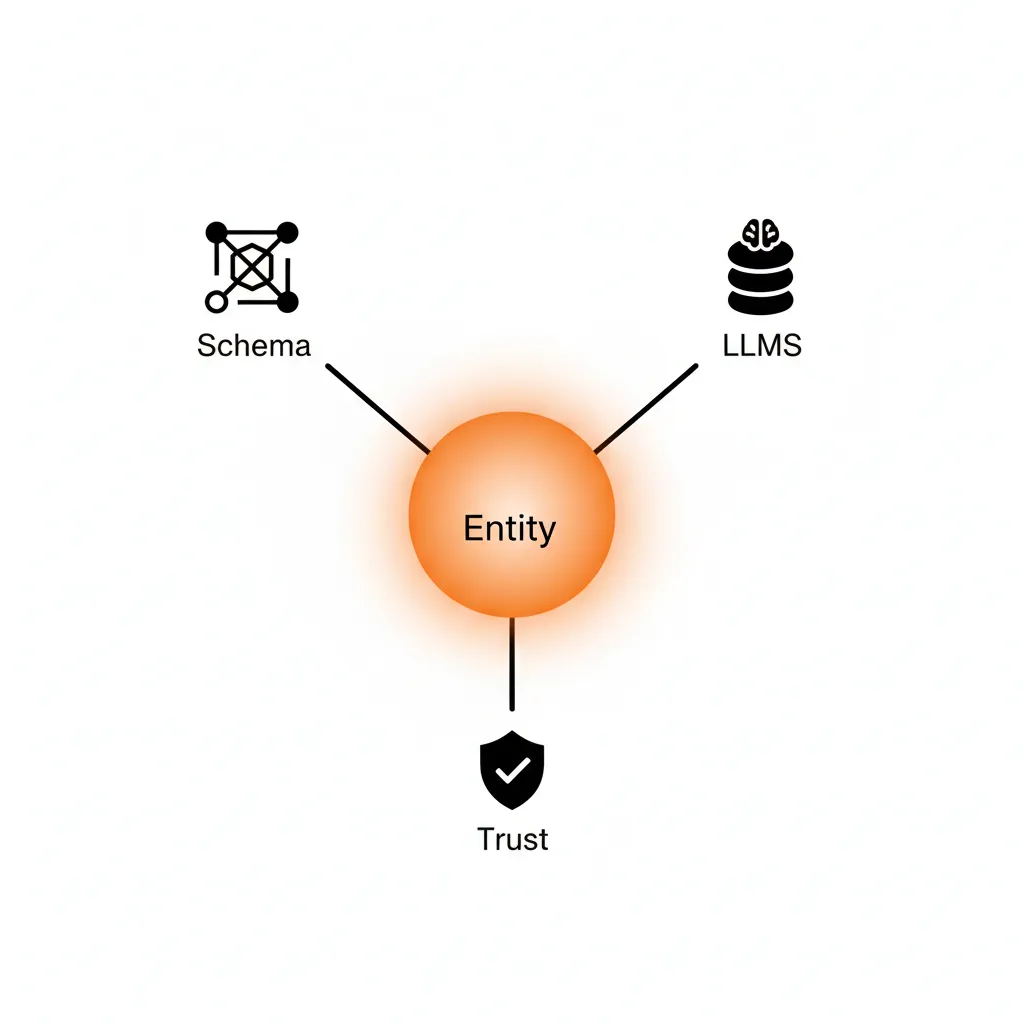
The AEO Playbook is a comprehensive roadmap for brands to optimize content for AI-driven response systems. To succeed, you must first understand the Answer Engine, which is any platform using large language models to provide direct, synthesized answers instead of a list of links. You need to identify your primary Entity, the unique person, place, or thing your brand represents in a knowledge graph. This requires implementing Schema Markup, a standardized code that helps machines understand the context of your data. Finally, you must establish E-E-A-T (Experience, Expertise, Authoritativeness, and Trustworthiness), the core evaluative framework used by both human raters and AI algorithms to judge content quality.
Why The AEO Playbook Dominates Search in 2026
By early 2026, the digital landscape has shifted toward "zero-click" interactions. According to data from Gartner, traditional search engine volume was predicted to drop by 25% by 2026 as users migrate to AI assistants. Last year, in 2025, we saw the first wave of brands lose significant organic traffic because they relied solely on 2020-era SEO tactics.
AI agents now handle the middle of the funnel. If your brand isn't part of the training set or the "live web" retrieval context, you don't exist for the modern consumer. Recent surveys by the Pew Research Center indicate that a growing majority of adults prefer direct AI summaries for complex decision-making over scrolling through blue links. Following an AEO strategy for businesses is no longer optional; it is the baseline for digital survival.
The Death of the "10 Blue Links" Paradigm
For decades, we optimized for a list. You wanted to be number one on a page of ten results. Today, the "winner-takes-all" nature of AI responses means there is often only one result—the synthesized one. If your content provides the core facts for that synthesis, you win the brand impression. If you are tucked away in a link at the bottom of the chat, you are effectively invisible. We focus on becoming the "consensus" answer that the AI trusts above all others.
A Step-By-Step Guide to Implementing the Playbook
Step 1: Entity Research and Mapping
You cannot optimize what the AI does not recognize. Start by mapping your brand’s core entities and how they relate to the problems you solve. We look at the "Knowledge Graph" to see where the gaps lie.
- Why it works: AI models think in concepts and relationships, not just keywords.
- Common mistake: Focusing on high-volume keywords without defining the underlying entity.
- Pro tip: Use tools like Google’s Knowledge Graph API to see if your brand already has a unique ID (a MID or Machine ID).
To map your entity, follow this three-step audit:
- Identify Core Nodes: List your brand, your CEO, your flagship product, and your primary service category.
- Analyze Relationship Gaps: Use a tool like Diffbot or Google’s NLP demo to see if the machines connect your brand to your industry keywords.
- Bridge the Gap: Create "About" pages for every executive and link them to their external profiles (LinkedIn, Crunchbase) to solidify the entity relationship.
Step 2: Structured Data Overhaul
In 2026, basic schema is the bare minimum. You need deep, nested JSON-LD that describes the "About" and "Mentions" properties of every page.
- Why it works: It provides a clear, machine-readable map that reduces the "hallucination" risk for AI models.
- Common mistake: Using automated plugins that generate generic, shallow schema.
- Pro tip: Use
SpeakableandFAQPageschema specifically to target voice-activated AI agents.
We recommend a "Nested Entity" approach. Instead of just telling the search engine your page is an Article, you tell it the Article is about a specific Organization and mentions a specific Service. This creates a web of context that LLMs use to verify your claims.
Step 3: Direct-Response Content Architecture
Every piece of content must include a "succinct summary" block. We structure pages with a clear hierarchy: Question H2, Direct Answer, and then the Supporting Detail.
- Why it works: Models like Perplexity and Gemini often scrape the first 50-100 words under a heading to generate their responses.
- Common mistake: Burying the lead at the bottom of a 2,000-word article.
- Pro tip: Keep your primary answer between 40 and 60 words for maximum compatibility with featured snippets and LLM context windows.
The "Inverted Pyramid" for AI
Think of your page as a press release. The most vital information belongs in the first paragraph. We use a "Definition Box" at the top of high-intent pages. This box contains a 50-word definition of the topic, formatted in a <div> with a specific CSS class. This makes it incredibly easy for an AI crawler to extract the core value without parsing your entire navigation menu or sidebar.
Step 4: Digital PR for Training Data Influence
AI models are trained on large datasets (Common Crawl, Reddit, Wikipedia). You need mentions on high-authority, third-party sites to reinforce your brand's authority.
- Why it works: Multiple citations across different high-authority domains confirm your brand’s "truth" to the model.
- Common mistake: Thinking that backlinks are only for "link juice" rather than brand verification.
- Pro tip: Focus on being mentioned in niche-specific wikis and industry databases.
Comparing Legacy SEO vs. Modern AEO
| Feature | Traditional SEO (2020) | The AEO Playbook (2026) |
|---|---|---|
| Primary Goal | High keyword rankings | Becoming the "Preferred Source" |
| Main Metric | Click-Through Rate (CTR) | Share of Model Voice (SOV) |
| Content Style | Long-form blog posts | Modular, answer-first blocks |
| Technical Focus | Page speed & Metadata | Schema & Knowledge Graphs |
| User Journey | Website visit required | Interaction often stays in the AI |
| Optimization Target | Rank Brain & BERT | GPT-4o, Claude, Gemini, Perplexity |
| Success Indicator | Position 1-3 | "According to [Your Brand]..." |
Common AEO Pitfalls to Sidestep
- Keyword Stuffing the Summary: AI models in 2026 are highly sensitive to "AI-baiting." If your summary feels unnatural or over-optimized, the model will likely skip it in favor of a more human-sounding source.
- Neglecting Brand Consistency: If your LinkedIn says one thing and your website says another, the AI sees a conflict. This lowers your trust score.
- Ignoring Citation Health: AI models often cite their sources. If you have broken links or outdated information, your "reliability score" within the model's retrieval system will tank.
- Focusing Only on Google: While Google's Gemini is huge, you must optimize for the "Big Four" (OpenAI, Google, Microsoft, Anthropic). A narrow focus leaves you vulnerable to algorithm shifts.
- Lacking Original Data: AI models love "new" information. If you are just re-hashing what is already in the training set, you provide no value to the engine. We suggest publishing one original data report per quarter.
Best Practices for High-Authority Answers
- Use Active Voice: AI summaries prefer direct, declarative sentences. "We achieved X" is better than "X was achieved by our team."
- Verify Your Facts: Use schema.org types like
ClaimReviewif you are making factual assertions. This helps search engines verify your data against trusted databases. - Optimize for Natural Language: Write how people speak to their phones. Use "How do I..." instead of "A Guide to..."
- Update Content Frequently: AI models prioritize "fresh" data from their live-web search components. A page updated three days ago will often beat a superior page updated three years ago.
- Audit Your AI Visibility: Use our AEO insights to track how often your brand appears in AI-generated answers.
Leveraging Proprietary Data for Moats
One of the best ways to secure a spot in an AI's answer is to own data that no one else has. According to Ahrefs, original data is one of the few things LLMs cannot synthesize from their own training sets. We recommend conducting customer surveys, analyzing anonymized user behavior, or running experiments. When you publish these results, you become the primary source. Other sites will quote you, and the AI will eventually see you as the "Owner" of that specific statistic.
Impact on ChatGPT, Gemini, Copilot, and Perplexity
Each Answer Engine has a different "personality" and retrieval method. ChatGPT relies heavily on its internal training data but uses Bing for live queries; it prioritizes well-cited, conversational content. Gemini has a direct line to Google’s Search Index, making technical SEO and schema even more critical there. Copilot (Microsoft) pulls heavily from the Bing Knowledge Graph, favoring structured data and LinkedIn-verified entities. Perplexity is a "pro-citation" engine; it rewards content that is easy to summarize and link back to.
Winning in these engines requires a multi-faceted approach. You aren't just ranking for a search term; you are competing for the "context window" of the user's session. If your content follows our AEO framework, these engines will treat your brand as a primary resource rather than a secondary mention.
| Answer Engine | Primary Retrieval Method | Preferred Content Format |
|---|---|---|
| ChatGPT | Bing Search + Training Data | Natural conversation, long-form depth |
| Gemini | Google Search Index | Schema-heavy, structured lists |
| Perplexity | Multi-source Indexing | Cited data points, concise summaries |
| Copilot | Bing + Office 365 Data | Professional, B2B focused entities |
"The brands that win in 2026 won't be those with the most content, but those with the most 'trustable' content in the eyes of the LLMs."
Case Study: B2B SaaS Transition to AEO
A B2B SaaS client in the FinTech space came to us in late 2024. They had thousands of high-ranking keywords but their traffic was plateauing as users moved toward AI-driven research. We implemented the AEO Playbook over a six-month period.
First, we restructured their top 50 high-intent pages using a "Question-Answer-Evidence" model. We then deployed advanced JSON-LD to link their executive team to specific industry whitepapers. By mid-2025, we saw a 40% increase in "brand mentions" within ChatGPT and Perplexity sessions. While their traditional organic traffic from Google dipped slightly (matching the global trend), their lead quality improved. The "Share of Model Voice" for their primary service category grew from 8% to 32% in one year. This resulted in a 22% increase in demo requests specifically attributed to "AI Search" in their CRM.
Essential Tools for Your AEO Arsenal
- Semrush (Paid): Excellent for tracking traditional keyword shifts and identifying "Search Generative Experience" (SGE) opportunities. It allows you to track which keywords trigger AI summaries.
- Merkle Schema Generator (Free): A simple, effective tool for creating basic JSON-LD without coding knowledge. We use it for rapid prototyping of Product and FAQ schema.
- Claude 3.5/4 (Paid/Free): Use this to test how an LLM summarizes your existing content. Paste your URL or copy-paste your text and ask: "What are the three main takeaways from this?" If it gets it wrong, your content isn't clear enough.
- Perplexity Pages (Free/Paid): Great for seeing how a dedicated Answer Engine curates information on your industry topics. It helps you see which competitors are currently winning the "citation war."
- Ahrefs (Paid): Essential for auditing your backlink profile. We use it to ensure your "mentions" are coming from high-authority nodes that AI models trust.
Testing and QA: How to Validate Your AEO Strategy
You shouldn't roll out massive content changes across a 5,000-page site without testing. We use a "Staging for AI" process. We select a cluster of 10 pages, apply the AEO Playbook changes, and wait 14 days to observe how AI engines respond.
The AEO QA Checklist
Before you push a page live, run through these checks:
- LLM "Blind" Test: Copy the text into ChatGPT and ask: "Based on this text, what is the answer to [Target Question]?" If the answer is longer than 60 words or contains errors, rewrite the summary block.
- Rich Results Test: Run the URL through Google’s official Rich Results Test. Any warning in your JSON-LD is a potential point of failure for an AI agent.
- Entity Link Verification: Ensure every
sameAslink in your schema points to a live, authoritative profile. A broken link here suggests to the AI that your entity is unverified. - Semantic Density Check: Use a tool like Clearscope or Phrase to ensure you are using the secondary terms the AI expects to see within that topic's "context window."
The Trade-offs: Where AEO Fails and What Doesn't Work
AEO is not a magic bullet. There are specific scenarios where this strategy will not yield results, and we believe in being honest about those limitations.
First, AEO does not work for "Navigational" search. If someone wants to log into their bank account or find a specific login page, they don't want an AI summary; they want a link. Over-optimizing these pages for answers is a waste of resources.
Second, AEO is less effective for highly visual industries. If you are an interior designer or a fashion brand, a text-based AI summary cannot replace a gallery of high-resolution images. While Google Gemini is multimodal, the "Answer Engine" experience is still primarily text and data-driven.
Third, AEO can actually reduce total site traffic. By providing the answer directly in the search interface, you are purposely decreasing the need for a user to click through to your site. This is a deliberate trade-off. You are trading high-volume, low-intent "browsing" traffic for high-authority "brand impressions." If your business model relies solely on ad impressions from page views, AEO might hurt your bottom line in the short term. We recommend this strategy for brands that value lead generation and authority over raw click counts.
Measuring Success in the Age of AI
You cannot measure AEO success with old KPIs alone. While you should still watch your blog traffic, you need to add these metrics:
- Brand Sentiment in LLMs: Ask ChatGPT "What are the best [Industry] services?" and see where you rank. Do this once a month and track your position.
- Citation Frequency: How often do Perplexity or Gemini link to your domain? Use a tool like BrightEdge to track these "Generative Parser" appearances.
- Answer Accuracy: Does the AI correctly state your pricing or features? If ChatGPT tells users your product costs $50 when it costs $100, you have a data contradiction issue.
Checklist for AEO Success:
- [ ] Is my site's JSON-LD error-free in the Rich Results Test?
- [ ] Does every H2 have a 50-word summary directly beneath it?
- [ ] Is my brand listed in industry-specific directories and wikis?
- [ ] Have I performed an AEO audit recently?
- [ ] Are my executive team's LinkedIn profiles linked to the company entity via schema?
The Future: AEO Beyond 2026
The next step is the rise of personal AI agents that "browse" on behalf of the user. In the coming years, your site will need to talk to these agents directly through APIs, not just through HTML. Content will become increasingly modular. We expect a shift where "pages" matter less than "data nodes."
We are already seeing the emergence of "Agentic SEO," where you optimize your site specifically for AI agents like OpenAI’s "Operator" to take actions (like booking a demo) without a human ever seeing your UI. By staying ahead of this curve today, you ensure your brand remains the definitive answer in an automated world. The Playbook is always evolving, but the core remains the same: be the most trusted, most readable, and most verified source of truth in your niche.
If you are ready to stop chasing rankings and start winning the answer, check out our AEO services to see how we can transform your digital presence.
Ready to see where you stand? [Book your free AEO audit today](/free-aeo-audit) and get a custom report on your AI visibility.
[Explore Our Full Suite of AEO Services](/services)
Frequently asked questions
What is the AEO Playbook?+
The AEO Playbook is a strategic framework used to optimize your website for AI-powered answer engines. Unlike traditional SEO, which focuses on ranking in a list of links, the playbook focuses on ensuring AI models like ChatGPT and Gemini select your brand as the definitive answer for a user's query. It involves entity mapping, structured data, and clear, modular content.
Why is AEO important for my business in 2026?+
AEO is essential because search behavior is shifting toward direct AI answers. In 2026, many users no longer click through to websites if their question is answered in the search interface. If you don't optimize for these engines, your brand loses visibility during the critical consideration phase of the buyer journey. AEO ensures you stay relevant in the AI-first era.
How does AEO differ from traditional SEO?+
Traditional SEO focuses on keywords and backlinks to rank in Search Engine Results Pages (SERPs). AEO focuses on entities, context, and structured data to be featured in AI-synthesized responses. While SEO drives traffic to your site, AEO drives your brand's presence within the AI's conversation with the user, often before they ever visit a website.
What content formats work best for Answer Engine Optimization?+
Answer Engines prioritize content that is highly structured and authoritative. To optimize, you should provide direct answers to common questions within the first 50 words of a section. Use JSON-LD schema to define your brand's entities and ensure your content is cited by other high-authority sources, which helps AI models verify your information's accuracy.
How do I measure the ROI of the AEO Playbook?+
Success is measured by 'Share of Model Voice'—how often an AI mentions your brand. You should also track citation frequency in engines like Perplexity, lead quality from AI-driven search, and the accuracy of information the AI provides about your services. Traditional metrics like organic traffic remain relevant but are no longer the only way to gauge digital success.
Does my website still need technical SEO for AEO to work?+
Yes, Answer Engines like Gemini and ChatGPT's Browse mode use live web crawling to find the most current information. If your technical SEO is poor (slow load times, no schema), these engines may struggle to find or trust your content. A strong technical foundation is the prerequisite for any successful AEO strategy in 2026.
Sources & further reading
Soft next step
Want to see where AI answers mention you — and where they don't?
We run a free AEO audit across ChatGPT, Gemini, Copilot and Perplexity, then hand you the fixes in priority order. Start your AEO strategy today.
Keep reading
Content Strategy
AEO Framework: How to Optimize for Answer Engines in 2026AEO Fundamentals
The Definitive AEO Checklist for 2026: Win the AI Search EraContent Strategy
AEO Strategy for Businesses: The 2026 Guide to AI Visibility