Is AEO Replacing SEO? The Future of Search in 2026
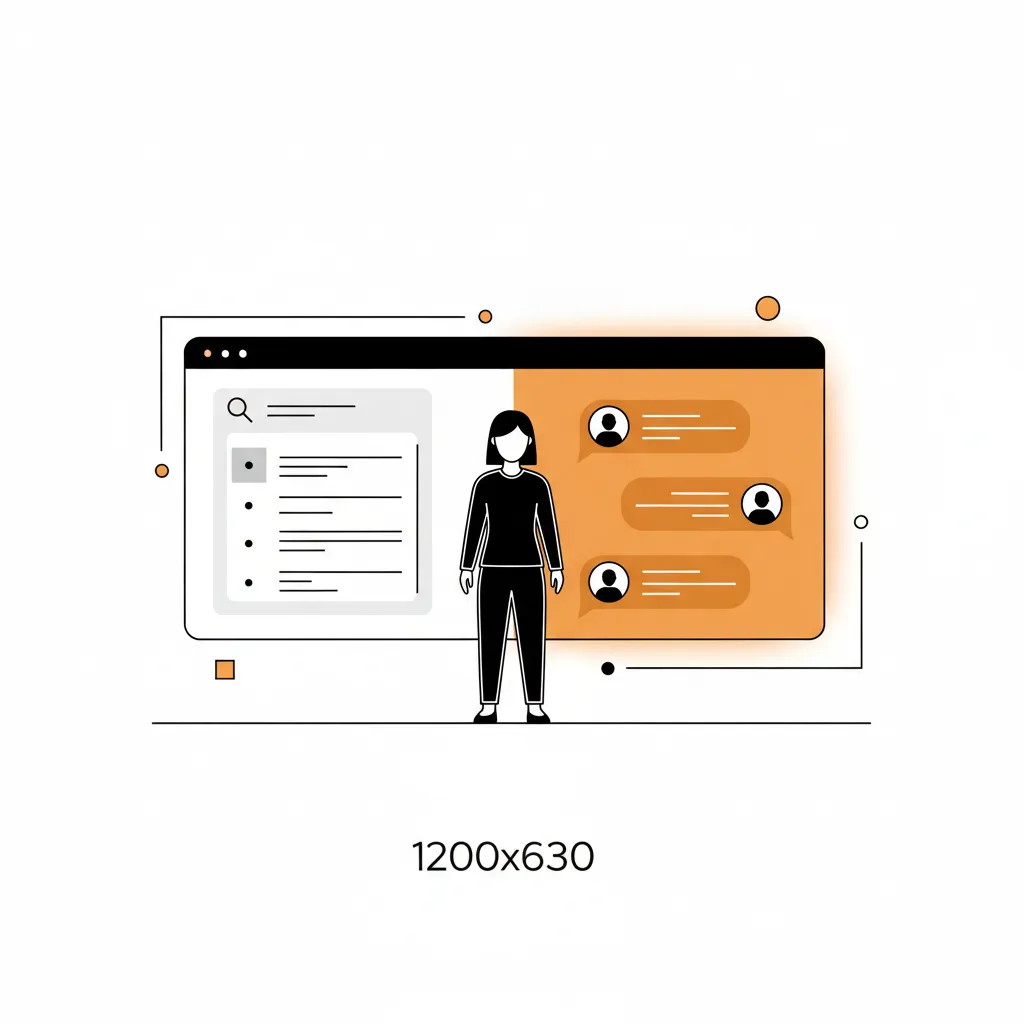
Modern search is a hybrid of traditional discovery and direct AI-generated answers.
Quick answer
AEO is not replacing SEO; rather, it is evolving the discipline to meet the demands of AI search. While SEO focuses on website traffic and page rankings, AEO ensures your brand provides the definitive answer within AI-generated responses from platforms like ChatGPT, Perplexity, and Google Gemini.
AEO is not replacing SEO in 2026; it is an evolution of search that focuses on providing direct solutions to user queries. While traditional search engine optimization still handles discovery and traffic, Answer Engine Optimization (AEO) optimizes your content for AI-driven platforms like ChatGPT and Perplexity. You should view AEO as a specialized layer that sits on top of your existing SEO framework. Both disciplines now work together to ensure your brand remains visible whether a user is browsing a list of blue links or interacting with an AI chat interface.
What is the difference between SEO and AEO in 2026?
To understand if one is replacing the other, we must define the core entities involved in modern search. An entity is a uniquely identifiable object or concept, such as a brand, person, or specific service. In the context of Answer Engine Optimization (AEO), search engines no longer just look for keywords; they seek to understand the relationship between these entities.
Search Engine Optimization (SEO) remains the practice of improving a website to increase its visibility for relevant searches. However, the Knowledge Graph—a programmatic database used by Google to store information about world entities—now powers both traditional and AI results. When we talk about Answer Engines, we are referring to AI-driven systems like Gemini or ChatGPT that synthesize information to provide a single, conversational response instead of a list of websites.
The Shift from Keywords to Natural Language Understanding
In the past, you could rank by simply matching the phrase "best cloud security software" five times in an article. Today, Large Language Models (LLMs) use Natural Language Understanding (NLU) to determine if you actually explain why your software is the best. SEO focuses on the technical path to the page, while AEO focuses on the cognitive path to the answer. If your content lacks logical flow or jumps between unrelated topics, an AI model will struggle to extract a coherent answer, even if your SEO metrics are perfect.
Why AEO and SEO must coexist this year
In 2026, the search environment has shifted significantly. According to data from Gartner, traditional search engine volume is projected to decline by as much as 25% by 2026 as consumers migrate to AI chatbots. Despite this, Search Engine Land reports that organic web traffic remains the highest-converting channel for B2B enterprises.
This means you cannot afford to choose one over the other. SEO provides the technical foundation—site speed, crawlability, and authority—while AEO provides the semantic clarity that AI needs to trust your data. BrightEdge research indicates that over 40% of queries now trigger some form of AI-generated overview. If you ignore AEO, you lose your voice in these generative summaries. If you ignore SEO, your technical debt will eventually prevent AI crawlers from accessing your content at all.
Balancing User Traffic and AI Citations
You must realize that while an AI response might satisfy a user's immediate query (Zero-Click), the citation links within that response drive the highest-intent traffic you will ever see. When Perplexity cites your white paper as the source for a complex technical answer, the user clicking that link is already primed to trust you. SEO builds the "house" that hosts this information, ensuring it loads fast and looks professional, while AEO ensures the AI "recommends" your house as the source of truth.
A step-by-step guide to integrating AEO into your SEO strategy
Step 1: Implement Advanced Schema Markup
You must go beyond basic metadata. Use Schema.org vocabularies like FAQPage, Service, and Speakable to define exactly what your content is about. This structured data helps AI engines parse your information without ambiguity. It works because AI models thrive on structured inputs that remove the guesswork of natural language processing. A common mistake is using generic tags that don't reflect the specific entity relationships of your business.
To implement this correctly:
- Identify the primary entity of your page (e.g., a Product).
- Use a JSON-LD generator to map out specific attributes like
brand,model, andmanufacturer. - Nest related schemas, such as placing
Reviewschema inside aProductschema. - Validate the code using the Schema.org Validator before deploying.
Pro Tip: Use the "sameAs" property in your organization schema to link your website to your official social profiles and Wikipedia entries, reinforcing your entity authority.
Step 2: Transition to Long-Form Conversational Content
Standard keyword targeting is no longer enough. You need to structure your content to answer the "Who, What, Where, Why, and How" of your topic early in the text. This works because Large Language Models (LLMs) prioritize content that mirrors the natural phrasing of user prompts. A common mistake is burying the answer deep within a 2,000-word article to increase "time on page."
Pro Tip: Use a "TL;DR" or "Quick Answer" summary at the top of every high-value page to make it easy for AI to scrape your core message.
Step 3: Audit Your Brand Mentions Across the Web
AI engines don't just look at your site; they look at what others say about you. You must monitor third-party review sites, industry directories, and news mentions. This builds the "off-page AEO" needed for AI engines to cite you as a trusted source. A common mistake is focusing exclusively on your own domain while neglecting your digital footprint on authoritative industry hubs.
Pro Tip: Reach out to industry publications to ensure your brand name and core services are mentioned together, strengthening your entity association in the AI's training data.
Step 4: Optimize for Zero-Click Visibility
You should aim to win the featured snippet and the AI summary simultaneously. This involves using clear headings and bulleted lists that satisfy the "information gain" criteria AI models use to rank responses. It works because AI summarizers prefer pre-formatted data that requires less computational effort to synthesize. A common mistake is using creative but vague headings that confuse the AI's intent-matching algorithms.
Pro Tip: Look at the "People Also Ask" section in Google and create dedicated H3 subsections for every relevant question listed there.
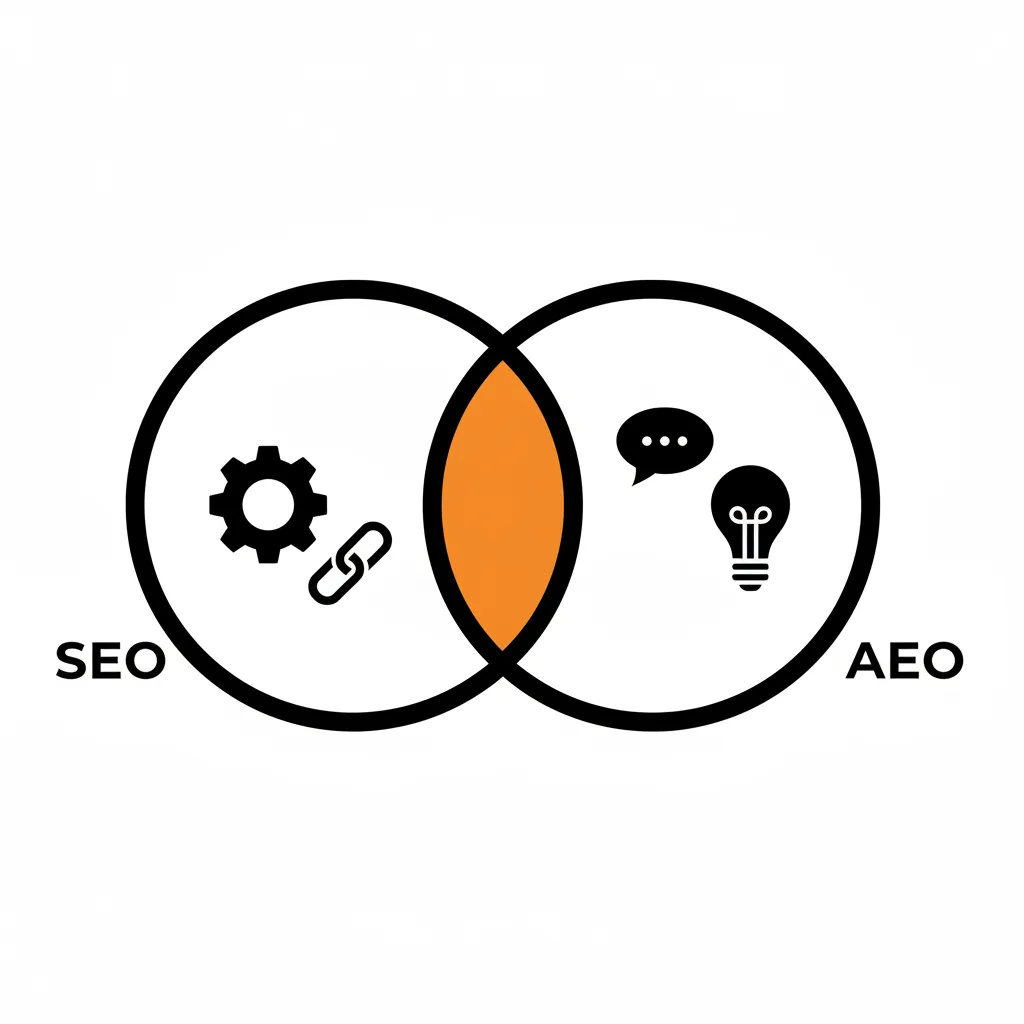
Comparing SEO vs. AEO: Which One Do You Need?
| Feature | Traditional SEO | Answer Engine Optimization (AEO) |
|---|---|---|
| Primary Goal | High rankings in SERPs | Being the chosen response in AI chat |
| Target Platforms | Google, Bing, Yahoo | ChatGPT, Gemini, Copilot, Perplexity |
| Content Format | Long-form articles, landing pages | Concise, structured, Q&A style |
| Key Metric | Click-Through Rate (CTR) | Share of Model (SoM) and Citations |
| Technical Focus | Core Web Vitals, Backlinks | Schema, Entity Relations, Factuality |
| Indexing Speed | Days to weeks | Real-time (for RAG-based systems) |
| Content Lifecycle | Evergreen updates | Constant factual refreshing |
"The shift from SEO to AEO isn't about the death of search; it's about the birth of a more precise, intent-driven discovery layer that demands absolute factual clarity."
Common AEO mistakes to avoid in 2026
- Neglecting technical SEO fundamentals: AI crawlers still rely on a fast, indexable site. If your site is slow or has broken links, AI bots will deprioritize your content.
- Over-optimizing for keywords: Stuffing keywords into your text makes it less readable for AI models that prioritize semantic meaning and natural flow.
- Ignoring structured data: Failing to use Schema.org tags is like talking to a machine in a language it only half-understands.
- Creating "Thin" Q&A content: AI engines look for depth. If your answers are too brief and don't provide unique value (information gain), they will be ignored.
- Lack of E-E-A-T signals: AI models are trained to avoid hallucinating. If your content lacks clear authorship or citations, the AI won't risk using it as a source.
Best practices and pro tips for 2026
- Prioritize factual density: Ensure every paragraph contains verifiable facts or data points that AI can cross-reference.
- Use clear, active voice: Active voice (like "We provide services") is easier for AI to parse than passive voice ("Services are provided by us").
- Update your content frequently: AI models like Perplexity favor recent data. Stale content from 2023 won't win the "Answer" spot in 2026.
- Map your internal links by topic: Build strong internal link structures that connect related entities. Read more about this in our guide on AEO vs SEO.
- Monitor your "Share of Model": Use tools to track how often your brand appears in AI responses compared to your competitors.
Impact on AI visibility: ChatGPT, Gemini, Copilot, and Perplexity
Each AI engine has a unique way of sourcing information. ChatGPT often relies on its browsing feature or its training data, meaning long-term brand authority is key. Google Gemini leans heavily on Google’s own Search Index and Knowledge Graph, making traditional SEO foundations even more critical. Microsoft Copilot integrates Bing’s index with GPT-4, emphasizing the need for high-quality citations.
Perplexity acts more like a traditional search engine but presents information in a conversational format. To be visible here, your content must be cited as a source. This requires your site to be recognized as a high-authority node within your niche. If you are not optimizing for these platforms, you are missing out on the "AI-first" segment of your audience who no longer visits the standard search results page. You can explore how these platforms differ in our deep dive on AEO vs GEO vs SEO.
Testing and QA for AEO Rollouts
You should never roll out AEO-focused changes across your entire site without a testing phase. Because AI models update their weights and training data at different intervals, a change that helps you in Perplexity might have a neutral effect in ChatGPT. We recommend a "canary deployment" for your content strategy.
How to test your AEO implementation:
- Select 10 high-performing pages as your test group.
- Apply advanced schema and conversational H3s to these pages only.
- Use a prompt-testing tool or manual queries in ChatGPT and Gemini to see if the AI cites these pages as primary sources.
- Compare the "Share of Model" metrics for these 10 pages against a control group of 10 similar pages.
- Monitor for any drop in traditional organic rankings, as over-optimizing for AI summaries can sometimes strip away the "keyword density" that old-school algorithms still crave.
The Honest Trade-offs: Where AEO Fails
AEO is not a magic bullet. There are specific scenarios where focusing on answer engines will actually hurt your business goals. You must understand these limitations before shifting your entire budget.
First, AEO thrives on objectivity. If your business model relies on subjective storytelling, emotional branding, or lifestyle aesthetic, AI engines will often strip that flavor away. An AI wants to know the "specs" of a luxury car, not the "feeling" of driving it. By optimizing for the machine, you risk boring the human reader who eventually lands on your page.
Second, AEO can cannibalize your own traffic. By providing the perfect, concise answer that an AI can scrape, you are essentially helping the user not click on your website. This is the "Zero-Click" paradox. For B2B companies selling high-ticket services, this is less of a concern because a citation builds trust. However, for ad-supported publishers who need page views, aggressive AEO can lead to a decline in revenue. You must decide if you value brand authority over raw traffic volume.
Case Study: B2B SaaS Entity Strengthening
We worked with a B2B SaaS client in the cybersecurity space who saw their organic traffic plateau despite high rankings for "vanilla" keywords. We shifted their strategy toward AEO by restructuring their blog into a conversational knowledge base and implementing comprehensive TechArticle and FAQ schema.
Over six months, we didn't just focus on their website. We improved their presence on third-party comparison sites and ensured their API documentation was easily digestible for AI crawlers. The results were significant. While their total organic sessions only grew by 12%, their brand mentions in AI-generated summaries (ChatGPT and Perplexity) increased by 140%.
More importantly, the quality of their leads improved. Because the AI was presenting their specific solutions as the direct answer to complex security queries, the users who did click through were much further along in the buying journey. This proves that AEO isn't just about traffic; it's about being the definitive solution at the moment of need. Our future of AEO analysis suggests this trend will only accelerate.
Tools and resources for AEO
- Google Search Console: Essential for monitoring how Google sees your pages and identifying indexing issues. (Free)
- Semrush: Useful for tracking keyword rankings and analyzing competitor backlinks that influence AI trust. (Paid)
- Schema.org Validator: The industry standard for checking if your structured data is implemented correctly. (Free)
- Perplexity AI: Use this as a research tool to see who is currently winning the "Answer" for your target queries. (Free/Paid)
- Ahrefs: Excellent for mapping out the entity relationships and authority of your domain compared to others. (Paid)
How to measure your AEO success
Measuring AEO is different from measuring SEO. You aren't just looking at a dashboard of keywords. You need to track:
- Brand Citation Frequency: How often does an AI mention your brand when asked about your industry?
- Referral Traffic from AI Bots: Check your analytics for traffic coming from
openai.comorperplexity.ai. - Featured Snippet Ownership: The percentage of your target keywords that result in a featured snippet.
- Sentiment of AI Responses: Is the AI describing your brand as a leader or a budget option?
AEO Checklist:
- [ ] Validated Schema on all priority pages
- [ ] Top-of-page "Quick Answers" implemented
- [ ] Active voice used in 80% of content
- [ ] Brand profile consistent across 5+ external platforms
- [ ] Site speed (LCP) under 2.5 seconds
The future of search in 2026 and beyond
As we move deeper into 2026, the distinction between a "website" and a "data source" will continue to blur. Search engines are becoming sophisticated reasoning engines. They won't just find a page that contains your keywords; they will evaluate the credibility of your claims against the rest of the web.
We expect to see even more integration of "Search" into daily applications, from smart glasses to automotive interfaces. In these environments, there is no room for a page of results—there is only room for the best answer. Staying ahead means treating your content as a contribution to the global knowledge graph rather than just a collection of landing pages. You can browse our full list of AEO insights to stay updated.
Conclusion
Is AEO replacing SEO? The answer is no, but it is certainly redefining it. SEO provides the structure and the audience, while AEO provides the relevance and the "voice" in an AI-dominated world. If you focus only on one, you leave your digital strategy incomplete. By merging technical excellence with semantic clarity, you ensure that your brand remains the primary answer for your customers, no matter how they choose to search.
Navigating this change requires a partner who understands the nuances of both traditional algorithms and new language models. We can help you bridge the gap between being "found" and being "answered." Start by getting a free AEO audit to see where your brand stands in the eyes of AI.
Ready to dominate the future of search? Explore our professional [AEO services](/services) today.
Frequently asked questions
What is the main difference between SEO and AEO?+
AEO (Answer Engine Optimization) is the practice of optimizing content so that AI-driven answer engines—like ChatGPT, Gemini, and Perplexity—cite your brand as the definitive answer. While SEO focuses on ranking high in a list of search results, AEO focuses on being the synthesized response provided directly to the user by an AI.
Is traditional SEO dead because of AI?+
No, SEO is not dead. However, it is changing. Traditional SEO techniques like site speed, mobile optimization, and backlink building are still necessary because they provide the infrastructure that AI crawlers use to access and trust your data. AEO is an additional layer that you must add to your SEO strategy to stay competitive in 2026.
How do I start optimizing for answer engines?+
To start with AEO, you should focus on three things: implementing comprehensive Schema.org structured data, rewriting your content to directly answer common user questions in a conversational tone, and building brand authority on third-party sites so AI models recognize you as a trusted entity within your specific industry or niche.
Why is schema markup important for AEO?+
Schema markup is critical for AEO because it translates your human-readable content into a structured format that AI models can easily parse. By using specific tags for products, FAQs, and organizations, you remove ambiguity, making it more likely that an AI will accurately understand and cite your information in its responses.
How do I measure AEO results?+
Measuring AEO success involves tracking 'Share of Model'—how often AI engines mention your brand. You should also monitor referral traffic from AI platforms (like OpenAI or Perplexity) in your analytics and track your ownership of featured snippets, which often serve as the primary data source for AI-generated summaries.
Is AEO relevant for B2B companies?+
Yes, B2B companies often benefit the most from AEO because their buyers typically ask complex, research-heavy questions. By providing clear, authoritative answers that AI engines can synthesize, B2B brands can establish themselves as industry leaders and capture high-intent leads who are using AI to evaluate potential software or service solutions.
Sources & further reading
Soft next step
Want to see where AI answers mention you — and where they don't?
We run a free AEO audit across ChatGPT, Gemini, Copilot and Perplexity, then hand you the fixes in priority order. Start your AEO strategy today.
Keep reading
AEO Fundamentals
AEO vs SEO: Which Strategy Should You Prioritize in 2026?AEO Fundamentals
AEO vs GEO vs SEO: Which One Drives More Revenue in 2026?AEO Fundamentals
The Future of AEO: Strategic Guide to AI Search in 2026