Avoid These Critical Mistakes: The Founder's Guide to AEO and AI Search

Modern founders must navigate the shift from simple search rankings to becoming the primary source for AI-generated answers.
Quick answer
Founders often fail at AEO by treating AI search like traditional SEO, focusing on keyword density rather than semantic relevance and entity authority. Common mistakes include ignoring structured data, neglecting brand citations across non-search platforms, and failing to provide direct, modular answers that LLMs can easily parse and synthesize for user queries.
Founders often fail at AEO by treating AI search like traditional SEO, focusing on keyword density rather than semantic relevance and entity authority. Common mistakes include ignoring structured data, neglecting brand citations across non-search platforms, and failing to provide direct, modular answers that LLMs can easily parse and synthesize for user queries.
The Evolution from Clicks to Citations
For two decades, the founder's playbook for growth was simple: identify high-volume keywords, write 1,500 words of 'good enough' content, build some backlinks, and wait for Google to send traffic. This model was predicated on the user clicking a link to find an answer. However, we have entered the era of the zero-click reality. With the rise of Search Generative Experience (SGE) and engines like Perplexity, the goal is no longer just a blue link. The goal is to be the underlying data source for the AI’s response.
Founders who treat AEO (Answer Engine Optimization) as just 'SEO with a new name' are setting themselves up for a quiet obsolescence. The underlying mechanics are different. Traditional search engines rank pages; answer engines synthesize information. If your content cannot be easily synthesized, it will be ignored, regardless of how high your 'Domain Authority' might be.
This shift moves us from a "Library Model"—where Google points you to a book—to a "Consultant Model," where the AI reads the book for you and provides a summary. If your brand is not the primary source for that summary, you are effectively invisible. The friction of the click is being replaced by the fluid nature of the conversation, and founders must realize that their website is no longer a destination; it is a repository for an AI's training data.
Why AEO Matters More in 2026
By 2026, the distinction between a 'search engine' and an 'AI assistant' will have largely evaporated. Users are increasingly asking complex, multi-layered questions that traditional search results struggle to answer without requiring the user to open multiple tabs. A user no longer asks for 'best CRM for startups'; they ask, 'Which CRM integrates with Slack, costs under $50 per user, and has the best reviews for automated lead scoring?'
If your startup’s data isn't structured to answer those specific parameters, you don't exist in that conversation. AEO is about ensuring your brand is the definitive answer to specific, high-intent queries. It is the difference between being a brand people find and being a brand AI recommends. Failure to adapt means losing the top of the funnel entirely as users migrate toward conversational interfaces. For a deeper look at the foundational elements, read our guide on ai-search-optimization.
Furthermore, the "agentic" web is coming. In 2026, AI agents will likely perform tasks on behalf of users—booking software demos, comparing pricing tiers, and vetting security compliance. If your technical documentation and pricing pages aren't AEO-ready, these autonomous agents will bypass your product simply because they couldn't verify your feature set in milliseconds.
Common Strategic Blunders Founders Make
Over-Reliance on Legacy Keywords
Many founders still obsess over 'seed keywords.' While keywords still matter for indexing, AI models operate on 'vectors'—mathematical representations of meaning. A common mistake is packing a page with 'AI software' when the AI is actually looking for semantic clusters related to 'machine learning scalability' or 'neural network efficiency.' If you don't build a semantic-search-and-aeo strategy, you’re speaking a language the models are moving past.
Vector embeddings allow LLMs to understand that "cost-effective" and "budget-friendly" are the same thing, even if the words don't match. Founders who waste time trying to "rank" for a specific string of text are missing the forest for the trees. The goal is topical dominance—demonstrating that your site understands every nuance of a specific problem space.
Ignoring the 'Entity' Concept
In the eyes of an LLM, your brand is an 'entity' with specific attributes. If your website says one thing, your LinkedIn says another, and your Crunchbase profile is outdated, the AI perceives 'low confidence' in your data. Founders often neglect their broader digital footprint, thinking only their website matters. In AEO, your presence on Reddit, GitHub, and industry-specific forums is just as important as your homepage.
An entity is a node in a knowledge graph. If Google’s Knowledge Graph or a private LLM’s weights cannot confidently link your CEO to your product and your product to a specific set of benefits, your brand authority will crumble. Consistency across the web acts as a "verification signal" for the AI.
Step-by-Step How-to: Transitioning from SEO to AEO
Step 1: Audit for Question-Based Intent
Analyze your existing search data. Instead of looking at what people type, look at what they ask.
- Why it works: AI models are trained on dialogue and queries. Aligning content with natural language questions increases retrieval probability.
- Common Mistake: Writing generic 'Ultimate Guides' that bury answers under 2,000 words of fluff.
- Pro Tip: Use tools to find 'People Also Ask' data and create dedicated H2 sections that directly mirror those questions. Structure these H2s as "What is [X]?" or "How do I [Y]?" followed immediately by a 40-60 word concise paragraph.
Step 2: Implement Advanced Schema Markup
Go beyond basic 'Article' schema. Use 'SoftwareApplication', 'FAQPage', and 'Product' schema with every possible attribute filled.
- Why it works: Schema provides the explicit metadata that AI uses to confirm facts without having to 'guess' via natural language processing.
- Common Mistake: Using automated plugins that generate thin, generic schema.
- Pro Tip: Manually audit your JSON-LD to ensure it includes
sameAslinks to your official social profiles and Wikipedia pages. Usementionsandaboutproperties to link your content to established entities in your field.
Step 3: Optimize for 'Answerability'
Structure your content so the 'answer' is at the top, followed by supporting evidence.
- Why it works: RAG (Retrieval-Augmented Generation) systems often pull 'chunks' of text. If your answer is fragmented across a page, the AI can't reconstruct it accurately.
- Common Mistake: Using 'clickbait' headings that don't reflect the content below them.
- Pro Tip: Use the 'inverted pyramid' style of journalism—essential facts first, background later. Check out our aeo-content-strategy for more details. Incorporate "TL;DR" summaries at the top of every technical page.
Step 4: Build a Citation Net
Actively seek mentions in non-traditional places like developer docs, community forums, and academic citations if applicable.
- Why it works: LLMs value consensus. If multiple diverse sources point to your brand as the expert on 'X', the AI's confidence score for your brand increases.
- Common Mistake: Focusing solely on high-DA guest posts that look like ads.
- Pro Tip: Engage in niche communities (like Hacker News or specialized Subreddits) where AI training crawlers are highly active. Natural, non-promotional mentions in these hubs carry significant weight in RAG pipelines.
Step 5: Monitor AI Citations
Use tools to see when and how AI engines like Perplexity or ChatGPT cite your site.
- Why it works: You can't improve what you don't measure. Seeing the specific context in which you are cited allows you to double down on that 'topic authority.'
- Common Mistake: Only tracking Google Search Console rankings.
- Pro Tip: Set up manual 'secret shopper' prompts in various LLMs to see if your brand is recommended for your core service offerings. If the AI is citing a competitor, analyze the competitor's structured data to see what you're missing.
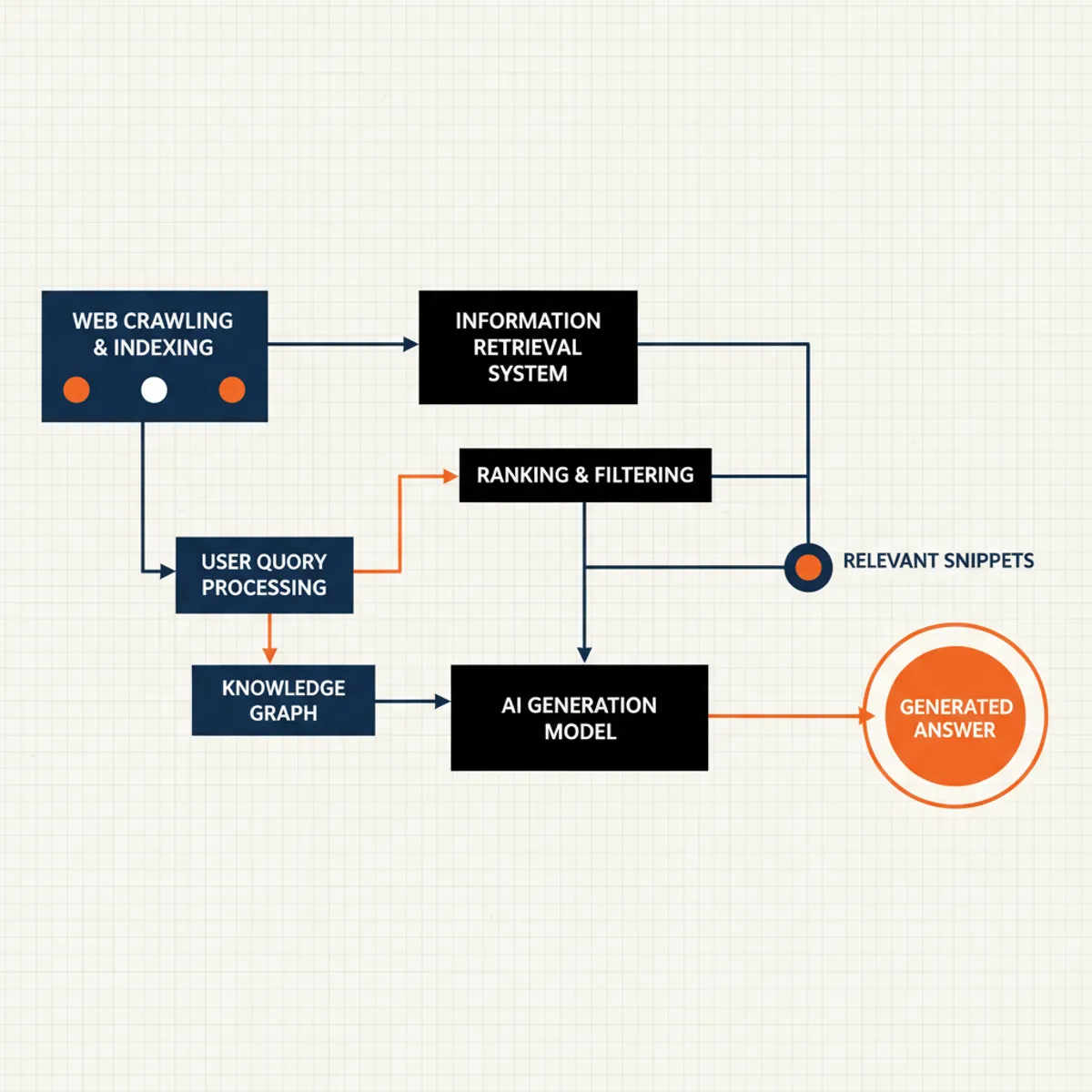
Comparison: Traditional SEO vs. AEO Strategy
| Feature | Traditional SEO | AEO (Answer Engine Optimization) |
|---|---|---|
| Primary Goal | Rank #1 for keywords | Be the cited source for AI answers |
| Metric of Success | Organic Traffic / CTR | Citation Frequency / Share of Model |
| Content Structure | Long-form, keyword-dense | Modular, factual, Q&A focused |
| Technical Focus | Crawlability & Speed | Structured Data & Entity Linking |
| User Intent | Browsing / Research | Immediate Problem Solving |
| Feedback Loop | Search Console / Analytics | Model Response Testing / RAG Analysis |
Advanced Tactics: Information Density and Retrieval Efficiency
Founders often confuse word count with value. In AEO, the most valuable content is that which has the highest information density. This means providing the maximum amount of factual, verifiable data in the minimum number of tokens.
LLMs have a context window—a limit on how much information they can process at once. When an AI search engine crawls your site to answer a user's prompt, it isn't reading your whole site; it is extracting "chunks." If your chunks are filled with marketing adjectives like "world-class," "revolutionary," or "cutting-edge," you are wasting the AI's context window.
Replace subjective adjectives with objective data. Instead of saying "Our software is incredibly fast," say "Our software processes 10,000 transactions per second with sub-50ms latency." The latter is a verifiable fact that the AI can use to compare you against a competitor. The former is noise that the AI will likely filter out.
Another advanced tactic is Semantic Triangulation. This involves creating a cluster of content that answers a question from three different angles: the technical "how-to," the strategic "why," and the economic "ROI." By covering all three, you ensure that no matter how the user phrases their query—whether they are a developer, a manager, or a CFO—the AI will find a relevant chunk of your data to satisfy the prompt.
The Pitfalls of AI-Generated Content for AEO
One of the most ironic mistakes founders make is using raw, unedited AI content to optimize for AI engines. This creates a 'circularity' problem. If you are just regurgitating what the models already know, you aren't providing new 'knowledge.' Answer engines prioritize sources that offer original data, unique insights, or primary research.
If your blog post looks exactly like a ChatGPT response, the engine has no reason to cite you. It already has that information in its weights. To be cited, you must provide Information Gain. This is the measurable amount of new information your content adds to the existing corpus of knowledge on the web. Founders should focus on publishing proprietary data, case studies with real numbers, and contrarian opinions backed by experience.
AEO is not about gaming an algorithm; it is about becoming the most reliable node in the global knowledge graph. If an AI cannot verify your claims through your structured data and third-party mentions, it will simply hallucinate a competitor into your spot.
— Amir, Founder of EvronStudio
Addressing Common Objections: Is AEO Just a Trend?
Many founders are hesitant to pivot their marketing resources, fearing that AEO is a fleeting trend or that "Google will always be king." Let’s address the three most common objections.
Objection 1: "We need the traffic. If people don't click through to our site, we can't convert them." This is a valid concern, but it ignores the reality of user behavior. Users are already not clicking. Zero-click searches have risen to over 60% in some sectors. By optimizing for AEO, you aren't "giving away" your traffic; you are capturing the brand mindshare that would otherwise go to a competitor. Furthermore, citations in AI engines often include links. A click from a Perplexity citation is a "warm" lead who has already been vetted by the AI, resulting in higher conversion rates.
Objection 2: "Structured data is too technical and time-consuming for our small team." While deep schema implementation requires effort, the cost of not doing it is the total loss of visibility. Think of structured data as the "API for your brand." You wouldn't launch a software product without an API; you shouldn't launch a website without a data layer that AI can read.
Objection 3: "AI engines just make things up (hallucinations). Why should I optimize for them?" The reason AI engines hallucinate is often a lack of high-quality, verifiable data in their retrieval pool. By providing clear, factual, and structured information, you are literally providing the "medicine" for hallucinations. You are helping the AI be more accurate, which in turn makes the AI more likely to rely on you as a trusted source.
Case Study: From Invisible to AI-Cited
In mid-2024, a Series A FinTech startup noticed that while they ranked well for 'expense management software,' they were never mentioned by Perplexity or ChatGPT when users asked for 'best expense tools for remote-first teams.' Their content was too broad and lacked structured data.
We implemented a three-month AEO pivot. First, we revamped their blog to follow a modular Q&A format. Second, we deployed comprehensive 'Product' and 'Organization' schema. Third, we initiated a 'source-building' campaign on professional forums like Stack Overflow and specific Reddit communities.
The Results:
- AI Citations: Increased from 0 to 14 citations across major LLM-based search tools for their core niche within 90 days.
- Referral Traffic: A 22% increase in traffic specifically from 'ai.perplexity.ai' and similar referrers.
- Conversion Rate: Users coming from AI citations converted at a 3x higher rate than standard organic search. This is because the AI had already "sold" the user on the product's specific benefits before they even landed on the site.
- Search Share: The company began appearing in Google SGE (Search Generative Experience) panels for complex queries like "How to automate remote employee reimbursements in the UK," a query they previously had zero presence for.
Essential Tools for the AEO-Focused Founder
To avoid these mistakes, you need a different tech stack than the one you used in 2020.
- Schema App: For scaling complex, interconnected structured data without manual coding errors. This is vital for avoiding common-schema-mistakes.
- Diffbot: This tool uses computer vision and NLP to "see" your site the way an AI does. It helps you understand if your site's knowledge graph is coherent.
- Perplexity Pro: Essential for manual testing. Founders should spend at least an hour a week asking Perplexity questions about their industry to see who the AI is recommending and why.
- Google Search Console (URL Inspection): To ensure that Google’s 'Rich Result' crawlers are seeing your schema correctly. If GSC shows errors in your Merchant or FAQ schema, an AI will likely ignore that data.
- Semrush (Sensor) / BrightEdge: These tools are beginning to track "Generative Engine Optimization" metrics, showing you how often AI-generated summaries appear for your target keywords.
Measurement Metrics: Beyond the Click
How do you know if your AEO strategy is working? You must look at 'Share of Model.' This is a new concept where you track how often your brand appears in the top 3 citations for a set of 50 core industry questions.
Metric 1: Citation Volume Track how many times your URL is cited in the footnotes of AI responses. Tools like Claude or Perplexity are increasingly consistent in their sourcing.
Metric 2: Semantic Proximity Use vector analysis tools to see how "close" your brand name is to your target category (e.g., "Cybersecurity" or "SaaS HR") in the latent space of major models.
Metric 3: Sentiment and Factuality Score Ask LLMs to "summarize the reputation of [Your Brand]." If the AI mentions specific features or recent awards, your AEO signals are working. If it gives a vague or outdated answer, your entity authority is weak.
Checklist for Founders:
- [ ] Does every top-performing page have a clear 50-word summary?
- [ ] Is your JSON-LD valid and rich with
sameAsattributes? - [ ] Have you checked your brand’s 'sentiment' in the training data (Reddit/Twitter)?
- [ ] Are you providing data tables and lists that AI can easily scrape?
- [ ] Is your site speed fast enough for real-time retrieval systems (RAG)?
- [ ] Do you have a "Source Policy" that ensures all claims are backed by external or proprietary data?
The Road Ahead: AEO as a Competitive Moat
The founders who succeed in the next five years will be those who stop chasing the algorithm and start feeding the models. AEO is not a shortcut; it is a commitment to data integrity and authority. In a world where AI-generated noise is exploding, the most valuable asset a founder has is a "Verifiable Truth."
By avoiding the common mistakes of thin content, poor structure, and siloed brand presence, you can ensure your startup remains the 'answer' in an increasingly automated world. The goal is to move from being a brand that fights for attention to a brand that is the foundation of the AI's intelligence.
AEO is not merely a marketing tactic; it is a survival strategy for the cognitive age. As AI agents become the primary interface through which the world interacts with the internet, your visibility depends entirely on your ability to be parsed, understood, and trusted by a machine.
Ready to see where your brand stands? Visit our services page or request a free-aeo-audit to start building your AI search presence today. Don't wait until your competitors have already claimed the top spot in the LLM citations. The window for establishing entity dominance is closing, and the time to act is now.
Frequently asked questions
What is the biggest difference between SEO and AEO?+
SEO focuses on driving traffic to a specific URL through keyword rankings, whereas AEO focuses on providing factual, synthesizable data that AI models use to generate direct answers. In AEO, the goal is to be the 'trusted source' cited by the AI, prioritizing semantic intent over exact-match keywords and structured data over meta-descriptions.
Do I still need traditional SEO if I focus on AEO?+
Yes, AEO builds upon a foundation of strong technical SEO. AI models often use search engine indices to retrieve information. If your site isn't crawlable, fast, or mobile-friendly, it likely won't be indexed by the retrieval systems that feed into Large Language Models (LLMs) like Claude or GPT-4o.
How does schema markup impact AI search results?+
Schema provides a machine-readable context that helps AI understand the relationship between entities. By explicitly defining products, people, and organizations, you reduce the 'hallucination' risk for the AI, making it more likely to accurately cite your brand as a source for specific industry questions or solutions.
Why is brand mentions outside of my website important for AEO?+
AI models are trained on vast datasets including Reddit, GitHub, and news outlets. If your brand is only mentioned on your own site, the AI lacks third-party validation. Cultivating mentions across authoritative industry platforms creates a 'knowledge graph' that signals to the AI that your brand is a credible authority.
Can I optimize for specific AI tools like Perplexity?+
While you cannot 'force' a specific ranking, you can optimize by monitoring how Perplexity cites sources. Using clear headings, bulleted lists, and transparent data points makes it easier for their RAG (Retrieval-Augmented Generation) systems to extract your content and present it as the definitive answer.
Is AEO more expensive than traditional SEO?+
AEO requires a higher investment in high-quality, research-backed content and technical implementation like advanced JSON-LD. However, the cost of being invisible in AI search is far higher. Founders should view AEO as a long-term brand equity play rather than a low-cost traffic acquisition tactic.
Sources & further reading
Soft next step
Want to see where AI answers mention you — and where they don't?
We run a free AEO audit across ChatGPT, Gemini, Copilot and Perplexity, then hand you the fixes in priority order. Start your AEO strategy today.