Common Schema Mistakes to Avoid for Better AEO Performance
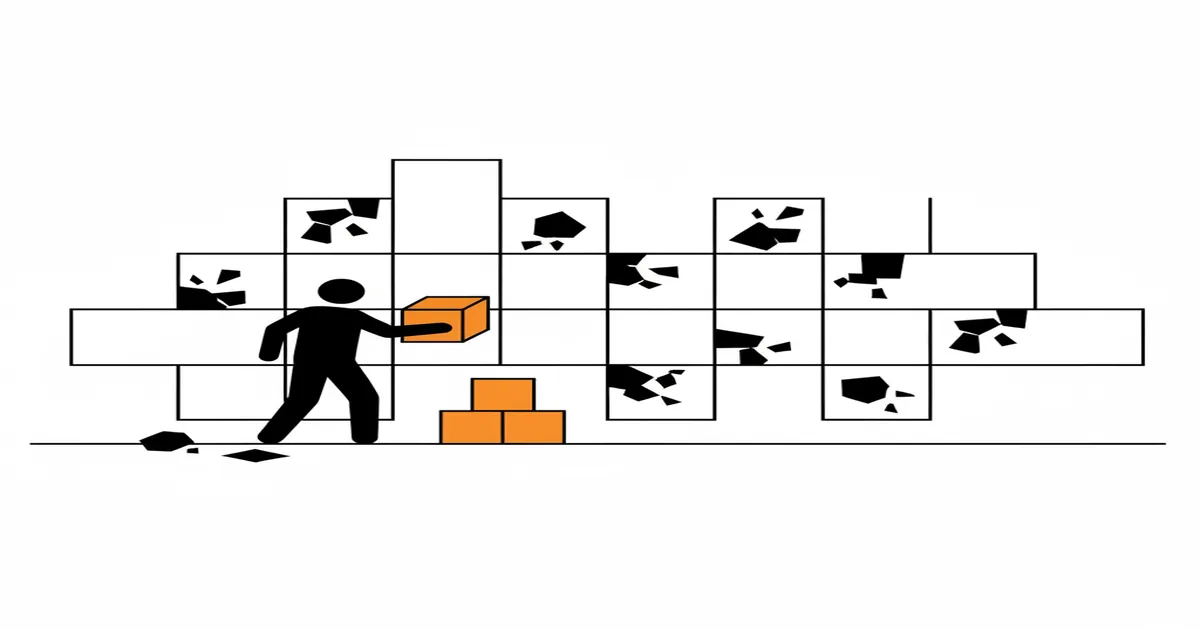
Eliminating technical schema errors is the first step toward winning in AI-driven search.
Quick answer
Common schema mistakes include using the wrong Schema.org types, omitting required properties, and failing to nest entities correctly. Most sites also struggle with data drift, where on-page content contradicts the JSON-LD code. Correcting these errors ensures AI agents like ChatGPT and Gemini can accurately parse your data.
Common schema mistakes usually stem from improper nesting, using deprecated types, and failing to align JSON-LD data with visible page content. By 2026, these errors do more than just hurt your rich snippets; they actively prevent Large Language Models (LLMs) from indexing your brand as a trusted authority. To win in the age of Answer Engine Optimization, you must ensure your structured data is technically perfect, semantically rich, and logically connected to your broader knowledge graph. This guide identifies the most frequent pitfalls and provides a clear roadmap to fix them for better visibility across ChatGPT, Perplexity, and Google Search.
Why Technical Accuracy Matters for AEO in 2026
Last year, in 2025, we saw a massive shift in how search engines and AI assistants process information. According to Gartner, search engine volume for traditional queries is projected to drop significantly as users shift toward conversational AI. For your business, this means your Schema Markup—a standardized language used to provide explicit clues about a page's meaning—is now the primary source of truth for AI agents.
In 2026, Answer Engine Optimization (AEO)—the process of optimizing content for AI-driven discovery—relies heavily on the Knowledge Graph, which is a programmatic representation of facts and relationships. If your JSON-LD (JavaScript Object Notation for Linked Data) contains errors, AI models like Gemini or Claude may hallucinate facts about your business or, worse, ignore you entirely. Recent data from Search Engine Land suggests that over 40% of enterprise sites still contain at least one critical structured data error that prevents entity recognition.
When an LLM scans your site, it looks for "triples"—a subject, a predicate, and an object. If your code is broken, the AI cannot form these triples. This results in a "low confidence" score. AI assistants are risk-averse; they rarely recommend a business if they cannot verify its core facts through structured data. Technical accuracy isn't just about SEO anymore. It is about your brand’s survival in a world where users ask questions instead of typing keywords.
How to Audit and Fix Your Structured Data
Step 1: Validate Your Existing Code
The first step is identifying what is currently broken. Use the Google Rich Results Test and the Schema.org Validator to check your current URLs. What to do: Run your top-performing pages through these tools to find syntax errors. Why it works: It provides an immediate list of red flags. Common mistake: Only checking your homepage while ignoring deep service pages. Pro tip: Use a crawler like Screaming Frog to audit schema at scale across your entire site.
To perform a deep audit, follow this mini-procedure:
- Export your top 100 pages by organic traffic from Google Search Console.
- Bulk upload these URLs into a schema validator.
- Look for "Warning" messages, not just "Errors." Warnings often indicate missing recommended fields that AEO models love.
- Document the specific line numbers where syntax fails.
Step 2: Align Markup with On-Page Content
Your structured data must reflect what a human reader sees. What to do: Ensure every field in your JSON-LD, such as "price" or "availability," matches the text on the screen. Why it works: Google and OpenAI use this alignment as a trust signal. Common mistake: Updating your prices in the CMS but forgetting to update the hard-coded schema. Pro tip: Use dynamic schema generation that pulls directly from your product database to prevent "data drift."
Step 3: Implement Proper Entity Nesting
Entities should not exist in isolation. What to do: Use the "mainEntity" property to link a webpage to a specific product or service. Why it works: Nesting tells AI that "this review" belongs to "this specific product" owned by "this organization." Common mistake: Placing multiple top-level objects in one script block without defining their relationship. Pro tip: Use the @id attribute to create unique identifiers for your entities, allowing them to be referenced across different pages.
Step 4: Add Semantic Depth with SameAs
Tell AI agents exactly who you are by linking to authoritative profiles. What to do: Include the sameAs property in your Organization schema, pointing to your LinkedIn, Wikipedia, or official social profiles. Why it works: This bridges the gap between your site and the global knowledge graph. Common mistake: Linking to dead social profiles or irrelevant third-party directories. Pro tip: Only link to "canonical" profiles that you actively maintain.
Step 5: Test for AI Interpretability
Standard validators only check for syntax, not meaning. What to do: Copy your JSON-LD and paste it into a prompt for ChatGPT, asking "What does this code tell you about my business?" Why it works: It reveals if an LLM can actually extract the intended "facts." Common mistake: Thinking a "green check" in Google Search Console means your AEO is finished. Pro tip: Focus on the "description" and "disambiguatingDescription" fields to provide extra context for AI.
The Nuances of Multi-Entity Pages
When a page lists several products or team members, many developers create separate, disconnected blocks of JSON-LD. This is a missed opportunity. Instead, use a ItemList or CollectionPage schema to show the AI how these items relate to one another. For instance, a "Meet the Team" page should nest each Person within the Organization using the employee property. This creates a cohesive "Who's Who" for your brand that AI can easily parse.
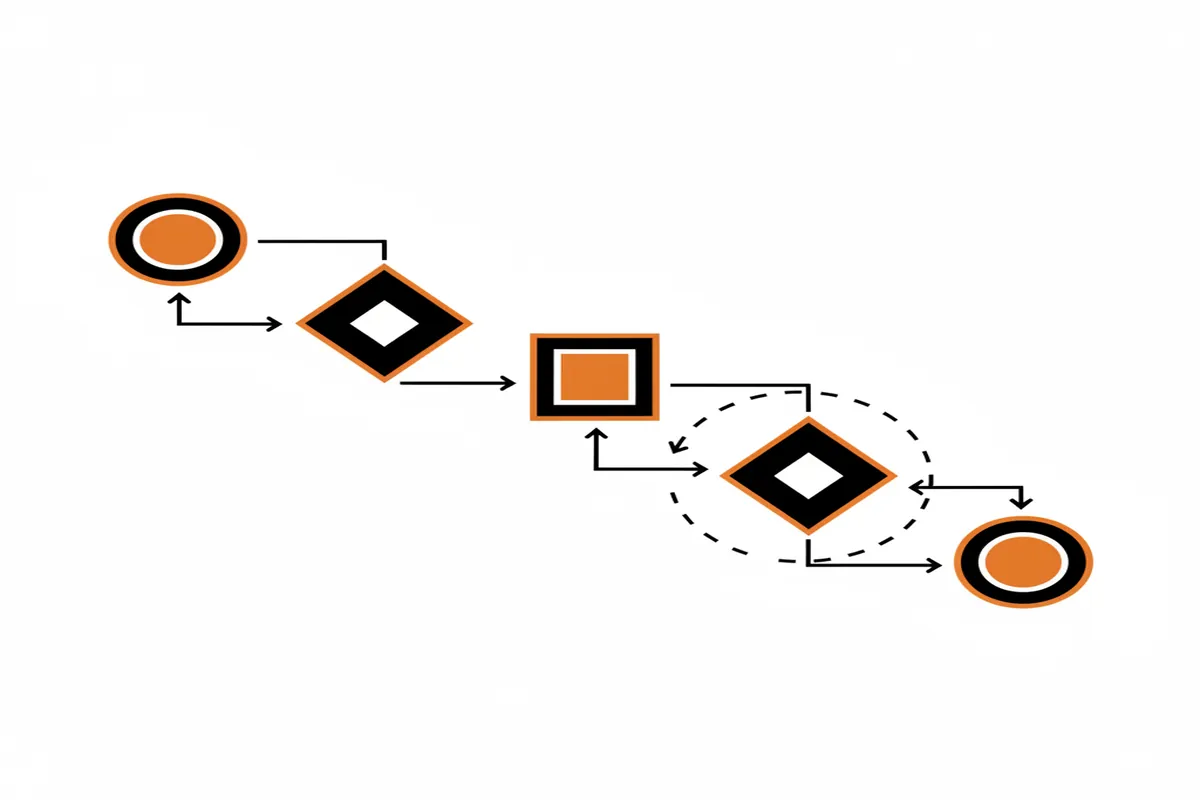
Common Schema Mistakes vs. AEO Best Practices
| Feature | Common Mistake | AEO Best Practice | Impact Level |
|---|---|---|---|
| Nesting | Flat, disconnected entities | Nested, hierarchical logic | High |
| Content Match | Outdated or invisible data | 100% match with visible UI | Critical |
| Image URLs | Relative paths or low-res | Absolute URLs (WebP/SVG) | Medium |
| Organization | Missing on inner pages | Referenced via @id globally | High |
| Context | Using generic 'Thing' types | Using specific 'Service' types | High |
| Review Sync | Hardcoded aggregate scores | Dynamic, real-time API sync | Medium |
5 Common Mistakes to Avoid
- Using the wrong Schema Type: Many sites use
WebPagewhen they should useService,Product, orSoftwareApplication. This prevents the AI from categorizing your business correctly. - Missing Required Properties: Google might only "warn" you about missing fields, but for AEO, those missing fields represent lost context. Always aim for "Recommended" fields, not just "Required" ones.
- Duplicate Entity Definitions: Defining your brand differently on every page confuses the knowledge graph. Define your
Organizationonce and reference it everywhere else using a unique URL ID. - Hidden Schema Data: Don't mark up content that is hidden from the user (like text in a collapsed div that never opens). This can be seen as "schema spam" and lead to manual actions.
- Broken JSON Syntax: A single missing comma or bracket can invalidate your entire script. Always use a linter before deploying code to production.
The Perils of Automated Plugin Bloat
We see many B2B sites relying on generic WordPress or Shopify plugins that "auto-generate" schema. While these are convenient, they often inject generic data that lacks the nuance needed for AEO. For example, a plugin might tag your white paper as a BlogPosting instead of a DigitalDocument. This tells the AI your research is just a casual update rather than an authoritative asset. Manual oversight is required to ensure these tools are pulling the correct metadata and applying the right semantic labels.
Best Practices and Pro Tips
- Use @id for Canonical Entities: Assign a permanent URL to your main brand entity (e.g.,
https://yourdomain.com/#organization) to maintain consistency across the web. - Prioritize Specificity: If you are a dentist, use
Dentistinstead ofLocalBusiness. The more specific the type, the better the AI can match you to niche queries. - Leverage Product Ontologies: For complex B2B services, use
additionalTypeto link to a Product Ontology (ProductOntology.org) for hyper-specific definitions. - Keep Code Lean: While detail is good, avoid bloated JSON-LD that slows down page load. Focus on the most impactful entities.
- Monitor Search Console Daily: The "Unparsable structured data" report in GSC is your first line of defense against site-wide technical failures.
Connecting the Dots with Wikidata
One of the most powerful moves you can make is connecting your internal schema to external knowledge bases. Use the sameAs property to link your company’s founder to their Wikidata entry or their specific author profile on a major industry publication. This allows AI agents to "triangulate" your authority. They see your site says you are an expert, and they see Wikidata confirms your history. This verification loop is the heartbeat of modern Answer Engine Optimization.
Impact on ChatGPT, Gemini, and Perplexity
In 2026, AI models no longer just "crawl" the web; they "reason" through it. ChatGPT and Perplexity use your schema to build a mental map of your expertise. When a user asks, "Who is the best RevOps agency for SaaS?" the AI looks for structured evidence of your "Service" area, "Review" ratings, and "Award" recognitions.
If your schema contains the common mistakes mentioned above—like broken links or vague entity types—the AI's confidence score in your brand drops. Conversely, a clean, error-free implementation of schema markup for AEO acts as a fast-pass for these models. It allows them to bypass the ambiguity of natural language and get straight to the facts. This is why our aeo-insights consistently emphasize technical precision as the foundation of visibility in the "Answer Engine" era.
Research from Ahrefs shows that while most pages have some form of schema, only a fraction use advanced nesting. Those that do tend to appear more frequently in "AI-generated overviews." The AI isn't just reading your words; it is interpreting your data structure to determine how much it can trust you.
"Structured data is no longer a 'nice-to-have' SEO tactic; it is the fundamental API through which your business communicates with the world's most powerful AI models."
Real-World Case Study: Fixing Schema for a B2B SaaS
We worked with a mid-market B2B SaaS client in the fintech space that was struggling to appear in Perplexity's "Sources" despite having high-quality blog content. Our initial audit revealed several common schema mistakes, including inconsistent Organization data and a total lack of SoftwareApplication markup on their core product pages.
We implemented a comprehensive AEO schema markup implementation guide strategy. This involved:
- Consolidating four different brand definitions into a single, canonical
@id. - Adding
aggregateRatingandoffersdata to their product pages. - Linking their key executives to their professional profiles via
Personschema andsameAslinks.
Within four months, the client saw a 45% increase in "brand mentions" within AI chat interfaces and a 22% lift in organic traffic from traditional search engines. By cleaning up their technical debt, they made it easier for AI agents to trust and recommend their software to potential buyers. This demonstrates that AEO isn't just about new content; it is about making your existing data readable for machines.
Tools and Resources for Schema Management
- Google Rich Results Test: (Free) The industry standard for checking if your page supports rich snippets.
- Classy Schema: (Paid/Free tier) An excellent visual editor for building complex, nested JSON-LD without writing code manually.
- Schema.org Validator: (Free) The official tool for checking syntax against the full Schema.org vocabulary.
- Screaming Frog SEO Spider: (Paid) Essential for auditing schema at scale and finding missing markup across thousands of URLs.
- Merkle Schema Generator: (Free) A simple, user-friendly tool for generating basic local business and FAQ schema.
How to Measure Success
You can't just set it and forget it. To track the impact of your schema fixes, monitor these three key areas:
- Rich Result Impressions: Check Google Search Console's "Search Appearance" report. You should see a steady climb in impressions for "Product snippets" or "FAQ snippets."
- Entity Visibility: Use a tool like Kalicube or Semrush to see if your brand's Knowledge Panel is expanding or becoming more accurate.
- AI Referral Traffic: Monitor your analytics for referrals from
chatgpt.com,perplexity.ai, andgemini.google.com.
Your Schema Success Checklist:
- [ ] No syntax errors in the Schema.org Validator.
- [ ] JSON-LD matches visible text on the page.
- [ ] All main entities have a unique
@id. - [ ] High-authority social profiles are linked via
sameAs. - [ ] The page passes our AEO checklist for technical health.
Testing and QA: The Pre-Deployment Protocol
Before you roll out new schema across your entire site, you must have a rigorous QA process. Errors at scale can lead to your site being "de-indexed" from rich results, a penalty that can take months to reverse.
Start by deploying your code to a staging environment. You should then follow this verification sequence:
- Syntax Check: Use a JSON linter to ensure every bracket and comma is in place.
- Schema.org Alignment: Pass the code through the Schema.org validator to ensure you aren't using deprecated terms.
- Google Readiness: Use the Rich Results Test to confirm Google can actually "read" the data for its own features.
- Visual Verification: Check your staging site's front end. Ensure the dynamic data (like prices or dates) matches the schema code exactly.
If you are using a CMS like HubSpot or Salesforce, check how the schema renders after the page finishes loading. Some JavaScript-heavy sites defer the injection of schema, which can sometimes lead to search bots missing the data entirely. Ensure your JSON-LD is in the static HTML or renders quickly enough for the crawler's initial pass.
The Trade-Offs: Where Schema Fails
It is important to be honest: schema is not a magic wand. There are scenarios where perfect schema won't save a page, or might even cause friction. First, if your underlying content is low-quality or AI-generated garbage, perfect schema will simply help search engines identify and ignore your site faster. You cannot wrap a "How-To" schema around a nonsensical article and expect to rank.
Second, there is a risk of "over-optimization." If you mark up every single word as an entity, you create noise. AI models are getting better at parsing natural language; if your schema is too bloated, it may actually slow down the crawling process. Focus on the core 20% of your data that drives 80% of the value.
Finally, schema can sometimes lead to "Zero-Click" searches. By providing all the answers in the search results or AI interface, you might see your website traffic decrease even as your brand awareness increases. You must decide if being the "source of truth" in an AI chat is more valuable to your business than a direct click to your website. For most B2B firms, the answer is yes—authority leads to trust, which leads to high-value leads down the line.
The Future of Schema in 2026 and Beyond
As we move deeper into 2026, the complexity of structured data will only increase. We expect to see new Schema.org types specifically designed for AI training transparency and "Proof of Human" content. The "Common Schema Mistakes" of today—like simple syntax errors—will become automated fixes for most CMS platforms. The real competitive advantage will lie in Semantic Schema, where you provide deep, interconnected context that helps AI understand the "why" behind your business, not just the "what."
We are also seeing a shift toward "Graph-based" schema. Instead of individual pages having their own isolated code, websites will serve a unified knowledge graph file. This "manifest" will tell AI assistants everything they need to know about a brand in one place. Staying ahead of this curve requires a move away from "SEO hacks" and toward true data architecture.
Conclusion
Correcting common schema mistakes is the most immediate way to improve your digital authority. By moving away from flat, disconnected data and toward a rich, nested knowledge graph, you ensure that both search engines and AI agents can find and trust your brand. Don't let a missing comma or an outdated price stand between you and a featured answer in ChatGPT.
If you aren't sure where your technical gaps are, we can help. Request a free AEO audit today to see how your site measures up against the latest AI indexing standards. To fully transform your digital presence for the future of search, explore our comprehensive Answer Engine Optimization services and let our experts build a data strategy that wins.
Ready to dominate the answer engines? [View our Services](/services) and let's get started.
Frequently asked questions
What are the most common schema mistakes businesses make?+
The most frequent errors include using incorrect Schema.org types (like 'Thing' instead of 'Product'), missing required fields like 'price' or 'author', and having syntax errors in the JSON-LD code. Additionally, many sites suffer from 'data drift,' where the code says one thing and the page content says another. Fixing these is vital for AI recognition.
How does incorrect schema affect my AI visibility?+
In 2026, AI engines like ChatGPT and Gemini use schema as a direct source of truth. If your code is broken, these models may ignore your content or provide inaccurate summaries to users. Properly structured data builds 'Entity Authority,' making it easier for AI to recommend your business as a trusted answer to complex user queries.
Which tools should I use to find schema errors?+
Google's Rich Results Test is great for seeing how your page appears in search, but the Schema.org Validator is better for checking technical compliance with the entire vocabulary. For AEO, we recommend using both. Additionally, try pasting your JSON-LD into an LLM to see if the AI correctly interprets your business details.
What is data drift and why is it a problem for AEO?+
Data drift happens when your structured data isn't synced with your CMS. For example, your schema might list a product as 'In Stock' while the page says 'Out of Stock.' AI models view this as a lack of transparency, which can lower your trust score. Always ensure your JSON-LD is dynamically updated alongside your content.
Why is entity nesting important in structured data?+
Nesting is the practice of connecting related entities within your code. Instead of having separate blocks for a 'Product' and a 'Review,' you should nest the review inside the product. This tells AI exactly what the review is for. Without nesting, AI agents struggle to understand the relationships between different pieces of information on your page.
Should I use the same schema on every page of my site?+
Yes, we recommend a 'One Entity per Page' approach. Use the 'mainEntity' property to define the primary subject of the page. Then, use unique '@id' tags to reference your 'Organization' or 'Author' entities. This prevents duplication and creates a clean, readable knowledge graph for search engines and AI models to follow.
Sources & further reading
Soft next step
Want to see where AI answers mention you — and where they don't?
We run a free AEO audit across ChatGPT, Gemini, Copilot and Perplexity, then hand you the fixes in priority order. Start your AEO strategy today.