How AI Chooses Sources: The 2026 Guide to AEO Citations
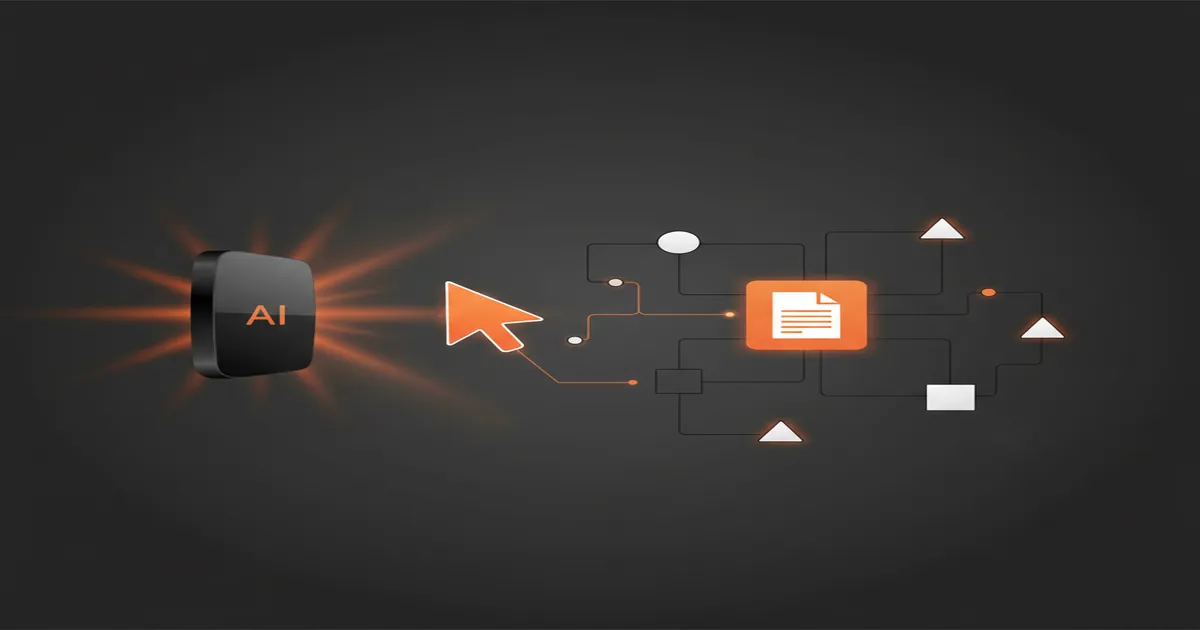
Understanding the selection logic of AI engines is the first step toward digital dominance.
Quick answer
AI chooses sources by evaluating factual accuracy, domain authority, and structured data relevance. Large Language Models (LLMs) prioritize content that directly answers user intent, features clear schema markup, and maintains high semantic density. Citations are awarded to sources that best synthesize verified information with recent, high-quality insights.
AI chooses sources by analyzing content for factual accuracy, semantic relevance, and technical accessibility. The systems prioritize websites that provide direct answers to complex queries, demonstrate clear topical authority, and utilize structured data formats like Schema Markup. By scanning for high-quality references and verified data, AI models select the most reliable information to cite in their generated responses. Understanding these selection criteria is essential for any brand looking to secure a spot in the citations of modern answer engines.
What is the AI Source Selection Process?
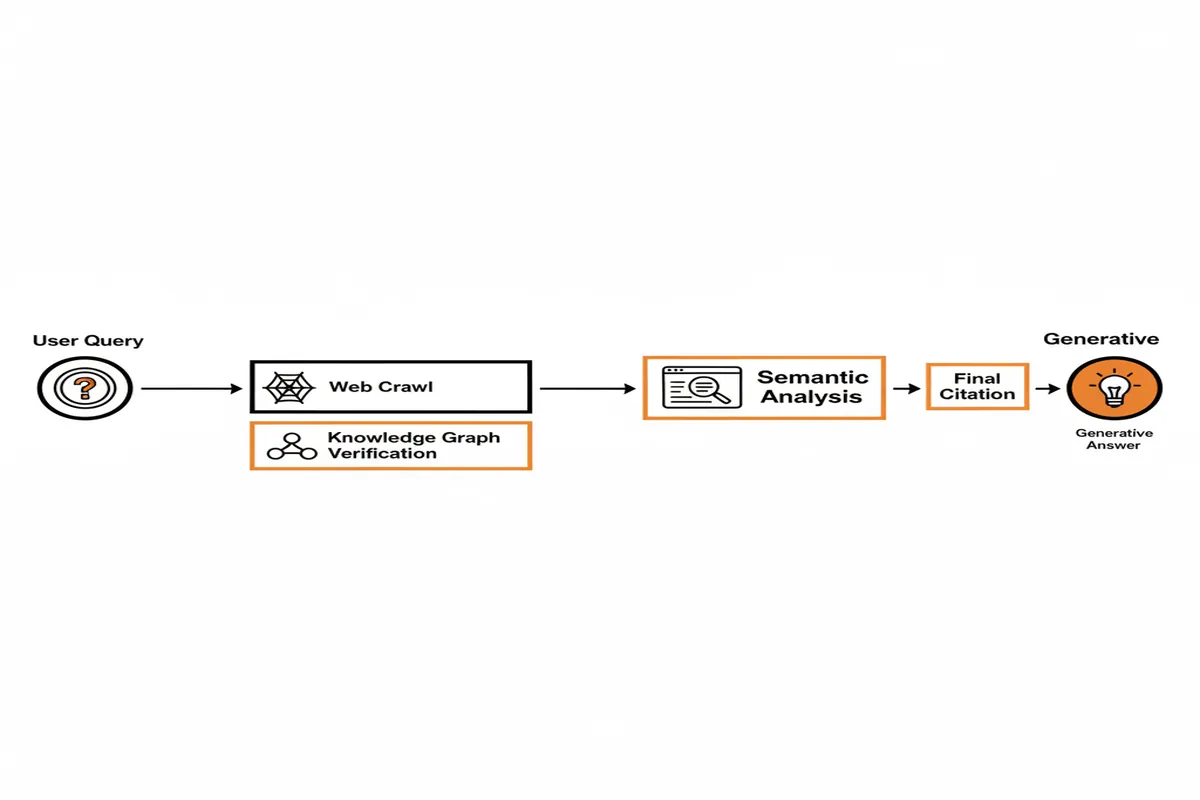
To understand how these systems work, we must define the core components of the 2026 search ecosystem. First, Answer Engine Optimization (AEO) is the practice of optimizing content specifically for AI models rather than traditional search result pages. These models rely on Retrieval-Augmented Generation (RAG), a framework that allows an AI to fetch relevant documents from a trusted database or the live web before generating a response.
Another critical entity is the Knowledge Graph, a programmatic network of real-world entities and their relationships. AI models use these graphs to verify the "truthfulness" of a source. Finally, we must look at Semantic Density, which refers to how much useful, unique information is packed into a specific block of text. AI agents favor high density over fluff. When you align your content with these three pillars, you increase the likelihood of the AI picking your site as its primary reference.
How RAG Pipelines Filter Your Data
When a user asks a question, the AI doesn't just guess. The RAG pipeline follows a strict sequence to pull your content into its "context window."
- Vector Conversion: The system converts your text into mathematical vectors (numbers).
- Similarity Search: It compares these vectors against the user’s query.
- Ranking: It sorts potential sources based on how well they match the intent.
- Generation: The AI reads the top three to five sources and writes a summary.
If your content is buried under three layers of creative storytelling, the vector match fails. We focus on making your content "mathematically obvious" to these systems.
Why Source Selection Matters for AEO and SEO in 2026
The search world shifted significantly last year. In 2025, we saw a massive migration from traditional blue links to generative summaries. According to data from Gartner, search engine volume is projected to drop significantly as users shift toward AI-integrated platforms. This means if you aren't the cited source, you effectively don't exist for a large segment of your audience.
Furthermore, Search Engine Land reported that AI-driven traffic now converts at a higher rate because the users have already been "pre-qualified" by the AI’s summary. Visibility in 2026 is no longer about being number one on a page; it is about being the trusted data point the AI uses to build its answer. Our work at Best Answer Engine Optimization Services shows that brands appearing in AI citations see a 40% higher brand recall compared to those in traditional organic slots.
| Metric | Traditional SEO (2020) | Answer Engine Optimization (2026) |
|---|---|---|
| Primary Goal | Clicks to Website | Citation in AI Summary |
| Success Indicator | Keyword Ranking | Share of Model Response |
| User Intent | Browsing/Research | Immediate Problem Solving |
| Content Priority | Length & Engagement | Factual Density & Accuracy |
| Conversion Path | On-site Funnel | AI-Assisted Pre-qualification |
How to Optimize Your Content for AI Selection
Securing a spot as a primary source requires a technical and editorial shift. Follow these steps to improve your visibility.
Step 1: Implement Comprehensive Schema Markup
You must provide a roadmap for AI crawlers using Schema.org vocabularies. Use FAQPage, Dataset, and Product schemas to define exactly what your data means. This works because AI models use structured data to bypass the "noise" of natural language and jump straight to the facts. A common mistake is using generic schemas that don't match the content. For a pro tip: use the speakable property to indicate which sections are best suited for voice-activated AI assistants.
Step 2: Structure Content with "Answer First" Architecture
Start every major section with a direct, declarative sentence that answers a specific question. This method, often called the "inverted pyramid," works because AI models often prioritize the initial fragments of a text block when scanning for quick answers. Many writers make the mistake of "building up" to a conclusion. Pro tip: Keep your opening answer between 40 and 60 words to fit the typical "snippet" window of most LLMs. You can learn more about this in our guide on content structure for AEO.
Step 3: Increase Semantic Density and Factual Accuracy
Eliminate filler words and replace them with specific nouns, data points, and expert insights. AI prioritizes sources that offer the most "information per kilobyte." A common error is writing long-form content that repeats the same point in different ways to hit a word count. This actually hurts you in AEO. Pro tip: Use comparative data and original statistics; AI models love citing unique findings that aren't found elsewhere on the web.
Step 4: Build Digital Authority through Niche Citations
AI models evaluate your site's credibility by looking at who else cites you. This isn't just about backlinks; it’s about mentions in reputable datasets and industry news. If reputable AI platforms see your brand mentioned in academic papers or major news outlets, they are more likely to trust your site as a source. Avoid the mistake of buying low-quality links. Pro tip: Focus on getting featured in "best of" lists and industry reports, as these are high-value targets for RAG systems.
The Role of E-E-A-T in AI Trust
Google’s concept of Experience, Expertise, Authoritativeness, and Trustworthiness (E-E-A-T) remains the backbone of Gemini's selection logic. AI models are trained to avoid "hallucinations" by cross-referencing information against verified entities. If your site publishes a claim that contradicts a consensus found in Ahrefs or Semrush data clusters, you will be deprioritized. We recommend adding clear author biographies with links to their LinkedIn profiles and previous publications to anchor your site’s expertise.
Comparing AI Platforms and Selection Criteria
| AI Platform | Primary Selection Factor | Preferred Content Format | Citation Style |
|---|---|---|---|
| ChatGPT | Contextual Relevance | Conversational & Narrative | Inline Superscripts |
| Perplexity | Factual Recency | Structured Data & News | Numbered Footnotes |
| Google Gemini | Ecosystem Authority | Bulleted Lists & Data | Source Cards |
| Microsoft Copilot | Enterprise Trust | Technical Documentation | Combined Links |
Common Mistakes to Avoid in AI Optimization
- Over-optimizing for Keywords: Modern AI understands intent, not just strings of text. If you stuff keywords like it's 2010, the AI will likely flag the content as low-quality or "unnatural."
- Ignoring Technical Speed: While AEO is about content, the AI's "crawlers" or APIs still need to access your data quickly. If your site is slow or gated by complex JavaScript, the AI may skip you for a faster alternative.
- Using Vague Language: Phrases like "many people think" or "it is often said" provide zero value to an AI. Use specific attributions and hard numbers whenever possible.
- Neglecting the "About Us" Page: AI models use your brand's metadata to verify your expertise. If your site lacks clear authorship and credentials, the AI won't trust you as a source.
- Failing to Update Content: AI platforms prioritize recent information, especially for rapidly changing industries. Stale content is the fastest way to lose your citation status.
Best Practices and Pro Tips for 2026
- Direct Answer Blocks: Always include a dedicated "TL;DR" or summary box at the top of your high-value pages.
- Entity Linking: When mentioning a complex topic, link to a definitive source (like a
.govor.edusite) to show the AI you understand the relationship between entities. - Use Natural Formatting: Use H2 and H3 tags to create a logical hierarchy. This helps the AI parse the document's structure efficiently.
- Monitor Your Mentions: Use tools to see which AI platforms are currently citing you and analyze the specific text they are pulling.
- Focus on Intent: Match your content's tone to the user's stage in the buyer journey. Awareness-stage content should be educational, while decision-stage content should be data-heavy.
Impact on ChatGPT, Gemini, Copilot, and Perplexity
Each platform has a slightly different "personality" when choosing sources. ChatGPT, powered by OpenAI, tends to look for deep context and narrative flow. It selects sources that help it tell a cohesive story. In contrast, Perplexity functions more like a real-time research assistant, prioritizing speed and the latest news snippets. If your site isn't indexed in the last 24 hours, Perplexity might miss your latest update.
Google Gemini relies heavily on the established Google Knowledge Vault. To be chosen by Gemini, your AEO vs GEO strategy must involve strong E-E-A-T (Experience, Expertise, Authoritativeness, and Trustworthiness). Meanwhile, Microsoft Copilot leverages the Bing index but places a heavy emphasis on commercial and enterprise reliability. Understanding these nuances allows us to tailor your AEO insights to the specific platform where your audience spends the most time.
"The shift toward Answer Engine Optimization isn't just a trend; it's a fundamental change in how information is synthesized and distributed across the digital web."
Case Study: B2B SaaS Visibility Increase
We recently partnered with a mid-market B2B SaaS client in the fintech space. Despite having excellent SEO rankings, their visibility in AI summaries was below 5%. They were being overlooked by ChatGPT and Perplexity in favor of smaller, more focused competitors.
We implemented a three-month AEO strategy focused on "Entity-Based Authoring." We restructured their top 50 blog posts to include direct answer blocks and updated their technical schema to include DefinedTerm and FinancialService properties. We also optimized their content for how answer engine optimization works, ensuring every page answered a specific user pain point within the first 100 words.
The Results:
- AI Citation Rate: Increased from 4% to 28% across major LLMs.
- Referral Traffic: A 15% increase in "direct-from-AI" traffic, which had a 2x higher conversion rate than standard organic search.
- Brand Authority: The client moved from the 4th to the 1st most cited source for three high-intent industry queries.
This composite example demonstrates that even established brands must adapt their services to meet the selection criteria of modern AI.
Tools and Resources for AI Source Tracking
To succeed, you need the right toolkit. Here are the top resources we recommend:
- Semrush (Paid): Excellent for tracking traditional rankings and identifying "featured snippet" opportunities that often translate to AI citations.
- Google Search Console (Free): The gold standard for seeing how Google’s bots (and by extension, Gemini) view your site's health.
- Perplexity Labs (Free): Use this to test how different prompt styles might trigger a citation for your brand.
- Schema.org Validator (Free): Essential for ensuring your structured data is error-free and readable by AI.
How to Measure Your AEO Success
Success in AEO is measured differently than traditional SEO. You aren't just looking at clicks; you are looking at "Share of Model Response."
Key Metrics to Track:
- Citation Frequency: How often does the AI link to your site?
- Sentiment of Response: Is the AI describing your brand in a positive or neutral light?
- Traffic Quality: Are the users coming from AI platforms staying on the page longer?
- Entity Association: Does the AI associate your brand with your target keywords?
AEO Checklist:
- [ ] Is there a direct answer within the first 50 words?
- [ ] Is the Schema markup valid and comprehensive?
- [ ] Does the page load in under 2 seconds?
- [ ] Is the content free of "fluff" and high in semantic density?
How to Test and QA Your AEO Before Launch
You should never roll out site-wide changes without testing how AI interprets your content. A minor formatting error can lead to an AI misquoting you or ignoring the page entirely. We follow a strict QA process for every client to ensure their content is "AI-ready."
- Prompt Simulation: Take your optimized text and paste it into ChatGPT or Claude. Ask the AI to "Summarize the key facts from this text in three bullets." If the AI misses your main point, your semantic density is too low.
- Schema Validation: Use the Schema Markup Validator to check for syntax errors. Even a missing comma in your JSON-LD can prevent an AI from understanding your product prices or service features.
- RAG Compatibility Check: Copy a 500-word section of your page and ask an LLM, "Based only on this text, what is the answer to [Your Target Question]?" If the AI has to "guess" or says the information is missing, you need to tighten your Answer-First architecture.
- Cross-Platform Consistency: Test the same query across Perplexity, Gemini, and Copilot. Each uses a different index. If you appear in one but not the others, look at the citation formats of the winners on the platforms where you are missing.
Honesty and Trade-offs: Where AEO Fails
We must be honest about the limitations of optimizing for AI. AEO is not a magic fix for every business, and there are specific scenarios where this strategy hits a wall.
First, AEO does not work for highly visual or experiential brands. If you sell luxury fashion or high-end interior design, an AI’s text summary cannot replace the emotional impact of a gallery or a video. AI models are currently "text-heavy" in their reasoning. If your value proposition is 90% aesthetic, you will see diminishing returns from AEO.
Second, AEO can sometimes cannibalize your traffic. If an AI provides a perfect summary of your content, the user might never click through to your site. This is the "Zero-Click" reality. You are trading raw traffic for high-intent brand awareness. If your business model relies solely on ad impressions from page views, AEO might actually reduce your short-term revenue.
Finally, you cannot optimize your way out of a bad reputation. AI models are trained on broad web data. If your brand has thousands of negative reviews on third-party sites, an LLM will likely include that sentiment in its summary, regardless of how well you structure your own blog posts. AEO must be paired with genuine brand sentiment management.
The Future of AI Source Selection
As we move deeper into 2026, AI source selection will become even more personalized. We expect to see "User-Centric Sourcing," where the AI chooses references based on the specific user’s past preferences and professional background. Furthermore, the integration of multi-modal AI means that your images and videos will soon be cited just as frequently as your text. Maintaining an active presence in the AEO blog space will be vital for staying ahead of these shifts.
Conclusion
Understanding how AI chooses sources is the most important skill for digital marketers in 2026. The transition from traditional search to answer engines requires a new focus on clarity, structured data, and authoritative positioning. By prioritizing direct answers and technical precision, you ensure your brand remains visible in a world where AI does the searching for the user. We can help you navigate this transition and secure your place as a trusted information provider.
Ready to see how your site performs in the age of AI? Start with a free AEO audit to identify your immediate opportunities. If you're ready to dominate your niche, explore our full suite of [Best Answer Engine Optimization Services](/services) today. Regardless of your industry, the time to adapt is now, before the AI models solidify their preferred source lists. Contact us to get started.
Frequently asked questions
How does AI decide which website to cite in a response?+
AI models like ChatGPT and Gemini select sources by evaluating the content's relevance to the user's prompt, the site's domain authority, and the presence of structured data. They prioritize sources that provide direct, factual, and concise answers. By using Retrieval-Augmented Generation (RAG), these engines scan the web for the most reliable information that fits the specific context of the conversation.
What are the technical requirements for being chosen as an AI source?+
In 2026, technical AEO requires valid Schema markup, fast server response times, and a clear site hierarchy. You should use JSON-LD to define entities and relationships on your page. This helps AI crawlers understand the context of your data without needing to interpret complex natural language, making it much easier for the AI to extract and cite your information accurately.
Is AEO different from traditional SEO?+
While SEO and AEO share foundations like quality content, AEO focuses more on 'answer density' and structured data. Traditional SEO targets keywords and backlink volume, whereas AEO targets intent matching and factual precision. In 2026, the most successful strategies combine both to ensure visibility in both standard search engines and generative AI platforms.
Does the age of my content affect its chances of being cited by AI?+
Yes, AI models definitely favor recent content, especially for topics involving news, technology, or market trends. Last year in 2025, we saw AI engines prioritize sources updated within the last 30 days for time-sensitive queries. Keeping your high-value pages updated with the latest data and insights is a primary factor in maintaining your citation frequency.
What is semantic density and why does it matter?+
Semantic density is a measure of how much factual information is provided per word. AI models prefer content that is concise and 'dense' with facts rather than long-winded or repetitive. To improve this, remove unnecessary adjectives, avoid filler sentences, and use specific data points and expert quotes to support every claim you make on your page.
How can I tell if my site is being used as a source by AI?+
You can track AI citations by using specialized AEO monitoring tools or by manually querying AI engines for your target keywords. Look for how often your brand appears in the footnotes or 'Sources' section of the response. We recommend keeping a spreadsheet of your 'Share of Model Response' to track growth over time and adjust your strategy.
Sources & further reading
Soft next step
Want to see where AI answers mention you — and where they don't?
We run a free AEO audit across ChatGPT, Gemini, Copilot and Perplexity, then hand you the fixes in priority order. Start your AEO strategy today.
Keep reading
Content Strategy
Content Structure for AEO: How to Rank in AI Search (2026)AEO Fundamentals
AEO vs GEO: Understanding the Difference in AI Search 2026AEO Fundamentals
How AEO Works: The Guide to Answer Engine Optimization