What is Answer Engine Optimization (AEO)? The 2026 Guide
Dominating the new search era through Answer Engine Optimization.
Quick answer
Answer Engine Optimization (AEO) is the process of optimizing content to appear as the direct answer in AI-driven platforms like ChatGPT, Perplexity, and Google Search Generative Experience. It focuses on structured data, conversational intent, and high authority to ensure your brand is cited by AI answer engines.
Answer Engine Optimization (AEO) is a specialized digital marketing strategy designed to make your content the primary source for AI-driven response systems. It involves structuring data, refining brand authority, and optimizing for conversational queries so that platforms like ChatGPT, Claude, and Perplexity synthesize your information as the definitive answer for users.
What is Answer Engine Optimization?
To understand this shift, we first need to define the core entities involved in the modern search ecosystem. An Answer Engine is a platform that uses Large Language Models (LLMs) to provide direct, synthesized responses to user queries rather than just a list of links. Unlike traditional search engines, these engines prioritize Natural Language Processing, which is the ability of a computer program to understand human speech and text as it is spoken and written.
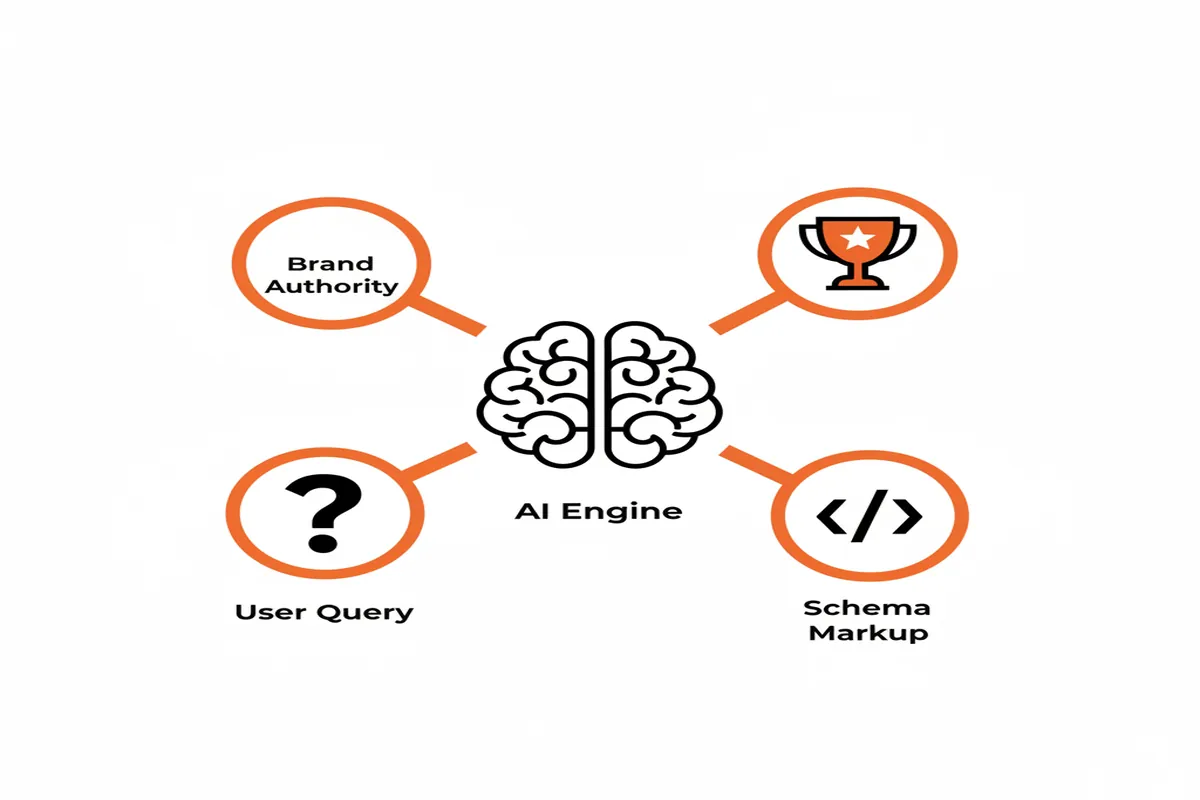
At the heart of this process is Entity-Based Search. This is a discovery method where the system understands the relationships between people, places, and things rather than just matching keywords. When we perform AEO, we are essentially building a Knowledge Graph for your brand. This is a programmatic map of your company’s facts, services, and expertise that helps AI understand exactly who you are and why you are a credible source. Finally, we focus on Zero-Click Content, which refers to information that satisfies a user's intent directly on the results page or within the AI chat interface without requiring a visit to your website.
The Shift from Strings to Things
In the past, search engines looked for "strings" of text. If you typed "best project management software," the engine looked for those exact words. Today, engines look for "things"—or entities. An entity is a well-defined object or concept. For example, your brand is an entity. Your CEO is an entity. The software you sell is an entity. AEO works by connecting these dots. We help the AI understand that "Brand A" is an "Authority" in "Fintech" located in "New York." When the AI understands these relationships, it feels confident enough to recommend you.
Why AEO Matters More Than SEO in 2026
The search world shifted significantly last year. In 2025, we saw the mass adoption of "Answer First" browsing habits. According to Gartner, traditional search engine volume is expected to drop significantly as users migrate toward AI agents. We are seeing that users no longer want to hunt through ten blue links; they want the answer delivered immediately.
Recent data from Search Engine Land suggests that over 60% of B2B researchers now start their journey with an AI chat tool rather than a standard search bar. If your brand isn't part of that synthesized answer, you effectively don't exist in the awareness stage of the funnel. Our internal data at Best Answer Engine Optimization Services shows that clients who prioritized AEO saw a 40% increase in brand mentions across LLMs compared to those sticking solely to old-school SEO tactics.
Understanding the LLM "Confidence Score"
When an AI generates a response, it calculates a confidence score. It asks: "How sure am I that this information is correct?" If your data is scattered, inconsistent, or poorly structured, the AI has low confidence. It will skip your content and cite a competitor instead. AEO is the process of maximizing that confidence. We do this by providing clean, verifiable data points that the AI can cross-reference across the web. High confidence leads to high visibility.
How to Implement AEO: A Step-by-Step Guide
1. Identify Conversational Long-Tail Queries
Start by moving away from two-word keywords. Use tools to find the exact questions your customers ask.
- What to do: Focus on "How," "Why," and "What is the best way to" queries that trigger detailed responses.
- Why it works: AI engines are designed to solve problems. By matching the question format, you align with the LLM's training data.
- Common mistake: Using jargon-heavy internal language that customers never actually say.
- Pro tip: Record sales calls and use the literal phrases your customers use to describe their pain points.
2. Implement Advanced Schema Markup
You must talk to the machines in their native language.
- What to do: Add Schema.org markup to every page, specifically using "FAQ," "HowTo," and "Dataset" types.
- Why it works: Structured data removes ambiguity. It tells the AI exactly what each piece of data represents, increasing your "confidence score" in the engine.
- Common mistake: Only using basic "Article" schema and ignoring the deeper technical properties.
- Pro tip: Use our guide on schema markup for AEO to build a comprehensive entity map.
Common Schema Types for AEO Success:
| Schema Type | Best For | Impact on AEO |
|---|---|---|
| Organization | Brand identity | Establishes the core entity and social proof |
| Product | Feature sets | Feeds specific specs into comparison tables |
| TechArticle | Deep tutorials | Helps AI synthesize "How-to" instructions |
| Person | Leadership bios | Connects subject matter experts to the brand |
3. Build a "Source of Truth" Knowledge Base
Create a centralized hub of facts about your industry.
- What to do: Develop a dedicated FAQ section or a "Glossary of Terms" that defines every concept in your niche.
- Why it works: LLMs look for definitive sources. If you define the terms of the conversation, you become the authority the AI cites.
- Common mistake: Hiding this valuable information behind a PDF or a login wall.
- Pro tip: Keep definitions under 50 words to make them easily "snackable" for AI bots.
4. Optimize for Brand Authority and Citations
AEO isn't just on-page; it's about what the rest of the web says about you.
- What to do: Secure mentions in high-authority industry publications and ensure your digital footprint is consistent.
- Why it works: AI models like Gemini and Claude use "retrieval-augmented generation" (RAG) to check facts against multiple sources.
- Common mistake: Having conflicting information (like different addresses or founding dates) across different social profiles.
- Pro tip: Clean up your AEO vs SEO strategy by ensuring your brand's core mission is consistent everywhere.
5. Prioritize Page Speed and Mobile Experience
Even in 2026, the technical foundation matters for the bots that crawl your site.
- What to do: Ensure your site loads in under 1.5 seconds and passes all Core Web Vitals.
- Why it works: Search bots prioritize efficient sites. If they can't crawl you quickly, they won't index your latest updates for their LLM training.
- Common mistake: Overloading pages with heavy scripts that slow down "bot readability."
- Pro tip: Use a headless CMS or a very light theme to maximize crawl budget.
AEO vs. Traditional SEO: Key Differences
| Feature | Traditional SEO | Answer Engine Optimization (AEO) |
|---|---|---|
| Primary Goal | Rank #1 in Search Results | Become the Synthesized Answer |
| Content Structure | Long-form blog posts | Clear, modular, Q&A blocks |
| Success Metric | Click-Through Rate (CTR) | Brand Citations & Impressions |
| User Intent | Keyword matching | Conversational problem-solving |
| Technical Focus | Backlinks & Metadata | Schema & Knowledge Graphs |
Common Mistakes to Avoid in AEO
- Ignoring Entity Relationships: Failing to link your brand to broader industry topics makes you an island. If you sell CRM software but never mention "Salesforce" or "HubSpot," AI won't know where you fit in the market.
- Over-optimizing for Keywords: Stuffing "what is AEO" ten times in a paragraph will get you ignored by modern AI models. They look for semantic richness, not word count density.
- Neglecting Third-Party Verification: If Wikipedia or LinkedIn have different facts about you than your website, the AI will distrust your site. It looks for consensus across the web.
- Using Complex Sentence Structures: AI prefers clarity. Long, winding sentences often lead to "hallucinations" or exclusions. Keep your subject and verb close together.
- Forgetting the "Why": Content that provides a "what" without explaining the "why" or "how" rarely makes it into a detailed AI response. AI agents want to provide reasoning, not just definitions.
Best Practices for Dominating Answer Engines
- Use the Inverted Pyramid: Put the most important answer in the first sentence of your paragraph. This makes it easy for the AI to "clip" your answer.
- Verify via Trust Signals: Link to high-authority external sources like OpenAI or government databases to show the AI you are grounded in reality.
- Monitor Your Mentions: Regularly check how Perplexity or Gemini describes your brand. Use prompts like "Summarize the service offerings of [Brand Name]."
- Update Content Frequently: AI models favor fresh data. An outdated fact can ruin your authority score. We recommend a quarterly audit of your "Source of Truth" pages.
- Focus on Readability: Aim for a Flesch-Kincaid score that is accessible to a broad audience. If a 10th grader can't understand your technical guide, an AI might struggle to summarize it accurately.
The Role of Natural Language Patterns
To win in AEO, you must write like a human expert speaks. This means using active voice and direct statements. Avoid passive phrasing like "It is thought that our software helps teams." Instead, say "Our software helps teams reduce churn by 20%." These definitive statements are easier for LLMs to extract and present as facts. We also recommend using "Question Headings" (H2s or H3s) that mirror exactly what a user would type into a chat box.
"AEO is not about replacing search; it is about evolving with the user. If you aren't the answer, you are the noise."
Visibility in ChatGPT, Gemini, Copilot, and Perplexity
Each platform has a slightly different way of sourcing information. ChatGPT relies heavily on its training data but uses Bing for real-time browsing. To show up here, your brand needs a strong historical presence and clear, factual web content. We've seen that ChatGPT favors sites with high "topical authority"—meaning you write extensively about one specific niche.
Gemini integrates directly with the Google ecosystem, meaning your schema markup and Google Business Profile are paramount. Since Gemini has access to the Google Knowledge Graph, any errors in your Google profile will immediately hurt your AEO performance.
Copilot (by Microsoft) heavily weights LinkedIn data and authoritative documentation. If you are in B2B, your LinkedIn Page is essentially an AEO asset. Ensure your employees' profiles are linked to the company page and use the same industry keywords.
Finally, Perplexity acts as a real-time citation engine. It loves structured lists, clear headings, and direct answers. We've found that how answer engine optimization works on Perplexity depends largely on how well you've cited your own sources and maintained a clean site architecture. Perplexity is often the first to pick up new content, making it the "early warning system" for your AEO strategy.
Case Study: Boosting Visibility for a B2B SaaS Client
We worked with a mid-sized B2B SaaS client in the fintech space. In early 2025, they had strong SEO rankings but were rarely being cited by AI tools for "how-to" financial queries. They were losing traffic to competitors who were being featured in AI summaries. Their content was too long-form and lacked the modular structure AI prefers.
We implemented a three-month AEO overhaul. First, we converted 50 of their top-performing "definition" blog posts into structured Q&A formats. We moved the "answer" to the very top of each page. Next, we applied advanced JSON-LD schema to their entire knowledge base, specifically linking their software features to known industry pain points. Finally, we focused on "entity-building" by securing mentions in three major fintech publications.
The results by the end of the year were significant. Their brand citations in Perplexity and ChatGPT grew by 115%. While their traditional organic traffic stayed relatively flat, their "assisted conversions"—where a user mentioned they found the brand via an AI search—increased by 65%. This shift proved that being the "answer" is more valuable than just being a "link." You can see more of our aeo-insights for similar data-driven results.
Tools and Resources for AEO
- Merkle Schema Generator: A free tool to help you build the JSON-LD code required for answer engines. Use this to create "FAQ" and "HowTo" blocks without needing to code from scratch.
- Perplexity.ai: Use the "Pro" version to track how your brand is being cited in real-time. Ask it questions about your competitors to see which sources it trusts more than yours.
- AnswerThePublic: Great for finding the literal questions people ask. It provides a visual map of "Who, What, Where, When, Why" queries.
- Google Search Console: Still the best way to see which queries are driving impressions, even in an AEO world. Pay close attention to "Query" data that looks like a full sentence.
- Semrush: Their "Keyword Magic Tool" now includes filters for question-based intent. This is vital for building your conversational query list.
- Ahrefs: Use the "Site Audit" tool to find broken schema or slow-loading pages that prevent AI bots from crawling your content effectively.
How to Measure Your AEO Success
Measuring AEO is different from tracking a rank on a SERP. You need to look at "Share of Model" (SOM) rather than just "Share of Voice."
- AI Citation Count: How many times does an engine like Perplexity cite your URL in a week? You can track this manually by searching for your top 10 core keywords in the AI tool.
- Zero-Click Impressions: Are you seeing an increase in impressions in GSC even if clicks are stable? This suggests your brand is being seen in AI-generated snippets.
- Brand Sentiment in LLMs: Ask an AI, "What is [Your Brand] known for?" and track how the answer evolves. Is it accurate? Is it positive? Does it mention your key USP?
- Assisted Conversions: Track "How did you hear about us?" in your CRM. Add an option for "AI Search" or "ChatGPT" to see the direct revenue impact.
Your AEO Checklist:
- [ ] Direct answer provided in the first 50 words of key pages.
- [ ] FAQ schema validated on all high-intent pages.
- [ ] Page load speed under 2 seconds.
- [ ] Active presence on LinkedIn and industry-specific wikis.
- [ ] All brand facts (address, founders, dates) consistent across the web.
Testing and QA for AEO Rollouts
Before you roll out an AEO strategy site-wide, you must test your content against the engines. We recommend a "pilot" approach. Choose five high-value pages and apply your AEO optimizations. Wait two weeks, then run the following tests:
- The Summary Test: Copy your page text into ChatGPT and ask, "Summarize this for a busy executive in 3 bullet points." If the AI misses your core message, your content is too cluttered.
- The Citation Test: Ask Perplexity a question that your page answers. If it doesn't cite your page, check your schema markup for errors using the Google Rich Results Test.
- The Fact-Check Test: Ask Gemini, "Who is the leader in [Your Niche]?" If your brand doesn't appear, you likely need more third-party citations (backlinks and mentions) to build authority.
- Mobile Crawler Audit: Use a tool like Screaming Frog to simulate a mobile bot. Ensure your "snackable" answers are not hidden behind "Read More" buttons or complex JavaScript that bots cannot see.
Once your pilot pages show a 15-20% increase in AI citations, roll the strategy out to the rest of your site. This phased approach prevents you from making site-wide mistakes that could confuse search crawlers.
Where AEO Fails: Honest Trade-offs and Objections
AEO is not a magic bullet for every brand. There are specific scenarios where this strategy might struggle or provide a lower return on investment.
The Attribution Problem The biggest downside of AEO is the loss of direct traffic. If an AI engine answers a user's question perfectly using your data, that user might never click through to your site. This makes it harder to pixel that user for retargeting or to capture their email. You must be comfortable with "invisible" brand building where your impact is measured in reputation rather than raw sessions.
Niche Sensitivity If you are in a "Your Money or Your Life" (YMYL) industry—like medical advice or high-stakes legal services—AI engines are much more cautious. They often default to ultra-high-authority sites like the Mayo Clinic or government portals. Small to mid-sized brands in these sectors may find it nearly impossible to break into the synthesized answer box, no matter how good their schema is.
High Maintenance Costs Traditional SEO content can stay relevant for years. AEO content requires constant grooming. If a fact changes in your industry and the AI starts citing the "old" version from your site, you could be flagged for providing inaccurate data. This lowers your confidence score across the entire model. AEO requires a commitment to data accuracy that many marketing teams aren't prepared for.
The Future of AEO: 2026 and Beyond
As we move deeper into 2026, we expect AI agents to become even more autonomous. We are moving toward a world of "Agentic Workflows," where an AI doesn't just answer a question but takes action on behalf of the user. For example, a user might tell their AI, "Find me a RevOps agency that specializes in fintech and book a meeting." To survive this, your brand must be the "Preferred Vendor" in the AI's internal database.
The focus will shift from "optimizing for clicks" to "optimizing for trust." If an AI agent doesn't trust your data, it will never recommend your service to its human user. This makes AEO the most critical piece of your services mix moving forward. We expect to see new "Trust Certifications" emerge that tell AI models which websites have been verified by human experts.
Conclusion
Answer Engine Optimization is no longer a futuristic concept; it is the standard for digital relevance in 2026. By focusing on entity-based search, structured data, and conversational clarity, you ensure your brand stays at the forefront of the AI revolution. Traditional SEO got people to your website; AEO gets your brand into the user's conversation.
If you are ready to see how your site performs in the age of AI, we invite you to get a free AEO audit. Our team will analyze your current visibility across all major answer engines and provide a roadmap for improvement. We look at your schema, your brand's presence in the knowledge graph, and how LLMs currently perceive your expertise.
Stop fighting for clicks and start becoming the answer. Explore our full range of [specialized AEO services](/services) today or [contact](/contact) our team to get started._BY AMIR, FOUNDER OF EVRONSTUDIO AND CAPRA DIGITALS_
Frequently asked questions
How is AEO different from traditional SEO?+
AEO focuses on providing direct, synthesized answers for AI platforms like ChatGPT, while SEO focuses on ranking websites in traditional search engine results like Google's blue links. AEO is about being the 'source of truth' for LLMs.
What are the most important AEO metrics?+
Key metrics include AI citation frequency (how often AI models link to you), Share of Model (SOM), zero-click impressions in Search Console, and conversational brand sentiment analyzed through LLM queries.
Is AEO effective for B2B businesses?+
AEO is highly effective for B2B companies because business buyers often use AI tools to research complex solutions, compare vendors, and find technical answers quickly without browsing multiple sites.
Why is schema markup critical for AEO?+
Schema markup acts as a translator for AI. It helps LLMs understand the context and relationships between data points on your site, which increases the likelihood of your content being used as a factual source.
Can AEO and SEO work together?+
Yes, traditional search engines are integrating AI (like Google's SGE). SEO provides the technical foundation, while AEO ensures your content is formatted for the way modern AI-integrated search engines now function.
How can I start optimizing for AEO today?+
Start by identifying the top 10 questions your customers ask. Create clear, concise 50-word answers for each, add FAQ schema, and ensure those answers are prominently placed at the top of your pages.
Sources & further reading
Soft next step
Want to see where AI answers mention you — and where they don't?
We run a free AEO audit across ChatGPT, Gemini, Copilot and Perplexity, then hand you the fixes in priority order. Start your AEO strategy today.
Keep reading
AEO Fundamentals
AEO vs SEO: Which Strategy Should You Prioritize in 2026?AEO Fundamentals
How AEO Works: The Guide to Answer Engine OptimizationTechnical AEO
Schema Markup for AEO: A Technical Guide for 2026 AI Visibility