Measuring AEO Success Metrics: The 2026 Guide to AI Visibility

Tracking the right AEO metrics is essential for maintaining brand visibility in conversational search engines.
Quick answer
Measuring AEO success metrics requires tracking Brand Share of Model (BSM), citation frequency in AI responses, and sentiment scores within AI overviews. You must monitor visibility across platforms like ChatGPT and Perplexity, focusing on how often your brand appears as a primary source for specific category-defining queries.
Measuring AEO success metrics involves tracking how effectively your brand appears in AI-generated answers across platforms like ChatGPT and Perplexity. In 2026, you must monitor visibility, citation accuracy, and Brand Share of Model to ensure your content fuels the AI response engine. Success is defined by becoming the primary source for user queries, moving beyond simple organic clicks to direct conversational influence. By auditing your citation frequency and sentiment trends, you gain a clear picture of your dominance in the new search era.
What Are AEO Success Metrics in 2026?
To understand how your brand performs in the age of AI, you must first define Answer Engine Optimization (AEO). This is the process of structuring data so AI models can easily synthesize and present it to users. A central metric here is Brand Share of Model, which measures the percentage of time an AI identifies your brand as the leading solution for a specific query.
We also track Entity Salience, a score that determines how strongly an AI links your brand to specific industry topics. Unlike traditional keyword rankings, this reflects your authority within the AI’s knowledge graph. Another vital metric is Citation Velocity. This tracks how quickly and frequently your site is cited as a source in real-time AI responses like Google Search Generative Experience (SGE) or Gemini. Finally, we look at Sentiment Attribution. This measures whether the AI describes your products in a positive, neutral, or negative tone based on the training data it consumes.
The Rise of "Answer Relevancy" Scores
In 2026, we also focus on Answer Relevancy. This measures how closely an AI’s generated response aligns with your core value proposition. If an AI mentions your software but misses your primary differentiator, your relevancy score is low. You must monitor if the model captures your "Unique Sales Points" (USPs) or just generic industry jargon.
Why Measuring AEO Success Metrics Matters Today
Traditional SEO metrics like "blue link" click-through rates are no longer sufficient. By early 2025, Gartner predicted that search engine volume for traditional methods would drop significantly as users migrated to AI assistants. In 2026, data from Search Engine Land suggests that over 60% of B2B research journeys now begin within a conversational interface rather than a standard search bar.
If you don't measure these metrics, you are flying blind. AI models don't just display links; they summarize reputations. If your brand isn't being cited, you effectively don't exist for a large segment of your audience. According to recent Pew Research trends, users increasingly trust AI-synthesized answers for product comparisons. By tracking your AEO performance, you ensure that your AEO vs SEO strategy is actually building the trust required to win these customers.
| Metric Type | Data Source | Frequency | Why It Matters |
|---|---|---|---|
| Direct AI Referrals | GA4 / Hubspot | Daily | Proves ROI of AEO efforts |
| Footnote Ranking | Manual / Perplexity | Weekly | Shows your authority level |
| Model Hallucination Rate | LLM API Testing | Monthly | Identifies brand misinformation |
| Semantic Density | Content Audit Tools | Quarterly | Ensures AI can parse your data |
A Step-by-Step Guide to Measuring Your AEO Impact
Step 1: Establish Your Brand Baseline in AI Models
Before you can improve, you must know where you stand. We recommend querying the big four—ChatGPT, Gemini, Copilot, and Perplexity—with "unbranded" category questions. For example, ask "What are the best RevOps tools for mid-market companies?" and see if your brand appears.
Why it works: This gives you a raw look at your current "mindshare" within the model's training data. Common mistake: Only searching for your brand name, which doesn't show how you rank for problem-solving queries. Pro tip: Use a fresh incognito session or API call to avoid personalized bias in the response.
Step 2: Track Citation Frequency and Placement
AI models often provide footnotes or "Sources" sections. You need to count how often your URL appears in these citations compared to your competitors.
- List your top 20 "money" keywords.
- Input these into Perplexity and Gemini.
- Record which source appears as the "Primary Citation."
- Calculate your percentage of the total citation pool.
Why it works: Citations are the new "backlinks." They prove to the AI—and the user—that your site is the authoritative source for that specific information. Common mistake: Ignoring the placement of the citation. Being source #1 is far more valuable than being source #10. Pro tip: Use tools that scrape AI responses to automate the tracking of your benefits of Answer Engine Optimization.
Step 3: Analyze Sentiment and Descriptive Adjectives
AI models don't just list you; they describe you. You must monitor the adjectives the AI uses. Are you "affordable," "innovative," or "complex"?
Why it works: AI models mirror the consensus of the internet. If the sentiment is off, you have a PR and content problem that schema alone can't fix. Common mistake: Assuming positive sentiment is guaranteed because you have good reviews. Pro tip: Feed AI responses back into a sentiment analysis tool to get a quantitative "Brand Health Score."
Step 4: Monitor Indirect Traffic via Referral Paths
While AI models try to keep users on their platform, high-intent users will still click through to verify details. You must tag your site to identify traffic coming from AI agents.
Why it works: It bridges the gap between AEO visibility and actual lead generation. Common mistake: Bundling AI referral traffic with general "Direct" or "Referral" traffic in your analytics. Pro tip: Create custom UTM parameters or filters for common AI user agents like "GPTBot" or "Google-Other."
Step 5: Audit Your Schema Markup for Entity Connection
Use tools like the Schema.org Validator to ensure your technical foundation is perfect. You are checking if the AI can clearly see the relationship between your brand and your services.
- Open the Schema Validator.
- Paste your homepage and service page URLs.
- Verify that the
sameAsproperty links to your Wikipedia or LinkedIn. - Ensure
BrandandOrganizationentities are properly nested.
Why it works: Structured data acts as a roadmap for AI, making it easier for the model to cite you accurately. Common mistake: Having "thin" schema that only covers basic organization details without specific service nodes. Pro tip: Regularly update your sameAs attributes to link all your authoritative social and industry profiles.
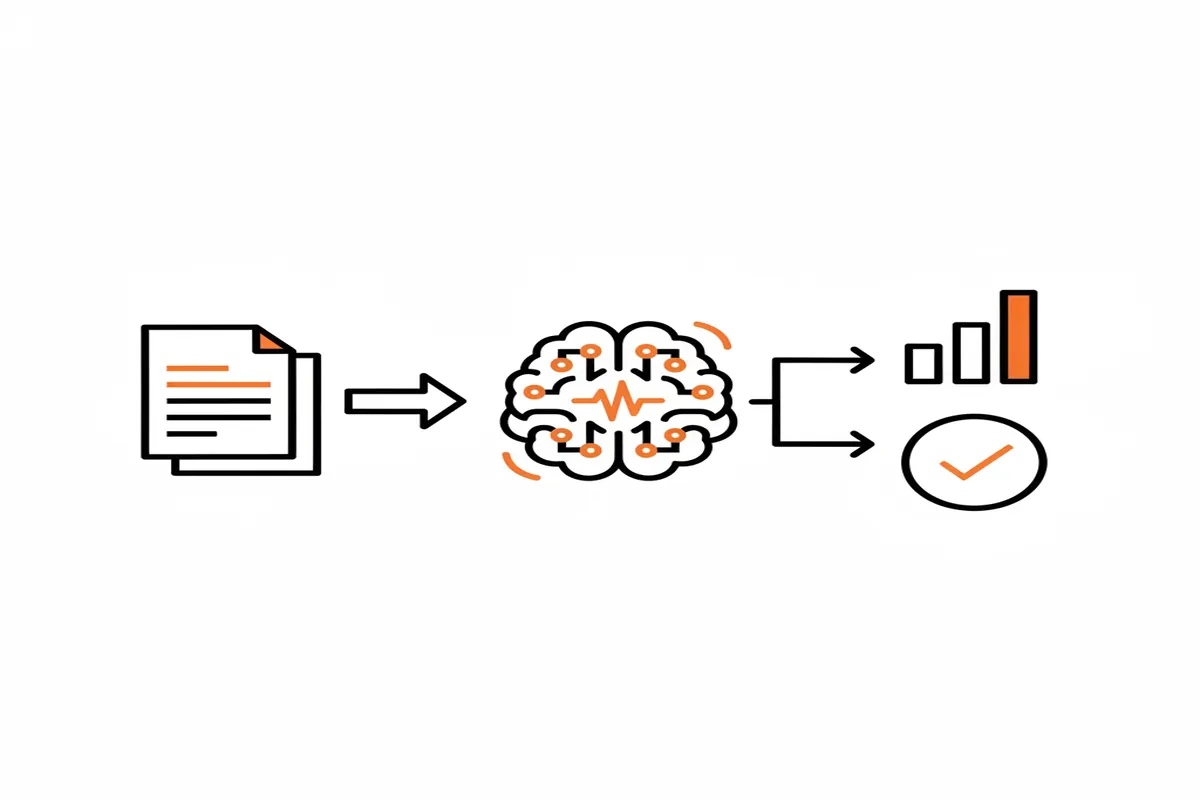
AEO vs. Traditional SEO Metrics Comparison
| Metric Category | Traditional SEO Focus | Modern AEO Focus | Success Indicator |
|---|---|---|---|
| Visibility | Keyword Rankings (1-10) | Brand Share of Model (%) | Appearing in the "Top 3" AI citations |
| Traffic Source | Organic Search Clicks | AI Referral Traffic | Higher conversion rate from AI-sourced leads |
| Authority | Backlink Count & DA | Entity Salience & Citations | AI labels your brand as a "Leader" |
| Content Goal | Clicks and Time on Page | Answer Accuracy & Factuality | Featured in AI "Quick Summaries" |
| Technical | Core Web Vitals | Schema & LLM-Readability | Zero-error structured data reports |
Common Mistakes to Avoid in AEO Measurement
- Focusing solely on traditional rank tracking: If you only look at where you sit on Google's page one, you miss the 40% of users getting answers directly from AI assistants.
- Neglecting the "Source of Truth" factor: AI models prioritize factual consistency. If your pricing or features vary across different pages, the AI may deem you unreliable and stop citing you.
- Ignoring long-tail conversational queries: People talk to AI differently than they type into Google. Failing to measure performance for natural language questions will skew your data.
- Using vanity metrics like total impressions: In AEO, being seen by 1,000 people who get a wrong answer about you is worse than being seen by 10 who get the right one.
- Underestimating the importance of schema: Skipping technical AEO checklist items makes it nearly impossible for AI to parse your data at scale.
The "Volume Trap"
Many B2B marketers focus on getting mentioned in any AI answer. This is a mistake. Being mentioned in an answer about "cheap alternatives" when you are a premium provider hurts your brand. You must measure the context of your visibility, not just the volume.
Best Practices and Pro Tips for 2026
- Implement specialized AEO tracking: Use platforms designed to monitor AI LLM responses to see how your brand is being mentioned in real-time.
- Optimize for "Brand-Plus" queries: Measure how often your brand is mentioned when users ask for "best [Product] for [Use Case]."
- Focus on the "Information Gain" score: AI models prefer sources that provide new, unique data rather than regurgitated blog posts. Measure how often your original research is cited.
- Build a "Conversational Funnel": Track how many steps it takes for an AI to recommend your specific solution during a multi-turn chat.
- Stay updated on model updates: AI models are retrained frequently. Monitor your metrics weekly to catch shifts in how ChatGPT or Gemini perceives your brand.
"AEO isn't just about being found; it's about being the definitive answer that the AI trusts enough to repeat to its users." — Amir, Founder of Best Answer Engine Optimization Services.
How AEO Success Affects Visibility in ChatGPT, Gemini, and Perplexity
Measuring success in 2026 requires a platform-specific lens. In ChatGPT, success is defined by how often the "Search" feature triggers your site as a primary reference for complex queries. For Gemini, it involves your integration with the broader Google ecosystem and how often your data appears in AI Overviews.
Perplexity operates differently, functioning as a "distilled" search engine. Here, your success metric is "Citation Dominance." If a Perplexity answer has five citations and three of them are yours, you have achieved AEO mastery for that topic. Meanwhile, Microsoft Copilot relies heavily on Bing's index and LinkedIn data for B2B queries. Measuring your presence here requires tracking your professional entity footprint. By focusing on these AEO insights, you ensure your brand isn't just a footnote, but the foundation of the AI's response.
Case Study: B2B SaaS Company Increases AI Citations by 140%
A mid-sized B2B SaaS client in the FinTech space came to us because their traditional organic traffic was stagnating, despite high rankings. We shifted their focus to AEO metrics, specifically targeting their Entity Salience for "automated compliance auditing."
Initially, the client appeared in only 5% of AI-generated summaries for their core product category. We implemented a rigorous strategy focusing on structured data and "factual density" in their whitepapers. We also optimized their services pages to answer the "Why" and "How" questions that AI agents typically look for.
Within six months, their Brand Share of Model rose from 5% to 22% across ChatGPT and Gemini. More importantly, their AI-referred traffic—users clicking through from an AI answer—saw a 65% increase in conversion rate compared to traditional organic search. The AI wasn't just sending more people; it was sending people who were already convinced by the AI’s recommendation. This shift proved that measuring AEO success metrics is the key to capturing high-intent leads in a post-search world.
Essential Tools and Resources for AEO Measurement
- Searchlight by Conductor: A leading enterprise platform that now includes specialized tracking for AI Overviews and generative engine visibility (Paid).
- BrightEdge Generative Parser: Excellent for identifying how AI models are categorizing your content and where you appear in the "carousel" of answers (Paid).
- Google Search Console: Still vital for seeing "AI Overview" impressions and identifying which queries trigger generative responses (Free).
- Perplexity Pro: Useful for manual testing and "deep research" into how the engine cites sources for your specific niche (Paid).
- Schema.org Validator: The essential tool for ensuring your technical AEO foundation is error-free (Free).
How to Measure Success: A Checklist for Your Team
To truly understand your AEO performance, you need to look at a blend of technical and reputational data points. Start with these three pillars:
- Visibility Baseline: Are you mentioned? (Target: >15% Share of Model for top 50 category queries).
- Citation Quality: Are you the primary source? (Target: >50% of mentions include a direct link).
- Sentiment Accuracy: Does the AI describe you correctly? (Target: 90%+ factual accuracy in AI summaries).
AEO Measurement Checklist:
- [ ] Set up tracking for AI-specific referral traffic in your analytics.
- [ ] Perform a monthly "Incognito AI Audit" for 20 core business questions.
- [ ] Validate all
OrganizationandProductschema via Schema.org. - [ ] Monitor your "Share of Model" against at least three top competitors.
- [ ] Analyze the adjectives AI models use to describe your brand.
How to Test and QA Your AEO Strategy Before Launch
You should never roll out site-wide AEO changes without a rigorous testing phase. AI models are sensitive to formatting. A small error in your JSON-LD schema can lead to the model ignoring your data entirely. We use a three-stage QA process for our clients.
First, perform a Semantic Content Audit. Use an LLM to summarize your page. If the summary misses your core product features, your content isn't dense enough for AI retrieval. We look for a "Summary Accuracy Score" of at least 9/10.
Second, conduct Small-Scale A/B Testing. Apply AEO-optimized content and schema to a single product category or a group of five blog posts. Monitor these pages for 30 days. Use a tool like Ahrefs or Semrush to check if these pages begin appearing in Google's AI Overviews. If you see a lift in "Position Zero" mentions, you can safely scale the strategy.
Finally, run a Conflict Check. Ensure that your new AEO-optimized answers do not contradict your existing landing page copy. AI models like Gemini often cross-reference multiple pages on your site. If your blog says one thing and your FAQ says another, the AI will likely flag the data as unreliable and drop your citation.
The Honest Truth: Where AEO Measurement Fails
We must be honest: AEO is not a magic bullet. There are specific scenarios where measuring these metrics will lead to frustration or misleading data. You need to understand these trade-offs before you invest your entire marketing budget.
One major hurdle is Attribution Lag. Unlike Google Ads, where you see a click immediately, AI models take time to update their weights. If you optimize a page today, it might take weeks or months for ChatGPT to reflect that change in its training data or real-time search. You cannot judge AEO success on a daily basis.
Another issue is the "Black Box" Problem. Platforms like OpenAI do not provide a "Search Console" for ChatGPT yet. Most of our measurements are based on external scraping and API testing. This means your data is an estimate, not a perfect count. If you need 100% precise click data to justify your job, AEO measurement will feel uncomfortable.
Finally, AEO fails if your brand has a poor offline reputation. AI models scrape reviews from Reddit, Trustpilot, and Glassdoor. If your customers hate your product, no amount of schema markup will fix the "Negative Sentiment" metric. AEO measures the consensus of the internet; it does not replace the need for a quality product.
The Future of AEO Metrics in 2026 and Beyond
As we move deeper into 2026, we expect AEO metrics to become even more granular. We will likely see the rise of "Agent Conversion Rates," measuring how often autonomous AI agents complete a transaction or book a demo on behalf of a user. The distinction between "content for humans" and "data for models" will continue to blur.
We anticipate that brands will soon have access to "Model Sentiment Dashboards" provided directly by companies like OpenAI or Google, similar to how we use Search Console today. Staying ahead means you must start contacting experts to build these measurement frameworks now, before your competitors own the knowledge graph.
Conclusion
Measuring AEO success metrics is the only way to ensure your brand remains relevant as AI transforms how the world finds information. From tracking Brand Share of Model to auditing citation frequency, these data points provide the roadmap for your 2026 growth. You can no longer rely on 20th-century SEO tactics to solve 21st-century discovery problems. By focusing on entity salience, factual density, and technical schema, you position your brand as the definitive answer for both humans and AI models.
If you are ready to stop guessing and start growing, we are here to help. You can start with a [free AEO audit](/free-aeo-audit) to see exactly where your brand stands in the AI ecosystem. For those ready to dominate their category, explore our full suite of [Best Answer Engine Optimization Services](/services) and secure your brand's future today.
[Explore Our Full Range of AEO Services](/services)
Frequently asked questions
How do I measure AEO success metrics?+
AEO success is measured by Brand Share of Model, citation frequency, and sentiment attribution within AI responses. Unlike SEO, which tracks link rankings, AEO tracks how often and how positively an AI model mentions your brand as a primary answer. You should also monitor 'Entity Salience' to see how strongly the AI associates your brand with specific industry topics.
What is Brand Share of Model?+
Brand Share of Model (BSM) is the percentage of AI-generated answers for a specific category that feature your brand. It is the AEO equivalent of market share. Tracking BSM helps you understand your dominance in the training data of models like ChatGPT and Gemini compared to your competitors. High BSM usually leads to higher trust and conversion rates.
Why are citations important for AEO?+
Citations are the links and footnotes AI models provide to verify their answers. In AEO, these are the new version of backlinks. High citation frequency proves to the AI that your content is a factual 'source of truth.' Measuring how often your site is cited helps you gauge your authority and the likelihood of users clicking through to your site.
What tools do I need for AEO measurement?+
Standard SEO tools like Ahrefs and Semrush are still useful for keyword research, but for AEO, you need tools that track AI Overviews and LLM responses. Platforms like BrightEdge, Conductor, and specialized AI-scraping tools allow you to see where your brand appears in conversational search. You should also use the Schema.org Validator to ensure your technical data is readable by AI agents.
How does sentiment analysis work in AEO?+
AI models summarize information based on their training data. Sentiment analysis in AEO tracks the specific adjectives and tone an AI uses when describing your brand. If an AI calls your product 'expensive' or 'difficult to use,' it reflects a consensus in the data. Monitoring this allows you to adjust your content and PR strategy to shift the AI's 'opinion.'
Can I use traditional SEO metrics to measure AEO?+
In 2026, standard organic traffic is only half the story. AEO metrics matter because more users are getting direct answers from AI without visiting a website. If you don't measure AEO, you miss the influence your brand has on users who never reach your site but are still persuaded by an AI's recommendation to choose your product later.
Sources & further reading
Soft next step
Want to see where AI answers mention you — and where they don't?
We run a free AEO audit across ChatGPT, Gemini, Copilot and Perplexity, then hand you the fixes in priority order. Start your AEO strategy today.
Keep reading
AEO Fundamentals
The Strategic Benefits of AEO: Dominate AI Search in 2026AEO Fundamentals
The Definitive AEO Checklist for 2026: Win the AI Search EraAEO Fundamentals
AEO vs SEO: Which Strategy Should You Prioritize in 2026?