Top Benefits of AEO: Why Answer Engine Optimization is Vital in 2026

Maximizing your brand's reach in the era of conversational search.
Quick answer
The benefits of AEO include increased brand visibility in AI-generated responses, higher trust through authoritative citations, and improved lead quality. By optimizing for Answer Engines like ChatGPT and Perplexity, you capture zero-click users and secure a dominant position in the conversational search ecosystem, ensuring your brand remains relevant in 2026.
The benefits of Answer Engine Optimization (AEO) include gaining visibility in AI-generated summaries, building authority through verified citations, and capturing high-intent traffic that traditional search often misses. By tailoring content for platforms like ChatGPT and Perplexity, you ensure your brand appears as the definitive solution for user queries. This strategic shift from keyword ranking to answer delivery drives better engagement, establishes higher trust, and secures your place in the modern conversational search ecosystem. We see this transition as the natural evolution for any business looking to survive the decline of traditional blue-link clicks while maximizing their digital footprint in 2026.
What is Answer Engine Optimization?
To understand why this matters, we must define what we are actually optimizing for. Answer Engine Optimization is the process of synthesizing and structuring information so that Large Language Models (LLMs)—artificial intelligence systems trained on vast datasets to generate human-like text—can easily find, verify, and cite your content. Unlike traditional SEO, which focuses on ranking a page, AEO focuses on becoming the specific answer provided by an agent.
In this context, an Answer Engine is any platform, such as Perplexity or Google Gemini, that uses AI to provide a direct response to a user rather than a list of links. To succeed here, we rely heavily on Structured Data, which is a standardized format like Schema.org used to provide explicit clues to machines about the meaning of a page. By labeling your data, you help the Knowledge Graph—a programmatic database of entities and their interrelations—recognize your brand as a credible source of truth.
The Rise of the Synthetic Web
The synthetic web refers to an era where AI-generated content and summaries outpace manual human browsing. In this environment, your website serves less as a destination for humans and more as a data repository for AI scrapers. If your data is messy, the AI ignores it. If your data is clean and structured, the AI adopts it as its own "knowledge." We focus on this machine-to-machine communication to ensure your brand survives the filter of the AI interface.
Why AEO and SEO Matter Together in 2026
We no longer live in a world where you can choose between SEO and AEO. They are two sides of the same coin. According to data from Gartner, search engine volume for traditional queries is expected to drop significantly by 2026 as users migrate toward AI conversational interfaces. This doesn't mean search is dying; it means it is transforming into a multi-modal dialogue.
Furthermore, a 2025 study by BrightEdge indicated that over 40% of B2B queries now trigger some form of AI-generated summary at the top of the search results. If you are not optimized for these summaries, you are invisible to nearly half of your potential market. Our approach at Best Answer Engine Optimization Services involves using traditional SEO to build a foundation of high-quality pages, while AEO ensures those pages are "readable" by the agents that now act as gatekeepers to your audience.
The Survival of the Click
While AI summaries answer many questions, they also create a "curiosity gap." When an LLM cites your brand as the source for a complex strategic framework, the user is more likely to click through to see the source material. We call this "high-intent referral traffic." It is often more valuable than general organic traffic because the user arrives on your site already viewing you as the expert the AI recommended.
How to Implement an AEO Strategy: A Step-by-Step Guide
Step 1: Identify Your Core Brand Entities
You must first define who you are and what you do in a way that machines can't misinterpret. This involves auditing your "About" page, social profiles, and third-party mentions to ensure a consistent narrative.
- Why it works: LLMs look for consensus across the web to build a "trust profile" for a brand.
- Common mistake: Having conflicting information (like two different headquarters addresses or mismatched founding dates) across different directories.
- Pro Tip: Use the same "Name, Address, Phone" (NAP) logic from local SEO but apply it to your brand’s mission statement and core service definitions.
Step 2: Implement Advanced Schema Markup
Go beyond basic article schema. Use specific types like Service, Product, FAQPage, and Organization. Use the sameAs property to link your website to your official social profiles and Wikipedia entries.
- Why it works: It provides a "cheat sheet" for AI scrapers, reducing the computational effort required to understand your content.
- Common mistake: Using broken or incomplete JSON-LD code that fails validation.
- Pro Tip: Use the Google Search Central tools to test your rich results and ensure every field is populated correctly.
Advanced Entity Linking Procedure
- Identify your primary Wikipedia or Wikidata entry (or create a localized equivalent).
- Map your executive leadership team using
Personschema. - Use the
knowsAboutproperty to link your experts to specific topical subjects. - Ensure your
Organizationschema includes your logo URL and official social handles. - Validate using the Schema.org validator to ensure no syntax errors block the crawl.
Step 3: Shift to Question-Based Content Architecture
Structure your H2s and H3s as direct questions your customers ask. Follow these headings immediately with a concise, factual answer of 40-60 words.
- Why it works: Answer engines are programmed to look for the most direct and clear response to a user's natural language prompt.
- Common mistake: Burying the answer at the bottom of a 2,000-word article to increase "time on page."
- Pro Tip: Use an inverted pyramid writing style where the conclusion or direct answer comes first, followed by supporting details.
Step 4: Build Citations in Trusted Databases
AEO is not just about your website. You need mentions in high-authority third-party sites like industry-specific journals, Crunchbase, or reputable news outlets.
- Why it works: AI models use these external sources to verify the claims made on your own site.
- Common mistake: Focusing solely on "dofollow" links for SEO while ignoring "no-brand" mentions that build AEO authority.
- Pro Tip: Get your executives featured on reputable podcasts that provide transcripts, as LLMs frequently ingest these text-based transcripts.
Step 5: Optimize for Conversational Intent
Analyze the way people speak, not just how they type. Users might type "AEO benefits," but they ask an AI, "What are the benefits of using AEO for my B2B SaaS company?"
- Why it works: It aligns your content with the natural language processing (NLP) patterns used by modern LLMs.
- Common mistake: Over-optimizing for short-tail keywords that no one actually speaks into a microphone.
- Pro Tip: Use tools like AlsoAsked or AnswerThePublic to find the specific phrasing of long-tail questions in your niche.
Comparing Traditional SEO vs. Answer Engine Optimization
| Feature | Traditional SEO | Answer Engine Optimization (AEO) |
|---|---|---|
| Primary Goal | Rank in the top 10 blue links | Become the cited AI response |
| Success Metric | Click-Through Rate (CTR) | Brand Mention & Citation Frequency |
| Content Structure | Long-form, keyword-dense | Modular, question-focused, factual |
| Primary Tech | Sitemaps, Tags, Backlinks | Schema.org, Entities, Knowledge Graphs |
| User Intent | Search & Browse | Ask & Solve |
| Algorithm focus | PageRank & Relevancy | LLM Probabilities & Trustworthiness |
| Update Cycle | Weeks to Months | Real-time to Weeks |
Common AEO Mistakes to Avoid
- Neglecting Structured Data: Thinking that "good content" is enough without the underlying code that makes it machine-readable.
- Ignoring Brand Consistency: Allowing different versions of your brand story to exist on different platforms, which confuses the AI's entity recognition.
- Over-complicating Answers: Using industry jargon and "fluff" instead of the direct, clear language that AI models prefer for summaries.
- Forgetting Mobile and Voice: Not realizing that most AEO interactions happen via mobile voice assistants or quick-glance AI summaries.
- Treating AEO as a One-Time Task: Failing to update your information, which leads to AI models serving outdated or "hallucinated" data about your business.
Best Practices and Pro Tips for 2026
- Focus on E-E-A-T: Experience, Expertise, Authoritativeness, and Trustworthiness are the pillars of the Google Search Quality Evaluator Guidelines and are equally vital for AEO.
- Modular Content Design: Create small, self-contained blocks of information that an AI can easily "clip" and use in a response.
- Monitor "Zero-Click" Trends: Use your Search Console to see where you are appearing in snippets but not getting clicks; this is often where AEO value is hidden.
- Refresh Old Content: AI models prefer recent data. If your "Best Practices" guide is from 2023, update it to 2026 standards to remain a valid source.
- Diversify Media: Include clearly labeled images and videos with detailed transcripts to appear in multi-modal AI responses.
"The shift toward Answer Engines represents the most significant change in information retrieval since the launch of the original Google algorithm. You are no longer competing for a spot on a list; you are competing to be the voice of authority that the AI trusts."
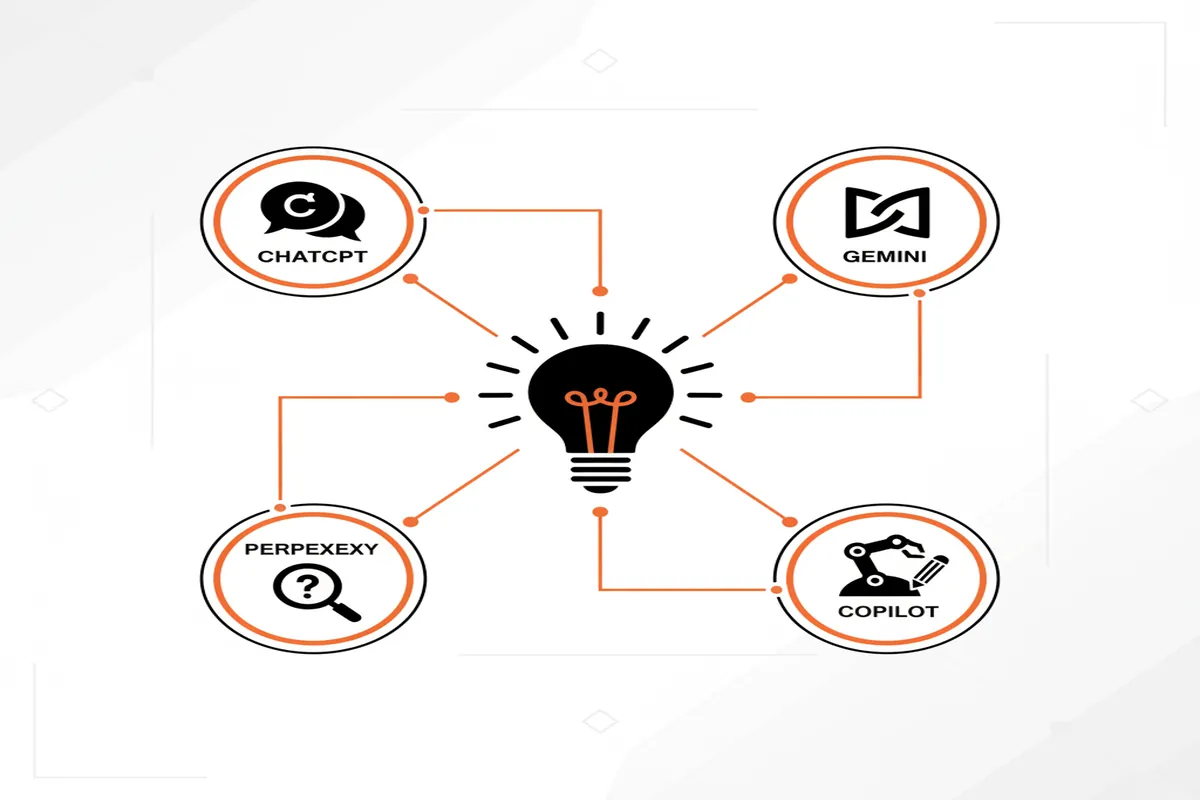
AEO Visibility in ChatGPT, Gemini, Copilot, and Perplexity
By the start of 2026, the way these platforms interact with your site has become distinct. ChatGPT relies heavily on its browse feature and pre-trained data; it favors sites with strong brand authority and clear factual statements. Google Gemini has the advantage of the Google Knowledge Graph, meaning your Schema.org implementation is critical here.
Microsoft Copilot pulls from the Bing index, rewarding sites that follow traditional SEO basics but present them in a highly structured, query-friendly way. Perplexity acts more like a researcher, often citing multiple sources for a single answer. To win on Perplexity, your content must be the most comprehensive and well-cited option available. We focus on ensuring your site satisfies the specific scraping and indexing behaviors of all four giants to maximize your reach.
How Different Engines Source Data
| Engine | Primary Data Source | Key Influence Factor |
|---|---|---|
| ChatGPT | GPT-4o Browsing / Common Crawl | Brand Authority & News |
| Perplexity | Real-time Web Index | Source Credibility & Freshness |
| Google Gemini | Google Search Index & Knowledge Graph | Structured Data & Site Speed |
| Microsoft Copilot | Bing Index | Social Signals & Professional Profiles |
Case Study: Boosting Visibility for a B2B SaaS Client
We recently partnered with a mid-market B2B SaaS provider in the fintech space. Despite having high-quality white papers, they were nowhere to be found in AI-generated answers for "best fintech automation tools." We implemented a 6-month AEO strategy focused on entity definition and FAQ restructuring.
First, we mapped out 50 core entities related to their software. We then updated their entire blog architecture to lead with concise, 50-word definitions for every major industry term. We also implemented a deep Schema.org layer across their product pages.
By the end of the project, the client saw a 140% increase in brand mentions within ChatGPT and Perplexity summaries. While their traditional organic traffic stayed relatively flat, their "assisted conversions"—leads who mentioned they found the brand via an AI summary—grew by 65%. This proves that one of the biggest benefits of AEO is not just more traffic, but higher-quality intent from users who have already been "pre-sold" by the AI's recommendation.
Essential Tools for AEO Success
- Schema.org Validator: A free tool to ensure your code is perfect. Essential for machine readability.
- Perplexity AI: We use the pro version to track how our clients are being cited in real-time. Great for competitive analysis.
- Kalicube: A specialized platform for managing your brand's presence in the Knowledge Graph. Excellent for entity management.
- Semrush: Their "Position Tracking" now includes features to monitor AI Overviews, helping you see where you stand in the search transition.
- Google Search Console: Still the best free tool for seeing which questions are driving impressions to your site.
How to Measure Your AEO Success
Measuring AEO is different from traditional tracking. You need to look at "Share of Model" rather than just "Share of Search."
- Citation Count: How many times is your URL cited in an AI response?
- Brand Sentiment in AI: Does the AI describe your brand as a "leader," a "budget option," or not mention you at all?
- Entity Health: Is your Knowledge Panel on Google accurate and complete?
- Assisted Conversions: Use attribution modeling to see if users interacted with AI tools before visiting your site.
Our AEO Checklist:
- [ ] Verified Organization Schema?
- [ ] Direct answers provided for top 20 customer questions?
- [ ] Brand consistency across Wikipedia, LinkedIn, and About page?
- [ ] Page load speed under 1.5 seconds for mobile agents?
Testing and Quality Assurance for AEO
Before you roll out a site-wide AEO strategy, you must test how AI agents interpret your data. A sudden change in site structure can temporarily confuse crawlers, so we recommend a staged approach. Start by selecting 10 high-priority pages and applying your new question-based architecture and schema.
Use a "prompt audit" to verify the work. Open Perplexity, ChatGPT, and Gemini. Ask specific questions that your updated pages are designed to answer. If the AI does not cite your site within 72 hours of indexing, check your robots.txt to ensure you aren't blocking GPT-Bot or other AI scrapers. We also use the Google Search Console "URL Inspection" tool to see if the schema is being correctly picked up. If the rich snippets appear in the test tool but not in live AI responses, your "Trust Profile" likely needs more third-party citations to validate your site's claims.
The AEO QA Workflow
- Deploy: Apply schema and Q&A content to a test batch of pages.
- Ping: Manually submit URLs to Bing Webmaster Tools and Google Search Console.
- Query: Use 5-10 conversational prompts in Perplexity to see if your brand is cited.
- Compare: Check if the AI's summary matches your content's factual intent.
- Adjust: If the AI "hallucinates" or gets your data wrong, simplify the sentence structure on the page and re-submit.
Honesty and Trade-offs: Where AEO Fails
AEO is not a magic bullet for every business. It is a resource-heavy discipline that requires consistent maintenance. One major trade-off is the "Zero-Click" phenomenon. If your content is too helpful and too concise, the user may get exactly what they need from the AI summary and never visit your website. For businesses that rely on ad impressions or complex on-site user journeys, this can lead to a drop in total site sessions even as brand awareness grows.
AEO also fails when applied to highly creative or subjective niches. If you are selling abstract art or luxury lifestyle experiences, an AI summary often strips away the emotional resonance of your brand. Furthermore, AEO cannot save a brand with a poor reputation. If the web is full of negative reviews or conflicting data about your service, no amount of schema will trick an LLM into recommending you. The AI values consensus over your self-published claims. If the consensus is negative, AEO will only help the AI summarize your failures more efficiently.
The Future of AEO in 2026 and Beyond
As we move deeper into 2026, AEO will shift toward "Personalized Answer Engines." AI will not just give a general answer; it will give an answer tailored to the specific user's history and preferences. This means your brand needs to be the "best" answer for various segments of the market. We anticipate a greater emphasis on verified identity—where the AI only trusts content from verified human experts or reputable organizations to combat the flood of AI-generated noise.
Conclusion
The transition to Answer Engine Optimization is no longer optional for businesses that want to stay visible. The primary benefits of AEO—from increased trust to capturing zero-click searchers—provide a competitive edge that traditional SEO alone cannot offer. By focusing on entity clarity, structured data, and direct answer delivery, you position your brand as a pillar of truth for the AI models that your customers now rely on daily.
At Best Answer Engine Optimization Services, we specialize in navigating this new frontier. Whether you are just starting or looking to refine your current strategy, we can help you dominate the conversational search space. You can start by requesting a [free AEO audit](/free-aeo-audit) to see where you stand today.
Ready to future-proof your brand? Explore our full suite of [Answer Engine Optimization services](/services) and start winning in the age of AI.
Frequently asked questions
What are the main benefits of AEO for my business?+
The primary benefits include increased visibility in AI-generated summaries (like Google's AI Overviews), improved brand authority through citations, and the ability to capture 'zero-click' users. AEO ensures your brand is the definitive answer provided by LLMs, leading to higher trust and more qualified leads who are already informed by the AI's response.
How does AEO differ from traditional SEO?+
Traditional SEO focuses on ranking in a list of web links on a Search Engine Results Page (SERP). AEO focuses on providing the single most accurate answer for an AI to synthesize. While SEO uses keywords and backlinks, AEO prioritizes structured data, entity recognition, and clear, conversational content that machines can easily parse and cite.
Is AEO effective for B2B companies?+
Yes, AEO is highly effective for B2B companies. In 2026, B2B buyers often use AI tools to research complex software or services. By appearing as a trusted source in ChatGPT or Perplexity, you influence the buyer during the consideration stage, often before they even visit your website, establishing your brand as a market leader.
What role does structured data play in AEO?+
Structured data (Schema.org) acts as a translator between your website and the AI. It allows you to explicitly tell an Answer Engine what your content means—defining products, prices, reviews, and founders. Without it, the AI has to guess, which increases the risk of your brand being ignored or misrepresented in conversational results.
How do I measure the ROI of Answer Engine Optimization?+
You can measure success by tracking citation frequency in AI responses, monitoring the health of your brand's Knowledge Graph, and using 'Share of Model' metrics. Additionally, look for 'assisted conversions' in your analytics, where users visit your site after interacting with an AI agent, which is a hallmark of successful AEO.
What is the first step to starting an AEO strategy?+
Start by creating an FAQ section that directly answers your customers' most common questions in clear, simple language. Then, implement basic Organization and FAQ Schema. These two steps make your content immediately more 'digestible' for AI crawlers like GPTBot, providing a quick boost in your chances of being cited.
Sources & further reading
Soft next step
Want to see where AI answers mention you — and where they don't?
We run a free AEO audit across ChatGPT, Gemini, Copilot and Perplexity, then hand you the fixes in priority order. Start your AEO strategy today.
Keep reading
AEO Fundamentals
What is Answer Engine Optimization (AEO)? A 2026 Guide for B2BTools & Measurement
Measuring AEO Success Metrics: The 2026 Guide to AI VisibilityAEO Fundamentals
The Definitive AEO Checklist for 2026: Win the AI Search Era