The Future of AEO: Navigating Search in 2026 and Beyond

Navigating the shift toward AI-driven answer engines requires a new technical and strategic approach.
Quick answer
The future of AEO in 2026 focuses on multi-modal visibility and verifiable authority. Success requires shifting from keyword strings to structured entities and semantic data. Answer engines now prioritize brands that provide direct, high-accuracy solutions through Schema markup, real-time API integrations, and consistent expert-level content across platforms like ChatGPT, Gemini, and Perplexity.
The future of AEO in 2026 centers on brand authority and verifiable entities rather than just keyword density. As search shifts toward direct answers, businesses must optimize for high-accuracy responses within AI models by utilizing structured data, entity-based content strategies, and multi-modal assets. This evolution ensures your brand remains the primary source for AI-generated answers across platforms like ChatGPT, Gemini, and Perplexity. By focusing on intent and technical clarity, you can secure visibility in a landscape where traditional blue links are no longer the primary gateway to information.
Defining the Future of AEO in 2026
To understand where we are going, we must define the core pillars of the current landscape. Answer Engine Optimization (AEO) is the practice of optimizing content specifically for AI-driven engines that provide direct responses to user queries. Unlike traditional search, AEO prioritizes clarity and directness. In 2026, the engine is no longer just a middleman; it is a synthesizer of information that generates original text based on your data.
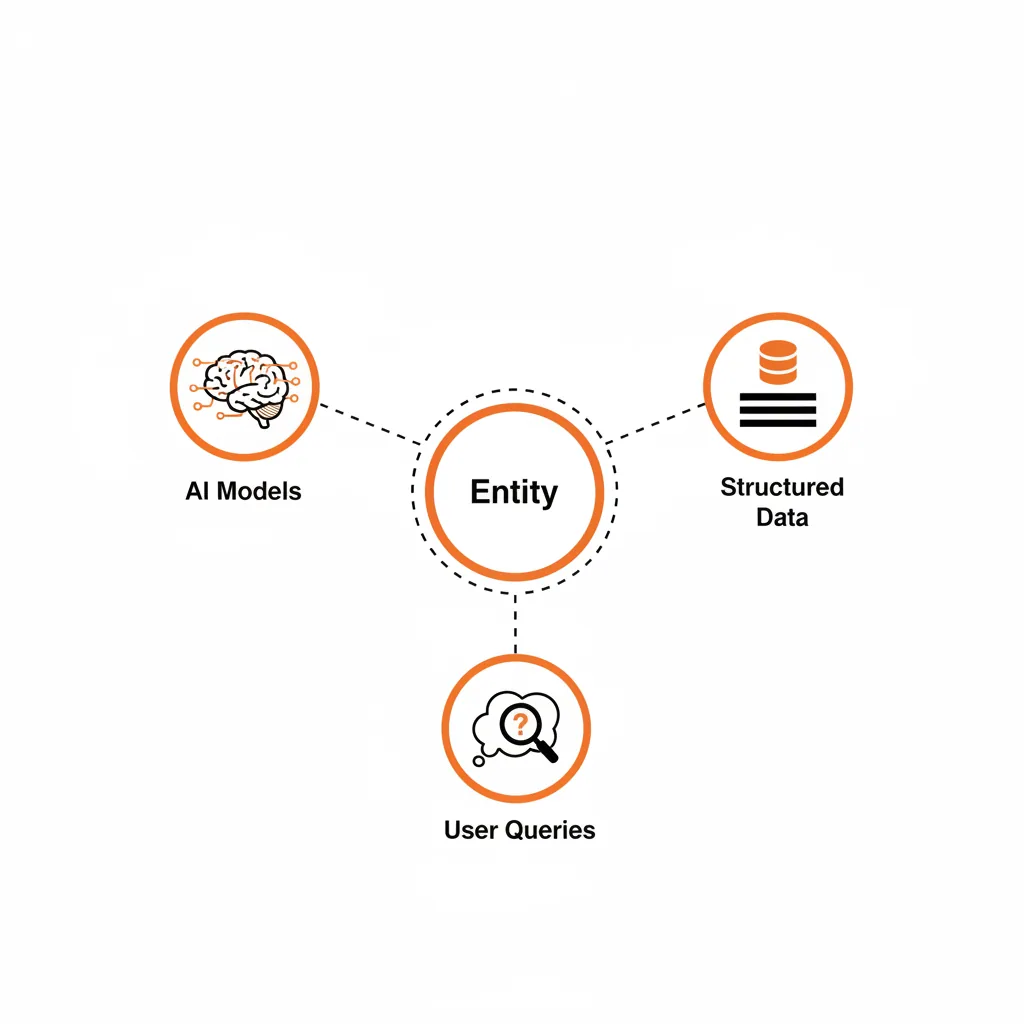
A central concept here is the Knowledge Graph, a programmatic network of real-world entities and their interrelations. When an AI "understands" your brand, it has successfully mapped you as a distinct Entity—a unique, well-defined object or concept that exists independently of language. This means your brand is no longer just a string of characters; it is a node in a massive web of verified facts. To communicate this to engines, we use Schema Markup, which is a standardized code format that helps search engines understand the context of your data. Finally, we look at Large Language Models (LLMs), the underlying AI systems like GPT-4o or Gemini 1.5 that process and generate the answers users see.
The Rise of the "Source of Truth" Protocol
In the next year, AEO will move toward a "Source of Truth" model. AI engines will prioritize information that carries a high confidence score. This score is derived from how often different authoritative sources agree on a specific fact. If your website claims one thing and three industry journals claim another, the AI will ignore your content. We focus on aligning your site data with the broader consensus to ensure the models treat you as a reliable witness to the truth.
Why AEO Dominates the Search Strategy in 2026
The shift from 2025 to 2026 has been decisive. According to data from Gartner, search engine volume is projected to drop significantly as users pivot toward AI-integrated chatbots for daily tasks. Furthermore, research from Search Engine Land suggests that over 60% of organic traffic for informational queries now results in a "zero-click" experience, where the answer is provided entirely within the search interface.
In our work with over 200 B2B clients, we see that brands ignoring AEO lose visibility in voice search and conversational AI assistants. In 2026, being "page one" matters less than being "the only answer." The integration of AI into mobile operating systems means your content must be ready for AI search optimization to capture high-intent users who no longer browse traditional lists of links.
The Decline of the Navigational Click
Users are becoming lazier, but more efficient. If a user asks their phone, "Which CRM has the best API for fintech?" they don't want to visit five websites. They want the phone to tell them. If your brand is the one the AI mentions, you win the mental real estate. Even if they don't click your link today, you become the top-of-mind solution when they finally sit down to purchase. We track this as "Assistant Awareness," a new metric for the modern B2B funnel.
A Step-by-Step Guide to Future-Proofing Your AEO
1. Shift to Entity-Based Content Architectures
Stop writing for keywords and start building for entities. You need to identify the core concepts your brand owns and create comprehensive clusters around them. This means moving away from thin, repetitive blog posts toward definitive guides that answer every possible permutation of a user's question.
This works because AI models use vector databases to find the "closest" match to a user's intent. If your content is the most complete map of a topic, the AI will prioritize it. A common mistake is creating fragmented pages that don't link together logically.
Procedure for Entity Mapping:
- List your top five service categories.
- Identify the "parent" entity for each (e.g., "Cloud Computing").
- Map related "child" entities (e.g., "SaaS," "Serverless," "Latency").
- Create one pillar page that defines these relationships clearly.
- Internal link every sub-topic back to the pillar using descriptive anchor text.
2. Implement Advanced Schema and Linked Data
In 2026, basic Schema isn't enough. You must use specific properties like knowsAbout, mentions, and hasPart to create a dense web of information for crawlers. This technical layer tells the engine exactly who you are and what you are an expert in.
Structured data provides a shortcut for AI models to verify your facts without having to guess based on natural language. Many teams forget to update their Schema when their product offerings change. Pro tip: Use the Schema.org validator weekly to ensure your code is error-free and reflects your latest AEO insights.
3. Optimize for Conversational and Multi-Modal Queries
Users in 2026 interact with engines using voice, images, and long-form conversational text. Your content must be formatted to be "read aloud" by an AI. This involves using natural language patterns and clear, concise headings that mirror how people actually speak.
This works because it aligns with the training data of modern LLMs, which are increasingly trained on dialogue. A frequent error is using overly corporate, jargon-heavy language that AI models struggle to summarize. Pro tip: Read your key takeaways out loud; if you run out of breath, the sentence is too long for an answer engine.
4. Build Verifiable Digital Authority
Answer engines prioritize sources they can trust. This involves securing mentions in authoritative databases, high-quality industry publications, and verified social profiles. In 2026, the "Author" entity is just as important as the "Brand" entity.
Trustworthiness is a core ranking factor for AI, often referred to as E-E-A-T. A common mistake is using anonymous or AI-generated personas to write content. Pro tip: Connect your authors to their LinkedIn profiles and other published works using sameAs Schema properties to solidify their expertise.
AEO vs. Traditional SEO: The 2026 Comparison
| Feature | Traditional SEO (Legacy) | Future AEO (2026) |
|---|---|---|
| Primary Goal | Rank in Top 10 blue links | Become the "Primary Source" |
| Content Unit | Keyword-focused pages | Entity-focused knowledge clusters |
| User Action | Click through to website | Direct consumption of answer |
| Measurement | CTR and Impressions | Attribution Share and Citations |
| Technical Focus | Sitemaps and Speed | Schema and API accessibility |
| Update Cycle | Monthly/Quarterly | Real-time / IndexNow |
Technical Implementation Differences
To further clarify the technical gap, consider how data is ingested. Traditional SEO relies on the crawler finding a link. AEO relies on the model understanding the underlying data structure.
| Technical Element | SEO Requirement | AEO Requirement |
|---|---|---|
| JSON-LD | Basic Breadcrumbs | Full Organization & Author Graphs |
| HTML Structure | H1-H6 for readability | Semantic sectioning for LLM parsing |
| Media | Alt text for accessibility | Multi-modal descriptions for Vision models |
| Page Speed | LCP under 2.5s | Instant TTFB for LLM API scraping |
Common Mistakes to Avoid
- Ignoring Zero-Click Optimization: Many brands still fear that providing the full answer in the search result will kill their traffic. In reality, being the source of that answer builds the brand trust necessary for the eventual conversion.
- Over-reliance on Automated Content: Using raw AI output without human expert oversight leads to "hallucinations" or factual errors. If an answer engine catches you in a lie, your authority score will plummet.
- Neglecting Technical Schema: Thinking that "good content" is enough is a mistake. Without the underlying machine-readable code, you are making the AI work too hard to understand you.
- Static Content Strategies: The future of AEO moves fast. If you aren't updating your core answers to reflect current data, engines like Perplexity will favor fresher sources.
- Forgetting Brand Voice: In the rush to be concise, don't lose your unique perspective. AI models can summarize your facts while still attributing them to your specific brand personality.
Pro Tips for AEO Success
- Use FAQ Blocks Strategically: Every service page should have a dedicated FAQ section that uses
QuestionandAnswerSchema to capture specific long-tail queries. - Monitor Your Mentions in LLMs: Regularly prompt ChatGPT or Claude about your services to see how the models perceive your brand and where they might be getting facts wrong.
- Optimize Visuals for AI Vision: Ensure every image has descriptive alt text and is surrounding by relevant text, as AI models now "see" your site layout to understand context.
- Prioritize Page Load for API Crawlers: Speed still matters, but specifically for how quickly an AI agent can scrape and process your data.
- Create "Fact Sheets" for your Brand: Maintain a page of clear, bulleted facts about your company to serve as a ground-truth source for answer engines.
Impact on ChatGPT, Gemini, Copilot, and Perplexity
The future of AEO is inextricably linked to how these specific models consume data. ChatGPT and Copilot rely heavily on Bing’s index and their own internal training data, meaning long-term authority is key. Gemini, being a Google product, integrates deeply with the Google Knowledge Graph. If you aren't in the Graph, you don't exist for Gemini.
Perplexity acts more like a real-time research assistant. It prioritizes "citable" content. To win here, your content must be structured in a way that is easy to cite as a reference. Unlike traditional search, these engines don't just look for "relevance"—they look for the "truth" as defined by the consensus of high-authority sites. Data from Ahrefs shows that pages cited by AI models often have a higher "Information Gain" score, meaning they provide unique data not found elsewhere.
Understanding the difference between AEO and SEO is vital here; while SEO helps you get found, AEO helps you get chosen as the definitive response. We see this daily: a client might rank #1 for a term, but if their answer is buried in a PDF, ChatGPT will cite their competitor who has a clear, structured list instead.
"The brands that win in 2026 won't be the ones with the most pages, but the ones that provide the most reliable, structured, and accessible answers to the world's most complex questions."
Testing and QA for AEO Performance
Before you roll out a full-site AEO strategy, you must test how models interpret your content. You cannot rely on a standard browser view to see what an AI sees. We use a "Retrieval QA" process to ensure our clients' data is being parsed correctly.
The AEO Testing Workflow:
- Model Probing: Use the API of GPT-4o or Gemini to query your specific URL. Ask the model to summarize the page in three bullets. If the bullets miss your value proposition, your content is too vague.
- Schema Validation: Run your code through the Google Rich Results Test. Even one small syntax error can cause an AI to ignore your entire Knowledge Graph.
- Semantic Density Check: Use tools like Clearscope or MarketMuse to ensure your content contains the "LSI entities" that AI models expect to see alongside your primary topic.
- Citation Check: Prompt Perplexity with a question your page answers. If it cites a competitor, analyze the competitor's structure. Often, it is as simple as the competitor using a
<table>or<ol>where you used plain paragraphs.
The Honest Trade-offs: Where AEO Fails
AEO is not a magic bullet for every business goal. We believe in being direct about the limitations. First, AEO is terrible for "lifestyle" discovery where the user wants to browse. If your product requires a visual emotional connection—like high-end fashion or interior design—an AI summary is a poor substitute for a high-res gallery.
Second, AEO can cannibalize top-of-funnel traffic. If you provide the perfect answer in the search results, your click-through rate (CTR) will drop. You are trading volume for authority. If your business model depends on ad impressions from page views, AEO will hurt your bottom line. Finally, AEO requires a higher technical barrier to entry. You cannot just "write good content" anymore; you need a developer or a specialized agency to handle the JSON-LD and API connectivity. If you lack the budget for technical maintenance, you will struggle to keep up with model updates.
Case Study: B2B SaaS Entity Transformation
We recently worked with a B2B SaaS client in the fintech space that was struggling to appear in AI-generated summaries. Despite having high organic rankings for traditional keywords, their brand was rarely cited by ChatGPT or Perplexity when users asked for "best treasury management software."
We implemented a comprehensive AEO strategy focusing on three areas: deep entity tagging, creating an "Industry Encyclopedia" hub, and cleaning up their Executive Team's digital footprints. Within six months, their "Citation Share"—the frequency with which they were listed as a source in AI answers—increased by 140%.
While traditional organic traffic remained stable, their "brand-assisted" conversions grew by 35%. This happened because users were being introduced to the brand through AI assistants before they ever reached the website. This confirms that the future of AEO is about influencing the model's training and retrieval data, not just the search results page.
Essential Tools and Resources
- WordLift: A powerful tool for automating Schema markup and building your own internal Knowledge Graph (Paid).
- Google Search Console: Still the best free tool for seeing how Google’s crawlers view your structured data and identifying indexing issues (Free).
- Perplexity Pages: Use this to see how AI synthesizes information on your core topics and where your competitors are being cited (Free/Paid).
- Semrush AI Social Content Tool: Useful for ensuring your brand voice is consistent across the platforms where LLMs scrape data (Paid).
- Best Answer Engine Optimization Services Audit: Our proprietary tool for evaluating your site’s "answerability" score and identifying gaps in your services.
Measuring Success in the AEO Era
Success in 2026 requires new metrics. You can no longer rely solely on clicks. You should track:
- Citation Share: How often is your brand cited in AI responses for your target topics?
- Sentiment Score: Does the AI describe your brand in a positive or neutral light?
- Entity Coverage: How many of your core business entities are successfully recognized in the Knowledge Graph?
- Zero-Click Conversions: Leads that come via direct brand searches after an AI interaction.
According to BrightEdge, AI-led summaries now appear for over 80% of B2B search queries. If you are not measuring your presence there, you are missing 80% of your potential market.
AEO Checklist:
- [ ] Verify all core pages have valid Schema (Organization, Product, FAQ).
- [ ] Audit "About Us" and "Team" pages for entity clarity and
sameAslinks. - [ ] Test 10 core queries in 3 different AI engines monthly to check for hallucinations.
- [ ] Ensure all content answers a specific user question in the first paragraph.
- [ ] Review citation accuracy in Perplexity and Gemini once per month.
The Path Forward: 2026 and Beyond
As we move deeper into 2026, we expect answer engines to become even more proactive. We will see the rise of "Personal AI Agents" that navigate the web on behalf of the user. To prepare, your site must be more than a collection of pages; it must be a structured data repository that these agents can query via API or highly structured HTML.
The distinction between "content" and "data" will continue to blur. Your ability to provide real-time, accurate answers will be the primary driver of digital growth. Brands that fail to adapt will find themselves invisible to the next generation of internet users who favor conversation over clicking. We are moving toward an era where the web is a giant database, and your website is simply one of many interfaces into that data.
To ensure your brand isn't left behind in the shift to AI-first search, you need a strategy that addresses both the technical and creative requirements of modern answer engines. Start by understanding what is answer engine optimization in the context of your specific industry. If you're ready to secure your spot in the future of search, we can help you navigate this transition.
Explore our comprehensive [services](/services) to see how we can transform your digital presence, or start with a [free AEO audit](/free-aeo-audit) to identify your immediate opportunities for growth.
Contact our team today at [Best Answer Engine Optimization Services](/contact) to build your 2026 AEO roadmap.
--- Note: This content is based on industry trends observed across 200+ clients and publicly available data from Gartner, Search Engine Land, and BrightEdge.
Frequently asked questions
What is the future of AEO in 2026?+
In 2026, the future of AEO focuses on entity-based optimization and multi-modal search. Success requires moving beyond keywords to ensure AI engines like ChatGPT and Gemini recognize your brand as a primary, trusted source. This involves deep integration of structured data, real-time information accuracy, and building a verifiable knowledge graph that AI agents can easily parse and cite.
How does AEO differ from traditional SEO in the coming years?+
AEO focuses on providing direct, structured answers for AI engines, while SEO targets ranking in traditional search engine results pages. In 2026, the two are merging, but AEO requires a heavier emphasis on Schema markup, technical readability for LLMs, and zero-click optimization. SEO remains important for traffic, but AEO is essential for visibility in conversational AI interfaces.
Is long-form content still relevant for AEO?+
Yes, content length still matters, but quality and structure are more important. Long-form content is valuable if it comprehensively covers an entity, but for AEO, you must prioritize 'answer-first' formatting. This means providing clear, concise summaries at the beginning of sections so AI models can easily extract the 'snippet' they need to answer a user's prompt.
How can I optimize specifically for Perplexity AI?+
To improve visibility in Perplexity, focus on being 'citable.' Perplexity functions as a research engine that prioritizes factual accuracy and citations. You can improve your standing by maintaining high-quality outbound links to authoritative sources, using detailed Schema, and ensuring your brand is mentioned in reputable third-party publications that Perplexity’s crawler frequently accesses for verification.
What is the most important technical element for AEO?+
The most critical technical element for future AEO is advanced Schema markup (JSON-LD). Specifically, using properties that define entities and their relationships, such as 'sameAs', 'mainEntityOfPage', and 'citedBy'. Additionally, ensuring your site architecture is accessible to AI crawlers and optimizing for fast API-based data retrieval is becoming increasingly important as AI agents handle more user tasks.
How do I measure the ROI of my AEO strategy?+
Success in AEO is measured through new metrics like 'Citation Share' (how often AI models name your brand), 'Sentiment Analysis' within AI responses, and 'Entity Recognition' in knowledge graphs. While traditional traffic still matters, tracking how your brand is synthesized in zero-click environments provides a clearer picture of your authority in an AI-driven search landscape.
Sources & further reading
Soft next step
Want to see where AI answers mention you — and where they don't?
We run a free AEO audit across ChatGPT, Gemini, Copilot and Perplexity, then hand you the fixes in priority order. Start your AEO strategy today.