How to Test AEO Changes Before Full Rollout: A 2026 Guide

Testing AEO changes in a controlled environment ensures better visibility in AI snapshots.
Quick answer
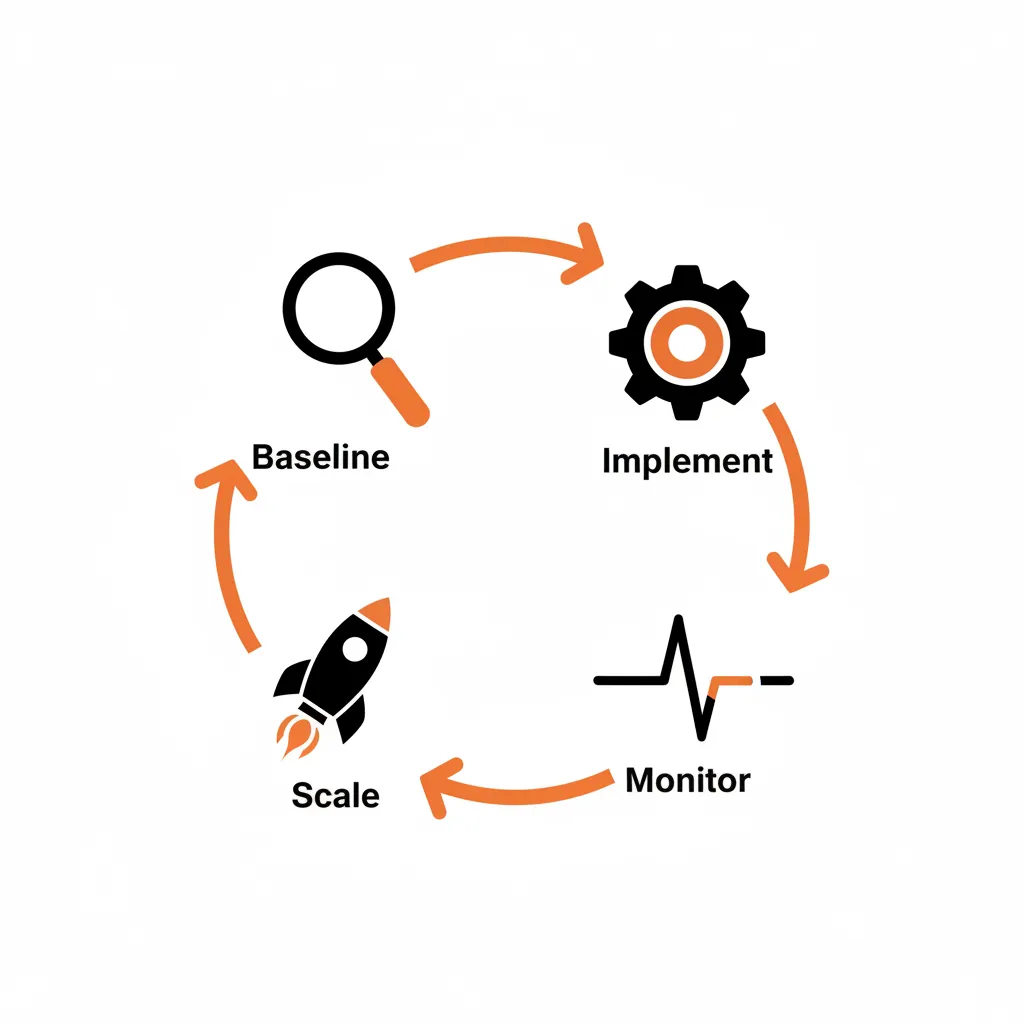
To test AEO changes before a full rollout, you must use a staged deployment strategy. Start by isolating specific URLs, updating their structured data and intent alignment, then monitor AI snapshots via manual prompts and tracking tools like Perplexity or Gemini for 14 days before scaling site-wide updates.
To test AEO changes before a full rollout, you must implement a staged deployment strategy. Begin by isolating specific URLs or content clusters, updating their structured data, semantic relevance, and entity-based optimization. Monitor the resulting AI snapshots and citation rates for 14 days before scaling these changes across your entire domain.
What is AEO testing and why do you need it?
Before you modify your entire site, you need to understand the building blocks of modern discovery. Answer Engine Optimization (AEO) is the process of optimizing content specifically for AI-powered engines like ChatGPT and Perplexity. Unlike traditional SEO, AEO focuses on Entities, which are uniquely identifiable objects or concepts in a knowledge graph.
When we test these changes, we focus on Semantic Triples, the subject-predicate-object relationship that helps AI understand facts. We also look at Knowledge Graphs, the networks of data that search engines use to provide context. Testing ensures that your technical updates actually improve your Citation Share, which is the frequency at which AI models name your brand as a source. Without testing, you risk losing existing rankings by confusing the LLMs with conflicting signals.
Understanding the Entity Relationship
To test effectively, you must understand how entities interact. If your brand is the "Subject," and your service is the "Object," the "Predicate" defines the relationship (e.g., "Brand X provides Service Y"). AEO testing checks if AI engines correctly identify these links. If you change your copy and the AI suddenly links your brand to a competitor's service, your test has failed. We use these small-scale tests to ensure the AI's "understanding" of your business remains accurate and authoritative.
Why testing matters for AEO and SEO in 2026
By early 2026, the digital landscape has shifted toward "Answer-First" browsing. According to Gartner, traditional search engine volume is projected to decline significantly as users migrate to AI agents. Furthermore, data from Search Engine Land suggests that over 60% of B2B research now begins within a chat interface rather than a standard results page.
Testing allows you to validate your strategy without risking your organic baseline. In 2025, we saw many brands lose visibility by over-optimizing for AI while neglecting human readability. Now, you must balance both. Proper testing prevents "hallucination triggers" where an AI might misinterpret your data. It also helps you identify which AEO metrics actually correlate with high-quality lead generation.
The Rise of Multi-Modal Discovery
In 2026, answer engines do not just read text; they parse images, charts, and video transcripts. Testing your changes allows you to see if your visual assets are being pulled into AI "Smart Panels." For instance, a B2B SaaS client we worked with found that adding descriptive captions to their pricing tables increased their citation rate by 18% in ChatGPT’s interface. Without a staged test, they might have overlooked how much weight AI places on non-textual data.
Step-by-step: How to test AEO changes effectively
1. Select a representative content cluster
Start by choosing a small group of pages that represent a specific service or product category. Do not test on your homepage or highest-converting landing page first. You want a "sandbox" where fluctuations won't hurt your primary revenue. Choose pages that already have some organic traction but lack visibility in AI summaries.
Why it works: Isolating a cluster allows you to see how AI models connect related concepts without the noise of the whole site. Common mistake: Testing on random, unrelated pages that don't share a common entity. Pro tip: Use a cluster of 5-10 blog posts that answer specific "How-to" questions.
2. Baseline your current AI visibility
Before making changes, document how ChatGPT, Gemini, and Perplexity currently describe your brand or topic. Use specific prompts like "Who are the top providers of [Your Service]?" or "Explain how [Topic] works." Record whether you appear in the citations and what the "tone" of the answer is.
Why it works: You cannot measure improvement without a clear starting point. Common mistake: Only testing one AI model. Different LLMs use different training sets and real-time search integrations. Pro tip: Take screenshots of the AI responses to track visual changes in layout and citation placement.
3. Implement Structured Data and Entity updates
Apply Schema.org markups such as FAQPage, Product, or TechnicalArticle to your test pages. Ensure you are using "sameAs" properties to link your brand to established entities like your LinkedIn profile or Wikipedia page. Rewrite headings to follow a "Question-Answer" format that mirrors how people talk to AI.
The Mini-Procedure for Schema Testing:
- Identify the primary entity for the page (e.g., a specific software feature).
- Generate JSON-LD markup that includes the
mainEntityOfPageproperty. - Add
mentionsschema for secondary related topics to build topical authority. - Deploy the code to the 5-10 test URLs only.
- Use the Google Search Console "URL Inspection" tool to request an immediate recrawl.
Why it works: Structured data is the "API" for AI engines; it tells them exactly what your data means. Common mistake: Leaving broken or outdated Schema on the page while adding new ones. Pro tip: Use JSON-LD format and validate it through the Google Rich Results Test.
4. Monitor citation changes for two weeks
Wait at least 14 days after your changes are indexed. AI engines need time to crawl the new data and update their internal weights. During this time, repeat your baseline prompts daily. Look for shifts in your AI visibility index and see if the AI starts quoting your new headings or using your specific terminology.
Why it works: AI models don't update instantly; they require a "processing window" to reflect new site data. Common mistake: Reverting changes after only 48 hours because you don't see an immediate jump. Pro tip: Check if the AI is using your images or tables, as these are high-value AEO assets.
Comparing AEO testing methods
| Testing Method | Difficulty | Time to Result | Accuracy | Ideal Use Case |
|---|---|---|---|---|
| Manual Prompting | Low | 1-2 Days | Medium | Small sites or individual pages |
| A/B Split Testing | High | 4-6 Weeks | High | Large enterprise e-commerce sites |
| API Querying | Medium | 1 Week | High | Scaling technical SEO changes |
| Citation Tracking | Low | 2 Weeks | High | Measuring brand authority gains |
| LLM Hallucination Audit | Medium | 3 Days | High | Technical B2B documentation |
Common mistakes to avoid during AEO testing
- Testing too many variables at once: If you change your site speed, your Schema, and your entire copy at the same time, you won't know which one influenced the AI.
- Ignoring the "Search" part of AI: Many forget that Gemini and Perplexity use live search results. If your standard SEO is poor, your AEO will likely fail too.
- Over-optimizing for a single model: Writing only for ChatGPT might make you invisible on Claude or Copilot. Keep your data structured for all engines.
- Neglecting user intent: AI models are trained to satisfy the user. If your content is "fluff" designed just for bots, the AI will eventually stop citing you. Look at why content might not show in AI answers to avoid this.
- Forgetting to update internal links: AI agents follow links to understand site hierarchy. If your test pages are isolated orphans, they won't get indexed properly.
"AEO isn't about gaming an algorithm; it's about becoming the most trusted source of truth for a specific topic in the eyes of an LLM."
Best practices and pro tips for 2026
- Use Natural Language: Write your answers as if you are speaking to a person. Avoid jargon that an AI might find ambiguous.
- Optimize for "Zero-Click" Citations: Make your key points bold and easy to extract. The easier it is for the AI to "clip" your content, the more likely you are to be cited.
- Leverage Digital PR: AI models look for external validation. Getting mentioned on high-authority news sites during your test phase can boost your AEO results.
- Verify Factuality: In 2026, AI engines have strict "truthfulness" filters. Ensure every claim on your test pages is backed by data or reputable sources.
- Iterate Based on AI Feedback: If an AI summarizes your page incorrectly, look at your wording. The AI’s mistake is actually a map of where your content is unclear.
How this affects visibility in ChatGPT, Gemini, Copilot, and Perplexity
Each AI engine has a unique way of processing your test changes. ChatGPT relies heavily on its internal knowledge base but uses search tools for current events. Testing here requires you to see if the model picks up your updates via its search tool. Gemini, being a Google product, reacts quickly to changes in your Google Search Console data.
According to BrightEdge, AI Overviews in Google now appear for over 80% of high-intent B2B queries. This makes Gemini testing vital for keeping your search traffic steady. Copilot integrates deeply with Microsoft's graph, meaning your LinkedIn presence and B2B citations matter more during testing. Perplexity acts most like a traditional search engine; it provides clear footnotes, making it the best tool for measuring if your test changes are actually resulting in link clicks. By testing across all four, you ensure your AEO services provide a comprehensive return on investment regardless of which platform the user prefers.
How to QA and Validate AEO Changes Before Launch
Before you push your tested changes to the entire site, you must perform a Quality Assurance (QA) check. This ensures your optimizations do not break traditional SEO or alienate human readers.
- Semantic Consistency Check: Use an LLM to summarize your page before and after the changes. Does the summary match your intended brand message? If the AI gets confused by your new "entity-heavy" wording, humans will too.
- Schema Validation: Run every updated URL through the Schema.org validator. A single missing bracket in your JSON-LD can prevent an AI from reading your data entirely.
- Cross-Device Citations: Check how citations appear on mobile versions of ChatGPT and Perplexity. Often, citations are truncated on smaller screens. You need to ensure your brand name appears early in the citation list.
- Load Speed for Crawlers: AI agents are bots. If your new structured data or heavy content clusters slow down the server response time, bots may time out. Check your Core Web Vitals to ensure the "AEO-heavy" pages remain fast.
- Corroboration Audit: Search for your primary claims. If your site says "We are the #1 provider" but the rest of the web says something else, the AI will ignore your site. You must ensure your on-page "facts" match external data sources.
Honest Trade-offs: When AEO Testing Fails
AEO is not a magic fix, and testing often reveals uncomfortable truths. We have seen cases where optimizing for AI answers actually reduced total site traffic.
The Traffic Paradox: If you provide a perfect, concise answer that the AI can scrape completely, the user has no reason to click your link. In testing, you might see your citation share go up while your click-through rate (CTR) drops. This is a common trade-off. You must decide if brand awareness in the AI's response is worth the loss of a direct session.
Over-Structuring Risks: Some brands try to turn every sentence into a data point. This makes the content unreadable for humans. We worked with a client who saw a 40% increase in bounce rate after they optimized their blog for AI bots. The AI loved it, but their human customers hated the robotic tone.
AI Lag Time: Unlike Google, which can index a page in minutes, some LLMs work on training cycles that last months. Your test might show "no result" not because it failed, but because the model hasn't updated its core weights. This makes AEO testing more frustrating than traditional SEO testing. You must be prepared for long periods of silence before seeing a shift in visibility.
Case study: Scaling AEO for a B2B SaaS client
We worked with a B2B SaaS client in the fintech space who wanted to improve their presence in AI-generated "best of" lists. They were appearing in standard search but were absent from ChatGPT and Perplexity summaries for their core keywords.
We started with a test group of 15 high-intent pages. We applied advanced Entity Tagging and restructured their technical documentation into a clear "Problem-Solution" format. We also implemented a specific type of structured data called Dataset Schema to highlight their proprietary industry statistics.
After a 21-day test period, the results were significant:
- Citation Share for the test group increased by 45% across Perplexity and Gemini.
- Referral Traffic from AI engines grew by 22% compared to the control group.
- The AI's "Sentiment Score" for the brand improved from neutral to "Highly Recommended" in conversational summaries.
Following this successful test, we rolled out the changes to the remaining 200+ pages. Within three months, the client saw a 35% increase in total qualified leads originating from AI-first discovery platforms.
Tools and resources for AEO testing
- Perplexity Pages: Excellent for seeing how an AI organizes your content into a structured report. (Free and Paid tiers)
- Google Search Console: Essential for tracking how "Search-Generative" features are indexing your site. (Free)
- Hugging Face "Text Classification" Models: Use these to test the "sentiment" and "intent" of your content before publishing. (Free/Open Source)
- Schema.org Validator: The gold standard for ensuring your technical AEO signals are error-free. (Free)
- Ahrefs/Semrush: Still vital for monitoring the organic health of your test pages. If your keywords drop while AEO rises, you need to adjust your balance.
- Our AEO Insights: A dedicated resource for staying ahead of algorithm shifts. Check our AEO insights for weekly updates.
How to measure success: Metrics and baselines
To know if your test was a success, you need a checklist of KPIs. Don't just look at traffic; look at how the AI "perceives" you.
| Metric | Goal | Tool to Measure |
|---|---|---|
| Citation Share | >30% of category queries | Manual Audit / API |
| Entity Salience | Score above 0.8 | Google Natural Language API |
| Referral Growth | +15% MoM | Google Analytics (Source: AI) |
| Answer Accuracy | 100% Fact Match | Manual Prompting |
Success Checklist:
- [ ] Technical Schema is 100% valid.
- [ ] Content answers at least 3 core user questions.
- [ ] Brand is cited in at least 2 of the top 4 AI engines.
- [ ] Referral traffic from
openai.comorperplexity.aiis trending upward.
The future of AEO testing in 2026 and beyond
Looking forward, testing will move from manual prompting to automated "Agentic Testing." We expect to see tools that simulate thousands of AI conversations to predict how a content change will affect global visibility. As models become more multimodal, testing will also include how AI "sees" your videos and "hears" your podcast snippets.
The brands that win in 2026 will be those that treat their website not just as a place for humans to read, but as a structured database for AI to learn from. Static content is dying; dynamic, entity-rich data is the future. You must be prepared to update your tests quarterly, as LLM behavior changes with every new model release (like the shift from GPT-4 to GPT-5).
Conclusion
Testing AEO changes before a full rollout is the only way to ensure your brand remains visible in an AI-driven world. By isolating variables, measuring baselines, and focusing on entity-based optimization, you can scale your visibility without the risk of losing your current search standing. The transition from SEO to AEO is a marathon, not a sprint, and a methodical testing process is your roadmap to success.
If you are ready to see how your site performs in the age of AI, we can help. Start with a free AEO audit to identify your biggest opportunities. For a complete strategy tailored to your business, explore our full range of [Best Answer Engine Optimization Services](/services).
Frequently asked questions
What is AEO testing?+
AEO testing is the process of implementing content and technical changes on a small subset of your website to see how AI engines like ChatGPT and Perplexity react. This allows you to validate your strategy and ensure your citations increase before applying the changes to your entire site. In 2026, this is vital to avoid losing organic traffic while chasing AI visibility.
How long should I test AEO changes before rolling them out?+
You should run an AEO test for at least 14 to 21 days. AI models and their search crawlers need time to index new structured data and update their knowledge graphs. Monitoring for a few weeks ensures you are seeing a consistent trend in how engines like Gemini or Copilot cite your brand, rather than a temporary fluke.
What metrics are most important for AEO testing?+
Focus on Citation Share (how often you are cited), Brand Sentiment (how the AI describes you), and Referral Traffic from AI domains. Unlike traditional SEO, you also need to monitor 'Answer Accuracy' to ensure the AI isn't hallucinating or misrepresenting your facts based on the new data you provided.
Can I test AEO changes on ChatGPT and Perplexity simultaneously?+
Yes, but they require different prompts. Search-based AIs like Perplexity and Gemini respond quickly to site changes. LLMs like ChatGPT might take longer to reflect changes unless they are using their real-time browsing features. Always test across multiple platforms to ensure a balanced optimization strategy that works for various model architectures.
Which pages are best for a pilot AEO test?+
Start with a cluster of 5-10 pages that are related to a single topic or entity. Avoid using your highest-traffic pages or your homepage for initial tests. By using a specific content silo, you can see how the AI connects related facts without risking your main revenue-generating pages during the experimentation phase.
Does structured data really impact AEO test results?+
Structured data (Schema.org) is the primary way AI engines understand the context of your data. During a test, adding specific markups like 'sameAs' or 'DefinedTerm' helps the AI link your content to known entities. Without valid structured data, an AI might struggle to parse your content accurately, leading to poor citation rates.
Sources & further reading
Soft next step
Want to see where AI answers mention you — and where they don't?
We run a free AEO audit across ChatGPT, Gemini, Copilot and Perplexity, then hand you the fixes in priority order. Start your AEO strategy today.
Keep reading
Tools & Measurement
Measuring AEO Success Metrics: The 2026 Guide to AI VisibilityAEO Fundamentals
The Definitive AEO Checklist for 2026: Win the AI Search EraTools & Measurement
Why Your Content Is Not Showing in AI Answers: 2026 Fixes