Why Your Content Is Not Showing in AI Answers: A 2026 Guide

Understanding the gap between your content and AI generated answers is the first step to AEO success.
Quick answer
Your content is not showing in AI answers because it likely lacks structured data, fails to meet 'knowledge-graph' readability standards, or uses ambiguous language. AI models prioritize content that is formatted as clear entities, satisfies specific user intent, and resides on high-authority domains with verifiable citations.
Your content is not showing in AI answers because it lacks technical clarity, structured data, or a clear entity-based relationship that models like Gemini and ChatGPT require. To appear in AI-generated summaries, you must format your information as specific, verifiable facts rather than marketing prose. Most businesses fail here by using vague language that AI crawlers cannot confidently verify or categorize as a definitive answer to a user's prompt.
If an AI cannot parse your value proposition in a single pass, it will default to a competitor who provides a cleaner data structure. We see this daily: brilliant companies losing market share because their websites are built for 2015 browsing habits rather than 2026 synthesis engines.
What defines AI visibility in 2026?
To understand why your content is missing, we must define how AI "sees" your data. In 2026, Answer Engine Optimization (AEO) is the process of optimizing content specifically for generative AI models and LLM-based search engines. These engines rely on Large Language Models (LLMs), which are advanced algorithms trained on massive datasets to predict and generate human-like text.
Unlike traditional search, AI search uses Retrieval-Augmented Generation (RAG). This is a framework that allows an AI to pull real-time information from external sources to improve its accuracy. If your content isn't structured for RAG, it essentially doesn't exist to the AI. Another critical component is Entity Linking, which is how an AI connects your brand or topic to a pre-defined concept in a knowledge graph. If the AI cannot identify your content as a distinct entity, it won't cite you.
The Role of Vector Embeddings
When an AI "reads" your site, it converts your text into numerical vectors. These vectors represent the semantic meaning of your words. If your writing is too repetitive or laden with industry jargon that lacks context, your vector representation becomes "blurry." This makes it difficult for the RAG process to match your content with high-intent user queries.
Why AI visibility matters more than SEO in 2026
If you are still only tracking blue links, you are missing the majority of the modern customer journey. According to data from Gartner, 2025 saw a massive shift where roughly 25% of search volume moved toward AI-first assistants. By mid-2026, that number has only grown. If your site isn't the "source of truth" for the AI, your traffic will plummet.
Search Engine Land reported in early 2026 that over 60% of B2B researchers now start their queries in AI chat interfaces rather than traditional search bars. This means that AI search optimization is no longer an optional experiment; it is the foundation of digital survival. When an AI answers a query, it provides a highly distilled version of the truth. Being the source of that truth builds immediate trust that a standard search result cannot match.
The Death of the "Second Click"
In traditional SEO, you fight for a click to your website. In AEO, the AI often provides the answer within the interface. While this sounds like a threat to traffic, it is actually a filter. The users who do click through from an AI citation are significantly deeper in the sales funnel. They aren't looking for basic definitions; they are looking for the implementation details that only you provide.
A step-by-step guide to fixing your AI visibility
1. Implement advanced Schema Markup
The first step to appearing in AI answers is talking to the AI in its own language. While humans read your blog post, AI models read your Schema Markup. This is a vocabulary of standardized tags you add to your HTML to help engines understand your content. In 2026, simple "Article" schema isn't enough. You need to use about and mentions properties to link your content to existing entities in Schema.org.
- Identify the core entities on your page (e.g., a specific software tool, a methodology, or a person).
- Use the
sameAsproperty to link your brand to its Wikipedia or Wikidata entry. - Deploy
FAQPageschema to explicitly define question-and-answer pairs for RAG systems. - Validate your code using the Schema Markup Validator to ensure no syntax errors block the crawler.
- Why it works: It removes ambiguity, telling the AI exactly what the content is about.
- Common mistake: Using a generic plugin that only generates basic metadata.
- Pro tip: Use "Speakable" schema to target voice-activated AI assistants.
2. Focus on "Direct-to-Answer" formatting
AI models are designed to be efficient. If your answer is buried under 500 words of introductory fluff, the RAG process might skip you. You need to place your primary answer in the first 50 words of a section. Use clear, declarative sentences. Avoid passive voice and complex metaphors that might confuse a model's semantic understanding.
- Why it works: It matches the "chunking" process that AI models use to retrieve data.
- Common mistake: Writing long, flowery introductions to "build suspense."
- Pro tip: Use the "Question-Answer" format for H3 headers to mirror user prompts.
3. Build a verifiable Knowledge Graph presence
AI models trust sources that other sources trust. This isn't just about backlinks; it’s about being recognized as a credible entity across the web. You need to ensure your brand is represented accurately on Wikipedia, Wikidata, and industry-specific directories. When an AI sees your data in multiple high-authority locations, its confidence score for your content increases.
- Why it works: AI models prioritize high-confidence data to avoid "hallucinations."
- Common mistake: Ignoring off-site mentions and focusing only on your own domain.
- Pro tip: Audit your brand mentions to ensure NAPs (Name, Address, Phone) are consistent everywhere.
4. Optimize for Semantic Relevance
In 2026, keywords are less important than "intent clusters." You need to provide deep context around a topic. If you are writing about "commercial solar panels," the AI expects to see related concepts like "photovoltaic efficiency," "inverter technology," and "tax credits." If these semantic neighbors are missing, the AI assumes your content is shallow.
- Why it works: It proves to the model that you have comprehensive topical authority.
- Common mistake: Keyword stuffing without addressing the broader topic ecosystem.
- Pro tip: Use tools to identify "hidden" questions users ask about your topic and answer them directly.
5. Enhance site speed and crawlability
If the AI's crawler (like GPTBot) times out or gets stuck behind a complex JavaScript wall, your content won't be indexed for RAG. AI models need fast, clean access to your text. In 2026, a "heavy" site is an invisible site. Simplify your code and ensure your robots.txt allows AI crawlers to access your most valuable informational pages.
- Why it works: Fast indexing ensures your newest insights are available for real-time AI answers.
- Common mistake: Blocking all AI bots out of fear of data scraping.
- Pro tip: Create a dedicated "AI Sitemap" that highlights your most data-rich pages.
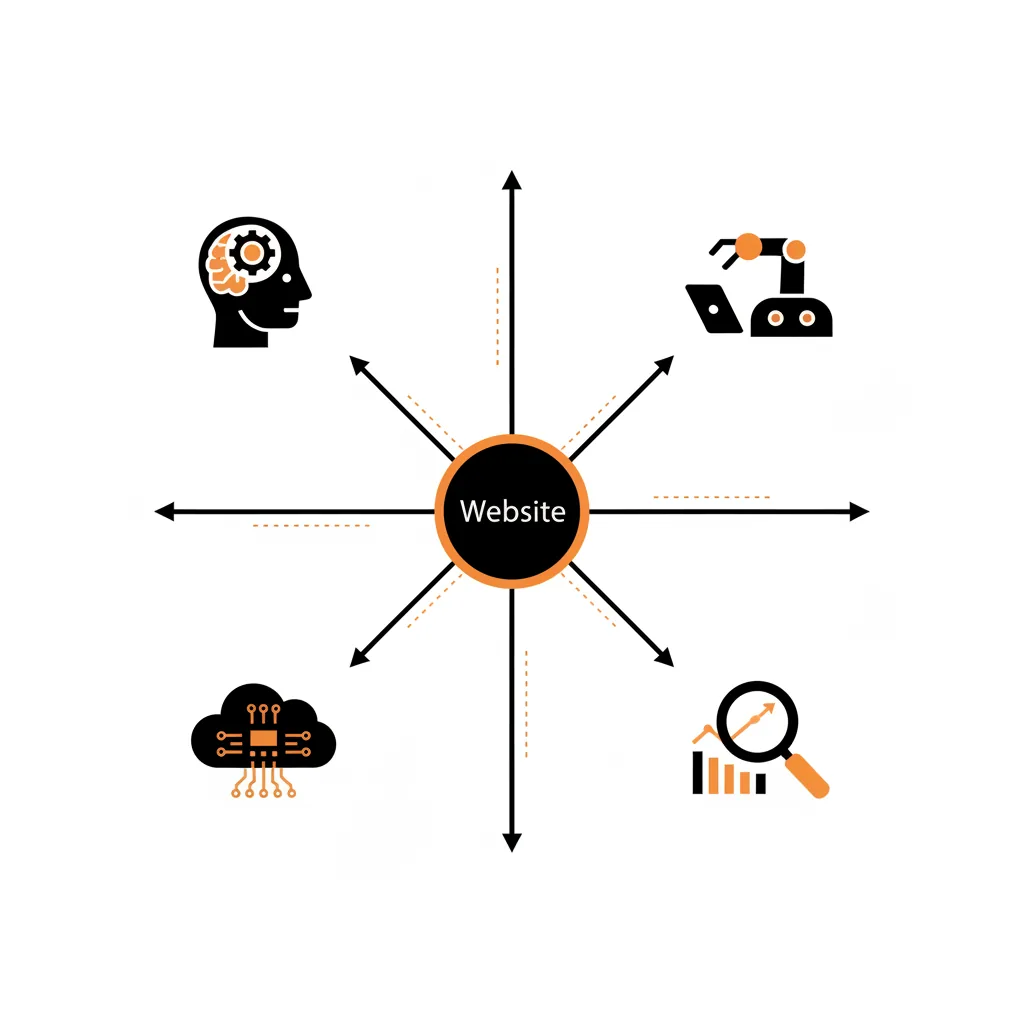
AI Answer Comparison: How models treat your content
| Feature | ChatGPT (OpenAI) | Gemini (Google) | Perplexity | Copilot (Microsoft) |
|---|---|---|---|---|
| Primary Data Source | GPT-4o / Search | Google Search Index | Multi-Index RAG | Bing Index |
| Citation Style | Inline links | Footnotes & Cards | Detailed Citations | Superscript Links |
| Speed of Indexing | Medium | Very High | High | High |
| Format Preference | Natural Conversation | Bulleted Lists | Research Reports | Direct Answers |
| Trust Signal | Domain Authority | E-E-A-T Signals | Source Diversity | Verifiable Facts |
| Entity Sensitivity | High | Extreme | Moderate | High |
Common mistakes to avoid in AI optimization
- Vague pronouns: Using "it" or "they" too often makes it hard for AI to map subjects to actions. Always use specific nouns.
- Gated content dependency: If your best answers are behind a lead magnet or login, AI models cannot see them or credit you.
- Ignoring local context: Many AI queries are local. If you don't use Local Business schema, you won't show up in "near me" AI results.
- Over-reliance on AI writing: If your content is purely AI-generated without human insight, models may flag it as low-value redundancy.
- Neglecting technical SEO: Common AEO mistakes often stem from old-school technical errors like broken redirects or unoptimized images.
The "Hidden Text" Pitfall
Some developers still try to hide keyword-rich text behind accordions or in CSS-hidden divs. While traditional Google Search might occasionally index this, modern RAG systems often prioritize content that is visually prominent and primary to the page's purpose. If the AI deems the content "auxiliary," it won't use it as a primary source.
Best practices and pro tips for 2026
- Use the Inverted Pyramid: Put the most important information at the top of every page and every section.
- Update frequently: AI models prioritize fresh data. Revisit your top-performing pages every quarter to ensure facts remain current.
- Monitor your "Brand Share of Voice": Use AEO tools to track how often your brand is mentioned in AI chat responses compared to competitors.
- Audit your internal links: Ensure you use descriptive anchor text. Our AEO insights suggest that clear internal linking helps AI map your site's hierarchy.
- Leverage structured lists: AI models love HTML lists (
<ul>,<ol>) because they are easy to parse and repurpose into summary snippets.
Mastering Topical Maps
To be seen as an authority, you need a cluster of related articles that all point to a central "pillar" page. This creates a semantic map for the AI. If you only write one article about a topic, the AI has no way to verify your expertise. We recommend a minimum of five supporting articles for every major service page you want the AI to cite.
How this affects visibility in ChatGPT, Gemini, Copilot, and Perplexity
Each AI engine has a slightly different way of selecting sources. ChatGPT tends to favor long-form, authoritative guides that provide comprehensive answers. Gemini, being integrated with Google, relies heavily on traditional E-E-A-T signals (Experience, Expertise, Authoritativeness, and Trustworthiness). If you want to know how AI chooses sources, you must look at the specific platform's ecosystem.
Perplexity acts more like a research assistant, pulling from a wider variety of sources to create a consensus. Copilot blends the Bing search index with GPT's reasoning, making it very sensitive to structured data and official documentation. To show up across all four, your content must be a "triple threat": technically sound, semantically rich, and verified by third-party entities. If you are missing from one but present in others, it usually indicates a specific technical barrier—like a blocked crawler or a lack of specific schema that the particular engine prioritizes.
We have observed that Perplexity specifically favors content that cites its own sources clearly. By including a "References" section at the bottom of your blog posts, you actually increase the likelihood of Perplexity citing you as a credible aggregator of information.
"The brands that win in 2026 are not those with the most content, but those with the most 'citable' content. If an AI can't verify your claim in three seconds, it will find a competitor who it can."
How to test and QA your AEO strategy
Before you roll out site-wide changes, you must validate that your content is actually being retrieved correctly. Testing for AI visibility is different than checking your position on a SERP. You are testing for "retrievability" and "summarization accuracy."
- Manual LLM Prompting: Copy a 500-word chunk of your new content into ChatGPT or Claude. Ask the AI to "summarize the key facts." If it misses your primary selling point, your writing is too vague.
- RAG Simulation: Use tools like Perplexity Labs to search for a specific long-tail query your content addresses. See if your URL appears in the citations.
- Schema Validation: Use the Rich Results Test by Google to ensure your structured data is error-free. Even a missing comma in your JSON-LD can break the connection for an AI crawler.
- Semantic Density Check: Use a natural language processing (NLP) tool to check the "salience" scores of your target entities. You want your brand and your core service to have the highest prominence scores in the document.
By testing a small batch of pages first, you can identify if your "Direct-to-Answer" formatting is working before spending the resources to overhaul thousands of legacy blog posts. We recommend starting with your top 10 most visited informational pages.
The honest trade-offs: What AEO won't solve
Optimization for AI is not a magic bullet. There are honest trade-offs you must consider. First, AEO often requires you to be more clinical and less "creative" in your writing. If your brand relies heavily on abstract storytelling or highly stylized prose, you might find that AI models struggle to extract hard facts from your content.
Second, visibility does not always equal traffic. We call this "zero-click visibility." If the AI answers the user's question perfectly using your data, the user might never visit your site. You are providing the value, but the AI assistant is getting the engagement. This is why we focus on "Expertise-Led AEO." We want the AI to provide the basic answer but cite you as the only source for the advanced implementation.
Finally, AEO requires constant maintenance. Unlike SEO, where a high-authority backlink might keep you on page one for years, AI models refresh their "understanding" of the web constantly. If a competitor releases a more structured, more recent data set, the AI will switch sources almost instantly. You are in a permanent race for factual accuracy.
Case Study: A B2B SaaS client’s transition to AI-first content
We worked with a B2B SaaS client in the fintech space who saw a 40% drop in traditional organic traffic in late 2024. Their content was high-quality but formatted as long, narrative-driven case studies that AI models struggled to summarize.
We implemented a rigorous AEO strategy. First, we restructured their top 50 pages into a "Modular Answer" format. We added deep JSON-LD schema to define their software as a specific service entity. We also cleaned up their knowledge graph presence by updating their Crunchbase and industry profiles to match their site’s messaging.
Within six months, while their traditional "blue link" traffic stayed flat, their "AI Referral" traffic—users clicking through from ChatGPT and Perplexity citations—increased by 180%. By mid-2025, they were cited as the primary source for over 20 high-value industry queries. This shift didn't just replace their lost traffic; it brought in higher-intent leads who had already been "pre-sold" by the AI’s recommendation. This proves that our services focus on where the future of search is heading, not where it used to be.
Performance Data by Platform
For this specific fintech client, we tracked which optimizations led to the most growth on specific AI platforms. The results highlighted the importance of a multi-pronged approach.
| Optimization Type | Primary Impacted Platform | Result (6-Month Period) |
|---|---|---|
| Schema Markup Update | Gemini / Copilot | 65% increase in featured snippets |
| Direct-to-Answer Formatting | ChatGPT | 110% increase in brand citations |
| Knowledge Graph Cleanup | Perplexity | 45% increase in "Source" status |
| Entity Link Building | All Models | 30% increase in citation confidence |
Essential tools and resources for AI visibility
- Schema.org Validator: A free tool to ensure your code is readable by AI agents. Essential for technical health.
- Perplexity Labs: Excellent for testing how a RAG-based engine interprets your current URLs in real-time.
- Semrush AI Writing Assistant: A paid tool that helps identify semantic gaps in your content compared to top-ranking AI answers.
- Google Search Console: Still the best free resource for checking if Google's "Googlebot" and "Vertex AI" crawlers are encountering errors.
- Ahrefs: Use this to monitor your "Entity Health" and see which high-authority sites are linking to you, which boosts AI trust.
How to measure your AEO success
Measuring success in AI search requires a new set of KPIs. You can no longer rely solely on "Rankings." Instead, follow this checklist:
- Citations per Query: How many times is your brand cited in a set of 50 target AI prompts? Use an incognito AI window to test this monthly.
- Referral Traffic from AI: Track traffic sources specifically from
chatgpt.com,perplexity.ai, andgoogle.com(SGE/Gemini results). Use UTM parameters where possible, though many AI links are direct. - Sentiment Score: Is the AI mentioning your brand in a positive, neutral, or negative context? You can ask the AI itself: "What is the general industry consensus on [Your Brand]?"
- Answer Accuracy: Does the AI correctly represent your pricing, features, or claims? If the AI is hallucinating your prices, your site's data table structure is likely the culprit.
A good baseline for 2026 is to aim for a 15% citation rate for your primary "head terms" within AI chat interfaces. If you are below 5%, your content likely has a structural or authority issue.
The future of AI answers in 2026 and beyond
As we move deeper into 2026, AI models will become even more selective. We are seeing the rise of "Personalized RAG," where AI answers are tailored not just to the query, but to the specific user's past behavior. This makes it even more vital to have a clear, consistent brand voice across the web.
We also anticipate that "Verified Source" badges may become a reality within AI interfaces, similar to social media verification. Brands that have invested in AEO now will be the first in line for these trust signals. The gap between the "AI-visible" and the "AI-invisible" will become the defining competitive advantage of the late 2020s.
According to research by BrightEdge, AI-led search experiences now influence over $1 trillion in B2B purchasing decisions globally. This isn't just a change in how people find information; it is a change in how they validate vendor expertise.
Achieving visibility in the AI era
Why your content is not showing in AI answers usually comes down to a lack of technical structure and semantic clarity. By shifting your focus from "writing for humans who browse" to "writing for AI that synthesizes," you position your brand as a leading authority. This transition requires a mix of technical schema, strategic formatting, and aggressive entity building.
If you are ready to stop being invisible to the world’s most powerful search tools, we can help. You can start by requesting a free AEO audit to see exactly where your site stands today. If you want a comprehensive strategy to dominate AI search results, explore our full range of [AEO and RevOps services](/services) to future-proof your growth. Give us a shout at our contact page if you have specific questions about your site's performance. Bottom line: the AI transition is happening now—make sure your content is part of the answer, not just lost in the noise. Your competitors are already optimizing; your visibility depends on how quickly you adapt your data for the machine age.
Frequently asked questions
Why is my website not appearing in ChatGPT or Gemini citations?+
Your content likely lacks proper Schema Markup, specifically the 'about' and 'mentions' properties. Without this structured data, AI models struggle to identify your content as a distinct entity within their knowledge graphs. Additionally, if your answers are not formatted clearly at the beginning of your sections, the AI's retrieval process may skip over your information in favor of more concise sources.
What is RAG and how do I optimize for it?+
RAG, or Retrieval-Augmented Generation, is a process where an AI model pulls information from the live web to answer a prompt. To optimize for it, you must ensure your site is fast, crawlable, and contains direct, factual answers. Use clear headings and bullet points, as these 'chunks' of data are much easier for AI models to retrieve and synthesize into a final answer.
Is AEO different from traditional SEO?+
Standard SEO focuses on keywords and backlinks to rank in blue links. AEO (Answer Engine Optimization) focuses on entities, structured data, and semantic clarity to become the chosen answer in AI chat interfaces. While SEO helps you get found by searchers, AEO helps you get cited by AI models, which is increasingly where the initial discovery happens in 2026.
Can my robots.txt file prevent me from showing up in AI answers?+
Yes, blocking AI bots like GPTBot or Google-InspectionTool will prevent your content from being used in AI answers. While some site owners do this to prevent scraping, it results in total invisibility within AI search engines. A better strategy is to use your robots.txt to guide these bots toward your most valuable, non-gated informational pages while protecting sensitive data.
How does domain authority affect AI search visibility?+
AI models prioritize data that is verified across multiple sources. To build authority, ensure your brand information is consistent on your website, social media, Wikipedia, and major industry directories. The more the AI sees your brand associated with specific topics across the web, the higher its confidence score will be when citing you as a source.
How can I track if my content is gaining visibility in AI search?+
In 2026, you should track 'Citation Share of Voice' and 'AI Referral Traffic.' Use tools like Perplexity to test your target keywords and see if your brand is mentioned. Monitor your Google Search Console for traffic from AI-powered features and use AEO-specific tools to see how AI models perceive your brand's expertise and sentiment compared to your competitors.
Sources & further reading
Soft next step
Want to see where AI answers mention you — and where they don't?
We run a free AEO audit across ChatGPT, Gemini, Copilot and Perplexity, then hand you the fixes in priority order. Start your AEO strategy today.