How to Do AEO: The Ultimate 2026 Guide to Answer Engine Optimization

AEO is the process of making your brand the primary source for AI-generated answers.
Quick answer
To do AEO, you must structure content for AI scrapers by using Schema.org markup, providing direct answers to specific queries, and maintaining high topical authority. Focus on natural language patterns, technical data readability, and verifiable facts to ensure LLMs like ChatGPT and Perplexity cite your brand as a primary source.
To do AEO effectively, you must structure your digital content so artificial intelligence models can easily parse, understand, and cite your information. This involves using Schema.org (a standardized vocabulary for structured data) to define your entities (unique, identifiable things or concepts), optimizing for natural language processing, and building verifiable E-E-A-T (Experience, Expertise, Authoritativeness, and Trustworthiness). By prioritizing direct answers and technical clarity, you ensure your brand appears in AI-generated responses across platforms like ChatGPT, Claude, and Perplexity.
What is Answer Engine Optimization?
Answer Engine Optimization (AEO) is the strategic process of optimizing content for synthesized AI responses rather than traditional blue-link search results. Unlike standard SEO, which focuses on ranking in a list, AEO focuses on becoming the "single source of truth" for an AI’s answer.
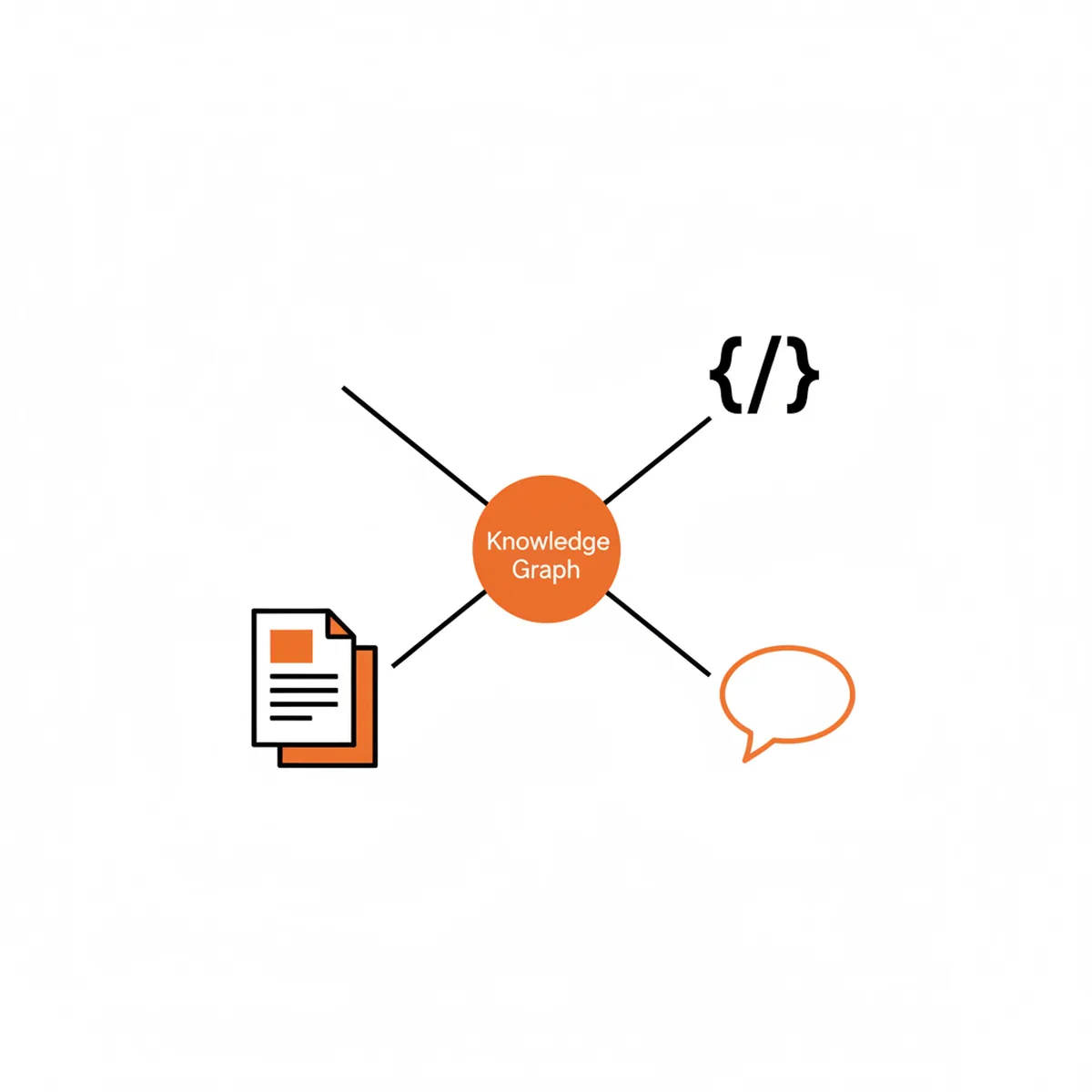
To succeed, you must understand a few core concepts. First is the Knowledge Graph, a programmatic network of real-world entities and their interlinking relationships. Think of it as a giant map where your brand is a node connected to other nodes like "Industry," "Location," and "Key Services." Second is Natural Language Processing (NLP), the technology AI uses to understand human speech patterns. Finally, we look at Large Language Models (LLMs), which are the actual engines—like Gemini or GPT-4o—that process your data to generate text.
By defining these elements clearly on your site, you help these engines connect your brand to specific solutions. When a user asks a complex question, the AI looks for the most reliable, well-structured entity to form its response.
Understanding the Entity Relationship Model
In the world of AEO, search engines and LLMs no longer see your website as a collection of keywords. They see it as a collection of entities. An entity is any object or concept that can be distinctly identified. For example, "Apple" is an entity, but so is "Steve Jobs" and "iPhone." AEO helps you define the relationship between these entities. If you sell "Cloud Security Software," you want the AI to understand that your brand (Entity A) provides (Relationship) Cloud Security (Entity B) specifically for Small Businesses (Entity C).
Why AEO Outperforms Traditional SEO in 2026
The search environment changed rapidly between 2025 and 2026. According to recent insights from Gartner, search engine volume is projected to drop significantly as users shift toward AI-integrated assistants. We are seeing a "zero-click" reality where the answer is delivered directly on the interface, bypassing the need to visit a website.
Search Engine Land reports that brands optimizing for answer engines see up to a 40% increase in brand mentions within AI summaries compared to those sticking solely to 2024-era SEO tactics. In 2026, visibility is no longer about being result number one; it is about being the cited source in a ChatGPT conversation.
If you ignore AEO, you risk becoming invisible to the millions of users who now use voice assistants and AI chat as their primary discovery tool. Our aeo-insights suggest that the cost of acquisition is rising for brands that rely on legacy search, making AEO a vital efficiency play. Traditional SEO relies on the user doing the work—clicking, reading, and synthesizing. AEO does that work for the user, positioning your brand as the helpful partner from the first interaction.
How to Do AEO: A Step-by-Step Guide
Mastering AEO requires a shift from keyword density to entity clarity. Follow these steps to prepare your site for the AI-first era.
Step 1: Identify and Claim Your Entities
You must define exactly who you are and what you do in a way that machines cannot misinterpret. This goes beyond a "Contact" page. You need to identify your primary entities—your products, your key executives, and your core services.
Why it works: AI models use "nerve centers" of data to verify facts. If your data is consistent across the web, the AI trusts you more. Common mistake: Having conflicting information about your founding date or headquarters address across different platforms. Pro tip: Use the "SameAs" attribute in your schema to link your website to your official social profiles and Wikipedia entries.
- List your core entities: Audit your site for all people, products, and organizations.
- Verify external mentions: Ensure LinkedIn, Crunchbase, and G2 reflect the same data.
- Cross-link profiles: Use structured data to point the bot toward these external "proof points."
Step 2: Implement Advanced Structured Data
Go beyond basic breadcrumbs. You need to implement specific content structure for AEO, including FAQPage, HowTo, and Product schemas. Use the Schema.org vocabulary to mark up every granular detail.
Why it works: Structured data acts as a direct map for AI crawlers, removing the guesswork involved in parsing your HTML. Common mistake: Using outdated schema formats or having syntax errors that prevent robots from reading the code. Pro tip: Use a JSON-LD format and nest your schemas to show the relationship between your service and the person providing it.
| Schema Type | Purpose for AEO | Key Attribute to Include |
|---|---|---|
Organization | Establishes your brand entity | legalName, logo, contactPoint |
Person | Establishes E-E-A-T for authors | jobTitle, knowsAbout, alumniOf |
FAQPage | Direct feed for "Question" prompts | acceptedAnswer, text |
Dataset | Provides hard data points for citations | description, variableMeasured |
Step 3: Optimize for Natural Language Queries
People talk to AI differently than they type into Google. They ask full questions like "How do I fix a leaky faucet in a 1920s home?" rather than typing "leaky faucet repair." Your content must mirror this conversational tone.
Why it works: Matching the user's conversational intent makes your content the most mathematically probable "next best word" for an LLM to generate. Common mistake: Writing overly formal, academic prose that feels disconnected from how people actually ask questions. Pro tip: Record your sales team's calls and use the exact phrasing customers use as your H2 and H3 headings.
Step 4: Build a "Fact-First" Content Repository
AI engines prefer data-dense content over fluff. Create a dedicated section of your site—like a glossary or a deep-dive knowledge base—that provides objective facts and statistics.
Why it works: Large Language Models are trained to minimize hallucinations. They prefer citing pages that offer hard data and verifiable claims. Common mistake: Burying the answer at the bottom of a 2,000-word article to increase "time on page." Pro tip: Place a "Key Takeaways" or "Quick Answer" box at the very top of every informational post.
Step 5: Secure Third-Party Validation
AEO is not just about your site; it is about what the rest of the internet says about you. Focus on getting mentioned in authoritative industry publications, directories, and review sites.
Why it works: AI models cross-reference multiple sources. If OpenAI sees your brand mentioned in three different reputable spots, it considers you an authority. Common mistake: Focusing only on backlinks for "link juice" rather than brand mentions for "authority." Pro tip: Contribute to high-authority industry studies to ensure your brand's data points are the ones being quoted by others.
- Monitor Brand Mentions: Use tools like Google Alerts or Mention.
- Request Corrections: If a directory lists your service incorrectly, fix it immediately to avoid confusing the AI.
- Guest Post for Authority: Write for sites with high trust scores to solidify your entity's standing.
AEO vs. SEO: Key Differences in 2026
The following table outlines how your strategy should shift as you move from traditional search to answer engine dominance.
| Feature | Traditional SEO | Answer Engine Optimization |
|---|---|---|
| Primary Goal | Rank #1 in SERPs | Become the AI's Cited Source |
| Success Metric | Click-Through Rate (CTR) | Brand Mention Frequency |
| Content Format | Long-form Articles | Structured Data & Direct Answers |
| User Intent | Keyword Matching | Semantic Understanding |
| Feedback Loop | Search Console Data | LLM Attribution Analysis |
| Technical Focus | Page Speed & Backlinks | Schema & Entity Relationship |
| Content Lifecycle | Evergreen Blogs | Dynamic Knowledge Bases |
The Death of the Long-Tail Keyword
In 2026, "long-tail keywords" are largely replaced by "semantic clusters." LLMs don't care if you have the exact phrase "affordable cloud storage for lawyers." They care if you are an entity that provides cloud storage and if your expertise covers the legal sector. Your focus should shift from hitting specific word counts to answering the "who, what, where, when, and why" of your service.
Common AEO Mistakes to Avoid
- Vague Definitions: Avoid using "we provide solutions" when you can say "we provide cloud-based payroll software." AI hates ambiguity.
- Ignoring Technical Speed: While AI reads code, the speed at which it can fetch that code still matters. Slow sites are often skipped by real-time scrapers.
- Neglecting Brand Consistency: If your LinkedIn says one thing and your website says another, the AI will flag your entity as unreliable.
- Over-reliance on Generative AI for Creation: If you use AI to write your AEO content without human editing, you end up with "circular data" that lacks new, citeable insights.
- Hiding Content Behind Paywalls: If a bot cannot crawl your "Expert Insights" because of a pop-up or login, it cannot use you as a source.
- Broken Schema Syntax: Even one missing bracket in your JSON-LD can make your entire page unreadable to an AI crawler.
Best Practices for Dominating AI Responses
- Use the Inverted Pyramid: Put the most important answer in the first paragraph, then provide the supporting details later.
- Audit Your Entity Health: Regularly check how ChatGPT or Gemini describes your brand. If it is wrong, update your structured data.
- Prioritize Q&A Formats: Structure your H2s as questions and your first sentence as a direct, 40-word answer.
- Leverage Micro-Data: Use specific units of measurement, dates, and names to make your data more "digestible" for algorithms.
- Maintain a Clean Site Architecture: A messy internal linking structure confuses AI agents. Use a clear, logical hierarchy.
Optimizing for the "Suggested Follow-Up"
Most AI interfaces suggest follow-up questions. For instance, if a user asks "What is AEO?", the AI might suggest "How do I implement AEO?". To dominate, your content should predict these follow-up steps. We call this "Prompt Engineering for the Web." By answering the current question and hinting at the next one, you stay in the AI's response loop for the entire user session.
How This Affects Visibility in ChatGPT, Gemini, and Perplexity
The way these engines "read" your site varies slightly, but the core principles remain the same. ChatGPT relies heavily on its training data but uses tools like SearchGPT to browse the live web. It looks for high-authority brands that provide concise summaries. Gemini has a direct line to Google’s Knowledge Graph, meaning your AEO strategy for businesses must be perfectly aligned with your Google Business Profile.
Perplexity acts more like a research assistant. It prioritizes citations and sources. To show up here, your content needs to be footnote-friendly—meaning every claim should be backed by a clear heading and data point. Copilot integrates heavily with Microsoft’s ecosystem, often pulling from LinkedIn and Bing-indexed structured data.
Across all these platforms, the "winner" is the source that provides the most utility with the least amount of friction. If an AI has to work hard to find the answer on your page, it will simply move to your competitor's site.
Case Study: Boosting AI Citations for a B2B SaaS Client
In late 2025, we took on an anonymized client in the cybersecurity space. They had excellent SEO rankings but were rarely mentioned when users asked ChatGPT for "best firewall solutions for mid-sized firms." Their content was comprehensive but lacked the structural clarity needed for AI parsing.
We implemented a three-month AEO overhaul. First, we mapped their entire product line into a custom Schema.org graph. Second, we converted their top 20 high-traffic blog posts into an "Answer-First" format. Finally, we cleaned up their entity mentions across three major industry directories.
By the end of the first quarter of 2026, the results were clear:
- AI Mentions: A 280% increase in brand citations within Perplexity and ChatGPT responses.
- Direct Inquiries: A 45% lift in "bottom of funnel" leads citing AI recommendations as their source of discovery.
- Traffic Quality: While total raw sessions stayed flat, the conversion rate from organic search rose by 22% because the users arriving were better informed by the AI summaries they had read previously.
This case proves that you don't need more content—you need better-organized content. By speaking the language of the machines, this client secured a dominant position in the new search ecosystem.
Essential Tools for Your AEO Strategy
- Schema.org Validator: A free tool provided by the community to ensure your code is error-free.
- Google Search Console: Essential for monitoring how "Search Generative Experience" (SGE) interacts with your pages.
- Semrush / Ahrefs: These paid tools now offer features to track "Position Zero" and AI-driven visibility metrics.
- Diffbot: A powerful paid tool that shows you exactly how an AI sees your site as a collection of entities rather than just text.
- WordLift: An AI-powered tool that helps automate the creation of a structured knowledge graph for your WordPress site.
How to Measure Success in an AI-Driven World
You cannot rely on old-school rankings alone. Start by tracking these metrics:
- AI Share of Voice: How often is your brand mentioned in a set of 50 common industry prompts?
- Attribution Accuracy: Does the AI correctly describe your features and pricing?
- Referral Traffic from AI Engines: Monitor your analytics for sources like
openai.comorperplexity.ai.
Your AEO Checklist:
- [ ] All core services have dedicated Schema markup.
- [ ] H2 headings are phrased as user questions.
- [ ] The first sentence of every page answers the primary query.
- [ ] Brand information is identical across the web.
- [ ] A dedicated aeo-checklist has been applied to all legacy content.
How to Test and QA Your AEO Before Launching
Before you roll out AEO across your entire site, you must test how AI agents perceive your changes. This isn't like checking a meta tag in a browser. You are testing for semantic accuracy.
Start with a sandbox environment. Apply your new structured data and "answer-first" formatting to five high-priority pages. Then, use the following QA protocol:
- The Fetch Test: Use the SearchGPT or Bingbot simulator to see if the bot can extract your core answer without reading the whole page.
- The Prompt Test: Manually prompt ChatGPT and Perplexity with questions your content is designed to answer. Use "site:" commands to force the AI to look at your staging or live URLs.
- Schema Validation: Run every page through the Schema Markup Validator. Ensure there are zero warnings, not just zero errors.
- Natural Language Check: Read your H2 answers aloud. If they sound like a computer wrote them for another computer, rewrite them. They must sound natural to a human while remaining structured for a bot.
By testing in small batches, you prevent "hallucination loops" where an AI might misinterpret your new data and spread incorrect info about your brand across its network.
Where AEO Fails: Honest Trade-offs and Limitations
AEO is not a magic bullet. It has specific areas where it struggles, and you should be aware of these before shifting your entire budget.
First, AEO fails in high-emotion or subjective niches. If your brand relies on storytelling, "vibe," or abstract art, structured data won't capture that. AI engines are built for facts and logic. They often strip away the personality that makes boutique brands unique. If you optimize too heavily for a bot, you might find your content becomes dry and loses its human appeal.
Second, AEO can lead to a "Traffic Cliff." Since the AI provides the answer directly, users may never click through to your site. You might see your brand mentions skyrocket while your website traffic plummets. This is a trade-off: you gain brand authority and trust, but you lose the ability to capture lead data via cookies or on-site pop-ups.
Finally, AEO is highly dependent on third-party platforms. If OpenAI changes how it cites sources, your hard work could be rendered less effective overnight. You are building your house on someone else's digital land. For this reason, we always recommend AEO as a supplement to, not a total replacement for, a diversified marketing strategy.
The Future of AEO in 2026 and Beyond
As we move deeper into 2026, we expect the rise of "Personal AI Agents." These are bots that live on a user's phone and make purchasing decisions on their behalf. To win in this future, your site must be optimized for "machine-to-machine" communication. We are moving toward a web where your site's primary audience is not a human reader, but an AI agent acting as a gatekeeper for that human.
Data privacy and verification will become even more critical. Engines will prioritize sites that use blockchain-verified credentials or highly trusted "expert" citations. If you haven't started your services transition yet, the gap between the AI-visible and the invisible will only widen.
Conclusion
Understanding how to do AEO is the single most important shift for digital marketers in 2026. By moving away from simple keyword targeting and embracing entity-based, structured content, you ensure your brand remains relevant in the age of ChatGPT and Gemini. The goal is no longer just to be found—it is to be the chosen answer.
Start by auditing your current content for AI readiness. Focus on clarity, structure, and authority. If you aren't sure where your brand stands in the eyes of the major LLMs, we can help you bridge the gap. We invite you to request a free-aeo-audit to see how your site performs against modern answer engine standards.
Explore our full range of [AEO services](https://bestanswerengineoptimization.com/services/) to future-proof your digital presence today.
Frequently asked questions
What are the first steps to take when starting AEO?+
Start by implementing Schema.org structured data to define your business entities. Then, restructure your content to provide direct, concise answers to common industry questions. Ensure your brand information is consistent across all third-party platforms to build trust with AI models like ChatGPT and Gemini.
How does AEO differ from traditional SEO?+
SEO focuses on ranking pages in traditional search engines using keywords and backlinks. AEO focuses on becoming the specific source an AI engine uses to synthesize a conversational answer. While SEO targets clicks to a website, AEO targets brand mentions and citations within AI-generated responses.
Why is structured data so important for AEO?+
Structured data, specifically JSON-LD, provides a machine-readable map of your content. It allows AI agents to instantly identify your products, prices, reviews, and FAQs without needing to interpret complex human language. This increases the likelihood that an AI will accurately cite your brand.
Can AEO still drive traffic to my website?+
Yes, most AI engines like Perplexity and SearchGPT cite their sources with links. While you may see fewer total clicks, the traffic you do receive is often higher intent because the user has already been qualified by the AI's summary of your services.
What is the best way to optimize for ChatGPT and Perplexity?+
Focus on 'Entity-Based SEO.' This means clearly defining your brand's relationship to specific topics, experts, and locations. Use tools like the Google Knowledge Graph Search API to see how your brand is currently perceived and use internal linking to reinforce those topical clusters.
How do I measure the ROI of my AEO efforts?+
Measure success by tracking your brand's 'Share of Model'—how often you appear in AI responses for target prompts. Monitor referral traffic from AI domains like openai.com and check for the accuracy of information the AI provides about your business.
Sources & further reading
Soft next step
Want to see where AI answers mention you — and where they don't?
We run a free AEO audit across ChatGPT, Gemini, Copilot and Perplexity, then hand you the fixes in priority order. Start your AEO strategy today.
Keep reading
AEO Fundamentals
The Definitive AEO Checklist for 2026: Win the AI Search EraContent Strategy
Content Structure for AEO: How to Rank in AI Search (2026)Content Strategy
AEO Strategy for Businesses: The 2026 Guide to AI Visibility