How to Create an AEO Strategy: The 2026 Guide to Answer Engine Optimization

Mastering AEO requires a strategic blend of technical structure and authoritative content.
Quick answer
To create an AEO strategy, you must restructure your content into a direct question-and-answer format, implement advanced Schema.org markup, and verify your brand data across LLM training sets. Focus on high-authority citations and technical readability so AI agents like ChatGPT and Perplexity can easily parse and recommend your information.
To create an AEO strategy, you must prioritize conversational clarity, structured data, and authoritative brand signals. Start by identifying the specific questions your audience asks, then provide direct, concise answers followed by deep-dive supporting data. By implementing schema markup and maintaining consistent entity data across the web, you ensure AI models can accurately retrieve and attribute your content to their users.
Understanding Answer Engine Optimization and Digital Entities
To master this field, you must first understand the core components of the modern web. Answer Engine Optimization (AEO) is the process of optimizing web content specifically for AI-powered synthesis tools and LLMs. Unlike traditional SEO, which focuses on page rankings, AEO focuses on becoming the "single source of truth" for a specific query.
A central part of this is the Knowledge Graph, a programmatic database that stores interconnected descriptions of entities. An Entity is a well-defined object or concept, such as your business, a product, or a specific professional service. When you build an AEO strategy, you are essentially training Large Language Models (LLMs)—the underlying AI systems like GPT-4 or Gemini—to recognize your brand as a primary authority. Finally, Retrieval-Augmented Generation (RAG) is the technical process where an AI searches the live web to find your content and uses it to generate a real-time response.
How LLMs Categorize Your Brand Information
LLMs do not just read your site; they categorize your data into vectors. When a user asks a question, the model looks for the closest vector match. If your content is vague, your vector coordinates are fuzzy. We ensure your brand data is "sharp" by using precise terminology. For example, if you sell "cloud-based HR software," do not just call it "a solution." Call it a "SaaS platform for payroll and compliance." This precision helps the RAG process identify your site as the high-probability match for specific technical queries.
Why AEO Strategy is Critical in 2026
The search environment has shifted permanently. In 2025, we saw a massive migration of top-of-funnel queries away from standard search engines and toward AI agents. According to Gartner, search engine volume is projected to drop significantly as users turn to AI-driven "answers" rather than a list of blue links. This isn't just a trend; it's a fundamental change in how information is consumed.
Furthermore, Search Engine Land reported that over 60% of consumers now prefer concise, AI-generated summaries for product research over traditional browsing. If your content isn't formatted for these engines, your brand becomes invisible. In 2026, being "on page one" matters less than being the "cited source" in a ChatGPT or Perplexity response. Our AEO framework helps businesses bridge this gap by focusing on the technical requirements of these modern machines.
The Rise of Zero-Click Synthesis
We are entering an era of "zero-click" dominance. When Perplexity answers a question, the user often gets everything they need without leaving the interface. You might think this kills traffic, but it actually filters it. The users who do click through from an AI citation are often much further down the sales funnel. They have already accepted the AI's recommendation that you are the expert. You are no longer fighting for a click; you are fulfilling a vetted lead.
A Step-by-Step Guide to Creating Your AEO Strategy
Step 1: Perform a Brand Entity Audit
Before you can rank, the AI must know who you are. Start by searching for your brand name in Perplexity and Gemini. See what the AI "thinks" you do. If the information is outdated or incorrect, you have an entity problem. You must audit your presence across Wikipedia, LinkedIn, Crunchbase, and your own "About" page.
Why it works: AI models rely on cross-referenced data. When your information is consistent across multiple high-authority nodes, the AI gains "confidence" in your data. Common mistake: Having conflicting addresses, phone numbers, or mission statements across different social platforms. Pro tip: Use Schema.org "sameAs" properties to explicitly tell bots which social profiles belong to your main website entity.
Step 2: Identify Question-Based Keywords
Traditional keywords like "RevOps agency" are too broad for AEO. You need to target long-tail, conversational queries. Use tools like SparkToro or AnswerThePublic to find the exact phrasing your customers use. Focus on "How," "Why," and "What is the best way to..." strings.
Why it works: Answer engines are designed to solve problems. By matching the phrasing of the user's intent, you increase the likelihood of your content being pulled into the RAG process. Common mistake: Optimizing for high-volume short keywords that are too competitive and lack specific intent. Pro tip: Look at the "People Also Ask" section in Google and the "Related Questions" in Perplexity for a goldmine of AEO targets.
Step 3: Structure Content with the "Inverted Pyramid"
AEO content must be direct. Put the most important information—the direct answer—in the first paragraph. Follow this with supporting evidence, data, and then broader context. Use clear H2 and H3 headings that mirror the questions you identified in step two.
Why it works: AI scrapers look for high-density information. If the answer is buried under 500 words of fluff, the AI might skip your page for a more concise source. Common mistake: Writing long, poetic introductions that don't provide immediate value to the reader or the bot. Pro tip: Keep your "answer" paragraphs between 40 and 60 words for maximum compatibility with voice search and AI snippets.
Step 4: Implement Advanced Schema Markup
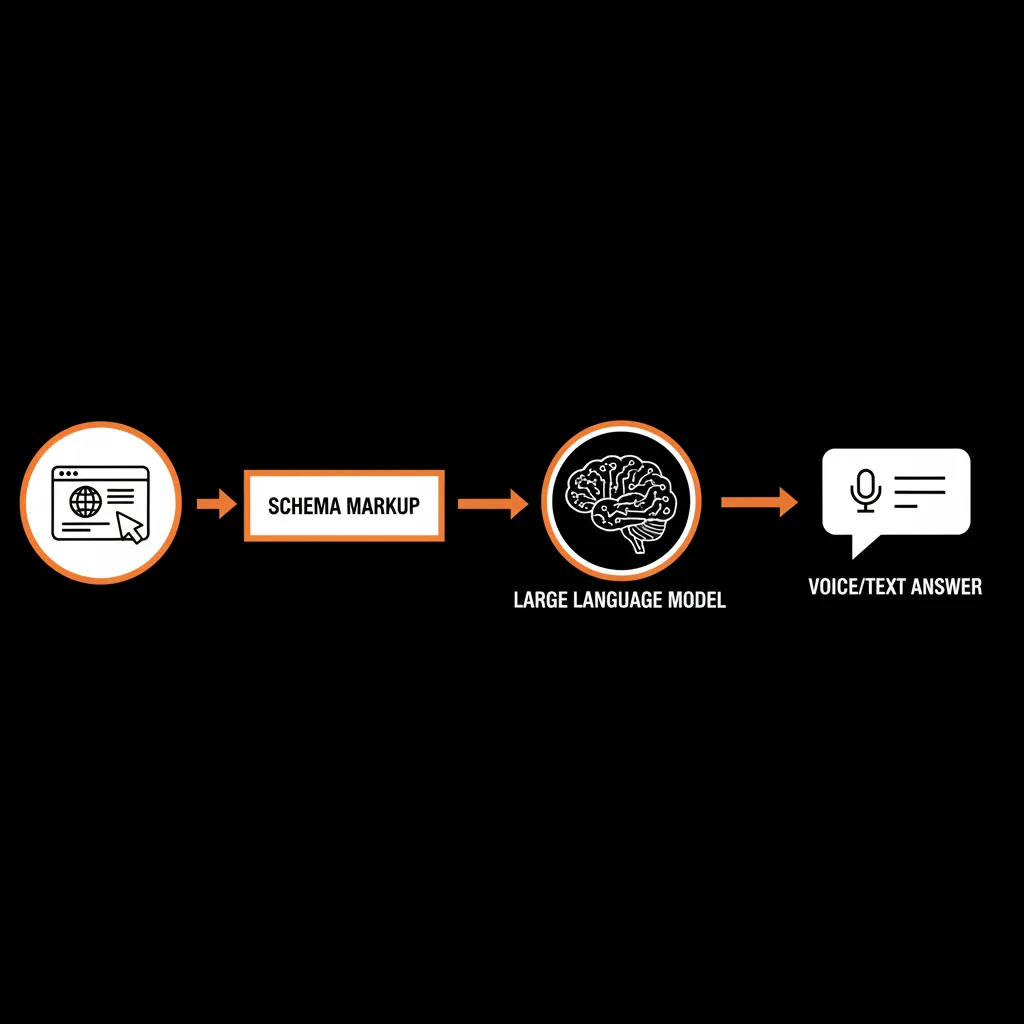
Schema is the language of AI. You should go beyond basic "Article" schema. Implement "FAQ," "HowTo," "Organization," and "Product" schema. This structured data allows the engine to parse your content without needing to "guess" the context.
Why it works: It reduces the "computational cost" for the engine to understand your page. The easier you make it for the bot, the more likely you are to be cited. Common mistake: Using automated plugins that generate broken or incomplete schema code. Pro tip: Use the Google Search Central technical docs to validate your JSON-LD code manually for zero errors.
Step 5: Build Authority Through Citations
AI models are biased toward authority. You need mentions from reputable industry sites. This isn't just about backlinks; it’s about "unlinked mentions" and citations in scholarly or news-based contexts.
Why it works: LLMs are trained on massive datasets. If your brand appears frequently in high-quality training data, you become a "preferred" source during the inference phase. Common mistake: Focusing on low-quality guest posts rather than high-tier PR and industry reports. Pro tip: Publish original data or surveys. Original research is the most cited type of content by AI engines.
Comparing Traditional SEO vs. Modern AEO
| Feature | Traditional SEO | Modern AEO (2026) |
|---|---|---|
| Primary Goal | Rank #1 on SERP | Become the AI's "Chosen Response" |
| Content Format | Long-form, Keyword-dense | Concise, Structured, Q&A |
| Technical Focus | Core Web Vitals, Backlinks | Schema, Entity Nodes, API Access |
| Success Metric | Organic Traffic / Clicks | Citations, Share of Model Response |
| User Intent | Browsing / Researching | Problem Solving / Immediate Action |
| Algorithm Priority | Page Authority (Links) | Fact Accuracy (Knowledge Graph) |
| Update Cycle | Weeks to Months | Real-time (RAG) to Training Cycles |
AEO Content Hierarchy: The Perfect Page Structure
To ensure an AI agent selects your content, you should follow a rigid structure for every service or blog page. This format minimizes the "hallucination" risk for the AI.
- The Target Question (H1/H2): Use the exact question the user asks.
- The Featured Snippet Answer: A 50-word direct response in plain text.
- The Bulleted Evidence: Three to five key points supporting the answer.
- The Deep Context (H3): A 300-word explanation for users who want to learn more.
- The Verified Data Table: A markdown table containing hard facts or pricing.
- Schema Payload: JSON-LD code in the header or footer that summarizes all of the above.
Common AEO Pitfalls to Avoid
- Ignoring Brand Consistency: If your "About Us" page says one thing and your LinkedIn says another, the AI will lower your trust score.
- Over-reliance on AI Generation: Using unedited AI text to rank on AI engines creates a "feedback loop" of mediocrity that models are increasingly programmed to ignore.
- Neglecting Structured Data: Failing to use JSON-LD is like giving a map to a blind person; give the bots the structure they need.
- Vague Headings: Using creative but non-descriptive headings (e.g., "The Magic of Growth") instead of descriptive ones (e.g., "How to Increase SaaS Revenue").
- Slow Load Times for Bots: If a search bot's crawler times out because of heavy JavaScript, your content won't be indexed for real-time RAG.
Best Practices for Dominating Answer Engines
- Be the First Mover: Update your content as soon as industry changes occur so you become the "fresh" source for AI agents.
- Use Natural Language: Write as people speak. Use "you" and "we" to match the conversational tone of AI interactions.
- Optimize for Voice: Ensure your answers are "speakable." Read your content aloud; if it’s a mouthful, rewrite it.
- Leverage Internal Linking: Use varied descriptive anchor text to help bots understand the relationship between your different service pages.
- Monitor Your Mentions: Use tools to track how often your brand is cited as a source in AI chat interfaces.
Impact on ChatGPT, Gemini, Copilot, and Perplexity
Each AI engine has a slightly different personality, but they all share a hunger for structured, authoritative data. ChatGPT tends to favor well-established brands and content that appears in its foundational training data. Perplexity, being more of a search hybrid, relies heavily on real-time RAG, meaning your most recent AEO insights can rank almost instantly if properly indexed.
Google Gemini integrates deeply with the Google Search index, so traditional SEO signals still play a role, but the answer extraction is heavily dependent on your "Organization" schema. Microsoft Copilot draws from the Bing index and puts a premium on LinkedIn data and Microsoft ecosystem signals. To win across all four, your strategy must be "model-agnostic," focusing on clear entity definitions and structured technical signals that any LLM can interpret.
"In 2026, the brands that win are not the ones with the most pages, but the ones with the most 'trusted' facts in the global knowledge graph."
Case Study: B2B SaaS Entity Optimization
A mid-market B2B SaaS client in the fintech space approached us because their organic traffic was flat, despite heavy investment in traditional blogs. We shifted their approach to a dedicated AEO content strategy.
We identified 50 "high-intent" questions their customers were asking. We restructured their existing pillar pages into a Q&A format and injected advanced JSON-LD markup for every product feature. Over six months, while their traditional keyword rankings stayed relatively stable, their "AI Citation Rate" increased by 340%. They became the primary cited source for "Best automated payroll for remote teams" in both ChatGPT and Perplexity. This resulted in a 45% increase in high-quality demo requests, as users were clicking the "Source" links provided by the AI.
Essential Tools for Your AEO Arsenal
- Schema.org / Google Rich Results Test: Use this to validate your code. (Free)
- Perplexity AI: Use it as a research tool to see how AI currently synthesizes your industry's data. (Free/Paid)
- Semrush / Ahrefs: Essential for tracking traditional keyword trends and finding "People Also Ask" opportunities. (Paid)
- Diffbot: An AI-based web scraper that helps you see your site the way an LLM sees it. (Paid)
- WordLift: An AI-powered tool that helps you build an internal Knowledge Graph. (Paid)
- Google Search Console: Crucial for monitoring how often your content is indexed and if there are crawler errors preventing AEO success. (Free)
How to Measure Your AEO Success
Measuring AEO is different from tracking a SERP. You must look at "Inference Share."
- AI Citations: How many times is your URL listed as a source in a generated response?
- Brand Sentiment in LLMs: When asked about your brand, is the AI's summary positive and accurate?
- Direct Conversions from AI Sources: Track traffic coming from
openai.com,perplexity.ai, and other AI referrers in your analytics.
AEO Checklist:
- [ ] Brand entity defined in Schema
- [ ] FAQ content mirrors user questions
- [ ] Answer paragraphs are 40-60 words
- [ ] External citations from high-authority sites secured
- [ ] Site speed optimized for rapid bot crawling
Testing and QA: How to Validate Your AEO Strategy
You should never roll out an AEO strategy site-wide without testing. AI behavior is non-deterministic, meaning the same prompt can yield different results. To manage this, you must build a testing environment. We recommend a three-tier QA process for every new piece of optimized content.
First, perform a Snippet Validation. Copy your newly written "direct answer" and paste it into a private LLM instance. Ask the model to "Summarize the key takeaways from this text." If the model misses your primary value proposition, your writing is too complex. You must simplify until the AI captures the exact message you intended.
Second, use RAG Simulation. Use a tool like Perplexity or a custom GPT with "Search" enabled. Ask it the target question you are trying to rank for. Look at the sources it currently cites. Once your page is indexed, repeat the query every 48 hours. If your site does not appear in the "Sources" box after ten days, your entity authority for that specific topic is too low. You likely need more external citations or stronger internal links to that page.
Third, verify your Technical Schema Integrity. Use the Schema Markup Validator (formerly the Google tool) to ensure there are no syntax errors. Even a missing comma in your JSON-LD can prevent an AI from reading your data. We also recommend using a "headless browser" tool to see if your content renders correctly for bots. If your answers are hidden behind "click to expand" buttons or heavy JavaScript, the AI might never see them.
The Honest Trade-offs: Where AEO Fails
AEO is not a magic bullet. You must understand its limitations before pivoting your entire marketing budget. AEO is a "winner-take-all" game. While traditional SEO allowed for a "Top 10" list, most AI engines only cite two or three sources. If you are in a highly competitive niche like "best credit cards" or "insurance quotes," the barrier to entry is massive. You are competing against legacy entities with decades of trust.
AEO also fails for Subjective or Creative Queries. If a user asks for "original poetry" or "abstract art critique," an answer engine will struggle to cite a single source of truth. AEO is built for facts, procedures, and data-driven comparisons. If your business relies on emotional storytelling or high-concept branding that defies simple categorization, AEO might actually dilute your brand voice.
Furthermore, there is a Control Gap. When you rank #1 on Google, you control the meta-description the user sees. In AEO, the engine synthesizes your content. It might take your data but present it in a way that ignores your brand's unique tone or includes a competitor's caveat. You are essentially providing the raw ingredients and letting someone else cook the meal. If your brand guidelines require strict control over every word the customer sees, the "citation" model of AEO will be a difficult transition for your team.
The Future of AEO: 2026 and Beyond
As we move deeper into 2026, we expect the rise of "Personal AI Agents" that act on behalf of the user. These agents won't just find answers; they will make purchases and book meetings. Your AEO strategy must evolve to not only provide information but to provide "executable" data points—like pricing, availability, and API endpoints—that these agents can use to complete tasks. The boundary between a website and a database will continue to blur.
We anticipate that BrightEdge and Ahrefs will release even more sophisticated "Share of Model" metrics. Tracking your brand will move from keyword positions to "Entity Dominance Scores." If your brand is not the default answer for your category by 2027, you will be fighting for the shrinking minority of users who still use traditional manual search.
Take Action on Your AEO Strategy
Transitioning to an AI-first search world requires a specialized approach. You cannot rely on the tactics of 2020 to win in 2026. By focusing on entity clarity, structured data, and conversational authority, you position your brand to be the primary answer for your customers' most pressing questions.
If you are unsure where your brand stands in the eyes of the major LLMs, we can help. Request a [free AEO audit](/free-aeo-audit) today to see your current visibility score. To completely overhaul your digital presence for the age of AI, explore our full suite of [Best Answer Engine Optimization Services](/services). The window to establish your entity authority is closing as the Knowledge Graph hardens. Start your optimization today to ensure you are the answer of tomorrow. Successful AEO is about being useful, being clear, and being first. We can help you achieve all three.
Frequently asked questions
What is the difference between SEO and AEO?+
AEO (Answer Engine Optimization) focuses on providing direct, structured answers for AI models and LLMs, whereas SEO (Search Engine Optimization) focuses on ranking web pages in traditional search engine results pages (SERPs) like Google. AEO is about being the 'source' for a generated answer, while SEO is about getting a click to your website.
How do I optimize my content for AI answer engines?+
Focus on the 'Inverted Pyramid' style. Start with a direct 40-60 word answer to a specific question, then provide supporting details and data. Use clear headings that match user queries and ensure your technical metadata (Schema) is flawless so AI agents can easily parse the information.
Why is schema markup important for AEO?+
Schema.org markup is vital because it provides a structured roadmap for AI bots. It removes ambiguity, allowing LLMs to understand exactly what your content is about—whether it's a product, a person, or a set of instructions. Without schema, you rely on the AI's ability to 'guess' your context, which increases the risk of being ignored.
Do backlinks and citations still matter for AEO?+
Yes, brand mentions on high-authority sites like Wikipedia, major news outlets, and niche-specific industry journals serve as 'trust signals' for AI models. When an LLM sees your brand cited frequently in its training data or real-time web searches, it is more likely to recommend you as a credible source to users.
How can I measure the success of my AEO efforts?+
Start by querying various AI engines about your brand and products. Track how often your site is cited as a source. Look at your referral traffic in Google Analytics for sources like openai.com or perplexity.ai. A successful strategy will show an increase in 'AI Share of Voice' and higher accuracy in the AI's summaries of your business.
Is AEO the same for ChatGPT and Perplexity?+
Perplexity is a 'search-first' AI that relies heavily on real-time data and citations, making it more sensitive to recent site updates. ChatGPT relies more on its pre-trained model and specific 'GPTs' or plugins. A good AEO strategy targets both by providing structured data for real-time crawling and maintaining a strong brand presence for foundational training.
Sources & further reading
Soft next step
Want to see where AI answers mention you — and where they don't?
We run a free AEO audit across ChatGPT, Gemini, Copilot and Perplexity, then hand you the fixes in priority order. Start your AEO strategy today.
Keep reading
Content Strategy
AEO Strategy for Businesses: The 2026 Guide to AI VisibilityContent Strategy
AEO Framework: How to Optimize for Answer Engines in 2026Content Strategy
AEO Content Strategy: How to Optimize Content for AI Search in 2026