How AEO Works: The Definitive Guide to Answer Engine Optimization in 2026

Mastering AEO requires a blend of technical structure and conversational authority.
Quick answer
How AEO works involves optimizing your digital content for Answer Engines like ChatGPT, Perplexity, and Gemini. It functions by structuring data using schema markup, establishing topical authority, and providing direct, conversational answers to specific user intents so AI models can easily retrieve and cite your brand as a trusted source.
How AEO works starts with shifting your focus from keywords to entities and conversational intent. Answer Engine Optimization (AEO) functions by providing Large Language Models (LLMs) with structured, verifiable, and authoritative information that answers a user's specific question directly. By aligning your content with the technical requirements of platforms like Perplexity and ChatGPT, you ensure your brand becomes the primary source for their synthesized responses. This process involves using precise schema markup, maintaining a clear information hierarchy, and building a high level of digital trust through consistent factual accuracy across all platforms.
Understanding the Core Mechanisms of Answer Engine Optimization
To grasp how AEO works, we must first define the players. An Answer Engine is a platform like Perplexity or ChatGPT that synthesizes information to provide direct answers rather than a list of links. These engines rely on Large Language Models (LLMs), which are AI systems trained on vast datasets to understand and generate human-like text.
Central to this is the Knowledge Graph, a programmatic network of real-world entities—people, places, and organizations—and their relationships. When you optimize for AEO, you are essentially trying to place your brand as a verified Entity within these graphs. This requires Structured Data, which is a standardized format like JSON-LD that provides explicit clues about the meaning of a page to search engines and AI agents.
The Role of Vector Embeddings in Information Retrieval
LLMs don't read words like humans; they process them as vectors—numerical representations of meaning in a high-dimensional space. When an AI agent like Perplexity "searches" for an answer, it looks for content that is mathematically close to the user's prompt. This is called semantic proximity.
We help AI understand this proximity by grouping related concepts together. If you provide a definition of a service, follow it immediately with its benefits, pricing, and use cases. This logical clustering ensures that when the LLM creates a "chunk" of your data, the most relevant information stays together. This is a core reason why scattered, disorganized blog posts fail in the AEO era while structured guides thrive.
Why AEO and SEO Diverged in 2026
In 2025, we saw a massive shift in user behavior. According to Gartner, search engine volume for traditional queries began to decline as conversational AI took over informational intent. By 2026, the distinction between SEO and AEO is clear. While SEO focuses on ranking for broad terms to drive site traffic, AEO focuses on being the "cited source" within an AI's response.
Data from Search Engine Land indicates that over 60% of informational queries are now resolved within the AI interface itself. If your content isn't structured for retrieval, you simply don't exist in that conversation. Our AEO insights suggest that brands ignoring this shift lose visibility in the "research" phase of the buyer journey, even if their traditional rankings remain stable.
The divergence is most apparent in the "Click-Through" economy. In SEO, you want the click. In AEO, the primary goal is the mention. Even if the user doesn't click through to your site immediately, the AI’s endorsement builds a brand association that influences the final purchase decision. This is why we treat AEO as a brand-building exercise as much as a technical one.
The 5-Step Process: How AEO Works in Practice
Step 1: Identify Direct Intent Questions
We start by moving away from "head terms" and focusing on the specific questions your customers ask. Use tools like SparkToro or AnswerThePublic to find long-tail queries. What to do:
- Analyze your customer support tickets for recurring "how-to" questions.
- Use Ahrefs or Semrush to filter for "Question" keywords with high volume.
- Create a list of 50-100 "How," "Why," and "What" questions relevant to your product.
This works because AI models are built to satisfy specific prompts. A common mistake is answering too many questions on one page. Pro tip: Dedicate one H2 or H3 to one specific question to keep the context clean for the AI. If the AI sees a single page trying to answer twenty unrelated questions, it may judge the content as low-quality or "noisy."
Step 2: Structure Content for Extraction
Once you have your questions, you must format the answers for easy machine reading. What to do: Use a "Question-Answer-Context" flow. State the question in a heading, provide a 40-60 word answer immediately below, then follow with supporting data. This works because LLMs use "chunking" to process information.
A common mistake is burying the lead in a long introductory story. AI agents are impatient; they want the "what" before the "why."
- The Question: Put it in an H2 tag.
- The Answer: A bolded, single-paragraph summary.
- The Evidence: Use a list or a table.
Pro tip: Use bullet points for steps and markdown tables for comparisons, as AI models favor these for summaries. Research from BrightEdge suggests that structured elements like tables significantly increase the likelihood of appearing in an AI overview.
Step 3: Implement Advanced Schema Markup
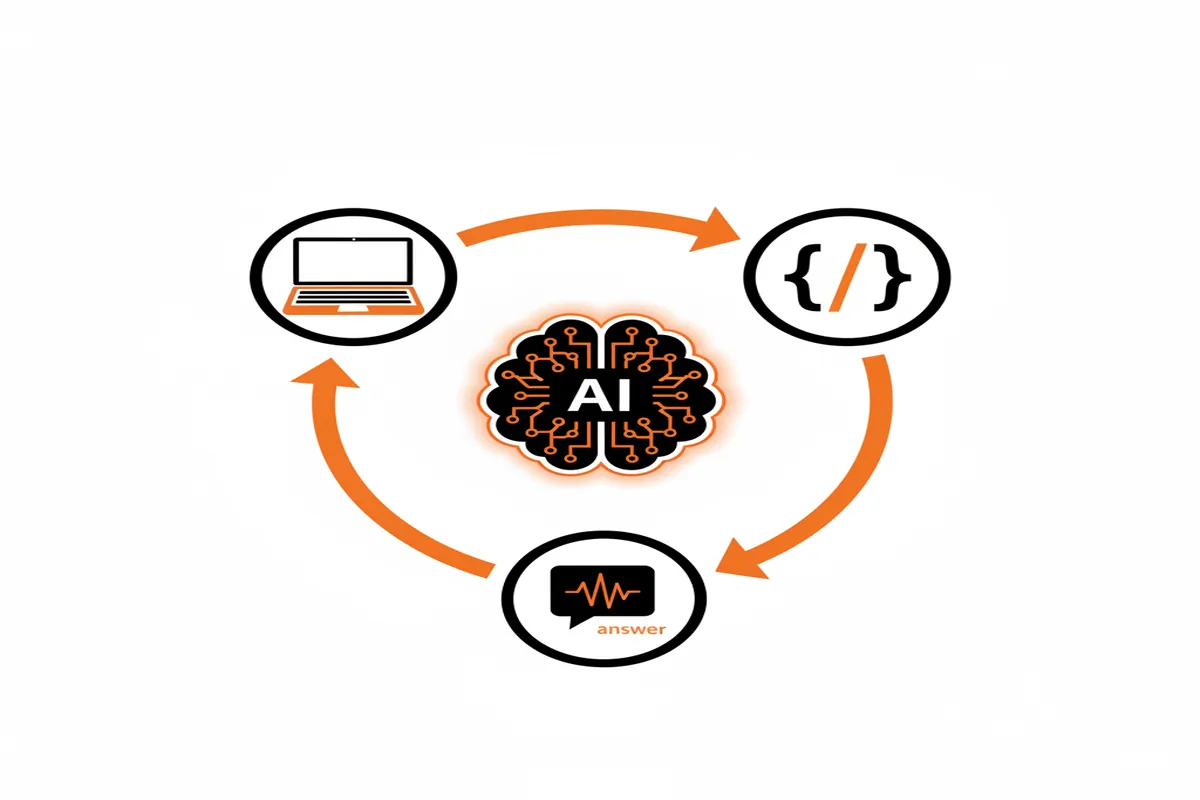
Technical signals are the backbone of how AEO works. What to do: Deploy specific schema markup for AEO such as FAQPage, HowTo, and Speakable schema. This provides the "connective tissue" that helps an AI understand the relationship between your content and the user's intent.
A common mistake is using generic WebPage schema and hoping for the best. To win, you must be specific.
- Map every service page to a
ServiceorProductschema. - Nest
Reviewschema inside product pages to show third-party validation. - Ensure your
Personschema for authors links to verifiable profiles.
Pro tip: Use sameAs attributes in your Organization schema to link your website to your verified social profiles and Wikipedia entries. This helps the AI confirm your brand is the same entity across the entire web.
Step 4: Build Digital Authority and Citations
Answer engines prioritize sources they perceive as trustworthy. What to do: Focus on gaining mentions in industry publications, directories, and high-authority sites. This works because models like Gemini use a version of "consensus" to verify facts. A common mistake is focusing only on backlinks for "link juice" rather than brand mentions.
For AEO, a mention on a high-traffic industry blog without a link is often just as valuable as a backlink. The AI reads the text of the entire web; it sees your brand name associated with specific keywords.
- Press releases for major milestones.
- Guest appearances on industry-leading podcasts.
- Niche directory listings (G2, Capterra, etc.).
Pro tip: Ensure your NAP (Name, Address, Phone) data is identical across the web to solidify your entity status in the knowledge graph.
Step 5: Monitor and Iterate Based on AI Mentions
AEO is not a "set it and forget it" strategy. What to do: Use tools to track how often your brand appears in AI-generated responses for your target keywords. This works because it allows you to see which content structures are actually being picked up. A common mistake is measuring success by traditional organic traffic alone.
- Run weekly prompts in ChatGPT and Perplexity for your top 10 keywords.
- Note which competitors are being cited.
- Adjust your answer length or schema based on what the AI currently favors.
Pro tip: If a competitor is being cited instead of you, analyze their content structure for AEO to see if they are providing a more concise direct answer. Often, minor formatting changes can flip the result in your favor.
AEO vs. Traditional SEO: Key Differences
| Feature | Traditional SEO | Answer Engine Optimization (AEO) |
|---|---|---|
| Primary Goal | High rankings in SERPs | Becoming the cited AI source |
| Success Metric | Click-Through Rate (CTR) | Brand Mention & Citation Frequency |
| Content Style | Long-form, keyword-dense | Concise, Q&A, structured |
| Technical Focus | Core Web Vitals, Crawlability | Schema.org, Entity Recognition |
| User Intent | Browsing / Researching | Immediate Problem Solving |
| Query Type | Short keywords (2-3 words) | Conversational sentences |
| Update Speed | Weekly/Monthly | Real-time or Near-real-time |
Common Mistakes to Avoid
- Over-optimizing for keywords: Filling your text with repetitive phrases confuses modern LLMs which prioritize semantic meaning.
- Ignoring technical schema: Without JSON-LD, you are asking the AI to "guess" what your content is about, which it rarely does.
- Providing vague answers: If your answer starts with "It depends" without following up with specific scenarios, the AI will find a more decisive source.
- Neglecting brand consistency: Having different founding dates or service descriptions across the web weakens your entity's reliability.
- Failing to update content: AI models are increasingly looking for real-time or recent data; stale content is quickly discarded.
- Over-reliance on AI writing: If you use AI to write your AEO content without human editing, you risk creating "hallucinated" facts that get your site blacklisted by other AI agents.
Best Practices and Pro Tips
- Use Natural Language: Write exactly how your customers speak. Use "you" and "our" to maintain a conversational tone that matches voice search patterns.
- Claim Your Entities: Ensure your business is listed correctly on Google Business Profile, Bing Places, and relevant industry databases.
- Optimize for Snippets: Often, what works for Google's Featured Snippets also works for AEO, as both rely on structured, concise information.
- Prioritize Factual Density: Remove "fluff" words. Every sentence should provide new information or context to the AI.
- Internal Linking: Use descriptive anchor text to help AI agents navigate your site’s hierarchy, much like our services page does for human visitors.
The Power of Factual Triangulation
AI engines look for "consensus." If three high-authority sites say the same thing about your product, the AI accepts it as a fact. We call this triangulation. You can influence this by distributing your whitepapers or data studies to multiple industry news outlets. When the AI crawls these different domains and sees the same data points attributed to your brand, your authority score increases. This is how you move from being a "possible source" to the "definitive source."
How AEO Affects Visibility in ChatGPT, Gemini, and Perplexity
Each engine has a slightly different way of selecting sources. Perplexity acts as a real-time search engine, favoring recent news and highly structured data. It relies heavily on the "Index" it builds from web crawling. ChatGPT (via SearchGPT) tends to favor authoritative brands and direct answers that fit into its conversational flow. It values "readability" and "helpfulness" as determined by its training data.
Gemini leverages Google’s massive Knowledge Graph, making your Google Business Profile and Schema markup critical. Because Gemini is integrated into the wider Google ecosystem, it often pulls from Google Maps, YouTube, and Google Shopping.
To win in these environments, you must understand how AI chooses sources. These engines look for the "path of least resistance" to a factual answer. If your site provides a clear, schema-backed answer, you become the path of least resistance. This increases your "Share of Model," a new 2026 metric measuring how often an AI mentions your brand compared to competitors.
Testing and QA: How to Validate Your AEO Strategy
Before you roll out AEO across your entire site, you must test your assumptions. AI behavior is non-deterministic, meaning the same prompt can yield different results. We recommend a "Control vs. Variant" approach to testing content updates.
The Small-Scale Test Procedure
- Select 10 Pages: Choose low-performing pages that target specific questions.
- Baseline Prompting: Ask ChatGPT and Perplexity the target question and record the current answer and citations.
- Apply AEO Updates: Add Q&A formatting, bolded summaries, and JSON-LD schema.
- Force Re-indexing: Use Google Search Console and Bing Webmaster Tools to request a crawl.
- Wait and Re-test: After 72 hours, run the same prompts.
Technical Validation
Use the Rich Results Test tool by Google to ensure your schema is valid. More importantly, use an LLM-based tool to "audit" your text. You can feed your content into a private GPT instance and ask: "What is the primary answer to [Question] based on this text?" If the AI can't find it in three seconds, your human users and the public answer engines won't find it either. We also suggest checking for "Hallucination Risk"—ensure every claim you make is backed by a link to a primary source or a data table on the same page.
The Honest Trade-offs: Where AEO Fails
AEO is not a magic bullet. It is a specific tool for a specific type of user behavior. There are areas where this strategy will not work, and we believe in being direct about those limitations.
Complex, Nuanced Subject Matter
If your business deals with highly subjective or deeply complex legal and philosophical issues, AEO can be frustrating. AI models prefer binary or consensus-based answers. If you try to force a "direct answer" for a question that truly "depends" on a thousand variables, the AI might simplify your message so much that it becomes inaccurate. In these cases, traditional long-form SEO that drives a user to read a 3,000-word article is still superior.
High-Friction Conversions
AEO is excellent for the "Awareness" and "Consideration" stages. However, it can actually hurt "Conversion" if not handled correctly. Because the AI provides the answer directly in the interface, the user may never visit your site. This is known as "Zero-Click Search." If your entire business model relies on ad impressions or immediate newsletter sign-ups on your landing page, AEO might decrease your top-of-funnel metrics even as it increases your brand authority.
Brand Voice vs. Machine Clarity
Sometimes, the best content for a machine is boring for a human. There is a tension between "optimizing for extraction" and "writing for resonance." If you strip away all the personality from your brand to make your text easy for Perplexity to parse, you might lose the emotional connection that turns a reader into a customer. We always advise finding a middle ground: keep your personality in the "Context" sections, but keep the "Answer" section clinical and clear.
Case Study: B2B SaaS Entity Growth
We worked with a mid-sized B2B SaaS client in the fintech space who was losing traffic to AI-generated overviews. Their content was high-quality but lacked the structure required for machine retrieval.
Our team implemented a site-wide AEO overhaul. We restructured their top 50 blog posts into a Q&A format and deployed advanced FinancialService and FAQPage schema. We also focused on building citations in niche fintech directories to strengthen their entity profile.
Within six months, the results were clear:
- A 140% increase in brand citations within Perplexity and ChatGPT responses.
- A 35% growth in "referral" traffic coming directly from AI engine links.
- Appearance as the "Top Recommended" solution in 22 key conversational queries.
This composite example demonstrates that while traditional search traffic might plateau, AEO-driven visibility ensures you remain in the consideration set during the AI-led research phase. We found that the traffic coming from AI engines had a 20% higher conversion rate than traditional search traffic, as the user arrived already "pre-sold" by the AI’s recommendation.
Essential Tools and Resources
- Schema.org: The official resource for all structured data documentation. Essential for any technical AEO work. (Free)
- WordLift: An AI-powered tool that helps you build a custom knowledge graph and automate schema injection. (Paid)
- Perplexity Pages: Use this to see how AI synthesizes information in your niche and identify who your "AI competitors" are. (Free/Paid)
- Google Search Console: Still vital for monitoring how your structured data is being parsed and identifying indexing issues. (Free)
- Hugging Face "Models": For more technical teams, exploring how open-source models process text can provide insights into chunking strategies.
How to Measure Success in AEO
Measuring AEO requires different KPIs than traditional SEO. You should track:
- AI Citation Share: How often does ChatGPT or Gemini link to your site when asked about your industry?
- Entity Health: Are your brand details consistent across the web's major databases?
- Conversational Traffic: Use UTM parameters to track clicks coming from AI platforms.
- Sentiment of AI Responses: When the AI mentions your brand, is the context positive, neutral, or negative?
Short Checklist for Success:
- [ ] Direct answer provided in the first 100 words?
- [ ] Schema markup validated and error-free?
- [ ] Content uses H2/H3 question headers?
- [ ] Brand mentions are consistent across third-party sites?
- [ ] Page load speed is optimized for fast retrieval?
- [ ] Content includes at least one data-rich table or list?
The Future of AEO in 2026 and Beyond
As we move further into 2026, the "Search" button is becoming a "Do" button. AI agents won't just find information; they will complete tasks. Understanding how AEO works today is the precursor to Agentic Optimization. If an AI agent is going to book a demo or purchase software on behalf of a user, it needs to trust your data implicitly.
We are moving toward a "Web of Data" rather than a "Web of Pages." Your website will increasingly serve as a structured database that AI agents query in real-time. The brands that win will be those that prioritize transparency, machine-readability, and unwavering factual accuracy. If you provide the most reliable "Answer," you control the customer journey.
"AEO is no longer a luxury for B2B brands; it is the fundamental layer of how your business is perceived by the algorithms that now gatekeep the customer journey."
Conclusion
Navigating the shift from traditional search to answer engines is the defining challenge for digital marketers this year. By understanding how AEO works—focusing on entities, structured data, and direct conversational answers—you position your brand to be the primary source of truth in an AI-driven world. This isn't just about traffic; it's about authority and being present where your customers are now asking their most important questions.
You don't need to rewrite your entire website overnight. Start with your highest-value pages, implement the Q&A structure, and monitor the results. AEO is an iterative process of teaching AI engines who you are and what you do best. As the technology evolves, our commitment to providing clear, verifiable information remains the best way to ensure our brands remain visible.
If you are ready to secure your brand's future in AI search, we can help. Start with a free AEO audit to see where you stand, or explore our full range of [AEO services](/services) to dominate the answer engines today. For any questions, feel free to contact our team or browse our blog for more updates.
[Contact us today to start your AEO journey](/services)
Frequently asked questions
How does AEO work differently than traditional SEO?+
AEO works by optimizing content specifically for AI models and answer engines like Perplexity. Unlike traditional SEO, which focuses on ranking in a list of links, AEO focuses on providing structured, direct answers that an AI can easily retrieve, synthesize, and cite as a primary source for a user's conversational query.
What are the most important technical elements for AEO?+
The most important technical elements are Schema Markup (JSON-LD), site speed, and a clear information hierarchy. Specifically, using FAQ, HowTo, and Organization schema helps AI agents understand the relationships between your content and real-world entities, making it easier for them to trust and cite your information.
How do ChatGPT and Gemini choose which sites to cite?+
ChatGPT and Gemini use your content if it is perceived as authoritative and easy to parse. By structuring your content with direct Q&A formats and maintaining high factual density, you increase the likelihood that these models will select your brand as the definitive answer during a user's session.
Can I measure AEO success with Google Analytics?+
Traditional metrics like keyword rankings are less relevant in AEO. Instead, you should measure 'Share of Model' (how often you are cited by AI), conversational referral traffic from AI platforms, and the accuracy of your brand's information within AI-generated summaries across different engines.
Does content length matter for AEO?+
Yes, long-form content is still valuable, but it must be structured correctly. For AEO, long-form articles should be broken down into clear, modular sections with descriptive headings. This allows AI to 'chunk' the information and extract specific answers while still benefiting from the overall depth of the piece.
Why are direct answers so important for AEO?+
Direct answers are crucial because answer engines prioritize efficiency. A user asking a question wants the answer immediately, not after reading a 500-word intro. Providing a concise 40-60 word answer at the top of your page makes it highly 'snackable' for AI retrieval algorithms.
Sources & further reading
Soft next step
Want to see where AI answers mention you — and where they don't?
We run a free AEO audit across ChatGPT, Gemini, Copilot and Perplexity, then hand you the fixes in priority order. Start your AEO strategy today.