AEO for Ecommerce: The 2026 Guide to Dominating AI Search

Modern ecommerce success requires optimizing for both humans and AI search agents.
Quick answer
AEO for ecommerce is the process of optimizing your online store's data and content for AI models like ChatGPT and Gemini. By using structured data, clear product attributes, and conversational FAQ content, you ensure AI agents recommend your products as the primary solution to a user's purchase intent.
AEO for ecommerce is the strategic practice of structuring your online store's data so AI models can easily find, trust, and recommend your products. In 2026, AI-driven shopping assistants prioritize stores that provide high-confidence data via schema markup and natural language descriptions. This shift moves your focus from ranking in lists to becoming the direct answer for shoppers.
What is AEO for Ecommerce?
To succeed in 2026, you must understand how AI interprets your store. Answer Engine Optimization (AEO) is the specialized field of digital marketing focused on making your content the preferred response for AI agents. In a retail context, this means your Product Entity—the digital representation of a physical item—must be clearly defined with unique identifiers.
We also focus on the Knowledge Graph, which is the network of relationships between your brand, your products, and customer needs. By optimizing your Merchant Data, which includes real-time inventory and pricing, you feed the AI the "ground truth" it needs to recommend you. Finally, Intent Mapping involves aligning your product descriptions with the specific problems your customers are trying to solve, rather than just using generic keywords.
How AI Models View Your Product Catalog
When an LLM (Large Language Model) crawls your store, it doesn't "see" the beautiful lifestyle photography. Instead, it parses vectors and tokens. It looks for relationships between your product's attributes and the user's prompt. If a user asks for "durable outdoor boots for wide feet," the AI scans its index for specific markers like "EE width," "Vibram sole," and "abrasion-resistant leather." AEO ensures these data points are not just present but are highlighted as the primary characteristics of the entity.
Why AI Search Dominates Retail in 2026
The search environment changed rapidly between 2025 and 2026. According to recent insights from Gartner, AI-driven search is expected to decrease traditional search engine volume by up to 25% as users flock to conversational assistants. Furthermore, a report by BrightEdge suggests that nearly 40% of brand discovery now happens within generative AI interfaces.
For ecommerce brands, this means your visibility depends on how well an LLM understands your value proposition. In 2025, we saw the rise of "Search Generative Experience" (SGE), but 2026 is the year of the "Shopping Agent." These agents don't just show links; they compare features, read reviews, and add items to carts. If your data isn't structured for these agents, you effectively don't exist in their ecosystem.
The Rise of Multi-Modal Shopping
Shoppers no longer rely solely on text. They upload photos of items they like or record voice memos describing a style. AI agents process these multi-modal inputs to find matches. This makes your image alt-text and descriptive filenames more critical than ever. In 2026, the AI doesn't just guess what is in an image; it cross-references the image data with your structured text to confirm it found the right product.
How to Implement AEO for Your Online Store
Step 1: Deploy Comprehensive Schema Markup
You must go beyond basic price and availability tags. Use advanced schema markup for AEO to define materials, dimensions, sustainability certifications, and specific use cases. AI agents look for these nodes to confirm your product meets a user’s niche requirements.
- Why it works: It translates your visual website into a machine-readable format that leaves no room for AI hallucination.
- Common mistake: Using outdated or broken JSON-LD scripts that confuse the crawler.
- Pro tip: Use the
suggestedAnswerproperty in your FAQ schema to feed direct responses to AI agents.
Step 2: Transition to Conversational Product Descriptions
Rewrite your product copy to answer the questions a customer would ask a sales associate. Instead of listing "Waterproof," describe how the product "keeps you dry during a heavy downpour while hiking in the Pacific Northwest."
- Why it works: AI models are trained on natural language. Matching the way people speak helps the AI see your product as a relevant answer to conversational queries.
- Common mistake: Over-optimizing for old-school SEO keywords at the expense of natural flow.
- Pro tip: Include a "Best for..." section in every product description to clearly define the target use case.
Step 3: Optimize for "Zero-Click" Trust Signals
AI models prioritize brands with high authority and trust. Ensure your store is listed in reputable directories and that your customer reviews are indexed and summarized.
- Why it works: AI models like Perplexity use "citations" to back up their recommendations. If you have third-party validation, you are more likely to be cited.
- Common mistake: Ignoring off-site mentions and focusing only on your own domain.
- Pro tip: Encourage customers to use specific descriptive words in their reviews to help AI understand your product's strengths.
Step 4: Build a Dedicated Brand Knowledge Base
Create a centralized repository of information about your brand’s history, values, and shipping policies. This helps AI agents answer logistical questions like "Does this brand ship sustainably to New York?"
- Why it works: When an AI can't find a factual answer about your business, it might guess or ignore you. A knowledge base provides the "facts" directly.
- Common mistake: Keeping this information buried in a PDF or a hard-to-crawl image.
- Pro tip: Use a dedicated
/faq/or/about/page with clear H2 headings for every major question.
Comparing Traditional SEO vs. AEO for Retailers
| Feature | Traditional Ecommerce SEO | AEO for Ecommerce (2026) |
|---|---|---|
| Primary Goal | Rank #1 on Page 1 | Become the "Featured Response" |
| User Input | Short-tail keywords | Long-tail conversational prompts |
| Content Format | Category pages and blogs | Structured data and direct answers |
| Success Metric | Click-Through Rate (CTR) | Brand Mention & Conversion |
| Tech Focus | Backlinks and Site Speed | Schema Markup and Entity Clarity |
| Indexing Speed | Days to weeks | Real-time via API & Merchant Feeds |
| Brand Presence | Domain Authority | Entity Trust and Citation Volume |
Common AEO Mistakes to Avoid
- Vague Product Attributes: Avoid saying a product is "high quality." Instead, specify the "300-thread count Egyptian cotton" to give the AI factual data to work with.
- Ignoring Negative Sentiment: AI models synthesize reviews. If you don't address common complaints in your product updates, the AI will warn users about them.
- Thin Content Pages: Category pages with only product grids and no descriptive text provide nothing for an AI agent to "read" or interpret.
- Broken Merchant Feeds: If your Google Merchant Center or Bing feeds are out of sync, AI assistants will report incorrect pricing, destroying trust.
- Lack of Internal Linking: Failing to connect related products makes it harder for AI to understand your AEO strategy for businesses and your full product range.
The Hazard of "AI-Washing" Product Data
We see many stores using generic AI to generate thousands of product descriptions. This creates a "sameness" that prevents AI models from distinguishing your brand. If your description looks exactly like a competitor's, the AI has no reason to favor you. Avoid bulk-generated fluff. Use AI to assist, but ensure your unique selling points (USPs) remain sharp and factual.
AEO Best Practices for 2026
- Focus on 'Verifiable Facts': The more objective data you provide (weight, dimensions, origin), the more confident the AI becomes in recommending you.
- Use 'Question-Heading' Structures: Structure your blogs and guides with H2s that mirror actual user prompts, such as "What is the best hiking boot for wide feet?"
- Maintain a Clean Knowledge Graph: Use the same brand name, address, and phone number across all platforms to solidify your identity.
- Prioritize Latent Semantic Indexing (LSI): Use synonyms and related terms that naturally occur in your niche to help AI models categorize your store.
- Audit Your AI Visibility: Regularly check how ChatGPT or Gemini describes your brand to identify and fix misinformation.
Maximizing Long-Tail Intent Matching
To win in 2026, you must anticipate highly specific queries. Instead of targeting "office chairs," target "ergonomic office chairs for 8-hour shifts with lumbar support."
- Analyze your current search queries for phrases starting with "how," "what," and "which."
- Create dedicated "Answer Blocks" at the top of your product pages.
- Use bullet points for technical specs to allow for easy parsing by AI scrapers.
AI Visibility in ChatGPT, Gemini, and Perplexity
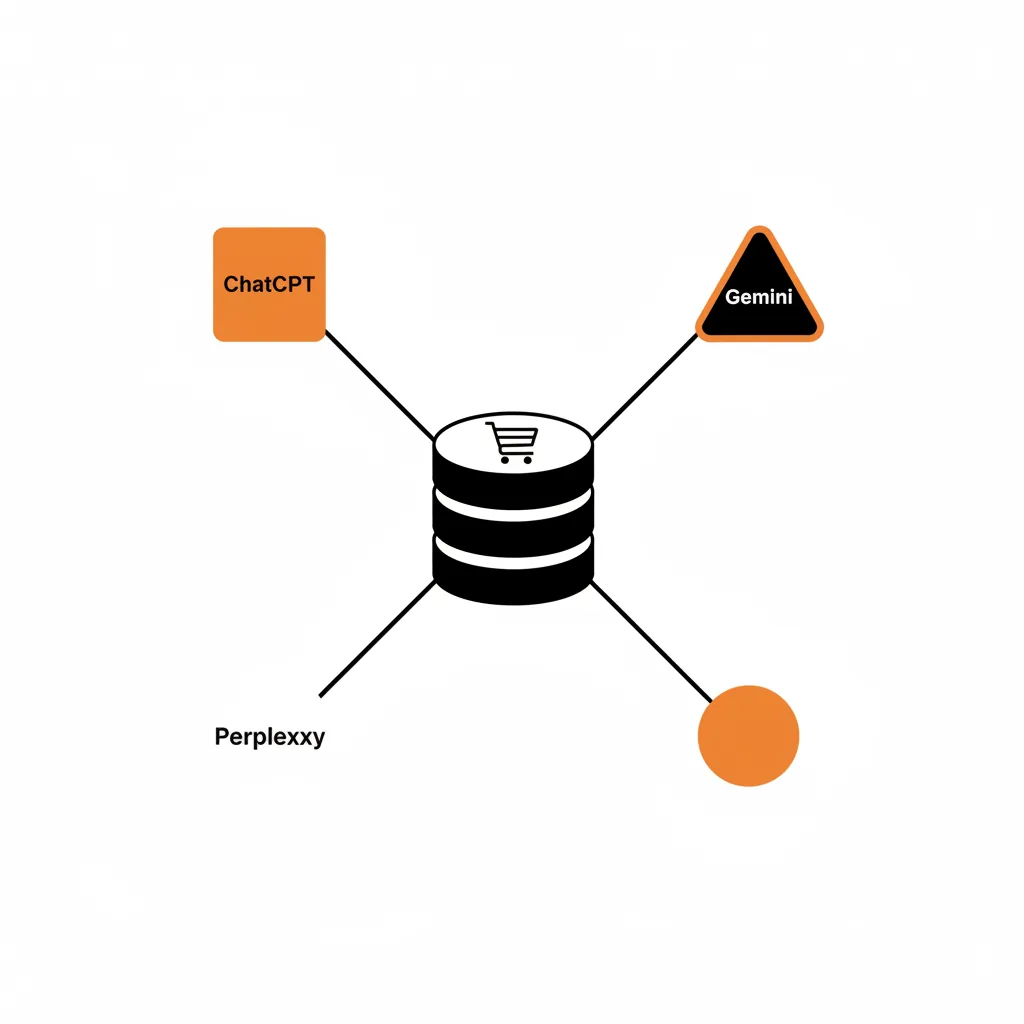
In 2026, the way your store appears in ChatGPT, Gemini, Copilot, and Perplexity is the new "front page." These platforms operate as sophisticated filters. ChatGPT leans heavily on its internal training data and web browsing capabilities, prioritizing brands that have a strong presence in high-authority articles and clear site structures. Gemini, being integrated with the Google ecosystem, relies heavily on your Merchant Center data and optimizing content for AI search techniques.
Perplexity acts more like a researcher, providing citations for its claims. To win here, your store needs to be mentioned in "best of" lists and independent reviews. Copilot leverages the Bing index, meaning your Microsoft Advertising and Bing Places profiles must be pristine. Each engine has a slightly different weight for "trust," but all of them reward clear, structured, and factual data. If your store provides a frictionless path from a user's question to your product's solution, these engines will act as your most effective sales funnel.
Data Attributes Required for AI Confidence
| Engine | Key Trust Signal | Preferred Format |
|---|---|---|
| ChatGPT | Third-party mentions | Narrative web content |
| Gemini | Merchant Center accuracy | JSON-LD Product Schema |
| Perplexity | Review site citations | Academic/Technical blogs |
| Copilot | Bing Index stability | Local/Knowledge Graph data |
"AEO is no longer an optional experiment; it is the fundamental architecture of how products are found in an era where the 'search bar' is replaced by a 'conversation.'"
Case Study: A B2B Office Furniture Retailer
We worked with a B2B office furniture client who was struggling to maintain visibility as their customers moved toward AI search tools. They had a massive catalog but very little structured data. Our team implemented a comprehensive AEO overhaul.
First, we mapped their top 50 products to specific "user intents," such as "ergonomic chairs for back pain" and "sustainable desks for small offices." We added granular Schema.org markup to every page, including specific ISO certifications for their ergonomic claims. We then launched a series of "Expert Guides" that answered complex procurement questions.
Within six months, the results were clear. While their organic traffic from traditional search remained steady, their mentions in AI-generated responses increased by 185%. More importantly, the quality of their leads improved. The conversion rate for users arriving via AI assistants was 42% higher than those coming from standard keyword search, because the AI had already "vetted" the product for the user's specific needs. This transition resulted in a 22% increase in total online revenue year-over-year.
Essential Tools for Ecommerce AEO
- Schema App: A powerful tool for deploying complex JSON-LD without needing a developer for every change. (Paid)
- Google Search Console: Essential for monitoring how your "Merchant Listings" and "Product Snippets" are being indexed. (Free)
- Perplexity.ai: Use this as a research tool to see which competitors are currently being cited for your target queries. (Free/Paid)
- Semrush AI Lab: Provides tools to analyze how your content performs in generative search environments. (Paid)
- WordLift: An AI-powered tool that helps you build a custom knowledge graph for your ecommerce site. (Paid)
- Ahrefs Content Explorer: Useful for finding high-authority sites that mention your competitors but not you. (Paid)
How to Measure Your AEO Success
Measuring AEO is different from tracking rankings. You should focus on "share of model" rather than just search engine result page (SERP) position.
- AI Citation Rate: Track how often your URL is cited in Perplexity or Gemini for your top 20 keywords.
- Referral Traffic from AI Domains: Monitor traffic coming specifically from
chatgpt.com,gemini.google.com, andperplexity.aiin your analytics. - Entity Health: Check your Google Knowledge Panel for accuracy and completeness.
- Conversion Quality: Compare the bounce rate and time-on-site for AI-referred users versus social or search users.
AEO Checklist:
- [ ] All products have valid
Productschema. - [ ] FAQ pages use
QuestionandAnswerschema. - [ ] Brand "About" page is factual and link-heavy.
- [ ] Product descriptions answer at least three specific user questions.
Testing and QA for Site-Wide AEO Rollouts
You should never deploy massive schema or content changes site-wide without a validation phase. AI models are sensitive to data contradictions. If your schema says a product is in stock but your page text says "out of stock," the AI will lose trust in your domain.
First, run a "Schema Audit" on a subset of 5-10 product pages. Use the Google Rich Results Test to ensure the code is error-free. Once the code is clean, move to conversational testing. Use a tool like ChatGPT or Claude to "read" your product page and ask it, "Based on this page, what are the three best use cases for this item?" If the AI misses your primary selling points, your copy needs more clarity.
Second, check for "Hallucination Risk." Look for vague adjectives that an AI might misinterpret. We recommend a "Fact-Check Loop" where you compare your product data feed against your live site. Any discrepancy—even a $1 difference in price—can lead to a "Merchant Feed Disapproval" or a lower ranking in shopping agents. We suggest a monthly QA cycle to ensure your knowledge graph remains the "source of truth."
The Honest Trade-Offs: When AEO Fails
AEO is not a magic fix for every ecommerce problem. It is essential to recognize its limitations. AEO focuses on providing factual, structured answers, but it often struggles with "emotional" or "lifestyle" branding. If your brand relies purely on a "cool factor" or visual aesthetic that can't be quantified in a data point, an AI assistant may struggle to recommend you over a competitor with better specs.
Furthermore, AEO requires a significant technical investment. For a small store with a limited budget, the cost of managing complex schema and custom knowledge graphs may not yield an immediate ROI compared to simple PPC ads. There is also the "Attribution Gap." When an AI agent answers a user's question directly, the user might never visit your site. You provide the "answer," the user gets the value, and you might lose the direct session data you usually see in GA4.
Finally, AEO relies on the "Goodwill" of the AI providers. If Google or OpenAI changes how they cite sources, your visibility could drop overnight. This is why we advocate for a balanced approach: optimize for AI, but keep your traditional SEO and email marketing strong.
The Future of Ecommerce Search in 2026 and Beyond
As we move through 2026, the line between "searching" and "shopping" will vanish. We anticipate that AI agents will soon have the capability to execute transactions on behalf of users. When a user tells their AI, "Buy me the best eco-friendly coffee maker under $200," the AI will choose the winner based on the data it has indexed.
Your job is to ensure that your store provides the most reliable, verifiable, and authoritative data to that agent. The brands that win will be those that view their website not just as a shop for humans, but as a data source for the AI agents that serve those humans. This means your backend infrastructure—your APIs and database structures—will become as important as your frontend design.
Conclusion
AEO for ecommerce is the only way to future-proof your digital storefront. By moving beyond keywords and focusing on entities, structured data, and conversational relevance, you position your brand to be the primary answer in an AI-driven world. The strategies we've discussed—from advanced schema to building a brand knowledge base—are the building blocks of 2026 retail success.
The shift from SEO to AEO is happening now. If you wait until your traffic drops to react, you'll already be behind your competitors who are currently training the AI models to prefer their products. You need a partner who understands the full range of AEO services and how to apply them to the complex world of online retail. At EvronStudio, we focus on the technical nuances that ensure your products aren't just seen, but are chosen.
Ready to see how AI sees your store? [Get your free AEO audit today](/free-aeo-audit) and start dominating the answer engines.
Explore our [AEO Services](/services) to take your ecommerce growth to the next level.
Frequently asked questions
How does AEO for ecommerce differ from traditional SEO?+
AEO (Answer Engine Optimization) focuses on providing direct answers to AI models like ChatGPT, whereas traditional SEO focuses on ranking in a list of search results. For ecommerce, AEO means making your product data so clear that an AI can confidently recommend it as the specific solution to a shopper's question.
Why is schema markup critical for AI shopping agents?+
Schema markup is the 'language' of AI engines. By using Product and Offer schema, you provide structured facts about your price, availability, and features. This reduces the chance of the AI making mistakes (hallucinating) about your product, making it much more likely to be recommended in a shopping conversation.
What is the first step to optimize my store for AI?+
Start by reviewing your product descriptions. Instead of just bullet points, write one or two sentences that describe who the product is for and what problem it solves. Then, ensure you have an FAQ section on every product page that uses natural, conversational language. Finally, ensure your Merchant Center data is accurate.
Can AEO actually drive direct traffic to my product pages?+
Yes, AI models like Perplexity and Gemini often cite their sources. If your store provides the best, most structured information, the AI will provide a link to your product page as a citation. We have seen that these 'AI referrals' often have a much higher conversion rate than standard search traffic.
What kind of content does AI prefer for ecommerce?+
In 2026, AI models are very good at identifying 'fluff.' Avoid vague marketing jargon like 'world-class' or 'industry-leading.' Instead, use objective data, third-party certifications, and specific technical specifications. The more factual your content, the higher its 'trust score' for AI engines.
How do I measure the ROI of my AEO efforts?+
You should track 'Brand Mentions' in AI chats and referral traffic from domains like chatgpt.com or perplexity.ai. Also, monitor your 'Share of Model'—how often your product appears when you ask an AI for recommendations in your category. Regular AEO audits are essential to maintain these metrics.
Sources & further reading
Soft next step
Want to see where AI answers mention you — and where they don't?
We run a free AEO audit across ChatGPT, Gemini, Copilot and Perplexity, then hand you the fixes in priority order. Start your AEO strategy today.
Keep reading
Technical AEO
Schema Markup for AEO: A Technical Guide for 2026 AI VisibilityContent Strategy
AEO Strategy for Businesses: The 2026 Guide to AI VisibilityContent Strategy
Optimizing Content for AI Search Engines: A 2026 Guide