Mastering FAQ Optimization for Answer Engines in 2025
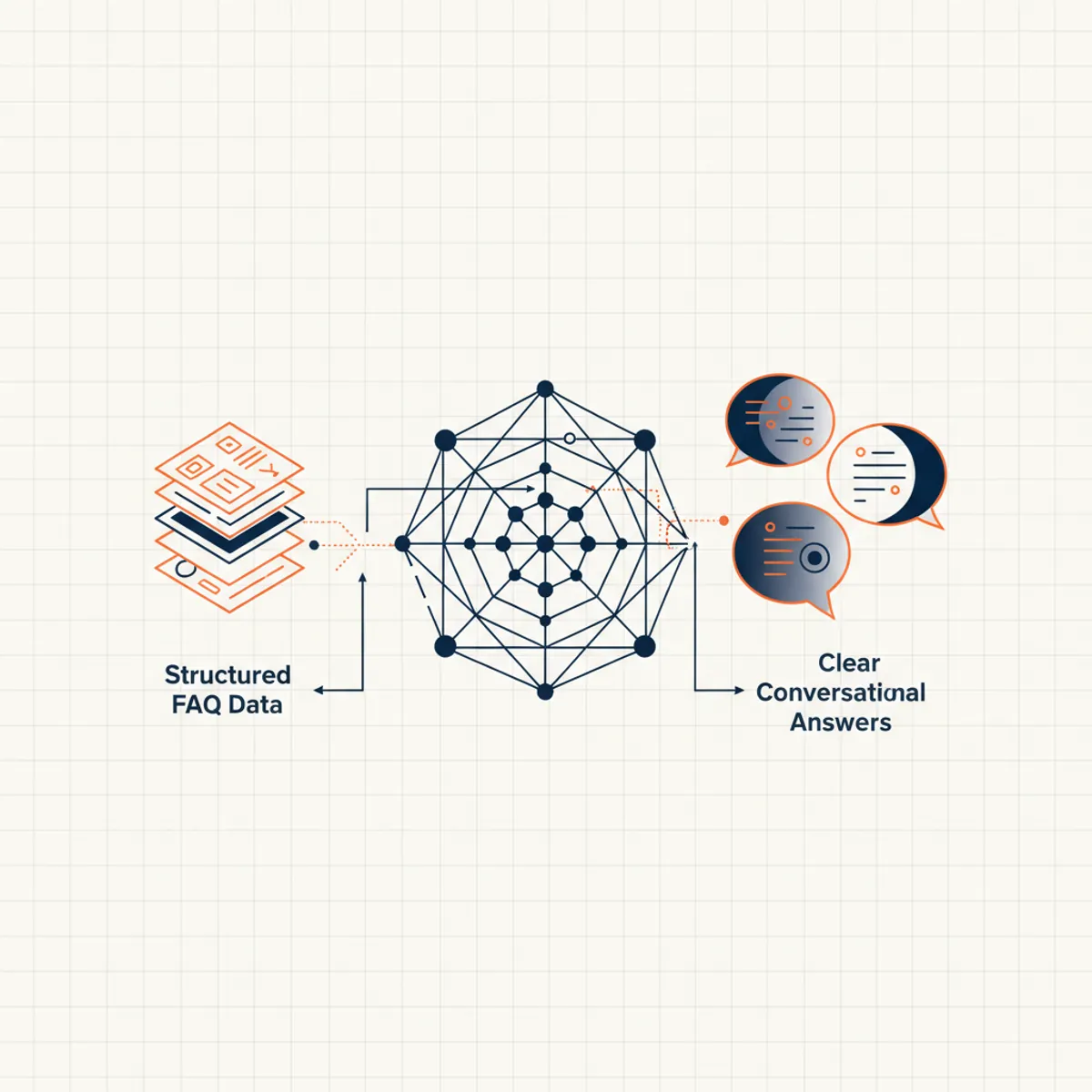
FAQ optimization serves as the bridge between static content and dynamic AI responses in 2025.
Quick answer
Answer engine optimization FAQ optimization in 2025 involves structuring content into concise question-and-answer pairs that directly address conversational user intent. By utilizing precise FAQPage Schema, targeting long-tail natural language queries, and ensuring semantic relevance, brands can increase their visibility within AI-driven platforms like Perplexity, SearchGPT, and Google’s Search Generative Experience.
Answer engine optimization FAQ optimization in 2025 involves structuring content into concise question-and-answer pairs that directly address conversational user intent. By utilizing precise FAQPage Schema, targeting long-tail natural language queries, and ensuring semantic relevance, brands can increase their visibility within AI-driven platforms like Perplexity, SearchGPT, and Google’s Search Generative Experience.
Defining FAQ Optimization in the AEO Era
Traditional FAQ optimization was a tactic used to secure a few extra pixels on the Google Search Results Page (SERP) through rich snippets. In 2025, the paradigm has shifted. As users move away from traditional blue links and toward conversational interfaces like SearchGPT and Gemini, the FAQ has become the primary unit of currency. We no longer optimize for the click; we optimize for the citation.
Answer Engine Optimization (AEO) is the practice of making your content easily digestible for Large Language Models (LLMs). Within this discipline, FAQ optimization is the most tactical lever available. It leverages the natural structure of a question followed by a direct answer, which aligns perfectly with how transformer-based models retrieve and synthesize information. When a user asks a complex question, the AI scans its index for the most authoritative, concise, and contextually relevant answer. An optimized FAQ block is essentially a pre-packaged response, ready for the engine to serve.
The Shift from Keywords to Intent
In 2025, we are seeing a total departure from keyword-stuffing in FAQs. The engines are sophisticated enough to understand latent semantic indexing and user intent. If a user asks, "How do I fix a leaking faucet?" the engine isn't just looking for those exact words. It's looking for the most reliable sequence of steps. Optimization now means ensuring the logic of your answer is flawless and that your language reflects the way real humans describe their problems in voice search and chat prompts.
This requires a move toward "semantic density." Instead of repeating "best CRM software" five times, you must answer the specific sub-questions that define a "best" CRM: "Which CRM integrates with Shopify for under $50?" or "What CRM offers the best automated lead scoring for real estate?" The AI evaluates the quality of your answer based on its utility to the specific user, not the volume of keywords.
Why FAQ Optimization Matters More in 2025
The digital landscape is currently defined by the erosion of the traditional funnel. Users are increasingly finding their answers within the search environment itself, never clicking through to a website. While this may seem like a loss for traffic, it is a win for brand authority. If a brand's content is consistently cited by Perplexity or ChatGPT, that brand becomes the cognitive default for the user.
FAQs are the highest-leverage assets for AEO because they are modular. Unlike a 2,000-word whitepaper that an LLM must summarize (and potentially misinterpret), a well-crafted FAQ is already summarized. It provides the "Information Gain" that AI engines crave—unique, specific data points that aren't just regurgitations of the common knowledge found elsewhere on the web.
"In the next phase of search, the most successful brands won't be those with the most pages, but those with the most 'answerable' content. FAQs are the foundational blocks of that answerability architecture."
— Amir, Founder of EvronStudio
The Rise of Zero-Click Mastery
We have reached the era of Zero-Click 2.0. In this environment, your goal is to be the 'Source of Truth.' When an AI cites your FAQ, it often includes a link to your site as the source. This high-intent referral traffic is significantly more valuable than the drive-by traffic of 2019. By mastering how-answer-engine-optimization-works, you position your site to capture these high-value citations.
Furthermore, these platforms prioritize "Information Gain." If ten websites all say the same thing, the LLM will pick the one that adds a new dimension, a specific data point, or a unique expert insight. FAQs are the perfect vehicle to inject this novelty into the AI's training set or retrieval window.
A Step-by-Step Guide to AEO FAQ Optimization
Optimizing your FAQs for the 2025 environment requires a blend of technical precision and editorial excellence. Follow this five-step framework to ensure your content is AEO-ready.
Step 1: Identify High-Probability Conversational Queries
Don't rely on traditional keyword tools alone. Use social listening, customer support logs, and AI prompt simulators to find out how people actually ask questions.
- Why it works: Conversational AI mimics human dialogue; your questions should too.
- Common Mistake: Using internal jargon that customers never use in real-life queries.
- Pro Tip: Look at the "People Also Ask" section in Google and the "Related" prompts in Perplexity for inspiration. Monitor Reddit and Quora to see the specific phrasing users use when they are frustrated or confused.
Step 2: Implement Advanced Content Chunking
Break your information down into small, digestible units. Each FAQ should cover one specific concept. This is a core part of a content-chunking-strategy.
- Why it works: LLMs have context windows; smaller, focused chunks are easier to process and attribute.
- Common Mistake: Answering three different questions in one long paragraph.
- Pro Tip: Use H3 tags for the questions and keep the answer in a single, clean paragraph directly below it. Ensure that each chunk can be understood if read in isolation.
Step 3: Write for Semantic Completeness
Your answer must stand alone. If someone only reads that one FAQ, they should have a complete understanding of the specific point you are making.
- Why it works: Answer engines often pull a single block of text out of context. If it refers to "this product" without naming the product, it loses value.
- Common Mistake: Using pronouns like "it" or "they" without clear antecedents.
- Pro Tip: Always name your brand or product within the first 10 words of the answer. Use specific nouns instead of generic descriptors.
Step 4: Deploy Precise Schema Markup
While AI engines are getting better at reading raw HTML, FAQPage Schema remains the gold standard for communicating structure to crawlers. Review best-schema-markup-for-aeo for technical details.
- Why it works: It acts as a definitive map, telling the engine exactly where the question ends and the answer begins.
- Common Mistake: Having schema that doesn't match the visible text on the page.
- Pro Tip: Use JSON-LD format and validate it using the Rich Results Test tool. In 2025, consider nesting Speakable schema within your FAQ blocks to capture voice search traffic from smart assistants.
Step 5: Test and Refine for Citations
Submit your URLs to various LLMs and ask them the questions you've optimized for. See if they cite your site.
- Why it works: Real-world testing is the only way to know if your optimization is hitting the mark.
- Common Mistake: Optimizing once and never checking if the AI platforms have updated their responses.
- Pro Tip: If you aren't being cited, try rephrasing the question to be more specific or the answer to be more factual. Use the "Search" feature in ChatGPT to see if it can find your specific text.
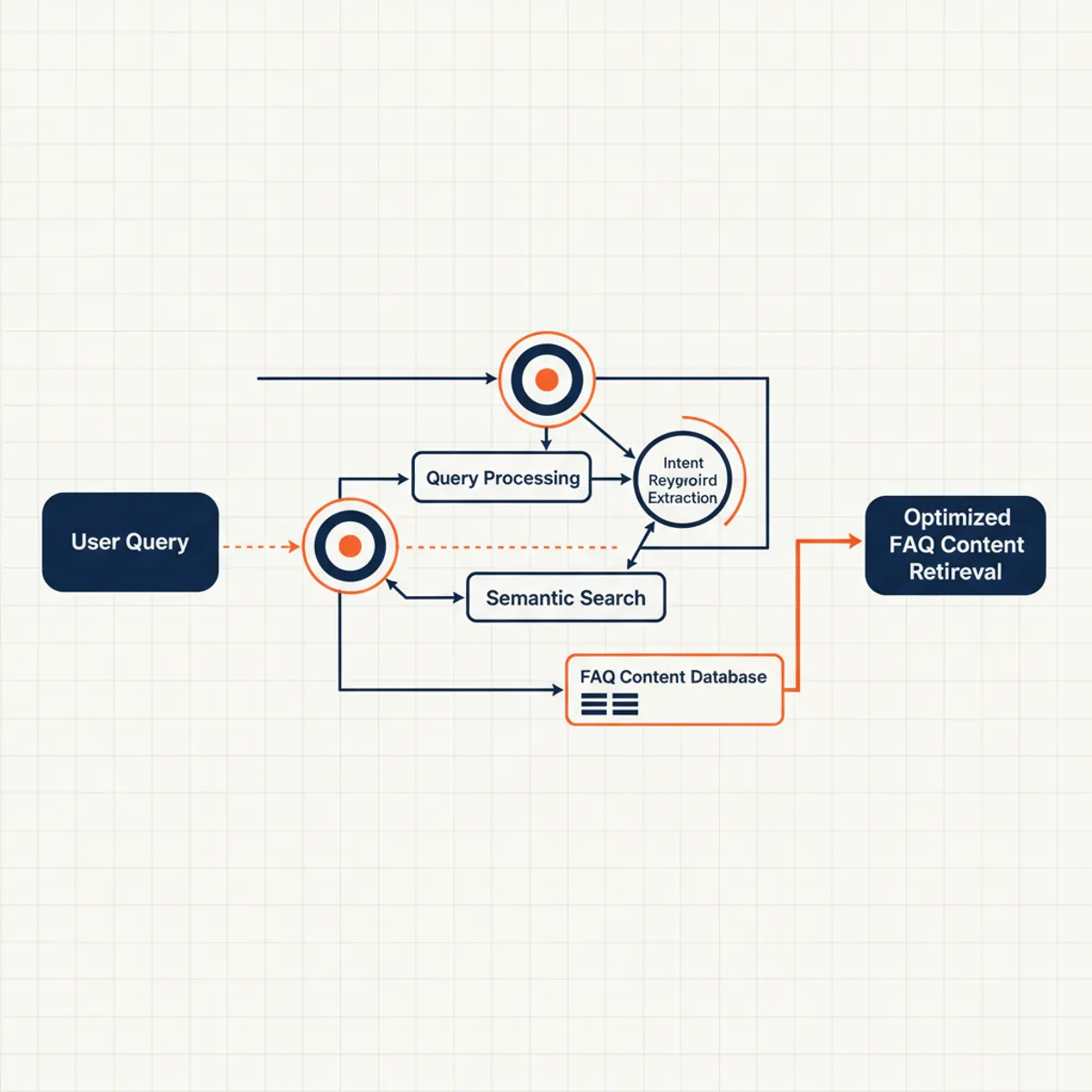
Comparison: Traditional SEO FAQs vs. 2025 AEO FAQs
Understanding the difference between the old way and the new way is vital for resource allocation.
| Feature | Traditional SEO FAQ | 2025 AEO FAQ |
|---|---|---|
| Goal | CTR and Keyword Ranking | Citation and Information Gain |
| Structure | Collapsible accordions | Semantic text blocks |
| Tone | Sales-oriented / Marketing | Factual / Encyclopedic |
| Length | Variable (often long) | Precise (45-75 words) |
| Schema | Basic FAQPage | Nested, entity-rich JSON-LD |
| Primary Metric | Clicks from SERP | Inclusion in AI Response |
Advanced Tactics: Knowledge Graph Integration and Entity Linking
In 2025, simply having a question and an answer isn't enough. You need to anchor your FAQs within the broader Knowledge Graph. This means ensuring your answers link to established entities (people, places, things, or specific concepts).
The Power of Internal Entity Linking
When you answer a question about "SaaS subscription management," you should link the phrase "subscription management" to your main pillar page on the topic. This signals to the AI that you have a deep repository of knowledge on this specific entity. Answer engines use these links to build a map of your site’s authority. If your FAQ answers are isolated islands of text, they are less likely to be perceived as authoritative.
Multi-Platform Consistency
LLMs verify information across multiple sources. If your website FAQ says your product costs $50, but your LinkedIn page says $60 and a press release says $45, the AI will perceive your data as unreliable. For AEO FAQ optimization to work, you must ensure "Nomenclature Consistency." Use the exact same phrasing for your core value propositions across every digital touchpoint. This creates a "consensus effect," making it easier for the AI to choose your site as the definitive source.
Temporal Refresh Cycles
Answer engines in 2025 prioritize "freshness." An FAQ about "tax laws for freelancers" from 2022 is useless today. You must implement a quarterly review cycle for your FAQs. Even a small change, like updating a year or adding a new data point, signals to the crawler that the information is current. This is a primary ranking factor for SearchGPT and Perplexity’s real-time search capabilities.
Industry Examples: AEO FAQ Optimization in Action
To understand the impact of these strategies, let's look at how specific industries are utilizing AEO-optimized FAQs to dominate their respective niches.
1. The E-Commerce Revolution (Electronics)
A major laptop retailer shifted their FAQ strategy from general product queries to "Comparative Intent" queries. Instead of "What is the battery life of the X1 Carbon?" they optimized for "How does the X1 Carbon battery life compare to the MacBook Air M3 for video editing?"
- The Tactic: They used a structured table within the FAQ answer, combined with a 50-word summary.
- The Result: A 300% increase in citations within Gemini’s shopping recommendations. Because they provided the specific comparison the AI was looking for, they became the trusted intermediary for the sale.
2. Legal Services and Compliance
A boutique law firm specializing in GDPR compliance moved away from long-form blog posts to a "Snippet-First" FAQ library. Each FAQ addressed a specific article of the GDPR in relation to small business operations.
- The Tactic: They used H3 headers that mirrored the exact phrasing found in legal search queries (e.g., "What are the penalties for Article 32 violations for US-based firms?").
- The Result: Their site became the primary source for Perplexity’s legal research queries, resulting in a 45% increase in lead generation from international clients who were searching for direct, factual answers.
3. Healthcare and Patient Education
A healthcare provider optimized their FAQs for "Symptom Intent" by focusing on the difference between similar conditions. They used "Differential Diagnosis" language, which LLMs are trained to recognize as high-quality medical information.
- The Tactic: They included citations to peer-reviewed studies within their JSON-LD schema, effectively "lending" their authority to the AI.
- The Result: A significant boost in their visibility within Google’s SGE (Search Generative Experience) for medical queries, positioning their doctors as the primary experts in the region.
Common Pitfalls in AEO FAQ Implementation
Many brands fail because they treat AEO as a "set it and forget it" task. Here are the most common errors we see in the field:
- Vague Answers: Engines hate fluff. Avoid phrases like "We offer a variety of solutions depending on your needs." Instead, say "Our solution includes X, Y, and Z for mid-sized businesses."
- Neglecting Mobile Voice Search: Many AI queries come through voice. If your FAQ answer is too complex to be read aloud naturally, it won't be chosen. Use short sentences and avoid complex nested clauses.
- Outdated Information: AI models are becoming more sensitive to temporal relevance. If your FAQ mentions a 2023 feature as "new," the engine will view your content as stale and deprioritize it in the retrieval process.
- Poor Entity Linking: Your FAQ should link to other relevant entities on your site. If you mention a service, link to that service page within the answer to help the engine map your site's knowledge graph.
- Schema Bloat: Including too many irrelevant questions in your schema can dilute the authority of your primary answers. Focus on quality and relevance over sheer volume.
Essential Tools for FAQ AEO
To compete in 2025, you need a stack that helps you identify, build, and track your performance.
- Perplexity & SearchGPT: Use these as your primary testing grounds. Ask questions and see who is winning the "Answer Box."
- Schema.org Validator: Ensure your code is technically sound to avoid common-schema-mistakes.
- AnswerThePublic: Still one of the best ways to find the raw questions people are asking. Use the "Comparison" and "Preposition" tabs to find conversational triggers.
- Clearscope or SurferSEO: Use these for semantic analysis to ensure your FAQ answers contain the necessary supporting terms that AI engines associate with expertise.
- Glimpse: A Google Trends extension that helps you identify rising conversational trends before they hit peak volume.
- EvronStudio AEO Audit: A specialized tool to measure your brand's overall "answerability" score across different LLMs.
Addressing Objections: Is FAQ Optimization Worth the Effort?
As we consult with brands on AEO, several recurring objections arise. It is important to address these with a data-driven mindset.
Objection: "Won't this just encourage zero-click searches and kill my traffic?" While it is true that many users will get their answer directly from the AI, the users who do click through are much further down the funnel. They have already received the "what" and the "how" from the AI; they are coming to your site for the "who" and the "buy." You are trading high-volume, low-intent traffic for low-volume, high-conversion traffic.
Objection: "Can't the AI just hallucinate an answer regardless of what I write?" LLMs are moving toward Retrieval-Augmented Generation (RAG). This means they are increasingly anchored to real-time search results. By providing the most structured, factual, and easy-to-read content, you are reducing the likelihood of hallucination and increasing the likelihood that the AI uses your specific text as its factual anchor.
Objection: "Is FAQ Schema still relevant if AI can read the whole page?" Yes. Schema is a "force multiplier." It removes the ambiguity that can lead to AI misinterpretation. Think of your webpage as a messy room and the schema as the labeled boxes. Even if the AI is a great cleaner, it will always prefer the labeled boxes because they require less processing power (and cost less for the AI provider to index).
Measuring Success: The New Metrics
How do you know if your FAQ optimization is working? The metrics have changed. You should be tracking:
- Citation Share: What percentage of time does an AI engine cite your brand when asked a relevant question? This is the new "Market Share."
- Answer Accuracy: Does the AI correctly summarize your content, or is it hallucinating based on your text? Use tools like FactCheck.org or manual prompt testing to verify.
- Referral Quality: Are you getting traffic from AI platforms, and does that traffic convert at a higher rate than traditional search? Look for "openai.com" or "perplexity.ai" in your referral logs.
- Entity Dominance: Does the AI associate your brand name with the specific answers you have optimized for? Ask the AI, "Who is the leader in [Your Niche]?" and see if your brand is mentioned.
The AEO Checklist for 2025
- [ ] Question uses natural, conversational language.
- [ ] Answer is 45-75 words long.
- [ ] Direct answer is provided in the first sentence.
- [ ] No internal company jargon or fluff.
- [ ] Brand or product name is explicitly mentioned.
- [ ] FAQPage Schema is validated and error-free.
- [ ] Content is placed contextually on the relevant page.
- [ ] Internal links to core entities are included in the answer.
The Future of FAQs: Beyond 2025
As we look toward 2026 and beyond, FAQ optimization will likely involve more than just text. We expect to see multi-modal AEO, where video and audio snippets are served as answers to voice and visual queries. A user might point their phone at a product and ask, "How do I set this up?" The engine will pull the answer from your "Visual FAQ" database.
By mastering the text-based FAQ now, you are building the logical framework—the "Knowledge Base"—that your brand will need to survive the next shift in search technology. The structure of a question and a factual answer is the universal language of information exchange, whether that information is delivered via text, voice, or augmented reality.
The window to gain a first-mover advantage in AEO is closing. As more brands realize that the SERP is being replaced by the "Answer Box," the competition for those citations will intensify. Brands that treat their FAQs as an afterthought will find themselves invisible in a world where AI is the primary gatekeeper of information. Starting your FAQ optimization today ensures your brand is the one the engines trust when users ask their most important questions.
Ready to dominate the new era of search? Book a free-aeo-audit today or explore our full range of AEO services to stay ahead of the curve.
Frequently asked questions
Why is FAQ optimization critical for AEO in 2025?+
In 2025, answer engines prioritize information that is pre-structured for ingestion. FAQs provide a natural 'query-response' format that mirrors how LLMs process data. By optimizing these sections, you reduce the computational load for the AI to understand your expertise, making it more likely your brand is cited as the primary source for specific user inquiries.
How long should AEO-focused FAQ answers be?+
For maximum impact in 2025, keep FAQ answers between 45 and 75 words. This range is long enough to provide substantive value and context for Large Language Models but short enough to be served as a direct snippet in a chat interface. Precision is more valuable than depth when the engine is looking for a specific data point.
Do I still need FAQ Schema for AI answer engines?+
Yes, but its role has evolved. While platforms like Perplexity and SearchGPT use neural matching to find content, structured data like FAQPage Schema serves as a verification layer. It confirms the intent of the content block, ensuring the engine correctly identifies the relationship between a user's question and your definitive answer without ambiguity.
What is the difference between SEO and AEO FAQ optimization?+
SEO FAQs focus on keyword density and click-through rates to a landing page. AEO FAQ optimization focuses on 'answerability' and semantic completeness. In AEO, the goal is to be the final destination of the user's information need, emphasizing factual accuracy and directness over traditional marketing copy or internal linking fluff.
Can AI-generated FAQs rank in answer engines?+
They can, but they often lack the unique perspective or proprietary data that gives a brand authority. For 2025, the most successful AEO FAQs are human-refined to include specific brand insights, unique terminology, or first-hand experience that an LLM cannot hallucinate or generalize, effectively building much-needed Information Gain.
Where should FAQs be placed for best AEO results?+
Place FAQs where they naturally resolve friction in the user journey. Instead of a single, massive FAQ page, distribute them across service pages, blog posts, and product descriptions. This contextual placement helps answer engines associate your specific solutions with specific problems, improving the relevance score for targeted queries.
Sources & further reading
Soft next step
Want to see where AI answers mention you — and where they don't?
We run a free AEO audit across ChatGPT, Gemini, Copilot and Perplexity, then hand you the fixes in priority order. Start your AEO strategy today.
Keep reading
Content Strategy
Content Chunking Strategy for AEO: A 2026 Guide to AI VisibilityTechnical AEO
Best Schema Markup for AEO: 2026 Expert Implementation GuideAEO Fundamentals
How AEO Works: The Guide to Answer Engine Optimization