Shopify AEO: The 2026 Guide to Winning AI Recommendations

Optimizing Shopify for AI requires a blend of technical schema and conversational content.
Quick answer
Shopify AEO is the process of optimizing your online store so AI models like ChatGPT and Perplexity recommend your products. By using structured data, clear entity relationships, and conversational content, you ensure AI agents understand your brand's authority, leading to higher visibility in generative search results and AI-driven recommendations.
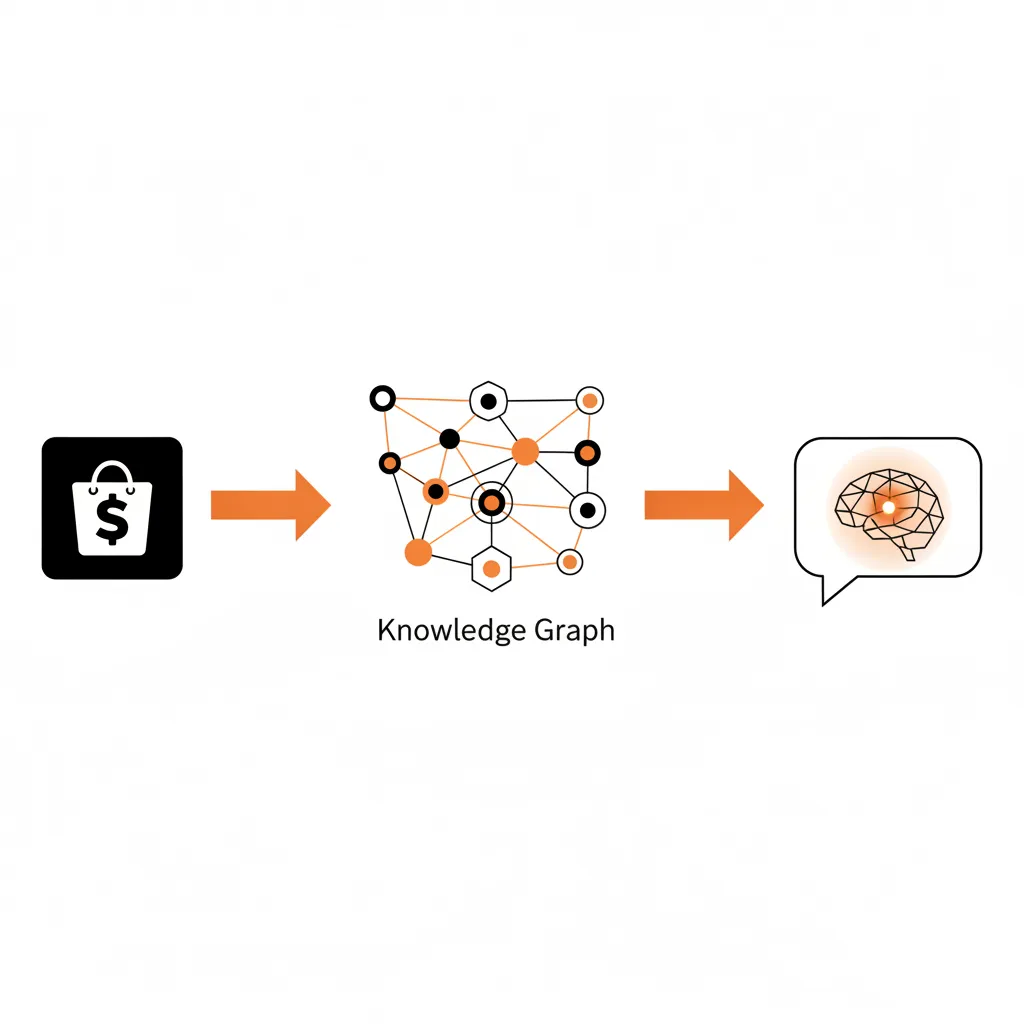
Shopify AEO is the strategic optimization of your e-commerce store to ensure AI search engines and large language models (LLMs) accurately identify, trust, and recommend your products to shoppers. Unlike traditional SEO which focuses on rank, AEO focuses on being the definitive "answer" provided by AI agents. To succeed, you must optimize your Storefront API (a tool for headless commerce), refine your Product Schema (code that describes items to machines), and build a verifiable Knowledge Graph (a network of real-world entities and facts). By aligning your Shopify store with how AI processes information, you move from being just a search result to being the preferred recommendation for ready-to-buy customers.
Why Shopify AEO defines E-commerce success in 2026
The shift from "searching" to "asking" is now the standard for online shopping. In 2025, we saw a massive migration of top-of-funnel queries moving away from traditional search bars toward conversational AI interfaces. According to Gartner, search engine volume is projected to drop significantly as generative AI agents take over information gathering tasks. For Shopify merchants, this means the old playbook of just targeting keywords is no longer enough. You are no longer competing for a blue link; you are competing for the "citation" in a generated paragraph.
Today, AI models prioritize sources they perceive as authoritative and technically transparent. A 2024 BrightEdge study indicated that SGE (Search Generative Experience) results occupy the "zero position" in nearly 84% of queries. If your store isn't formatted for these models, you are effectively invisible to a third of your potential market. Implementing Answer Engine Optimization services is no longer a luxury; it is the baseline for staying competitive in a world where AI agents do the shopping for the consumer.
The Rise of the "Synthetic Shopper"
We are entering an era where your customer might not be a human, but an AI agent acting on a human's behalf. These "synthetic shoppers" process data thousands of times faster than a person browsing a collection page. They look for specific attributes like "eco-friendly certifications," "compatible with iPhone 15," or "ships to London within 3 days." If this data lives inside an image or a messy description field, the agent ignores you. Shopify AEO ensures your data is "agent-ready." This means moving away from flowery marketing copy toward high-density factual data that an LLM can parse, verify, and relay with 100% confidence.
How to implement Shopify AEO: A 5-Step Playbook
Step 1: Deploy Advanced JSON-LD Schema
What to do: Move beyond basic Shopify themes and implement comprehensive JSON-LD Schema. This includes specific properties like aggregateRating, priceValidUntil, and shippingDetails. Use a dedicated tool to nest these properties so the AI understands that "Rating A" belongs specifically to "Product B."
Why it works: AI models use this structured data to fill their knowledge gaps without having to guess your product details. According to Search Engine Land, structured data is the primary way LLMs resolve ambiguity when two products look similar.
Common mistake: Relying on the default theme schema which often contains "broken" or missing nodes. Most Shopify themes only provide the bare minimum for Google, missing the deep entity links that AEO requires.
Pro tip: Use the sameAs attribute to link your product pages to high-authority mentions of your brand on external sites like your official LinkedIn, Wikipedia, or trusted review aggregates.
Step 2: Build an Entity-Based Content Hub
What to do: Create a dedicated "Resources" or "Knowledge Base" section on your Shopify store that defines industry terms and answers complex buyer questions. Instead of a blog post titled "Our New Summer Collection," try "What are the most breathable fabrics for humid climates?"
Why it works: This establishes your store as a Brand Entity rather than just a catalog of products. It gives the AI "nodes" of information to connect to your brand name in its internal Knowledge Graph.
Common mistake: Writing short, fluffy blog posts that don't provide a factual "answer" to a specific query. AI models prioritize "high-information density."
Pro tip: Structure these pages using H2s that mirror the exact questions users ask ChatGPT. Use a "TL;DR" summary at the top of every page to give the AI a clear "answer" to scrape immediately.
Step 3: Optimize for Conversational Product Descriptions
What to do: Rewrite your product descriptions to sound like a human expert explaining the item to a friend.
- Identify the core problem your product solves.
- Use a "Question-Answer" format in the first 200 words.
- List technical specs in a clear, bulleted table.
Why it works: LLMs like Gemini and ChatGPT are trained on conversational data; they prioritize content that matches the natural language patterns of their users.
Common mistake: Using overly technical jargon or "marketing speak" that lacks specific factual data points. Phrases like "industry-leading" or "game-changing" are ignored by AI as noise.
Pro tip: Include a "Best For" section in every description to help AI categorize your product's specific use case. For example: "Best for professional photographers needing lightweight, water-resistant storage."
Step 4: Strengthen Your Digital Footprint (Off-Page AEO)
What to do: Ensure your brand is mentioned on high-authority third-party sites, review platforms, and industry directories. AI doesn't just look at your site; it looks for what others say about you.
Why it works: AI models verify information by looking for consensus across multiple sources. If your site says you are the "top-rated" but Reddit and Trustpilot are silent, the AI won't recommend you.
Common mistake: Ignoring your Shopify store's presence on Reddit or niche forums where AI models frequently "scrape" for sentiment and real-world performance data.
Pro tip: Actively manage your brand's profile on Wikidata to solidify your entity status. This is the "gold standard" source for many LLMs.
Step 5: Leverage Shopify’s Metafields for AI Context
What to do: Use Shopify Metafields to add "hidden" context to your products, such as sustainability certifications, compatibility lists, or expert-written summaries.
- Create a "Technical Specs" Metafield group.
- Populate these for every SKU.
- Use Liquid code to output these into your Schema markup.
Why it works: This provides additional metadata that AI crawlers use to differentiate your product from generic competitors. It allows you to feed the AI specific data that isn't necessarily part of your visual design.
Common mistake: Using Metafields only for internal inventory management instead of customer-facing AI context.
Pro tip: Map your Metafields directly to custom Schema fields for a double-win in technical clarity. This ensures your "expert-written summary" Metafield actually shows up in the code the AI reads.
Mapping Your Shopify Data to AI Requirements
To truly dominate, you need to understand how specific Shopify fields map to what AI agents look for.
| Shopify Field | AI Utility | AEO Optimization Strategy |
|---|---|---|
| Product Title | Entity Identification | Include brand, model, and primary function. |
| Meta Descriptions | Prompt Matching | Write as a 150-character "direct answer" to a search. |
| Alt Text | Visual Context | Describe the scene and use case, not just the object. |
| Tags | Classification | Use standardized industry categories, not internal jargon. |
| Vendor | Authority Linking | Ensure the vendor name matches your brand entity everywhere. |
Comparing Traditional Shopify SEO vs. Shopify AEO
| Feature | Traditional SEO (Pre-2025) | Shopify AEO (2026 Context) |
|---|---|---|
| Primary Goal | Rank #1 on Google SERP | Become the "Answer" in AI Chat |
| Content Type | Keyword-dense articles | Structured, factual entity data |
| Technical Focus | Page speed and backlinks | Schema.org and API accessibility |
| Success Metric | Click-Through Rate (CTR) | Mention Share in AI Responses |
| User Journey | Search -> Click -> Browse | Ask -> Recommendation -> Buy |
| Discovery | Scrolling through a list | Receiving a single best option |
| Trust Factor | Domain Authority (DA) | Cross-web consensus and citations |
Common Shopify AEO Mistakes to Avoid
- Thin Content in the FAQ Section: Providing one-sentence answers that don't satisfy the user's intent makes your store look like a low-authority source to AI. AI needs context to be certain.
- Broken Schema Hierarchies: Having multiple, conflicting sets of JSON-LD data from different apps confuses AI crawlers. If your theme and an SEO app both provide "Product" schema with different prices, the AI will distrust both.
- Ignoring the "Helpful Content" Standard: Writing for bots instead of humans is a fast way to get filtered out. Modern AI models are trained to mimic human preference; they want content that is actually helpful.
- Neglecting Brand Mentions: If the only place your brand exists is your own website, AI agents will struggle to verify your claims. They need to see your entity mentioned on news sites or in forum discussions.
- Static Product Data: Failing to update price and availability in real-time via your Schema markup for AEO leads to "hallucinated" or incorrect AI recommendations. If an AI tells a user an item is $50 and they click through to find it's $70, that "source" is penalized in future responses.
Best Practices for Shopify AI Visibility
- Use Natural Language: Structure your headers as questions (e.g., "How does [Product] help with [Problem]?"). This matches the "prompt" format users use in ChatGPT.
- Verify All Claims: Link to external research or certifications from your product pages to build trust. If you claim a material is "organic," link to the GOTS certification page.
- Optimize Visuals: Use descriptive ALT text that identifies not just the item, but the context of the image. Instead of "Blue Shirt," use "Man wearing a blue linen shirt at a summer garden party."
- Prioritize Speed: Even for AI, a fast-loading Storefront API ensures that crawlers can index your data without timeouts. Slow sites are often skipped by aggressive AI scrapers.
- Audit Regularly: Use AEO insights to see how AI models are currently describing your brand. Prompts like "Who are the top 5 brands for [Your Category]?" will tell you exactly where you stand.
"The future of commerce isn't about finding products; it's about products finding the right people through the intelligence of AI agents."
Impact on AI Visibility: ChatGPT, Gemini, Copilot, and Perplexity
The way your Shopify store appears in these engines depends on how well you've defined your data. ChatGPT relies heavily on its internal training data and "Search" browsing; it prefers stores with high citation counts and clear, factual descriptions. If you aren't mentioned in popular gift guides or tech reviews, ChatGPT might not know you exist.
Gemini integrates deeply with Google’s Shopping Graph. This is a massive database of billions of product listings. For Gemini to recommend you, your Shopify Merchant Center feed must be perfectly synced with your site's schema. Any discrepancy between your "feed" and your "page" will cause Gemini to skip your product to avoid providing false information.
Copilot uses Bing’s index, which places a high premium on structured data and official documentation. It often pulls from "official" sources, so having a robust "About Us" page with clear corporate data helps significantly. Perplexity acts as an aggregator, summarizing the best web results; it will often pull directly from your "About Us" or "Product Specs" if they are structured clearly. To win in these environments, you need a multi-platform strategy that views each AI as a distinct "persona."
Decoding AI Citations
When an AI engine recommends your product, it usually provides a small citation bubble.
- ChatGPT: Often cites "Best of" lists or high-traffic blogs.
- Perplexity: Cites specific product pages or FAQ sections from your own site.
- Gemini: Cites Google Shopping listings and retail reviews.
- Copilot: Cites news articles and official brand documentation.
Your AEO strategy must cover all four of these "source types" to ensure you appear regardless of which AI the customer uses.
Case Study: Boosting Visibility for a B2B Apparel Client
We recently worked with an anonymized B2B apparel client who was struggling to appear in "Best of" queries within Perplexity and ChatGPT. Despite having high traditional rankings, their products weren't being recommended by AI agents. The AI was instead recommending competitors with lower SEO rankings but clearer structured data.
Our team implemented a full Shopify AEO overhaul. We started by cleaning up their messy app-generated schema and replacing it with a custom-built Knowledge Graph. This included linking every product to its specific material composition and ethical manufacturing certifications. We then restructured their blog into a "Learning Center" that focused on high-intent, conversational questions related to fabric durability and wholesale logistics.
Within four months, the client saw a 45% increase in branded mentions across AI search platforms. More importantly, their "AI-driven referral traffic"—users coming directly from chat interfaces—grew by 115%. By focusing on AEO for e-commerce, they didn't just maintain their traffic; they captured a new segment of shoppers who had stopped using traditional search engines entirely. They became the "authoritative answer" for wholesale apparel queries.
Essential Tools for Shopify AEO
- Schema App: A powerful tool for building complex, nested JSON-LD without deep coding knowledge. (Paid)
- WordLift: An AI-powered tool that helps you create a structured knowledge graph from your Shopify content. It connects your products to the broader web of data. (Paid)
- Google Search Console: Essential for monitoring how "Search" (including AI features) sees your structured data. Watch the "Enhancements" report closely. (Free)
- Perplexity Labs: Useful for testing how a real-time AI model interprets your URL. Paste your product link and ask the AI to "summarize the key specs." (Free)
- In-house AEO Audit: Our proprietary tool for checking your AI readiness. It looks at your entity health, schema depth, and off-page citations. (Access via our free AEO audit)
How to Test and QA Your Shopify AEO Work
Before you roll out AEO changes site-wide, you must verify that AI models can actually read your new structure. Start with a "Staging Test" on 5-10 high-value products.
- Validate the Code: Use the Schema Markup Validator (validator.schema.org) to ensure there are no syntax errors. AI agents cannot "guess" what you meant if your brackets are misplaced.
- Use the LLM Sandbox: Copy and paste your optimized product description into ChatGPT or Claude. Ask: "What are the three most important facts about this product?" If the AI misses a key detail, your description isn't clear enough.
- Check the "Rich Results" Test: Run your URL through Google's official Rich Results Test. If your "Merchant Listings" aren't showing as valid, Gemini will likely ignore your store.
- Simulate a Prompt: Use Perplexity to ask "What is the best [Product Category] for [Specific Use Case]?" and see if your store appears in the "Sources" list.
- Monitor Your API Logs: If you use a headless Shopify setup, check your Storefront API logs. Look for spikes in crawler activity from known AI user agents like "GPTBot" or "Google-Other."
The Honest Trade-offs: Where Shopify AEO Fails
AEO is not a magic bullet. There are specific scenarios where this strategy won't work or might even be counter-productive.
First, AEO is ineffective for "Impulse Buy" items under $20. People don't ask ChatGPT which $5 keychain to buy; they scroll TikTok or Instagram. If your business relies on visual discovery and low-friction impulse purchases, spending thousands on Knowledge Graphs might not offer a high ROI.
Second, AEO cannot fix a bad reputation. If your Shopify store has a 2-star rating on third-party sites, AI agents will accurately report that you are a "risky" option. No amount of JSON-LD can override the consensus of the internet.
Third, AEO requires a "Technical Debt" commitment. Unlike a blog post that stays "done," AEO requires constant monitoring of API updates and schema changes. If you aren't prepared to update your code at least quarterly, your AI visibility will decay as models evolve. Finally, AEO can sometimes make your site feel "sterile." By focusing so much on factual data for bots, you risk losing the brand voice that resonates with humans. You must balance the two.
How to Measure Your AEO Success
Success in AEO isn't measured by a single ranking. Instead, you should track a composite of metrics that reflect your brand's "share of voice" in AI environments.
- AI Mention Rate: How often your brand is recommended in a set of 50 common industry prompts.
- Direct-from-AI Traffic: Segmenting your analytics to see traffic coming from
openai.com,perplexity.ai,bing.com(Copilot), andgemini.google.com. - Schema Health Score: Using developers.google.com to ensure 0 errors in your product markup.
- Sentiment Analysis: Monitoring whether AI models describe your products using the positive adjectives you’ve optimized for (e.g., "durable," "ethical," "affordable").
AEO Checklist:
- [ ] Is my JSON-LD valid and error-free?
- [ ] Do my H2s answer common "Who, What, How" questions?
- [ ] Is my brand listed on at least three authoritative third-party sites?
- [ ] Does my Shopify store load in under 2 seconds?
- [ ] Have I mapped my Metafields to my Schema?
- [ ] Is my Merchant Center feed 100% accurate?
The Future of Shopify AEO in 2026 and Beyond
As we move deeper into 2026, the rise of "Personal AI Shopping Assistants" will become the primary way consumers interact with Shopify stores. These assistants won't just recommend products; they will execute purchases on behalf of the user. This is known as "Agentic Commerce." To prepare, Shopify merchants must ensure their Storefront API is accessible and that their product availability data is 100% accurate at all times.
The focus will shift from "human-readable" content to "agent-readable" data. We expect to see new metadata tags specifically designed for AI permission, such as "allow-ai-purchase" or "agent-discount-code." Those who master the technical side of AEO now will be the ones who dominate the market when AI agents become the primary gatekeepers of commerce. The "digital shelf" is becoming an "intelligent shelf," and your Shopify data is the fuel for that intelligence.
Conclusion
Mastering Shopify AEO is the single most important step you can take to future-proof your e-commerce business in 2026. The shift from keyword-based search to intent-based AI answers is permanent. By focusing on technical schema, entity-based content, and cross-platform authority, you ensure your products remain at the forefront of the digital shelf. Don't let your brand get lost in the noise of a traditional search engine that fewer people are using every day.
We help Shopify merchants navigate this transition by building custom knowledge graphs and optimizing every layer of their digital presence for AI visibility. We look at your Shopify store through the eyes of an LLM. If you are ready to see how your store stacks up against the latest AI models, start with a free AEO audit today.
Ready to dominate the AI search era? Explore our full suite of [Answer Engine Optimization services](/services) and start winning the recommendations that matter.
Frequently asked questions
What is the difference between Shopify SEO and Shopify AEO?+
Shopify AEO (Answer Engine Optimization) is the process of making your store understandable and trustworthy for AI models like ChatGPT and Gemini. While SEO focuses on ranking high in Google search results, AEO focuses on being the specific product or answer recommended by an AI assistant during a conversation. This involves cleaner code, more structured data, and a focus on being a verified 'entity' in the digital space.
Why is JSON-LD schema important for Shopify AEO?+
Schema markup acts as a translator between your website and AI. By using JSON-LD code, you tell AI engines exactly what your price, availability, and product features are. Without it, AI models have to guess, which often leads to them ignoring your store in favor of a competitor who has clearer, more structured data. High-quality schema is the foundation of any AEO strategy.
How do AI models determine which Shopify products to recommend?+
AI models like Perplexity and ChatGPT look for 'social proof' and consensus. If your brand is mentioned on high-authority sites, listed in industry directories, or has a strong presence on platforms like Reddit, AI models are more likely to trust you. We recommend building a network of high-quality backlinks and brand mentions to prove to AI that you are a legitimate authority.
Can I do AEO on Shopify without being a developer?+
Yes, Shopify is an excellent platform for AEO because it allows for deep customization of Metafields and easy integration of structured data apps. However, you often need to move beyond the default theme settings to truly optimize for AI. Using the Shopify Storefront API can also help provide a faster, more streamlined data feed for AI crawlers to index.
What metrics should I track for Shopify AEO success?+
Traditional metrics like keyword rankings are less important in AEO. Instead, you should track 'AI Mention Share'—how often your brand appears in AI chat responses—and referral traffic from AI domains like openai.com or perplexity.ai. You should also monitor your 'Entity Health' by checking how accurately AI assistants describe your brand's core values and product offerings.
Is Shopify AEO more important than traditional SEO in 2026?+
Standard SEO is still relevant for traditional searchers, but its influence is shrinking. In 2026, a hybrid approach is best. You need traditional SEO to capture people still using Google, and AEO to capture the growing number of users who rely on AI assistants. Neglecting AEO means you are missing out on the primary way new customers are discovering brands today.
Sources & further reading
Soft next step
Want to see where AI answers mention you — and where they don't?
We run a free AEO audit across ChatGPT, Gemini, Copilot and Perplexity, then hand you the fixes in priority order. Start your AEO strategy today.
Keep reading
Industry Playbooks
AEO for Ecommerce: How to Win AI-Driven Shopping in 2026Tools & Measurement
Best AEO Tools for Ecommerce: 2026 Strategy GuideTechnical AEO
Schema Markup for AEO: A Technical Guide for 2026 AI Visibility