Is AI Content Good for Answer Engine Optimization in 2026?

Combining AI efficiency with human expertise is the key to AEO success.
Quick answer
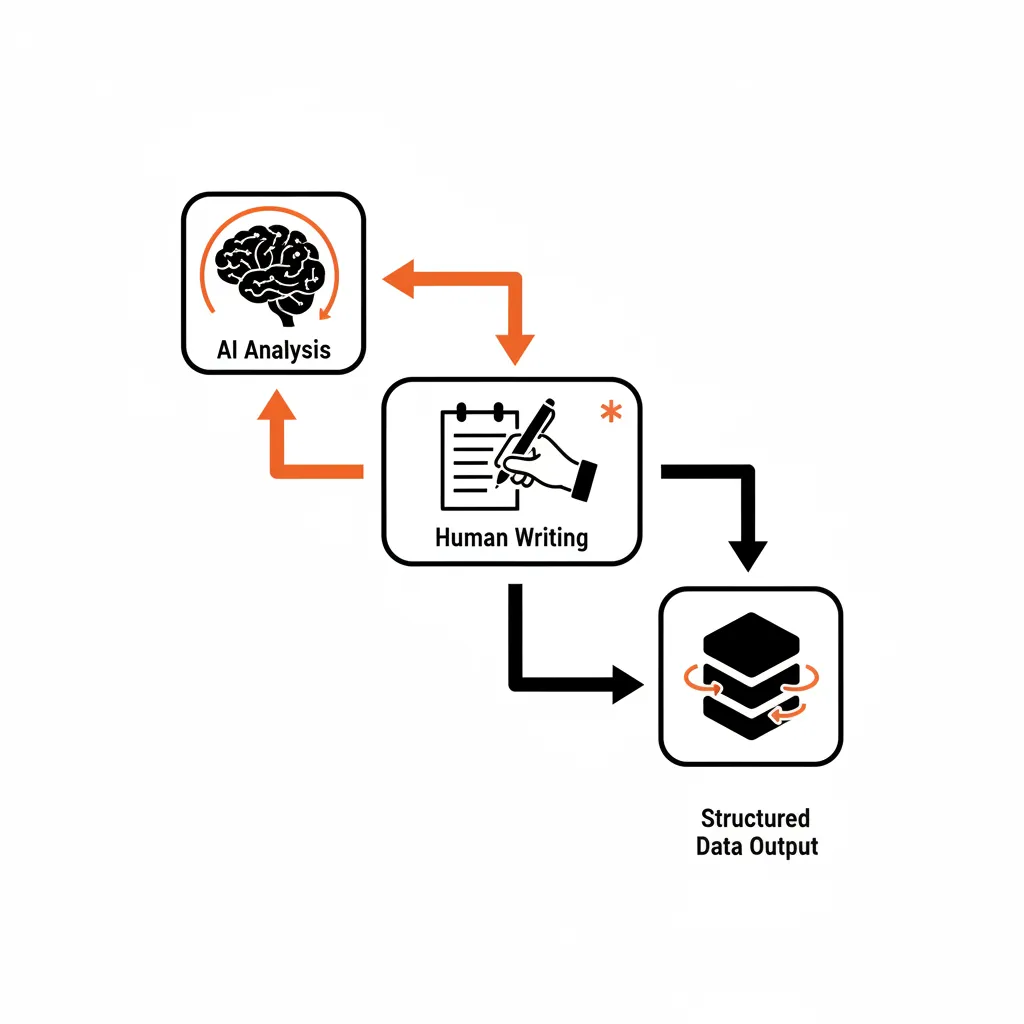
AI content is good for Answer Engine Optimization (AEO) only when used as a draft for human expertise. While AI can structure data and generate high-volume content, LLMs prioritize accuracy, unique insights, and verified facts. Pure AI content often lacks the original perspective required to become a primary source.
AI content is good for Answer Engine Optimization if you use it to scale information while maintaining human-verified accuracy and unique insights. In 2026, answer engines like Perplexity and SearchGPT prioritize original data and expert perspectives over generic summaries. While AI speeds up your production, success requires heavy editing to ensure your brand remains a trusted source for LLMs. We recommend using AI for structure and data synthesis but relying on human experts to provide the nuanced "why" that AI currently cannot replicate. This balance allows you to dominate AI-driven results without sacrificing the trust that builds long-term authority.
Defining AI Content in the Age of Answer Engines
To understand how AI affects your visibility, we must define a few core concepts. Answer Engine Optimization (AEO) is the process of optimizing your digital assets to be the direct answer provided by AI models. These models rely heavily on Natural Language Processing (NLP), a field of AI that helps computers understand and interpret human language. When an AI "reads" your site, it looks for Structured Data, which is a standardized format for providing information about a page and classifying the page content.
Most AI-generated text today is built using Large Language Models (LLMs). These are algorithms trained on massive datasets to predict the next word in a sequence. Finally, the way these engines retrieve your information is often through Retrieval-Augmented Generation (RAG). This process allows the AI to look at specific, trusted external documents to provide a more accurate and up-to-date answer to a user.
The Role of Semantic Density in LLM Training
Modern LLMs do not just look for keywords; they look for semantic relationships between concepts. If you write about "B2B Lead Generation," the AI expects to find related entities like "Conversion Rate Optimization," "SQLs," and "CRM Integration" nearby. AI content generation often excels at hitting these "table stakes" terms. However, AEO requires you to go further by ensuring these terms are placed in a logically dense structure. We call this semantic density. It helps the RAG system understand that your page is a comprehensive node of information rather than a shallow summary.
Why Quality Content Matters for AEO and SEO in 2026
In 2025, we saw a massive shift in how search engines handle AI-generated text. According to data from BrightEdge, AI-led overviews now appear for a significant majority of informational queries. This marks a departure from traditional blue links. Furthermore, Gartner recently predicted that by 2026, search engine volume will drop by 25% as users move toward direct answer engines.
This means your content is no longer just for humans to read; it is training data for the bots that serve those humans. If your content is generic AI output, you offer nothing new to the model. Google’s E-E-A-T guidelines (Experience, Expertise, Authoritativeness, and Trustworthiness) have become the primary filter for what gets cited. If an AI model sees ten pages saying the same thing, it will cite the one with the most verified structured data and original research.
The Rise of Information Gain Scores
Search engines and LLMs now prioritize "Information Gain." This is a metric that measures how much new information a page provides compared to what the model already knows. If your AI-generated blog post simply summarizes existing top-10 results, your Information Gain score is zero. To rank in a SearchGPT or Perplexity citation, you must provide a unique data point, a specific case study, or a proprietary framework. Without this, even the most grammatically perfect AI content will fail to gain traction in AEO.
How to Use AI Content for AEO: A Step-by-Step Guide
Step 1: Use AI for Data Synthesis and Outlining
Start by using AI to analyze top-performing answers for your target keywords. Have the AI identify common themes, missing gaps, and the typical reading level of the top results. This helps you build a blueprint that is already aligned with how LLMs categorize information.
- What to do: Input five competitor URLs into an LLM and ask for a gap analysis.
- Why it works: It ensures your content structure matches the intent the engine is looking for.
- Common mistake: Letting the AI write the full article from the outline without human intervention.
- Pro tip: Ask the AI to identify "entities" your competitors are mentioning so you can include them in your AEO strategy.
Step 2: Infuse Unique Human Perspectives
Once you have an outline, a subject matter expert (SME) must write the core insights. AI cannot interview your customers or share a story about a failed project from 2024. These unique details are what make your content "link-worthy" for an AI.
- Identify the "Expert Hook": Find the one part of the topic where your team has a contrarian view.
- Interview an SME: Spend 15 minutes recording their thoughts on that specific hook.
- Inject Personal Proof: Insert actual results or internal metrics that support the expert's claim.
- What to do: Add specific case studies, internal data, or contrarian opinions to the AI-generated draft.
- Why it works: Answer engines look for "information gain"—new info that doesn't exist elsewhere.
- Common mistake: Using AI to "rewrite" expert quotes, which often strips away the personality and nuance.
- Pro tip: Use voice-to-text to record an expert, then use AI to clean up the transcript into a blog section.
Step 3: Optimize for Entity Recognition
AI engines don't just read words; they identify entities (people, places, things, and concepts). You need to make it easy for the engine to understand who you are and what you are an authority on.
- What to do: Use clear H2 and H3 headings that state a question or a clear fact.
- Why it works: It maps directly to how RAG systems pull "chunks" of text to answer a query.
- Common mistake: Using clever or cryptic headings that confuse the AI's entity extraction.
- Pro tip: Refer to our guide on writing content for AI search to master heading structures.
Step 4: Validate and Fact-Check with Multiple Sources
AI is prone to "hallucinations" or presenting outdated facts as current. In 2026, answer engines are incredibly sensitive to factual errors. If you publish incorrect AI data, your entire domain's authority could drop in the eyes of the model.
- What to do: Cross-reference every statistic or date generated by AI against primary sources like Pew Research or Gartner.
- Why it works: Fact-checking builds the "Trust" pillar of E-E-A-T.
- Common mistake: Assuming that because an AI has "browsing" enabled, its citations are always accurate.
- Pro tip: Explicitly state your sources in a dedicated section at the bottom of your post.
Step 5: Implement Advanced Schema Markup
The final step is translating your human-AI hybrid content into a language the machines prefer. Schema markup acts as a roadmap for the answer engine.
- What to do: Add
FAQPage,ClaimReview, orProductschema to your post. - Why it works: It provides a direct, non-ambiguous data point for the AI to ingest.
- Common mistake: Using outdated schema properties that have been deprecated.
- Pro tip: Use the Google Search Central documentation to stay updated on the latest schema requirements.
Comparing AI-Only vs. Human-AI Hybrid Content for AEO
| Feature | Pure AI Content | Human-AI Hybrid | Why it Matters for AEO |
|---|---|---|---|
| Information Gain | Low (Regurgitated) | High (New Data/Opinions) | Engines prioritize unique facts. |
| Factual Accuracy | Variable (Risk of Hallucination) | High (Human Verified) | Errors lead to de-indexing in AI results. |
| Entity Authority | Weak | Strong | Humans establish real-world expertise. |
| Tone & Voice | Generic | Brand-Specific | Builds user trust and return visits. |
| Production Speed | Very High | Moderate | Hybrid is the best "quality at scale" balance. |
| RAG Retrieval Likelihood | Moderate | Very High | Direct answers require high-trust data. |
"The winners in the AEO era won't be those who publish the most content, but those who provide the most reliable, unique answers that AI models can't help but cite."
Common Mistakes to Avoid
- Ignoring the "source of truth" problem. If you use AI to summarize other AI summaries, the accuracy degrades. Always go back to primary data.
- Neglecting technical SEO fundamentals. Even the best AI content won't be found if your site is slow or has crawl errors.
- Over-optimizing for a single model. Don't just write for ChatGPT. Ensure your content is accessible to Gemini, Perplexity, and others by using standard formats. Avoid common AEO mistakes like over-tagging.
- Failing to update content regularly. AI models prefer recent information. An AI-generated post from 2024 is already stale in the eyes of a 2026 engine.
- Omitting clear "Who, What, Why" statements. AI engines often look for a summary paragraph at the start or end of a section to verify the main point.
Best Practices and Pro Tips
- Focus on Long-Tail Questions: Use tools to find specific "how-to" or "why" questions that your audience is asking AI.
- Use Clear, Declarative Sentences: Avoid complex metaphors that might confuse a machine's semantic understanding.
- Link Internally to Related Topics: Help the engine see the breadth of your knowledge by linking to your AEO insights or other relevant blogs.
- Monitor Your Brand Mentions: Use tools to see how AI engines are describing your brand and adjust your content to correct misconceptions.
- Prioritize Zero-Click Value: Write your content so that even if the user stays on the search page, your brand is the one providing the value.
Visibility in ChatGPT, Gemini, Copilot, and Perplexity
In 2026, the major players have distinct ways of selecting sources. ChatGPT (OpenAI) tends to favor sites with high conversational relevance and clear authority. Gemini (Google) integrates deeply with the Google Search index, meaning traditional SEO signals still carry significant weight. Perplexity acts more like a research assistant, heavily favoring academic-style citations and real-time data. Copilot (Microsoft) often pulls from professional and technical sources within the Bing index.
To be visible across all four, your AI-assisted content must be highly structured. We have noticed that these engines share a common trait: they prefer "chunkable" content. If your article is a giant wall of text, the RAG systems struggle to pull a specific answer. By using bullet points, tables, and clear headings, you increase the chances of being the "featured" source across all platforms. Understanding how AI chooses sources is essential for staying competitive here.
Platform-Specific Formatting Nuances
While structure matters globally, each engine has quirks. For instance, Perplexity values citations within the text, similar to a Wikipedia entry. If you use AI to generate content, ensure you manually insert bracketed citations that link to high-authority external sites or your own primary research. Gemini, on the other hand, responds well to content that uses the same terminology found in Google’s Knowledge Graph. Using AI to scan the Knowledge Graph for your topic before you write can give you a significant advantage in Gemini-driven answers.
Case Study: B2B SaaS Client Success
We worked with a B2B SaaS client in the fintech space who was struggling to appear in AI-generated answers. Their blog was filled with 100% AI-generated content that, while grammatically correct, offered no new value. Their "share of voice" in Perplexity and SearchGPT was below 2%.
We implemented a hybrid strategy. We used AI to identify the top 50 questions their customers were asking and to generate initial drafts. Then, we had their internal product team add specific data points from their proprietary platform and unique commentary on industry trends. We also implemented comprehensive TechArticle schema markup.
Within six months, the results were clear. Their presence in AI answer boxes increased by 45%. More importantly, the traffic coming from these engines had a 30% higher conversion rate than traditional search traffic. This happened because the AI was recommending them as a specific solution to complex problems, rather than just a generic information source. This proves that while AI can help you scale, the "human" element is what drives the final recommendation.
Tools and Resources for AEO
- Perplexity Labs: Excellent for testing how a real-time engine interprets your URLs. (Free and Paid tiers)
- Semrush AI Writing Assistant: Helps you check for readability and SEO alignment while you draft. (Paid)
- Schema.org: The official resource for finding the right tags for your content. (Free)
- Google Search Console: Essential for monitoring how your "Rich Results" are performing. (Free)
- Ahrefs: Useful for identifying the "people also ask" queries that fuel answer engines. (Paid)
| Tool Category | Recommended Tool | Core Use Case for AEO |
|---|---|---|
| Discovery | AnswerThePublic | Finding the specific questions users ask LLMs. |
| Validation | Google Fact Check Explorer | Ensuring AI-generated claims are accurate. |
| Technical | Merkle Schema Generator | Creating JSON-LD for Answer Engine ingestion. |
| Monitoring | Brand24 | Tracking when AI mentions your brand without a link. |
How to Measure Success in AEO
Measuring success in 2026 requires looking beyond just "keyword rankings." You need to track your Answer Share—how often your brand is cited as a source in an AI response.
AEO Success Checklist:
- Brand Citation Rate: Are LLMs naming your brand when answering relevant questions?
- Referral Traffic from AI: Track traffic from
chatgpt.com,perplexity.ai, and others in your analytics. - Content Freshness: Ensure your top-performing AEO pages have been updated within the last 90 days.
- Schema Health: Check for zero errors in your Rich Results test.
- Information Gain Score: Does your content provide at least two facts not found in the top 3 AI results?
Testing and QA: Verifying Your AI Content Before Rollout
You should never push AI-generated content live without a rigorous quality assurance (QA) process. AEO is sensitive; one hallucination can damage your credibility with the model's index. We use a three-tier testing system to ensure every piece of content is "engine-ready."
The Hallucination Check
First, scan the content for "phantom facts." AI often invents statistics or attributes quotes to the wrong people.
- Step: Copy every statistic into a search engine. If you cannot find the primary source within 30 seconds, delete it.
- Why: AI models prioritize accuracy. If you serve a "fake" fact, the engine may flag your domain as unreliable.
Semantic Alignment Testing
Next, check if your content actually answers the target prompt. You can use an LLM for this.
- Step: Paste your completed article into a clean ChatGPT session. Ask: "Based on this text, what is the definitive answer to [Target Question]?"
- Goal: If the AI struggles to find the answer in your own text, a RAG system will also struggle. You need to sharpen your declarative sentences.
Schema Validation
Finally, run your URL through a structured data testing tool. Even a single missing bracket in your JSON-LD can prevent an answer engine from parsing your data. We recommend using the Schema Markup Validator alongside Google's Rich Results Test. This ensures that the technical layer of your AI content is as polished as the prose.
The Honesty Gap: Where AI Content Fails in AEO
We must be honest about the trade-offs. AI content is not a magic bullet, and there are specific scenarios where it will fail you completely. Understanding these limitations prevents you from wasting budget on ineffective automation.
The "Echo Chamber" Effect
If you are in a highly competitive niche like cybersecurity or medical SaaS, AI-generated content often becomes an echo chamber. Because LLMs are trained on existing data, they cannot predict future trends. If your goal is to be a "thought leader," AI-generated content will actually hurt you. It makes you look like a follower rather than a pioneer. In these cases, the AI should stay in the research phase, and humans should handle 100% of the drafting.
The Problem of Static Knowledge
LLMs have a knowledge cutoff. Even with web-browsing capabilities, their "reasoning" is often based on older patterns. If your industry changes overnight—due to a new regulation or a market crash—AI content will produce outdated advice. AEO requires real-time relevance. If you rely too heavily on AI for news-sensitive topics, you risk providing "confidently wrong" answers that will get your site blacklisted from real-time engines like Perplexity.
Technical Bloat and Latency
Large volumes of AI content can lead to "index bloat." If you publish 500 AI-generated pages, but only 5 are high-quality, search engines may stop crawling your site efficiently. This "dilution" of quality makes it harder for your best content to be picked up by RAG systems. More content is not better; better content is better.
The Future of AI Content and AEO
As we look toward 2027, the line between "search" and "answer" will continue to blur. We expect AI models to become even better at detecting "fluff." If your content is written just to satisfy an algorithm, it will be ignored. The engines are moving toward a "multimodal" understanding, meaning they will soon evaluate your videos, podcasts, and images alongside your text to determine your authority.
Sustainability will also matter. As the cost of training models increases, engines will prefer sources that are concise and "information-dense." The goal is to say more with fewer words. Brands that master this hybrid approach—using AI for efficiency and humans for authority—will dominate the digital landscape. You must treat your website as a structured database of expertise rather than just a collection of articles.
Conclusion
AI content is a powerful tool for Answer Engine Optimization, but it is not a standalone solution. In 2026, the secret to high visibility lies in the "Hybrid Model." Use AI to handle the heavy lifting of data analysis, structure, and initial drafting. Then, layer in human expertise, unique data, and rigorous fact-checking to ensure your content stands out to both LLMs and human readers. By following a structured approach to AEO and avoiding the pitfalls of generic automation, you position your brand as a primary source of truth in the AI era.
If you are unsure if your current content strategy is ready for the age of AI search, we can help. Request a free AEO audit today to see where you stand. Ready to dominate the answer engines? Explore our full range of [Answer Engine Optimization services](/services) and start building your future-proof authority now.
Frequently asked questions
Is AI content good for AEO in 2026?+
Yes, AI content can be good for AEO, but only if it is heavily edited by humans. Answer engines look for accuracy and unique insights. While AI can help with structure and speed, pure AI text often lacks the 'information gain' required to be a cited source in engines like Perplexity or SearchGPT.
How does AEO differ from traditional SEO?+
Traditional SEO focuses on ranking in a list of links on a search engine results page. AEO focuses on being the single, direct answer provided by an AI model. While SEO targets keywords, AEO targets entities, questions, and natural language patterns that LLMs can easily synthesize.
How do I make AI content rank in answer engines?+
To make AI content rank in answer engines, focus on structured data, clear headings, and unique human perspectives. You must ensure your content provides specific facts that generic AI models don't already have in their training data. Adding original research or case studies is the most effective way to do this.
What are the risks of using pure AI content for AEO?+
The biggest risk is factual inaccuracy, also known as hallucination. If an answer engine detects that your content is incorrect, it will stop using your site as a source. Additionally, pure AI content can feel generic, which may lower your brand's perceived authority and trust with human users.
Which AI engines are most important for AEO?+
Answer engines use a process called Retrieval-Augmented Generation (RAG). When a user asks a question, the engine searches the web for trusted documents, 'chunks' the information, and summarizes it. If your content is well-structured and authoritative, it is more likely to be selected for this summary.
How do I measure AEO success?+
You should measure AEO success by tracking 'Answer Share' and referral traffic from AI platforms like ChatGPT, Gemini, and Perplexity. Use tools to see if your brand is mentioned by name in AI responses and monitor your click-through rate from AI-generated citations.
Sources & further reading
Soft next step
Want to see where AI answers mention you — and where they don't?
We run a free AEO audit across ChatGPT, Gemini, Copilot and Perplexity, then hand you the fixes in priority order. Start your AEO strategy today.