How to Choose an AEO Agency: The 2026 Guide to AI Visibility
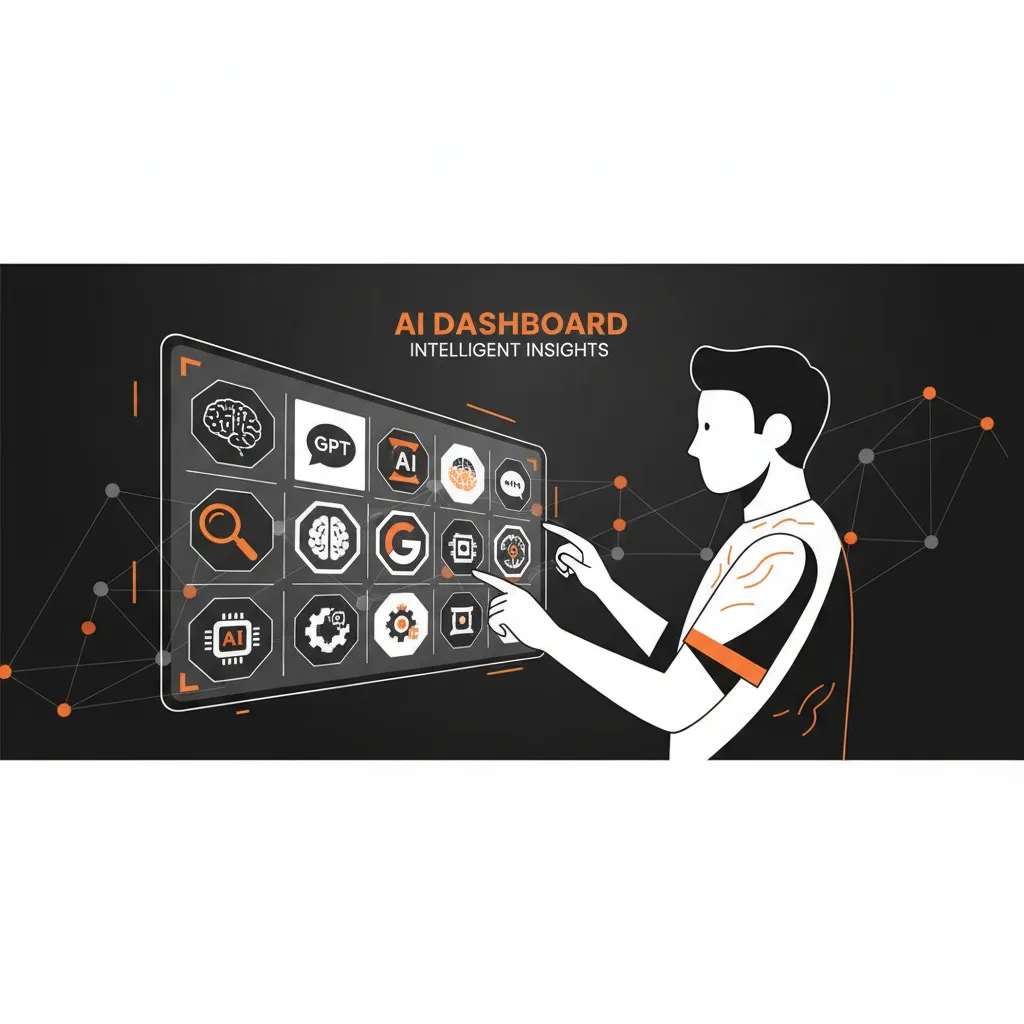
Selecting the right partner is the first step toward dominating AI-driven search results.
Quick answer
To choose an AEO agency, evaluate their ability to optimize for Large Language Models (LLMs) rather than just search engines. Look for expertise in structured data, conversational keyword research, and brand entity management. Ensure they provide specific metrics for AI visibility across platforms like ChatGPT, Gemini, and Perplexity.
To choose an AEO agency, start by evaluating their technical proficiency in structured data and their understanding of how Large Language Models process information. You should look for a partner that prioritizes brand entity clarity and provides transparent reporting on AI mention shares across platforms like Perplexity and ChatGPT. A qualified agency must demonstrate a shift from traditional keyword stuffing to building a cohesive knowledge graph for your brand. By focusing on intent-based content and technical schemas, the right agency ensures your business becomes the definitive answer for your target audience's queries in this AI-driven era.
What is Answer Engine Optimization?
To make an informed choice, you must first understand the core components of the field. Answer Engine Optimization (AEO) is the process of optimizing web content specifically for AI-powered engines that provide direct answers to user queries. Unlike traditional SEO, which focuses on ranking in a list of blue links, AEO aims to be the single source of truth for an AI’s response.
A central part of this is managing your Brand Entity, which is a unique, well-defined object or concept that search engines can recognize regardless of the specific words used to describe it. To help engines understand these entities, agencies use Schema Markup, a standardized code (vocabulary) added to your website that helps AI understand the context of your data.
Furthermore, we focus on the Knowledge Graph, a programmatic network of real-world entities and their interrelationships. When an agency optimizes your presence, they are essentially trying to secure your spot in the Large Language Model (LLM)—the underlying AI technology, such as GPT-4o or Gemini 1.5 Pro, that generates human-like text based on the patterns it learned during training.
The Role of Natural Language Processing (NLP)
A key sub-discipline your agency must master is NLP. Modern engines use NLP to understand the nuance of human speech. When a user asks, "What is the best way to scale a RevOps team?", the engine doesn't just look for those words. It looks for concepts like "hiring pipelines," "tech stack integration," and "lifecycle management." An expert agency writes content that satisfies these conceptual clusters, making your site more "digestible" for the LLM’s neural network.
Why AEO Agency Selection Matters in 2026
The search environment has shifted drastically. In 2025, we saw the definitive move from "search" to "answers." According to Gartner, traditional search engine volume is expected to drop by 25% by 2026 as consumers pivot to AI assistants. If your agency is still talking only about backlinks and meta descriptions, you are falling behind.
Data from BrightEdge suggests that AI-generated overviews now appear for over 80% of high-intent B2B queries. This means your visibility is no longer guaranteed by a "Position 1" ranking. You need to be the "Cited Source." Furthermore, Pew Research indicates that younger demographics now trust AI-curated answers for product recommendations more than sponsored social posts. Choosing the wrong partner means your brand becomes invisible to the next generation of buyers.
The Cost of Digital Invisibility
When an AI engine synthesizes an answer, it often provides 1-3 citations. If you are not in those three slots, you effectively do not exist for that user session. Unlike the "ten blue links" where a user might scroll to page two, AI users rarely ask for more sources. Your agency must fight for that primary citation, or your top-of-funnel leads will dry up as users stop clicking through to traditional search results.
How to Choose an AEO Agency: A Step-by-Step Guide
Step 1: Verify Their Technical Schema Expertise
What to do: Ask the agency to audit your current JSON-LD implementation and explain how they link entities to external databases like Wikidata or DBpedia. Why it works: AI models rely on structured data to "verify" facts. If your schema is broken or basic, the AI won't trust your site as a primary source. Common mistake: Many agencies use "plug-and-play" SEO tools that generate generic schema which lacks the depth required for 2026-era AEO. Pro tip: A top-tier agency will use "About" and "Mentions" nodes in their schema to connect your content to high-authority industry topics.
Step 2: Evaluate Their Conversational Research Process
What to do: Inquire about how they identify "long-tail conversational triggers" instead of just high-volume keywords. Why it works: People talk to AI; they don't just type keywords. Your agency must find the specific questions your customers ask their phones or desktop assistants. Common mistake: Focusing on 2-word keywords that have high volume but zero "answer potential." Pro tip: Look for an agency that uses AEO insights to map the entire customer journey through question-based clusters.
Step 3: Audit Their Content Structure Methodology
What to do: Review their portfolio for "Fragmented Content Design"—short, declarative paragraphs that answer specific questions immediately. Why it works: LLMs are more likely to scrape and cite content that is easy to parse. If your content is buried in 50-word sentences, the AI will skip it. Common mistake: Writing long, "flowery" introductions that delay the actual answer. Pro tip: Ensure they use the "Inverted Pyramid" style, where the direct answer is the very first sentence of a section.
Step 4: Check Their Multi-Platform AI Tracking
What to do: Ask for a sample report that shows "Share of Voice" across ChatGPT, Perplexity, and Google Gemini. Why it works: You cannot manage what you cannot measure. Traditional SEO tools like Ahrefs or Semrush are great, but they don't fully track AI mentions yet. Common mistake: Accepting a report that only shows Google Search Console data. Pro tip: Choose an agency that has a dedicated AEO website audit process specifically for LLM discoverability.
Step 5: Test Their Knowledge of Entity Authority
What to do: Ask how they plan to improve your brand’s "E-E-A-T" (Experience, Expertise, Authoritativeness, and Trustworthiness) specifically for non-Google engines. Why it works: AI models are programmed to avoid hallucination by cross-referencing multiple sources. Your agency needs to build a "digital footprint" that spans beyond your own site. Common mistake: Thinking that AEO only happens on your website. It happens across the entire web. Pro tip: Your agency should be managing your presence on third-party aggregators and industry-specific directories to reinforce your entity.
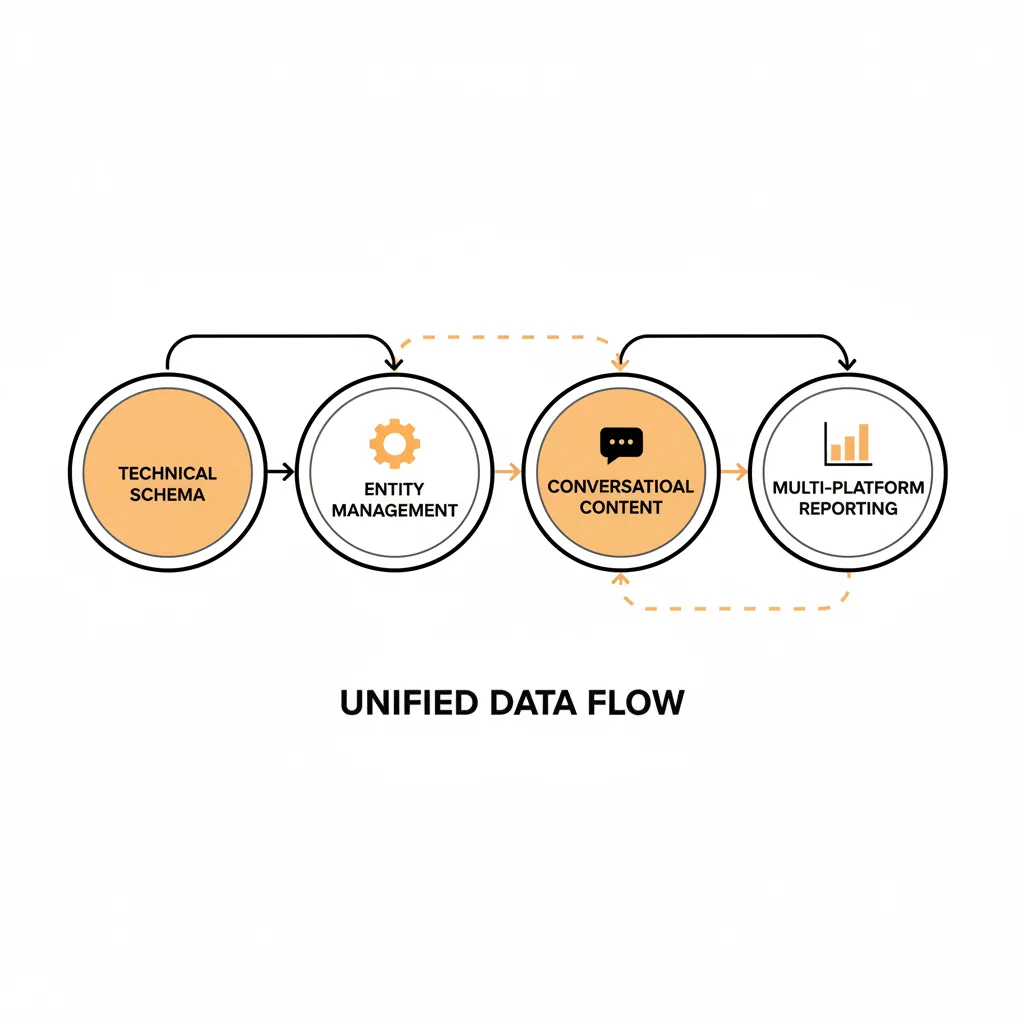
AEO Agency vs. Traditional SEO Agency
| Feature | Traditional SEO Agency | Modern AEO Agency |
|---|---|---|
| Primary Goal | Rank #1 on Google Search | Become the "Chosen Answer" for AI |
| Success Metric | Clicks and Organic Traffic | Citation Share & Brand Mentions |
| Content Focus | Keywords & Readability | Entities, Facts & Direct Answers |
| Technical Focus | Sitemaps & Page Speed | Graph Schema & LLM Crawlability |
| Primary Platforms | Google, Bing | ChatGPT, Perplexity, Gemini, Copilot |
| Data Source | Keyword Planner / Semrush | Perplexity API / LLM Benchmarks |
| Content Format | Long-form blog posts | Modular, Q&A structured nodes |
Common Mistakes to Avoid When Hiring
- Hiring based on traffic alone: High traffic doesn't mean AI models are using your site as a source. You want citations, not just visitors.
- Overlooking the technical stack: If an agency doesn't mention JSON-LD, API integrations, or knowledge graphs, they aren't doing AEO.
- Accepting "AI-Generated" as a strategy: Using AI to write content isn't AEO. AEO is making your content consumable by AI.
- Ignoring non-Google engines: If your agency isn't talking about Perplexity or OpenAI's SearchGPT, they are stuck in 2023.
- Neglecting the "Free Audit" trap: Many agencies offer a free AEO audit that is just a rebranded SEO report. Ensure the audit covers entity health and citation frequency.
The "Cheap Content" Pitfall
Some agencies promise high-volume AEO by churning out thousands of AI-written pages. This is a mistake. Google Search Central has clarified that content should be helpful and reliable. If an agency uses low-quality AI output, LLMs will eventually flag your site as a low-confidence source. The best agencies use human experts to refine AI-assisted drafts to ensure factual precision.
Best Practices and Pro Tips
- Prioritize Zero-Click Visibility: Your goal is for the user to get the answer without even clicking. This builds brand trust and authority at the highest level.
- Update Content Frequently: AI models favor fresh "facts." Stale data is a quick way to lose your citation spot.
- Focus on Niche Dominance: It is better to be the definitive answer for 10 specific questions than a "maybe" for 100 broad ones.
- Leverage User-Generated Content: LLMs often scrape forums and reviews to find "human sentiment." Ensure your agency has a plan for off-site reputation.
- Internal Linking for Context: Use descriptive anchor text to help AI crawlers understand the relationship between different pages on your site.
AI Visibility: ChatGPT, Gemini, Copilot, and Perplexity
In 2026, the way you choose an agency depends on their understanding of the different "personalities" of AI engines. ChatGPT, for instance, relies heavily on its training data but uses "SearchGPT" features to find real-time info. An agency must know how to get your brand into the "System Prompt" context of these queries.
Gemini is deeply integrated with the Google ecosystem. If your agency doesn't understand how your Google Business Profile interacts with AEO, you'll lose out on local and visual AI results. Meanwhile, Perplexity functions as a "Citation Engine." For Perplexity, your agency needs to focus on being the most authoritative factual source. Copilot pulls heavily from the Microsoft Graph and LinkedIn data; for B2B clients, this is where your agency’s "Entity" work pays the most dividends. We ensure our services cover this entire spectrum so your brand is never left out of the conversation.
Platform-Specific Optimization Tactics
- For Perplexity: Focus on academic-style sourcing and verified citations.
- For ChatGPT: Focus on brand sentiment and being mentioned in popular training sets or web-crawled summaries.
- For Gemini: Prioritize structured data and integration with Google Merchant Center (for products).
- For Copilot: Optimize your LinkedIn Company Page and Microsoft-affiliated directories.
Case Study: B2B SaaS Transition to AEO
A B2B SaaS client we worked with in early 2025 was seeing a steady 15% year-over-year decline in organic search traffic despite ranking well for their primary keywords. They realized that their potential customers were asking ChatGPT for "best project management software for remote teams" instead of searching Google.
We implemented a comprehensive AEO strategy that focused on three pillars: restructuring their blog into a "Question-and-Answer" format, deploying advanced nested Schema, and building entity associations through high-authority guest contributions.
Within six months, while their total "organic traffic" from Google remained flat, their "AI Citation Rate" increased by 400%. They went from being mentioned in zero "best of" summaries on Perplexity to being featured in the top 3 recommendations for 12 key industry queries. This shift resulted in a 22% increase in high-quality demo requests, proving that measuring AEO success metrics requires looking at lead quality and brand mentions rather than just raw click volume.
"The transition from SEO to AEO isn't just a technical change; it is a fundamental shift in how we establish brand authority in a world where machines do the research for us."
How to Test and QA AEO Work Before Rollout
You should never roll out site-wide AEO changes without a rigorous testing phase. Because AEO impacts how AI models perceive your facts, a mistake can lead to "hallucinations" about your brand. We recommend a three-tiered QA process:
- Schema Validation: Use the Schema Markup Validator to ensure there are no syntax errors. Then, use the Google Rich Results Test to see how the engine interprets the data.
- Isolated LLM Prompting: Before changing your whole site, update one "pillar" page. Wait for it to be crawled. Then, use a "temperature 0" (strict) prompt in ChatGPT or Perplexity to ask specific questions that only that new content answers. If the AI cites your new content correctly, the format is working.
- Entity Consistency Check: Use a tool like Diffbot to see how your brand entity appears in the knowledge graph. Ensure that your headquarters, founder names, and core product features are identical across your site, LinkedIn, and Crunchbase. Any discrepancy can cause an AI engine to lose "confidence" in your data.
Honest Trade-offs: When AEO Fails or Hits a Wall
We believe in transparency. AEO is not a magic wand, and there are specific scenarios where it will not work or where the trade-offs are significant.
- The "Traffic Drop" Paradox: If your AEO is successful, your website traffic might actually decrease. If the AI gives the user a perfect answer, they have no reason to click your link. You must be comfortable trading raw sessions for brand authority and high-intent conversions. If your KPI is purely "ad impressions on your blog," AEO might hurt your bottom line.
- Subjective or Creative Queries: AEO fails when the query is highly subjective. AI engines struggle to give a "definitive answer" for "What is the most beautiful painting?" or "Which software feels the best to use?" AEO works best for factual, process-oriented, or comparison-based queries.
- High Volatility: The algorithms for Perplexity and SearchGPT change weekly. Unlike traditional SEO, where a ranking might hold for months, an AI citation can disappear overnight if the model updates its weights or changes its primary sourcing preference.
- Niche Information Gaps: If you operate in a very small niche with little public data, LLMs may lack the "context" to even look for your brand. In these cases, you need traditional PR and SEO to build enough web presence before AEO becomes effective.
Tools and Resources for AEO
- WordLift: A powerful tool for building a structured knowledge graph and automating Schema markup (Paid).
- Schema.org: The official resource for all structured data types. It’s free and essential for your technical team (Free).
- Perplexity Pages: Use this to see how AI synthesizes information about your industry topics (Free/Paid).
- Google Search Console: Still vital for seeing which "Queries" are leading to "Impressions," even in an AI world (Free).
- AEO-Specific Platforms: Explore our list of top-rated answer engine optimization platforms for specialized tracking software.
How to Measure Success
Measuring AEO is different from tracking a blue link. You need to focus on:
- Citation Share: How often is your brand cited as a source in AI answers?
- Entity Visibility: Does a search for your brand return a "Knowledge Panel" or AI summary?
- Conversational Accuracy: Is the AI providing correct information about your pricing and features?
- Referral Traffic from AI: Traffic coming from
openai.comorperplexity.ai.
AEO Success Checklist:
- [ ] Is your JSON-LD valid and "nested"?
- [ ] Does your FAQ section use
FAQPageschema? - [ ] Are your brand's key facts consistent across the web?
- [ ] Have you checked your AEO insights report this month?
The Future of AEO in 2026 and Beyond
As we move past 2026, we expect AEO to integrate more deeply with "Voice and Visual Search." AI agents will not just provide text; they will perform actions. Choosing an agency now that understands the "Actionable Web" will put you ahead of the curve. We are already seeing "Agentic SEO," where AI bots navigate websites to complete tasks. If your site isn't optimized for these "Agent" crawlers, you will be locked out of the automated economy.
Your future customers will likely use "Personal AI Agents" that do the shopping for them. These agents won't look at a flashy website design. They will look at your API documentation, your structured product data, and your historical reliability scores. The agency you hire today must be preparing you for a world where your primary customer isn't a human, but a human's AI representative.
Conclusion
Choosing the right AEO partner is the most critical decision your marketing department will make this year. The transition from the "Search Era" to the "Answer Era" is complete, and the companies that dominate the AI summaries will own the market share. You need an agency that looks beyond the keyword and understands the complex interplay between data, entities, and Large Language Models.
Our team at Best Answer Engine Optimization Services focuses exclusively on these emerging technologies to ensure your brand remains the definitive answer. We don't just optimize for bots; we optimize for the trust that those bots relay to your customers. If you are ready to see how your website stacks up against the latest AI requirements, start with a [free AEO audit](/free-aeo-audit). To see our full range of strategic solutions and move your brand to the top of the AI citation list, explore our [comprehensive AEO services](/services).
[See Our Full List of AEO Services](/services)
Frequently asked questions
What is the difference between an SEO agency and an AEO agency?+
The main difference is the target. SEO aims to rank your website in search engine results pages (SERPs) for specific keywords. AEO focuses on making your content the primary source for AI-generated answers in platforms like ChatGPT and Google's AI Overviews. While SEO focuses on clicks, AEO focuses on citations and brand authority within the AI's "context window."
How do I measure the performance of an AEO agency?+
Standard SEO tools like Ahrefs and Semrush are beginning to include AI tracking, but you also need to look at "Share of Model" metrics. A good agency will track how often your brand is cited in responses from Perplexity, ChatGPT, and Gemini. They also monitor the health of your Knowledge Graph and the accuracy of facts the AI reports about you.
Why is schema markup so important for AEO?+
Schema markup is the language of AEO. It provides the structured context that AI models need to understand your data without guessing. Without proper schema, an AI might misinterpret your pricing, location, or expertise. An agency that doesn't prioritize advanced, nested JSON-LD schema is not a true AEO agency.
Can an AEO agency also help with traditional SEO?+
Yes, AEO and SEO are highly complementary. A well-optimized site for AEO often performs better in traditional search because both reward high-quality, authoritative, and well-structured content. However, AEO requires additional technical steps, such as entity linking, that traditional SEO might overlook.
How fast can I see results from Answer Engine Optimization?+
AI models are updated frequently. Some use real-time search (like Perplexity), while others have training cutoffs. An AEO agency ensures your site is "crawl-ready" for the bots that feed these models. By maintaining a clear knowledge graph, you ensure that even as models update, your brand remains the "source of truth."
Is AEO necessary for every business in 2026?+
In 2026, many search queries have moved to AI assistants. If your business relies on providing information or solving problems, you need AEO. B2B companies, SaaS, and professional services benefit most because their customers often use AI to compare complex options and find factual answers before making a purchase.
Sources & further reading
Soft next step
Want to see where AI answers mention you — and where they don't?
We run a free AEO audit across ChatGPT, Gemini, Copilot and Perplexity, then hand you the fixes in priority order. Start your AEO strategy today.
Keep reading
Tools & Measurement
Top-Rated Answer Engine Optimization Platforms: 2026 Expert GuideTools & Measurement
AEO Website Audit: A 2026 Guide to AI Search SuccessTools & Measurement
Measuring AEO Success Metrics: The 2026 Guide to AI Visibility