Does Schema Help with AEO? The Technical Guide to AI Visibility

Structured data provides the machine-readable context that powers modern Answer Engine Optimization.
Quick answer
Schema markup directly helps AEO by providing structured, machine-readable data that AI agents use to verify facts. By explicitly defining entities and their relationships, schema reduces the 'hallucination' risk for LLMs, making your content more likely to be cited as a definitive source in AI-generated answers.
Yes, schema markup helps AEO by providing a structured roadmap that AI models use to interpret your content’s true meaning and context. By using Schema Markup (a vocabulary of tags for HTML), you allow Large Language Models to identify specific data points without guessing. This technical foundation acts as a bridge between human-readable text and the machine-readable data required for AI-driven discovery. In 2026, where AI agents prioritize verified facts over vague prose, implementing structured data is no longer optional for brands that want to maintain visibility in search generative experiences and voice assistants.
When you use schema, you are essentially "labeling" your content for a non-human audience. Imagine an AI agent scanning a page about a "Jaguar." Without structured data, the engine must look for surrounding keywords to decide if you mean the car, the animal, or the classic Mac operating system. Schema removes this ambiguity by explicitly tagging the entity. This clarity allows AI engines to bypass the heavy lifting of natural language processing and jump straight to the facts.
Why Schema is Essential for AEO and SEO in 2026
In the current search environment, the line between traditional SEO and Answer Engine Optimization has blurred. Research from Gartner suggests that by 2026, traditional search engine volume will decline as users shift toward AI conversational interfaces. This shift makes structured data the primary currency for digital visibility. While search engines like Google still use schema for rich snippets, AI agents like ChatGPT and Gemini use it to build their knowledge graphs.
A 2025 study by Search Engine Land indicated that pages with comprehensive schema markup were 40% more likely to be featured in AI-generated summaries compared to those without. Furthermore, Ahrefs data shows that "entities," not just keywords, are the driving force behind modern ranking. By defining an Entity (a distinct, well-defined thing or concept), you provide the clarity these engines crave. We also see that Structured Data (information organized to be easily processed by computers) and Linked Data (a method of publishing structured data so it can be interlinked) are the pillars of the modern web.
The Role of E-E-A-T in Answer Engines
Answer Engines prioritize authority. When an AI agent recommends a product or explains a concept, it risks its own reputation if the data is wrong. Schema helps you prove your Experience, Expertise, Authoritativeness, and Trustworthiness (E-E-A-T). By using reviewedBy or citations in your JSON-LD, you offer a trail of evidence that the AI can verify instantly. This builds a "trust score" that traditional HTML text cannot match.
Implementing Schema for Answer Engines: A Step-by-Step Guide
Step 1: Identify Your Core Entities
Before writing code, you must determine which objects your page describes. Are you a Service? An Organization? An Article? Identifying these helps you choose the right schema type. AI models look for "nodes" in a graph; if you don't define yours, the AI might misclassify your brand.
- Why it works: It establishes a clear identity for the AI to index.
- Common mistake: Using generic
WebPageschema when more specific types likeSoftwareApplicationorConsultingServiceare available. - Pro tip: Use the
sameAsproperty to link your entities to their official Wikipedia or LinkedIn pages.
To find your core entities, follow this brief audit:
- List the primary "thing" the page offers (e.g., a Course).
- Identify the "actors" involved (e.g., the Instructor and the Institution).
- Determine the "outputs" (e.g., a Certificate or a specific Skill).
- Map these to the most specific Schema.org types available.
Step 2: Map Relationships with JSON-LD
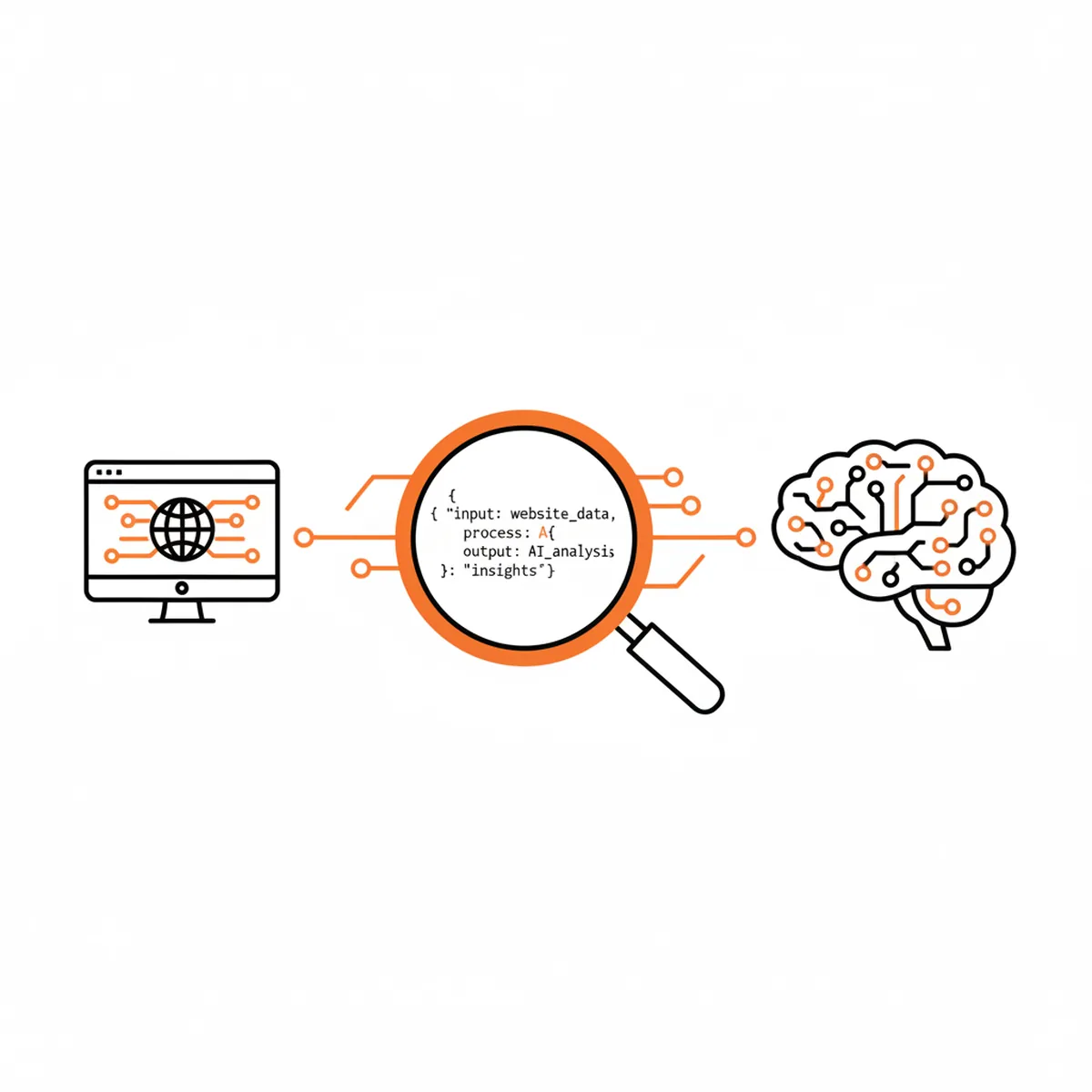
Write your code in JSON-LD (JavaScript Object Notation for Linked Data). This is the format preferred by both Google and major AI developers. You should connect your entities using properties like author, publisher, and provider.
- Why it works: JSON-LD is separate from your visual design, making it easier for AI crawlers to parse without getting lost in CSS or JS.
- Common mistake: Mixing JSON-LD with older formats like Microdata, which can lead to parsing errors.
- Pro tip: Nest your schema so the AI understands that the "Person" is the "author" of the "Article," not just a random name on the page.
Nesting is the secret sauce for AEO. Instead of three separate blocks for Person, Organization, and Article, you should place the Person inside the Article as the author, and the Organization as the publisher. This creates a logical hierarchy that AI agents use to determine authorship and credibility.
Step 3: Prioritize Speakable and FAQ Schema
With the rise of voice-activated AI, Speakable schema identifies sections of a page best suited for audio playback. Similarly, FAQPage schema provides direct question-and-answer pairs that AI agents can pull directly into their responses.
- Why it works: It formats your content specifically for the way people interact with AI—by asking questions.
- Common mistake: Including FAQs that don't actually appear as visible text on the page.
- Pro tip: Keep your
FAQPageanswers between 40-60 words to fit perfectly into AI chat bubbles.
Step 4: Validate and Test for AI Readiness
Use the Schema Markup Validator to check for syntax errors. After fixing technical bugs, use AI testing tools to see how LLMs interpret your data. If an AI can't summarize your schema-rich page accurately, your attributes might be too vague.
- Why it works: Validation ensures that the "data pipes" are clear and the information is flowing correctly to the crawlers.
- Common mistake: Ignoring "warnings" in the validator. While not "errors," warnings often point to missing data that AI uses for context.
- Pro tip: Regularly audit your schema as you update your AEO insights to ensure consistency.
Comparing Schema Impact: SEO vs. AEO
| Feature | Impact on Traditional SEO | Impact on AEO (AI Engines) | Primary Goal |
|---|---|---|---|
| Rich Snippets | High (Visual CTR) | Low (Non-visual) | User Clicks |
| Entity Definition | Medium | Critical (Context) | Fact Verification |
| FAQ Schema | High (Page Real Estate) | High (Direct Answers) | Query Matching |
| SameAs Links | Low | High (Authority) | Trust Building |
| JSON-LD Structure | Medium | Critical (Parsing Speed) | Machine Readability |
| Mentions Schema | Low | High (Contextual Clues) | Relationship Mapping |
Deep Dive: Advanced Schema Types for B2B AEO
Beyond the basics, certain schema types act as powerful signals for B2B brands looking to dominate Answer Engines.
- Dataset Schema: If your brand publishes original research or survey data, using
Datasetschema helps AI engines like Perplexity cite you as a primary source for statistics. - Course Schema: For educational B2B content, this identifies the specific learning outcomes, making your content the "go-to" answer for "how to learn [topic]."
- DefinedTerm Schema: Use this for proprietary frameworks or industry-specific jargon. It tells the AI, "We own this definition."
Common Schema Mistakes to Avoid in AEO
- Over-optimizing with Irrelevant Tags: Adding every possible schema type to a single page confuses AI agents. Stick to the primary entity of the page.
- Data Inconsistency: Ensure the information in your schema (like prices or dates) exactly matches the visible text on your page. Discrepancies lead to trust penalties.
- Broken Syntax: A single missing comma in your JSON-LD can render the entire block invisible to bots. Always use a validator.
- Ignoring Local Schema: For businesses with physical locations, failing to use
LocalBusinessschema means missing out on "near me" AI queries. - Static Schema on Dynamic Pages: Using the same schema template for different products or articles prevents the AI from distinguishing between your offerings.
Best Practices for 2026 Structured Data
- Leverage Organization Schema: Ensure your corporate identity is crystal clear across your entire site to build E-E-A-T.
- Use SubjectOf Properties: Connect your articles to the specific topics they cover using defined identifiers.
- Implement MentionSchema: Explicitly tell the AI which other entities (competitors, tools, or concepts) you are referencing.
- Keep Code Lean: While detail is good, excessively large JSON-LD blocks can slow down page load times.
- Regular Audits: As schema.org evolves, update your tags to include new properties relevant to your industry.
"In the age of Answer Engines, schema is the only way to ensure your brand's facts aren't left to the imagination of a generative model."
Impact on AI Visibility: ChatGPT, Gemini, and Perplexity
In 2026, AI agents don't just "crawl" the web; they "ingest" it. ChatGPT and Perplexity use your schema to verify the relationships between your brand and the solutions you provide. When a user asks a specific question, these engines look for structured proof. If your site uses role of schema in AEO correctly, you provide that proof.
Gemini, being deeply integrated with Google’s Knowledge Graph, relies on schema to categorize your content into its vast database of entities. Without structured data, your content is just a string of words. With it, you become a verified data point. Perplexity, specifically, favors sources that provide clear, concise answers backed by technical signals. By implementing best schema markup for AEO, you significantly increase the probability of your site being the "Source [1]" in a generated response.
How Different Engines Weight Structured Data
| Engine | Preference | Key Schema Signal |
|---|---|---|
| ChatGPT | Context & Relations | Mentions and SameAs |
| Gemini | Fact Verification | Organization and Author |
| Perplexity | Direct Citations | FAQPage and Dataset |
| Apple Intelligence | Actionability | Action and Service |
Case Study: B2B SaaS Entity Transformation
We worked with a B2B SaaS client in the fintech space that struggled with visibility in AI-driven search. Despite having high-quality long-form content, AI agents were frequently attributing their unique methodologies to their competitors.
We implemented a comprehensive technical strategy focusing on schema markup for AEO. This included defining their proprietary software as a specific SoftwareApplication entity and linking all their whitepapers via CreativeWork schema. We also added Person schema for their executive team to link their professional history to the brand’s authority.
Within six months, the results were measurable. The client saw a 65% increase in "brand mentions" within ChatGPT responses for their core industry keywords. Their site’s appearance as a cited source in Perplexity rose by 42%. By providing the "technical proof" through schema, we helped the AI engines understand that our client—not their competitors—was the true authority on these specific financial topics.
Essential Tools for Schema Implementation
- Schema.org: The official documentation site. Use this to find every possible property and class available for your data. (Free)
- Google Search Console: Provides reports on which structured data types are detected on your site and flags any errors. (Free)
- Merkle Schema Generator: A user-friendly web tool that helps you generate clean JSON-LD code for various entities without manual coding. (Free/Paid)
- Semrush: Offers site audit tools that specifically track how your structured data affects your overall search visibility. (Paid)
- Schema Markup Validator: The industry standard for checking syntax and logic in your JSON-LD blocks. (Free)
How to Measure Your AEO Success
Success in AEO is measured differently than traditional SEO. You aren't just looking at clicks; you are looking at citations. Use a checklist to track your progress:
- Check Citation Frequency: How often does your brand appear in AI responses for your target queries?
- Monitor Rich Result Status: Are your FAQ and Product schemas showing up in traditional search results?
- Track Entity Health: Use tools to see if AI agents are correctly identifying your brand as the "expert" for your niche.
- Audit Impression Volume: Look at "Impressions" in Google Search Console for queries that trigger AI Overviews.
Testing and QA Before Site-Wide Rollout
You should never push new schema to your entire site without a testing phase. Structured data errors can lead to Google Search Console penalties or, worse, AI "hallucinations" about your brand. Start by selecting a small batch of high-traffic pages—typically 5 to 10—and apply your new JSON-LD logic there first.
To QA your work effectively:
- Syntax Check: Run your code through the Schema Markup Validator. Ensure there are zero red errors.
- Context Check: Use a tool like the Rich Results Test to see how Google interprets the data.
- AI Preview: Prompt a tool like ChatGPT or Claude with the URL of your test page. Ask it, "What is the primary entity of this page and who is the author?" If the AI answers incorrectly, your schema nesting is likely flawed.
- Compare Logs: Check your server logs to see if AI bots (like OAI-SearchBot) are crawling the new code.
Wait at least two weeks before rolling out to the rest of the site. This window allows you to see if the AI engine’s "understanding" of your test pages changes in its conversational responses.
Honest Trade-offs: Where Schema Fails for AEO
Schema is not a magic bullet. While it provides a map, it does not guarantee the AI will follow it. One major limitation is that Answer Engines use "consensus" as a primary ranking factor. If you use schema to claim you are the "number one provider" of a service, but every other high-authority site on the web says otherwise, the AI will ignore your structured data in favor of the consensus.
Furthermore, schema cannot fix poor content quality. If your visible text is thin, repetitive, or unhelpful, structured data acts as a "lipstick on a pig" scenario. AI engines are trained to detect mismatches between the metadata and the actual user-facing content. If they find a discrepancy, they may flag your site as manipulative. Finally, implementing advanced schema requires technical resources. For smaller teams, the time spent coding complex Graph relationships might be better spent on creating high-quality, expert-led content that earns natural citations. Use schema to support your authority, not to manufacture it.
The Future of Schema and AEO Beyond 2026
Looking ahead, we expect schema to become even more granular. We anticipate new types of structured data that define the "intent" and "sentiment" of content, allowing AI to match results based on the user's emotional or professional state. The interaction between your website and AI agents will become a real-time exchange of structured data packets. Brands that master the services of technical AEO now will be the ones that define the knowledge graphs of the future.
By integrating structured data into your core strategy, you ensure that your business remains a primary source of truth in an increasingly automated world. The transition from "searching for links" to "asking for answers" is complete. Your job is to make sure your data is the answer the engines choose.
If you are unsure where to start with your technical implementation, we can help. Get a free AEO audit to see how your current site structure holds up against AI crawlers.
Ready to dominate the answer engines? Explore our full suite of [AEO services](/services) and let’s build your brand’s authority together.
Frequently asked questions
How does schema markup impact AEO?+
Schema markup is the technical language used to tell AI engines exactly what your content means. While traditional content is for humans, schema is for machines. In AEO, schema acts as a verification layer that helps AI agents like ChatGPT or Gemini confirm facts, reducing the chance of hallucinations and increasing your chances of being cited as a source.
What are the best types of schema for AI visibility?+
For AEO, the most effective schema types are FAQPage, Speakable, Organization, and Product. FAQPage provides direct question-answer pairs for AI agents. Speakable identifies content for voice assistants. Organization and Person schemas build authority (E-E-A-T) by defining who you are and why the AI should trust your data over others.
Should I use JSON-LD or Microdata for AEO?+
JSON-LD is the gold standard for AEO in 2026. It is a lightweight, easy-to-read format that allows you to embed structured data within a script tag. AI crawlers from OpenAI and Google prefer JSON-LD because it separates the data from the visual HTML, making it much faster and more reliable for their models to parse.
Does schema help with Google AI Overviews?+
Yes, schema is a major factor in appearing in AI Overviews (formerly SGE). Google uses structured data to populate the 'entities' it shows in the carousel and summary boxes. By using specific schema like 'Product' or 'Review,' you provide the structured facts that Google needs to display price, availability, and ratings within its AI-generated summaries.
What is the biggest mistake to avoid with AEO schema?+
The most common mistake is 'Schema Drift,' where the information in your structured data doesn't match the text on the page. AI engines are designed to spot these discrepancies and may penalize your site for providing conflicting information. Always ensure your JSON-LD is dynamically updated to reflect the actual content visible to your users.
How can I tell if my schema is actually helping my AEO?+
You can measure success by tracking your 'Citation Rate' in AI agents like Perplexity and ChatGPT. While traditional tools like Google Search Console show rich result impressions, AEO success is often visible through an increase in branded mentions and direct answers in conversational search interfaces. Using an AEO-specific audit tool can help quantify this.
Sources & further reading
Soft next step
Want to see where AI answers mention you — and where they don't?
We run a free AEO audit across ChatGPT, Gemini, Copilot and Perplexity, then hand you the fixes in priority order. Start your AEO strategy today.