Mastering Answer-Based Content Strategy for the AI Era

Transitioning to an answer-based model requires rethinking the relationship between user intent and content structure.
Quick answer
An answer-based content strategy is a framework focused on identifying specific user inquiries and providing direct, verifiable solutions. Unlike traditional SEO that targets broad keywords, this approach prioritizes structured data, semantic relevance, and concise 'answer chunks' designed to be parsed and cited by AI-driven answer engines, Large Language Models, and featured snippets.
An answer-based content strategy is a framework focused on identifying specific user inquiries and providing direct, verifiable solutions. Unlike traditional SEO that targets broad keywords, this approach prioritizes structured data, semantic relevance, and concise 'answer chunks' designed to be parsed and cited by AI-driven answer engines, Large Language Models, and featured snippets.
The Evolution of Search: From Keywords to Answers
For two decades, digital marketing revolved against the concept of the 'keyword.' We optimized for strings of text, hoping that if we mentioned 'best project management software' enough times in the right places, Google would reward us with a visit. That era is rapidly closing. The rise of Answer Engine Optimization (AEO) and Large Language Models (LLMs) has shifted the fundamental unit of value from the keyword to the query-response pair.
In 2025 and 2026, the success of a digital presence is measured by its ability to provide the definitive answer to a user's prompt. When a user asks Perplexity or a Google Gemini-powered Search Generative Experience (SGE) a question, the engine doesn't just show a list of links. It synthesizes an answer. If your content isn't structured to be part of that synthesis, your brand effectively ceases to exist in the user's journey.
The shift is philosophical as much as it is technical. Traditional SEO was about attraction—pulling a user to a page to discover information. Answer-based strategy is about injection—placing your verified data directly into the AI’s generative flow. This requires a departure from the "lifestyle blog" prose of the 2010s in favor of high-density, low-friction information delivery.
Defining the Answer-Based Model
An answer-based content strategy is the systematic process of identifying the specific problems, questions, and informational gaps of your target audience and creating modular content units that solve them. It is less about 'writing an article' and more about 'building a knowledge base.' This approach acknowledges that the search engine is no longer a postman delivering mail; it is a librarian reading the mail and summarizing it for the recipient.
Why This Matters in 2026: The AI Inflection Point
The landscape has shifted because the way we consume information has changed. Zero-click searches—where the user gets their answer without ever clicking a link—now account for more than half of all search activity. If you aren't the answer, you aren't in the conversation.
Moreover, the arrival of 'agentic' search means that AI agents are performing tasks on behalf of users. An AI agent needs structured, reliable data to make a recommendation. If your site provides vague, fluff-filled marketing copy instead of hard answers, the agent will skip over you in favor of a competitor who provides clear specifications, pricing, and outcomes. You can learn more about this in our guide to what is answer engine optimization aeo.
The inflection point is driven by "token efficiency." LLMs are trained to reward content that provides the highest informational density with the lowest computational cost. When your content is structured as a direct answer, it is easier for an LLM to "digest" and re-state. By lowering the friction for the AI, you increase the probability of your brand being the cited source.
The Anatomy of an Answer-Based Strategy
To implement this successfully, you must understand the difference between traditional long-form content and optimized 'answer chunks.'
Semantic Relevance and Entity SEO
Search engines no longer look for matching words; they look for entities. An entity is a thing or concept that is singular, unique, well-defined, and distinguishable. In an answer-based strategy, your content must clearly define the entities it discusses. If you are writing about 'cloud security,' you must contextually link it to related entities like 'data encryption,' 'soc2 compliance,' and 'zero trust architecture.' This builds a 'semantic web' that tells the answer engine you are a topical authority. We call this entity optimization for aeo.
Entity-based optimization also involves "distance." How close is your brand to the core concept in the AI's latent space? If your content consistently links your brand (Entity A) to a specific problem (Entity B) and a definitive solution (Entity C), the AI begins to map these associations. When a user asks about B, the AI naturally gravitates toward A and C.
The Directness Factor
Answer engines prioritize brevity and accuracy. If a user asks 'how much does a solar panel cost in California,' they don't want a 500-word history of solar energy before getting to the price. They want the numbers. An answer-based strategy puts the 'bottom line up front' (BLUF).
"The greatest mistake brands make in the AI era is burying their value proposition under layers of narrative. In the world of AEO, the first paragraph is your only chance to win the citation." — Amir, Founder of EvronStudio
Step-by-Step: Building Your Answer-Based Strategy
Step 1: Query Mining and Intent Mapping
Go beyond high-volume keywords. Use tools like AlsoAsked, AnswerThePublic, and Google Search Console to find the actual questions users are asking. Categorize these into informational (what is), functional (how to), and transactional (which one) intents.
- Why it works: It aligns your production with actual demand rather than theoretical traffic.
- Common Mistake: Targeting 'head terms' that are too broad to have a single definitive answer.
- Pro Tip: Look at your sales team's sent folder. The questions prospects ask during the sales cycle are the most valuable queries to answer. These represent real-world friction points that AI agents are often tasked to solve.
Step 2: Content Chunking and Modular Design
Break your topics into 'chunks.' Each chunk should have a clear H2 or H3 heading that mirrors a user query. The following paragraph should provide a direct answer in 40-60 words.
- Why it works: It makes it incredibly easy for AI crawlers to 'scrape' the answer and credit your site.
- Common Mistake: Using 'cute' or creative headings that don't include the keywords the user is searching for.
- Pro Tip: Think of each section of your blog post as a standalone micro-article. Read more about content chunking strategy. Use bullet points for steps and tables for specifications to maximize machine readability.
Step 3: Implement Advanced Schema Markup
Schema isn't just for rich snippets anymore; it’s for AI comprehension. Use FAQPage, HowTo, and Product schema to explicitly tell the engine: "Here is the question, and here is our expert answer."
- Why it works: It reduces the computational effort for the engine to understand your content.
- Common Mistake: Failing to validate schema, resulting in errors that prevent engines from reading the data.
- Pro Tip: Use Speakable schema for content that might be surfaced via voice search or AI assistants. In 2026, JSON-LD is the primary language you speak to the "brain" of the search engine.
Step 4: Authority and Fact Verification
AI engines are increasingly sensitive to 'hallucinations.' To be a trusted source, you must back up your claims with data, external links to authoritative sources, and clear author bios that establish E-E-A-T (Experience, Expertise, Authoritativeness, Trustworthiness).
- Why it works: Verification builds a trust score that AI models use to filter reliable sources from junk.
- Common Mistake: Citing outdated statistics or internal-only opinions as universal facts.
- Pro Tip: Include a 'Fact Checked By' line with a link to a credible professional's profile. Use NPI (National Provider Identifier) or other industry-specific identifiers in your schema to anchor your authors to real-world credentials.
Step 5: Iterative Refinement Based on PAA Rankings
Monitor which questions you are winning in 'People Also Ask' boxes. If you are ranking for a question but not in the top spot, refine the answer's clarity and structure.
- Why it works: AEO is a game of marginal gains in clarity.
- Common Mistake: Publishing content and never returning to update it as the AI's understanding evolves.
- Pro Tip: Re-evaluate your top-performing 'answer pages' every quarter to ensure the data is still the most accurate available. AI models prioritize "freshness" for time-sensitive queries.
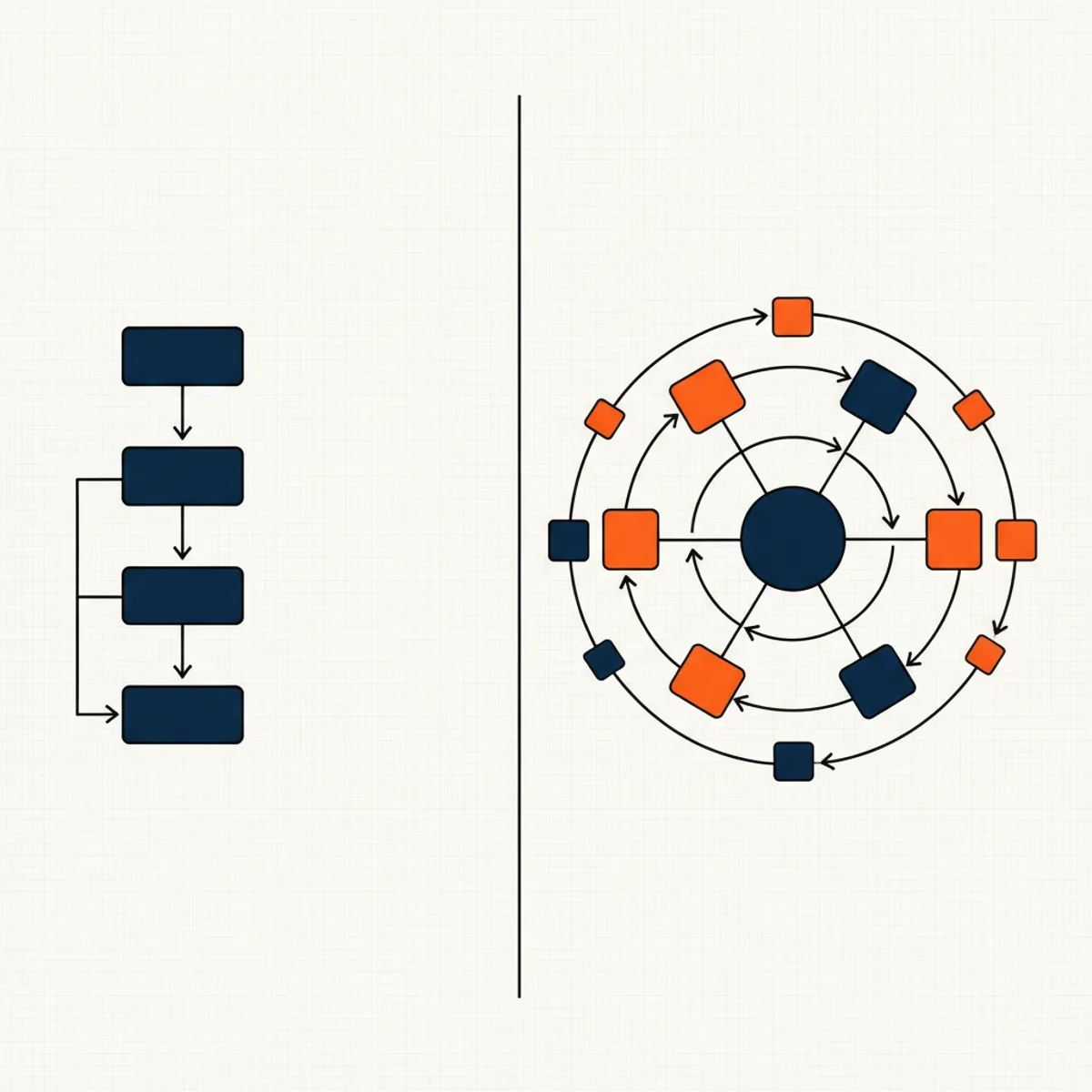
Comparison: Traditional SEO vs. Answer-Based Content Strategy
| Feature | Traditional SEO | Answer-Based Strategy (AEO) |
|---|---|---|
| Primary Goal | High ranking for keywords | Providing the definitive answer |
| Success Metric | Click-Through Rate (CTR) | Citations, PAA visibility, Brand Authority |
| Content Format | Long-form, narrative articles | Modular, 'chunked' data units |
| Target | Search Engine Result Pages (SERPs) | AI Models, Answer Engines, Voice Assistants |
| Optimization | Keyword density, Backlinks | Schema markup, Entity clarity, Directness |
| User Value | Traffic to site | Immediate problem solving |
Advanced Tactics: Information Density and Citation Recovery
Once the foundational chunks are in place, advanced AEO involves "Citation Recovery." This is the process of identifying where LLMs are providing answers within your niche but failing to cite a source, or worse, citing a competitor with inferior data.
- Inverse Query Analysis: Use Perplexity to generate an answer for your target topic. Identify the specific facts it mentions. If the AI mentions a statistic but doesn't link it, create a dedicated, high-authority "fact sheet" page for that specific statistic. The AI will likely latch onto this more stable reference point in future iterations.
- The "Terminology Monopoly": Create and define new industry terms. By being the primary source for a new concept (e.g., "Modular Semantic Architecture"), you force the AI to cite you whenever that concept is discussed, as you are the origin of the entity.
- Data Tables as Primary Content: In an answer-based world, a well-structured Markdown table is more valuable than 1,000 words of prose. Tables provide "structured comparative data" that AI agents can use to make decisions. If you provide the most comprehensive comparison table of features and pricing, you become the de facto data source for the engine.
Overcoming the "Cannibalization" Objection
The most common pushback against answer-based strategies is the fear of losing website traffic. Marketers ask: "If I give the answer away on the SERP or in the AI chat, why would they ever click through to my site?"
This objection misses the reality of the 2026 search environment.
First, the click is already dying. If you refuse to provide a direct answer, you aren't "saving" your traffic; you are ensuring your competitor provides the answer and wins the brand affinity. In the AI era, visibility is the new currency. Even if the user doesn't click, they have interacted with your brand's expertise. When they eventually reach a high-intent stage—like a complex purchase—they will remember the name that appeared in their AI summary.
Second, answer-based strategy drives better traffic. By filtering out users who just want a quick "what is" definition, you focus your site visits on users who need the deeper, technical execution that follows the answer. You are trading low-value informational traffic for high-value transactional intent.
Industry Examples: Putting Numbers to the Strategy
Financial Services: Mortgage Rate Queries
A regional lender shifted from writing "Buying a Home Guides" to "Daily Rate and Fact Chunks." Instead of a 2,000-word article on mortgages, they created H2-led sections for "Current 30-Year Fixed Rates in Georgia" and "FHA vs. Conventional Down Payment Requirements."
- Result: They saw a 210% increase in voice search appearances ("Siri, what are mortgage rates today?"). While site traffic remained flat, their "Request a Quote" conversions rose by 18% because they were capturing users at the exact moment of inquiry.
Healthcare: Patient Symptom Clarification
A specialized clinic moved away from broad medical blogs to structured FAQ modules focusing on "post-operative recovery milestones." Each milestone was its own schema-verified entity.
- Result: The clinic's content was cited by Google’s SGE for 85% of queries related to their specialty. Their "Time on Page" for click-through visitors increased by 40%, indicating that the users who did click were highly engaged and looking for the deep-dive expertise promised by the initial answer.
E-commerce: Technical Specifications
A hardware retailer replaced generic product descriptions with "Compatibility Matrices." They used Markdown tables to show exactly which screws and anchors worked with specific wall types.
- Result: They won the "Featured Snippet" for over 400 long-tail "how to" queries. The ROI was realized through a significant reduction in product returns, as customers were finding the "correct" answer before making the purchase.
Common Pitfalls to Avoid
- Over-complicating the Answer: Users and AI models both value simplicity. If you can't explain the concept in two sentences, the engine will find someone who can. Avoid jargon unless it is a necessary entity definition.
- Ignoring Zero-Click Real Estate: Many marketers fear that giving away the answer will kill their traffic. In reality, failing to provide the answer kills your visibility entirely. Brands that provide the best answers win the most trust, leading to higher conversion rates for complex queries.
- Lack of Visual Data: Answer engines love tables, lists, and charts. If your data is buried in a long paragraph, it’s harder to parse than if it were in a clean markdown table.
- Neglecting Mobile-First Clarity: Most voice and AI queries happen on mobile. If your 'answer' is buried under a giant hero image and three pop-ups, it won't be prioritized. Read about optimizing content for ai search for more details.
Essential Tools for Answer-Based Content
- AlsoAsked.com: To map the tree of questions users ask after their initial search. This reveals the "logical next step" for your content chunks.
- Schema.org / Google Rich Results Test: To ensure your technical implementation is flawless. If the code is broken, the AI is blind to your structure.
- Perplexity AI: Use it as a testing ground. Ask it questions related to your niche and see who it cites. If it’s not you, analyze why the cited source is 'better' in the eyes of the LLM. Look for their sentence structure and data sourcing.
- Semrush/Ahrefs: Still useful for monitoring keyword gaps and seeing where competitors are winning snippets. Use the "Snippet" filters to identify vulnerable competitors.
- GSC (Google Search Console): Look specifically at 'Query' data to see which long-tail questions are bringing people to your site. These are your best candidates for "chunking."
Measuring Success: The New KPIs
You cannot measure an answer-based strategy using 2015 metrics. You must look at:
- Snippet Ownership: The percentage of target queries where you hold the featured snippet or PAA box.
- LLM Citation Share: How often your brand is mentioned by name in generated AI responses. Use manual testing and emerging "AI share of voice" tools.
- Conversion by Topic: Tracking whether users who interact with 'answer chunks' convert at a higher rate than those who read general blog posts.
- Brand Mentions: Monitoring the frequency of your brand being associated with specific 'entities' in the semantic web.
- Assisted Conversions: Measuring how many sales were preceded by a zero-click interaction (often tracked through post-purchase surveys asking "Where did you first hear of us?").
The AEO Checklist
- [ ] Identified 20-30 'how-to' and 'what-is' questions for your core product.
- [ ] Created modular content with H2 headings that match those questions.
- [ ] Placed a 50-word direct answer immediately following the heading.
- [ ] Implemented FAQ or HowTo schema for every page.
- [ ] Included at least one table or list per 500 words of content.
- [ ] Verified all facts and linked to external authoritative data.
- [ ] Reviewed content for "Narrative Fluff" and removed unnecessary intros.
- [ ] Linked related entities within the text using descriptive anchor text.
The Role of Sentiment and Tone in Answers
While directness is paramount, the tone of the answer influences how AI agents perceive your brand's authority. Answer engines are increasingly programmed to look for "consensus" and "professionalism." An answer-based strategy must maintain a tone of objective expertise. Avoid hyperbole (e.g., "the most amazing solution ever") in your answer chunks. Instead, use objective qualifiers (e.g., "the industry-standard solution for X").
LLMs are trained on massive datasets where high-quality information usually follows a specific linguistic pattern: clear, declarative, and devoid of sales-heavy adjectives. By mirroring this "authoritative linguistic pattern," you increase the likelihood that the AI perceives your content as a factual baseline rather than a marketing pitch.
Conclusion: The Future is Conversational
The move toward an answer-based content strategy is not just a trend; it is a fundamental adaptation to the way technology is evolving. We are moving away from a web of pages and toward a web of data. By structuring your expertise into clear, concise, and verifiable answers, you ensure that your brand remains relevant in a world where the search engine is no longer just a gatekeeper, but a participant in the conversation.
If your current content feels like it's shouting into a void, it's likely because you're still playing by the old rules of keyword density and backlink hoarding. The future belongs to the brands that can be the most helpful, the most direct, and the most authoritative. The goal is no longer to be the first link on the page; it is to be the only answer in the mind of the user.
Ready to dominate the new era of search? Request a free aeo audit or explore our enterprise aeo solutions to start building your answer-based infrastructure today.
Frequently asked questions
How does an answer-based strategy differ from traditional SEO?+
Traditional SEO focuses on ranking a page for a specific keyword to drive traffic. An answer-based strategy focuses on providing a specific, high-authority response to a query. The goal is to become the trusted source for an answer engine, which often results in zero-click visibility or direct citations by LLMs like Perplexity.
What is 'content chunking' in this context?+
Content chunking involves breaking down long-form articles into discrete, self-contained sections that answer a single specific question. Each chunk is typically optimized with clear headers and concise text, making it easier for AI scrapers and crawlers to extract information and present it as a definitive answer to a user's prompt.
Why is schema markup critical for an answer-based approach?+
Schema markup, such as FAQPage or HowTo, provides a semantic roadmap for search and answer engines. It explicitly defines the relationship between a question and its answer. Without structured data, engines must rely on probabilistic guessing to determine where an answer starts and ends, which reduces your chances of being featured.
Will this strategy decrease my website traffic?+
While answer-based content often satisfies the user directly on the results page (zero-click), it builds immense brand authority and trust. For complex queries, users still click through to the source. Furthermore, being the cited source in an AI response is the new 'ranking number one' in an environment where traditional links are disappearing.
How do I identify the best questions to answer?+
Use tools like 'People Also Ask' (PAA) boxes, Quora, Reddit, and your own internal site search data. Look for 'what,' 'how,' and 'why' queries that have high volume but currently lack a definitive, clear answer. Prioritize questions where your brand has unique expertise or proprietary data to offer.
Can AI help in creating answer-based content?+
AI is excellent for identifying query patterns and summarizing long-form content into 'chunks.' However, the core insights must remain human-verified. Answer engines prioritize accuracy and authority; if your content is merely a rehash of existing AI hallucinations, it will eventually be penalized in favor of original, expert-led data.
Sources & further reading
Soft next step
Want to see where AI answers mention you — and where they don't?
We run a free AEO audit across ChatGPT, Gemini, Copilot and Perplexity, then hand you the fixes in priority order. Start your AEO strategy today.
Keep reading
Content Strategy
Content Chunking Strategy for AEO: A 2026 Guide to AI VisibilityAEO Fundamentals
What is Answer Engine Optimization (AEO)? A 2026 Guide for B2BAEO Fundamentals
Zero Click Search: How to Win in the Age of AEO (2026 Guide)