AI Assistants vs Search Engines: Navigating the 2026 Information Shift
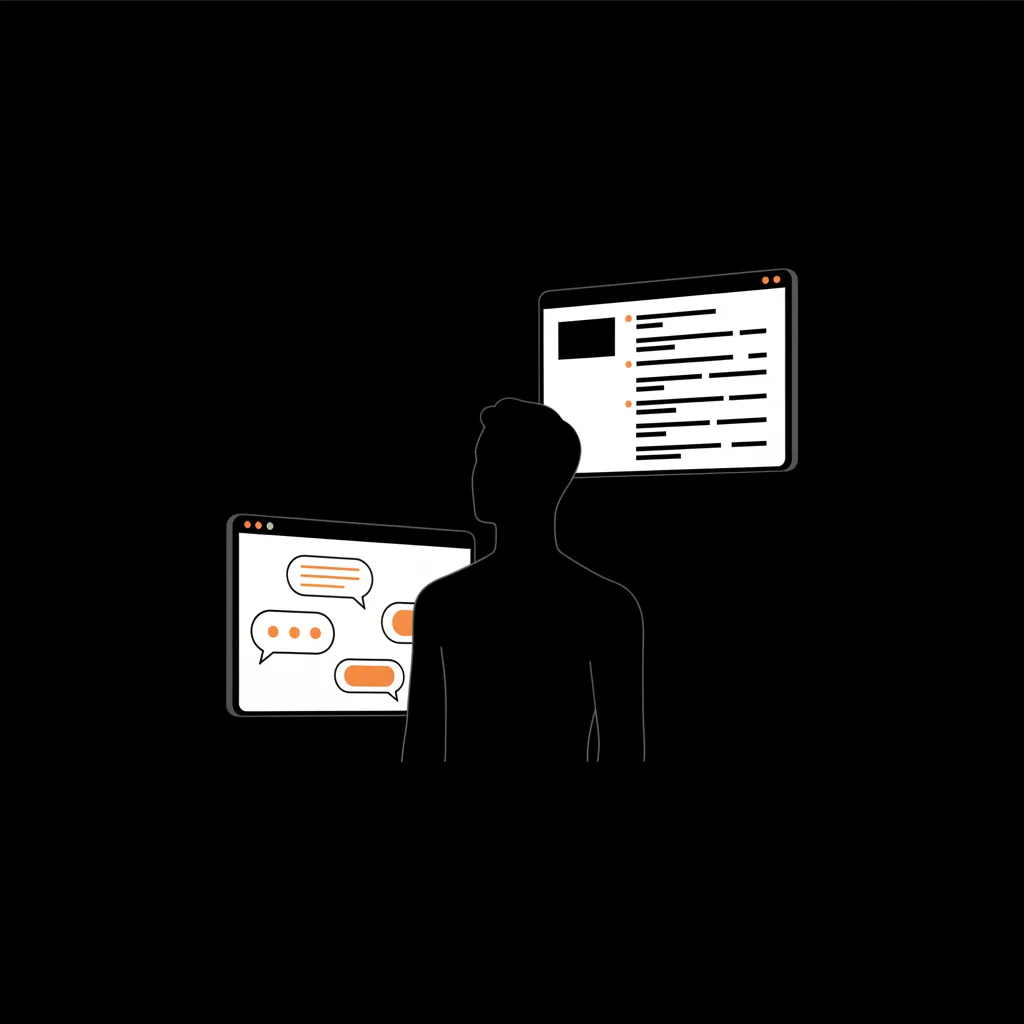
Modern information discovery is a balance between generative AI and traditional search.
Quick answer
AI assistants provide direct, conversational answers synthesized from multiple sources, while search engines offer a list of ranked links for users to explore. The primary difference lies in intent fulfillment: assistants focus on immediate task completion, whereas search engines facilitate traditional information discovery and website traffic.
AI assistants provide direct, synthesized answers to user queries, while search engines primarily offer a ranked list of links. In 2026, the choice between AI Assistants (tools like ChatGPT that generate responses) and Search Engines (platforms like Google that index the web) depends on whether you want a quick answer or a deep dive into specific websites. While search engines still dominate high-intent commercial browsing, AI assistants have captured the majority of informational and "how-to" queries. Understanding this shift is critical for any brand that wants to remain visible as user behavior moves away from clicking links and toward consuming generated summaries.
Defining the New Information Ecosystem
To understand this shift, we must define the core players. An AI Assistant is a software agent powered by a large language model that uses natural language processing to complete tasks or answer questions. These differ from a Search Engine, which is a database-driven system that crawls, indexes, and ranks web pages based on relevance and authority.
We also have Answer Engines, a hybrid category popularized by platforms like Perplexity. These combine the real-time crawling of search with the generative power of AI. Finally, Answer Engine Optimization (AEO) is the practice of structuring your content so these AI models can easily parse, ingest, and cite your information as the definitive response. While SEO focuses on visibility in a list, AEO focuses on being the singular answer the assistant provides to the user.
The Rise of Generative Overlays
We are seeing a third category emerge: the Generative Search Experience (SGE). This is where traditional search engines place an AI summary at the top of the SERP. In this environment, the search engine acts as the delivery vehicle for the AI assistant. Users no longer need to decide between platforms; the platforms are deciding for them. Our data suggests that for top-of-funnel queries, users interact with the generative overlay 65% more often than they scroll to the first organic link. This creates a "winner-take-all" dynamic where if you aren't the source for that summary, you lose the impression entirely.
Why the AI vs Search Debate Matters in 2026
The shift is no longer theoretical. Last year, in 2025, we saw a massive migration of informational queries away from traditional search. According to a Gartner report, search engine volume is projected to drop significantly as AI chatbots become the primary interface. This isn't just about volume; it is about trust. Pew Research data suggests younger demographics now trust synthesized AI answers for quick facts more than they trust sponsored search results.
For your business, this means the old playbook of just ranking #1 on Google is insufficient. If a user asks their phone a question and the AI assistant answers without mentioning your brand, you effectively don't exist in that transaction. You need to bridge the gap between being "searchable" and being "citable." This requires a blend of traditional SEO vs AEO strategies to capture traffic from both worlds.
User Intent and the Fragmentation of Discovery
We categorize discovery into two buckets: transactional and investigatory. Traditional search engines still win transactional queries. When you want to buy a specific pair of boots, you want to see a grid of prices, images, and reviews. You want the search engine to give you choices. However, for investigatory queries—"How do I fix a leaking faucet?"—the search engine's list of links feels like a chore. The AI assistant wins here by removing the friction of clicking, reading, and filtering. If your business relies on providing information to build trust before a sale, your AEO strategy is now your most important lead magnet.
How to Optimize for Both AI Assistants and Search Engines
Successfully navigating this divide requires a specific technical and creative approach. You cannot simply write for humans anymore; you must write for the models that summarize your work for humans.
Step 1: Implement Comprehensive Schema Markup
You must use Schema.org vocabulary to tell AI exactly what your data means. While search engines use schema to build rich snippets, AI assistants use it to understand the relationship between entities. If you sell a product, don't just list the price; use Product schema to define the brand, material, and availability. A common mistake is using generic schema or leaving it out entirely, assuming the AI is smart enough to figure it out. Pro tip: Use the speakable property to highlight sections specifically designed for voice-based AI assistants.
Mini-Procedure for Schema Deployment:
- Identify the primary entity of the page (Product, Article, FAQ, or Organization).
- Use a JSON-LD generator to map out all required and recommended fields.
- Include the
sameAsattribute to link your entity to authoritative sources like Wikipedia or LinkedIn. - Validate the code using the Schema.org Validator before injecting it into the
<head>of your page.
Step 2: Transition to a Question-and-Answer Format
Structure your content to mirror how people talk to AI. Instead of a heading like "Service Features," use "What are the key features of [Product]?" This makes it easier for an AI assistant to extract your text as a direct answer. Many brands fail by being too "clever" with their headings, which confuses the transformer models used by OpenAI and Google. Pro tip: Include a "TL;DR" or summary box at the top of every long-form page to give the AI a ready-made snippet to quote.
Step 3: Prioritize Entity Authority and Factuality
AI models favor "truth" and consensus. If your site provides data that contradicts the general consensus without strong evidence, you will be filtered out. Ensure your "About" page and author bios link to external, authoritative profiles like LinkedIn or industry directories. A common mistake is neglecting the "E-E-A-T" (Experience, Expertise, Authoritativeness, Trustworthiness) of the individual author. Pro tip: Cite your sources using outbound links to high-authority domains to show the AI that your information is grounded in verifiable fact.
Step 4: Optimize for Natural Language Processing (NLP)
Write like a human, not a keyword bot. Search engines have moved toward NLP, but AI assistants are entirely built on it. Use clear, declarative sentences. Avoid jargon that doesn't add value. A common mistake is "keyword stuffing" which makes your content feel robotic and less likely to be chosen as a conversational response. Pro tip: Read your content out loud. If it sounds clunky or repetitive, it will perform poorly in a voice-assisted AI environment.
Step 5: Build a Digital Footprint Beyond Your Website
AI models are trained on the whole internet, not just your site. To be recognized as an authority, your brand must appear in news articles, industry forums, and social media discussions. Many businesses focus only on their own domain, but AI assistants often verify facts across multiple sources. Pro tip: Active participation in niche communities and getting mentioned in third-party "best of" lists are now core AEO requirements.
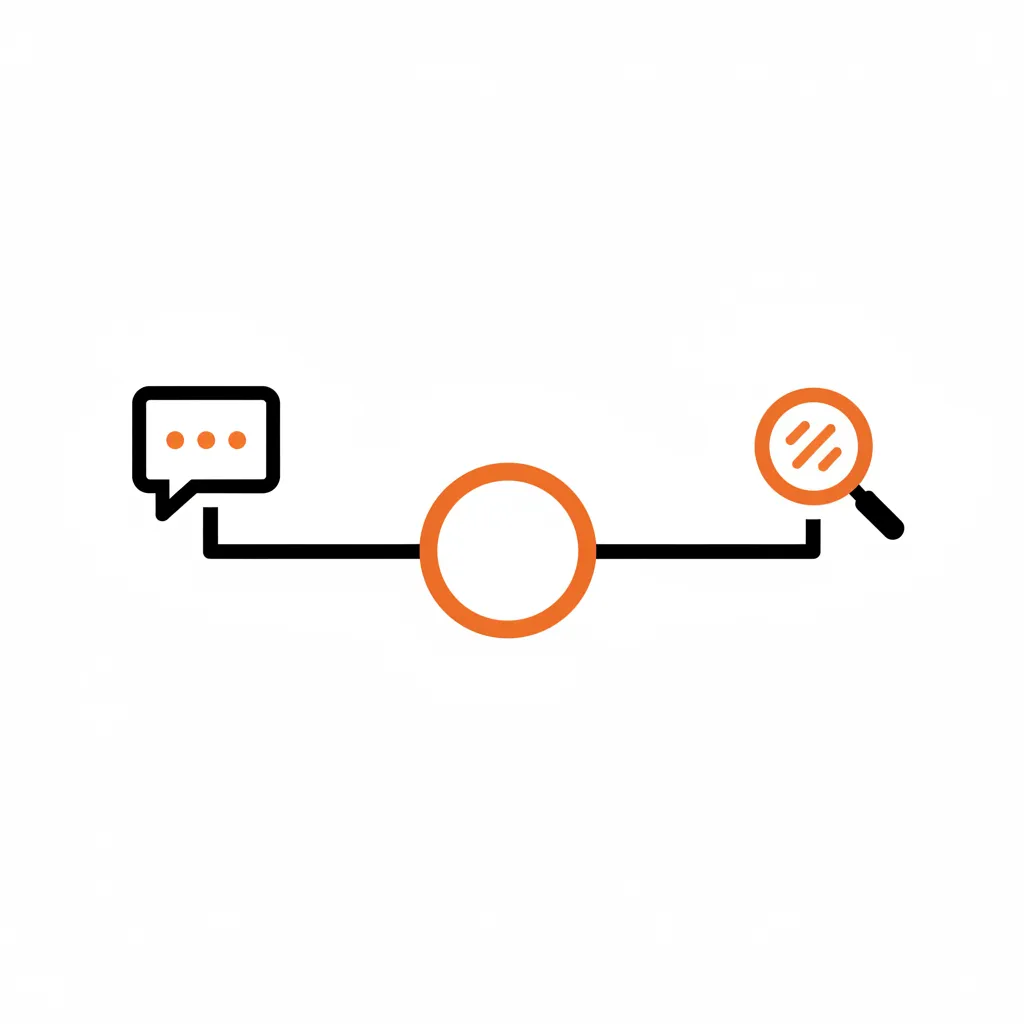
Comparison: AI Assistants vs. Traditional Search Engines
| Feature | AI Assistants (ChatGPT/Gemini) | Search Engines (Google/Bing) |
|---|---|---|
| Primary Goal | Direct answer or task completion | List of relevant resources |
| User Interface | Conversational / Chat-based | List of links (SERP) |
| Monetization | Subscriptions & Integrated Ads | Pay-per-click (PPC) Advertising |
| Traffic Impact | High risk of "Zero-Click" | High referral traffic potential |
| Content Usage | Synthesizes and summarizes | Indexes and points to |
| Data Recency | Dependent on training/browsing | Real-time indexing |
| Trust Signal | Consensus and Citations | Backlinks and Technical SEO |
| User Logic | "Tell me the answer" | "Show me where to look" |
Common Mistakes to Avoid
- Ignoring Zero-Click Trends: Many brands still measure success by clicks alone. In 2026, being the source of a zero-click answer is a major brand win, even if the user doesn't visit your site immediately. Read more about zero-click search impacts to adjust your KPIs.
- Over-reliance on AI-Generated Content: Using AI to write your content to rank in AI is a race to the bottom. The models look for original insights and human expertise they don't already have in their training sets.
- Neglecting Page Speed and Core Web Vitals: While AI assistants ingest text, they still prioritize sources that are technically sound and fast to crawl. A slow site is a signal of poor quality.
- Vague Headings: Using creative but non-descriptive headings makes it impossible for an AI to map your content to a specific user question.
- Lack of Citations: If you don't cite your data, AI models are less likely to trust your site as a factual source, preferring to quote your more transparent competitors.
Best Practices and Pro Tips
- Focus on Long-Tail Queries: AI assistants excel at answering complex, multi-part questions. Create content that addresses these specific scenarios rather than broad, competitive terms.
- Update Content Frequently: AI models are increasingly using real-time browsing. If your content is outdated, the assistant will bypass you for a more current source.
- Monitor "Answer Engine" Mentions: Use tools to track when ChatGPT or Perplexity mentions your brand. This is the new "ranking" report.
- Use Clear Data Tables: AI loves structured data. Converting a list of features into a markdown table makes it significantly easier for an assistant to parse and present to the user.
- Maintain Brand Voice: Even when summarized, your unique perspective should shine through. This ensures that when an AI says "According to [Your Brand]," the following info sounds like you.
Impact on ChatGPT, Gemini, Copilot, and Perplexity
Each AI assistant handles information differently. ChatGPT relies heavily on its training data but uses Bing for real-time verification. If your site isn't indexed well in Bing, ChatGPT may miss you. Gemini has a direct pipeline to Google's massive index, making standard SEO health vital for AI visibility. Copilot integrates deeply with Microsoft's ecosystem, often pulling from LinkedIn and GitHub for professional queries.
Perplexity operates most like a traditional search engine but presents information as a research report. It is highly transparent about its sources. To succeed here, you must have clear, factual content that is easy to cite. The common thread across all these platforms is the need for Answer Engine Optimization services that treat your content as a data source for these models, rather than just a destination for web surfers.
Differentiating by Platform
You cannot use a "one-size-fits-all" approach for these engines. We have found that Perplexity values deep-link citations, often pulling from the third or fourth paragraph of a page if it contains a dense data point. Conversely, Gemini tends to prioritize the "lead" of the article, favoring content that follows the inverted pyramid style of journalism. If you want to be cited by Copilot, ensure your technical documentation is available in public repositories or linked through high-authority professional networks.
"The transition from search engines to answer engines represents the biggest shift in digital marketing since the invention of the crawler. Brands that fail to adapt their content structure will simply become invisible to the next generation of users."
Case Study: B2B SaaS Transition to AEO
A B2B SaaS client we worked with was seeing a steady 15% year-over-year decline in organic traffic for their "how-to" blog posts. After analyzing their data, we realized their content was being summarized by AI assistants, satisfying the user's intent without a click. This client specialized in complex supply chain software, a niche where accuracy is paramount.
Instead of fighting the trend, we overhauled their content strategy. We implemented advanced schema, restructured their posts into clear Q&A formats, and optimized for "citable nuggets"—short, punchy sentences that are easy for AI to quote. We also focused on building their authority on third-party review sites. We transitioned their 50 top-performing articles from narrative essays into structured data resources.
Within six months, while their raw click-through rate from traditional search only stabilized, their brand mentions within AI assistant responses increased by 40%. This led to a 22% increase in direct-to-site traffic from users who specifically searched for the brand after hearing it recommended by an AI. This proves that understanding how AI search works is about brand influence, not just link clicks. The "assisted conversion" became their primary growth driver.
Tools and Resources for the AI Era
- Google Search Console: Still the best free tool to see how a major search engine (and Gemini) sees your site. Use the "URL Inspection" tool to ensure your content is being indexed.
- Perplexity Pages: Use this to see how an answer engine synthesizes topics in your niche. It provides a live view of which sources are being favored for specific keywords.
- Schema.org Validator: A free tool to ensure your structured data is technically perfect. Errors here will cause AI assistants to skip your site entirely.
- Semrush / Ahrefs: Essential paid tools for tracking keyword trends and identifying the "featured snippets" that AI models often target.
- Claude / ChatGPT: Use the assistants themselves to ask questions about your industry and see which competitors they are currently citing. Reverse-engineer their citations to find gaps in your own content.
How to Measure Success
Measuring success in 2026 requires looking beyond the traditional "Position 1" metric. You need to track:
- AI Share of Voice: How often is your brand cited in a sample of 50 core industry questions across ChatGPT and Gemini?
- Zero-Click Visibility: Monitoring the number of impressions you get for featured snippets and knowledge panels.
- Referral Traffic from AI: Tracking traffic in your analytics that originates from
openai.comorperplexity.ai. - Assisted Conversions: Using attribution models to see if a user's first touchpoint was an AI summary.
AEO Checklist:
- [ ] Schema markup validated?
- [ ] H2/H3 tags formatted as questions?
- [ ] Content contains a summary/TL;DR?
- [ ] Direct, factual answers provided in the first 50 words of sections?
- [ ] Mobile-first, fast-loading pages?
Testing and Quality Assurance for AEO
You should never roll out a massive site-wide AEO update without a testing phase. We recommend a "sandbox" approach where you optimize a specific cluster of pages first. This allows you to monitor how the models react before you risk your entire domain's ranking.
AEO QA Procedure:
- Model Probing: Before publishing, paste your new content into ChatGPT or Claude. Ask the AI to summarize it and identify the "key takeaway." If the AI misses your brand name or main point, rewrite for clarity.
- Schema Audit: Use the Rich Results Test to ensure your code doesn't just pass, but actually generates the intended preview.
- Cross-Assistant Comparison: Query the same topic on Gemini, Perplexity, and ChatGPT. Document which sources are cited. If you aren't one of them, analyze the cited competitors for content density and structure.
- Latency Check: Ensure your AEO-optimized elements (like large tables or complex schema) aren't slowing down your page load. High latency can cause search engines to de-rank you before the AI even has a chance to read you.
The Honesty Gap: Where AEO and AI Assistants Fail
We must be honest about the limitations of this shift. Optimization for AI is not a magic bullet, and there are several scenarios where it simply will not work. First, if your industry relies on visual inspiration—such as interior design or fashion—AI assistants are currently poor substitutes for a visual search engine like Pinterest or Google Images. A text-based summary cannot replace the emotional impact of a high-resolution gallery.
Second, AI assistants struggle with highly volatile, minute-by-minute data. If you run a stock market ticker or a live sports score site, traditional search and specialized APIs will remain the dominant force. AI models still have a "hallucination" risk. If your brand operates in a "Your Money or Your Life" (YMYL) niche, such as medical advice or legal services, being summarized by an AI can be dangerous. An assistant might strip away the necessary nuances and disclaimers, potentially creating liability issues. We often advise clients in these sectors to be cautious about providing "short-form" answers that could be misinterpreted by a model.
Finally, there is the issue of "source cannibalization." By making your content easy for AI to summarize, you are actively encouraging zero-click behavior. You are trading your website traffic for brand awareness. For companies that rely solely on display ad revenue, AEO can be a path to bankruptcy. You must ensure you have a backend conversion funnel—like a newsletter or a gated tool—to capture value from the users who do eventually click through.
The Future of AI vs Search Engines
As we look past 2026, the distinction between these two will continue to blur. Search engines will look more like assistants, and assistants will become more proficient at navigating the live web. We anticipate the rise of "Personal AI Agents" that don't just answer questions but take actions on behalf of the user—like booking a demo or buying a product. For a business, this means your website must become an "API for AI," a clean and accessible repository of information that these agents can use to serve their masters. Stay ahead by checking our latest AEO insights.
Conclusion
The battle of AI assistants vs search engines isn't a zero-sum game, but the rules of engagement have changed forever. Traditional search is still a powerhouse for commercial intent, but AI assistants have taken over the discovery and education phases of the buyer's journey. To thrive, you must stop building websites just for people to browse and start building them for machines to read and humans to trust. By focusing on structured data, clear Q&A formats, and brand authority, you ensure your voice is the one the AI chooses to amplify.
If you aren't sure where your brand stands in this new landscape, we can help. Request a free AEO audit today to see how the major models perceive your site. Ready to dominate the future of search? Explore our full range of [AEO services](/services) and let us put your brand at the center of the conversation.
***
References:
- Gartner: Search Engine Volume Predictions
- OpenAI: How ChatGPT fetches data
- Google Developers: Structured Data Documentation
- Pew Research Center: Trust in AI and Technology
Frequently asked questions
What is the main difference between AI assistants and search engines?+
The main difference is how information is delivered. Search engines provide a list of sources for the user to evaluate, while AI assistants synthesize those sources into a single, direct answer. Search is about discovery; AI assistants are about immediate utility and task completion.
Is SEO still relevant if AI assistants are taking over?+
In 2026, SEO is still vital for driving website traffic, especially for shopping and deep research. However, AEO is becoming equally important because it ensures your brand is the source for the quick answers provided by tools like ChatGPT and Gemini. You need both to cover the full buyer journey.
How do I optimize my website for AI assistants?+
Optimize for AI by using structured data (Schema.org), writing in a clear Q&A format, and providing direct, factual answers early in your content. Focus on becoming a 'citable' source by building authority through high-quality backlinks and consistent brand mentions across the web.
Can AI assistants see my website in real-time?+
Yes, AI assistants like Gemini and ChatGPT (via SearchGPT features) can browse the live web to find current information. This makes real-time content updates and technical SEO more important than ever, as the AI needs to be able to crawl and understand your site quickly.
What is a zero-click search and why does it matter for AEO?+
A 'zero-click search' happens when a user gets the answer they need directly on the search results page or from an AI assistant without clicking on a website. While this reduces site visits, being the source of that answer builds immense brand trust and authority.
How do I measure my brand's visibility in AI assistants?+
Success is measured by AI Share of Voice (how often you are cited), referral traffic from AI platforms, and brand mention growth. Traditional metrics like keyword rankings are being replaced by 'citation rankings' within conversational AI responses.
Sources & further reading
Soft next step
Want to see where AI answers mention you — and where they don't?
We run a free AEO audit across ChatGPT, Gemini, Copilot and Perplexity, then hand you the fixes in priority order. Start your AEO strategy today.
Keep reading
AI Platforms
How AI Search Works: A 2026 Guide to AEO and SEO SuccessAEO Fundamentals
Zero Click Search: How to Win in the Age of AEO (2026 Guide)AEO Fundamentals
AEO vs SEO: Which Strategy Should You Prioritize in 2026?