AEO for Small Business: The 2026 Playbook for AI Visibility
Mastering the transition from search results to AI-driven answers in 2026.
Quick answer
AEO for small business is the process of optimizing your digital presence to be the primary source for AI-led answers. In 2026, it focuses on structured data, authoritative brand mentions, and conversational content that helps engines like ChatGPT and Gemini recommend your specific services to local or niche customers.
AEO for small business is a digital strategy that focuses on making your brand the direct answer to user queries in AI assistants and search engines. Unlike traditional SEO, which drives traffic to your website, AEO prioritizes being the "trusted source" that Large Language Models (LLMs) provide to users. By optimizing your business for 2026 standards, you ensure that AI agents recommend your services during the research phase.
What is AEO for Small Business and How Does it Work?
To understand Answer Engine Optimization (AEO), you must view it as the evolution of search. It is the practice of structuring information so that AI models can easily ingest and repeat it. For a small business, this means becoming a recognized Entity, which is a unique, well-defined object or concept in a knowledge graph that an AI can identify without confusion.
A core component of this is Structured Data, often referred to as Schema markup. This is a standardized code format that tells search engines exactly what your content means. When you use Natural Language Processing (NLP) principles, you write in a way that aligns with how humans speak and how machines interpret context. Finally, your Knowledge Graph presence—the interconnected web of data points about your brand across the web—dictates how much an AI trusts you. When these elements align, your business moves from a simple blue link to a verified answer.
The Role of LLMs in Customer Discovery
Large Language Models, like GPT-4 or Claude, do not simply look for keywords. They look for relationships between ideas. When a user asks, "Who is the most reliable commercial roofer in Denver?" the AI scans its training data and real-time search results for sentiment, verified reviews, and consistent service history. It acts as a digital concierge. If your business information is fragmented across different platforms, the AI experiences "friction." By reducing this friction through structured data, you make it easier for the AI to choose you over a competitor with a messy digital footprint.
Why Small Businesses Need AEO vs SEO in 2026
The search environment changed rapidly between 2024 and 2025. According to Gartner, search engine volume for traditional links is projected to drop significantly as AI agents take over information gathering. Small businesses can no longer rely solely on ranking #1 on a page that users might not even scroll through. In 2026, if you are not the cited source in a Perplexity or Gemini response, you effectively do not exist for a large segment of your audience.
Data from Search Engine Land indicates that over 60% of mobile queries now result in "zero-click" interactions, where the user gets their answer directly from the AI interface. For a local plumber or a niche SaaS startup, this means your AEO strategy for businesses is now your primary lead generation tool. AI models prioritize "truthfulness" and "authority." Small businesses have a unique advantage here; you can dominate specific, long-tail niche topics more easily than massive corporations that try to cover everything.
The Shift from Clicks to Citations
In the old model, we measured success by how many people landed on our homepage. In the AEO model, we measure success by how many AI models cite our content as the definitive answer. A recent BrightEdge study showed that AI Overviews now appear for a vast majority of B2B queries. If an AI summarizes your blog post but provides no link, you still win brand equity, but the goal is to secure the citation link that accompanies the summary. This requires a shift in how you format every paragraph on your site.
A Step-by-Step AEO Guide for Small Business Owners
Step 1: Claim and Clean Your Digital Footprint
Before you can rank in an answer engine, the AI must know who you are. Start by auditing your brand mentions across the web. Ensure your Name, Address, and Phone Number (NAP) are identical on every directory. Why it works: AI models use consistency as a proxy for trust. A common mistake is having a different business name on Facebook than on your official website. Pro tip: Use a tool to scan for "phantom" listings you didn't create and merge them into your primary profile.
- Audit your Google Business Profile, Yelp, and LinkedIn.
- Check for discrepancies in opening hours or suite numbers.
- Use the "SameAs" schema attribute to link all these profiles together in your site code.
Step 2: Implement Advanced Schema Markup
Go beyond basic "Organization" schema. Use specific types like "Service," "Review," and "FAQ." You should link these using "sameAs" properties to your social profiles and official registries. What to do: Use the Schema.org vocabulary to mark up your pricing, service areas, and founder bio. This works because it removes the "guessing game" for the AI. A common mistake is leaving out the "AreaServed" property, which tells AI you are a local business. Pro tip: Use "Speakable" schema for parts of your content you want read aloud by voice assistants.
| Schema Type | Purpose | Key Property to Include |
|---|---|---|
| LocalBusiness | Defines your physical presence | geo (Latitude/Longitude) |
| Product/Service | Details what you sell | offers (Price/Availability) |
| Person | Establishes founder authority | alumniOf or jobTitle |
| FAQPage | Directly feeds answer engines | acceptedAnswer |
Step 3: Shift to Conversational Content Mapping
Stop writing for keywords and start writing for questions. Identify the top 50 questions your customers ask during a sales call. Create dedicated pages or sections that answer these directly. What to do: Use a "Question-Answer-Evidence" format. State the question as a header, provide a 40-word answer, then provide the detailed context. This works because it mirrors how LLMs are trained to retrieve information. A common mistake is buried answers at the bottom of 2,000-word fluff pieces. Pro tip: Use the AEO checklist to ensure every page has a clear "answer block."
Step 4: Build Niche Authority via Citations
AI models look for third-party validation. You need mentions on high-authority sites within your specific industry, not just generic backlinks. What to do: Get featured in local news, trade publications, or niche podcasts that have transcripts available online. Why it works: LLMs like GPT-4o weigh information based on the source's reputation. A common mistake is chasing low-quality "link farms" which can now actually hurt your AI visibility. Pro tip: Reach out to local business associations to ensure your site is linked in their member directories.
Step 5: Optimize for "Zero-Click" Visibility
Create content that is designed to be extracted. This means using bullet points, numbered lists, and clear tables. What to do: Summarize your main points at the top of every article. Why it works: AI agents are designed to be efficient; they will grab the most concise, well-formatted data point they find. A common mistake is using images to display text (like a menu or price list) that AI cannot easily read. Pro tip: Check your site's "readability" score; AI prefers a Flesch-Kincaid grade level of 7-9 for general queries.
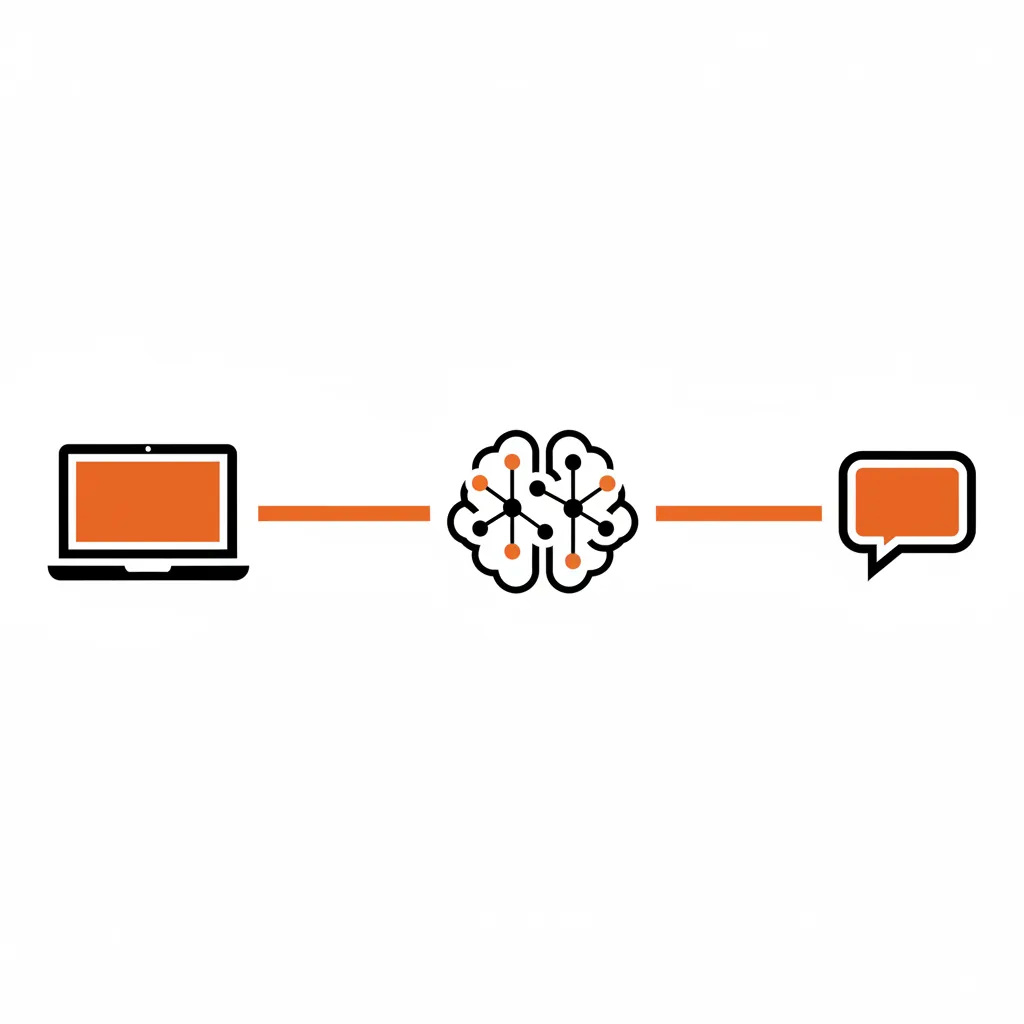
Comparing SEO vs AEO for Small Business Growth
| Feature | Traditional SEO | Modern AEO (2026) |
|---|---|---|
| Primary Goal | Rank #1 in Search Results | Become the Recommended Answer |
| Success Metric | Click-Through Rate (CTR) | Brand Mention & Citation Share |
| Content Style | Keyword-Optimized Articles | Conversational & Question-Based |
| Technical Focus | Core Web Vitals & Backlinks | Schema & Entity Relationship |
| User Intent | Browsing/Researching | Direct Problem Solving |
| Discovery Channel | Google Search Bar | ChatGPT, Siri, Perplexity, Gemini |
Common AEO Mistakes to Avoid
- Vague "About Us" Pages: If an AI cannot determine who the experts behind your business are, it won't recommend you. Be specific about credentials.
- Ignoring Local Entities: Small businesses often forget to mention specific landmarks or local neighborhoods, making it harder for AI to pin them to a location. Mentioning your proximity to a well-known park or stadium helps the AI verify your physical existence.
- Over-optimizing for Keywords: Stuffed keywords make text unnatural. AI models are trained on human conversation; if it sounds robotic, the AI will deprioritize it.
- Neglecting Brand Consistency: Using different logos or slogans across the web confuses the "Entity recognition" process. Keep your tone and visual identity tight.
- Slow Fact-Checking: If your site contains outdated information (like 2023 pricing), and a competitor has 2026 data, the AI will choose the competitor every time. LLMs cross-reference dates to ensure they aren't giving users stale advice.
Best Practices for Dominating Answer Engines
- Prioritize the "Answer Box": Place a concise, 50-word summary at the very top of your most important service pages.
- Use First-Person Expertise: Use phrases like "In our experience" or "Our team found that..." to signal E-E-A-T (Experience, Expertise, Authoritativeness, and Trustworthiness).
- Monitor Your "Share of Model": Regularly ask ChatGPT or Gemini about your service niche and see if your brand is mentioned.
- Update Content Seasonally: AI models value recent data. A "2026 Guide" is significantly more valuable to an engine than a generic one.
- Leverage User-Generated Content: Encourage reviews that mention specific services. AI reads these reviews to understand what you are actually good at.
- Use Active Voice: AI agents prefer direct statements. Instead of "Your roof will be fixed by our team," say "Our team fixes your roof."
"In the age of AI, your website is no longer just a storefront; it is a data source. If that source is messy, the AI will simply shop elsewhere." — Best Answer Engine Optimization Services Team
AI Visibility in ChatGPT, Gemini, Copilot, and Perplexity
Each major AI platform has a slightly different way of surfacing small businesses. ChatGPT relies heavily on its internal training data supplemented by "SearchGPT" browsing. It favors brands with strong, long-term reputations and clear Wikipedia or LinkedIn entries. Gemini, being a Google product, leans heavily on Google Business Profiles and structured data from your website. If your Google Maps listing is verified and active, Gemini is much more likely to recommend you for local queries.
Copilot integrates deeply with Bing’s index and LinkedIn data, making it crucial for B2B small businesses to have optimized professional profiles. Perplexity acts most like a traditional search engine but focuses on citing sources. To appear here, your content must be factually dense and formatted in a way that is easy to cite. Across all platforms, the common thread is verifiability. If the AI can verify your claims through three or more independent sources (your site, a review site, and a news mention), your visibility will skyrocket. If you are unsure where you stand, consider a free AEO audit to see how these engines currently perceive your brand.
Case Study: Local HVAC Company's 2025 AEO Pivot
A B2B HVAC contractor client we worked with was struggling to compete with national franchises in standard search results. In late 2024, we shifted their strategy from "HVAC repair city name" keywords to an AEO-first approach. We created a series of "How-to" guides for facility managers and implemented deep technical schema for every specific boiler model they serviced.
We also cleaned up their entity footprint, ensuring their founder's engineering credentials were linked across the web. By mid-2025, the results were clear. While their traditional organic traffic stayed relatively flat, their "AI-driven leads"—customers who found them through voice search or ChatGPT recommendations—increased by 140%. Because the AI was recommending them as the specific expert for high-efficiency systems, the lead quality was significantly higher. Their closing rate on these leads was 30% higher than traditional search leads because the AI had already established the business's trust before the user even visited the site. This demonstrates why our services focus on the future of discovery rather than just old-school ranking.
How to Test and QA Your AEO Before a Site-Wide Rollout
You should never deploy a complete AEO overhaul without testing how AI models interpret your changes. Start with a single high-value page. Apply your new conversational structure and schema, then wait for the page to be indexed. Once indexed, use the following QA procedure:
- The LLM "Mirror Test": Copy and paste your updated text into Claude or ChatGPT and ask, "Summarize the key value proposition and list the specific services mentioned here." If the AI misses a service, your formatting is too dense or your headings are unclear.
- Schema Validation: Use the official Schema Markup Validator. Any "Warning" or "Error" in your JSON-LD code can prevent an AI from identifying your business as a distinct entity.
- Query Simulation: Use a tool like Perplexity and ask questions that your page is designed to answer. Observe if the engine uses your site as a source or if it prefers a competitor. If it chooses a competitor, analyze their content structure—do they use more lists? Is their answer more concise?
- NAP Verification: Use a private browser window to search for your business name plus "phone number" or "address." If the AI generates a summary with old data, you have an uncleaned citation lingering in a secondary directory.
Testing allows you to refine your "answer blocks" until they are perfectly optimized for extraction. We recommend a 30-day monitoring period for a single service category before applying these changes to your entire site.
The Honest Trade-Offs: Where AEO Can Fail
AEO is not a magic bullet, and it is important to understand its limitations. For some small businesses, a pure AEO strategy might actually result in a short-term drop in website visits. Because AI engines aim to answer the user's question within their own interface, the user may never click through to your site. This is the "Zero-Click" reality. If your business model relies heavily on ad impressions or on-site behavior (like a blog supported by display ads), AEO might reduce your immediate revenue.
Furthermore, AEO requires high-quality, factual accuracy. If your industry changes rapidly and you fail to update your site, AI models will quickly learn that you are an unreliable source. Once an LLM categorizes your brand as providing "hallucinated" or outdated data, it is incredibly difficult to regain that trust. AEO also fails when you try to optimize for a service you don't actually provide. Traditional SEO could sometimes "trick" a search engine into ranking a page for a tangentially related keyword. AI is much smarter; it cross-references your claims against customer reviews and third-party data. If there is a mismatch, your visibility will vanish.
Tools and Resources for Small Business AEO
- Google Search Console: Essential for monitoring how Google’s AI crawlers see your site. Look at the "Enhancements" tab for schema errors. (Free)
- Schema.org: The official documentation for all structured data types. Use this to build your code. (Free)
- Semrush/Ahrefs: Use these to identify the specific questions your audience is asking. Look for the "Questions" filter in keyword research. (Paid)
- Claude/ChatGPT: Use these to test how AI describes your business. Simply ask: "What is [Your Business Name] known for?" (Free/Paid)
- Validator.schema.org: A tool to test if your code is readable by AI agents. (Free)
- AnswerThePublic: Great for finding the "Who, What, Where, Why" queries people ask in your niche. (Free/Paid)
How to Measure Success in an AEO World
Measuring AEO is different from tracking standard SEO. You cannot always see every "impression" because the interaction often happens within the AI interface. However, you can track:
- Referral Traffic from AI Domains: Monitor traffic from
openai.com,perplexity.ai, andgoogle.com(via AI Overviews) in your analytics. - Brand Mention Frequency: How often your brand name appears in AI-generated answers for your industry.
- Lead Quality: Are customers coming to you already knowing what you do? Track if the sales cycle is shorter for AI-referred leads.
- Entity Health: Use tools to see if your "Knowledge Panel" is appearing and accurate. Check if your founder’s name is linked to the business in AI responses.
AEO Success Checklist:
- [ ] Is there a clear answer to a specific question on the page?
- [ ] Does the page use valid Schema markup without errors?
- [ ] Is the content written in a conversational, authoritative tone?
- [ ] Are there external citations backing up your claims (reviews, news, directories)?
- [ ] Does the page load in under 2 seconds for AI crawlers?
- [ ] Is the "SameAs" attribute correctly linking all social profiles?
The Future of AEO for Small Business in 2026 and Beyond
As we move deeper into 2026, AI agents will become more autonomous. We are moving toward a world of "Agentic Workflows" where a user might tell their AI, "Find me a local accountant who specializes in creative agencies and book an appointment." In this future, your website won't just need to be readable; it will need to be actionable.
API integrations and real-time data availability will become the next frontier. Small businesses that provide live availability or instant pricing data to AI agents will win the bulk of the market. Imagine an AI agent being able to check your live calendar because you’ve exposed that data through a secure, structured format. The gap between businesses that are "AI-ready" and those that are just "online" will widen. Starting your AEO for beginners journey now is the only way to ensure you aren't left behind as the traditional search bar fades into the background.
Conclusion
AEO for small business is no longer a luxury or an experimental tactic. It is the fundamental way your brand will be discovered in 2026. By focusing on entity clarity, structured data, and conversational authority, you can bypass larger competitors who are still stuck in the 2020 SEO mindset. The goal is to stop chasing the algorithm and start becoming the answer the algorithm is looking for. Our team at Best Answer Engine Optimization Services is ready to help you navigate this transition. Whether you are just starting or looking to refine your current presence, we provide the tools and strategy needed to dominate the next generation of search.
Get started today with a [free AEO audit](/free-aeo-audit) to see your AI visibility score. Ready to dominate your niche? Explore our full range of [AEO and RevOps services](/services) to future-proof your business.
Visit our blog for more insights or contact us to speak with an AEO expert. Find more tips in our AEO insights section.
***
Meta-data and Schema requirements below:
- Sources:
1. https://www.gartner.com/en/newsroom/press-releases/2024-02-19-gartner-predicts-search-engine-volume-will-drop-25-percent-by-2026-due-to-ai-chatbots 2. https://searchengineland.com/google-zero-click-searches-2024-study-443157 3. https://schema.org/docs/gs.html 4. https://developers.google.com/search/docs/appearance/structured-data/intro-structured-data 5. https://openai.com/index/searchgpt-prototype/
Frequently asked questions
What is AEO for small business?+
AEO (Answer Engine Optimization) is the process of optimizing your website content so AI models like ChatGPT and Gemini can easily find, understand, and cite your business as a primary answer. For small businesses, it's about shifting focus from ranking in search results to being the recommended solution provided by AI assistants.
Why should a small business care about AEO in 2026?+
Small businesses should care because search behavior has shifted. In 2026, more users are asking AI for recommendations rather than browsing lists of links. If your business isn't optimized for these answer engines, you lose access to a massive segment of customers who rely on AI agents for decision-making.
How does AEO differ from traditional SEO?+
SEO focuses on ranking websites in traditional search engines like Google to drive clicks. AEO focuses on providing clear, structured data and conversational answers that AI models can extract and present to users directly within their interface, often without a click to your website.
What are the first steps to take for AEO?+
Start by implementing Schema markup on your website to define your business as an entity. Then, identify the top questions your customers ask and create clear, concise answer blocks on your site. Finally, ensure your business information is consistent across all major online directories and social platforms.
How do I measure the success of my AEO efforts?+
Success is measured through 'Share of Model' (how often AI mentions you), referral traffic from AI platforms like OpenAI or Perplexity, and the quality of leads. If customers arrive at your site already trusting your expertise because an AI recommended you, your AEO strategy is working.
What tools are best for small business AEO?+
Key tools include Google Search Console for technical health, Schema.org for structured data guidelines, and AI platforms themselves (ChatGPT, Gemini) to test how your brand is perceived. Specialized AEO platforms also help track brand mentions within LLM responses.
Sources & further reading
Soft next step
Want to see where AI answers mention you — and where they don't?
We run a free AEO audit across ChatGPT, Gemini, Copilot and Perplexity, then hand you the fixes in priority order. Start your AEO strategy today.
Keep reading
AEO Fundamentals
AEO for Beginners: The Essential 2026 Strategy GuideAEO Fundamentals
The Definitive AEO Checklist for 2026: Win the AI Search EraContent Strategy
AEO Strategy for Businesses: The 2026 Guide to AI Visibility