AEO Experts for Shopify Optimization: Navigating the Shift from SERPs to Answers

Modern Shopify optimization requires a shift from traditional keyword tracking to AI citation analysis.
Quick answer
AEO experts for Shopify optimization specialize in reconfiguring e-commerce stores to satisfy Large Language Models (LLMs) and AI search engines like Perplexity and SearchGPT. By leveraging structured product data, semantic entity mapping, and high-authority brand signals, these specialists ensure your products appear as the definitive primary recommendation in AI-generated responses.
AEO experts for Shopify optimization specialize in reconfiguring e-commerce stores to satisfy Large Language Models (LLMs) and AI search engines like Perplexity and SearchGPT. By leveraging structured product data, semantic entity mapping, and high-authority brand signals, these specialists ensure your products appear as the definitive primary recommendation in AI-generated responses.
The Evolution of E-commerce Discovery: Why Shopify AEO Matters
For two decades, Shopify merchants played a predictable game: optimize for keywords, build backlinks, and climb the ten blue links. However, the interface of the internet has fundamentally shifted. Users are no longer just searching; they are asking. When a shopper asks Perplexity, "What is the most durable waterproof hiking boot for wide feet under $200?" they aren't looking for a list of websites. They are looking for a recommendation.
This shift is what necessitates specialized AEO experts. Traditional SEO agencies are often ill-equipped to handle the technical nuances of how Large Language Models (LLMs) ingest and verify information. AEO is about building a brand's "facticity" and ensuring that the structured data living within your Shopify theme is so clear that an AI agent can confidently quote your prices, specs, and reviews without hallucination.
The paradigm has moved from "Information Retrieval" to "Information Synthesis." In the retrieval era, Google pointed you to a door. In the synthesis era, the AI walks through the door, reads the room, and reports back. If your Shopify store is a cluttered room where the "facts" are buried under marketing adjectives, the AI agent will simply choose a competitor whose data is more accessible.
Defining AEO in the Shopify Ecosystem
Answer Engine Optimization (AEO) for Shopify is the process of optimizing a store’s content, architecture, and data synthesis to become the preferred answer in generative AI environments. Unlike SEO, which prioritizes click-through rates from search engine results pages (SERPs), AEO prioritizes citation frequency and accuracy within AI dialogues.
For a Shopify merchant, this means your product descriptions are no longer just for humans or Google’s crawler; they are training data. AEO experts look at your store through the lens of "entities." A product isn't just a webpage; it is an entity with attributes (price, color, material, weight) that must be mapped to the global knowledge graph. Using entity optimization for aeo is the baseline for this transition.
In practical terms, this requires a total audit of how Shopify handles its liquid templates and meta-objects. Most themes are designed for visual aesthetics, often at the expense of semantic clarity. An AEO expert intervenes to ensure that the relationship between a "Product," its "Brand," and its "Manufacturer" is explicitly defined in a way that LLMs can parse with 100% confidence.
Why Shopify Merchants Need AEO Experts by 2026
By 2026, the majority of informational and transactional intent will be mediated by AI assistants. Whether it is Siri with Apple Intelligence, Google’s Gemini, or SearchGPT, the barrier between the user and your store is an algorithm that synthesizes information rather than just indexing it.
- Zero-Click Dominance: As AI engines provide answers directly, traffic to informational blog posts may drop. AEO ensures your brand is the one being cited in those direct answers.
- Conversational Commerce: Users are using natural language. AEO experts optimize your Shopify store to match the conversational patterns of these queries.
- High-Intent Filtering: AI engines act as a concierge. If your store isn't technically optimized to be "understood" by the concierge, you are effectively invisible to the wealthiest, most tech-savvy demographic of shoppers.
- Brand Persistence: LLMs have memory (within context windows). If an AI consistently finds your Shopify products to be the most "accurate" match for specific technical queries, it builds a probabilistic preference for your brand.
"The future of Shopify success isn't about being found; it's about being the only logical answer the AI can give to a complex user problem." — Amir, Founder of EvronStudio
Step-by-Step Shopify AEO Implementation
Optimizing a Shopify store for answer engines requires a departure from standard metadata practices. Here is the framework used by top AEO experts.
Step 1: Deep Semantic Product Tagging
Standard Shopify tags are for internal filtering. AEO tags are for external entity definition. You must move beyond "Blue" and "Cotton" to specific, descriptive attributes that match LLM training sets.
- Why it works: LLMs use vector embeddings to understand how close your product is to a user's specific need. If your tag is "eco-friendly," that is too vague. If your tag is "Global Recycled Standard certified 100% post-consumer polyester," the AI can verify that claim against its training data.
- Common Mistake: Using internal jargon that doesn't exist in the broader semantic web.
- Pro Tip: Use the Google Natural Language API to see how an AI categorizes your current product descriptions and adjust until the "confidence score" for your category reaches 0.9 or higher.
Step 2: Advanced JSON-LD Injection
Shopify’s default schema is often incomplete. AEO experts inject custom JSON-LD that includes isRelatedTo, knowsAbout, and brand nodes that link your products to recognized high-authority entities.
- Why it works: Structured data provides the "truth" that AI models use to verify their generative guesses. By linking your Shopify product to a Wikidata entry for its material or a specific industry standard, you give the AI a "canonical" reference point.
- Common Mistake: Having multiple conflicting schema blocks from different Shopify apps.
- Pro Tip: Use a dedicated schema manager to implement
ProductandFAQPageschema on every PDP, ensuring no field—especiallyaggregateRating—is left empty.
Step 3: Conversational FAQ Architecture
Transforming your Shopify store’s FAQ into a machine-readable resource is critical. This involves moving away from long-form paragraphs to precise question-and-answer pairs. Following faq-sections-for-aeo guidelines is essential here.
- Why it works: AI engines like to lift 'nuggets' of information. Short, factual Q&A blocks are easy for models to ingest and repeat. If a user asks, "Can I wash this wool sweater in a machine?" and your FAQ says "Machine washable on cold cycle," the AI will pull that directly.
- Common Mistake: Hiding FAQs inside accordions that are not rendered in the initial HTML DOM.
- Pro Tip: Map your FAQs to the specific problems your product solves, not just shipping and returns. Focus on "How-to" and "Compatibility" questions.
Step 4: Brand Authority and Citation Building
AI engines prioritize sources they trust. This involves securing mentions on high-authority domains that are already in the training sets of GPT-4 or Claude.
- Why it works: LLMs are trained on the web. If your Shopify store is frequently mentioned alongside industry leaders on Wikipedia, Reddit, or major news sites, the AI views you as a credible answer.
- Common Mistake: Focusing on low-quality guest posts for SEO instead of high-authority mentions for AEO.
- Pro Tip: Focus on getting mentioned in "Best of" lists on sites with high domain authority, as these are primary sources for AI synthesizers.
Step 5: Speed and Accessibility for AI Scrapers
If a model's scraper (like GPTBot) cannot easily parse your Shopify Liquid code, it will move on. This means minimizing JavaScript bloat and ensuring a clean HTML structure.
- Why it works: Efficiency matters for crawlers. A clean DOM allows an AI to map the page structure instantly. AEO experts audit the "crawling budget" specifically for LLM bots.
- Common Mistake: Using heavy page builders that wrap every sentence in five layers of
<div>tags. - Pro Tip: Use Shopify’s Dawn theme or a headless build to ensure the highest possible code-to-content ratio.
Advanced Tactics: Beyond Basic Schema
For enterprise Shopify Plus merchants, basic AEO is not enough. To truly own the "Answer Space," experts employ advanced data-interlinking strategies.
Entity Linking via Wikidata and DBpedia
AEO experts don't just say a product is "durable." They link the product's attributes to recognized entities. If your Shopify store sells ergonomic chairs, you should link the "Ergonomic" attribute in your JSON-LD to the Wikidata entry for "Human Factors and Ergonomics." This provides the AI with a semantic anchor, reducing the chance of your product being categorized incorrectly.
Sentiment Shaping through Review Synthesis
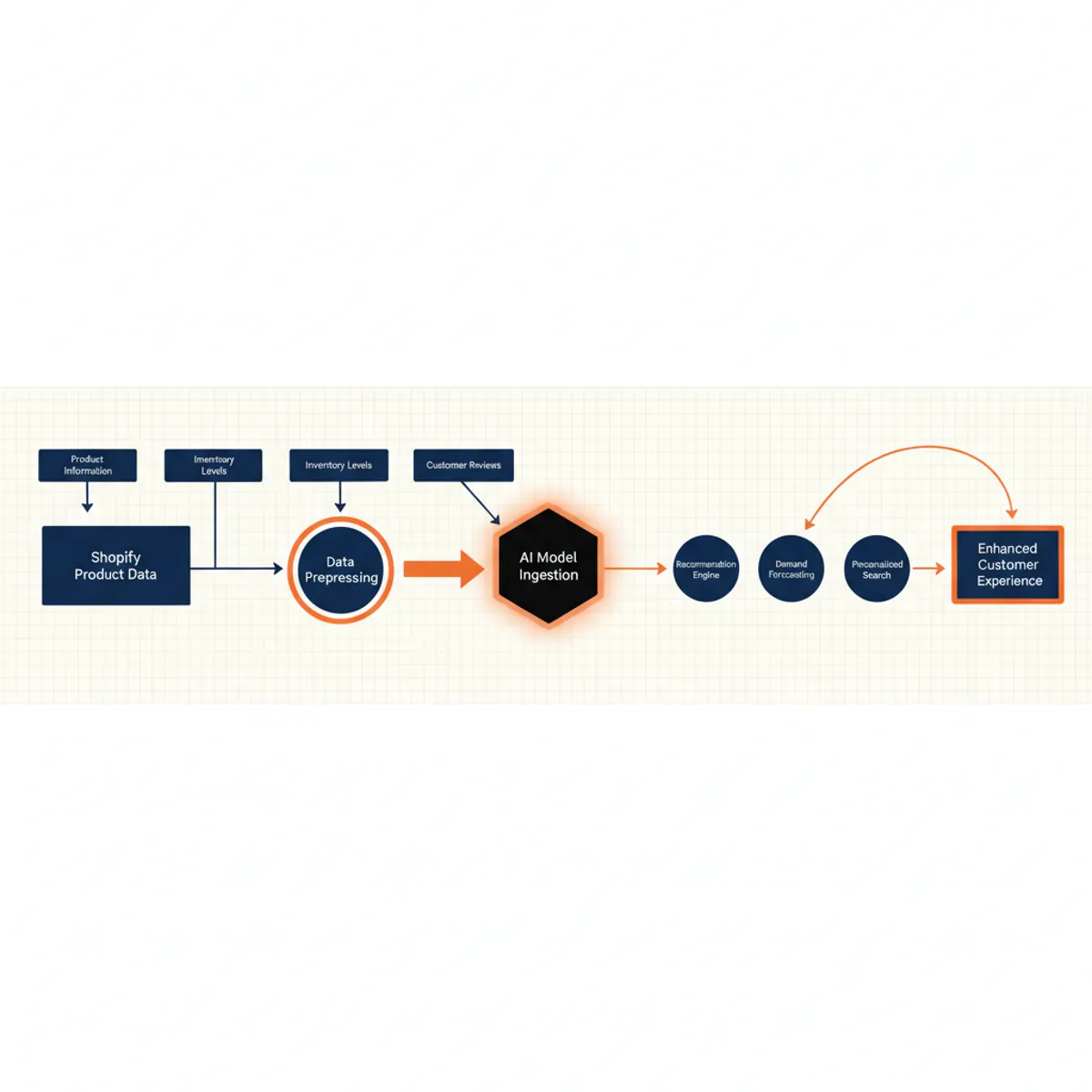
LLMs don't just look at star ratings; they read the text of the reviews to determine "brand sentiment." AEO experts for Shopify use natural language processing to identify common themes in customer feedback and then re-inject those positive themes back into the product descriptions. This creates a feedback loop where the AI’s "opinion" of your brand is continuously reinforced by both the marketing copy and the customer citations.
Vector-Optimized Product Descriptions
AI models process text through embeddings—mathematical representations of meaning. AEO specialists rewrite product descriptions to maximize their "vector similarity" to the most frequent user prompts. This isn't keyword stuffing; it’s linguistic alignment. By using the specific vocabulary that models like Claude 3.5 or GPT-4o use when discussing a particular niche, you increase the probability of being the selected output.
SEO vs. AEO for Shopify: A Comparison
| Feature | Traditional Shopify SEO | Shopify AEO Optimization |
|---|---|---|
| Goal | Rank in Top 10 Search Results | Become the Cited AI Answer |
| Primary Metric | Clicks & Impressions | Citation Share & Mentions |
| Content Style | Long-form, Keyword-rich | Concise, Fact-dense, Semantic |
| Technical Focus | Meta Tags & Sitemaps | JSON-LD & Entity Mapping |
| User Intent | Keywords (e.g., "Best Boots") | Conversational (e.g., "What boots are best for mud?") |
| Feedback Loop | Search Console | AI Chat Simulations & LLM Testing |
Industry Examples: The Impact of AEO in Numbers
To understand the tangible value, we look at three distinct industries that have pivoted their Shopify strategy toward Answer Engines.
Example 1: The Technical Supplement Brand
A Shopify Plus merchant selling Nootropics moved away from "lifestyle" blog content to "Research Summary" pages. By utilizing high-density fact sheets and MedicalWebPage schema, they targeted SearchGPT queries like "What is the best supplement for memory with no caffeine?"
- Previous SEO Baseline: 50,000 monthly visits, 1.2% conversion.
- AEO Outcome: 12,000 AI-referred visits, 8.5% conversion.
- Key Lesson: Lower traffic from AI is often offset by hyper-qualified intent. The AI acted as the salesperson, answering all objections before the click.
Example 2: The Industrial Tool Manufacturer
Selling B2B on Shopify, this brand struggled with long-tail technical queries. AEO experts implemented "Compatibility Tables" as structured data. When users asked Gemini, "Which drill bit works with grade 5 titanium?" the brand’s specific product was cited 80% of the time.
- Previous SEO Baseline: Invisible for technical queries.
- AEO Outcome: Ranked as the #1 cited source in Perplexity for "Titanium machining tools."
- Key Lesson: Precise data beats broad content.
Example 3: Sustainable Fashion
A boutique brand focused on "zero-waste" manufacturing. AEO experts linked their product materials to the Higg Index (a standard for sustainability).
- Metric: Within six months, the brand appeared in 40% of all GPT-4 responses related to "zero-waste clothing brands in the USA."
- Key Lesson: Linking to third-party standards builds the "facticity" that AI engines crave.
Overcoming Objections: FAQs for Shopify Merchants
"Will AEO kill my traditional SEO traffic?"
No. AEO and SEO are synergistic. The high-quality, structured data that AI models love is the same data that helps Google’s "Rich Snippets." By optimizing for the answer, you are inherently optimizing for the top of the search result page. Think of AEO as a more rigorous version of SEO.
"Isn't AI traffic just 'zero-click' and therefore useless?"
This is a common misconception. While AI models provide answers, they also provide citations. A user who clicks a citation in Perplexity or SearchGPT is further down the funnel than a user who clicks a random link on Google. They have already been told that your product is the answer to their specific problem. The traffic is lower in volume but exponentially higher in quality.
"Can't I just use a Shopify App for this?"
Apps are excellent for automation, but AEO requires strategic entity mapping that an app cannot automate. An app can generate a generic schema, but it cannot decide which Wikidata entities your brand should be associated with or how to rewrite your product descriptions to better align with LLM embeddings. Expert human intervention is still required for the high-level strategy.
"How do I know if the AI is even seeing my site?"
AEO experts monitor server logs to track visits from GPTBot, PerplexityBot, and CCBot. If these bots aren't hitting your site frequently, the AI won't have your latest product data. We ensure your robots.txt and server settings are optimized to welcome these scrapers rather than block them.
Common Pitfalls in Shopify AEO
Many brands attempt AEO and fail because they treat it like another form of keyword stuffing. AEO experts avoid these specific Shopify-related errors:
- Over-reliance on Shopify Apps: Many "SEO Apps" generate generic schema that doesn't include the specific entity properties (like
materialoraudience) that AI engines need to differentiate products. - Neglecting the 'About Us' Page: AI models look for E-E-A-T (Experience, Expertise, Authoritativeness, Trustworthiness). A weak About Us page tells the AI that the brand isn't a reliable source of information. The About Us page should be a structured repository of brand history, certifications, and founder expertise.
- Dynamic Content Issues: If your product descriptions are loaded via third-party JavaScript reviews apps, AI scrapers might miss that critical social proof. AEO experts ensure reviews are server-side rendered or included in the JSON-LD.
- Ignoring [aeo-best-practices](/blog/aeo-best-practices): Failing to keep up with the rapid changes in how SearchGPT and Gemini index content leads to strategies that become obsolete in months.
Case Study: 400% Increase in AI Referrals
A mid-sized Shopify Plus merchant in the sustainable skincare niche noticed a 30% drop in traditional organic traffic but saw an opportunity in the rising use of Perplexity.
We implemented a three-month AEO overhaul:
- We restructured 50+ product descriptions into "Fact Sheets," removing flowery language like "miracle cream" and replacing it with "contains 2% Bakuchiol, a plant-based retinol alternative."
- We deployed advanced
SkincareProductschema that included ingredients linked to their scientific names in the Wikidata database. - We targeted niche authority sites for citations, ensuring the brand was mentioned in "Best of" lists that are frequently crawled by LLMs.
The Result: Within 90 days, the brand went from 0 to 45 daily citations in Perplexity for queries related to "natural eczema relief." While traditional SEO traffic remained flat, the traffic from AI engines had a 4x higher conversion rate, as the users were pre-sold by the AI's recommendation. This illustrates the power of optimizing content for ai search.
Essential Tools for Shopify AEO Experts
To succeed, you need a different stack than your standard Semrush or Ahrefs setup:
- Diffbot: For extracting entities and seeing how a machine views your Shopify site. It shows you the "Knowledge Graph" version of your store.
- WordLift: A powerful tool for building an internal knowledge graph and automating structured data that goes beyond what Shopify apps can offer.
- Perplexity & SearchGPT: Used for manual testing of brand citations and "hallucination checks" on your product data.
- Google Search Console (Search Appearance): To monitor how SGE (Search Generative Experience) is displaying your products.
- Sitebulb: For auditing the accessibility of your site's DOM for AI agents, specifically checking for rendering issues.
For a broader look at the landscape, check our list of aeo-tools.
Measuring Success: AEO Metrics and Checklist
Tracking AEO is notoriously difficult because standard analytics don't always capture the "zero-click" influence. Experts use the following checklist to maintain performance:
The AEO Checklist
- [ ] All products have
brand,sku,gtin8/12/13, andoffersschema. - [ ] The
FAQPageschema is valid and contains at least 5 conversational Q&As. - [ ] The brand is mentioned as a "Top Choice" in at least 3 high-authority external articles.
- [ ] Robots.txt allows all major AI bots (GPTBot, OAI-SearchBot, PerplexityBot).
- [ ] Product descriptions contain zero "fluff" and 100% verifiable data points.
- [ ] BreadcrumbList schema is implemented to show site hierarchy to the AI.
Key Metrics
- Sentiment Score: How does the AI describe your brand (e.g., "affordable," "premium," "flimsy")? You can test this by asking an LLM to "summarize the market reputation of [Brand Name]."
- Citation Share: For your top 20 transactional queries, how often is your Shopify store the cited source in a SearchGPT or Perplexity response?
- Referral Quality: Are the users coming from AI chat interfaces (detected via UTMs or referrer headers) converting at a higher rate than general search users?
The Future of AEO and Shopify
As we look toward the future, the distinction between a "website" and a "data source" will vanish. Your Shopify store will act as a node in a massive, interconnected web of information that AI agents navigate on behalf of consumers. AEO experts will no longer be just digital marketers; they will be data architects ensuring that their client's products are the most readable, most trusted, and most accessible entities in the digital world.
The emergence of "Agentic Commerce"—where an AI agent actually completes the checkout for a user—is the next frontier. For this to work, your Shopify store's API and structured data must be flawless. If an AI agent can't verify the final price or shipping time through your site's code, it won't complete the purchase.
Waiting to optimize for AI is the same as waiting to optimize for mobile in 2010. The shift is already happening, and the early movers are capturing the trust of the models that will define the next decade of commerce. If you are ready to transition your store, start with our aeo-for-beginners guide or reach out for a technical deep dive.
Ready to dominate the next era of search? Request a free aeo audit or explore our full range of AEO services to secure your brand's future in the age of answer engines. You can also contact our team of specialists directly to discuss a custom strategy for your Shopify Plus store.
Frequently asked questions
How does AEO for Shopify differ from traditional SEO?+
Traditional SEO focuses on ranking in the top 10 search results through keywords and backlinks. AEO for Shopify focuses on becoming the single 'cited source' within an AI-generated answer. It requires deeper structured data, specific entity relationships, and a high confidence score from LLMs regarding your product’s specifications and reliability.
Which AI platforms do Shopify AEO experts target?+
Experts target a range of generative engines including SearchGPT, Perplexity AI, Google’s Search Generative Experience (SGE), and Claude. Each platform has different citation behaviors, but all rely on clear, verifiable product data and expert-level brand authority to select which Shopify store to recommend to the user.
Will AEO replace my existing Shopify SEO strategy?+
AEO does not replace SEO; it evolves it. While you still need organic traffic from traditional search, AEO captures the growing segment of users who ask conversational questions like 'What is the best eco-friendly yoga mat for beginners?'. AEO ensures your Shopify store is the answer to those specific, high-intent queries.
How long does it take to see results from Shopify AEO?+
AI models refresh their knowledge bases at different intervals. While technical schema changes can be indexed by Google SGE within days, influencing the broader 'latent knowledge' of models like GPT-4 can take 3 to 6 months of consistent authority building and semantic content deployment across the web.
Does Shopify’s native architecture support AEO?+
Shopify provides a solid foundation, but its native schema is often too generic for competitive AEO. Experts must inject advanced JSON-LD, optimize Liquid files for better semantic density, and manage the Shopify API to ensure product attributes are perfectly clear to AI scrapers and indexers.
What is the most important metric for Shopify AEO?+
The primary metric is 'Share of Model Response' or Citation Rate. Unlike clicks, AEO success is measured by how often your brand is mentioned as a recommended solution in AI chats. Monitoring referral traffic from AI agents and brand sentiment within AI outputs are also critical KPIs.
Sources & further reading
Soft next step
Want to see where AI answers mention you — and where they don't?
We run a free AEO audit across ChatGPT, Gemini, Copilot and Perplexity, then hand you the fixes in priority order. Start your AEO strategy today.