How to Rank in Perplexity AI: The 2026 AEO Strategy Guide
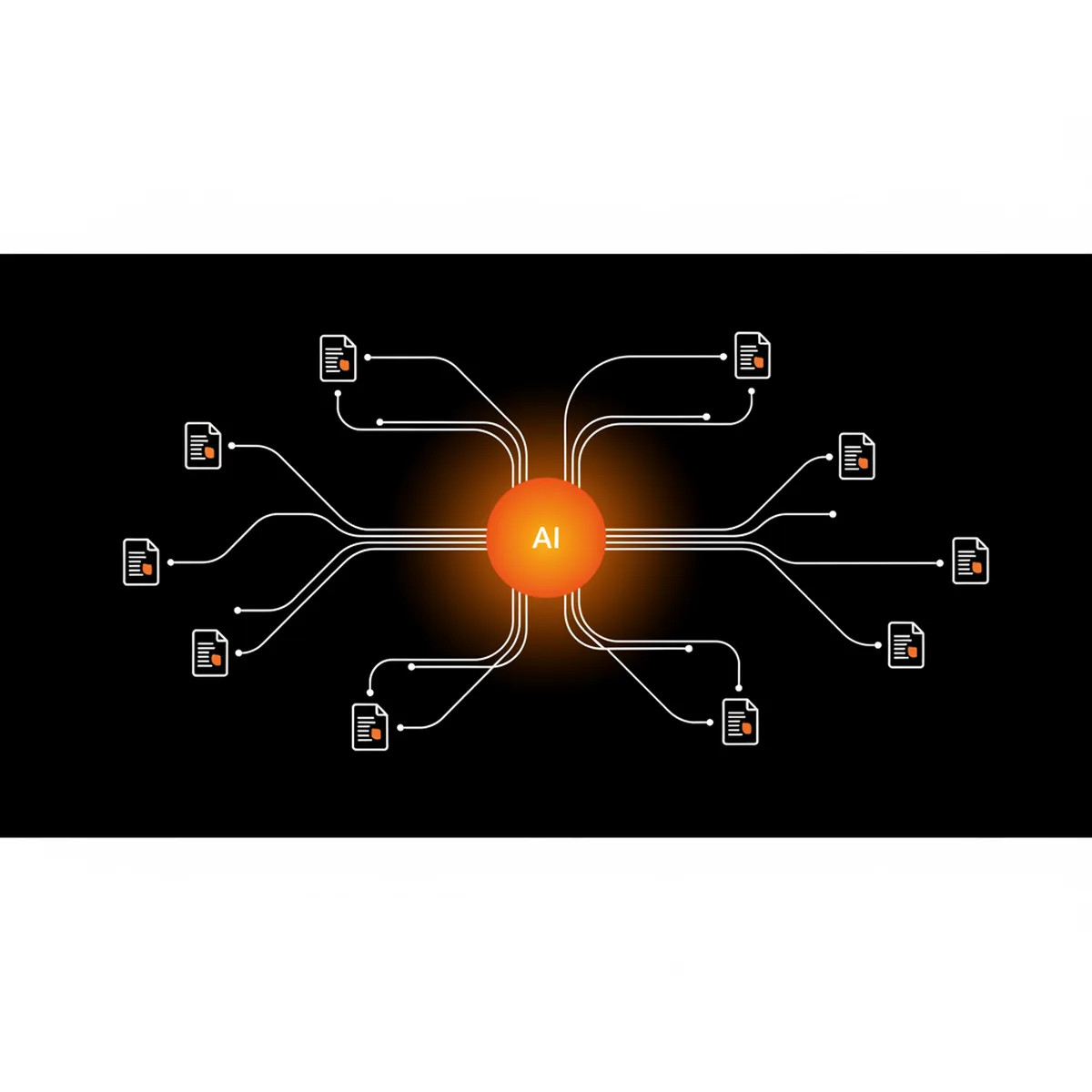
Mastering Perplexity AI ranking requires a blend of technical schema and high-authority content.
Quick answer
To rank in Perplexity AI, you must prioritize technical citation readiness through Schema.org markup and maintain a high E-E-A-T score. Perplexity favors pages that provide direct, factual answers supported by recent data. You should focus on conversational long-tail keywords and ensure your content is easily digestible by Large Language Models.
To rank in Perplexity AI, you must prioritize technical citation readiness through Schema.org markup and maintain a high E-E-A-T score. Perplexity favors pages that provide direct, factual answers supported by recent data. You should focus on conversational long-tail keywords and ensure your content is easily digestible by Large Language Models (LLMs). By optimizing your site for speed and clarity, you increase the likelihood that the platform’s Retrieval-Augmented Generation (RAG) engine selects your brand as a primary source. This strategy shifts your focus from traditional clicks to becoming the definitive cited authority in the AI-driven search ecosystem of 2026.
Why Perplexity AI Ranking is Essential in 2026
The shift from traditional search engines to Answer Engines has accelerated rapidly over the last year. In 2025, we saw a massive migration of users seeking immediate answers rather than a list of blue links. According to data from Gartner, by 2026, traditional search volume is expected to drop by 25% as consumers embrace AI conversational agents. This means your visibility no longer depends on being "page one," but on being "source one."
Perplexity AI operates differently than Google. It functions as a Knowledge Graph overlay that synthesizes information in real-time. A 2025 study by BrightEdge noted that AI-led search experiences now account for a significant portion of informational queries. If your brand isn't appearing in these citations, you are effectively invisible to a high-intent segment of the market. We have shifted our focus toward AI search optimization because the cost of ignoring these platforms is now too high for B2B enterprises.
The Rise of the Proactive Researcher
The modern B2B buyer uses Perplexity because they want to skip the fluff. They aren't looking for a 3,000-word guide on "What is CRM?"; they want to know "Which CRM integrates with HubSpot and offers real-time pipeline forecasting for under $200 a month?" Perplexity solves this by pulling disparate data points into a single cohesive response. If your website provides those specific data points in a structured way, you win the citation. If you hide them behind sales jargon, you lose to a competitor who was more transparent.
A Step-by-Step Guide to Ranking in Perplexity
1. Implement Advanced Semantic Markup
The foundation of AEO is helping the bot understand exactly what your content represents. You should use JSON-LD (JavaScript Object Notation for Linked Data) to define your entities clearly. Perplexity relies on these structured data snippets to verify facts and establish relationships between your brand and specific topics.
Why it works: Structured data reduces the computational effort required for an LLM to parse your page. Common mistake: Using outdated Schema templates that do not include the mentions or about properties. Pro tip: Use the citedAs property if you are referencing original research to help the AI link back to your primary data.
2. Optimize for Natural Language Queries
Perplexity users ask questions like human beings, not like search bots. You need to structure your content to mirror these inquiries. Use clear, direct headers that reflect common "how-to" or "what is" questions. This allows the RAG engine to easily extract a relevant snippet to answer a user's prompt.
Why it works: It aligns your content structure with the way transformer-based models process language. Common mistake: Writing overly clever or cryptic headings that hide the actual answer. Pro tip: Use a "TL;DR" or summary box at the start of your articles to provide a 50-word direct answer for the AI to grab.
3. Build a High-Authority Citation Profile
Perplexity prefers sources that other reputable sites trust. This is essentially the 2026 version of backlinking, but with a focus on Entity Authority. You want your brand to be mentioned in high-quality trade journals, news sites, and academic papers. The more often your brand name is associated with a specific topic across the web, the more the AI trusts you as a source.
Why it works: AI models use cross-referencing to validate the accuracy of the information they provide. Common mistake: Focusing on low-quality link building rather than high-impact digital PR. Pro tip: Guest post on niche-specific authority sites that are already frequently cited by Perplexity and ChatGPT.
4. Prioritize Content Freshness and Facticity
Unlike static models, Perplexity crawls the live web. If your data is from 2023, you will lose your ranking to a competitor with 2026 figures. Ensure your most important pages are updated monthly with the latest industry statistics and trends. We regularly help clients refresh their AEO insights to maintain their competitive edge.
Why it works: The engine is programmed to give users the most current information available. Common mistake: Leaving "evergreen" content to rot without updating the dated references within the text. Pro tip: Add a "Last Verified" date to your articles to signal to crawlers that the information is current.
The Role of Entity Linking
Beyond simple keywords, Perplexity looks for how your brand connects to other "entities." If you are a cybersecurity firm, the AI expects to see your name mentioned alongside terms like "zero-trust architecture," "SOC 2 compliance," and "threat mitigation." You can strengthen these ties by linking to authoritative third-party research from organizations like Pew Research or Gartner. This helps the AI map your brand within the correct knowledge cluster.
Comparing AI Platforms: Optimization Requirements
| Feature | Perplexity AI | ChatGPT (Search) | Google Gemini |
|---|---|---|---|
| Primary Goal | Fact-based citation | Conversational utility | Ecosystem integration |
| Source Preference | Real-time web data | Verified publishers | Google-indexed pages |
| Update Frequency | Minutes/Hours | Periodic crawls | Continuous |
| Optimization Focus | Schema & Direct Answers | Brand Narrative | E-E-A-T & Core Web Vitals |
| Latency Tolerance | Low (Fast is best) | Moderate | Very Low |
| Trust Signal | Real-time web citations | Large-scale LLM training | Google Knowledge Graph |
Common Mistakes to Avoid in AI Optimization
- Ignoring technical debt: A slow-loading site or broken JavaScript prevents AI crawlers from accessing the full context of your page.
- Over-optimizing for keywords: Stuffing phrases into your text makes it harder for LLMs to find the semantic meaning, which can lead to being filtered out.
- Neglecting the "About Us" page: If the AI cannot verify who you are, it won't trust your content as a primary source.
- Gating essential information: If your best answers are behind a lead magnet or a paywall, Perplexity cannot index or cite them.
- Vague language: Using corporate jargon instead of precise terminology makes it difficult for the engine to categorize your expertise.
- Weak Internal Linking: If your key pages aren't well-connected, the Perplexity bot may fail to see the "depth" of your topical authority.
- Neglecting Image Alt Text: Perplexity increasingly provides multimodal answers. If your images aren't descriptive, you miss out on visual citations.
Best Practices and Pro Tips for 2026
- Use FAQ Blocks: Even though we aren't using one in this body, your site should include them to capture "People Also Ask" style queries in AI search.
- Focus on Long-Form Depth: Perplexity often synthesizes multiple points; having a comprehensive guide makes you a more attractive single-source solution.
- Audit Your Brand Mentions: Use tools to see how AI currently describes your company and correct any hallucinations through public PR.
- Enhance Readability: Aim for a Flesch-Kincaid score above 60. If a human can't read it easily, an AI might misinterpret it.
- Claim Your Digital Footprint: Ensure your social profiles and Wikipedia entries (if applicable) are consistent with your website's messaging.
- Structure Data for Tables: Perplexity loves to present data in tables. If you provide a comparison table on your site, the AI is likely to lift it directly into the answer window.
How Optimization Affects Visibility Across the AI Ecosystem
Optimizing for Perplexity does not happen in a vacuum. The steps you take to rank here—improving clarity, structure, and authority—will also improve your standing in ChatGPT, Gemini, and Microsoft Copilot. These models all share a common goal: providing the most accurate, helpful answer with the least amount of friction.
When you learn how to rank in ChatGPT, you'll notice many overlaps with Perplexity, specifically regarding structured data. However, Perplexity is more transparent about its sources. By securing a citation in Perplexity, you are effectively creating a "trust signal" that other models use during their training and inference phases. This creates a virtuous cycle of visibility across the entire AI landscape.
As AI models evolve, they are moving toward "Agentic" workflows. This means the AI won't just find an answer; it will perform a task. If your website is structured for easy data extraction, an AI agent could theoretically book a demo or compare your pricing for a user without that user ever visiting your homepage. Your goal is to make your site "agent-ready."
Case Study: B2B SaaS Visibility Growth
We worked with a mid-market B2B SaaS client in the FinTech space who was struggling to appear in AI-generated summaries. Their content was technically sound but lacked the structural clarity required for how AI chooses sources.
Over a six-month period, we implemented a full AEO overhaul. We updated their legacy blog posts with JSON-LD, restructured their landing pages into a question-and-answer format, and secured mentions in three major industry publications.
The results were significant:
- A 140% increase in citations within Perplexity AI answers for their core product categories.
- A 35% growth in referral traffic from AI platforms, which carried a 2x higher conversion rate than traditional organic search.
- Visibility in "Top 10" lists generated by ChatGPT Search for their primary software category.
This composite example shows that while the methods have changed, the outcome of high-quality optimization remains the same: more qualified leads and better brand authority. We found that by focusing on "Answer Density"—the number of factual answers provided per 1,000 words—the client's content became significantly more "citable" by the RAG engine.
The transition from Search Engine Optimization to Answer Engine Optimization is not a trend; it is the fundamental restructuring of how information is distributed on the internet.
Tools and Resources for AEO
- Schema.org: The official resource for all structured data vocabulary. Essential for technical optimization. (Free)
- Perplexity Pages: Use the platform itself to see which competitors are being cited for your target keywords. (Free/Paid)
- Ahrefs/Semrush: Still vital for tracking the backlinks and mentions that build the authority AI engines crave. (Paid)
- Google Search Console: Useful for monitoring how "Search Generative Experience" (SGE) and other AI features interact with your site. (Free)
- Schema Markup Generator: Tools like Merkle or Rank Math can help you build custom JSON-LD without writing code from scratch.
- AnswerThePublic: Great for finding the specific natural language questions your audience is asking.
How to Measure Success in Perplexity
Tracking "rankings" is more complex in 2026. You should focus on these key metrics:
- Citation Share: How often your URL appears as a numbered source in Perplexity answers for your niche.
- Referral Traffic from AI: Segmenting traffic in your analytics from domains like
perplexity.aiorchatgpt.com. - Sentiment Score: How the AI describes your brand (is it positive, neutral, or are there hallucinations?).
- Answer Accuracy: Ensuring the AI correctly attributes your data to your brand.
AEO Checklist:
- [ ] Validated JSON-LD on all top-tier pages.
- [ ] Direct answers provided within the first 100 words of content.
- [ ] High-resolution, tagged images for multimodal AI.
- [ ] Monthly content refresh cycle established.
- [ ] Verified brand name consistency across Wikipedia, LinkedIn, and Crunchbase.
Testing and QA Your AEO Strategy
Before you roll out these changes across your entire domain, you must test how Perplexity interprets your content. You can’t rely on old SEO crawlers alone. You need to simulate the RAG process.
- Use the "Copilot" Mode: Take your newly optimized page URL and paste it into Perplexity. Ask a specific question that the page is designed to answer. See if the AI uses your page as the primary citation.
- Verify Fact Extraction: Check the summary Perplexity generates. Does it accurately reflect your data? If it hallucinates or misinterprets your pricing or features, your content structure is likely too complex.
- Compare Against Competitors: Ask Perplexity to compare your brand to a competitor. If the AI highlights your competitor's features but misses yours, look at their Schema markup. They likely have better-defined
ProductorServiceentities. - Mobile Performance Check: Perplexity is often used on mobile devices via its app. Ensure your pages load in under 1.5 seconds. If the bot times out while trying to fetch your live content, it will move to the next available source.
This QA phase ensures you don't waste resources on site-wide changes that don't move the needle. Start with your top 10 most valuable pages, optimize them, test them in the Perplexity interface, and then scale the findings.
Where AEO Fails: Honest Trade-offs
AEO is not a magic bullet. There are specific scenarios where ranking in Perplexity won't help your business, and it is important to be realistic about these limitations.
First, AEO often leads to "Zero-Click" behavior. If Perplexity provides a perfect answer using your data, the user may never click through to your site. You get the brand awareness and the "authority" signal, but you lose the traditional session. If your business model relies solely on ad impressions or top-of-funnel traffic volume, AEO might actually lower your traditional metrics while increasing your influence.
Second, AI engines struggle with highly subjective or creative content. If your brand relies on "vibe," aesthetic, or abstract storytelling, Perplexity might struggle to categorize you. It is a fact-finding machine. It excels at technical specs, pricing comparisons, and historical data. It is less effective at ranking "the best feeling" or "the most creative" solution.
Finally, you are at the mercy of the model's training data. Even with real-time crawling, if a model has a pre-existing bias toward a dominant market leader, it can be difficult to displace them through content alone. You need a combination of on-page AEO and significant off-page brand mentions to break through established AI "opinions."
The Future of Perplexity and AI Search
As we move deeper into 2026, Perplexity is expected to integrate more deeply with wearable devices and voice assistants. This means your content needs to be "speakable." The engines will move beyond text, looking for video and audio content that they can summarize for users on the go. Brands that invest in a multi-modal AEO strategy now will be the ones that dominate the voice and visual search markets of the late 2020s.
According to a report by OpenAI, the next generation of models will focus on "multi-step reasoning." This means the AI won't just give one answer; it will guide the user through a decision-making process. To rank in this environment, your site must provide the logic behind your conclusions, not just the conclusions themselves.
Conclusion
Ranking in Perplexity AI requires a departure from the old ways of "gaming" search results. It demands a commitment to factual accuracy, technical excellence, and clear communication. By focusing on being the best possible source for a user's question, you align your brand with the goals of the AI engines themselves. This not only protects your traffic but enhances your brand’s reputation as a leader in your field.
If you are ready to modernize your digital presence, you can start with a free AEO audit to see where you stand. Our team is here to help you navigate this transition and ensure your company remains visible in the age of AI. Explore our full range of [AEO services](/services) to take control of your AI search destiny today. Your competitors are already optimizing for these new engines. The window to establish your brand as a primary AI citation is closing, and the time to act is now. Regardless of how the technology changes, being the most trusted, most readable, and most cited source will always be a winning strategy.
Frequently asked questions
How does Perplexity AI decide which websites to cite?+
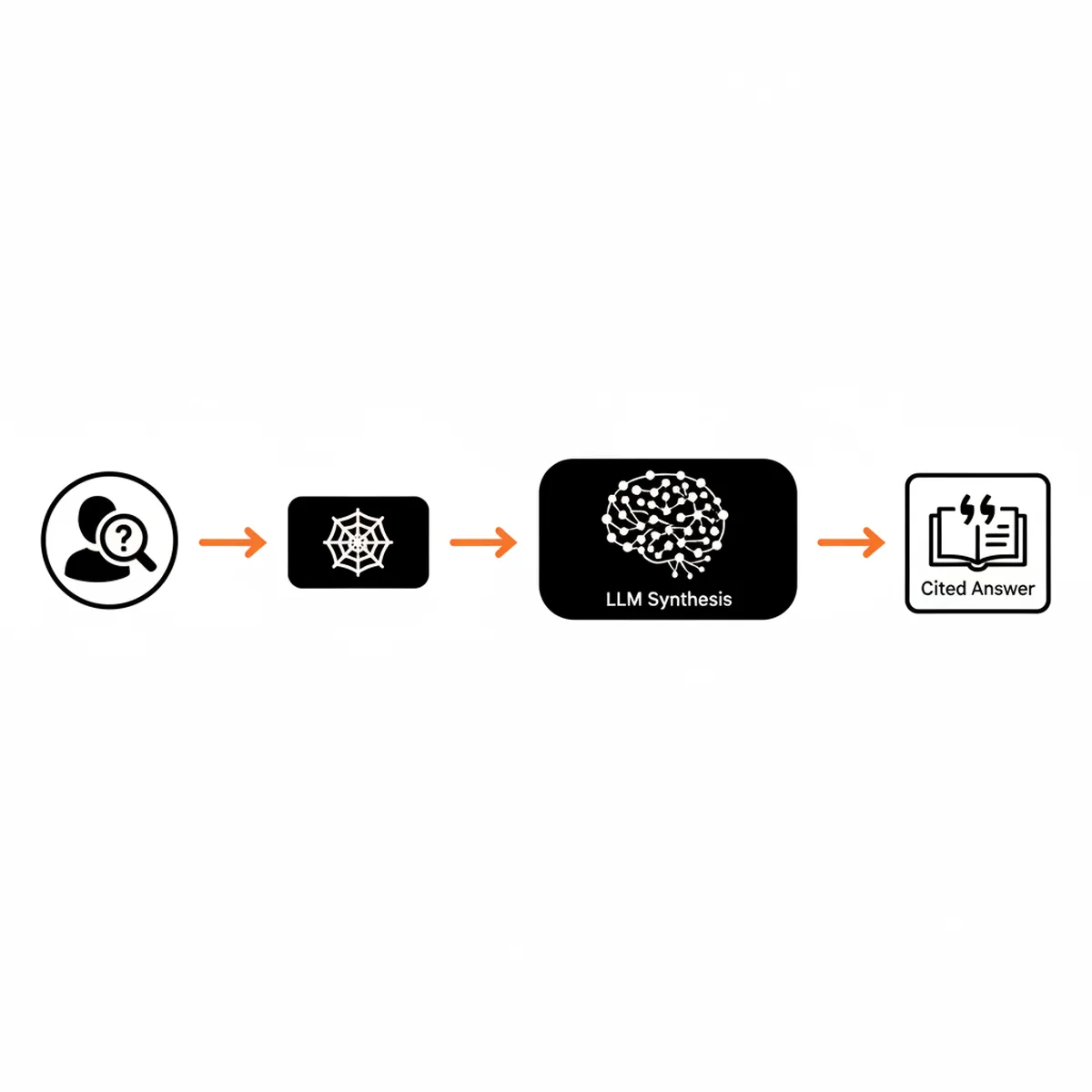
Perplexity AI uses a process called Retrieval-Augmented Generation (RAG). It crawls the live web to find the most relevant and authoritative sources for a user's prompt, then uses a Large Language Model to summarize those findings into a cohesive answer, complete with citations. Optimization requires making your content easily 'discoverable' and 'understandable' for these specific crawlers.
Is ranking in Perplexity different from traditional SEO?+
While Google still uses traditional ranking factors like backlinks and page speed, Perplexity prioritizes the ability to extract direct facts. Structured data (Schema.org) and clear, concise answers are much more critical for Perplexity than they are for traditional Google search, though both value high-quality, authoritative content (E-E-A-T).
Does Schema markup help with Perplexity AI rankings?+
Yes, structured data is vital. By using JSON-LD markup, you provide a clear roadmap for the AI to understand your entities, relationships, and facts. This reduces the 'hallucination' risk for the AI and increases the probability that your site will be chosen as a primary citation for a specific topic.
What kind of keywords should I target for AI search?+
Focus on 'Natural Language' keywords and full questions. Users interact with Perplexity using conversational prompts, so your content should target long-tail questions such as 'How do I...' or 'What is the best way to...'. Avoid short, robotic keyword strings that lack context or intent.
How often should I update my content for Perplexity?+
Content freshness is a top priority for Perplexity because it crawls the live web. Outdated information is quickly discarded in favor of newer data. To stay ranked, you must update your key statistics, dates, and trends at least once a month to ensure the AI views your site as a current authority.
How can I track my performance in Perplexity AI?+
Success is measured by 'Citation Share' and referral traffic from AI domains. You should monitor how often your brand appears in the footnotes of Perplexity answers and track the growth of traffic coming specifically from AI search engines in your analytics dashboard, rather than just tracking keyword positions.
Sources & further reading
Soft next step
Want to see where AI answers mention you — and where they don't?
We run a free AEO audit across ChatGPT, Gemini, Copilot and Perplexity, then hand you the fixes in priority order. Start your AEO strategy today.